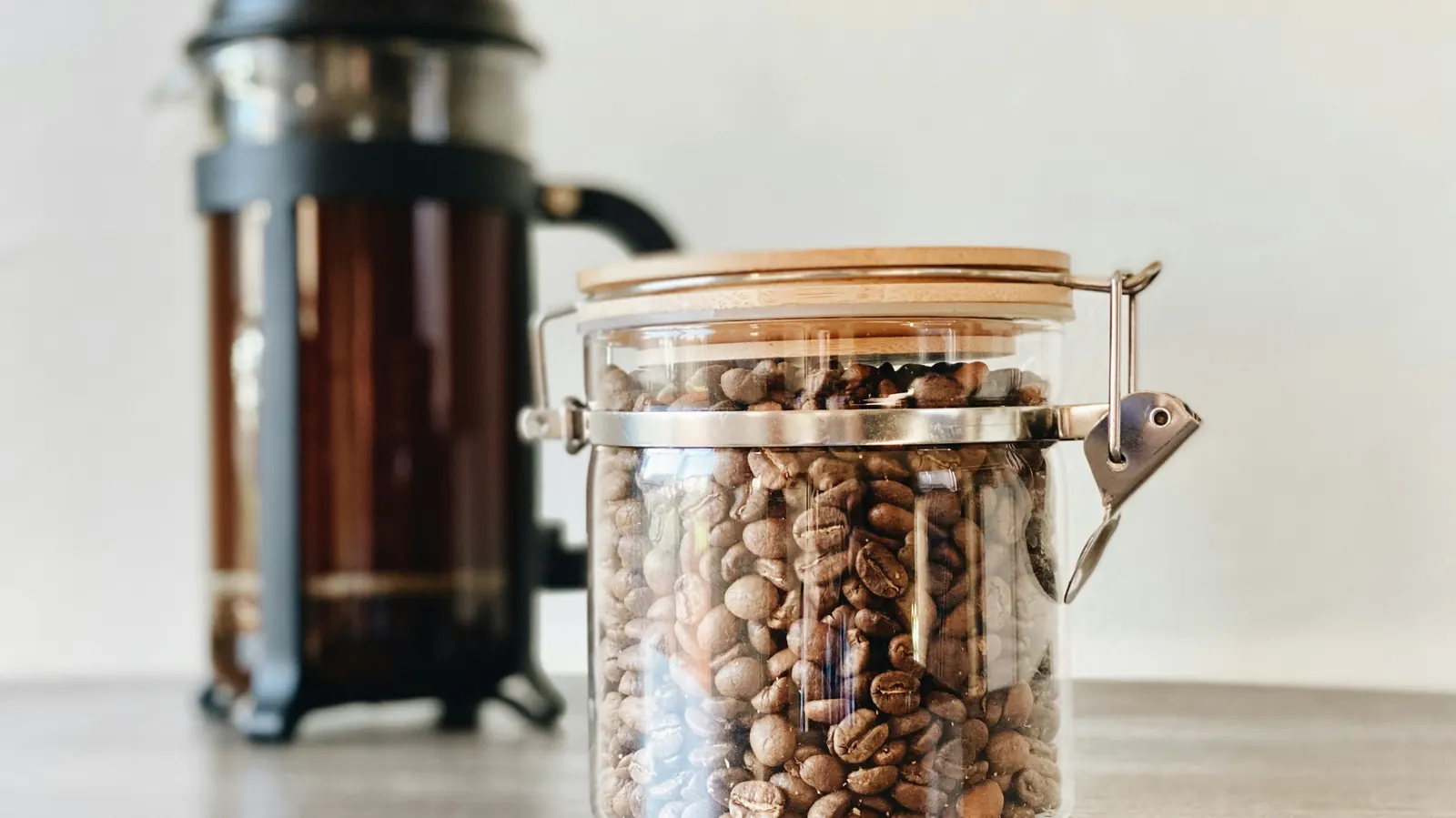
Mexico grows a lot of good coffee. Chiapas produces the most, followed by Veracruz, Puebla and Oaxaca, and Coffee Review’s tasting notes for Mexican coffees often mention chocolate and nuts. A French press suits that kind of coffee well: it steeps the grounds in the water, keeps the oils in the cup and makes a full-bodied pot with nothing more than a kettle.
Most presses look alike, but they differ in the things that matter: whether the pot keeps the coffee hot, how much grit gets through the filter, and whether the body is glass that can break. This guide sorts those differences out and names eight presses worth buying, from America’s Test Kitchen’s co-winners to a classic glass beaker and a plastic-free steel pot.
Julia’s earns a commission on purchases made through links on this page, at no cost to you. Recommendations are based on what a restaurant kitchen looks for, product specifications and verified buyer reports.
Quick verdict: which French press to buy
For most kitchens the best French press is the Bodum Columbia Thermal: double-wall steel that will not break and heat that lasts, which is why America’s Test Kitchen named it a co-winner. We link the 51-ounce size for a full table; ATK tested the 34-ounce. If you want to watch the coffee brew and will drink it right away, buy the glass 17-ounce Bodum Chambord; see the recall note below for the sizes CPSC names. For the cleanest cup, choose the Espro P7, and for a big pot with a wide top, the 48-ounce Stanley Stay-Hot.
Recall note: On October 29, 2026, the U.S. Consumer Product Safety Commission announced recall 27-055, covering about 5.9 million Bodum French presses: 8-cup and 12-cup Bistro, Brazil, Caffettiera, Chambord, Crema, Java, Jesper and Kenya models with replaceable glass carafes, sold from 1974 through October 2026. CPSC says the carafe can unexpectedly break during use if it is damaged or cracked, including by use of a metal spoon to stir the coffee, posing a risk of serious burn injuries. CPSC lists the remedy as a repair: stop using metal spoons or utensils to stir coffee in the glass carafe immediately, and contact Bodum at 888-879-8213 to receive a plastic Bodum stirring spoon and a warning label. The label reminds owners not to use cracked or damaged carafes. Those are the sizes CPSC names. The Chambord we link holds 17 ounces, which is not one of them, and the steel Bodum Columbia is not a named model and has no glass carafe. The 34-ounce Chambord is an 8-cup press. The recall covers Bodum presses only; the other brands here are not part of it.
The details below explain why the filter and the walls of the pot matter more than the brand name on the side.
Five French presses compared
Our five standout picks side by side, one for each kind of coffee drinker, with the body and filter each maker or listing states. All eight French presses are reviewed in full below.
| French press | Best for | Body | Filter | Buy on Amazon |
|---|---|---|---|---|

Bodum Columbia Thermal French Press, 51 ozBest overall
|
A full pot that sits a while | Double-wall stainless steel | Stainless steel mesh | View on Amazon |

Bodum Chambord French Press, 17 ozBest glass press
|
Coffee you drink right away | Borosilicate glass, steel frame | Stainless steel mesh | View on Amazon |

Espro P7 French Press, 32 ozCleanest cup
|
People who hate grit in the cup | Double-wall stainless steel | Dual micro-filter, paper option | View on Amazon |

Stanley Stay-Hot French Press, 48 ozBest for a crowd
|
Big batches, long mornings, camping | Vacuum-insulated stainless steel | Steel mesh | View on Amazon |
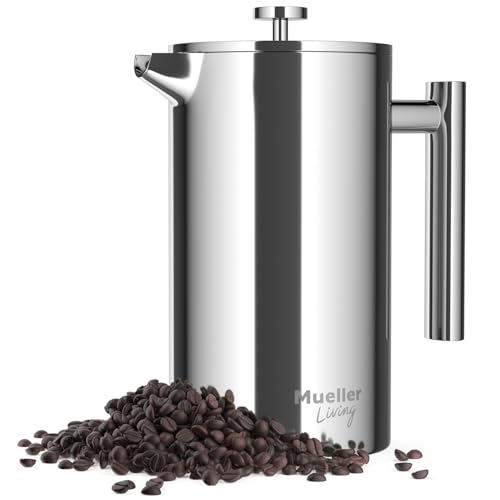
Mueller Stainless Steel French Press, 34 ozBudget steel press
|
A sturdy press on a small budget | Double-wall stainless steel | Four-level steel filtration | View on Amazon |
Product images from Amazon. Capacities and materials are as stated by each maker or listing; check the listing for the size you want.
Our picks for the best French press
These eight presses cover the real choices: glass you can see through or steel that keeps the heat, a plain mesh or a finer filter, and sizes from a two-cup pot to a 51-ounce family press. Each pick explains who it suits and one honest reason to skip it.
1. Bodum Columbia Thermal French Press, 51 oz – Hot Coffee for the Whole Table
The Columbia is the press to buy if you want one that does the whole job without fuss: brew, press, and leave the pot on the table while the second cup waits. America’s Test Kitchen named the 34-ounce Columbia a co-winner in its French press review, reporting that it holds its heat for up to an hour and that its silicone-edged plunger holds back more fine particles than a plain wire coil. We link the larger 51-ounce Columbia, which Bodum says holds enough for 12 four-ounce cups.
Bodum builds it from double-wall stainless steel, so there is no glass to crack when someone knocks it against the sink. The listing says the double wall keeps drinks hot for longer and describes Bodum’s patented safety lid, which keeps the contents from spilling. That matters on a busy morning table, where a glass press is one elbow away from a mess.
One detail to check before ordering: the 51-ounce listing describes a three-part stainless steel plunger with a mesh filter and does not mention the silicone rim ATK credited on the 34-ounce, so we cannot say the filtration is identical. For café de olla mornings or a pot of Chiapas coffee shared after a big breakfast, a steel press that stays hot is the most useful kind to own. The press is dishwasher safe, according to the listing.
Why we like it
- Named a co-winner by America’s Test Kitchen (34-ounce size)
- Double-wall stainless steel, no glass to break
- Holds 51 ounces, about 12 four-ounce cups, per Bodum
- Dishwasher safe, per the listing
Key specifications
| Press | Bodum Columbia 1312-16 |
|---|---|
| Capacity | 51 oz, 12 four-ounce cups (listing) |
| Body | Double-wall stainless steel |
| Filter type | Three-part stainless steel plunger with mesh filter (listing) |
| Dishwasher-safe | Yes (listing) |
| Insulated | Yes, double wall (listing); about an hour in ATK’s test of the 34 oz |
| Made in | Not stated |
Why we recommend it
It suits a household that brews a full pot and drinks it over an hour, and anyone who has already broken one glass press. It is the safest all-round choice here.
Skip it if you want to watch the coffee brew. The steel body hides the grounds, so you go by time rather than by eye.
Pros and cons
Pros
- Keeps coffee hot (ATK; Bodum)
- Unbreakable steel body
- Enough coffee for a full table
- Dishwasher safe
Cons
- You cannot see the brew
- Larger than one or two people need
- Heavier than glass
2. Bodum Chambord French Press, 17 oz – The Classic Glass Press
The Chambord is the press most people picture: a glass beaker in a steel frame with a round knob on top. America’s Test Kitchen lists it as its Best Buy and calls it a good, comparatively inexpensive choice, but the size ATK reviewed was the 34-ounce, an 8-cup press, and 8-cup Chambords are in the CPSC recall described at the top of this page. We link the 17-ounce Chambord in polished stainless steel, model 1924-16, which is not one of the sizes CPSC names. It is the same glass-beaker-in-a-steel-frame design in a smaller size, so it suits one or two people rather than a table. The listing says the press is dishwasher safe and made in Portugal.
Glass has one real advantage: you can see the bloom, the crust of grounds and the color of the coffee, which helps when you are learning how coarse to grind and how long to steep. It has one real weakness too. ATK found uninsulated glass presses cooled in about 30 minutes, so pour the whole pot once it is pressed instead of leaving it on the counter.
Wash it before first use, never put a glass press on the stove, and stir with a wooden or plastic spoon, not metal; the CPSC recall names a metal spoon as one way the carafe can be damaged. Spare carafes are sold separately, which is worth knowing before the first one slips.
Why we like it
- Same design as ATK’s Best Buy, in a smaller size
- Borosilicate glass lets you watch the brew
- Polished stainless steel frame, the classic Chambord look
- Dishwasher safe, per the listing
Key specifications
| Press | Bodum Chambord 1924-16 (polished stainless) |
|---|---|
| Capacity | 17 oz |
| Body | Borosilicate glass carafe in a stainless steel frame |
| Filter type | Stainless steel mesh (retailer listings) |
| Dishwasher-safe | Yes (listing) |
| Insulated | No |
| Made in | Portugal (listing) |
Why we recommend it
Buy it if you brew for one or two, drink the pot within half an hour and like seeing the coffee as it brews. It is the simplest way into French press coffee from a long-established maker.
Skip it if the press tends to sit on the table for a while, or if glass in the kitchen worries you. A steel press holds heat longer and will not break.
Pros and cons
Pros
- Classic design that has lasted
- See-through brewing
- Dishwasher safe, per the listing
- Spare carafes sold separately
Cons
- Small 17-ounce pot
- Glass can break
- Coffee cools quickly
- Basic single-mesh filter lets some fines through
3. Espro P7 French Press, 32 oz – Two Filters, Far Less Silt
If the sludge at the bottom of a French press cup is the reason you stopped using one, start here. The P7 uses Espro’s dual-layer micro-filter, which the listing says is twelve times finer than a standard mesh, and America’s Test Kitchen’s tasters described its coffee as superclean. ATK labels it the best press for a cleaner cup.
The body is double-wall stainless steel, so it holds heat better than glass and does not break. Espro also includes ten paper filters that fit the basket, for a lighter, oil-free cup closer to pour-over. The listing says the press is dishwasher safe and suitable for cold brew as well as hot coffee.
There are trade-offs. ATK rated its heat retention only fair compared with the winners and found the double basket fussy to clean, since grounds collect between the layers. Rinse it apart right after pressing rather than leaving it until later. For a darker Veracruz or Oaxaca roast where you want the body without the silt, this is the most refined press on the list.
Why we like it
- Dual micro-filter twelve times finer than standard mesh (Espro)
- ATK’s pick for a cleaner cup
- Paper filters included for an oil-free option
- Dishwasher safe (listing)
Key specifications
| Press | Espro P7, 1132C2 |
|---|---|
| Capacity | 32 oz (4 cups, per Espro) |
| Body | Double-wall stainless steel |
| Filter type | Dual-layer micro-filter; paper filters included |
| Dishwasher-safe | Yes (listing) |
| Insulated | Yes |
| Made in | Not stated |
Why we recommend it
It suits the coffee drinker who likes French press body but not the grit, and who will rinse a two-part basket after each pot.
Skip it if you want the simplest possible cleanup. ATK found the baskets fussy, and a single-mesh press rinses out faster.
Pros and cons
Pros
- Very little sediment (ATK)
- Unbreakable steel body
- Paper filter option
- Works for cold brew too
Cons
- Basket is fussy to clean (ATK)
- Heat retention only fair in ATK’s review
- Smaller than a full liter
4. Stanley Stay-Hot French Press, 48 oz – Big Batch That Stays Hot
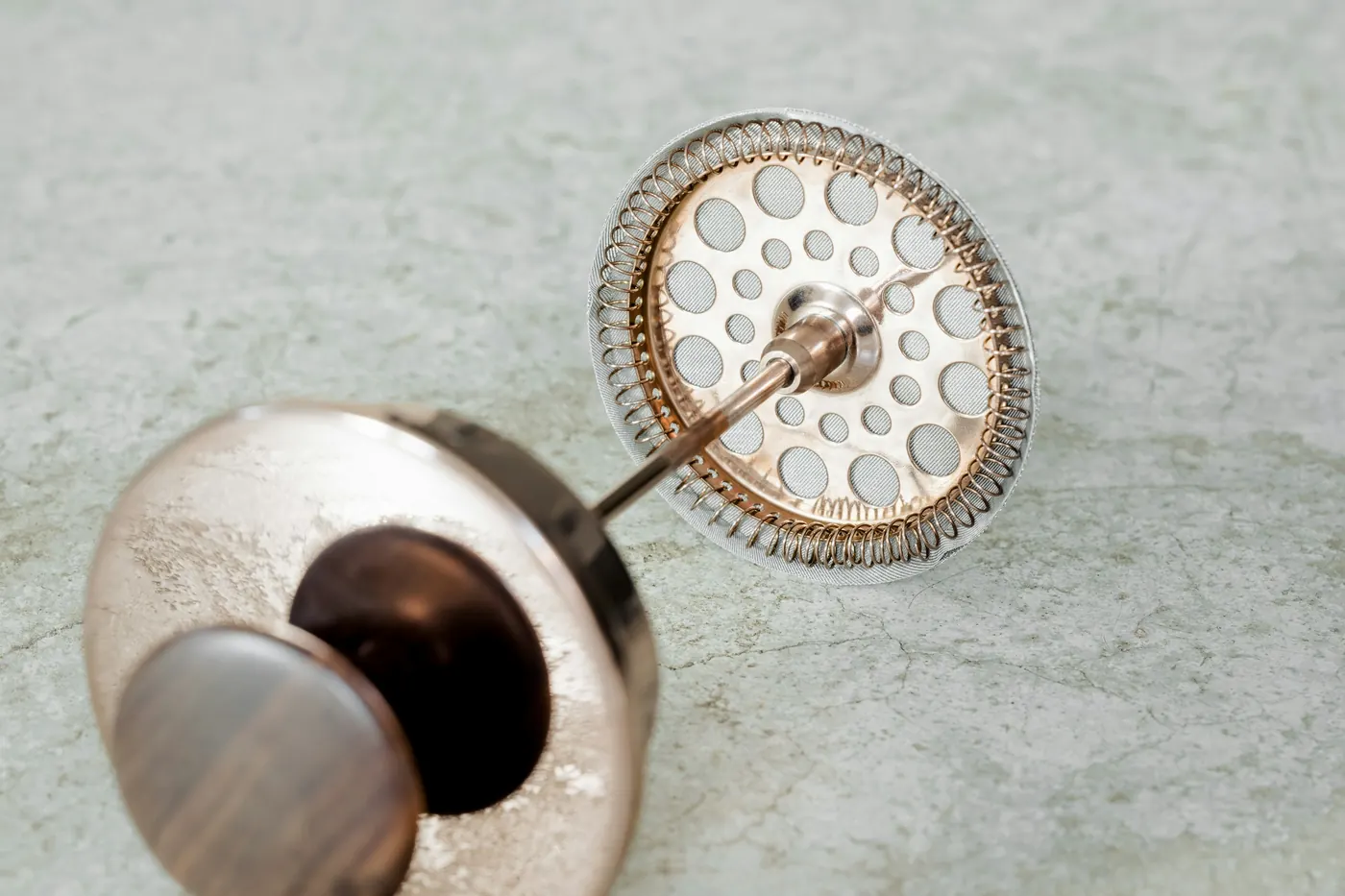
When the whole family is at the table, or the coffee is going out to the patio for a long Sunday, a 48-ounce press saves brewing twice. America’s Test Kitchen named Stanley’s 48-ounce Classic Stay Hot press a co-winner, noting that it kept coffee piping hot for over an hour and has a wide top opening and an arrow that marks the pour direction.
Stanley’s listing describes double-wall, vacuum-insulated 18/8 stainless steel and says it keeps drinks hot for up to four hours and cold for up to nine. Every piece is dishwasher safe, according to Stanley, and it carries a lifetime warranty. The maker recommends a medium-coarse grind and about five minutes of brewing before you press.
It is big and heavy compared with a 34-ounce press, so it is not the one for a single morning cup. But for a pot of café de olla-style coffee with piloncillo and cinnamon stirred in after pressing, or iced coffee for a hot afternoon, the size and the heat retention are what you are paying for.
Why we like it
- ATK co-winner, hot for over an hour in its review
- 48 oz, the largest press here
- Every piece dishwasher safe (Stanley)
- Lifetime warranty (listing)
Key specifications
| Press | Stanley Stay-Hot French Press |
|---|---|
| Capacity | 48 oz |
| Body | Vacuum-insulated 18/8 stainless steel |
| Filter type | Steel mesh plunger |
| Dishwasher-safe | Yes, every piece (listing) |
| Insulated | Yes; up to 4 hours hot, 9 cold (listing) |
| Made in | Not stated |
Why we recommend it
Buy it for households that brew for four or more, or for anyone who wants a press that also goes camping. It is the easiest way to keep a large pot hot.
Skip it if you usually brew for one or two. A big press used half-full wastes its size, and it takes up more cupboard space.
Pros and cons
Pros
- Large capacity
- Excellent heat retention (ATK; Stanley)
- Dishwasher safe
- Lifetime warranty
Cons
- Bulky for small batches
- Single mesh lets some fines through
- Opaque body
5. Mueller Stainless Steel French Press, 34 oz – Steel Body at a Low Cost
A steel press does not have to be expensive. America’s Test Kitchen highly recommends the Mueller 34-ounce press, saying this inexpensive steel press performed well. It is double-walled stainless steel, so it shares the main advantages of the pricier picks: no glass to break and better heat retention than an uninsulated beaker.
Mueller’s filter stack has four parts, according to the listing: a coiled filter, two stainless steel screens and a metal cross plate. The listing says the press is dishwasher safe and the plunger comes apart for hand washing, and it recommends cleaning the plunger after every use, which is good advice for any press. A chart in the manual helps set the coffee strength.
It is a plain, practical press. If you want to try French press coffee with a bag of Chiapas beans before deciding whether it suits you, or you need a second press for the office, this is the sensible place to start.
Why we like it
- Highly recommended by America’s Test Kitchen
- Double-wall stainless steel
- Four-part filter stack (listing)
- Dishwasher safe (listing)
Key specifications
| Press | Mueller MU-SSHYDPRESS |
|---|---|
| Capacity | 34 oz |
| Body | Double-wall stainless steel |
| Filter type | Coiled filter, two steel screens, cross plate |
| Dishwasher-safe | Yes (listing) |
| Insulated | Yes (double-walled) |
| Made in | Not stated |
Why we recommend it
It suits a first-time French press buyer, a dorm or an office, and anyone who wants steel durability without paying for a brand name.
Skip it if you want the cleanest possible cup. A multi-screen stack still lets more fines through than Espro’s micro-filter.
Pros and cons
Pros
- Good results at a low cost (ATK)
- Unbreakable body
- Dishwasher safe
- Plunger comes apart
Cons
- Warranty length not stated
- More parts to take apart
- Plain finish
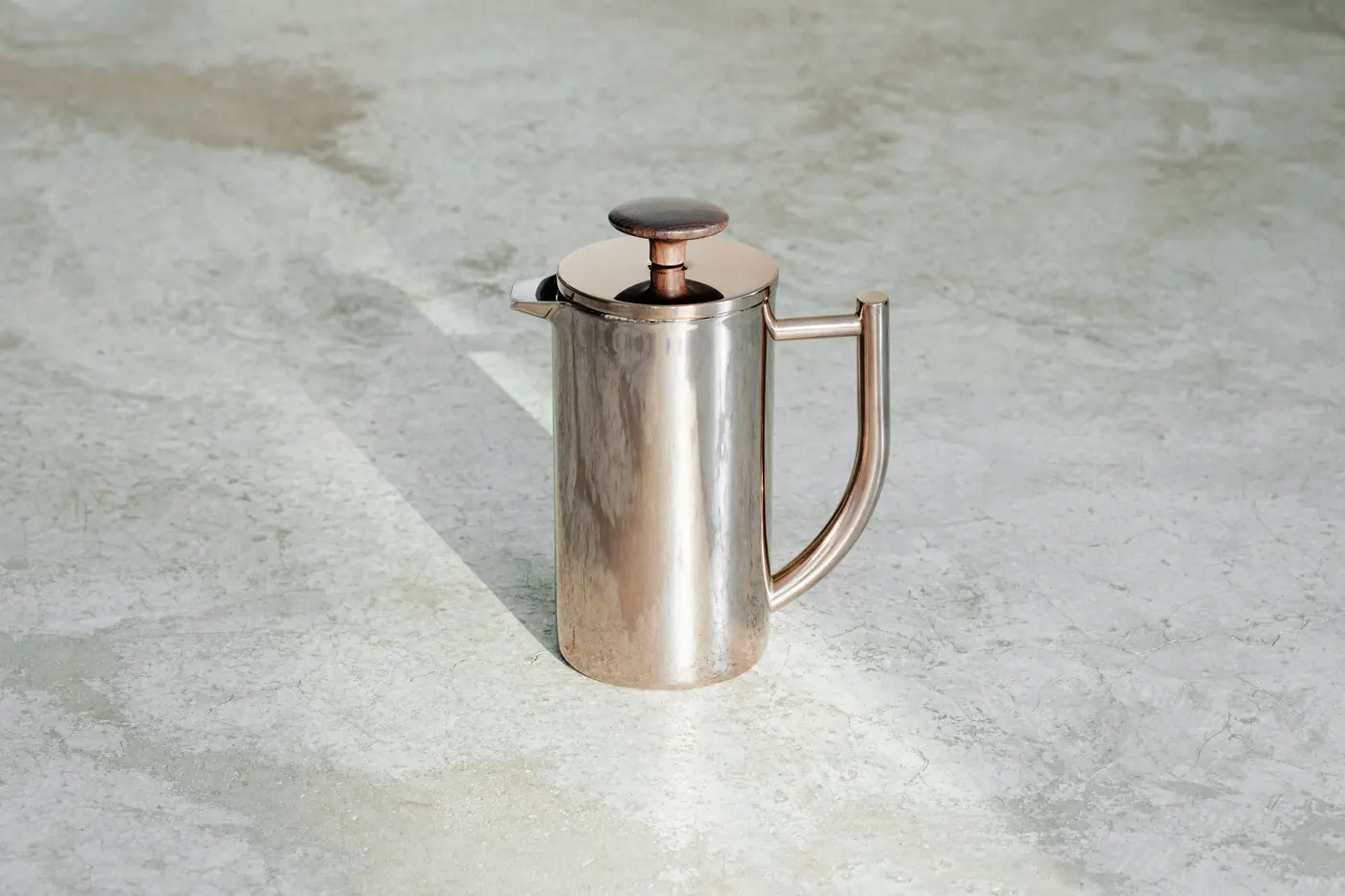
6. Frieling Double-Walled Stainless French Press, 36 oz – All-Steel, Built to Last
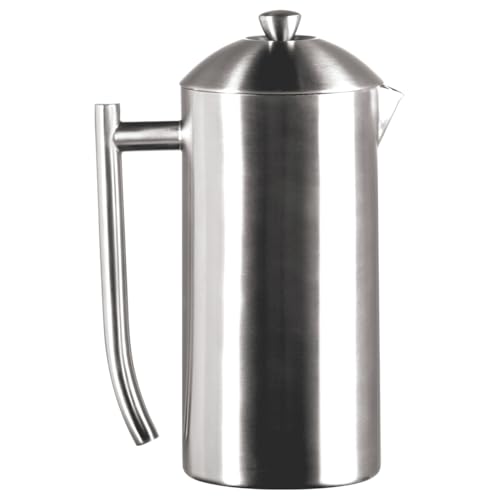
Frieling’s double-walled press is the polished, all-steel option: no plastic touches the coffee, according to the listing, and the body is brushed stainless steel with a dual screen filter. Frieling says it holds heat longer than a glass press and is dishwasher safe, and the listing gives a one-year warranty.
The listing’s brewing guide is a useful starting point for any press: two tablespoons of ground coffee per cup, water just below boiling, stir, cover and press after four minutes. In a glass carafe, stir with a wooden or plastic spoon, as explained in our brewing steps below. Weigh the coffee if you can; our guide to the best kitchen scale covers scales that read in grams.
One caveat from America’s Test Kitchen, which reviewed a Frieling double-wall model from the maker’s colored range: its lid only partially covers the spout, so the coffee cools faster than in a fully closed press. ATK recommended that model with reservations, so treat this one as a durable, good-looking press rather than the best at keeping coffee hot.
Why we like it
- All-steel construction, no plastic touching the coffee (listing)
- Dual screen filter
- Dishwasher safe (listing)
- 36 oz capacity
Key specifications
| Press | Frieling 144 |
|---|---|
| Capacity | 36 oz (1 liter) |
| Body | Double-wall brushed stainless steel |
| Filter type | Dual screen filter |
| Dishwasher-safe | Yes (listing) |
| Insulated | Yes |
| Made in | Not stated |
Why we recommend it
It suits someone who wants a press that will look good and last for years, and who prefers no plastic parts in contact with the coffee.
Skip it if heat retention is your top priority. ATK found a Frieling model’s partly open spout let heat escape.
Pros and cons
Pros
- Durable all-steel build
- No plastic touching the coffee
- Dishwasher safe
- Useful brewing guide in the listing
Cons
- Partly open spout cools coffee faster (ATK, on a related model)
- One-year warranty
- Heavier than glass
7. SterlingPro Stainless Steel French Press, 34 oz – Plastic-Free Steel Press

SterlingPro sells its press as a plastic-free coffee maker: double-walled 18/10 stainless steel throughout, with a dual-filter system that the listing says helps reduce sediment, and a cool-touch handle. It brews up to a liter, or about four mugs.
That makes it a close alternative to the Frieling for anyone avoiding plastic, usually at a lower cost. SterlingPro also sells 51-ounce and 64-ounce versions for bigger households. We did not find an independent review of this press from a source we could read, so the details here come from the maker’s listing.
The Amazon listing does not state whether it is dishwasher safe, so hand-wash it until you have checked the instructions that come in the box.
Why we like it
- 18/10 stainless steel, plastic-free (listing)
- Dual filter to reduce sediment (listing)
- Larger sizes available
- Cool-touch handle
Key specifications
| Press | SterlingPro SSFP |
|---|---|
| Capacity | 34 oz (about 4 mugs) |
| Body | Double-wall 18/10 stainless steel |
| Filter type | Dual filter |
| Dishwasher-safe | Not stated |
| Insulated | Yes |
| Made in | Not stated |
Why we recommend it
Buy it if a plastic-free, insulated press matters to you and you want room to size up later.
Skip it if you want a press with an independent review behind it; the Columbia and the Mueller both have one from ATK.
Pros and cons
Pros
- No plastic touching the coffee (listing)
- Insulated steel body
- Several sizes
Cons
- No independent review we could read
- Dishwasher guidance not stated
- Mirror finish shows fingerprints
8. Fellow Clara French Press, 24 oz – Thoughtful Details, Small Batch
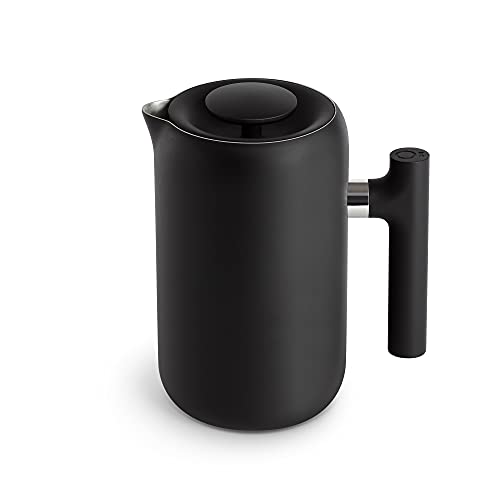
Fellow’s Clara is the most design-minded press here. The listing describes coffee and water fill lines marked inside the carafe, an all-directional pour lid that does not need lining up with a spout, an agitation stick for stirring and a non-stick interior. The body is insulated stainless steel and the carafe holds 24 ounces.
Fellow says its Enhanced Filtration Mesh gives a clean cup without sludge or silt. America’s Test Kitchen was less impressed: it recommended the Clara with reservations, saying it made acceptable coffee and that the non-stick interior was no easier to clean in its review.
It is a good fit for one or two people who like well-made gear and a small pot, but it is not the best value for the coffee alone.
Why we like it
- Fill lines inside the carafe (listing)
- Pour lid works from any direction
- Insulated stainless steel body
- Agitation stick included
Key specifications
| Press | Fellow Clara 502030103 |
|---|---|
| Capacity | 24 oz |
| Body | Insulated stainless steel, non-stick interior |
| Filter type | Enhanced Filtration Mesh |
| Dishwasher-safe | Not stated |
| Insulated | Yes (listing) |
| Made in | Not stated |
Why we recommend it
It suits someone brewing for one or two who values careful design details and a press that looks good on the counter.
Skip it if value matters most. ATK rated it below cheaper steel presses for the coffee it made.
Pros and cons
Pros
- Clever, well-thought-out details
- Insulated
- Easy measuring with interior lines
Cons
- Recommended only with reservations by ATK
- Smaller capacity
- Dishwasher guidance not stated
How to choose a French press for your kitchen
Five things decide whether a press suits you. Looks come last.
1. Glass or steel
Glass lets you watch the coffee, and borosilicate glass handles boiling water well, but it can crack if it is knocked or forced. America’s Test Kitchen found that uninsulated glass presses cooled in about 30 minutes, while insulated pots kept coffee drinkable for about an hour. If the pot sits on the table through breakfast, choose double-wall steel. If you pour it all at once, glass is fine.
2. The filter
A standard wire mesh lets oils and fine particles through, which gives French press coffee its body and also its sludge. Silicone-edged plungers, like the one ATK found on the 34-ounce Columbia, and multi-layer micro-filters, like Espro’s, hold back more of the fines. ATK notes that its tasters were split on whether that cleaner cup is better, so this is a matter of taste rather than right and wrong.
3. Size
Press sizes are often given in small “cups”: SterlingPro, for example, says its 34-ounce press makes up to eight cups or four mugs. A 34-ounce press is the common family size. Choose the 48-ounce Stanley or the 51-ounce Columbia if you regularly brew for four or more, and a smaller press if you mostly brew for one; a press works best when it is filled to its line.
4. The lid and spout
A spout that closes keeps heat in. ATK marked down presses with open spouts or lid slots, both because heat escapes and because hot coffee can slosh out near your hand. Wide openings make it easier to pour in water and scoop out the grounds.
5. Cleaning
Every press needs the plunger taken apart now and then, because grounds lodge between the screens. Single-mesh plungers rinse quickly; double baskets take longer. Check whether the maker says the press is dishwasher safe, and never pour spent grounds down the sink drain; tip them into the trash or compost, and use a fine-mesh strainer to catch what is left in the rinse water.
How we picked these eight presses
We started with what a Mexican kitchen asks of a coffee pot: a full-bodied cup from medium and dark roasts, enough coffee for a table, and a pot that survives daily use. We then narrowed the field to presses sold on Amazon in the United States and in stock when we checked, from makers who publish their materials and filter design. We used America’s Test Kitchen’s French press review for how the presses performed; where we cite heat retention or sediment, those are ATK’s findings or the maker’s own claims, and we say which. We have not brewed with every press on this list. We left out a Le Creuset stoneware press because we could not find a statement from the maker that its glaze is lead-free, and we left out near-identical steel presses from sellers who publish little about them. Secura’s stainless steel press is a reasonable alternative to the Mueller if it is unavailable. If you look at other glass Bodum presses, check the size against the recall note at the top of this page first.
How to brew good French press coffee
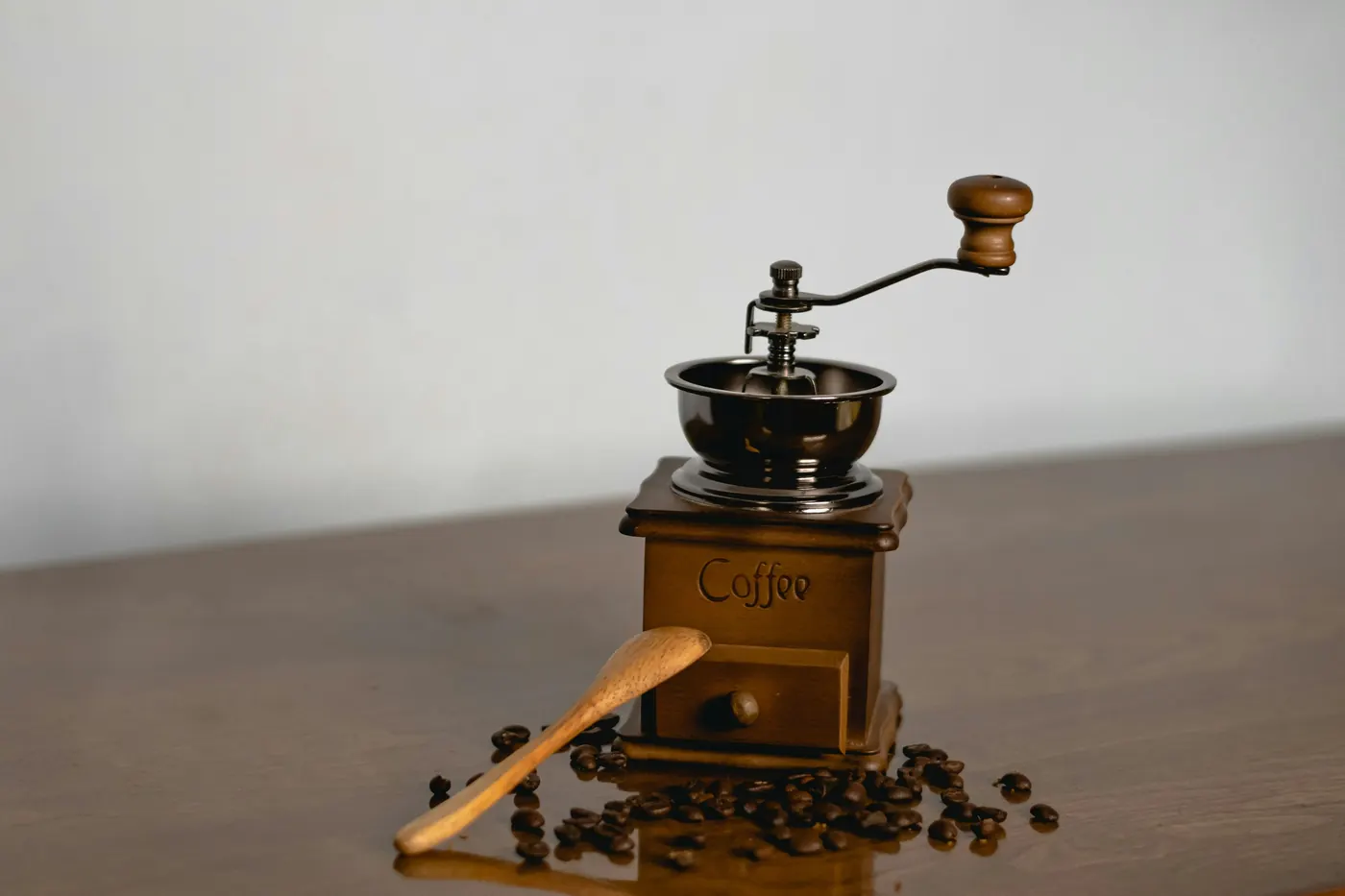
- Grind coarse. Stanley recommends a medium-coarse grind; a coarse, even grind keeps fines out of the cup and lets the plunger move freely. Coffee ground for drip machines is finer than a press needs.
- Measure. Frieling suggests two tablespoons of ground coffee per cup. Once you find a strength you like, weigh it so you can repeat it.
- Use water just off the boil. Let the kettle rest a moment after boiling, then pour over the grounds and stir. In a glass carafe, use a wooden or plastic spoon, not metal: CPSC’s Bodum recall says a carafe can break during use if it is damaged or cracked, including by use of a metal spoon to stir the coffee.
- Steep about four minutes. Stir or break the crust of grounds before pressing, as ATK recommends, with the same wooden or plastic spoon if the carafe is glass, then press slowly and evenly. Forcing the plunger can spill coffee or crack a glass beaker.
- Pour it all. Coffee left in the press keeps steeping on the grounds below the filter, so pour it into cups or a thermal carafe straight away.
For café de olla, the spiced coffee traditionally made in a clay pot with piloncillo and cinnamon, you can steep a stick of cinnamon with the grounds and stir piloncillo syrup into the pressed coffee in your mug. It is not the same as the olla, but it is close on a weekday morning. On hot days, pour pressed coffee over a tray of coffee ice cubes so it does not water down; our guide to the best ice cube trays covers trays with lids that keep freezer smells out.
French press questions, answered
What is the best kind of French press: glass or stainless steel?
Stainless steel for most homes, because it keeps coffee hot and cannot shatter. Glass is fine if you drink the pot right away and like watching the brew. ATK’s two co-winners are both insulated steel presses, and its Best Buy is the glass Chambord in the 34-ounce size, an 8-cup press covered by the CPSC recall noted at the top of this page.
Which French press makes coffee with the least sediment?
The Espro P7, with its dual-layer micro-filter, followed by presses with a silicone-edged plunger such as the 34-ounce Bodum Columbia ATK tested. A coarse, even grind matters as much as the filter.
What do reviewers like Wirecutter, Serious Eats and America’s Test Kitchen recommend?
We read America’s Test Kitchen’s review, which names the Stanley 48-ounce and the Bodum Columbia as co-winners, the 34-ounce Bodum Chambord as its Best Buy (an 8-cup press, now in the CPSC recall noted at the top of this page) and the Espro P7 as best for a cleaner cup. We were not able to read the current Wirecutter and Serious Eats guides, so we do not quote them.
Is the Bodum Chambord recalled?
CPSC recall 27-055, announced October 29, 2026, covers 8-cup and 12-cup Chambord models with replaceable glass carafes, among other named Bodum models. The 17-ounce Chambord on this page is not one of the sizes CPSC names. If you own a covered press, stop stirring with metal and contact Bodum at 888-879-8213 for the plastic stirring spoon and warning label.
Is a French press good for everyday use?
Yes. It needs only hot water, has no paper filters to buy and few parts to wear out. The daily work is rinsing the plunger and emptying the grounds, which takes a minute.
Can you make cold brew in a French press?
Yes. Espro and Stanley both say their presses work for cold coffee. Steep coarse grounds in cold water in the refrigerator, then press and pour off the coffee. Keep it chilled and follow the maker’s instructions for how long to keep it.
Our final word on French presses
Buy the Bodum Columbia if you want one press that keeps coffee hot, serves the whole table and cannot break. Choose the 17-ounce Bodum Chambord if you like glass and drink the pot straight away, the Espro P7 if sediment is what puts you off, and the Stanley if you brew for a crowd. Whichever you choose, grind coarse, steep about four minutes and pour it all once it is pressed.
A French press pot also makes a fine vessel for Mexican hot chocolate when the coffee is done; see our guide to the best Mexican hot chocolate for the tablets worth buying, and our page on what to drink with Mexican food for what to pour alongside dinner.
More coffee gear we’ve covered: coffee makers, coffee grinders, espresso machines, single-serve coffee makers, pour-over drippers, cold brew makers, milk frothers, coffee mugs, espresso grinders, travel mugs.
On a budget? See our guide to the best value French presses.
Want the body without the grit? See our guide to French press alternatives.
Related guide: French press vs pour over.
And if you would rather someone else made breakfast, see the menu or call to order.