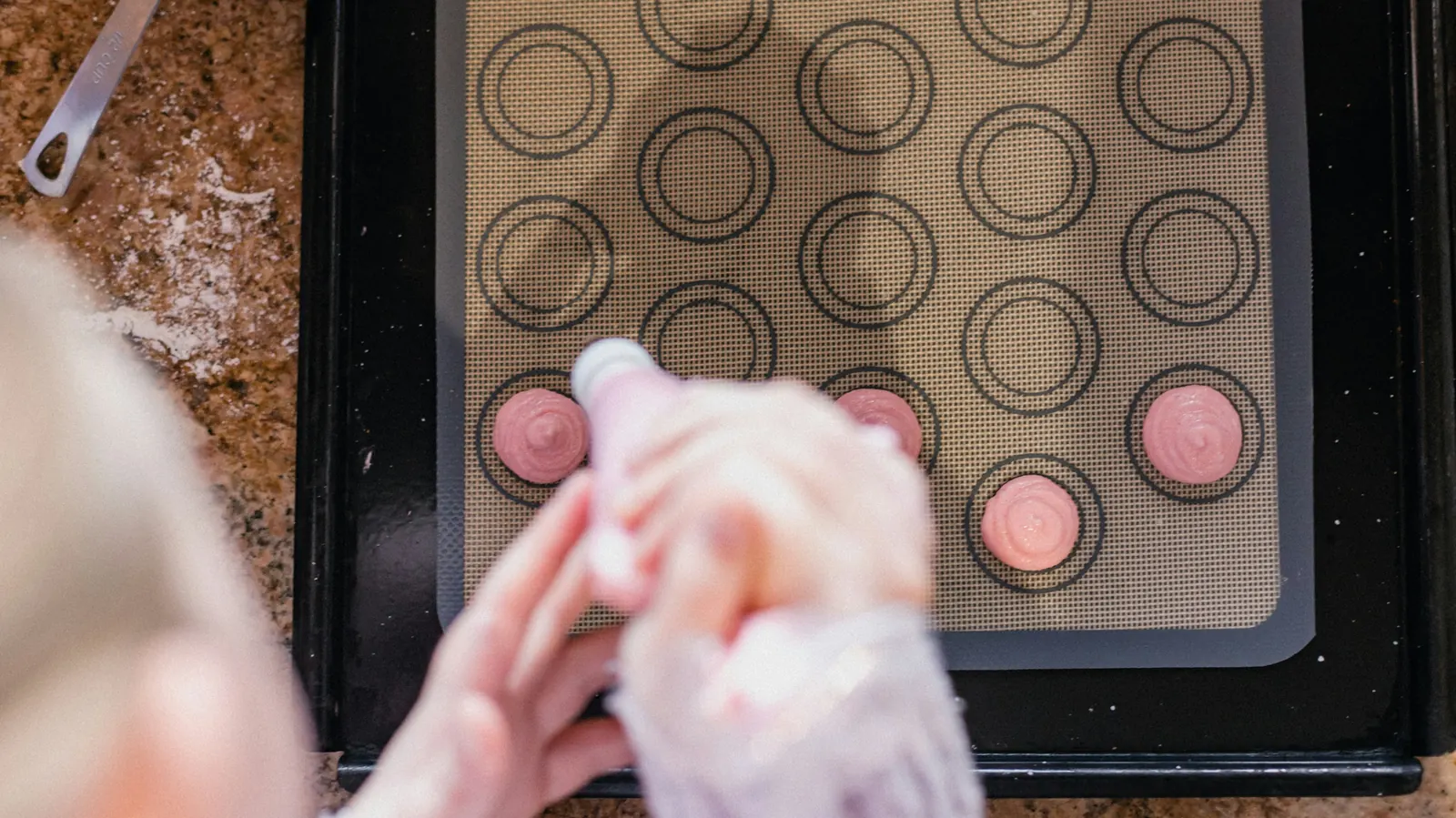
Parchment paper is cheap and useful, but it runs out at the worst moment, curls off the pan, and goes in the trash after a bake or two. Plenty of cooks would rather stop buying it, and some just need to know what to reach for tonight when the box is empty.
This guide covers what actually works in its place: reusable silicone mats, pans that release on their own, a greased pan, and non-stick foil for the jobs that need a disposable sheet. It also covers the one swap that does not work, wax paper in a hot oven, and says plainly what each alternative cannot do that parchment can.
Julia’s earns a commission on purchases made through links on this page, at no cost to you. Recommendations are based on what a restaurant kitchen looks for, product specifications and verified buyer reports.
Why people look beyond parchment
- Waste and repeat buying. Parchment is single-use or close to it; a mat or a nonstick pan is bought once.
- Curling and sliding. Rolled parchment wants to roll back up, and a sheet weighing a few grams slides when you pipe or spread a batter. ATK’s silicone mat review weighed mats at 107 to 117 grams against about 4 grams for parchment, which is why mats stay put.
- Heat. Reynolds says its parchment handles temperatures up to 425°F. Many silicone mats are rated to 480°F or 500°F, and Reynolds rates its foil far higher.
- Running out. Sometimes the question is simply what to use right now.
Quick verdict: the best parchment paper alternative
For most kitchens the best parchment paper alternative is a silicone baking mat, such as King Arthur’s half sheet cookie mat: it is rated to 500°F, goes in the dishwasher and replaces parchment for cookies, rolls and roasting. For small pans, KitchenAid’s 9 by 14-inch mat fits where a half-sheet mat will not. If you would rather use no liner at all and bake at 400°F or below, a nonstick sheet pan such as Nordic Ware’s Brilliant set does the job. Keep non-stick foil for packets, slings and sticky toppings, not delicate cookies. Do not put wax paper in a hot oven on its own.
Five parchment swaps side by side
Our five standout picks, one per kind of job, with what each maker or listing states. All six alternatives are reviewed in full below.
| Alternative | Best for | Type and heat | Main limit | Buy on Amazon |
|---|---|---|---|---|

King Arthur Silicone Cookie Mat, Half SheetBest overall
|
Cookies and rolls on half sheets | Reusable silicone mat, 500°F | Not to be cut | View on Amazon |
KitchenAid Silicone Medium Baking Mat, 9 x 14 inBest for smaller pans
|
Small and quarter-size pans | Reusable silicone mat, 500°F | Fixed 9 x 14 in | View on Amazon |

Nordic Ware Brilliant 3-Piece Nonstick Baking SetBest nonstick pans
|
No liner at all, up to 400°F | Nonstick aluminum pans | 400°F limit | View on Amazon |

Wilton Silver Non-Stick Baking Sheet, 15.25 x 10.25 inBest single nonstick sheet
|
One light-colored cookie sheet | Nonstick steel sheet | Oven limit not stated | View on Amazon |

Reynolds Wrap Non-Stick Aluminum Foil, 3 x 50 sq ftBest disposable
|
Packets, slings, sticky tops | Disposable non-stick foil | Runs hot under cookies | View on Amazon |
What each swap can and cannot do
Parchment does four things: it stops sticking, it keeps the pan clean, it can be cut or folded to any shape, and it lifts a whole bake out of a pan. No single alternative does all four, so it helps to know which one you are replacing.
Silicone mats: the everyday replacement
A mat handles the first two jobs on a sheet pan, for years. America’s Test Kitchen’s review of silicone baking mats (Miye Bromberg and Sarah Sandler) found the best mats browned food well and stayed put under clingy batters, but also that mats which can only be hand washed built up grease and odors over time, so a dishwasher-safe mat is worth choosing. What a mat cannot do is change shape: you cannot cut it to line a cake pan, and you cannot fold it into a packet.
A greased pan, or no liner at all
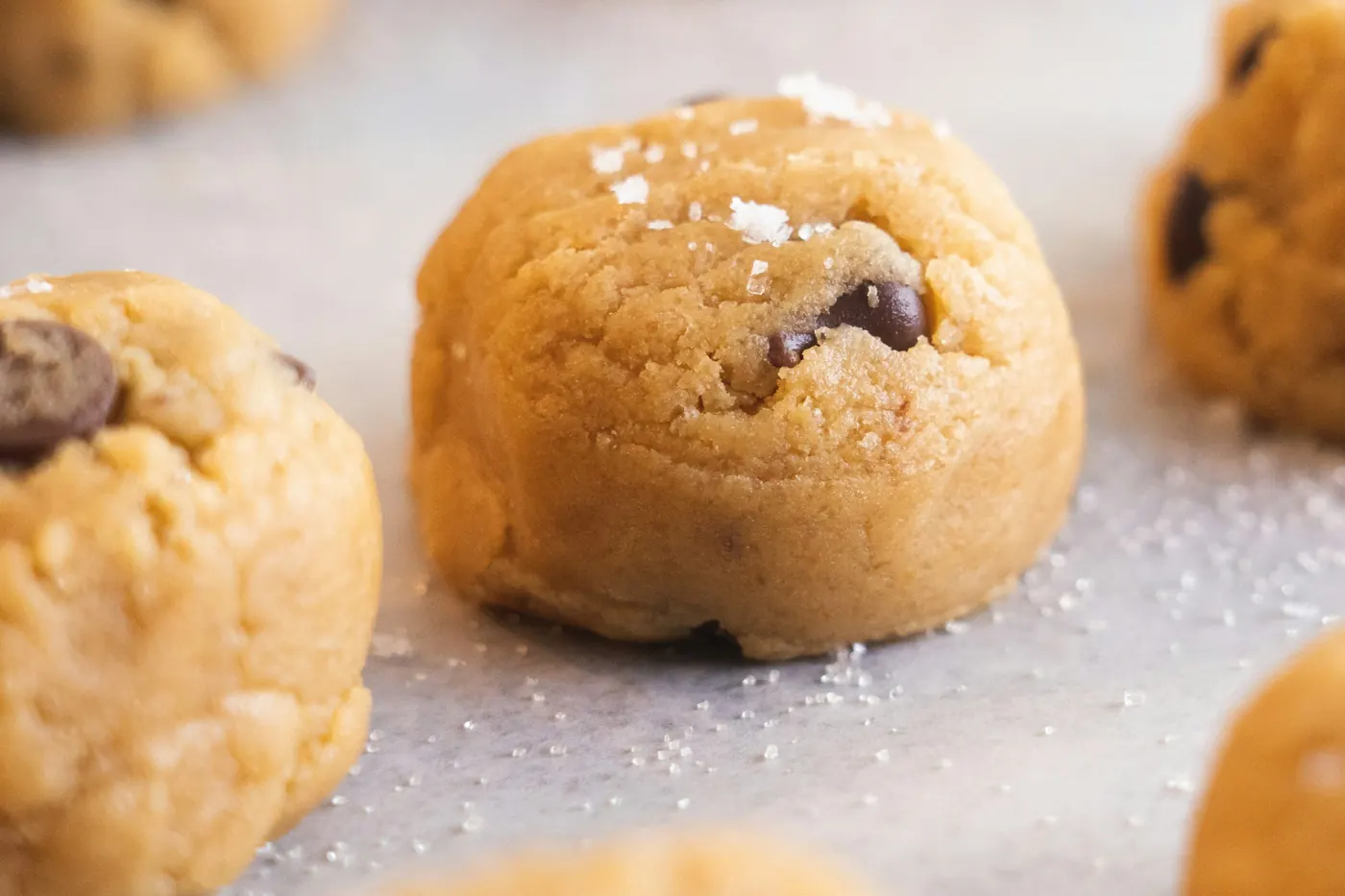
Before parchment was everywhere, bakers greased their pans, and for cakes, greasing and flouring the pan still works in place of a parchment round. For cookies, results vary. In a King Arthur Baking blog test, Jesse Szewczyk baked the same dough on several surfaces: cookies on a greased pan spread well but their edges burnt and “fried” in the fat, while cookies on an ungreased pan spread into even disks, with some sticking. If your recipe is rich in butter, an ungreased light-colored pan is often enough.
A nonstick pan takes that further, but its color matters. King Arthur’s guide to baking pans advises against dark nonstick cookie sheets unless the coating is no darker than light gray, and suggests lowering the oven 25°F if a dark sheet burns cookie bottoms.
Aluminum foil: useful, but not for every bake
Foil can be torn, folded and shaped, so it covers the jobs a mat cannot: a packet of fish, a sling to lift out bar cookies, a cover for a cheesy casserole. Its weakness is cookies. Reynolds, which makes both foil and parchment, says that substituting parchment for foil when baking cookies helps avoid burnt bottoms. For anything sticky, use non-stick foil with the dull side toward the food, as Reynolds directs, or grease regular foil.
Wax paper: not in a hot oven
Wax paper looks like parchment but is coated with wax, not silicone. Reynolds, which makes both, says it does not recommend exposing wax paper directly to oven heat. Its one exception is as a pan liner where the dough or batter completely covers the paper, such as the bottom of a cake pan. Never use it for cookies, roasting or anything where bare paper meets hot air. For the jobs wax paper is good at, see our best wax paper guide.
The jobs that still need parchment
Some jobs have no good substitute: cooking fish en papillote in a paper packet, lining the sides of a tall cake, or rolling sticky dough between two sheets. A box of parchment lasts a long time if you save it for those. Our guide to the best parchment paper covers which to buy.
Our picks for the best parchment paper alternative
1. King Arthur Silicone Cookie Mat, Half Sheet – Reusable Liner With Spacing Guides
A silicone baking mat is the alternative most bakers mean when they say they have stopped buying parchment, and King Arthur’s is a good one to start with. It is food-grade silicone reinforced with glass fibers, 16.5 by 11.5 inches to fit a half sheet pan, rated to 500°F and dishwasher safe, per the listing. King Arthur describes it as a reusable alternative to parchment paper.
The printed dots are its party trick: small, medium and large circles show where to set 1-teaspoon, 1-tablespoon and 3-tablespoon scoops of dough so cookies bake without touching, and border guides help roll a sheet of dough up to 11 by 16 inches. The guides are printed in, so they will not wear off, according to the maker.
A mat does change how some cookies bake. America’s Test Kitchen’s silicone mat review found melted-butter chocolate chip cookies about a quarter inch wider on a mat than on parchment, while a King Arthur blog test by Jesse Szewczyk found cookies on a mat spread the least. Our reading: try your usual recipe once on the mat before a big batch. Do not cut on it or use it over direct flame, King Arthur says.
Why we like it
- Rated to 500°F, above the 425°F Reynolds gives for parchment
- Fits a standard half sheet pan
- Dishwasher safe, which ATK found keeps mats cleaner
- Printed guides for spacing cookies and rolling dough
Key specifications
| Model | 22058KAF |
|---|---|
| Material | Silicone reinforced with glass fibers |
| Size | 16.5 x 11.5 in |
| Count | 1 mat |
| Oven limit | 500°F |
| Dishwasher safe | Yes |
| Cut to shape | No, do not cut |
| Made in | Not stated |
Why we recommend it
Choose this if you bake cookies, rolls or roasted vegetables on half sheet pans most weeks and want one liner that replaces a box of parchment.
Skip it if you need a liner you can trim to fit a cake pan or fold into a packet; a mat is one fixed size.
Pros and cons
Pros
- From a well-known baking company
- High heat rating
- Useful dough guides
Cons
- Lead offer came from a third-party seller (Cooking on Mars)
- Can change cookie spread
- Mats hold onto grease and odors over time, ATK notes
2. KitchenAid Silicone Medium Baking Mat, 9 x 14 in – A Smaller Mat for Smaller Pans
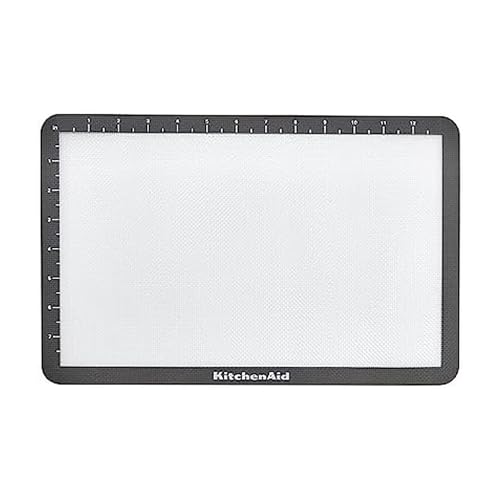
Not every pan is a half sheet. KitchenAid’s medium mat is 9 by 14 inches, sized to sit snugly in a KitchenAid baking sheet, and suits the smaller sheet pans that fit a toaster oven or a narrow home oven. The listing says it is nonstick, heat resistant to 500°F and dishwasher safe, and KitchenAid pitches it for use in place of parchment paper or foil.
Like any mat, it is a flat liner. It does the everyday parchment jobs on a sheet pan, such as cookies, biscuits, roasted vegetables and reheating, and it saves you fighting a curling roll of paper on a small tray. It will not line the sides of a cake pan or make a fish packet.
Measure your pan before you buy: a mat that is too big for the pan will ride up the sides. As general kitchen sense, always set a mat on a pan rather than straight on the oven rack.
Why we like it
- Heat resistant to 500°F, per the listing
- Dishwasher safe
- Sized for smaller sheet pans
- Sold by Amazon.com
Key specifications
| Model | KQ413OHCGA |
|---|---|
| Material | Silicone |
| Size | 9 x 14 in |
| Count | 1 mat |
| Oven limit | 500°F |
| Dishwasher safe | Yes |
| Cut to shape | Not stated |
| Made in | Not stated |
Why we recommend it
Choose this if your everyday pan is a small or quarter-size sheet and a half-sheet mat would not lie flat.
Skip it if you bake on full half sheets; a 9 by 14-inch mat leaves bare pan around the edges.
Pros and cons
Pros
- Right size for small pans
- Simple care
- Familiar maker
Cons
- Listing gives little detail on construction
- Too small for a half sheet
- Fixed size, cannot be trimmed
3. MMmat Half Sheet Silicone Baking Mats, Set of 2 – Two Mats for Two Pans

If you bake two trays at a time, you need two liners. MMmat sells its half sheet mats in pairs, each 11.6 by 16.5 inches and 0.75 mm thick, which the listing says is thicker than most mats. It is rated to 500°F, dishwasher safe and also freezer safe.
MMmat says it uses WACKER silicone from Germany and calls the mats food grade, BPA free and PFOA free; it also says plainly that the mats are not made in Germany, which we appreciate. Those are the seller’s own statements and we have not seen independent confirmation. MMmat is an Amazon-first brand with little information beyond the listing, which is why it is not our top pick.
Use them as you would any mat: on a pan, never alone on the oven rack, and without cutting on them.
Why we like it
- Two half sheet mats in one pack
- Rated to 500°F
- Dishwasher and freezer safe, per the listing
- Honest about country of manufacture
Key specifications
| Model | Silicone Baking Mats (half sheet) |
|---|---|
| Material | Silicone (WACKER, per seller) |
| Size | 11.6 x 16.5 in |
| Count | 2 mats |
| Oven limit | 500°F |
| Dishwasher safe | Yes |
| Cut to shape | Not stated |
| Made in | Not stated (not Germany) |
Why we recommend it
Choose these if you bake two sheets of cookies or rolls at once and want matching liners for both.
Skip them if you prefer a maker with a longer track record; King Arthur’s mat costs more per mat but comes from a known baking company.
Pros and cons
Pros
- Two mats
- High heat rating
- Thick for a mat
Cons
- Amazon-first brand
- Material claims are the seller’s own
- Fixed size
4. Nordic Ware Brilliant 3-Piece Nonstick Baking Set – Pans That Need No Liner
The other way to skip parchment is to bake on a pan that releases on its own. Nordic Ware’s Brilliant set is three aluminum sheet pans, a half, a quarter and an eighth sheet, with a nonstick surface the maker says is enhanced with silicone and made without PFAS or PTFE. A steel rim is meant to stop warping, and the pans are made in America of domestic and imported materials.
Read the heat limit before you commit: Nordic Ware rates these pans to 400°F. That is fine for most cookies, cakes and sheet-pan dinners, but lower than the 425°F Reynolds gives for its parchment and well below the 500°F many mats claim. For a 450°F roast, a mat on a bare pan is the better choice.
Nonstick coatings in general do not like knives or metal spatulas, and King Arthur Baking warns that cutting baked goods in a nonstick pan can scratch the coating. Lift bars and cookies out first.
Why we like it
- Nonstick made without PFAS or PTFE, per Nordic Ware
- Three useful sizes, half to eighth sheet
- Steel rim to resist warping, per Nordic Ware
- Made in the USA, per the maker
Key specifications
| Model | 13243AMZ |
|---|---|
| Material | Aluminum, silicone-enhanced nonstick |
| Size | Half, quarter and eighth sheet |
| Count | 3 pans |
| Oven limit | 400°F |
| Dishwasher safe | Not stated |
| Cut to shape | Not applicable |
| Made in | USA (domestic and imported materials) |
Why we recommend it
Choose this if you would rather have no liner at all and bake mostly at 400°F or below.
Skip it if you roast at high heat or broil often; the 400°F limit rules that out.
Pros and cons
Pros
- No liner to buy or wash
- Three sizes cover most jobs
- Sold by Amazon.com
Cons
- 400°F limit
- Coating can scratch
- Dishwasher use not stated
5. Wilton Silver Non-Stick Baking Sheet, 15.25 x 10.25 in – A Light-Colored Nonstick Sheet
If you need just one pan, Wilton’s silver baking sheet is a plain, light-colored nonstick sheet made from cold-rolled steel. The listing says it is made without PFAS, dishwasher safe and covered by a 5-year limited warranty, and Wilton suggests it for cookies, roasted vegetables and sheet-pan dinners.
The color matters. King Arthur Baking’s guide to baking pans advises against dark nonstick cookie sheets unless the coating is no darker than light gray, and suggests lowering the oven 25°F if a dark sheet burns cookie bottoms. A silver finish avoids that problem, which is why we chose it over darker nonstick sheets.
Wilton does not state an oven limit in the listing, so check the insert that comes with the pan before roasting at high heat. At 15.25 by 10.25 inches it is smaller than a half sheet, a size that fits most home ovens and toaster-oven-sized jobs comfortably.
Why we like it
- Light silver finish, as King Arthur advises for cookies
- Made without PFAS, per Wilton
- Dishwasher safe
- 5-year limited warranty
Key specifications
| Model | 191011498 |
|---|---|
| Material | Cold-rolled steel, nonstick |
| Size | 15.25 x 10.25 in |
| Count | 1 sheet |
| Oven limit | Not stated |
| Dishwasher safe | Yes |
| Cut to shape | Not applicable |
| Made in | Not stated (designed in USA) |
Why we recommend it
Choose this if you want a single, easy-release cookie sheet and do not want to buy liners at all.
Skip it if you need a full half sheet or a stated high-heat rating; the listing gives neither.
Pros and cons
Pros
- Easy release with no liner
- Light color browns gently
- Sold by Amazon.com
Cons
- No oven limit in the listing
- Smaller than a half sheet
- Coating needs gentle tools
6. Reynolds Wrap Non-Stick Aluminum Foil, 3 x 50 sq ft – Disposable, With Limits
When a job needs something you can tear, fold and throw away, non-stick foil is the closest disposable swap for parchment. Reynolds coats one side, the dull side marked NON-STICK, so cheesy, glazed or sticky foods lift off without grease or spray, and its website says the foil can be used from -40°F to 650°F. It is the right choice for a foil packet, a sling under sticky bar cookies, or covering a casserole with a cheese top.
It is not a straight swap for cookies. Reynolds’ own wax paper vs parchment guide says that substituting parchment for foil when baking cookies helps avoid burnt bottoms; in other words, foil runs hotter under a cookie. Reynolds also notes that small pinholes or discoloration can appear when foil touches highly acidic, spicy or salty foods, which it calls harmless.
This is a same-model reuse: the Reynolds Non-Stick roll already appears on our aluminum foil guide in a different size. We list it here, in this 3-roll pack, because it is the only non-stick foil from a major maker we found in stock, and parchment users asking about foil need to know which side to use and where foil falls short.
Why we like it
- Non-stick dull side, per Reynolds
- Rated -40°F to 650°F on the Reynolds site
- Tears, folds and shapes like parchment
- No grease or spray needed, Reynolds says
Key specifications
| Model | Non-Stick Foil, 50 sq ft rolls |
|---|---|
| Material | Aluminum with non-stick coating on dull side |
| Size | 50 sq ft per roll |
| Count | 3 rolls |
| Oven limit | 650°F (Reynolds site) |
| Dishwasher safe | Not applicable |
| Cut to shape | Yes, tear or fold |
| Made in | Not stated |
Why we recommend it
Choose this for packets, slings and sticky toppings, where you need a liner that folds and goes in the trash.
Skip it for delicate cookies and macarons; Reynolds itself points to parchment for avoiding burnt bottoms.
Pros and cons
Pros
- Folds and shapes like paper
- Higher heat limit than parchment
- Familiar maker
Cons
- Lead offer came from a third-party seller (CPGIO)
- Runs hotter under cookies
- Single use; acidic foods can mark it
How to choose a liner or pan to replace parchment
- Match the pan size. Measure the inside of your sheet pan. A mat should lie flat without riding up the sides.
- Check the heat rating. Compare the stated limit with your hottest recipe. The pans and mats here range from 400°F to 500°F; Reynolds rates its foil to 650°F.
- Look for dishwasher-safe mats. ATK found they stay cleaner and less sticky over time.
- Prefer light-colored pans for cookies. King Arthur’s advice on dark sheets applies to any liner-free baking.
- Keep something disposable. Non-stick foil or a small box of parchment covers packets, slings and cake rounds that a mat cannot.
How we chose these six alternatives
We started from what parchment does and which jobs a home baker most often wants to replace it for, using maker guidance from Reynolds and King Arthur Baking and America’s Test Kitchen’s silicone baking mat review. We then looked for one or two strong options per kind of alternative from makers we could identify, read each listing for size, heat limit and care, and confirmed every pick was in stock with a new offer. Heat limits and material claims are the makers’ own; we did not verify them independently, and we did not handle these products ourselves. We left out PTFE craft sheets sold for heat presses, whose listings do not describe them as food-contact products, and every mat or pan already recommended on our other guides.
Parchment paper alternative questions, answered
What can I use instead of parchment paper for baking cookies?
A silicone baking mat on a sheet pan is the closest replacement. A light-colored ungreased or lightly greased pan also works for many recipes. Avoid plain foil for delicate cookies, which Reynolds says can burn on the bottom, and never use wax paper.
Can I use aluminum foil instead of parchment paper?
For roasting, packets and lifting out bar cookies, yes. For cookies, parchment or a mat gives gentler browning. Use non-stick foil dull side toward the food, or grease regular foil. More on foil types is in our best aluminum foil guide.
Is a silicone mat better than parchment?
For repeated sheet-pan baking, usually, because it is reusable and stays put. Parchment wins when you need to cut, fold or throw away. Our best baking pan liners guide compares the two in detail, and the best silicone baking mat guide covers more mats.
Can I put wax paper in the oven instead of parchment?
No, not exposed to oven heat. Reynolds allows it only as a liner fully covered by batter or dough.
How do I line a cake pan without parchment?
Grease the pan, dust it with flour and tap out the excess. A nonstick cake pan with a light coat of grease also releases well.
Our final word on baking without parchment
Most kitchens can cut parchment down to a few jobs. A good silicone mat or two handles cookies and roasting, a light-colored nonstick pan handles bakes that need no liner, and a roll of non-stick foil handles packets and sticky tops. Keep a small box of parchment for the jobs nothing else does well. If you are also replacing your pans, our best baking sheets guide is the place to start.
And if you would rather skip the baking tonight, see the menu or call to order.