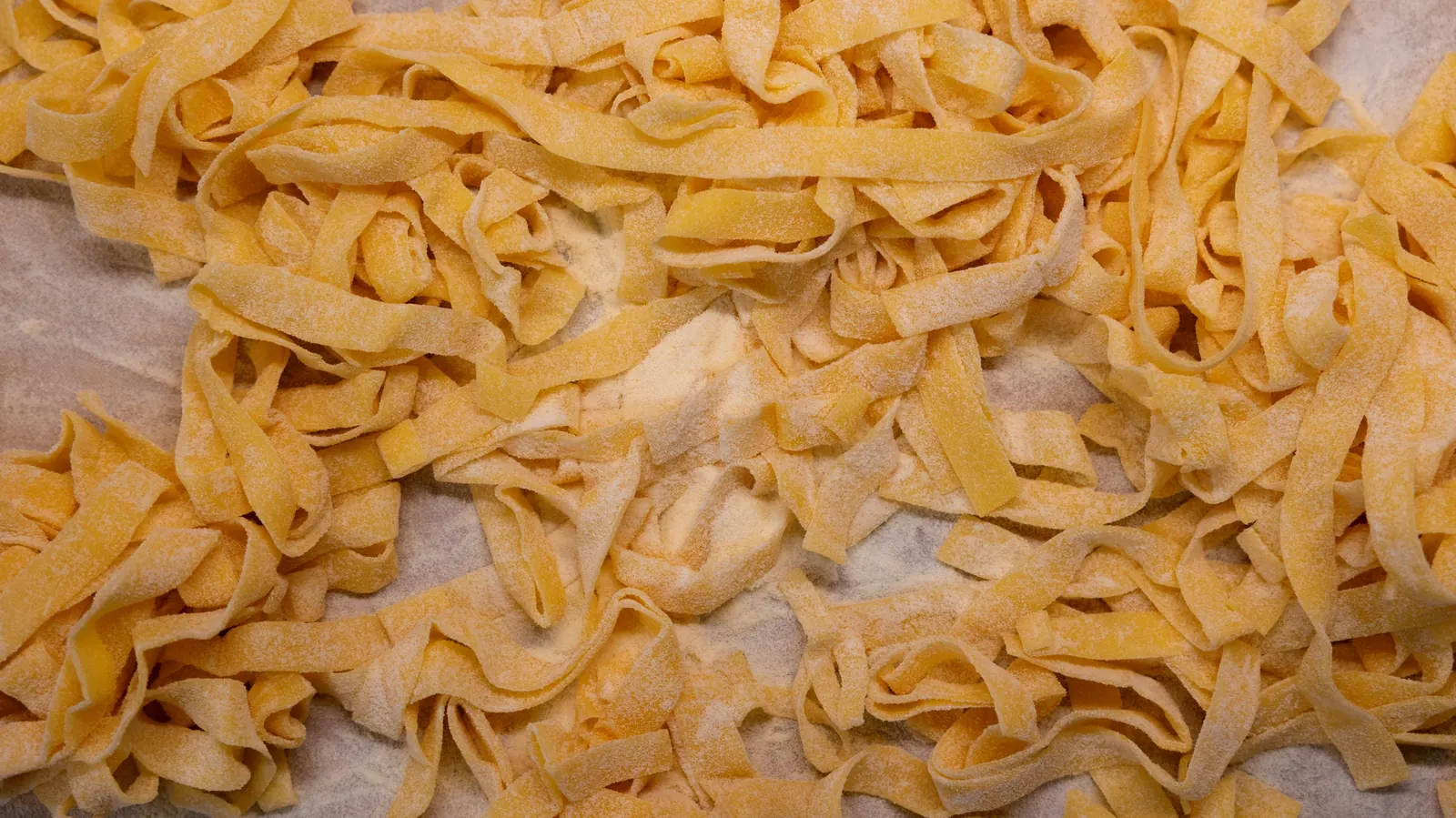
A pasta machine does two jobs: it rolls dough into thin, even sheets, and it cuts those sheets into noodles. Italian cooks did both by hand for centuries before the crank machine arrived, and the tools they used are still made. If you don’t want a machine clamped to your counter, have nowhere to store one, or simply want to try fresh pasta before you buy, a pasta maker alternative can get you to a plate of tagliatelle, spaghetti alla chitarra, cavatelli or garganelli.
None of these tools does everything a machine does, and some don’t roll at all. This guide explains which part of the job each one covers, how well, and with what limits, then names one good example of each. You can make fresh pasta without a pasta machine; you just trade the crank for a little more time and practice.
Julia’s earns a commission on purchases made through links on this page, at no cost to you. Recommendations are based on what a restaurant kitchen looks for, product specifications and verified buyer reports.
Why cooks look for a pasta maker alternative
The usual reasons are space, cost and how often you make pasta. A manual machine is heavy, needs a counter edge to clamp to, and has rollers you can’t wash. If you make fresh pasta a few times a year, a long rolling pin and a sharp knife may be all you need. Others already own a stand mixer and wonder whether a roller attachment beats a separate machine; our best pasta maker guide reviews the KitchenAid roller set. And some cooks want shapes a sheet-rolling machine can’t make at all, such as cavatelli, gnocchi and garganelli, which are rolled one piece at a time.
It helps to split the machine’s work in two. Rolling is the hard part: getting a sheet thin and even. Cutting is easy, and many simple tools do it well. Short shapes skip the sheet altogether.
Quick verdict: the best pasta maker alternative
For most cooks, the best pasta maker alternative is a long pasta rolling pin such as Nonna’s 24-inch hard maple mattarello, plus a sharp knife. America’s Test Kitchen says a rolling pin and some elbow grease are enough for strand and filled pasta. Add a chitarra such as Eppicotispai’s if you love square spaghetti, or a cutter such as Marcato’s Pastabike to slice many strips at once. If short shapes are what you’re after, a cavatelli maker or a gnocchi board makes them with no sheet at all. If you want thin, even sheets every time with little effort, buy a pasta machine; see our best pasta maker guide.
Five ways to make pasta without a machine, side by side
Our five main picks, one per kind of alternative, with what each maker or listing states. Each is reviewed in full below, along with a sixth.
| Alternative | Type | Best for | How close to a pasta machine | Buy on Amazon |
|---|---|---|---|---|

Nonna’s Mattarello, 24-inch Hard MapleBest for rolling
|
Long, handle-free rolling pin | Sheets for tagliatelle, lasagna, ravioli | Does the rolling; slower and less even | View on Amazon |

Eppicotispai Chitarra with Rolling PinBest for spaghetti
|
Wire-strung wooden frame and pin | Spaghetti alla chitarra from a thick sheet | Cuts strands; you still roll the sheet | View on Amazon |

Marcato Pastabike, 9 WheelsBest for cutting strips
|
Multi-wheel hand cutter | Many even strips in one pass | Replaces the cutter only | View on Amazon |

Fante’s Cousin Elisa’s Cavatelli MakerBest crank alternative
|
Clamp-on hand-crank shaper | Ridged cavatelli in quantity | One shape only; no sheets | View on Amazon |

Tredoni Garganelli and Gnocchi Board with StickBest for short shapes
|
Ridged wooden paddle and dowel | Garganelli, gnocchi, malloreddus | Hand shaping, one piece at a time | View on Amazon |
How each alternative covers a pasta machine’s job
Rolling pin: the whole job, with more effort
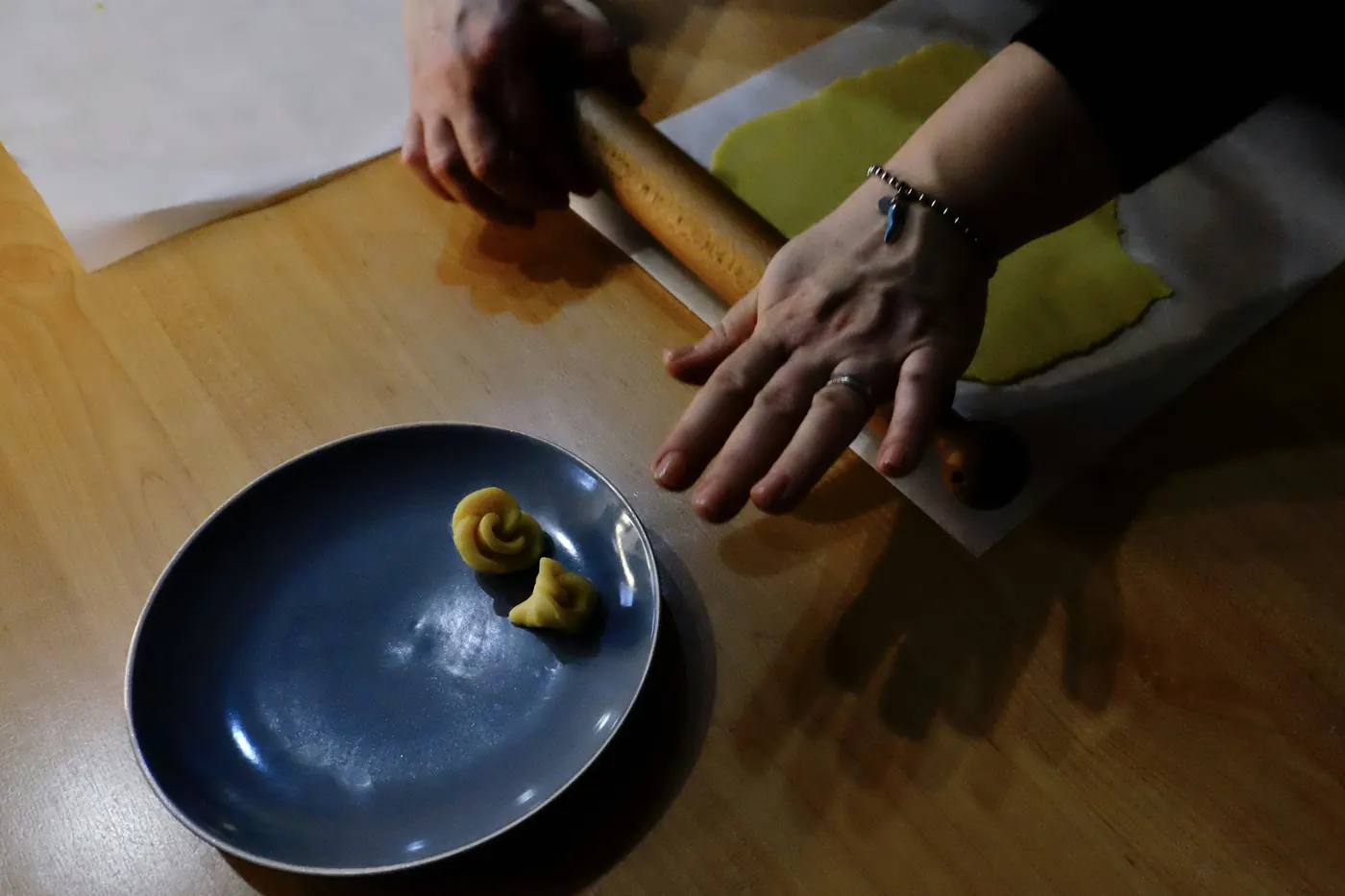
A rolling pin is the only tool here that replaces the machine’s rollers. America’s Test Kitchen’s guide to rolling and cutting fresh pasta, by Liz Bomze, calls hand rolling “doable and gratifying” and says all you need is a rolling pin and elbow grease. Its method rolls each piece of dough to about 20 by 6 inches, lets the sheets air-dry for about 15 minutes so they are less likely to tear, then folds each half-sheet at 2-inch intervals and slices the roll crosswise with a sharp knife to the width you want. ATK adds that hand rolling usually takes more flour than machine rolling, and that too much loose flour can make cooked pasta gummy. The limits are evenness and thinness: a machine sets the gap for you, while a pin relies on your hands.
Chitarra: cutting with strings
A chitarra, or pasta guitar, is a wooden frame strung with wires. You lay a sheet over the strings and press it through with a rolling pin, and the wires cut it into square-edged strands. Dave Bayer, a Columbia University professor who builds his own, writes in The Cook’s Cook that you roll the dough to about 1/8 inch, lay it on the strings and roll the pin up and down it, then toss the cut noodles to separate them. That sheet is thicker than most machine-rolled spaghetti, which is what gives the dish its chewy, square shape. You still need to roll the sheet, by pin or machine.
Cutters: quick and cheap, but rolling comes first
A pasta wheel or a multi-wheel cutter replaces only the machine’s cutting heads. Run it along a rolled sheet and you get strips for tagliatelle, pappardelle or lasagna, or neat edges on ravioli. A multi-wheel cutter such as Marcato’s cuts several strips in one pass, so the widths come out even.
Cavatelli maker and gnocchi board: no sheet needed
Short shapes skip the rolling stage. A cavatelli maker takes strips of dough and, as Fante’s describes its own model, grabs the dough, folds it into the hot-dog-bun shape, presses ridges on one side and cuts it, all in one turn of the crank. A gnocchi board does a similar job by hand: you roll each small piece across the ridges, or wrap a square around a dowel for garganelli. Both make pasta that a sheet-rolling machine can’t.
Six tools to make pasta without a pasta machine
1. Nonna’s Mattarello, 24-inch Hard Maple – A Long Pin for Wide, Even Sheets
A mattarello is the Italian pasta pin: a long, straight cylinder with no handles, so you can roll a wide sheet and use your whole palm along it. This one, from the small maker NonnasWoodShop, is 24 inches long and lathe-turned from vacuum-dried North American hard maple to a 1.87-inch diameter, according to the listing, which says each pin is selected for straight grain. A linen storage case comes with it.
Twenty-four inches is long enough for the 20-by-6-inch sheets in America’s Test Kitchen’s method, with room for your hands at each end. A handle-free pin also lets you feel where the sheet is thick and press there, which a handled pin makes harder. It is the one tool here that gives you every pasta a machine makes: tagliatelle, pappardelle, lasagna and the sheets for ravioli, cut with a knife or one of the cutters below.
The honest limit is evenness. You will not get a sheet as uniformly thin as a machine’s thinner settings until you have practiced, and it takes longer. Maple is a hard, close-grained wood; wipe the pin clean and let it dry rather than soaking it, which is general care for wooden tools since the listing gives no care instructions.
Why we like it
- 24 inches long with no handles (listing)
- Vacuum-dried hard maple, turned to 1.87 inches (listing)
- Linen storage case included (listing)
- Sold by the maker when we checked
Key specifications
| Model | Hard Maple, 24 in |
|---|---|
| Type | Handle-free pasta rolling pin |
| Pasta it makes | Sheets for any cut or filled pasta |
| Material | North American hard maple |
| Size | 24 in long, 1.87 in diameter |
| Made in | Not stated |
| Care | Not stated |
Why we recommend it
It suits a cook who wants to learn pasta the traditional way and is happy to trade a little time for no machine at all.
Skip it if you want paper-thin sheets for delicate filled pasta without practice; a machine is easier.
Pros and cons
Pros
- Replaces the whole rolling job
- Long enough for full-width sheets
- Also useful for pie crust and flatbreads
Cons
- Thinness and evenness depend on your skill
- Slower than a crank machine
- Small maker; no care or origin details in the listing
2. Eppicotispai Chitarra with Rolling Pin – Square Spaghetti Without a Machine
Eppicotispai is an Italian maker of wooden pasta tools, and this set pairs its chitarra with a 32 cm (12.5-inch) rolling pin. The listing says the frame is natural wood and the set is made in Italy. The rolling pin in the box is for pressing sheets through the wires; for rolling the sheet itself you will want a longer pin, such as the mattarello above.
The chitarra is the traditional tool for spaghetti alla chitarra. Dave Bayer’s method in The Cook’s Cook rolls the dough to about 1/8 inch, lays it on the strings and rolls the pin up and down until the strands drop through. A thicker sheet is the point: the strands come out square and chewy, which suits hearty sauces.
It does one cut well. It doesn’t roll, and it isn’t the tool for wide noodles or filled pasta. Keep it dry, as with any wooden tool.
Why we like it
- Chitarra and pressing pin in one set (listing)
- Natural wood, made in Italy (listing)
- Cuts a whole sheet into strands in a few passes
- Established Italian maker of pasta tools
Key specifications
| Model | 2009/CM |
|---|---|
| Type | Chitarra (pasta guitar) with pin |
| Pasta it makes | Spaghetti alla chitarra |
| Material | Natural wood frame, wire strings |
| Size | Large; pin 32 cm (12.5 in) |
| Made in | Italy |
| Care | Not stated |
Why we recommend it
It suits a cook who loves thick, square spaghetti and wants a traditional tool that hangs on the wall when not in use.
Skip it if you only own a short rolling pin and don’t want to roll the sheets yourself; it cuts, it doesn’t roll.
Pros and cons
Pros
- Makes a pasta a standard machine cutter doesn’t
- Simple wood and wire, nothing to break
- Made in Italy (listing)
Cons
- One cut only
- You still roll the sheet
- Sold by a third-party seller when we checked
3. Marcato Pastabike, 9 Wheels – Many Even Strips in One Pass
Marcato is the Italian maker of the Atlas pasta machine, and the Pastabike is its hand cutter: a handle carrying nine wheels side by side. The listing says the wheels come off and go back on easily, so you can space them for the width you want, and that it wipes clean with a dry brush or cloth.
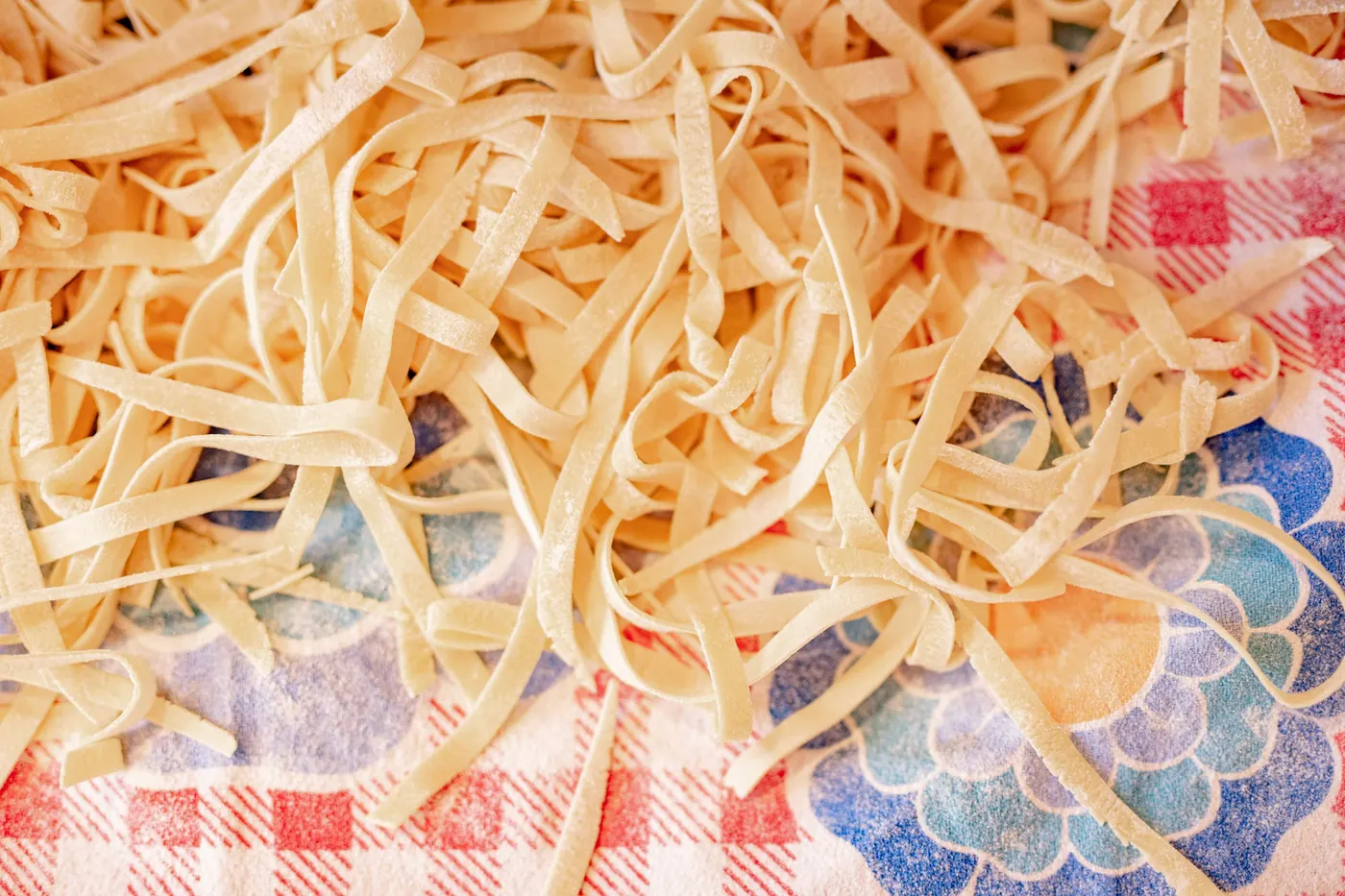
Roll a sheet with a pin, run the Pastabike down its length, and you have a row of even strips in one stroke, which is the part of a pasta machine’s work a knife does least neatly. Take some wheels off for wider pappardelle or lasagna strips.
Like any cutter, it does nothing until the dough is rolled, and with nine wheels on a short axle it is best on sheets that are evenly thin. The listing doesn’t state the wheel material or where it is made.
Why we like it
- Nine wheels cut many strips at once (listing)
- Wheels come off to change the width (listing)
- Wipes clean with a dry brush or cloth (listing)
- From the maker of the Atlas pasta machine
Key specifications
| Model | MCPBNEU |
|---|---|
| Type | Multi-wheel hand cutter |
| Pasta it makes | Strips from rolled sheets |
| Material | Not stated (clear handle) |
| Size | 6.3 x 5.9 x 1.6 in |
| Made in | Not stated |
| Care | Dry brush or cloth |
Why we recommend it
It suits a cook rolling by hand who wants neat tagliatelle or pappardelle without measuring every cut with a knife.
Skip it if you already have a pasta machine with cutting heads; it duplicates what they do.
Pros and cons
Pros
- Even widths in one pass
- Adjustable by moving wheels
- Small enough for a drawer
Cons
- Cuts only; no rolling
- Materials and origin not stated in the listing
- Sold by a third-party seller when we checked
4. Fante’s Cousin Elisa’s Cavatelli Maker – Ridged Cavatelli by the Crank
If what you want from a machine is volume, this is the alternative with a crank. Fante’s, a kitchen shop trading since 1906, says its cavatelli maker grabs the dough, folds it into the hot-dog-bun shape, presses ridges on one side and cuts it to length in one stroke. You roll out the dough, cut it into strips, feed them in and turn the handle at a steady pace, according to the listing.
Fante’s lists a cast aluminum alloy nonstick body, nickel-plated steel parts, plastic rollers and a clamp that fits a counter or table up to 1 3/8 inches thick. The listing gives the size as 9.25 by 4.4 by 5.75 inches and says to hand wash it in warm, soapy water. Fante’s says it is made in Taiwan and is for home use only.
It makes one shape. The listing says Fante’s family recipes come in the box. It won’t make long noodles or sheets.
Why we like it
- Folds, ridges and cuts in one turn (Fante’s)
- Clamps to counters up to 1 3/8 in thick (Fante’s)
- Nonstick cast aluminum body (Fante’s)
- Instructions and family recipes included (listing)
Key specifications
| Model | 15500 |
|---|---|
| Type | Clamp-on hand-crank cavatelli maker |
| Pasta it makes | Ridged cavatelli |
| Material | Cast aluminum, nickel-plated steel, plastic rollers |
| Size | 9.25 x 4.4 x 5.75 in |
| Made in | Taiwan (Fante’s) |
| Care | Hand wash in warm, soapy water |
Why we recommend it
It suits a family that makes cavatelli often and wants a fast, kid-friendly crank instead of shaping each piece by hand.
Skip it if you want long pasta; this makes one short shape only.
Pros and cons
Pros
- Much faster than hand-shaping
- No sheet to roll thin
- Clamps to most counters
Cons
- One shape
- Home use only, per Fante’s
- Sold by a third-party seller when we checked
5. Tredoni Garganelli and Gnocchi Board with Stick – Ridged Short Shapes by Hand
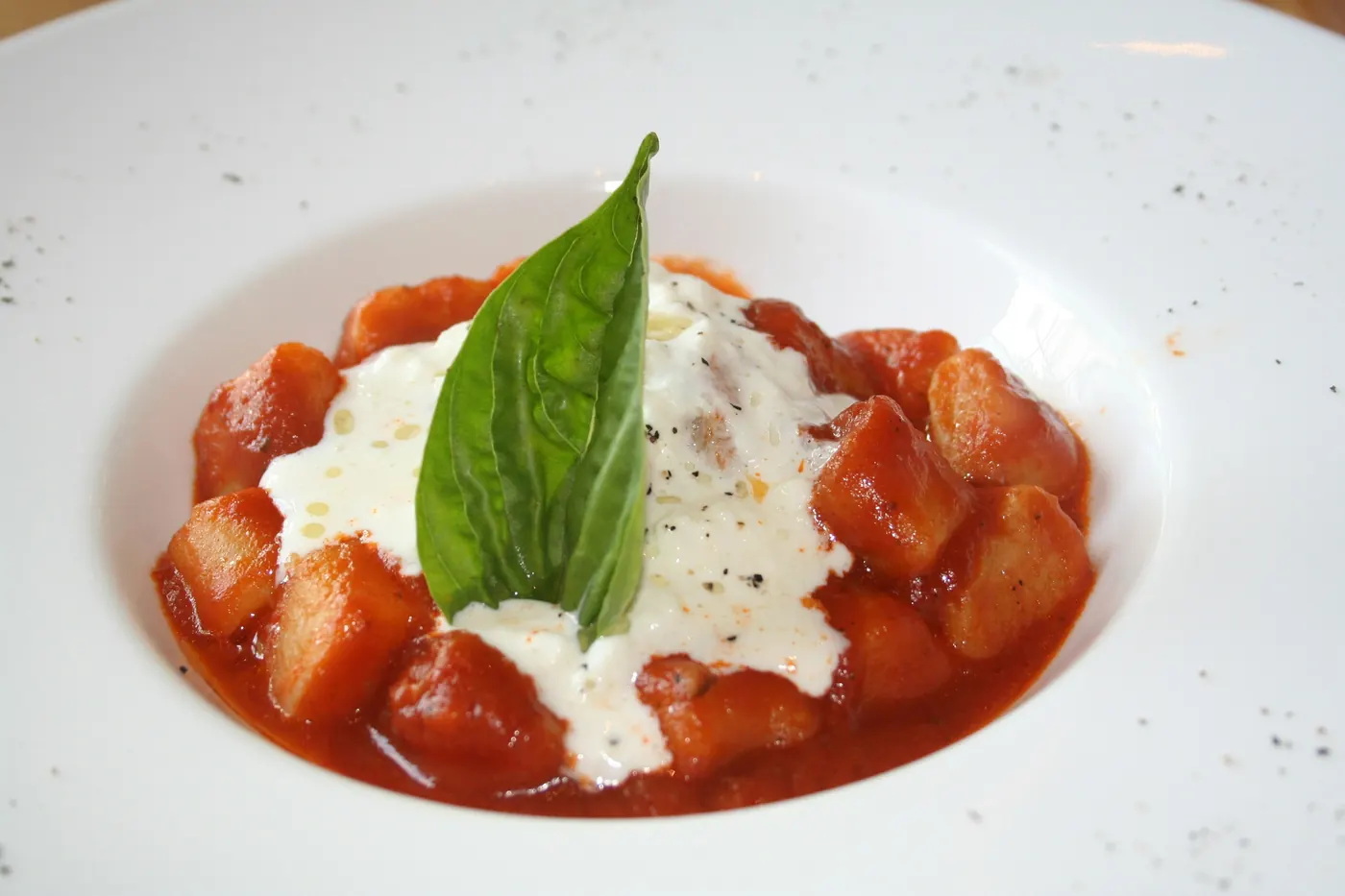
A gnocchi board is the simplest tool on this page: a ridged wooden paddle you roll small pieces of dough across. This Tredoni board measures 3.6 by 5 inches, has a slanted edge so it rests steady on the counter, and comes with a 6.9-inch wooden stick for rolling dough squares into garganelli tubes, according to the listing. Tredoni lists gnocchi, malloreddus, cavatelli rigati and casarecce rigate as other shapes, and says it is solid wood and made in Italy.
The ridges give each piece grooves that hold sauce, which is why cooks bother. For garganelli you still need a thin sheet cut into squares, so pair it with a rolling pin; for gnocchi and malloreddus you only roll ropes of dough and cut them into pieces.
It is slow work, one piece at a time, which suits a relaxed weekend more than a weeknight. For more boards, see our best gnocchi board guide.
Why we like it
- Board and garganelli stick in one (listing)
- Slanted edge rests steady while you work (listing)
- Solid wood, made in Italy (listing)
- Small enough for a drawer
Key specifications
| Model | J21 |
|---|---|
| Type | Ridged board with dowel |
| Pasta it makes | Garganelli, gnocchi, malloreddus, cavatelli rigati |
| Material | Solid wood |
| Size | 3.6 x 5 in; 6.9 in stick |
| Made in | Italy |
| Care | Not stated |
Why we recommend it
It suits a cook who wants to try ridged short shapes without giving up much storage space.
Skip it if you want to make pasta for a crowd quickly; shaping by hand is slow.
Pros and cons
Pros
- Several shapes from one board
- Tiny to store
- Made in Italy (listing)
Cons
- One piece at a time
- Garganelli still need a rolled sheet
- Sold by a third-party seller when we checked
6. La Gondola Festooned Pasta Wheel – Ruffled Edges for Ravioli and Pappardelle

If a nine-wheel cutter is more than you need, a single fluted wheel covers most cutting by hand. La Gondola’s has a festooned (ruffled) brass wheel on a natural wood handle and is made in Italy, according to the listing, which was sold by La Gondola itself when we checked. The listing names ravioli, spaghetti and fettuccine among its uses; in practice a single wheel is best for wider cuts, where a ruffled edge looks good, and for sealing and trimming ravioli.
Run it along a ruler for straight pappardelle or lasagna strips, or around filled pasta to trim and crimp in one motion. It is a small tool that complements a rolling pin rather than replacing anything on its own. For more choices, see our best ravioli cutter guide.
Why we like it
- Brass wheel, natural wood handle (listing)
- Made in Italy (listing)
- Ruffled edge for ravioli and pappardelle
- Sold by the maker when we checked
Key specifications
| Model | COMINHKPR69921 |
|---|---|
| Type | Single fluted pasta wheel |
| Pasta it makes | Ravioli edges, wide strips |
| Material | Brass and natural wood |
| Size | Not stated |
| Made in | Italy |
| Care | Not stated |
Why we recommend it
It suits a cook who rolls by hand and wants a good-looking edge on ravioli and wide noodles.
Skip it if you want even narrow noodles; a multi-wheel cutter or chitarra does that better.
Pros and cons
Pros
- Trims and crimps filled pasta
- Brass and wood, made in Italy
- Sold by the maker
Cons
- One cut at a time
- Size and care not stated
When a pasta machine is still the better buy
Every tool above asks for more of your time than a crank machine does. If you make fresh pasta every week, want thin, even sheets for delicate filled pasta, or are cooking for a crowd, a machine pays for itself in time. Our best value pasta maker guide covers the less expensive manual machines. Whichever route you take, a pasta drying rack keeps long noodles from sticking while you finish the batch.
Fresh pasta without a machine: questions, answered
Can you make fresh pasta without a pasta machine?
Yes. America’s Test Kitchen’s guide says a rolling pin, elbow grease and a sharp knife are enough: roll the dough into sheets, let them air-dry for about 15 minutes, fold them loosely and slice them crosswise to the width you want.
What can I use instead of a pasta roller?
A rolling pin, ideally a long, handle-free one. It is the only common tool that replaces the rollers. Cutters, a chitarra and gnocchi boards replace other parts of the job.
How thin should hand-rolled pasta be?
That depends on the shape. ATK’s hand method rolls each piece to about 20 by 6 inches for strand pasta. For a chitarra, Dave Bayer rolls to about 1/8 inch, thicker than most machine-rolled pasta, on purpose.
Can I use a stand mixer instead of a pasta maker?
A stand mixer can mix the dough, and with a roller attachment it works much like a pasta machine. That is really a machine rather than an alternative; our best pasta maker guide reviews KitchenAid’s roller and cutter set.
Is a pasta machine worth it if I only make pasta now and then?
Probably not. A rolling pin and a cutter store in a drawer and do the job for occasional batches. Buy a machine once you find yourself making pasta often.
Our final word on skipping the pasta machine
Start with a long rolling pin and a sharp knife: that alone makes tagliatelle, pappardelle and lasagna. Add a chitarra or a multi-wheel cutter if you want neater noodles, and a cavatelli maker or gnocchi board if short, ridged shapes are what you crave. When you outgrow them, our best pasta maker guide is the next step.