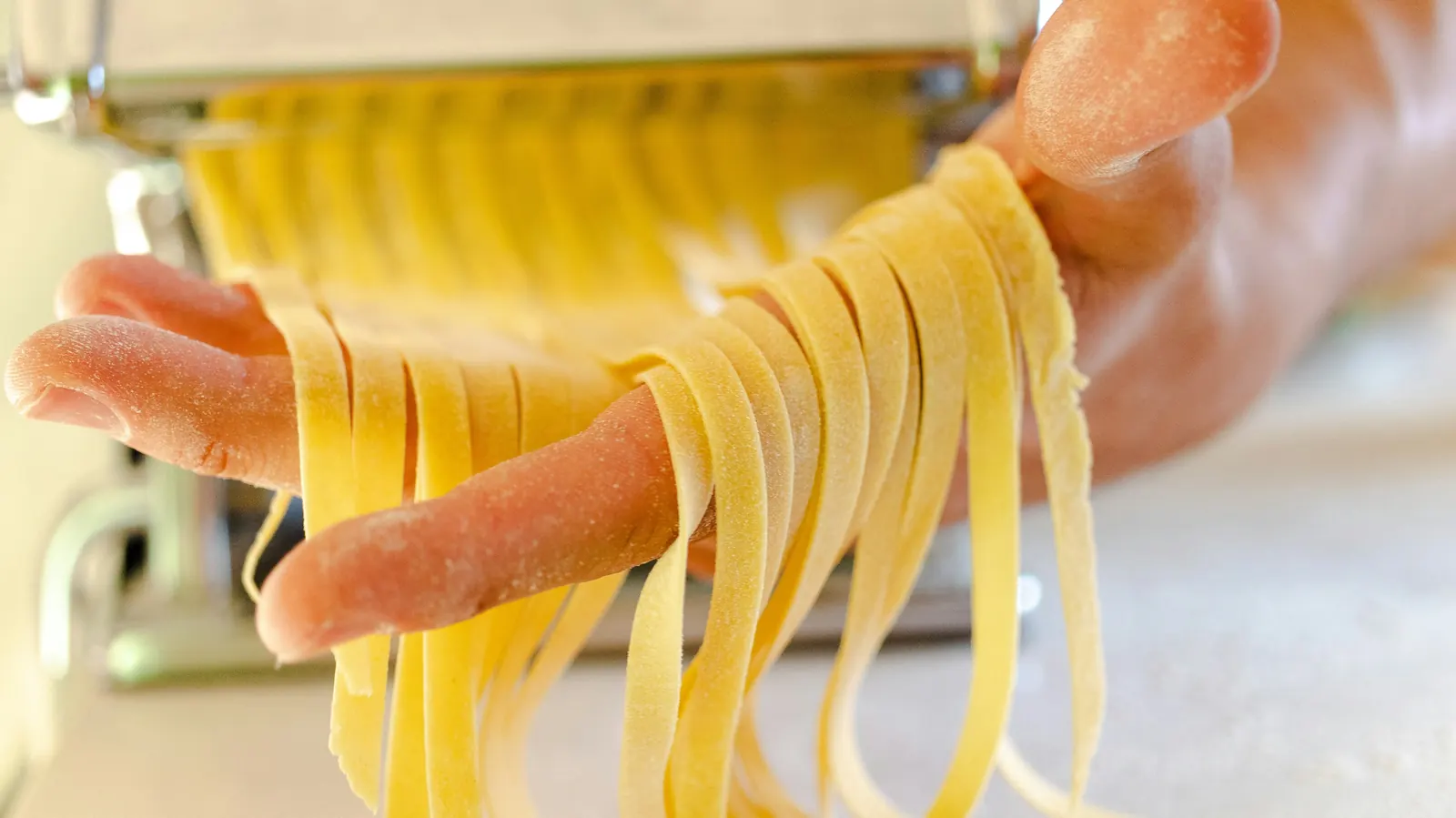
Pasta is not the first thing people think of in a Mexican kitchen, but noodles have been part of it for a long time. Sopa de fideo, thin noodles toasted in oil and simmered in a tomato and chile broth, is a weeknight staple in many homes, and espagueti and tallarines turn up in everything from creamy green-chile sauces to a side for a Sunday roast. Most of that starts with dried pasta from a bag, and there is nothing wrong with that. A pasta maker is for the days you want to make your own.
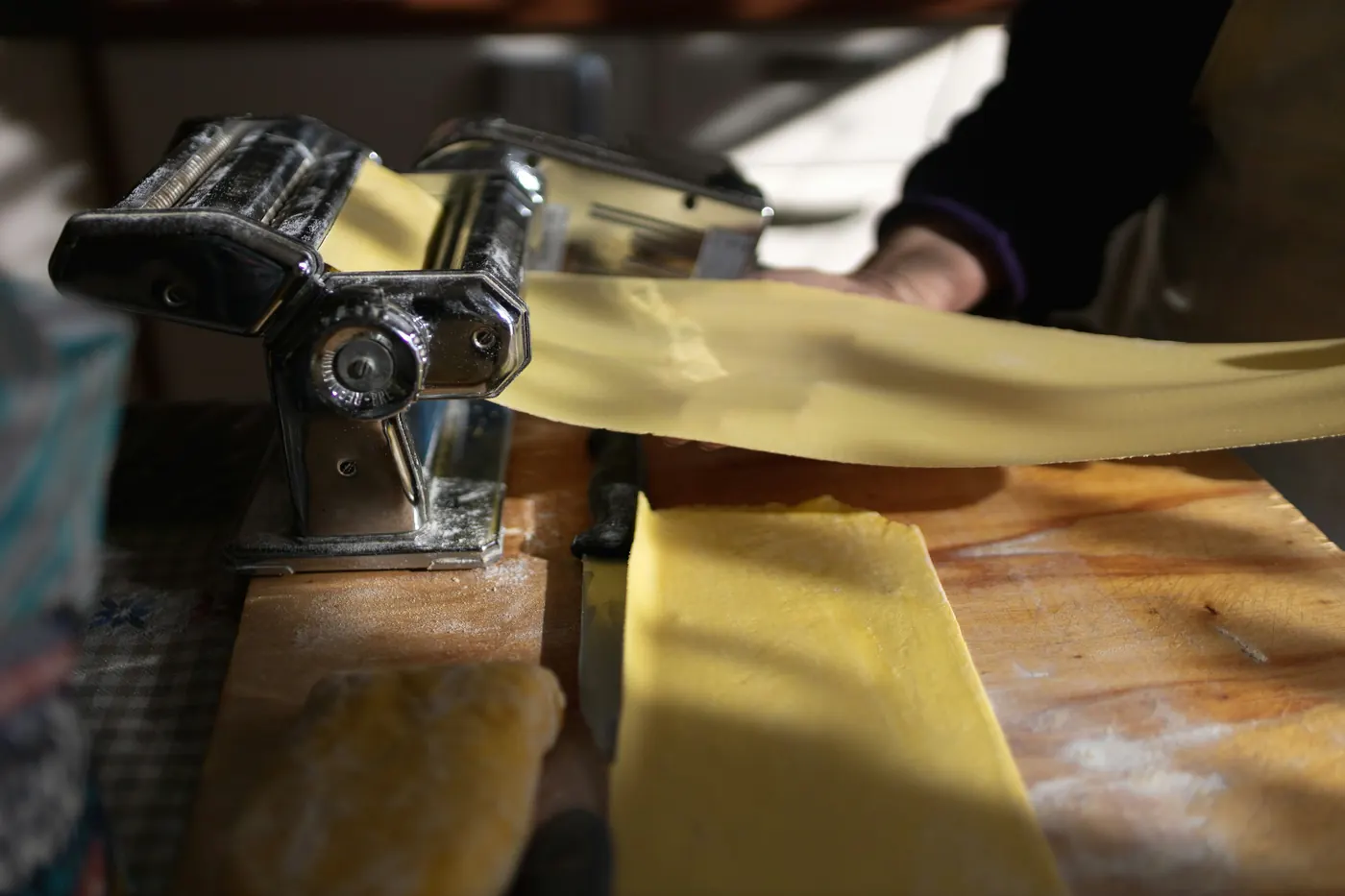
There are two kinds of machine, and they make different things. A roller flattens a ball of dough into long sheets and cuts them into ribbons such as fettuccine or fine tagliolini. An extruder mixes flour and liquid, then pushes the dough through a shaped disc to make spaghetti, penne or macaroni. This guide covers eight pasta makers, manual and electric, using what each maker and Amazon listing states and America’s Test Kitchen’s reviews of manual and electric pasta machines.
Julia’s earns a commission on purchases made through links on this page, at no cost to you. Recommendations are based on what a restaurant kitchen looks for, product specifications and verified buyer reports.
Quick verdict: which pasta maker to buy
The best pasta maker for most home cooks is the Marcato Atlas 150, a hand-cranked Italian roller with ten thickness settings and a fettuccine and tagliolini cutter; the Atlas 150 was America’s Test Kitchen’s top manual machine. If you own a KitchenAid stand mixer, the KitchenAid Pasta Roller and Cutter Set does the same job with the mixer’s motor. For extruded shapes such as penne and spaghetti from a single machine, choose the Philips 7000 Series Pasta Maker.
Whichever you choose, accurate measuring matters for pasta dough, especially in an extruder. A kitchen scale takes the guesswork out of flour and liquid.
Five pasta makers at a glance
Our five standout picks, one for each kind of cook, with the type, shapes and thickness settings each maker or listing states. All eight are reviewed in full below.
| Pasta maker | Best for | Type and shapes | Thickness and power | Buy on Amazon |
|---|---|---|---|---|

Marcato Atlas 150 Pasta MachineBest overall
|
Sheets and ribbons by hand | Manual roller; lasagna, fettuccine, tagliolini | 10 settings; hand crank | View on Amazon |

KitchenAid Pasta Roller and Cutter SetBest for stand mixers
|
KitchenAid mixer owners | Mixer attachment; sheets, spaghetti, fettuccine | 8 settings; mixer-powered | View on Amazon |

Philips 7000 Series Pasta MakerBest electric extruder
|
Hands-free spaghetti and penne | Electric extruder; 8 discs | Set by disc; 150 W | View on Amazon |
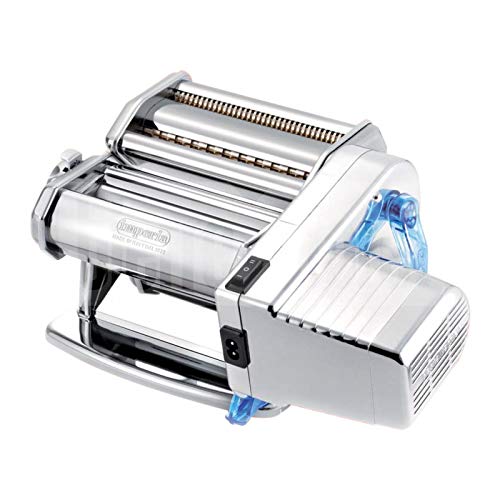
Imperia Pasta Machine and MotorBest motorized roller
|
Both hands free to guide dough | Roller plus motor, double cutter | Settings not stated; dual-speed motor | View on Amazon |
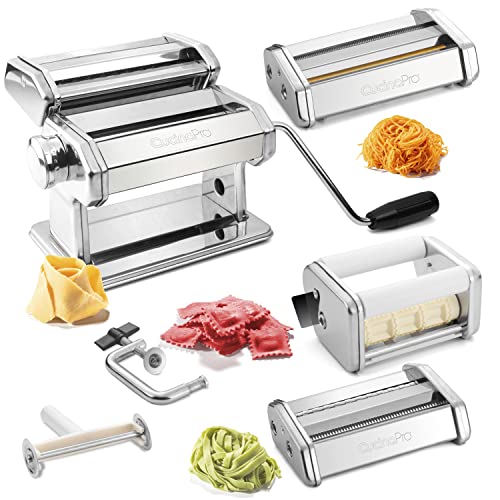
CucinaPro Pasta Maker Deluxe SetBudget pick
|
More cutters for less | Manual roller; 3 attachments, 5 pastas | Adjustable; hand crank | View on Amazon |
Product images from Amazon. Shapes, settings and power are as stated by each maker or listing; check the listing before you buy.
Our picks for the best pasta maker
Five of the eight machines below are rollers, hand-cranked or motorized, which make sheets and flat ribbons. Three are extruders, which make round and tubular shapes. ATK puts the difference plainly: manual machines “can’t produce extruded pasta,” and electric extruders mix and knead the dough and force it through shaping discs. Each pick lists the shapes, thickness settings, power and cleaning its maker states, with one honest reason to skip it.
1. Marcato Atlas 150 Pasta Machine – Thick to Paper-Thin With One Hand
America’s Test Kitchen’s manual pasta machine review named the Marcato Atlas 150 Wellness its winner and called it “a real pleasure to use.” ATK found it rolled “chunky ¼-inch sheets and paper-thin sheets with equal ease,” that its knob could be turned with one hand, and that its noodle cutter was sharp; it also handled delicate gluten-free dough. ATK’s electric machine review calls the Atlas 150 its favorite manual pasta maker.
The listing we link is Marcato’s Atlas 150 roller in chrome, made in Italy, with anodized aluminum rollers 150 millimeters (about 6 inches) wide and a cutter for fettuccine and tagliolini alongside lasagna sheets. ATK tested the Wellness version, model 8845; the Amazon listing does not state the Wellness name, so we cannot confirm it is the identical model. Marcato states ten thickness positions for the Atlas 150.
For the thin, even sheets that become fideo-fine tagliolini or broad lasagna, this is the standard. Clamp it to a sturdy counter, feed the dough through the widest setting a few times, then work down. The listing recommends hand washing and wiping it clean with a dry brush or cloth.
Why we like it
- ATK’s top manual pasta machine (Wellness version)
- Widest thickness range in ATK’s test
- One-handed thickness knob, per ATK
- Fettuccine and tagliolini cutter included
- Made in Italy; motor and accessories available
Key specifications
| Maker | Marcato Atlas 150, MCAT150ROL |
|---|---|
| Type | Manual roller, hand crank |
| Widths/shapes | 150 mm sheets; fettuccine, tagliolini |
| Thickness settings | 10 |
| Power | Hand crank (motor sold separately) |
| Cleaning | Hand wash; wipe with a dry brush or cloth |
| Made in | Italy |
| Warranty | Not stated |
Why we recommend it
Choose it if you want the machine reviewers return to, with a wide thickness range and room to add a motor or extra cutters later.
Skip it if you want penne, macaroni or round spaghetti; a roller cannot make extruded shapes.
Pros and cons
Pros
- Even sheets, thick to thin
- Sharp cutter
- Expandable system
Cons
- No extruded shapes
- Must clamp to a counter
- Brush or wipe clean only
2. KitchenAid Pasta Roller and Cutter Set – Let the Mixer Do the Cranking
If a KitchenAid stand mixer already sits on your counter, this three-piece set turns it into a motorized pasta roller. It fits every household KitchenAid stand mixer, according to KitchenAid, and the mixer turns the rollers, leaving both hands free to feed and catch the dough.
The set is a roller that makes 6-inch sheets with eight thickness settings, plus separate spaghetti and fettuccine cutters, all with stainless steel rollers and cutters. A cleaning brush is included, and KitchenAid says to hand-wipe only. KitchenAid also sells a newer single 3-in-1 attachment (KSM3PPA) that rolls 5-inch sheets and cuts in one unit; the three-piece set gives you a slightly wider sheet.
The spaghetti cutter here makes square-edged strands cut from a sheet, not round extruded spaghetti. For a quick pot of fideo-style noodles, that hardly matters. Our guide to the best stand mixer covers the machines that power it.
Why we like it
- Uses the mixer’s motor, hands stay free
- 6-inch sheets with eight thickness settings
- Stainless steel rollers and cutters
- Fits all household KitchenAid stand mixers
Key specifications
| Maker | KitchenAid KSMPRA |
|---|---|
| Type | Stand mixer attachment (roller and cutters) |
| Widths/shapes | 6-inch sheets; spaghetti, fettuccine |
| Thickness settings | 8 |
| Power | KitchenAid stand mixer (sold separately) |
| Cleaning | Hand wipe only; brush included |
| Made in | Not stated |
| Warranty | 1 year |
Why we recommend it
Choose it if you own a KitchenAid mixer and want motorized rolling without another machine to store.
Skip it if you do not own the mixer; buying one just for pasta costs far more than a manual roller.
Pros and cons
Pros
- Hands-free rolling
- Three tools in one set
- Stainless rollers
Cons
- Needs a KitchenAid mixer
- Three pieces to swap
- Not in the reviews we read
3. Philips 7000 Series Pasta Maker – Mixes, Kneads and Extrudes
An electric extruder is the closest thing to push-button pasta. You add flour, then the liquid, and the machine mixes, kneads and pushes the dough through a shaped disc. America’s Test Kitchen’s electric pasta machine winner was the Philips Pasta Maker HR2375/06, praised for “top-notch spaghetti, fettuccine, and sheets of lasagna”; it took “a bit of effort to clean.” That model was not available on Amazon when we checked, so this is Philips’ current 7000 Series, which ATK has not reviewed.
According to Philips, the 7000 Series is rated at 150 watts, comes with eight shaping discs, makes fresh pasta in under 10 minutes for 250 grams (two to three portions) and can make up to eight portions in one go. The listing says the parts are non-stick and dishwasher safe, and Philips’ HomeID app has recipes, including gluten-free ones. The mixing function can also start cookie, pizza and bread doughs. Philips gives a 2-year warranty.
ATK warns that recipes written for hand rolling or manual machines “will not work” in electric extruders, because they are too wet. Use the recipes and measuring cups that come with the machine, at least at first.
Why we like it
- Mixes, kneads and extrudes in one machine
- Eight shaping discs
- Up to eight portions per batch
- Dishwasher-safe parts, per the listing
- 2-year warranty, per Philips
Key specifications
| Maker | Philips 7000 Series, HR2660/03 |
|---|---|
| Type | Electric extruder |
| Widths/shapes | 8 shaping discs |
| Thickness settings | Set by each disc |
| Power | 150 W |
| Cleaning | Non-stick, dishwasher-safe parts |
| Made in | Not stated |
| Warranty | 2 years |
Why we recommend it
Choose it if you want round spaghetti, penne and other extruded shapes with very little effort.
Skip it if you want long, silky sheets for lasagna or ravioli; a roller does those better, and the shaping head on an extruder is the fussy part to clean.
Pros and cons
Pros
- Nearly hands-off
- Many shapes
- Large batches
Cons
- Not the model ATK tested
- Needs its own recipes
- Bulky to store
4. Imperia Pasta Machine and Motor – Two Speeds, Both Hands Free
The hardest part of hand-cranking is that you only have one hand left for the dough. Imperia’s machine and motor set solves that: the listing describes a pasta machine with a dual-speed motor and a double cutter, in stainless steel, made in Italy.
The listing is short, and we would rather say so. It gives no count of thickness settings, no motor wattage and no sheet width, and it does not say whether a hand crank comes in the box, so we have marked those as not stated. Check them against the maker’s manual before you rely on any one of them.
What you pay for is the motor, which makes long runs of lasagna sheets or a big batch of ribbons much less tiring. Imperia is the same Italian maker behind the iPasta Classic further down this list.
Why we like it
- Motor with two speeds, per the listing
- Double cutter in the set
- Both hands free for the dough
- Made in Italy, per the listing
Key specifications
| Maker | Imperia, model 650 on the listing (IPS330030) |
|---|---|
| Type | Roller with electric motor |
| Widths/shapes | Double cutter; widths not stated |
| Thickness settings | Not stated |
| Power | Dual-speed motor; wattage not stated |
| Cleaning | Not stated |
| Made in | Italy |
| Warranty | Not stated |
Why we recommend it
Choose it if you make sheet pasta often and want both hands free without buying a stand mixer.
Skip it if you make pasta only a few times a year, or if you want a full list of settings; the hand-cranked Atlas 150 is simpler and better documented.
Pros and cons
Pros
- Both hands free
- Two motor speeds
- Cutter included
Cons
- Thin listing, several details not stated
- Motor wattage not stated
- No extruded shapes
5. CucinaPro Pasta Maker Deluxe Set – Five Pastas From Three Attachments
CucinaPro’s Deluxe Set is a hand-cranked roller sold with more cutters than most. According to the listing, its three interchangeable attachments make five kinds of pasta: lasagnette, fettuccine, angel hair, spaghetti and ravioli. A hand crank, table clamp and cleaning brush come in the box.
The listing title calls it stainless steel, while its feature list describes chrome-coated steel; it does not state the number of thickness settings, only that the thickness is adjustable. That leaves some questions a more detailed maker page would answer. What it does offer, for less, is a wider set of shapes than the basic Atlas, including an angel hair cutter that makes the fine strands closest to fideo.
ATK did not test this set. Its Best Buy was an Imperia machine sold by CucinaPro, a different product. Treat this as a good-value way to try several cutters, backed by the listing rather than an independent test.
Why we like it
- Three attachments, five pasta types
- Includes an angel hair cutter
- Clamp and cleaning brush included
- Adjustable thickness
Key specifications
| Maker | CucinaPro Deluxe Pasta Maker |
|---|---|
| Type | Manual roller, hand crank |
| Widths/shapes | Lasagnette, fettuccine, angel hair, spaghetti, ravioli |
| Thickness settings | Adjustable; number not stated |
| Power | Hand crank |
| Cleaning | Cleaning brush included |
| Made in | Not stated |
| Warranty | Not stated |
Why we recommend it
Choose it if you want to try several shapes, including angel hair and ravioli, without a large outlay.
Skip it if you want a machine with a proven record; the Marcato has ATK’s results behind it, and this listing leaves key specifications out.
Pros and cons
Pros
- Many cutters
- Complete starter kit
- Lower cost
Cons
- Settings count not stated
- Material described two ways
- Not independently tested
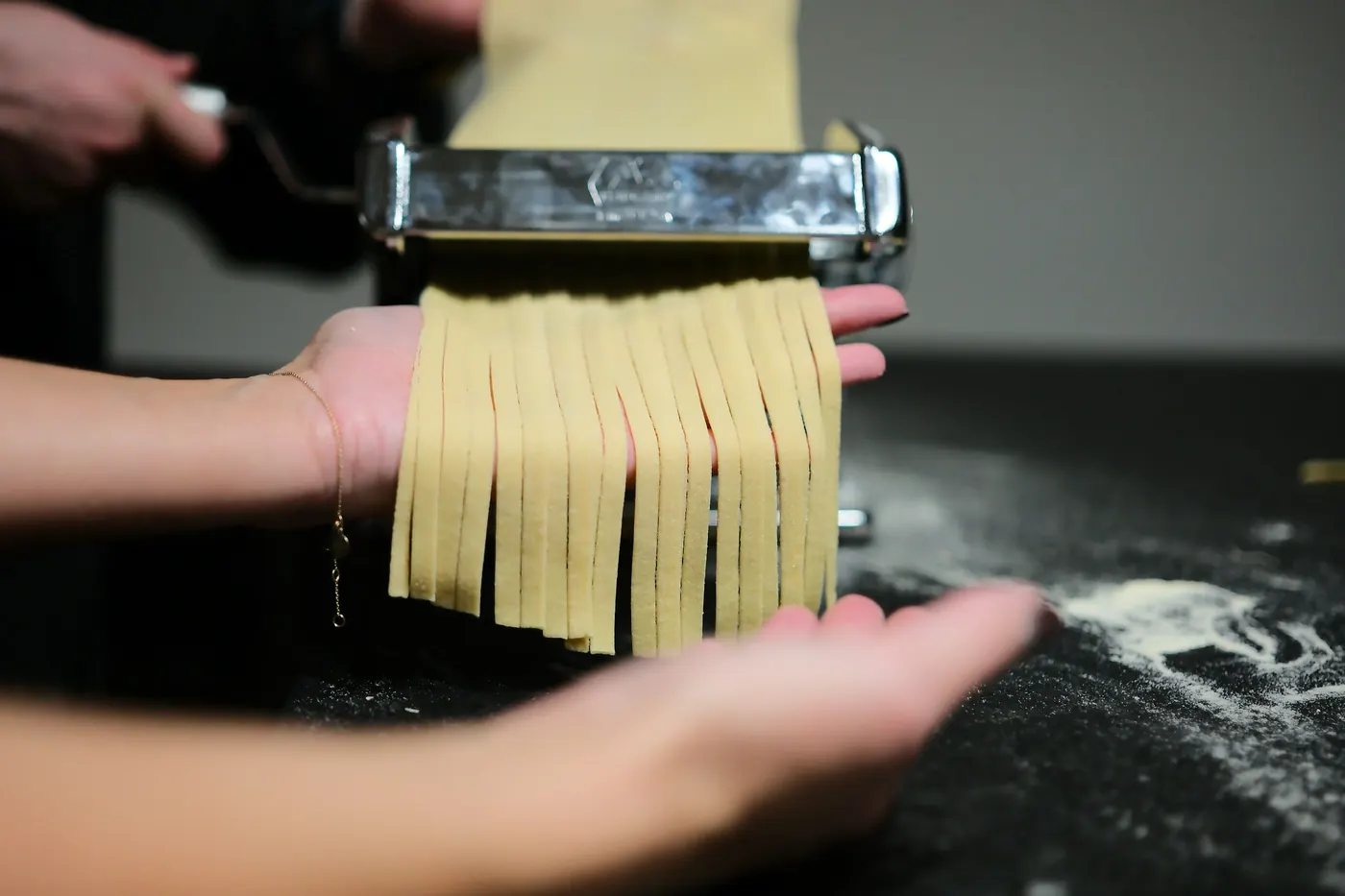
6. Imperia iPasta Classic Pasta Machine – Italian Steel, Six Settings

Imperia is the other long-standing name in hand-cranked rollers; its maker, Imperia & Monferrina, has led the market since 1932, according to the listing. ATK’s Best Buy was an Imperia machine sold by CucinaPro; ATK found it offered a slightly narrower range of thicknesses than the Marcato and needed both hands to adjust. This iPasta Classic Line listing is Imperia’s own; we cannot confirm it is the same model ATK tested.
The listing gives chromed steel construction, sheets up to 150 millimeters wide, fettuccine at 6.5 millimeters and tagliolini at 2 millimeters, and six roller heights from 0.5 to 5 millimeters with what Imperia calls an easy lock dial. It comes with a crank, clamp, non-slip base, cotton storage pouch and a brush, and accepts Imperia’s Pasta Facile motor and its Duplex, Simplex and ravioli accessories.
Imperia also suggests it for flatbreads such as piadina. Clean it with a damp cloth or the brush, according to the listing.
Why we like it
- Made in Italy of chromed steel
- Six heights from 0.5 to 5 mm
- Fettuccine and tagliolini cutters
- Motor and accessory compatible
Key specifications
| Maker | Imperia iPasta Classic Line, 4100 |
|---|---|
| Type | Manual roller, hand crank |
| Widths/shapes | 150 mm sheets; fettuccine 6.5 mm, tagliolini 2 mm |
| Thickness settings | 6 (0.5–5 mm) |
| Power | Hand crank (Pasta Facile motor sold separately) |
| Cleaning | Damp cloth or included brush |
| Made in | Italy |
| Warranty | Not stated |
Why we recommend it
Choose it if you want an Italian-made roller with clearly stated cutter widths and roller heights.
Skip it if you want the widest range of thicknesses; ATK found the Marcato’s range broader.
Pros and cons
Pros
- Solid steel build
- Clear specifications
- Storage pouch included
Cons
- Fewer settings than the Atlas
- Two-handed adjustment, per ATK
- Exact ATK model unconfirmed
7. KitchenAid Gourmet Pasta Press – Six Extruded Shapes From Your Mixer
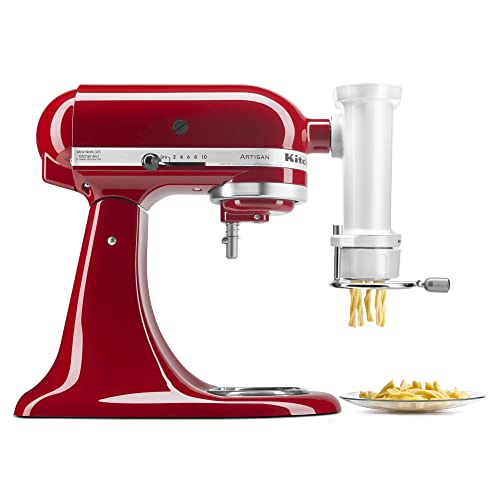
The pasta press is KitchenAid’s answer to an electric extruder. It fits the mixer’s power hub, and you feed balls of dough into the hopper while the auger pushes them through one of six discs: spaghetti, bucatini, rigatoni, fusilli, large macaroni or small macaroni, according to KitchenAid. A built-in wire cutter trims the pasta to length.
Unlike a stand-alone extruder, it does not mix the dough for you; you make the dough first, in the mixer bowl or by hand, then press it. The discs, dough pusher and a stainless steel cleaning tool store in an included case, and KitchenAid says the auger, pasta ring and combination tool are dishwasher safe.
For a kitchen that already has the mixer, this is the cheapest route to real round spaghetti and short tubes. Rigatoni and macaroni are handy for baked pasta, and spaghetti or bucatini can be broken into short lengths for a brothy noodle soup.
Why we like it
- Six extruded shapes
- Built-in wire cutter
- Storage case for discs
- Some parts dishwasher safe
Key specifications
| Maker | KitchenAid KSMPEXTA |
|---|---|
| Type | Stand mixer attachment (extruder) |
| Widths/shapes | Spaghetti, bucatini, rigatoni, fusilli, large and small macaroni |
| Thickness settings | Set by each disc |
| Power | KitchenAid stand mixer (sold separately) |
| Cleaning | Cleaning tool; auger, ring and tool dishwasher safe |
| Made in | Not stated |
| Warranty | 1 year |
Why we recommend it
Choose it if you own a KitchenAid mixer and want extruded shapes without a separate machine.
Skip it if you want the machine to mix the dough too; the Philips extruders do both steps.
Pros and cons
Pros
- Real extruded shapes
- Organized storage
- Uses a mixer you own
Cons
- Needs a KitchenAid mixer
- Dough made separately
- Not in the reviews we read
8. Philips Compact Pasta and Noodle Maker – ATK-Recommended and Small

This is the exact model America’s Test Kitchen rated Recommended in its electric pasta machine review, the Philips Viva Collection HR2371/05, which ATK called a “good compact, no-frills option.” Its one flaw in ATK’s test was penne that “came out a little curvier” than the testers preferred.
According to Philips, it kneads and extrudes two to three servings of fresh pasta in about 18 minutes, with three discs in the box for spaghetti, penne and fettuccine, and built-in storage for them. Philips says its discs use a double extrusion process for smooth pasta, and that you can vary the dough with egg, herbs or vegetable juices. The cord is 40 inches long.
Two to three servings is enough for a weeknight for a couple. For a family, the 7000 Series makes far more per batch.
Why we like it
- Recommended by ATK, this exact model
- Mixes and extrudes automatically
- Three discs with built-in storage
- Compact enough to leave out, per Philips
Key specifications
| Maker | Philips Viva Collection, HR2371/05 |
|---|---|
| Type | Electric extruder |
| Widths/shapes | Spaghetti, penne, fettuccine discs |
| Thickness settings | Set by each disc |
| Power | Not stated |
| Cleaning | Not stated in the listing |
| Made in | Not stated |
| Warranty | Not stated |
Why we recommend it
Choose it if you want an electric extruder with an independent test behind it and a small footprint.
Skip it if you cook for four or more; at two to three servings a batch you will be running it twice.
Pros and cons
Pros
- Independently recommended
- Fully automatic
- Small
Cons
- Small batches
- Only three discs included
- Slightly curved penne, per ATK
How to choose a pasta maker for your kitchen
Decide first what shapes you want, then how much work you want to do.
1. Roller, extruder or attachment
Rollers make sheets and flat ribbons: lasagna, fettuccine, tagliolini, angel hair, and the sheets for ravioli. Extruders make round and tubular shapes such as spaghetti, bucatini, penne and macaroni. Attachments for a KitchenAid stand mixer come in both kinds. If you want both kinds of pasta, you need both kinds of tool.
2. Thickness range and width
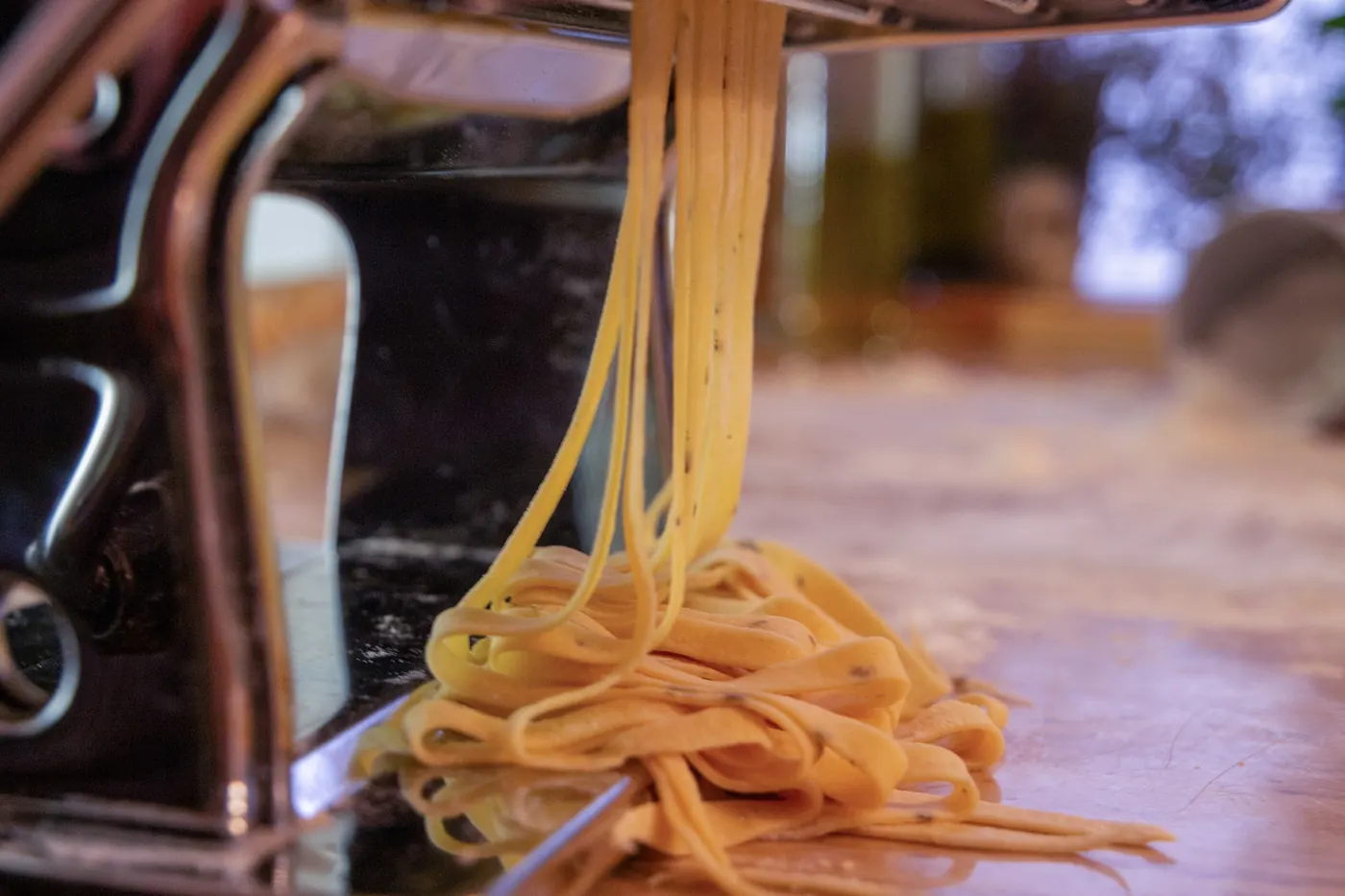
ATK advises looking for a wide range of thicknesses, with rollers that open far enough for thick dough and close tightly for ultrathin ravioli sheets; the number of settings matters less than the range. A knob that turns with one hand and clearly shows the setting helps. Standard machines make sheets about 150 millimeters, or roughly 6 inches, across; wider machines handle more dough at once.
3. Hand crank or motor
A hand-cranked roller needs no power, only a sturdy counter edge to clamp to. A motor, whether a Marcato Pastadrive or a KitchenAid mixer, frees both hands to guide the dough, which matters most with long sheets. Electric extruders do everything but are bigger and need their own recipes.
4. Cleaning
Hand-cranked rollers are cleaned by brushing or wiping rather than soaking: Marcato says to wipe with a dry brush or cloth and to let leftover dough dry for at least 30 minutes first, and Imperia suggests a damp cloth or the brush. Extruders have more parts, and ATK found even its winning Philips “took a bit of effort to clean.” A bench scraper keeps the work surface clean as you go.
5. Raw dough safety
Fresh pasta dough usually means raw flour and often raw egg. The FDA says flour is a raw food that can carry bacteria such as Salmonella and E. coli, that many flour foods also contain raw eggs, and that you should never eat or taste raw flour, dough or batter. It also advises washing hands, utensils, bowls and counters with warm, soapy water after handling raw dough, and keeping flour and eggs away from ready-to-eat food. Cook fresh pasta through before eating it.
How we picked these eight pasta makers
We started with America’s Test Kitchen’s two reviews: its manual pasta machine review, which named the Marcato Atlas 150 Wellness its winner, the Imperia Pasta Machine by CucinaPro its Best Buy and the Marcato Atlas 180 its upgrade pick, and its electric pasta machine review, which named the Philips Pasta Maker HR2375/06 its winner and rated the Philips Viva Compact HR2371/05 Recommended. Where the tested model was not in stock on Amazon, or we could not confirm a listing was the same model, we say so in the pick. We added KitchenAid’s attachments for mixer owners and a motorized Imperia, and took every specification from the maker or the Amazon listing, writing “Not stated” where they were silent.
We looked for Gourmia and Shule machines as well. We found no Gourmia pasta maker on Amazon, and the Shule listings gave unclear model and settings information, so we left them out. We checked every pick against the CPSC recall database and found no recall for any of these pasta makers or attachments; the only pasta machine recall we found was for lids on a different brand’s machine from the 1990s. We have not used these machines ourselves, and we were unable to read Serious Eats’ or Wirecutter’s pasta maker coverage for this guide, so we do not quote them.
Pasta maker questions, answered
What is the best pasta maker brand?
For hand-cranked rollers, Marcato made ATK’s winner and Imperia its Best Buy, and both build their machines in Italy. For electric extruders, Philips made ATK’s winning and Recommended models. KitchenAid makes the attachments for its own mixers.
Which pasta machine does America’s Test Kitchen recommend?
For manual machines, the Marcato Atlas 150 Wellness, with the Imperia by CucinaPro as Best Buy and the Marcato Atlas 180 as an upgrade. For electric machines, the Philips Pasta Maker HR2375/06, with the Philips Viva Compact and the Cuisinart Pastafecto also Recommended.
Is an electric or manual pasta maker better for home use?
A manual roller is better for sheets and ribbons, and it needs no power. An electric extruder is better if you want round and tube shapes with little effort, as long as you follow its own recipes.
Can I make fideo for sopa de fideo with a pasta maker?
Yes. Cut the thinnest strands your machine makes, such as tagliolini or angel hair, and break or cut them short. Fresh noodles cook faster than dried, so add them near the end. For the rest of the soup, a well-stocked shelf of Mexican pantry staples covers the tomatoes, chiles and broth.
Do I need a rolling pin if I have a pasta machine?
It helps. Flattening the dough a little before the first pass makes it feed more easily, and ATK notes that narrower rollers need more hand-rolling first. See our guide to the best rolling pin.
Our final pick for fresh pasta at home
Buy the Marcato Atlas 150 if you want the most dependable hand-cranked roller, or the KitchenAid Pasta Roller and Cutter Set if you already own the mixer. Choose the Philips 7000 Series for hands-off extruded shapes, the Imperia machine and motor to roll with both hands free, and the CucinaPro Deluxe Set for the most cutters for the money.
More small-appliance guides: food processors, personal blenders, hand mixers, vegetable choppers, spice grinders, meat grinders, food dehydrators, yogurt makers, bread machines.
On a budget? See our guide to the best value pasta makers.
Related guide: Best pasta drying rack.
Related guide: Best ravioli mold.
Related guide: Best pasta cookbook.
Related guide: Best italian cookbook.
Related guide: Best gnocchi board.
Related guide: Best pasta server.
Related guide: Pasta maker alternative.
Related guide: Best gifts for pasta lovers.
And when you would rather someone else made dinner, see our menu or call to order.