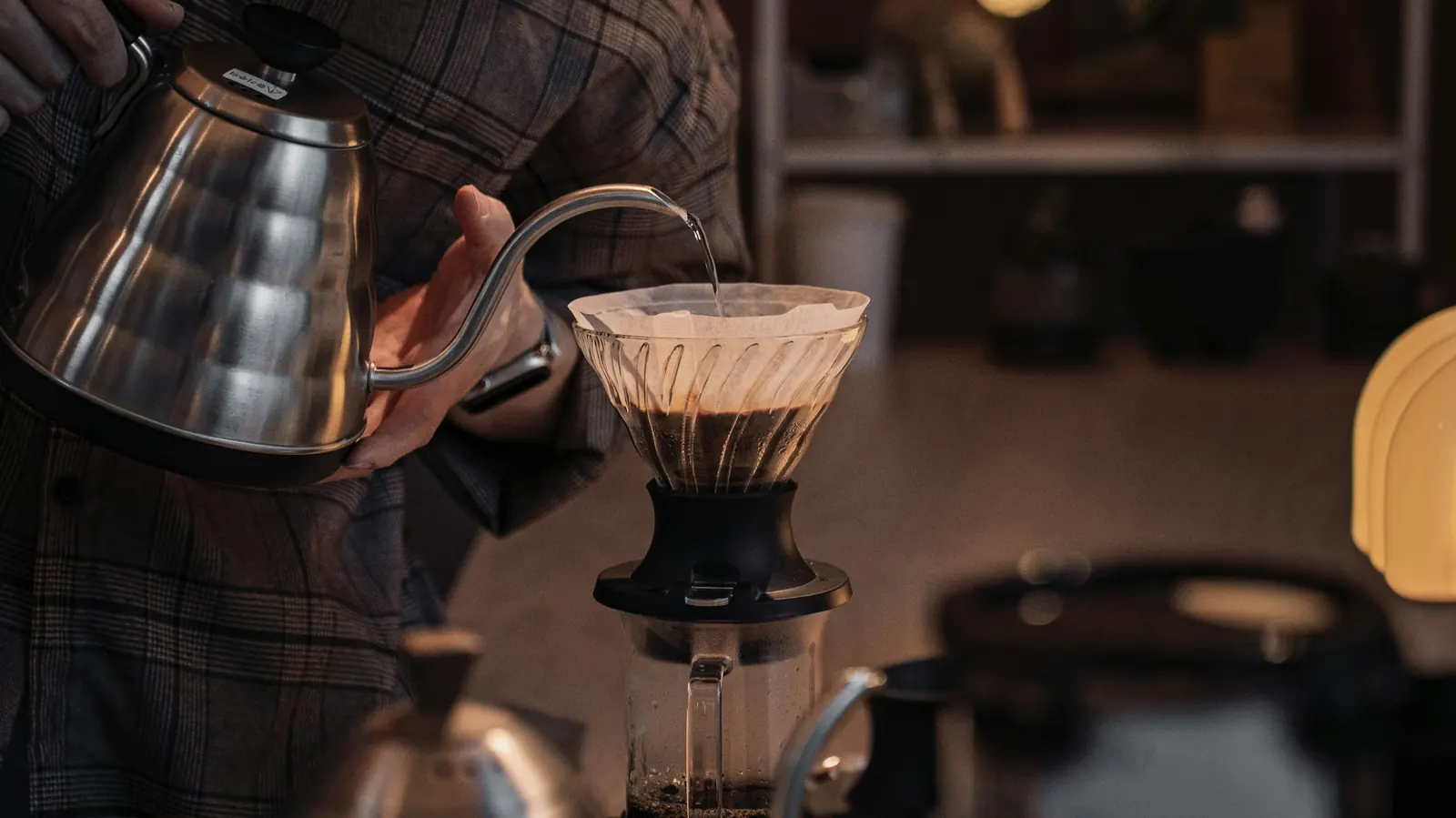
Pour-over and drip coffee are closer relatives than they look. Both pour hot water over ground coffee in a paper filter and let gravity pull it through into a cup or carafe. The difference is who does the pouring. With pour-over, you do: a kettle in your hand, the water going where and when you choose. With a drip machine, a heater and a shower head do it for you while you get on with the morning.
That one difference decides almost everything else: how much control you have over temperature and timing, how much coffee you can make at once, how long you stand at the counter and what you need to buy. This guide compares the two on those points, using what the Specialty Coffee Association, UC Davis researchers and America’s Test Kitchen have published, then names a pick for each side.
Julia’s earns a commission on purchases made through links on this page, at no cost to you. Recommendations are based on what a restaurant kitchen looks for, product specifications and verified buyer reports.
Quick verdict: pour-over or a drip machine?
Choose pour-over if you brew one to four cups at a time, enjoy the ritual and want the most control over how your coffee tastes for the least money. Choose a drip machine if you make a full pot most mornings or want coffee without standing over it, but buy one built to reach proper brewing temperature, such as an SCA-certified brewer. For most households brewing a pot a day, a good drip machine is the more practical buy; for one or two people who like to tinker, pour-over wins.
The table sums up the differences; the sections after it explain each one.
Pour over vs drip coffee, side by side
| Pour-over | Drip machine | |
|---|---|---|
| Who controls the water | You, with a kettle | The machine |
| Water temperature | Whatever your kettle delivers | Set by the machine; SCA-certified brewers must reach at least 92°C (197.6°F) |
| Typical batch | 1 to 4 cups (Hario V60 size 02) | A full pot, often 8 to 12 cups |
| Your time at the counter | The whole brew, a few minutes | A minute to load it |
| Skill needed | Some; “requires finesse” (ATK) | Little |
| Extra gear | Kettle, ideally a gooseneck; scale helps | None beyond filters |
| Cost | Low for the dripper | Higher, especially for good machines |
| Upkeep | Rinse or dishwasher | Carafe and basket, plus descaling |
Brew temperature: what the standards actually say
Temperature is where most of the argument starts, so it helps to know what the coffee world’s standards say. The Specialty Coffee Association’s Gold Cup standard, as described by UC Davis researcher William Ristenpart in an SCA interview, sets 92°C (197.6°F) as the minimum allowed brewing temperature. In another SCA article, sensory scientist Andrew Cotter notes that drip brewers that can’t reach 92°C fast enough fail SCA certification, and that a temperature near 93°C is believed by most to be best.
That is the drip machine’s weak point. A machine has a fixed heater, and if it is underpowered, the water hitting the coffee is too cool and the coffee tastes thin and sour. Brewers that carry SCA certification have been checked against that standard; a machine without it may or may not reach it. With pour-over, the kettle sets the temperature, so you can heat water to just off the boil every time.
The research also puts temperature in its place. A UC Davis study published in Scientific Reports by Mackenzie Batali, William Ristenpart and Jean-Xavier Guinard found that, at fixed brew strength and extraction, brew temperature has little impact on the sensory profile of drip coffee. Cotter reports the same for temperatures from 87 to 93°C. Temperature still changes how fast coffee extracts, so it matters, but mostly because it changes extraction. Grind, ratio and contact time matter just as much, and that is where pour-over gives you more to adjust.
Control and flavor
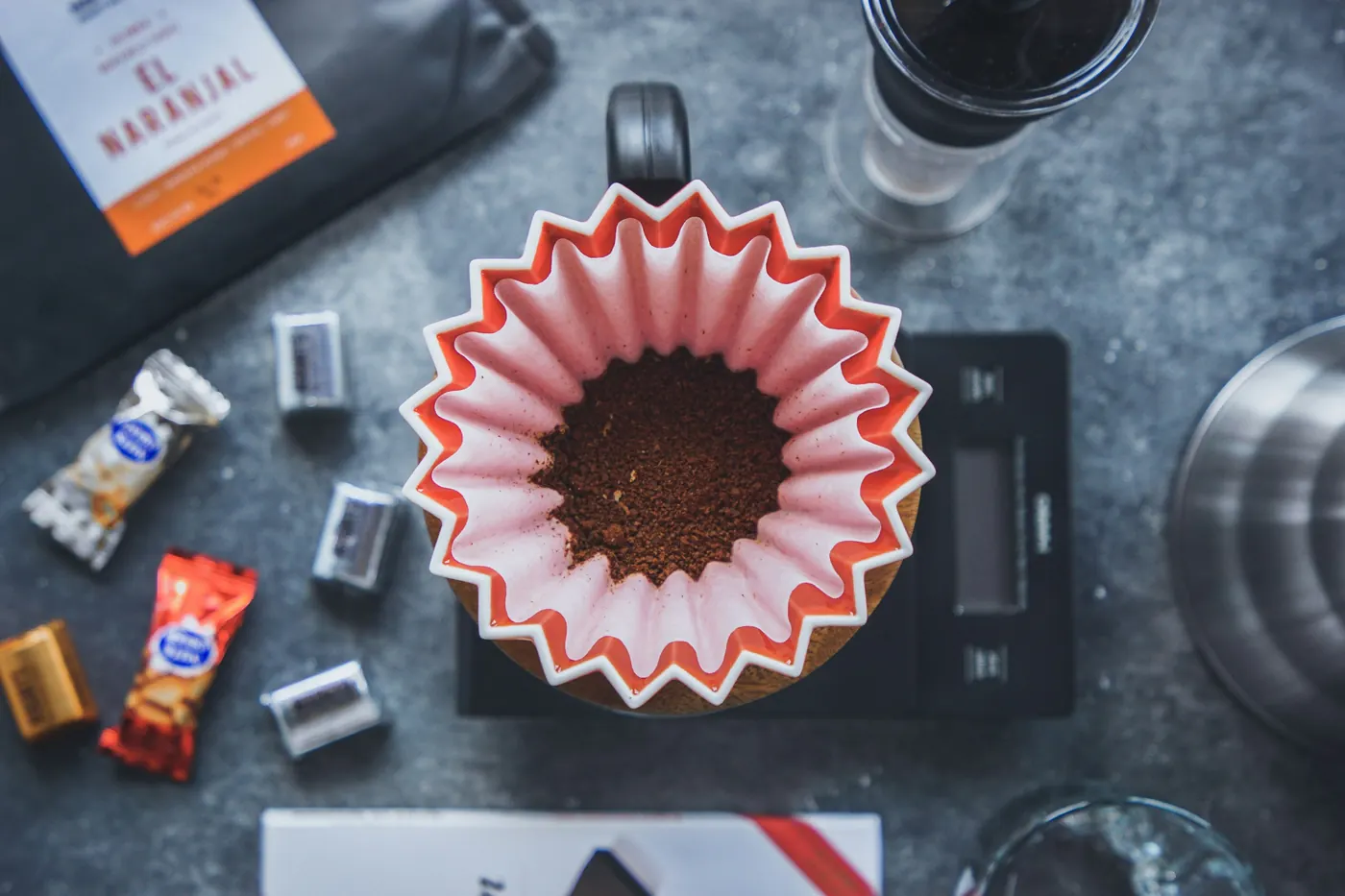
America’s Test Kitchen says pour-over makers can produce coffee as good as or better than that made with automatic machines, and credits the control the method gives you over temperature and timing. You choose how fast to pour, when to pause, and how long the water sits on the grounds. A short pause to let the coffee bloom, about 30 seconds as ATK describes it, lets the fresh grounds release gas so the water can extract them evenly.
The same control is the catch. ATK says pour-over requires finesse to achieve optimal extraction, and that if the slurry is unevenly hydrated, the coffee won’t be extracted properly. Pour too fast or in one spot, and part of the coffee is over-extracted while part barely gets wet. A good drip machine gives a less tunable but more repeatable result, with the same shower of water over the bed every morning.
In general kitchen terms, both make clean, paper-filtered coffee with little sediment. Dripper shape matters too: ATK says cone drippers like the Hario V60 favor light roasts and bright notes, while flat-bottom drippers are more forgiving.
How much coffee and how fast
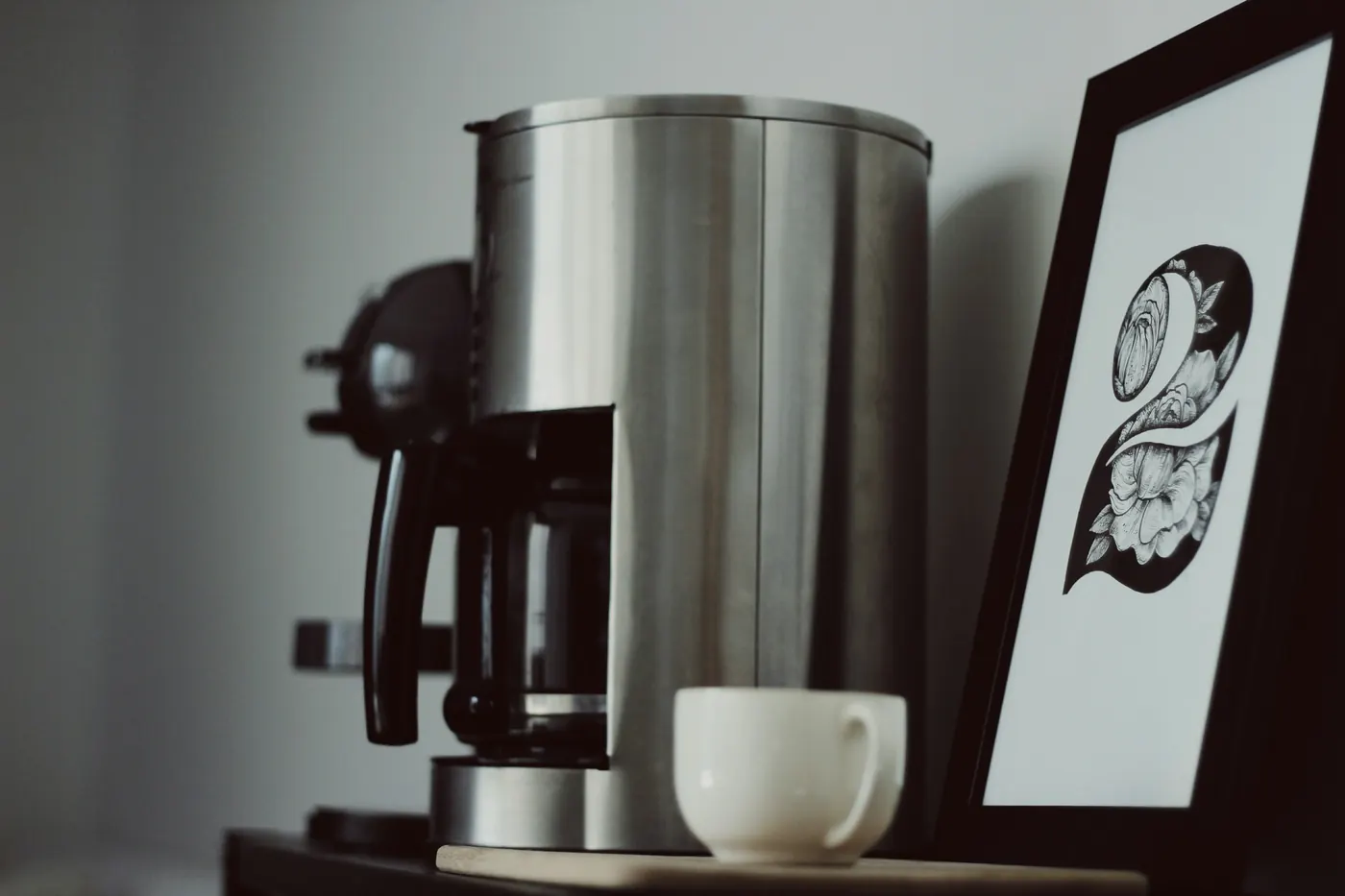
This is where the drip machine pulls ahead. Hario rates its V60 size 02 dripper for 1 to 4 servings of 120 milliliters each, which is roughly two big mugs. Making more means brewing twice or buying a larger brewer such as a Chemex. A drip machine like the Moccamaster brews a full 40-ounce pot in 4 to 6 minutes with one switch, according to its listing, and you don’t have to stand there.
So think about the household. One or two coffee drinkers who brew a cup or two at a time lose nothing with pour-over. A family, a busy weekday, or a pot for guests after a dinner of mole and tamales are drip machine jobs. Many kitchens keep both: a machine for weekdays and a dripper for slow weekends.
What else you need to buy
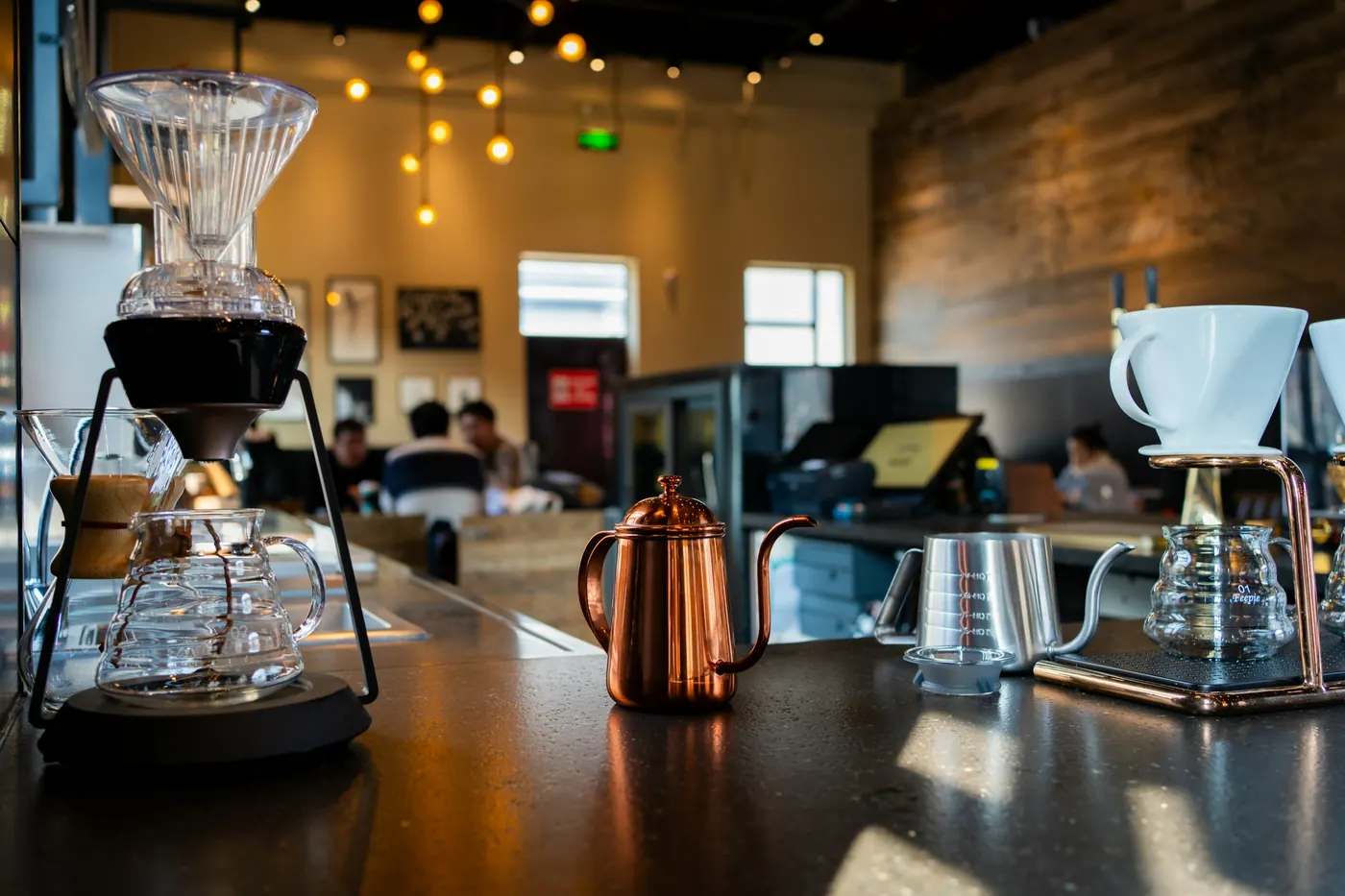
A dripper alone isn’t a coffee setup. You need a kettle, ideally a gooseneck that lets you pour a thin, steady stream; our gooseneck kettle vs regular kettle guide explains why the spout matters. ATK recommends using the dripper’s own filters where they exist. A scale helps you repeat a good ratio, and a burr grinder helps more than anything else; our best conical burr grinder for pour-over guide covers that.
A drip machine needs filters and coffee, and that’s it. A grinder still improves the cup, and our best burr grinder for drip coffee guide covers grinders set up for machine brewing. Add up the whole setup before comparing costs: a cheap dripper plus a gooseneck kettle and scale can cost as much as a basic machine.
Cost over time
America’s Test Kitchen notes that pour-over makers are inexpensive compared to automatic drip coffee makers. A plastic or ceramic dripper costs very little, has no parts to fail and lasts for years. Machines vary widely: the ones built to brew at the right temperature cost noticeably more than basic models, and they carry a heater and pump or valve that can eventually wear out. Warranty length is worth checking; the Moccamaster lists a 5-year warranty.
Filters are a running cost for both. Pour-over drippers often take their own shape of paper, while most drip machines take common basket or cone filters you can buy anywhere.
Cleaning and upkeep
A pour-over dripper is the easiest coffee maker to keep clean: lift out the paper, rinse the cone, and put it in the dishwasher if the maker allows it, which Hario does for its plastic V60. There’s nothing hidden to grow mineral scale.
A drip machine has a carafe and filter basket to wash and a water path that collects mineral scale over time. In general kitchen terms, every machine that heats water needs descaling now and then, more often with hard water; follow the schedule in your machine’s manual.
Choose pour-over if… / Choose a drip machine if…
Choose pour-over if…
- You brew one to four cups at a time.
- You enjoy adjusting grind, ratio and pour to bring out a coffee’s flavor.
- You want the lowest-cost, longest-lasting brewer.
- You already own a kettle, or are happy to buy a gooseneck.
Choose a drip machine if…
- You make a full pot most mornings or brew for guests.
- You want coffee ready while you do something else.
- You want the same result every day with little skill.
- You are willing to pay for a machine that reaches proper brewing temperature.
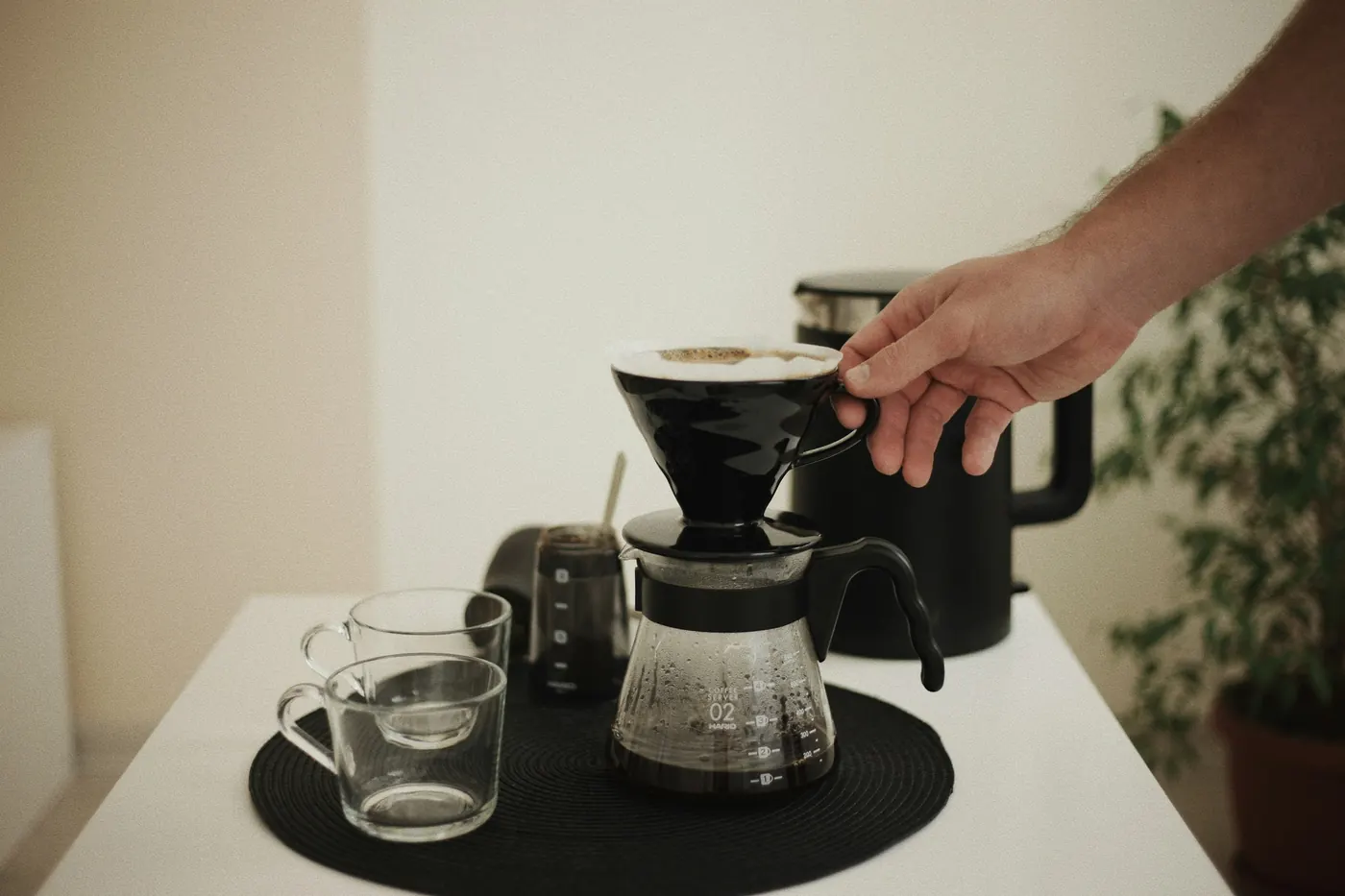
Our pick on each side of the pour over vs drip coffee question
One pick per side, both in stock when we checked. Neither listing appears on our other pages, but each is another color of a model we cover elsewhere: the Hario V60 is the clear version of the white plastic V60 02 in our best pour over coffee maker guide, chosen because the cone dripper is the classic pour-over and the clear plastic lets you watch the bed drain; and the Moccamaster is the matte black version of the KBGV Select in our automatic pour-over coffee maker guide, chosen because it is a drip machine built around brewing temperature.
1. Hario V60 Plastic Coffee Dripper, Size 02 – The Classic Cone for One to Four Cups

The V60 is Hario’s cone dripper, and this is the plain plastic version in size 02. The listing gives it as model VDR-02-T, made of AS resin and polypropylene, for 1 to 4 servings of 120 milliliters each. It is dishwasher safe and safe with boiling water, and the design won a Good Design Award in 2007.
The V60 is a cone with spiral ribs inside, as Hario’s own V60 listings describe it. How fast you pour largely sets how long the water stays on the coffee, which is what gives a cone dripper its control and its learning curve. America’s Test Kitchen tested the ceramic V60, found it brought out bright notes with well-balanced flavor overall, and noted that the plastic version shares the same design features. ATK also says this style favors light roasts.
Plastic has two practical advantages over ceramic: it doesn’t break if dropped, and it doesn’t soak up heat from the first pour the way a cold ceramic cone does. It takes V60 02 cone filters, which ATK’s general advice to use the maker’s own papers applies to. Pair it with a gooseneck kettle and a scale for the most repeatable results.
Why we like it
- Classic cone design for full control
- Dishwasher safe and boiling-water safe
- Unbreakable plastic body
- Clear body shows the coffee bed draining
Key specifications
| Model | VDR-02-T |
|---|---|
| Type | Cone pour-over dripper |
| Capacity | 1 to 4 servings of 120 ml |
| Material | AS resin, polypropylene |
| Water heating | None; use your own kettle |
| Filter | V60 02 cone paper |
| Cleaning | Dishwasher safe |
| Warranty | Not stated |
Why we recommend it
It suits a coffee drinker brewing a cup or two at a time who wants to learn pour-over and adjust each brew.
Skip it if you want a forgiving dripper that tastes good with rough pouring; a flat-bottom dripper like the Kalita Wave in our pour-over guide is easier.
Pros and cons
Pros
- Very low cost
- Nothing to break or wear out
- Easy to clean
Cons
- Sensitive to pouring technique
- Needs its own cone filters
- Sold by a third-party seller when we checked
2. Technivorm Moccamaster KBGV Select 10-Cup Coffee Maker – A Full Pot, Hands-Off
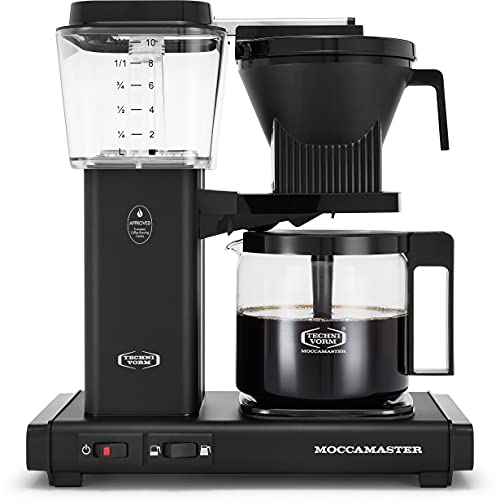
The Moccamaster is a drip machine designed around brewing temperature. The listing describes the KBGV Select as a pump-free coffee maker that heats water to the correct temperature for coffee extraction, and says it brews a full 40-ounce pot in 4 to 6 minutes using one switch.
A brew-volume selector switches between a half and a full carafe, which helps on mornings when only one or two people want coffee. The listing says it brews quietly and turns off automatically after 100 minutes. Moccamaster backs it with a 5-year warranty, per the listing.
It is the opposite trade to the V60: no technique and a full pot, but at a much higher cost and with more counter space used. Like any machine that heats water, it needs descaling now and then; follow Moccamaster’s instructions. If you want coffee kept hot for hours in an insulated jug, look at a thermal carafe model instead.
Why we like it
- Heats water to brewing temperature, per the listing
- Full 40-ounce pot in 4 to 6 minutes
- Half-carafe setting
- 5-year warranty
Key specifications
| Model | 53948 (KBGV Select, Matte Black) |
|---|---|
| Type | Automatic drip coffee maker |
| Capacity | 10 cups, 40 oz (1.25 L) |
| Material | Not stated on listing |
| Water heating | Built-in, pump-free |
| Filter | Not stated on listing |
| Cleaning | Wash carafe and basket; descale per maker |
| Warranty | 5 years (listing) |
Why we recommend it
It suits a household that brews a pot most mornings and wants machine convenience with careful temperature control.
Skip it if you only make a cup or two a day; a dripper and kettle cost far less and do that job well.
Pros and cons
Pros
- One switch, no technique
- Fast full pot
- Long warranty
Cons
- Much higher cost than a dripper
- Takes more counter space than a dripper
- Needs regular descaling
Pour-over and drip coffee questions, answered
Does pour-over taste better than drip coffee?
It can. America’s Test Kitchen says pour-over can make coffee as good as or better than automatic machines because you control temperature and timing. A good drip machine that reaches proper temperature can make excellent coffee too, and more consistently if your pouring is uneven.
What water temperature should I use for pour-over?
The SCA’s Gold Cup standard sets 92°C (197.6°F) as the minimum, and around 93°C (about 200°F) is widely considered best. Water just off the boil gets you close. UC Davis research found that small changes in temperature matter less than getting the strength and extraction right.
Is pour-over stronger than drip?
Not by method alone. Strength comes from the ratio of coffee to water and how fully the coffee is extracted. Either method can make strong or weak coffee depending on how much coffee you use and how fine you grind it.
What should I look for in a drip machine?
A machine that heats water to proper brewing temperature, an even shower over the grounds, and a carafe that suits how you drink it. SCA certification is a useful shortcut, since certified brewers must reach the standard’s temperature in time.
Is pour-over worth the effort?
If you brew one or two cups and enjoy the process, yes: it is inexpensive and gives you the most control. If mornings are rushed or you need a pot, a good drip machine is the better use of money.
Our final word on pour-over and drip
Match the brewer to your mornings. One or two cups and a few minutes to spare: buy a dripper and a gooseneck kettle, and you’ll have the most control for the least money. A pot every day or a houseful of coffee drinkers: buy a drip machine that heats water properly, and you’ll get good coffee without thinking about it.
For more choices, see our best pour over coffee maker guide, our best coffee maker guide for drip machines, and our best thermal carafe coffee maker guide if you want coffee kept hot for hours. And when you would rather someone else did the cooking, see the menu or call to order.