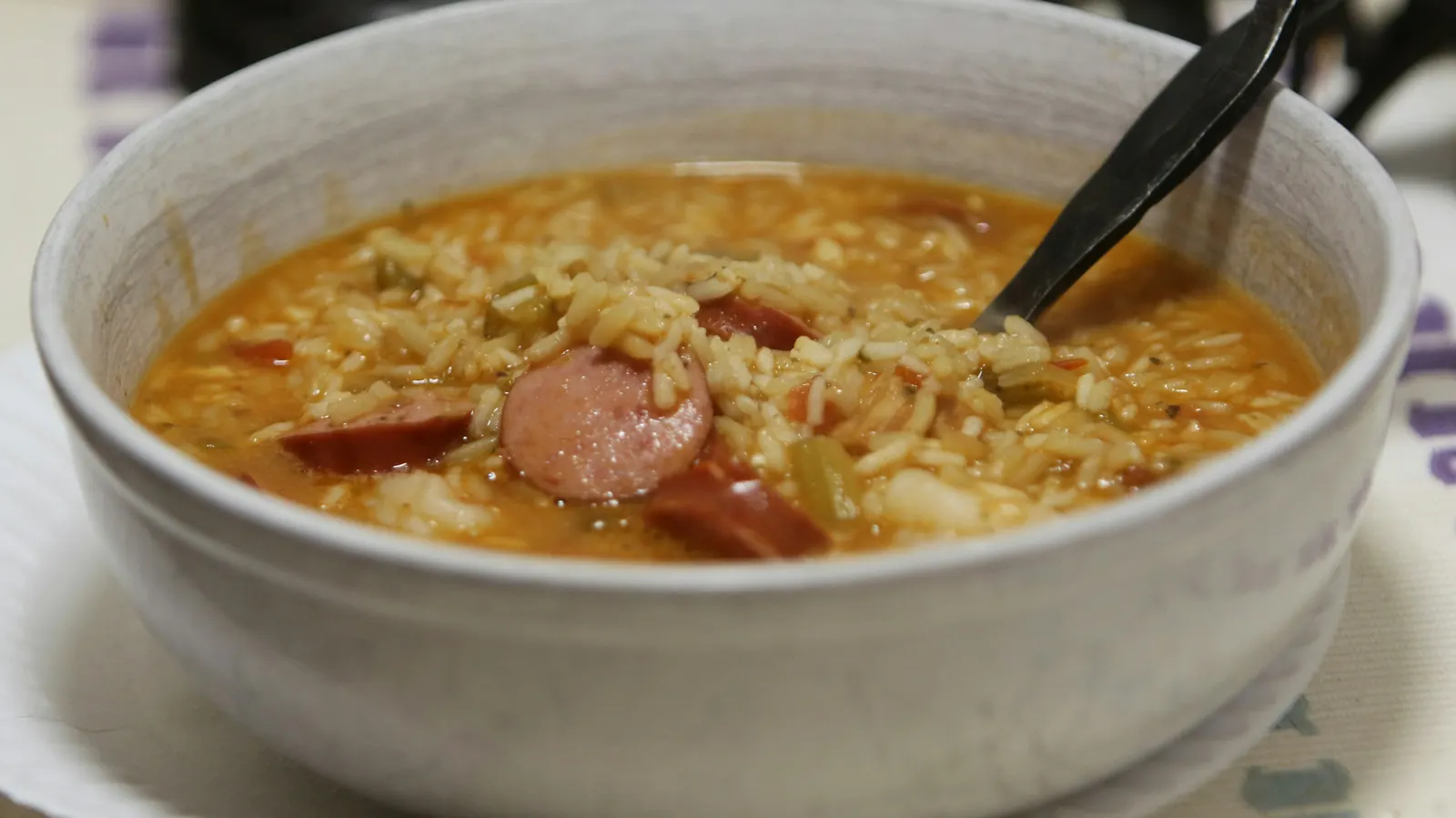
A pressure cooker and a slow cooker both turn tough cuts, dried beans and big pots of soup into dinner with little stirring. They get there from opposite ends. A pressure cooker seals the pot so the liquid inside can get hotter than boiling, and a braise that would take hours is done in under one. A slow cooker stays below the boil for six, eight or ten hours, so you can load it in the morning and come home to supper.
In a restaurant kitchen both ideas are old friends: the pressure pot for beans and pozole hominy at short notice, and the low, steady heat of a steam table for barbacoa that holds all day. This guide compares the two on speed, flavor, safety, beans, convenience, capacity and cleanup, says who should buy which, and names one example of each.
Julia’s earns a commission on purchases made through links on this page, at no cost to you. Recommendations are based on what a restaurant kitchen looks for, product specifications and verified buyer reports.
Quick verdict: fast or low-and-slow?
Buy a pressure cooker if you decide what’s for dinner at five o’clock, cook a lot of dried beans, or want one pot that can also sear. For most households it is the more useful single appliance, and most electric models include a slow-cook setting as well. Buy a slow cooker if you want dinner ready when you walk in after a long day, like to carry food to parties, or want the simplest controls possible. Plenty of cooks own both, because they suit different days.
The table sums up the differences; the sections after it explain each one.
Pressure cooker vs slow cooker, side by side
| Pressure cooker | Slow cooker | |
|---|---|---|
| How it cooks | Sealed pot; steam pressure raises the boiling point | Low, steady heat under a loose glass lid |
| Cooking temperature | Above boiling; 240 to 250°F at 10 to 15 psi (NCHFP, for pressure canners) | Generally 170 to 280°F (University of Maine Extension) |
| Typical time | Minutes to about an hour, plus time to build and release pressure | Hours: often 4 to 10 |
| Searing | Electric models usually sear in the pot | Stoneware crocks can’t go on the stove; brown in a pan first |
| Dried kidney beans | Gets hot enough to cook them properly | May not get hot enough; boil them first (Illinois Extension) |
| Leaving it alone | Short cook, then it switches to warm | Built for all-day, unattended cooking |
| Learning curve | Valves, release methods and fill lines to learn | Turn it on, choose low or high |
| Canning | Electric multi-cookers are not recommended for canning (Penn State Extension) | Not for canning |
Speed: the reason people buy a pressure cooker
Water in an open pot can’t get hotter than its boiling point. Seal the pot, and the steam pressure pushes that point up. The National Center for Home Food Preservation gives 240 to 250°F at 10 to 15 psi for pressure canners, which work on the same principle. Food cooks much faster at those temperatures, which is why a pot roast, carnitas or a pot of pinto beans can be done in the time it takes to make rice and a salad.
The quoted cooking times leave something out, though. The pot has to come up to pressure first, and the pressure has to come down at the end. Ninja’s listing for the pressure cooker we pick below is careful about this: its rice time of “as little as 8 minutes” excludes the time to build and release pressure. On a full pot, that can add a good part of an hour. A pressure cooker is still far faster than a slow cooker, just not as instant as the recipe card suggests.
A slow cooker runs the other way. The University of Maine Extension’s Kathy Savoie describes it as low and slow, generally between 170 and 280°F. That gentle heat is why it can run all day without scorching, and also why it can’t be hurried.
Flavor and texture
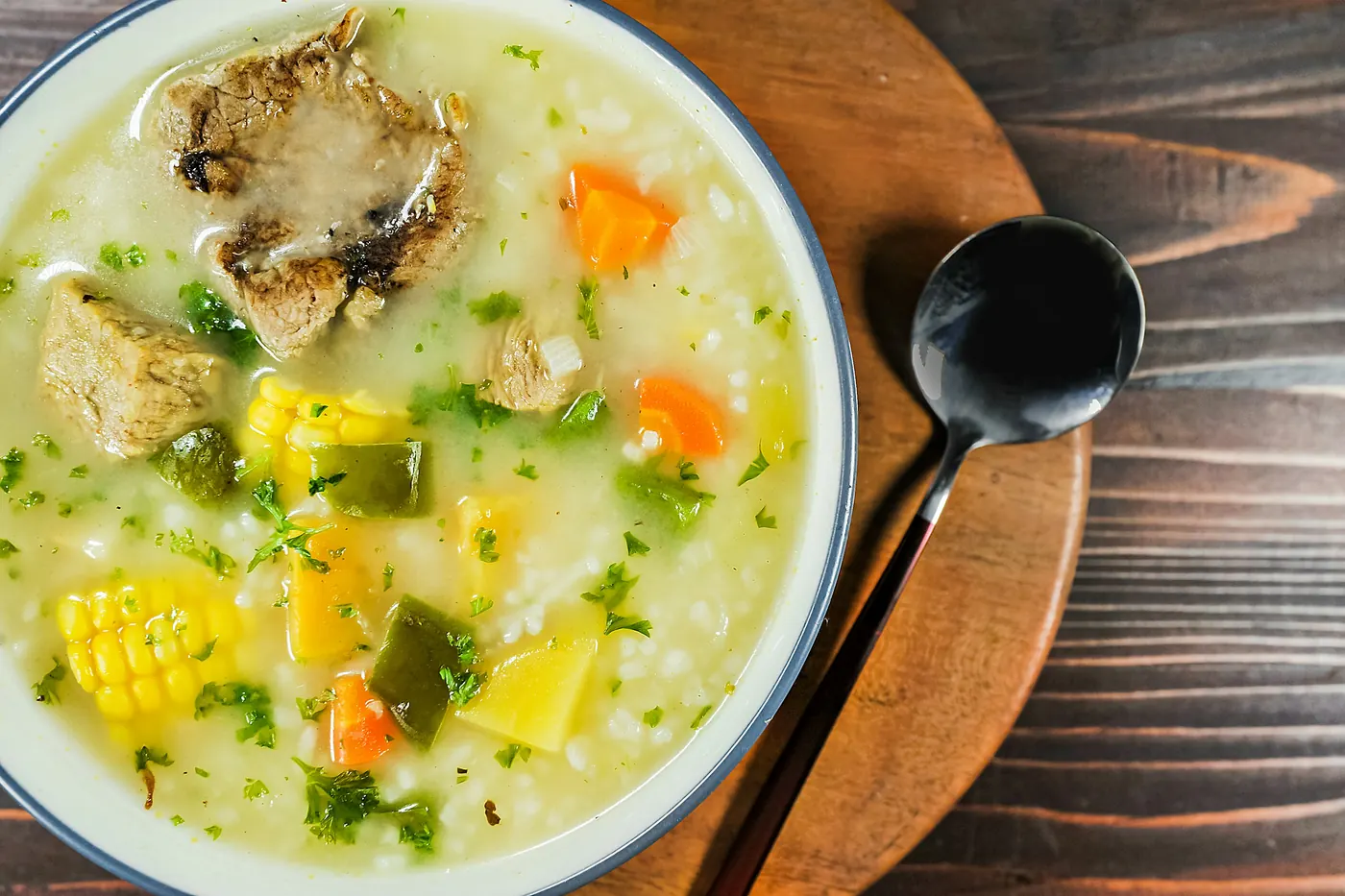
Both make tender meat, but they treat sauce differently. A pressure cooker is sealed, so almost nothing evaporates, and the cooking is short. You get very tender meat and a thin, plentiful broth, which suits caldo, pozole and beans de la olla. For a thick sauce, simmer it down with the lid off after cooking; electric models with a sear or sauté setting can do that in the same pot.
A slow cooker also traps moisture under its lid, so sauces come out thin there too. Its strength is the long, gentle cook: shredded beef for tacos, barbacoa-style roasts and chile colorado have hours to soften without boiling hard. Hamilton Beach’s own FAQ notes that lifting the lid lets out heat and steam and can mean extending the cooking time, so the slow cooker rewards leaving it alone.
Neither one browns meat by itself while it cooks. A pressure cooker with a sear setting lets you brown first in the same pot. With a stoneware slow cooker you brown in a skillet on the stove, since Hamilton Beach says its crocks must not go on the stovetop. If you skip browning, both still work; the flavor is simply milder.
Beans: a clear win for pressure
This is the difference that matters most in a Mexican kitchen. Dried beans in a pressure cooker take a fraction of the stovetop time and reach well above boiling.
In a slow cooker, beans need care. Illinois Extension’s Lisa Peterson explains that undercooked kidney beans are high in phytohaemagglutinin, a plant lectin that is toxic, and that slow cookers often bring beans only to about 167°F, not high enough to destroy it. Her advice is to soak them for at least 5 hours, drain, and boil them briskly in fresh water for 30 minutes before they go in. Pintos and black beans do well in a slow cooker, but if you cook red kidney beans often, the pressure cooker is the safer and faster tool. Our best pressure cooker guide is built around beans and braises.
Safety rules that come with each one
Each appliance has its own short list. For slow cookers, Savoie’s guidance is to thaw meat and poultry completely first, fill the cooker no less than half and no more than two-thirds full, keep the lid on, and turn it to high for the first hour if you can. She also says a slow cooker should not be used to reheat leftovers, and that hot food should be held at 140°F or above. Hamilton Beach says not to use frozen, uncooked meat in its slow cookers and to thaw it first, and suggests filling the crock between half and three-quarters full.
For pressure cookers, the rules come from the maker: respect the max fill line, keep the valve and gasket clean, and never force the lid open while there is pressure inside. Modern electric models lock the lid until the pressure drops. One thing neither appliance should do is home canning. Penn State Extension says there is no USDA or university research showing electric multi-cookers can safely process low-acid foods, and that using their canning feature is not recommended. For canning, our best canning pressure cooker guide covers real pressure canners.
Convenience: present or absent
The two suit different days. A pressure cooker suits the cook who is home but short on time: you start it, set the table and eat within the hour. A slow cooker suits the cook who is out all day: you load it in the morning, it switches to warm when it’s done, and dinner waits for you. The Hamilton Beach model below switches to warm automatically and turns itself off after 24 hours of cooking and warm time combined.
Electric pressure cookers can also slow cook, which is why many people buy one and skip the crock. The trade-off is that a slow-cook mode on a multi-cooker is not always as good as a dedicated slow cooker; our best multi cooker guide flags the models whose slow cooking falls short. A dedicated slow cooker also has the edge for carrying food to a party, since some have lids that latch for travel.
Capacity, space and cleanup
For a household of four to six, a 6-quart pot is the usual size for either appliance. Slow cookers come larger, up to 7 or 8 quarts, for party batches. A pressure cooker can’t be filled to the top: the max line sits well below the rim, and beans need extra room because they foam, so its usable capacity is less than the number on the box.
Cleanup is similar. The slow cooker’s stoneware crock and glass lid go in the dishwasher on many models, including our pick, but the crock is heavy and can crack if dropped. An electric pressure cooker’s inner pot is light and easy to wash, but the lid has a gasket, a valve and a float to keep clean, and the silicone ring can hold on to smells.
On lead: stoneware crocks are glazed, so we look for a maker statement. Hamilton Beach says its specifications for all slow cookers and their components, including the earthenware crocks, prohibit the product from containing any measurable amounts of lead.
Choose a pressure cooker if… / Choose a slow cooker if…
Choose a pressure cooker if…
- You often decide on dinner late and want it within the hour.
- You cook dried beans, especially red kidney beans, from scratch.
- You want to brown, cook and reduce in one pot.
- You’d like one appliance that can also slow cook, steam and make rice.
Choose a slow cooker if…
- You are out all day and want dinner ready when you get home.
- You want the simplest controls, with no valves to learn.
- You carry food to parties, potlucks or tailgates.
- You make big batches of shredded meat or chili for a crowd.
Our pick on each side of the pressure cooker vs slow cooker question
One pick per side, both in stock when we checked, both 6.5 to 7 quarts so the comparison is like for like. The Ninja is a different color listing of a pressure cooker on several of our pages, chosen again because Ninja’s listing states its slow-cook and sear functions and is clear about pressure build-up time, which makes it the fairest example of a modern electric model. The Hamilton Beach is a model we don’t cover elsewhere, and Hamilton Beach is one of the few slow cooker makers with a published statement on lead in its crocks.
1. Ninja HyperHeat 9-in-1 Pressure Cooker, 6.5 Quart – Sears and Slow Cooks Too

This is an electric pressure cooker that does the slow cooker’s job as well, which is the point for anyone who would rather own one appliance. Ninja lists nine functions: pressure cook, slow cook, rice, sous vide, steam, sear and sauté, yogurt and more. The base is rated at 1,200 watts, and the listing says the pot has a wide 9.5-inch cooking surface for browning meat before you lock the lid.
The 6.5-quart pot fits up to a 4-pound chicken or a 5-pound roast and feeds 8 to 10 people, according to Ninja. It is a removable ceramic nonstick pot that Ninja describes as PFAS-free and made to serve from at the table. Ninja gives white rice in as little as 8 minutes and quinoa in as little as 5, and states plainly that those times exclude building and releasing pressure.
Ninja’s “2X faster” claim is measured against traditional slow cooking, not against other pressure cookers, so read it that way. A nonstick pot is easy to clean but needs non-metal utensils to last; if you want bare stainless for searing hard, look at the stainless models in our pressure cooker guides.
Why we like it
- Pressure cook and slow cook in one base (listing)
- Sear and sauté in the same pot
- 1,200-watt base (listing)
- States that cook times exclude pressure build and release
Key specifications
| Model | PC201WH |
|---|---|
| Capacity | 6.5 quarts |
| Power | 1,200 watts |
| Settings | 9 functions incl. pressure cook, slow cook, sear, rice |
| Pot | Removable ceramic nonstick, PFAS-free (listing) |
| Feeds | 8 to 10 people (listing) |
| Cleaning | Nonstick pot wipes clean (listing) |
| Warranty | Not stated on the listing |
Why we recommend it
It suits a family cook who wants fast beans and braises on weeknights and the option to slow cook on weekends, all in one countertop appliance.
Skip it if you want a stainless inner pot; the Instant Pot Duo Plus in our best pressure cooker guide has one.
Pros and cons
Pros
- Does both jobs
- Family-size pot
- Wide surface for searing
Cons
- Nonstick pot needs gentle utensils
- Warranty not stated on the listing
- Valve and gasket to keep clean
2. Hamilton Beach Set & Forget 7-Quart Portable Slow Cooker – Timer, Auto Warm and a Lid Latch

This is a programmable slow cooker built for the all-day cook. The listing gives 15 programmable options: warm, low or high heat combined with 2, 4, 6, 8 or 10 hours of cooking time. When the time is up it switches itself to warm, and it turns off automatically after a total of 24 hours of cooking and warm time, according to Hamilton Beach.
The 7-quart stoneware crock holds a whole 7-pound chicken or a 5-pound roast and serves 8 or more people, the listing says. A strap called the Lid Latch anchors to the base to hold the lid in place when you carry it, which makes it a good pot for potlucks and tailgates. The controls are touch buttons with lights that show each setting.
The crock and glass lid are dishwasher safe. Hamilton Beach’s FAQ says its crocks are microwave, oven and dishwasher safe but must not be used on the stovetop, so brown meat in a separate pan. The same FAQ carries the company’s statement that its slow cookers and earthenware crocks may not contain any measurable amounts of lead. The listing gives a one-year limited warranty.
Why we like it
- 15 time and heat combinations (listing)
- Switches to warm, then off after 24 hours
- Lid Latch for carrying
- Maker statement on lead in crocks (Hamilton Beach FAQ)
Key specifications
| Model | 33670 |
|---|---|
| Capacity | 7 quarts |
| Power | Not stated on the listing |
| Settings | Warm, low, high; 2 to 10 hours |
| Pot | Stoneware crock, glass lid |
| Feeds | 8+ people (listing) |
| Cleaning | Crock and lid dishwasher safe |
| Warranty | 1 year limited |
Why we recommend it
It suits a cook who is out all day or feeds a crowd, and wants a slow cooker that finishes on time and travels without spills.
Skip it if you only cook for one or two; a 7-quart crock should be at least half full, so a smaller model from our best slow cooker guide fits better.
Pros and cons
Pros
- Simple timer with auto warm
- Large crock for parties
- Latching lid for travel
Cons
- Can’t brown on the stove in the crock
- Heavy stoneware
- Large for small households
Pressure and slow cooking questions, answered
Is a pressure cooker better than a slow cooker?
For most people, it is the more useful single appliance, because it is fast, handles dried beans well and usually includes a slow-cook mode. A dedicated slow cooker is still better for long, unattended days and for carrying food to a party.
Can a pressure cooker replace a slow cooker?
Mostly. Electric pressure cookers such as our Ninja pick list a slow-cook setting. Results vary by model, and a dedicated slow cooker is simpler and often larger, so check reviews of the slow-cook function before you give your crock away.
Can I convert a slow cooker recipe to a pressure cooker?
Yes, but cut the liquid, since a sealed pot loses almost none, and use the pressure cooker maker’s time chart rather than guessing. Never fill past the max line.
Can I put frozen meat in a slow cooker?
No. University of Maine Extension and Hamilton Beach both say to thaw meat and poultry completely first.
Which is better for beans?
The pressure cooker. It is much faster and gets hot enough to cook red kidney beans safely. In a slow cooker, Illinois Extension advises boiling kidney beans for 30 minutes first.
Which pot earns the counter space
If you can only own one, make it the pressure cooker, ideally an electric model with a slow-cook setting, because it covers fast weeknight beans and braises and can still cook low and slow. Choose a dedicated slow cooker if your days are long and you want dinner waiting, or if you often cook for a crowd. For a third way to braise, our Dutch oven vs slow cooker guide compares the oven route, and our best slow cooker guide covers more crocks.
And on the nights when neither pot is going, see the menu or call to order.