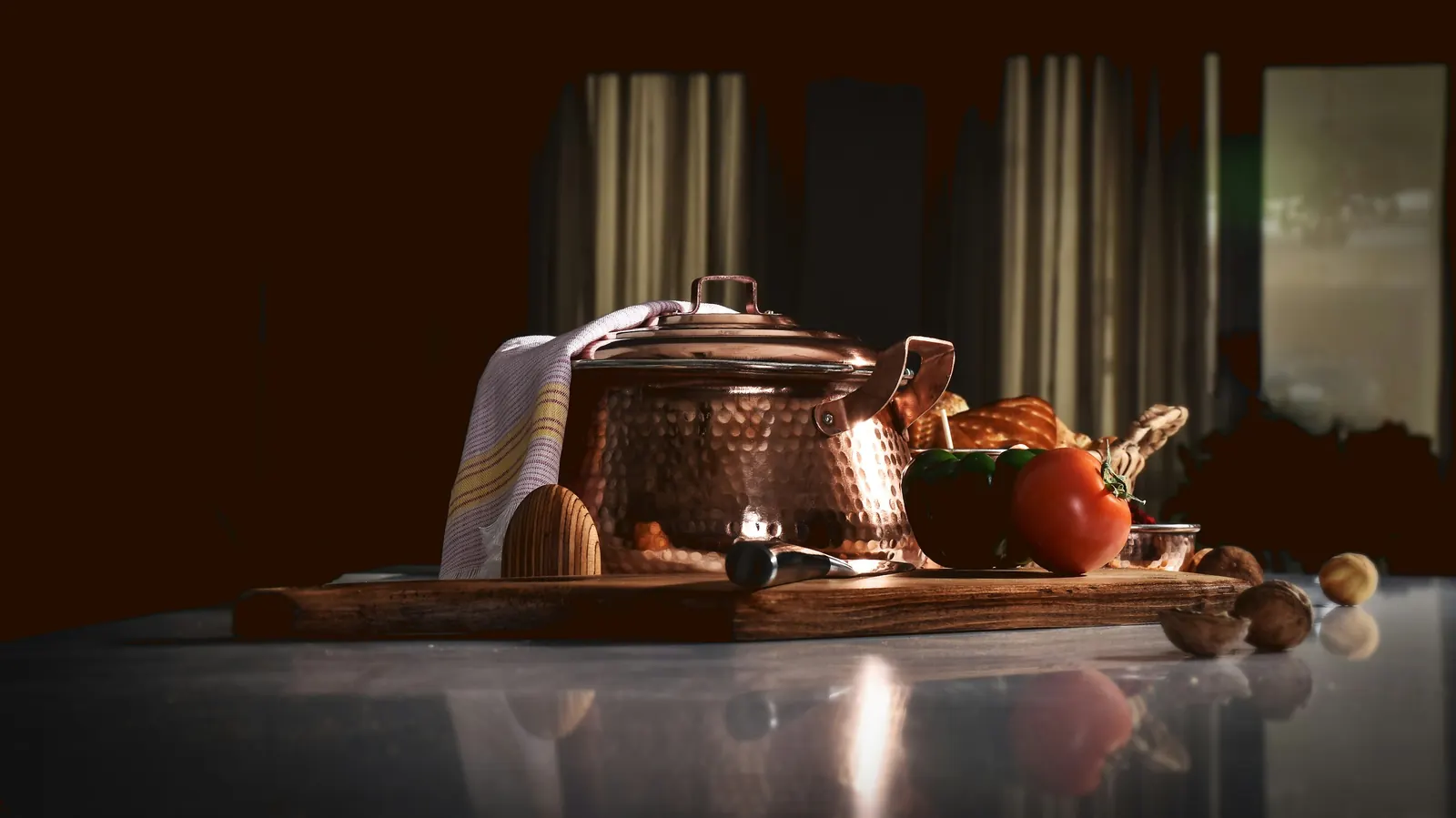
A Dutch oven and a slow cooker both make tender barbacoa, a deep pot of chile colorado and frijoles that fall apart on the spoon. They get there in different ways. A Dutch oven is a heavy lidded pot that you heat yourself, on a burner or in the oven, at any temperature you like. A slow cooker is a pot with its own low heater and a timer, built to work for hours while nobody is home.
If you can only find room for one, the choice comes down to how you cook on a normal weekday, not which one makes the better stew. This guide compares the two on heat, browning, sauce, safety, beans, cleanup, space and what else each one can do. Then it says which to buy first and names one example of each.
Julia’s earns a commission on purchases made through links on this page, at no cost to you. Recommendations are based on what a restaurant kitchen looks for, product specifications and verified buyer reports.
Quick verdict: which one should you own first?
For most home cooks, buy the Dutch oven first. It sears, braises, boils beans, fries and bakes bread, and America’s Test Kitchen calls an enameled cast-iron Dutch oven its preferred pot for braising. Buy a slow cooker first only if you are out of the house all day and want dinner to start while you are gone. That one job is the slow cooker’s whole case, and for people who work long days it is a strong one.
The table below lines up the differences. Each one gets a short section after it.
Dutch oven vs slow cooker, side by side
| Dutch oven | Slow cooker | |
|---|---|---|
| Heat source | Your stove and oven | Its own heater in the base |
| Cooking temperature | Whatever you set; Lodge rates its enameled pots oven safe to 500°F | Low and slow, generally 170 to 280°F (University of Maine Extension) |
| Browning | Yes, in the same pot | Not in a stoneware crock; brown in a skillet first |
| Reducing a sauce | Yes, lid off on the stove or in the oven | Limited; the lid stays on |
| Leave it while you are out | No | Yes, that is what it is for |
| Dried kidney beans | Can boil them as Illinois Extension advises | Boil them on the stove first |
| Other jobs | Bread, frying, soups, rice, roasting | Keeping food warm for serving |
| Cleanup | Hand wash recommended (Lodge) | Crock and lid in the dishwasher (Hamilton Beach) |
Heat: you set it, or the appliance does
This is the root of every other difference. The University of Maine Cooperative Extension describes a slow cooker as cooking “slow and low,” generally between 170 and 280°F. You choose low, high or warm, and the appliance decides what those words mean. That narrow band is why it can run unattended for hours without scorching anything.
A Dutch oven has no range of its own. On a burner it can go from a bare simmer to a hard sear, and in the oven it goes wherever you turn the dial. Taste of Home’s Dutch oven guide suggests starting a braise on the stove, then moving the pot to a 300°F oven to simmer gently until done. Lodge rates its Essential Enamel pots oven safe up to 500°F, so the same pot also handles a hot bake.
Why the oven rather than the burner? America’s Test Kitchen’s braising guide says the oven surrounds the pot with even heat from all sides, while on the stove the heat concentrates on the bottom and can scorch the liquid. It also notes that a liquid kept below a boil cannot go above 212°F, which is why a covered pot in a moderate oven cooks so gently.
Browning and sauce: where the Dutch oven pulls ahead
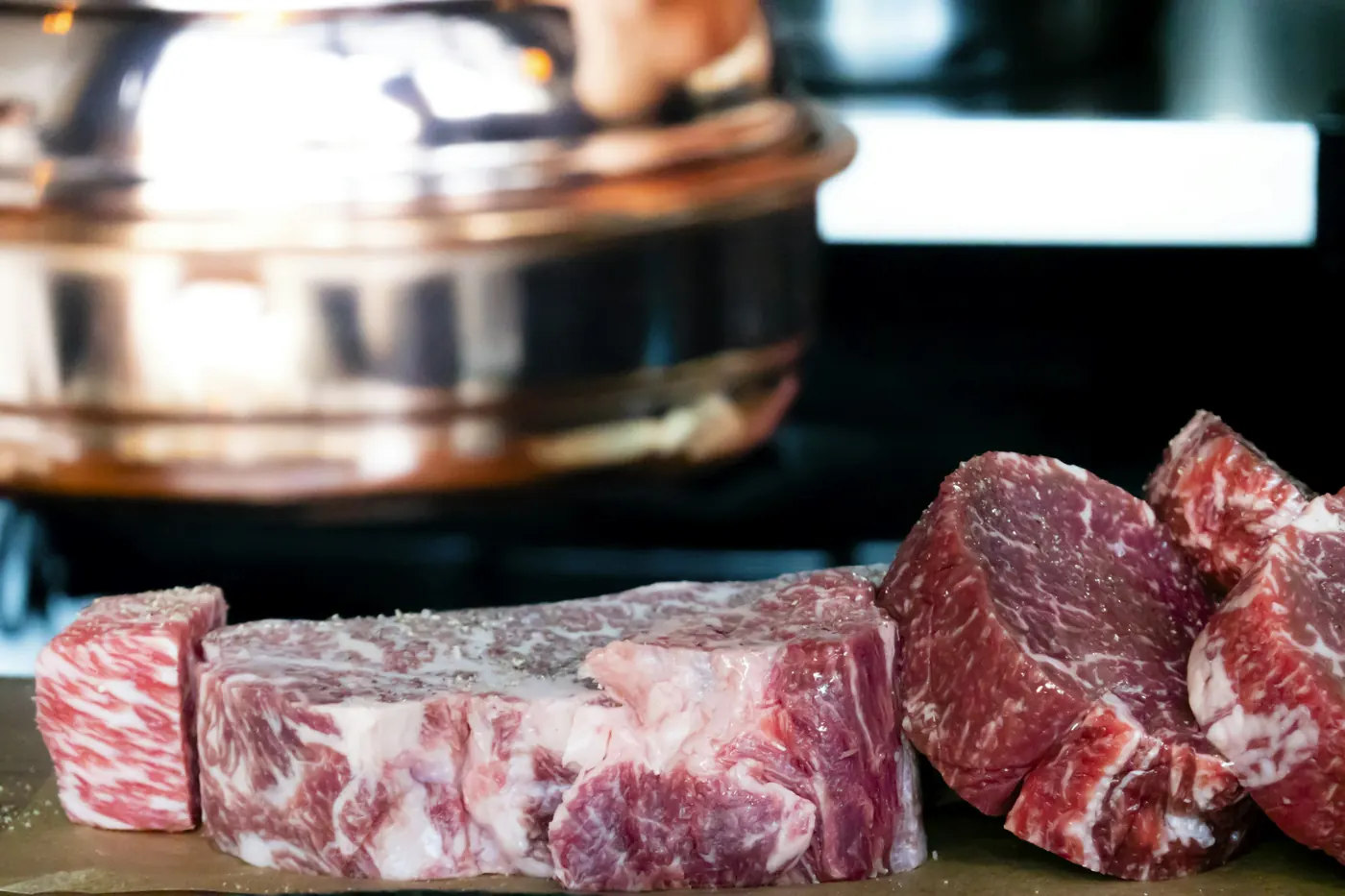
Much of the flavor in a braise comes before the long cook: meat browned in hot fat, onions softened, dried chiles toasted until fragrant. Taste of Home’s advice is to sear meat in hot oil until it has some color before adding the liquid. In a Dutch oven that happens in the pot you will braise in, and the browned bits on the bottom dissolve into the sauce.
A stoneware crock cannot go on a burner, so a slow cooker recipe either skips that step or asks you to brown in a separate skillet and scrape everything across. Some slow cookers solve this with a metal insert that is safe on the stovetop; our best slow cooker with browning guide covers them. With a standard crock, plan on two pans.
The end of the cook matters too. A slow cooker works with the lid on, and the University of Maine Extension advises keeping it on for the whole cycle, because each lift drops the temperature and the cooker needs time to recover. That is right for safety, but it means very little liquid escapes, so slow cooker sauces tend to come out thinner. With a Dutch oven, you take the lid off for the last stretch, on the stove or in the oven, and cook the sauce down until it coats the meat. For a mole de olla or a thick adobo, that control is worth a lot.
Leaving the house: the slow cooker’s real job
Here the slow cooker wins outright. It is built to run unattended: the Hamilton Beach pick below can be set for anywhere from 30 minutes to 24 hours and switches itself to warm when the time is up. You can load it before work and come home to dinner that is cooked and held hot.
A Dutch oven depends on your stove and oven, and neither is designed to run all day with nobody home. If you cook in a Dutch oven, you are in the house while it cooks, even if you are not standing over it. For many cooks that is no hardship on a weekend, but on a workday it settles the question.
Safety rules that come with each pot
The slow cooker’s low heat is gentle, which is also why it comes with a few extension-service rules. The University of Maine’s list includes these:
- Fill the crock no less than half full and no more than two-thirds full, so it heats food quickly enough.
- Thaw meat and poultry completely before it goes in.
- Turn the cooker to high for the first hour, then lower it to the setting in your recipe if needed.
- Keep the lid on during cooking.
- Don’t use a slow cooker to reheat leftovers. Reheat them to 165°F on the stove, in the oven or in the microwave, then hold them in the preheated cooker.
The Hamilton Beach pick below has a defrost setting that the maker says defrosts meat safely before cooking. The extension advice is still to start with fully thawed meat, and we would follow that.
A Dutch oven brings ordinary stove and oven safety instead. A 6-quart cast-iron pot full of braise is heavy and stays hot for a long time, so use two dry oven mitts, clear a landing spot before you lift and never use a damp towel as a pot holder. For either pot, check that meat has reached a safe internal temperature with a thermometer; the University of Maine chart lists 145°F with a three-minute rest for whole cuts of beef and pork, 160°F for ground meat and 165°F for poultry.
Beans: a Dutch oven job
This one matters in a Mexican kitchen. A pot of beans looks like a natural slow cooker dish, and for pintos and black beans many cooks use one. Dried red kidney beans are the exception. Illinois Extension explains that undercooked kidney beans contain high levels of a natural lectin called phytohaemagglutinin, that the toxin is destroyed at 212°F when cooked for at least 10 minutes, and that slow cookers often heat beans to only about 167°F.
Its advice is to soak dried kidney beans for at least five hours, drain them, then boil briskly in fresh water for 30 minutes before using them. Canned kidney beans are already cooked and need no extra boiling. A Dutch oven does that boil on a burner and can carry on to finish the beans. If you use a slow cooker, do the boil first in a separate pot.
Cleanup, glazes and what the makers say about lead
Cleanup favors the slow cooker slightly. Hamilton Beach says the stoneware crock and glass lid of its Set & Forget model are dishwasher safe, and the control panel only needs a wipe. Lodge says its Essential Enamel Dutch oven is also dishwasher safe, but recommends hand washing with warm, soapy water and a nylon brush to keep the enamel in good shape.
Both pots have a glazed or enameled cooking surface, so we only picked makers that address lead directly. Hamilton Beach’s own FAQ, answering “Does the crock contain lead?”, says its specifications for all slow cookers and their components, including the earthenware crocks, prohibit any measurable amount of lead. Lodge says it uses third-party labs to verify that its cookware is free of PFAS and of dangerous levels of lead and cadmium. Many other brands state only that they meet FDA rules; we left those out.
Space, weight and what else each one does
A slow cooker is a one-job appliance with a cord and a heating base, and it lives in a cupboard or on the counter between uses. A Dutch oven is a pot, and it earns its space every week. Taste of Home describes baking bread in one, preheating the covered pot on the middle rack while the oven heats. It also deep-fries, cooks a pot of arroz, simmers pozole and roasts a chicken. Our best Dutch oven guide covers the range of sizes and materials.
The trade-off is weight. Enameled cast iron is heavy even when empty, and Lodge does not give the pot’s weight on the listing we checked, so expect a real lift when it is full. A slow cooker’s crock is lighter to carry to the table, and the cooker itself goes to a potluck with the food still hot.
Choose a Dutch oven if… / Choose a slow cooker if…
Choose a Dutch oven if…
- You are home while dinner cooks, even if you are doing something else.
- You want browned meat and a thick, reduced sauce from one pot.
- You cook dried beans, including kidney beans, from scratch.
- You want one pot that also bakes bread, fries and makes soup.
Choose a slow cooker if…
- You are out of the house for most of the day and want dinner ready when you get back.
- You want to set a time and have it switch to warm by itself.
- You often take food to gatherings and want it held hot.
- Dishwasher cleanup matters more to you than browning in the same pot.
Plenty of kitchens end up with both, and they work well together: brown and build flavor in the Dutch oven at night, then let the slow cooker carry a long cook through the next day. If you already own one and want the other’s results without buying it, our slow cooker alternative guide covers converting recipes between them.
Our pick on each side of the Dutch oven vs slow cooker question
One pick per side, matched at 6 quarts so the comparison is like for like. Both were in stock when we checked. The Lodge is the same pot as the Lodge in our best Dutch oven guide, in a different color listing; we chose it here because it is the 6-quart size and because Lodge publishes a statement on lead and cadmium for its cookware. The Hamilton Beach slow cooker does not appear on our other pages.
1. Lodge Essential Enamel 6-Quart Dutch Oven – Sear, Braise and Bake in One Pot

This is the plain, practical version of the enameled Dutch oven: a 6-quart cast-iron pot with a porcelain-enamel coating inside and out, two handles and a lid that Lodge describes as moisture-sealing. Lodge lists it for braising, baking bread, simmering and marinating, on the stove and in the oven up to 500°F, so it covers every step of a braise from searing to the final reduction.
Six quarts is a family-size pot. It holds a pork shoulder for carnitas cut into chunks, a full batch of chile colorado or a pot of beans for a crowd, and it matches the capacity of the slow cooker below. The enamel means no seasoning and no rust, and it does not react with tomatoes, tomatillos or vinegar the way bare iron can over a long cook.
Lodge says the pot is dishwasher safe, but recommends hand washing with warm, soapy water and a nylon scrub brush to keep the enamel looking its best. Lodge describes the pot as PFAS free, and on its website says third-party labs verify that its cookware is free of dangerous levels of lead and cadmium; that is a company-wide statement rather than one for this pot alone. The listing does not give a weight; plan on a heavy pot and lift it with both handles.
Why we like it
- Stovetop and oven safe up to 500°F (listing)
- Enameled interior: no seasoning, no rust (listing)
- 6 quarts, a size most families can use daily
- Lodge publishes a lead and cadmium statement for its cookware
Key specifications
| Model | EC6D50 |
|---|---|
| Capacity | 6 quarts |
| Heat source | Stovetop and oven |
| Heat settings | Set by your stove or oven; oven safe to 500°F |
| Cooking surface | Porcelain enamel on cast iron |
| Lid | Enameled cast iron, moisture-sealing (listing) |
| Cleaning | Dishwasher safe; hand washing recommended |
| Warranty | Not stated on the listing |
Why we recommend it
It suits a cook who is home while dinner simmers and wants one pot for searing, braising, beans and bread.
Skip it if lifting a heavy full pot in and out of the oven is hard for you; a slow cooker crock is easier to handle.
Pros and cons
Pros
- Sears and braises in the same pot
- High oven rating for bread and roasting
- Enamel is non-reactive with tomatoes and chiles
Cons
- Heavy, and weight is not stated
- Hand washing recommended
- Can’t be left cooking while you are out
2. Hamilton Beach Set & Forget 6-Quart Slow Cooker – Timer, Defrost and Auto Warm

This is a programmable slow cooker built around the one thing a Dutch oven can’t do: cook while you are out. You choose high, low or warm and set a countdown timer from 30 minutes to 24 hours, or run it in manual mode without a timer. When the time is up it switches itself to warm, and lights show the current time and heat setting.
The 6-quart stoneware crock holds a 6-pound chicken or a 4-pound roast, according to Hamilton Beach, which is enough for barbacoa or tinga for a family. The maker also lists a defrost function that thaws meat and then cooks it. Extension services still advise starting with fully thawed meat, so treat that setting as a backup rather than a habit.
Cleanup is easy: the crock and glass lid go in the dishwasher, and the control panel wipes clean. The crock can’t go on a burner, so brown meat in a skillet first if the recipe calls for it. Hamilton Beach gives a one-year limited warranty on the listing.
Why we like it
- Timer from 30 minutes to 24 hours (listing)
- Switches to warm when cooking ends
- Dishwasher-safe crock and lid
- Maker states its crocks contain no measurable lead
Key specifications
| Model | 33765 |
|---|---|
| Capacity | 6 quarts |
| Heat source | Built-in electric base |
| Heat settings | High, low, warm; defrost; timer 30 min to 24 hr |
| Cooking surface | Stoneware crock |
| Lid | Glass |
| Cleaning | Crock and lid dishwasher safe |
| Warranty | 1-year limited |
Why we recommend it
It suits a cook who leaves the house for the day and wants a braise or a pot of beans to start, finish and stay warm on its own.
Skip it if you want to sear in the same pot; a slow cooker with a stovetop-safe insert does that.
Pros and cons
Pros
- Runs unattended with a long timer
- Auto warm holds food for serving
- Easy dishwasher cleanup
Cons
- Crock can’t brown on the stove
- Sauces stay thin with the lid on
- Power and dimensions not stated on the listing
Dutch oven and slow cooker questions, answered
Is a Dutch oven better than a slow cooker?
For flavor and range, usually yes: it browns, reduces and bakes, and America’s Test Kitchen prefers an enameled cast-iron Dutch oven for braising. The slow cooker is better at one thing, cooking safely while you are away from home.
Can you leave a Dutch oven in the oven all day?
We wouldn’t leave one cooking while nobody is home. A Dutch oven depends on your oven, which isn’t designed to run unattended all day. If you need dinner to cook while you are out, that is the job a slow cooker is built for.
Why are slow cooker sauces thinner?
The lid stays on for the whole cook, as the University of Maine Extension advises, so very little liquid evaporates. Use less liquid than a stovetop recipe, or reduce the sauce in a pan at the end.
Can you cook dried beans in a slow cooker?
Many cooks do. For dried red kidney beans, Illinois Extension advises soaking them for at least five hours and boiling them briskly in fresh water for 30 minutes first, because slow cookers often don’t get hot enough to destroy the toxin in raw beans.
Should I own both?
If you cook a lot of braises and beans, both earn their keep. If you have room for only one, start with the Dutch oven unless you are out of the house most days.
Which pot comes home first
The Dutch oven is the better first buy for most kitchens: it does everything a slow cooker does apart from cooking while you are out, and a great deal the slow cooker can’t. The slow cooker earns its place in a household where nobody is home from morning to evening. For more choices on each side, see our best Dutch oven and best slow cooker guides, and for timers and probes, our best programmable slow cooker guide. And when you would rather someone else spent the afternoon on the barbacoa, see the menu or call to order.