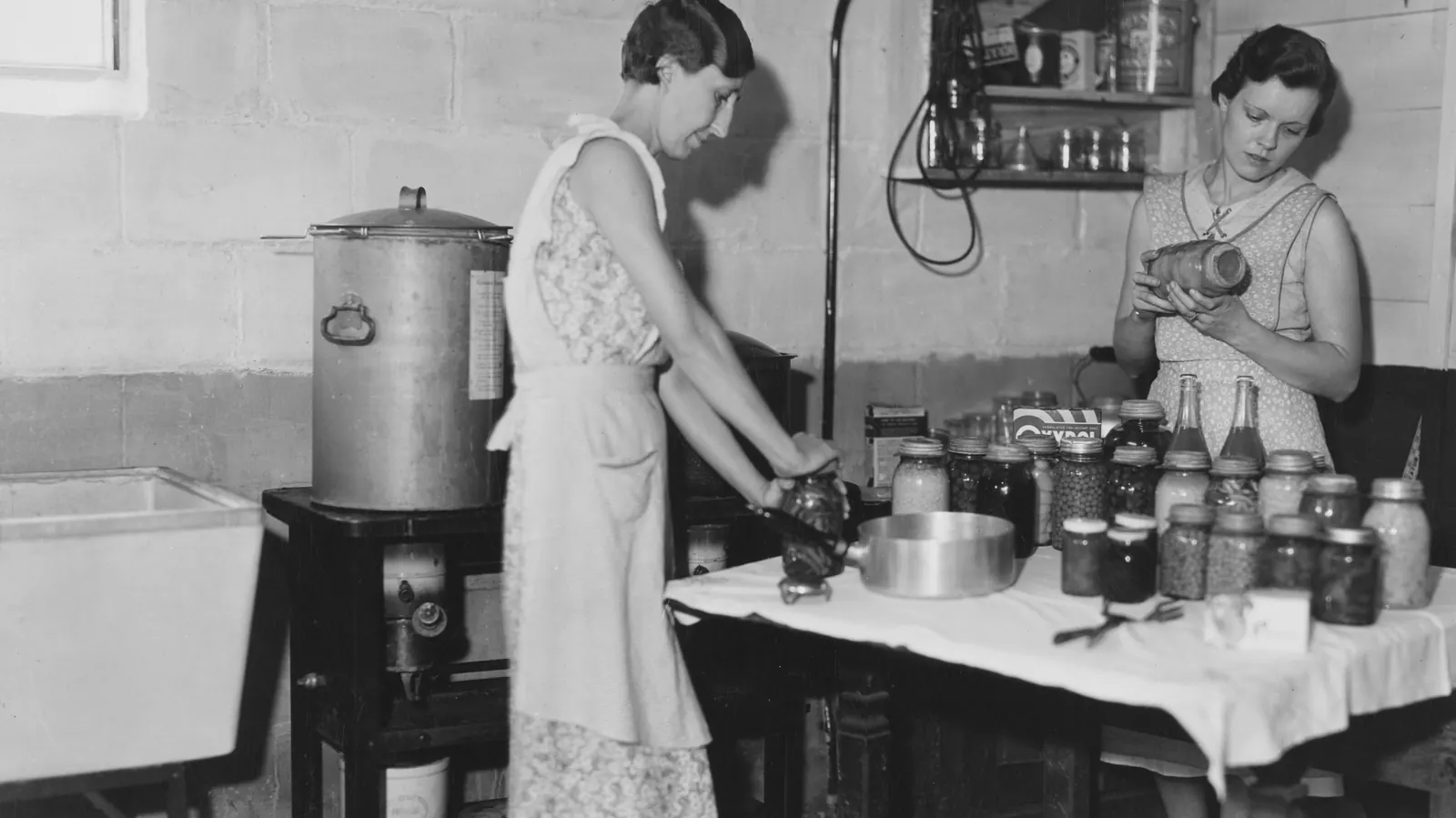
Pressure cooking and pressure canning sound like the same job, and plenty of appliances are sold as if they were. They are not. A pressure cooker makes a pot of frijoles in under an hour. A pressure canner holds a load of sealed jars at a tested temperature for a tested time, so that jars of plain beans, chiles or corn can sit safely on a pantry shelf for months. The difference matters because low-acid foods canned the wrong way can carry the risk of botulism.
This guide is for the second job. Every canning claim on it comes from the USDA’s home canning guidance as published by the National Center for Home Food Preservation (NCHFP) at the University of Georgia, and every recommended product is a stovetop pressure canner from an established maker that holds at least four quart jars, the size NCHFP’s guidance is built around. If you only want to cook faster, our main guide to the best pressure cooker is the one to read.
Julia’s earns a commission on purchases made through links on this page, at no cost to you. Recommendations are based on what a restaurant kitchen looks for, product specifications, verified buyer reports and the USDA canning guidance published by the National Center for Home Food Preservation.
Quick verdict: which pressure canner to buy
For most home canners, the best canning pressure cooker is a true stovetop pressure canner, and the one to start with is the Presto 23-Quart Pressure Canner and Cooker (01781): it holds seven quart jars, has a dial gauge for fine pressure adjustment, and doubles as a boiling-water canner for salsas and pickles. If you want a canner with no gasket to replace, choose the All American 915. If you cook on induction, choose Presto’s induction-compatible 01784. Do not use an electric multicooker for pressure canning: NCHFP does not recommend its canning processes in them.
The rest of this page explains why, which canner suits your stove and batch size, and what NCHFP says about gauges, altitude and electric appliances.
Five pressure canners at a glance
Our five standout picks, one for each kind of canner, with the jar capacity and pressure control each maker or listing states. All seven canners are reviewed in full below.
| Canner | Best for | Quart jars (per maker) | Pressure control | Buy on Amazon |
|---|---|---|---|---|

Presto 23-Quart Pressure Canner and CookerBest overall
|
Most home canners | 7 quarts, 20 pints double-decked | Dial gauge | View on Amazon |

All American 15.5-Quart Pressure CannerBest gasket-free
|
Decades of use, no gasket | 7 quarts, 10 pints | Regulator weight plus steam gauge | View on Amazon |

Presto 23-Quart Induction Pressure CannerBest for induction
|
Induction cooktops | 7 quarts, 20 pints double-decked | Dial gauge | View on Amazon |

All American 30-Quart Pressure CannerBest for big batches
|
Harvest-size loads | 14 quarts, 19 pints | Regulator weight plus gauge | View on Amazon |

T-fal 22-Quart Pressure CannerBest for pint batches
|
Big pint batches, gas or coil stoves | 7 quarts, 18 pints | 3 pressure settings plus gauge | View on Amazon |
Product images from Amazon. Jar capacities are as stated by each maker or listing for regular-mouth jars; check the listing before you buy.
Our picks for the best canning pressure cooker
All seven picks are stovetop pressure canners from established makers, and each holds at least four quart jars, the minimum NCHFP sets for a pressure canner. There are only seven because that is how many canners met the guidance, were in stock on Amazon and came from makers who publish clear jar capacities. We did not pad the list with electric multicookers or unbranded kits. None of these picks repeat the main pressure cooker guide’s choices, which are built for cooking, not canning.
1. Presto 23-Quart Pressure Canner and Cooker – Seven Quarts and a Dial Gauge
This is the canner most people should buy first. Presto rates it for 7 quart jars, 20 pint jars or 26 half-pints, with the pints and half-pints stacked in two layers. That is a full batch of beans or chiles in one load, and it is comfortably above NCHFP’s four-quart minimum.
The deluxe dial gauge shows the whole range of processing pressures. Presto points out that this precise reading matters most at higher altitudes, where NCHFP’s dial-gauge tables raise the pressure a pound at a time. NCHFP says dial gauges should be checked for accuracy every year, and Presto will test gauges from its own brands at no charge, according to South Dakota State University Extension.
It is made of warp-resistant heavy-gauge aluminum, works on regular and smooth-top ranges, and comes with a canning rack and a 76-page instruction and recipe book. Presto says the 23-quart model holds quart jars for boiling-water canning too, so the same pot handles tested salsa and pickle recipes. Presto backs it with a 12-year limited warranty. It does not work on induction; see pick 3 for that.
Why we like it
- Holds 7 quart jars, per Presto.
- Dial gauge allows NCHFP’s one-pound altitude steps.
- Doubles as a boiling-water canner for quart jars.
- 12-year limited warranty, per the listing.
Key specifications
| Model | 01781 |
|---|---|
| Liquid capacity | 23 quarts |
| Jar capacity (pressure) | 7 quarts, 20 pints, 26 half-pints |
| Pressure control | Dial gauge |
| Seal | Rubber sealing ring |
| Stovetops | Gas, electric coil, smooth-top |
| Material | Heavy-gauge aluminum |
| Warranty | 12-year limited |
Why we recommend it
It suits a first-time canner on a gas or electric stove who wants a full-size canner, room for quart jars and a gauge that works at any altitude.
Skip it if you would rather not have a dial gauge tested each year; a weighted-gauge canner avoids that step.
Pros and cons
Pros
- Large capacity
- Pressure and boiling-water canning in one pot
- Long warranty
Cons
- Dial gauge needs a yearly check
- Not induction compatible
- Sealing ring will need replacing over time
2. All American 15.5-Quart Pressure Canner – A Metal Seal With No Gasket
All American casts its canners in Wisconsin, and their defining feature is the seal. Instead of a rubber gasket, the lid and pot meet in a precision-machined metal-to-metal seal, clamped shut with wing nuts. There is no gasket to crack or replace, which is why these canners are often handed down.
The 915 holds 7 quart jars or 10 pint jars, per the listing. Pressure is set with a regulator weight that an All American dealer describes as adjustable to 5, 10 or 15 psi, and the lid also carries a steam gauge. For low-acid foods, NCHFP’s weighted-gauge tables use 10 pounds up to 1,000 feet and 15 pounds above that.
It is heavy: the dealer page lists 21 pounds empty, before water and jars. The listing says it works on gas, electric and flat-top stoves; on a glass top, check your range maker’s weight limit first. The listing states a one-year limited warranty, shorter than Presto’s, though the construction is the reason people buy it.
Why we like it
- Metal-to-metal seal; no gasket to replace.
- Holds 7 quart jars, per the listing.
- Regulator weight plus steam gauge.
- Cast aluminum, made in Wisconsin.
Key specifications
| Model | 915 |
|---|---|
| Liquid capacity | 15.5 quarts |
| Jar capacity (pressure) | 7 quarts, 10 pints |
| Pressure control | Regulator weight (5, 10, 15 psi) and steam gauge |
| Seal | Metal-to-metal, no gasket |
| Stovetops | Gas, electric, flat-top |
| Material | Cast aluminum, made in USA |
| Warranty | 1-year limited |
Why we recommend it
It suits a canner who wants one pot for life and dislikes replacing parts. The weight-based control also suits low-altitude kitchens.
Skip it if lifting a heavy canner full of water and jars is a problem.
Pros and cons
Pros
- No gasket
- Heavy cast construction
- Made in the USA
Cons
- Heavy before it is even filled
- Pints fit in a single layer only
- Shorter stated warranty
3. Presto 23-Quart Induction Pressure Canner – A Steel-Clad Base for Induction
Aluminum canners do not work on induction, which leaves induction cooks with few choices. Presto’s 01784 solves that with a stainless steel-clad base on a heavy-gauge aluminum body, and Presto rates it for induction, gas, electric and smooth-top ranges.
Otherwise it matches pick 1: 7 quart jars, 20 pints or 26 half-pints with the smaller jars double-decked, a dial gauge, and a boiling-water canning mode that holds quart jars. Presto describes an air vent and cover lock that lets pressure build only when the cover is properly closed and keeps it shut until pressure has dropped. Presto’s own comparison guide notes the dial gauge needs annual testing, which matches NCHFP’s advice.
The listing states a 12-year limited warranty. If you might move to an induction range later, this is the safer long-term buy than pick 1.
Why we like it
- Works on induction as well as gas and electric, per Presto.
- Holds 7 quart jars.
- Cover lock until pressure is released.
- 12-year limited warranty.
Key specifications
| Model | 01784 |
|---|---|
| Liquid capacity | 23 quarts |
| Jar capacity (pressure) | 7 quarts, 20 pints, 26 half-pints |
| Pressure control | Dial gauge |
| Seal | Rubber sealing ring |
| Stovetops | Induction, gas, electric, smooth-top |
| Material | Aluminum, stainless steel-clad base |
| Warranty | 12-year limited |
Why we recommend it
It suits anyone canning on an induction cooktop, or anyone who wants one canner that will work on whatever stove comes next.
Skip it if you cook on gas and never plan to change; pick 1 does the same job.
Pros and cons
Pros
- Induction compatible
- Full-size capacity
- Long warranty
Cons
- Dial gauge needs yearly testing
- Sealing ring is a wear part
4. T-fal 22-Quart Pressure Canner – Three Pressure Settings and Two Racks
T-fal’s canner has three pressure settings and a gauge you can read, and it is built for volume. With two racks it fits more pint jars than either Presto 23-quart model can hold without stacking, which suits a kitchen that cans beans and chiles in pints.
The listing gives the capacity as 7 quart jars, 18 pint jars, 16 wide-mouth pints or 24 half-pints, using the two included racks to stack smaller jars. It also includes a step-by-step canning guide, a locking lid and a steam release valve. Whatever settings a canner’s packaging suggests, use the pressure and time in a tested NCHFP recipe for the food and jar size you are canning.
The body is aluminum, and T-fal lists it for gas and electric coil cooktops only, not glass-top or induction. The stated warranty is one year.
Why we like it
- Holds 7 quart jars or 18 pints, per the listing.
- Three pressure settings plus a gauge.
- Two racks for stacking smaller jars.
- Canning guide included.
Key specifications
| Model | 32406059009 |
|---|---|
| Liquid capacity | 22 quarts |
| Jar capacity (pressure) | 7 quarts, 18 pints, 24 half-pints |
| Pressure control | 3 pressure settings and gauge |
| Seal | Locking lid (gasket type not stated) |
| Stovetops | Gas and electric coil only |
| Material | Aluminum |
| Warranty | 1 year |
Why we recommend it
It suits a canner on a gas or coil stove who puts up big batches of pints and wants the racks to stack them.
Skip it if you cook on glass or induction; T-fal lists it for gas and coil only.
Pros and cons
Pros
- Three pressure settings
- Two racks included
- Large pint capacity
Cons
- Gas and coil stoves only
- One-year warranty
- Listing does not say how the gauge and settings work together
5. All American 30-Quart Pressure Canner – Fourteen Quarts in One Load
When a garden or a sale on dried beans produces more than one batch, the 930 cuts the number of loads in half. It holds 14 quart jars or 19 pints, per the listing, roughly double pick 2.
It shares All American’s design: cast aluminum, made in Wisconsin, a metal-to-metal seal with clamping wing nuts and no gasket, plus a regulator weight and a pressure gauge. The listing names gas or electric stoves; it does not list flat-top use, so treat it as a canner for a sturdy gas or coil burner.
It is a big, heavy pot. Filled with water and 14 quart jars it is a two-person lift, and it needs time to heat and to cool, which is part of NCHFP’s tested process. Buy it only if you regularly can in large batches.
Why we like it
- 14 quart jars per load, per the listing.
- Gasket-free metal-to-metal seal.
- Regulator weight plus gauge.
- Made in the USA.
Key specifications
| Model | 930 |
|---|---|
| Liquid capacity | 30 quarts |
| Jar capacity (pressure) | 14 quarts, 19 pints |
| Pressure control | Regulator weight and gauge |
| Seal | Metal-to-metal, no gasket |
| Stovetops | Gas or electric |
| Material | Cast aluminum, made in USA |
| Warranty | Not stated |
Why we recommend it
It suits a serious home canner putting up beans, chiles or corn by the case, with a strong burner and a helper for lifting.
Skip it if you can a few jars at a time; the extra size only adds weight and heating time.
Pros and cons
Pros
- Largest capacity here
- No gasket
- Built to last
Cons
- Very heavy when full
- Flat-top use not listed
- Warranty not stated on the listing
6. Presto 16-Quart Pressure Canner and Cooker – A Smaller Pot That Still Takes Quarts

Presto’s 16-quart canner is shorter and lighter to handle than its 23-quart model, yet it still holds 7 quart jars for pressure canning, along with 10 pints or 13 half-pints, according to Presto’s canner comparison guide. For a small kitchen that cans beans or chiles a few times a year, it does the job in less space.
The catch is boiling-water canning. Presto says the 16-quart canner is not tall enough to cover quart jars with the recommended inch of water, so for salsas and pickles it handles only pints and half-pints. If you want one pot for both methods at full size, buy pick 1.
Like the 23-quart model it has a dial gauge, which Presto’s guide notes needs annual testing, and it works on electric coil, smooth-top and gas ranges. The Amazon listing gives a one-year limited warranty, though another Presto 16-quart listing states 12 years, so confirm before you buy.
Why we like it
- Holds 7 quart jars for pressure canning, per Presto.
- Smaller and lighter than full-size canners.
- Dial gauge for altitude adjustments.
- Works on coil, smooth-top and gas.
Key specifications
| Model | 01755 |
|---|---|
| Liquid capacity | 16 quarts |
| Jar capacity (pressure) | 7 quarts, 10 pints, 13 half-pints |
| Pressure control | Dial gauge |
| Seal | Rubber sealing ring |
| Stovetops | Gas, electric coil, smooth-top |
| Material | Heavy-gauge aluminum |
| Warranty | 1-year limited (per listing) |
Why we recommend it
It suits a cook with limited storage who mainly pressure cans and does boiling-water canning in pints.
Skip it if you water-bath can salsa or pickles in quart jars.
Pros and cons
Pros
- Compact for a full pressure canner
- Still holds 7 quarts under pressure
- Works on most stoves
Cons
- Boiling-water canning in pints only
- Dial gauge needs yearly testing
- Sparse Amazon listing
7. Mirro 16-Quart Pressure Canner – Regulator Control in a Smaller Pot

Mirro’s 16-quart canner is the smallest pick here and the only small one controlled by regulators rather than a dial gauge. It holds 16 pint jars or 5 quart jars, per the listing, which clears NCHFP’s four-quart minimum with a little room to spare.
Pressure is set with regulators for 5, 10 and 15 psi, which maintain pressure automatically, according to Mirro. Set it to the pressure that the tested NCHFP recipe and Mirro’s manual give for your altitude. Mirro lists a reusable overpressure plug, a locking lid, a side gasket pressure release, cool-touch side handles and cooking racks with a user guide and recipes.
It is made of heavy-gauge aluminum. Mirro does not state which stovetops it suits or the warranty on this listing.
Why we like it
- 5, 10 and 15 psi regulator settings.
- Holds 5 quart jars, above NCHFP’s minimum.
- Overpressure plug and locking lid.
- Compact size.
Key specifications
| Model | 92116 (7114000228) |
|---|---|
| Liquid capacity | 16 quarts |
| Jar capacity (pressure) | 5 quarts, 16 pints |
| Pressure control | Regulators, 5, 10, 15 psi |
| Seal | Gasket with side pressure release |
| Stovetops | Not stated |
| Material | Heavy-gauge aluminum |
| Warranty | Not stated |
Why we recommend it
It suits a canner who wants a smaller pot and the simplicity of set regulator pressures rather than watching a dial.
Skip it if you want seven-quart loads or need confirmed glass-top or induction compatibility.
Pros and cons
Pros
- Regulator control; no dial gauge listed to test
- Compact
- Overpressure plug
Cons
- Only 5 quart jars per load
- Stove compatibility not stated
- Warranty not stated
What NCHFP says before you buy a pressure canner
These rules come from the National Center for Home Food Preservation, which publishes the USDA’s tested home canning processes. They decide which appliance you can use and how you use it.
Canners, not cookers
NCHFP says a canner must be large enough to hold at least four quart jars to be considered a pressure canner, and that the USDA’s processes were developed for canners of that size. NCHFP explains that food keeps being processed while a canner cools down, and a very small cooker cools faster, which can leave food under-processed.
Electric multicookers
NCHFP states that its canning processes “are not recommended for use in electric pressure multi-cookers at this time”, including models with a canning or steam canning button. It explains that no USDA thermal process work has been done with jars inside an electric pressure cooker of any kind, and that what matters for safety is the temperature inside the jars, not the pressure on a display. The one electric exception it describes is the Ball Automatic Home Canner, which is for acid foods only and is not a pressure appliance.
Stand-alone digital pressure canners
Presto also sells Precise digital pressure canners, which sense temperature instead of pressure and adjust for altitude automatically, according to Presto. Presto says they meet USDA guidelines. We could not find an NCHFP statement on these appliances, and NCHFP’s published processes were developed for stovetop canners. Because we could not confirm NCHFP support, we left them out. If you are considering one, ask your local Cooperative Extension office first.
Gauge testing
NCHFP says dial gauges should be checked for accuracy every year before use, and replaced if they read high or low by more than two pounds. Many county Extension offices test gauges, and South Dakota State University Extension notes that Presto tests gauges from its own brands for free. Weighted gauges do not need testing, SDSU adds; they rock or jiggle when the canner is at pressure.
Altitude
Canners must run at higher pressures as elevation rises, NCHFP says. Its process for dried beans, for example, uses 11 pounds in a dial-gauge canner up to 2,000 feet, rising a pound for each further 2,000 feet, and 10 pounds in a weighted-gauge canner up to 1,000 feet, 15 pounds above. Houston sits close to sea level, so cooks here use the lowest pressures in those tables. Look up your elevation before your first batch.
Venting
Every pressure canner must be vented for 10 minutes before it is pressurized, NCHFP says: steam flows steadily from the open vent so that air does not lower the temperature inside.
How to choose a pressure canner for your kitchen
Once a canner meets NCHFP’s size rule, the choice comes down to four things.
1. Your stove
Aluminum canners work on gas and electric coil burners; check the maker’s word on glass tops. For induction you need a canner with a magnetic base, which is why Presto’s 01784 is on this list.
2. Dial or weighted control
A dial gauge allows NCHFP’s one-pound steps at altitude but needs a yearly test. A weighted regulator needs no test and suits kitchens below 1,000 feet, where its 10-pound setting applies. Presto’s own guide makes the same distinction: dial gauges are useful above 2,000 feet, and its weighted model is best suited to 1,000 feet or less.
3. Batch size
Seven quart jars is the usual full-size load. Go bigger only if you can by the case, and remember a full canner is heavy.
4. Gasket or metal seal
Gasketed canners are lighter and cost less up front; plan on replacing the ring. All American’s metal seal removes that part entirely.
How we picked these seven canners
We began with NCHFP’s guidance and kept only stovetop pressure canners that hold four or more quart jars, from makers with a long record in home canning. We checked each with the Amazon product API and kept only those in stock. Jar capacities and features come from Presto’s canner comparison guide, the Amazon listings and an All American dealer page; where a maker does not state something, we say so.
We left out electric multicookers and Presto’s digital canners for the reasons above; Granite Ware’s canners, because the in-stock 8-quart model’s listing does not show room for four quart jars and the larger ones were nearly sold out; Mirro’s 22-quart model, because its listing gives no jar capacity; and unbranded canning kits. We also searched the CPSC’s recall listings for Presto, All American, T-fal and Mirro and found no recall of any pressure canner from them.
Pressure canning questions, answered
What is the best pressure cooker for canning?
A dedicated stovetop pressure canner that holds at least four quart jars. For most people that is the Presto 23-quart, or the All American 915 if you want no gasket. An ordinary pressure cooker or multicooker is not a canner.
What is the best pressure cooker for home canning on a glass-top stove?
Presto rates its 23-quart and 16-quart canners for smooth-top ranges, and All American lists the 915 for flat tops. Check your range maker’s weight limit, since a full canner is heavy.
Can I can in an Instant Pot or other multicooker?
Not for low-acid foods by USDA processes. NCHFP does not recommend its canning processes in electric multicookers, even those with a canning button. Use one for cooking, such as the models in our pressure cooker guide.
Do I need a pressure canner for salsa?
Not if you follow a research-tested salsa recipe for boiling-water canning. The USDA and NCHFP recommend water-bath canning only for tested salsa recipes, which add acid in set amounts, so follow them without changes. Plain peppers are different: NCHFP’s process for hot or sweet peppers, including chiles and jalapeños, is a pressure process for pints and half-pints. If you would rather buy salsa, see our guide to the best jarred salsa.
Can I pressure can beans for frijoles?
Yes. NCHFP has a tested process for dried beans: 75 minutes for pints and 90 minutes for quarts, hot packed, at the pressure for your altitude and gauge. Its process is for whole beans; mash or refry them after you open the jar. Our guide to charro beans and refried beans covers what to do next.
How often should a pressure canner gauge be tested?
Every year before use for a dial gauge, per NCHFP. Weighted gauges do not need testing.
Our final pick for canning at home
Buy the Presto 23-quart pressure canner if you want one full-size pot for pressure and boiling-water canning on a gas or electric stove. Choose the All American 915 if you want a gasket-free canner built for decades, Presto’s 01784 if you cook on induction, and the All American 930 if you can by the case. Whatever you choose, use only tested NCHFP recipes, vent for 10 minutes, set the pressure for your altitude and test a dial gauge every year.
Related guide: Best fermentation book.
Related guide: Best canning funnel.
Related guide: Best water bath canner.
For cooking rather than preserving, see our guide to the best pressure cooker, and for slow-simmered beans the traditional way, the best clay pot for cooking beans. And when you would rather someone else did the cooking, see our menu or call to order.