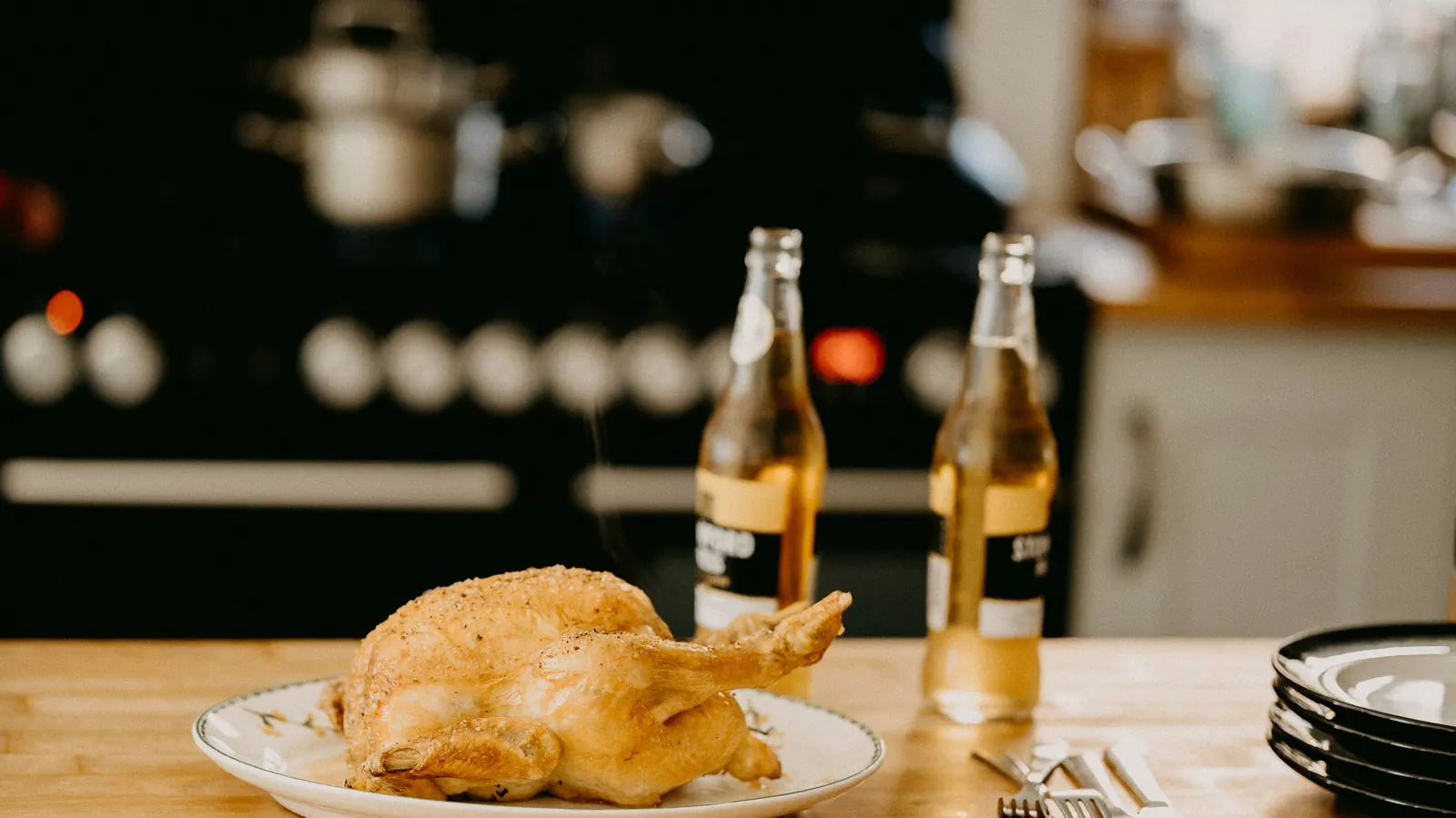
The chicken is seasoned, the oven is hot, and there is no roasting pan in the cupboard. That is less of a problem than it sounds. A roasting pan is a wide pan with handles and sides, often with a rack, and most kitchens already own something that does the same job for everything short of a holiday turkey.
The substitutes are not interchangeable, though. A sheet pan browns better but holds fewer drippings, a Dutch oven holds every drop but browns less, and a thin foil pan needs help to stay rigid. This guide explains which roasting pan alternative suits which roast, what each one does well and badly, and which are worth buying if you are missing them.
Julia’s earns a commission on purchases made through links on this page, at no cost to you. Recommendations are based on what a working kitchen looks for in roasting gear, the makers’ own specifications and published advice from the sources we name.
Why cooks look for a roasting pan alternative
Most people asking this question fall into one of a few groups.
- It is roast night and there is no roaster. You want to know what in the cupboard will work tonight, and how to keep the drippings off the oven floor.
- Storage. A full-size roaster with a rack is a big, awkward object that comes out once or twice a year.
- Better browning. Milk Street argues that the high walls of a roasting pan shield food from the oven’s heat, and that a rimmed baking sheet browns better.
- Small roasts. A whole chicken or a pork loin rattles around in a turkey-size pan, and the drippings spread thin and scorch.
- One pan for several jobs. A sheet pan, a Dutch oven or a 9 x 13 baker earns its cupboard space every week; a roaster does not.
Quick verdict: the roasting pan alternative to use
For most roasts, the best roasting pan alternative is a heavy rimmed half sheet pan with a wire rack set inside it, such as the Fat Daddio’s half sheet pan with a KITCHENATICS stainless rack. Milk Street says a baking sheet browns better than a roasting pan, and the rack lifts the meat out of its juices. Its limit is the 1-inch rim, so for a pot roast or anything that throws off a lot of liquid, use a Dutch oven such as the Staub 7-quart cocotte, which also goes on the burner for gravy. For a whole chicken or a small roast, a 9 x 13 baker or a cast iron pan works too. Buy a real roasting pan only if you roast big turkeys often and want to make gravy in the pan.
Five roaster stand-ins side by side
The five standout options, one for each kind of roast, with what each maker or listing states. All six products, including the rack, are reviewed in full below.
| Alternative | Best for | Drippings | Stovetop gravy | Buy on Amazon |
|---|---|---|---|---|

Fat Daddio’s Half Sheet Pan, 2-PackBest overall alternative
|
Chicken, pieces, vegetables, small roasts | 1-inch rim; light to moderate | Not stated | View on Amazon |

Staub 7-Quart Round CocotteBest for pot roasts
|
Pot roast, braised pork, small birds | Deep pot holds every drop | Yes, all stovetops incl. induction | View on Amazon |

Lodge Cast Iron Casserole and Baking Pan BundleBest cast iron option
|
Hard browning, roast vegetables, chicken | Deep 9 x 13 plus a wide baking pan | Not stated on the listing | View on Amazon |

All-Clad Stainless Steel 9 x 13-inch Baking PanBest stainless baker
|
Whole chicken, pork loin, broiler finish | Baking-pan depth, handles | Not stated | View on Amazon |

Emile Henry 13 x 9-inch Ceramic BakerBest ceramic baker
|
Chicken pieces, roasts served at the table | 4.7 quarts, per the listing | No; oven, broiler and microwave listed | View on Amazon |
Product images from Amazon. Sizes, materials and oven limits are as stated by each maker or listing; check the listing before you buy.
What a roasting pan does, and what has to replace it
Our guide to the best roasting pan sums up the job: a wide pan with sides low enough for hot air to brown the meat, often with a rack that lifts the roast out of its fat, and handles you can grab with thick mitts. The browned drippings that collect underneath are the base of a pan gravy. Any substitute has to cover three of those four things, and it is worth knowing which one you are giving up.
- Low sides for browning. Milk Street’s case for the sheet pan rests on this. It says the higher walls of a roasting pan shield ingredients from heat, and the shorter sides of a baking sheet allow more air circulation and evaporation, so food browns better. It recommends heavyweight sheets and advises against nonstick ones.
- Enough depth for the drippings. This is where the sheet pan gives ground. Tasting Table’s Vanessa Nix Anthony advises a pan with high enough sides that the drippings do not spill over, and a pan matched to the size of the roast.
- Something to lift the meat. A wire rack is the clean answer. Tasting Table also suggests bars of scrunched-up foil or a bed of thick-cut vegetables as a make-do rack.
- A way to make gravy. Only a pan rated for the burner lets you deglaze the drippings in place. Otherwise, scrape them into a saucepan.
Which substitute for which roast
Tasting Table matches the pan to the roast: a 9 x 13-inch baking pan or casserole for small beef, lamb or pork roasts, Cornish hens and a whole chicken; a Dutch oven for the same smaller roasts; and a pan of 16 to 18 inches for a turkey. In practice that gives a simple rule of thumb.
| Roast | Best substitute | Watch out for |
|---|---|---|
| Whole chicken, chicken pieces | Sheet pan with a rack, or a 9 x 13 baker | Fat pooling on a 1-inch rim |
| Roast vegetables, sheet-pan dinners | Bare sheet pan or cast iron baking pan | Crowding, which steams rather than browns |
| Pork shoulder, chuck roast, pot roast | Dutch oven | Less browning with the lid on |
| Pork loin, beef tenderloin | Sheet pan with a rack, or a 9 x 13 baker | Pan size against the length of the roast |
| Large turkey | A real roasting pan, or a foil pan set on a sheet pan | Weight, depth and a wobbly foil base |
The turkey is the honest exception. Our guide to the best roasting pan for turkey covers sizing a pan to the bird; a half sheet pan’s 1-inch rim is shallow for the juices a big turkey releases.
Six pans that can stand in for a roaster
All six are from identifiable makers and were in stock on Amazon on the day of writing. Most kitchens already own something like the first, the fourth or the fifth; buy only what you are missing. Each review says what the pan does well, where it falls short and one honest reason to skip it.
1. Fat Daddio’s Half Sheet Pan, 2-Pack – Low Sides for Better Browning
A heavy rimmed half sheet is the substitute Milk Street argues is actually better than a roasting pan for browning, because its short sides let hot air reach the food and moisture escape. Fat Daddio’s pan is the plain commercial kind: 18-gauge natural aluminum with a wire-reinforced rolled rim, 18 by 13 inches outside and 1 inch deep, with an interior floor of 16½ by 11½ inches. The listing gives a capacity of 14 cups per pan and names roasting and broiling among its uses.
That floor fits a spatchcocked chicken, two pounds of vegetables in a single layer, or a pork loin with room around it. Set a wire rack inside, like the KITCHENATICS rack below, and you have the roasting pan’s lift without its high walls. The listing gives an oven limit of 550°F and says the pan will not warp or rust, and Fat Daddio’s backs it with a lifetime warranty. It is bare aluminum rather than nonstick, which is what Milk Street recommends for roasting.
The limit is depth. A 1-inch rim holds the juices from a chicken but not the rendered fat and stock from a large roast or a turkey. If the drippings rise close to the rim, ladle some off, and move the pan with both hands and level. The listing does not say whether it can go on a burner, so make gravy in a saucepan. The second pan in the pack is useful straight away for the vegetables.
Why we like it
- Low sides that Milk Street says brown better than a roaster’s
- 18-gauge aluminum with a wire-reinforced rim, per the listing
- Interior floor of 16½ x 11½ inches
- Oven safe to 550°F, with a lifetime warranty
Key specifications
| Model | SP-HALF2PK |
|---|---|
| Type | Rimmed half sheet pan (2-pack) |
| Material | 18-gauge natural aluminum |
| Size | 18 x 13 x 1 inches; 14 cups each |
| Oven limit | 550°F |
| Stovetop use | Not stated |
| Cleaning | Dishwasher use not stated |
| Made in | Not stated |
Why we recommend it
Choose it if you roast chicken, pork loin and vegetables more often than anything else; it is the pan that does most of a roaster’s work and all of a baking sheet’s.
Skip it if you mostly roast large, fatty cuts or turkeys; the shallow rim is the wrong shape for a lot of liquid.
Pros and cons
Pros
- Browns well, per Milk Street’s reasoning
- Two pans in the pack
- Lifetime warranty
Cons
- Only 1 inch deep
- No rack included
- Stovetop and dishwasher use not stated
2. KITCHENATICS Stainless Half Sheet Rack, Set of 2 – Lifts the Roast off the Pan

A rack is what turns a sheet pan into a roaster. It holds the meat above its fat so the underside browns rather than stews, and it lets the drippings collect clean underneath. One of Tasting Table’s rack substitutes is exactly this: a wire cooling rack set in a deeper-lipped baking sheet.
KITCHENATICS makes its rack from 304 stainless steel wire with no chrome coating, sized at about 11.8 by 16.9 inches to fit a standard 13 by 18-inch half sheet, so it sits inside the Fat Daddio’s pan above. The listing gives 1-inch legs, three support bars, a load of up to 45 pounds and heat resistance up to 575°F, which is above the sheet pan’s own limit. The grid is tight, so small pieces of vegetable do not fall through, and the racks go in the dishwasher. A set of two gives you one for roasting and one for cooling.
The 1-inch legs give air room underneath and keep the meat clear of the drippings. A flat rack holds a chicken or a pork loin steadily, but it does not cradle a turkey the way a V-rack does.
Why we like it
- Sized to fit a standard half sheet pan
- 304 stainless steel with no chrome coating, per the listing
- Holds up to 45 pounds and is heat resistant to 575°F
- Dishwasher safe; set of two
Key specifications
| Model | Not stated (set of 2) |
|---|---|
| Type | Flat wire rack for a half sheet pan |
| Material | 304 stainless steel wire |
| Size | About 11.8 x 16.9 inches, 1-inch legs |
| Oven limit | 575°F |
| Stovetop use | Not applicable |
| Cleaning | Dishwasher safe |
| Made in | Not stated |
Why we recommend it
Choose it if you already own a half sheet pan; this is the one piece that makes it a roasting setup.
Skip it if you only roast vegetables, which brown better straight on the pan.
Pros and cons
Pros
- Fits a standard half sheet
- Tight grid
- Also a cooling rack
Cons
- Flat, so it does not cradle a big bird
- Amazon-first brand; origin not stated
3. Staub 7-Quart Round Cocotte – Holds Every Drop, Then Makes the Gravy
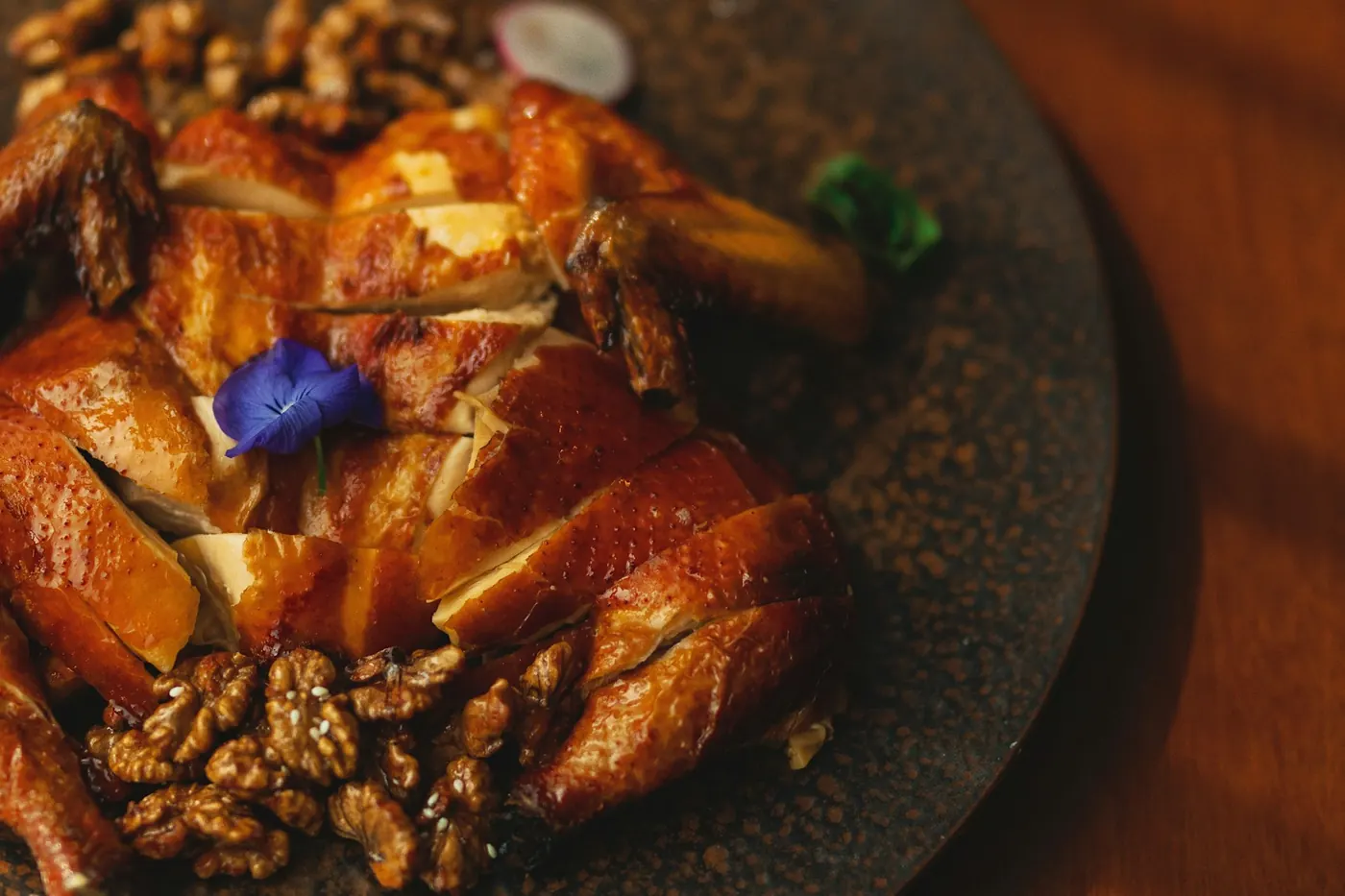
A Dutch oven is the opposite of a sheet pan: deep walls that keep in moisture and hold all the liquid a roast gives off. Tasting Table names it as a stand-in for smaller roasts, and it is the right tool for cuts that want slow, moist heat, such as a chuck roast, a pork shoulder for carnitas or a chicken with vegetables underneath.
Staub’s 7-quart round cocotte is enameled cast iron made in France, and Staub says it generously serves five to seven. The listing describes a heavy, tight-fitting lid with spikes underneath that drip condensed juices back onto the food, and a matte black interior texture that it says helps browning. It is oven safe to 900°F without the lid and 500°F with it, and its smooth enamel base works on gas, electric, glass ceramic, induction and halogen stovetops. That last point matters: you can sear the roast on the burner first, roast it, then lift it out and make gravy in the same pot.
The trade-off is browning. With the lid on, a roast steams more than it roasts. Start covered and uncover for the last part of the cook if you want a darker outside. A 7-quart round pot also fits a small chicken but not a large bird or a long tenderloin. On the lead question, Staub states on its safety and materials page that “Staub is Cadmium Free, Lead-Free, PFOA Free, PTFE Free, and PFAS Free.”
Why we like it
- Deep pot holds all the drippings
- Works on every stovetop listed, including induction
- Oven safe to 900°F without the lid, per the listing
- Staub states its cookware is lead-free and cadmium-free
Key specifications
| Model | 1102802 |
|---|---|
| Type | Round Dutch oven (cocotte) with lid |
| Material | Enameled cast iron, matte black interior |
| Size | 7 quarts |
| Oven limit | 900°F without lid; lid 500°F |
| Stovetop use | Gas, electric, glass ceramic, induction, halogen |
| Cleaning | Dishwasher safe; hand wash recommended |
| Made in | France |
Why we recommend it
Choose it if your roasts are pot roasts, braised pork or chicken with vegetables, or if you want to make gravy without a second pan. It also does soups, beans and bread the rest of the year.
Skip it if you want crisp skin on a whole bird; the high walls work against browning, the reverse of the sheet pan.
Pros and cons
Pros
- Sear, roast and make gravy in one pot
- Very high oven limit without the lid
- Maker lead-free statement
Cons
- Round shape limits roast size
- Less browning when covered
4. Lodge Cast Iron Casserole and Baking Pan Bundle – Two Iron Pans for Hard Browning
Tasting Table suggests cast iron for small roasts, and Lodge says its pans give consistent browning and heat distribution. This Lodge bundle gives you two shapes that between them cover most roasts: a 9 x 13-inch cast iron casserole, the size Tasting Table names for a whole chicken or a small roast, and a 15.5 x 10.5-inch cast iron baking pan with two easy-grip handles, which works like a heavy sheet pan for vegetables and chicken pieces.
Lodge says both pans are naturally seasoned, will not dent, bend or warp, and are handcrafted in the USA. The 9 x 13 casserole’s walls make it the better choice when a roast will throw off juices; the wider baking pan, with its lower sides, is the one for crisp-edged potatoes and charred vegetables. Both can sit under a whole chicken set on a bed of thick-cut onions and carrots, Tasting Table’s make-do rack, and those vegetables come out soaked in the drippings.
The trade-offs are the usual cast iron ones. The pans are heavy, they take a while to heat through, and bare iron needs to be dried and lightly oiled after washing to keep its seasoning. The listing does not give an oven limit or say whether the pans can go on a burner, so check Lodge’s care card before making gravy in them.
Why we like it
- A 9 x 13 casserole plus a 15.5 x 10.5 baking pan
- Naturally seasoned cast iron, per Lodge
- Will not dent, bend or warp, Lodge says
- Handcrafted in the USA
Key specifications
| Model | Not stated (2-piece bundle) |
|---|---|
| Type | Cast iron casserole and cast iron baking pan |
| Material | Seasoned cast iron |
| Size | 9 x 13 inches and 15.5 x 10.5 inches |
| Oven limit | Not stated on the listing |
| Stovetop use | Not stated on the listing |
| Cleaning | Not stated; dry and oil as for any bare cast iron |
| Made in | USA |
Why we recommend it
Choose it if you like deep browning and want two roasting shapes that will outlast you, made in the USA.
Skip it if lifting a loaded iron pan out of a hot oven is hard for you; aluminum or stainless is far lighter.
Pros and cons
Pros
- Two useful shapes
- Strong browning
- Made in the USA
Cons
- Heavy when full
- Seasoning needs care
- Oven limit and stovetop use not stated
5. All-Clad Stainless Steel 9 x 13-inch Baking Pan – A Small Roaster with Handles
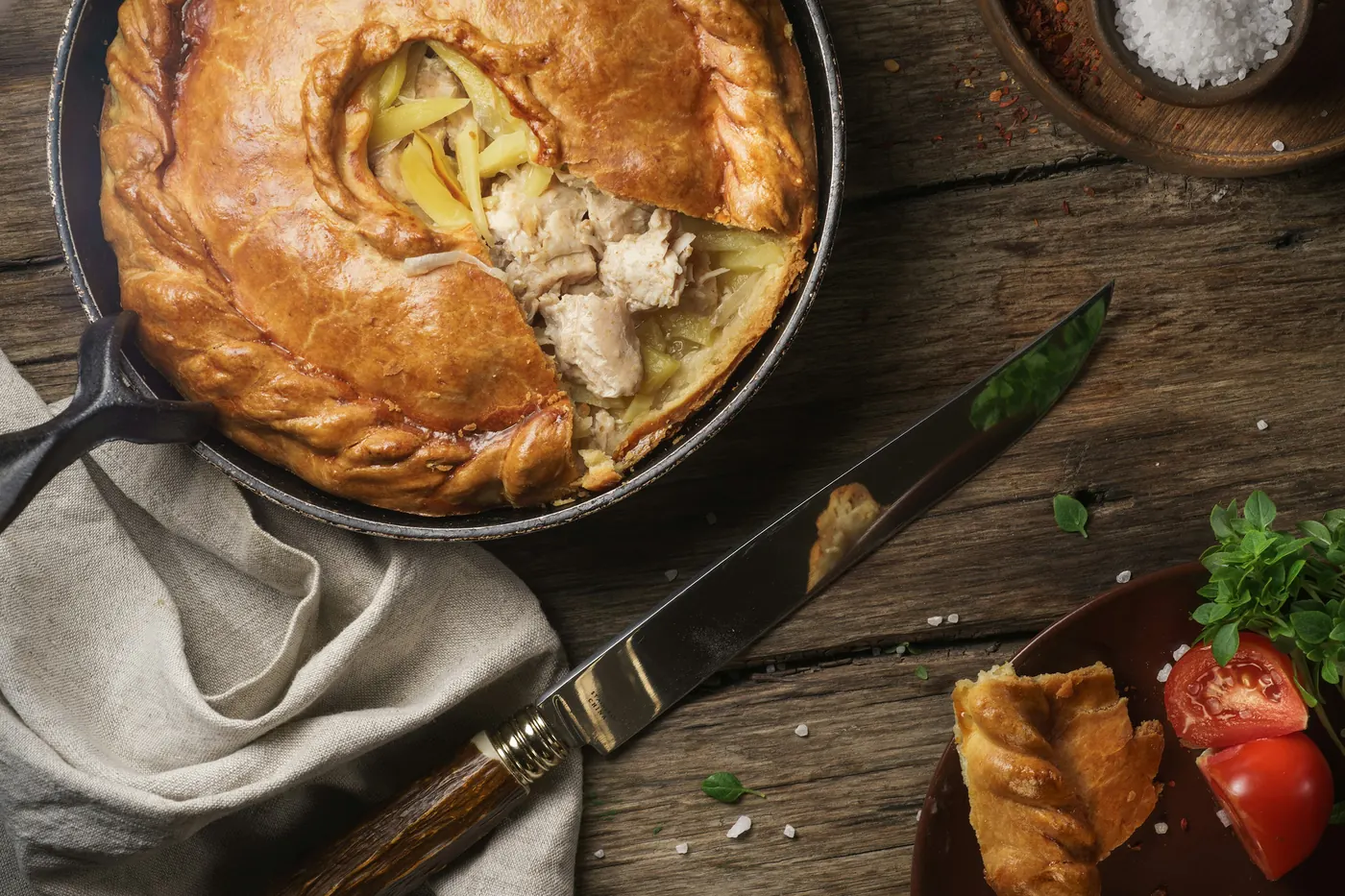
A 9 x 13-inch metal pan is the most common roasting pan alternative in American kitchens, and the size Tasting Table names for a whole chicken or a small roast. All-Clad’s version is built more like a small roaster than a cake pan: tri-ply stainless steel bonded to aluminum, which All-Clad says conducts heat evenly and resists warping, with integrated handles for a secure grip. The listing names meats, vegetables and roasting among its uses.
It is oven and broiler safe to 600°F, the highest limit of the open pans here, so you can roast a chicken and then run it under the broiler to crisp the skin. The polished stainless interior is metal-utensil safe, so you can scrape up the browned bits with a metal spatula before pouring them into a saucepan for gravy. All-Clad recommends hand washing and backs the pan with its limited lifetime warranty. It is designed in Canonsburg, Pennsylvania, and made in China, the listing says.
The limits are size and stovetop use. A 9 x 13 holds one chicken or a modest roast, not a turkey, and a rack has to be bought separately to fit. The listing does not say the pan can go on a burner, so do not deglaze it there. Stainless also sticks more than seasoned iron; a little oil and letting the meat release on its own help.
Why we like it
- Tri-ply stainless and aluminum, per All-Clad
- Oven and broiler safe to 600°F
- Integrated handles
- Metal-utensil safe interior
Key specifications
| Model | J3097164 |
|---|---|
| Type | Rectangular baking pan with handles |
| Material | Tri-ply stainless steel with aluminum |
| Size | 9 x 13 inches |
| Oven limit | 600°F, broiler safe |
| Stovetop use | Not stated |
| Cleaning | Hand washing recommended |
| Made in | China (designed in Pennsylvania) |
Why we recommend it
Choose it if you roast one chicken or a small roast at a time and want a pan that also handles lasagna, cobblers and the broiler.
Skip it if you want to make gravy in the pan; the Staub is the alternative rated for the stovetop.
Pros and cons
Pros
- Highest oven limit of the open pans
- Handles you can grab with mitts
- Limited lifetime warranty
Cons
- One-chicken size
- No rack; stovetop use not stated
- Hand wash recommended
6. Emile Henry 13 x 9-inch Ceramic Baker – Oven to Table in One Dish
A deep ceramic baker is the option that goes straight from the oven to the table. Emile Henry’s Modern Classics baker is 13 by 9 inches with a capacity of 4.7 quarts, per the listing, made from Burgundy clay that Emile Henry says promotes even heat distribution and retention. Emile Henry says it makes its cooking products in Burgundy, France.
The listing rates it for the oven, broiler and microwave up to 500°F and calls the glaze highly resistant and dishwasher safe, with a 10-year warranty. Its depth is the main advantage over a sheet pan: chicken thighs, a small pork roast or a chicken on a bed of potatoes can give up all their juices without any risk of spilling. On the lead question, Emile Henry states on its About page, “There is no lead or cadmium in our products.”
It has two clear limits. The listing names the oven, broiler and microwave but not the stovetop, so gravy has to be made in a separate pan. And deep sides shield food from the heat the way Milk Street describes, so a whole chicken in it browns less on the lower half than on a sheet pan. Treat it as the pan for juicy, saucy roasts rather than crisp ones.
Why we like it
- 4.7-quart depth holds the juices
- Oven and broiler safe to 500°F, per the listing
- Dishwasher safe, 10-year warranty
- Emile Henry states there is no lead or cadmium in its products
Key specifications
| Model | 559626 |
|---|---|
| Type | Rectangular ceramic baker |
| Material | Glazed ceramic (Burgundy clay) |
| Size | 13 x 9 inches, 4.7 quarts |
| Oven limit | 500°F; broiler and microwave safe |
| Stovetop use | Not listed |
| Cleaning | Dishwasher safe |
| Made in | France, per Emile Henry |
Why we recommend it
Choose it if you want a roasting dish that looks good on the table and doubles for gratins, enchiladas and lasagna.
Skip it if crisp skin all round is the goal; the low-sided sheet pan with a rack browns better.
Pros and cons
Pros
- Deep, so no spills
- Oven to table
- Maker lead and cadmium statement
Cons
- Not for the stovetop
- Less browning than open metal
A cast iron skillet, and the foil pan caution
Two common substitutes are not in the picks above. A cast iron skillet works well for a small chicken or roast: Tasting Table points out that its walls and handle make it behave like a small roasting pan, and it can move to the stovetop for gravy. We did not add one here because the skillets we would pick already appear in our guide to the best cast iron skillet; if you own one, a 12-inch pan holds a typical chicken.
A disposable foil roasting pan is the cheap answer for a turkey, and Tasting Table notes it means no cleanup. It also flexes. Tasting Table warns that foil pans can be wobbly when loaded with meat, potatoes and drippings, and Reynolds, which makes them, recommends carrying disposable pans on a sturdy metal sheet pan so you can move the turkey from oven to counter, and removing excess juice carefully with a ladle. Set the foil pan on a rimmed sheet before it goes in the oven, lift by the sheet, never by the foil rim, and handle it with caution, as Reynolds says.
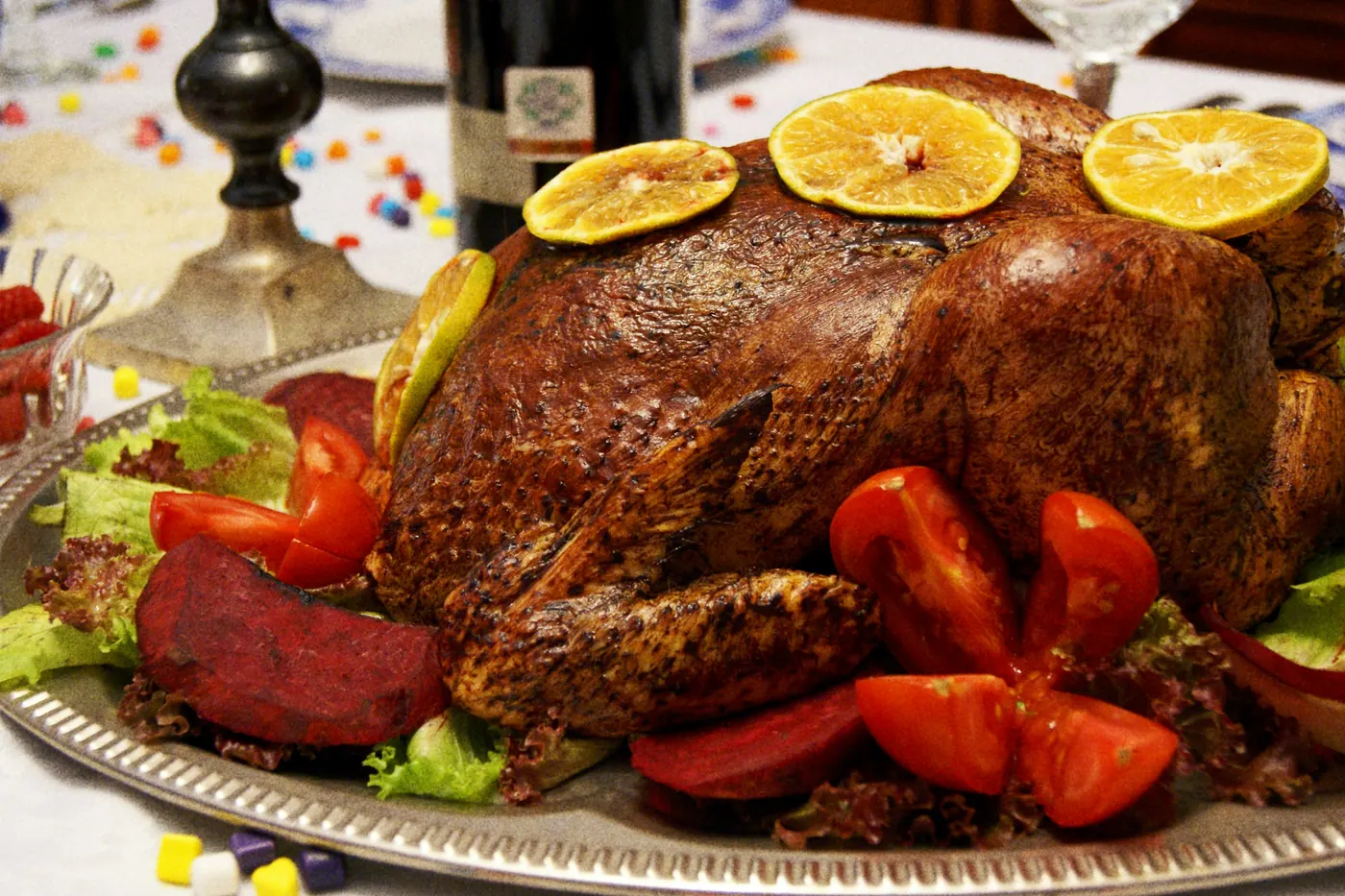
How to roast on a sheet pan without a roasting pan
- Leave headroom. A rack inside the pan lifts the roast about an inch, so check it clears the oven rack above before you heat the oven.
- Set the rack in the pan. A wire rack in a rimmed sheet is one of Tasting Table’s suggestions. No rack? Use bars of scrunched-up foil or a bed of thick-cut onions, carrots and potatoes.
- Size the pan to the roast. Leave some room on every side, and do not let any part of the meat hang over the rim.
- Add a splash of water if the pan looks dry. This is general kitchen sense rather than a sourced rule: a little liquid under the rack keeps the drippings from scorching on a thin pan.
- Watch the drippings. If they rise toward the 1-inch rim, ladle some off before moving the pan.
- Make gravy in a saucepan. Pour the drippings and any scraped-up browned bits into a pan on the stove, unless your pan is rated for the burner.
Our guide to the best sheet pan with a rack covers matched pan-and-rack sets if you would rather buy the two together.
When a real roasting pan is worth buying
If you roast a large turkey every year, make gravy in the pan, or roast big, fatty cuts often, a roasting pan earns its space: its sides hold more liquid than a sheet, its handles carry more weight than a baking dish, and a good one goes over two burners. Our guide to the best roasting pan compares stainless, enameled and nonstick roasters, and the guide to the best roasting pan for vegetables explains why vegetables are happier on a low-sided pan anyway.
Roasting pan alternative questions, answered
What can I use instead of a roasting pan?
A rimmed half sheet pan with a wire rack for most roasts, a Dutch oven for pot roasts and braises, and a 9 x 13-inch metal, ceramic or cast iron pan for a whole chicken or a small roast.
Can I roast a chicken on a sheet pan?
Yes. Milk Street argues a baking sheet browns better than a roasting pan because its short sides let air circulate. Use a heavy pan, set the chicken on a rack and watch the depth of the drippings.
Can I use a Dutch oven as a roasting pan?
For smaller roasts, yes; Tasting Table lists a Dutch oven for these. Expect more tender meat and less browning, and uncover the pot toward the end for a darker outside.
Is a disposable foil pan safe for roasting a turkey?
It can be used, but it flexes. Reynolds recommends carrying disposable pans on a sturdy metal sheet pan and ladling off excess juice; Tasting Table warns they can be wobbly when loaded.
What can I use instead of a roasting rack?
A wire cooling rack set in a rimmed baking sheet, bars of scrunched-up foil, or a bed of thick-cut vegetables, all suggested by Tasting Table.
Our final word on roasting without a roaster
Use a heavy rimmed sheet pan with a wire rack for chicken, pork loin and vegetables; it browns as well as a roaster or better. Use a Dutch oven when the roast needs moist heat or you want gravy in the same pot, and a 9 x 13 metal, iron or ceramic pan when you are roasting one chicken. Save the real roasting pan, or a foil pan set on a sheet, for the holiday turkey. For a roast with Mexican flavors, our guide to Mexican cooking methods explains the techniques behind them.
And if tonight is not a roasting night, see the menu or call to order.