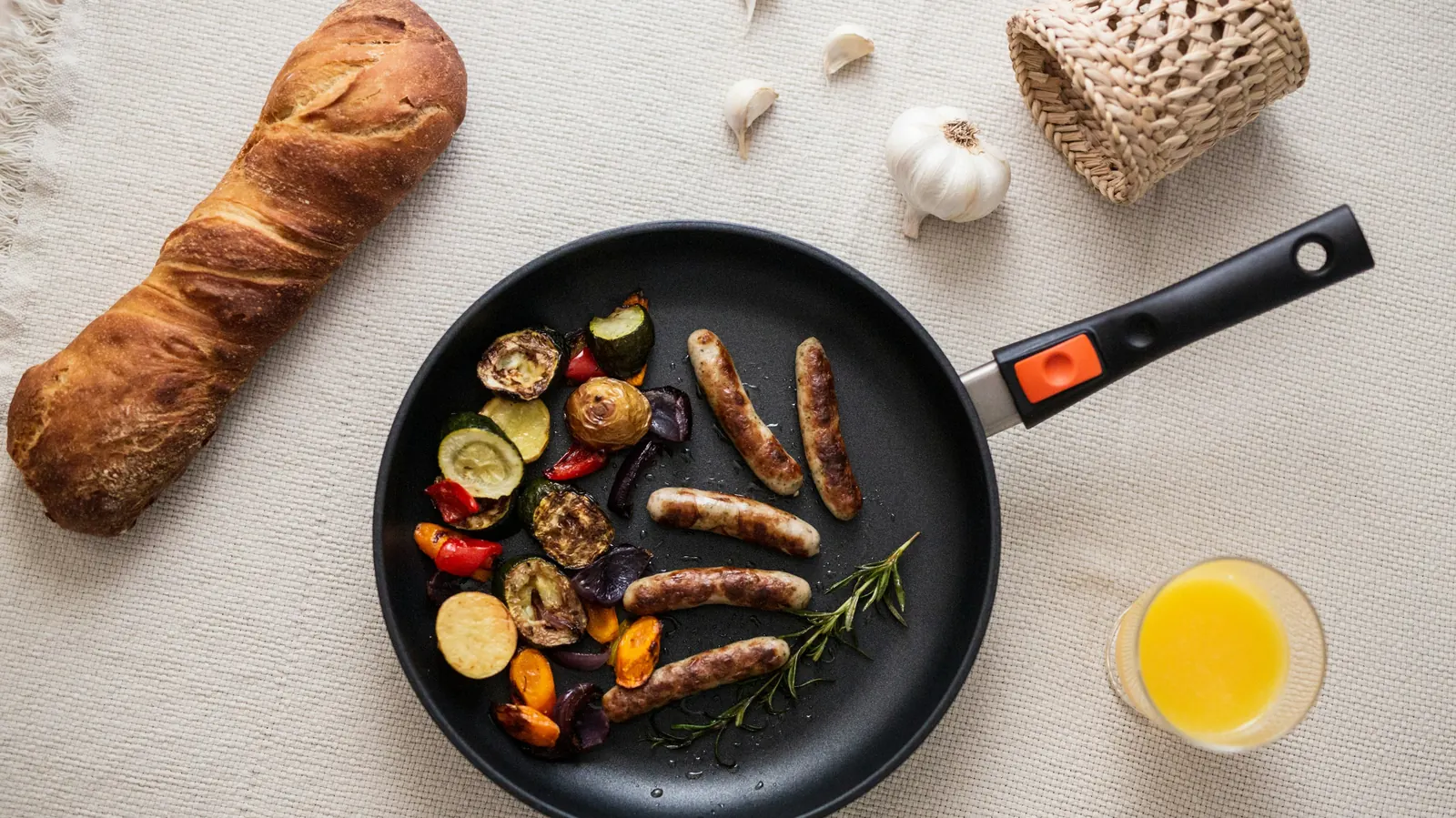
Set a 12-inch skillet next to a 3.5-quart sauté pan and from above they look almost the same: a wide, flat circle of steel with a long handle. Turn them sideways and the difference shows. The skillet’s walls are low and flare outward; the sauté pan’s walls rise straight up, at a right angle to the base. That one change decides which pan you reach for when you sear a steak for fajitas, and which one you want when the next step is a ladle of broth.
This guide sets the sauté pan and the skillet, which is the same pan as a frying pan, side by side. It covers shape, cooking surface, evaporation and browning, liquid and splatter, weight and handles, and lids, then says who should buy which and names one well-reviewed pan for each side. The performance points come from America’s Test Kitchen’s reviews of sauté pans and of stainless steel skillets and its explainer on the difference between the two, and the product details from the makers’ listings and pages.
Julia’s earns a commission on purchases made through links on this page, at no cost to you. Recommendations are based on what a restaurant kitchen looks for, product specifications and verified buyer reports.
Quick verdict: sauté pan or skillet first?
Buy a 12-inch skillet first if most of your cooking is searing, browning and frying: steaks, chicken, eggs, fish, peppers and onions. Its low, sloped walls let moisture escape so food browns, and make it easy to slide a spatula under a fried egg. Buy a sauté pan first, or add one next, if your cooking often ends in liquid: braises, saucy chicken, rice cooked in broth, or a big pile of greens. Its straight walls hold liquid, contain splatter and keep food in the pan as you stir. Most busy kitchens end up owning both.
The table sums up the differences, using the pans America’s Test Kitchen rates highest in each category as the reference. Each difference gets its own section below.
Saute pan vs skillet at a glance
| Sauté pan | Skillet (frying pan) | |
|---|---|---|
| Walls | Moderately tall, straight, L-shaped | Low, gently sloping, flared |
| How it is sized | By volume: usually 3 to 3.5 quarts | By rim diameter: usually 10 or 12 inches |
| Flat cooking surface | About 9.5 to 9.8 inches on a 3.5-quart pan | About 9.25 to 10.5 inches on a 12-inch pan |
| Wall height (ATK’s top picks) | About 2.4 inches | About 2 inches, angled outward |
| Best at | Braising, shallow frying, greens, rice finished in the oven | Searing, frying eggs, quick sautés, pan sauces |
| Moisture | Holds liquid in; slower to evaporate | Lets steam escape for better browning |
| Handles | Long handle, often a helper handle | Long handle, usually no helper |
| Lid | Often sold with one | Often sold without one |
| Weak at | Sliding out eggs and fish; tossing | Holding broth without spills |
Walls: straight sides versus a gentle slope
America’s Test Kitchen puts the difference in one line each. Skillets have a broad cooking surface with low, gently sloping walls. Sauté pans have a broad cooking surface with moderately high, L-shaped walls. Almost everything else in this comparison follows from those walls.
Straight walls hold more for the same floor. ATK says the walls of a sauté pan are high enough to corral splatters, contain food and prevent spills as you stir. In its sauté pan review, the testers preferred walls just under 2.5 inches: pans with taller walls started to feel like saucepans, and in a pan with 2-inch walls the rice test spilled food over the edge. Its winning pan, the Made In 3.5-quart, has walls of about 2.4 inches.
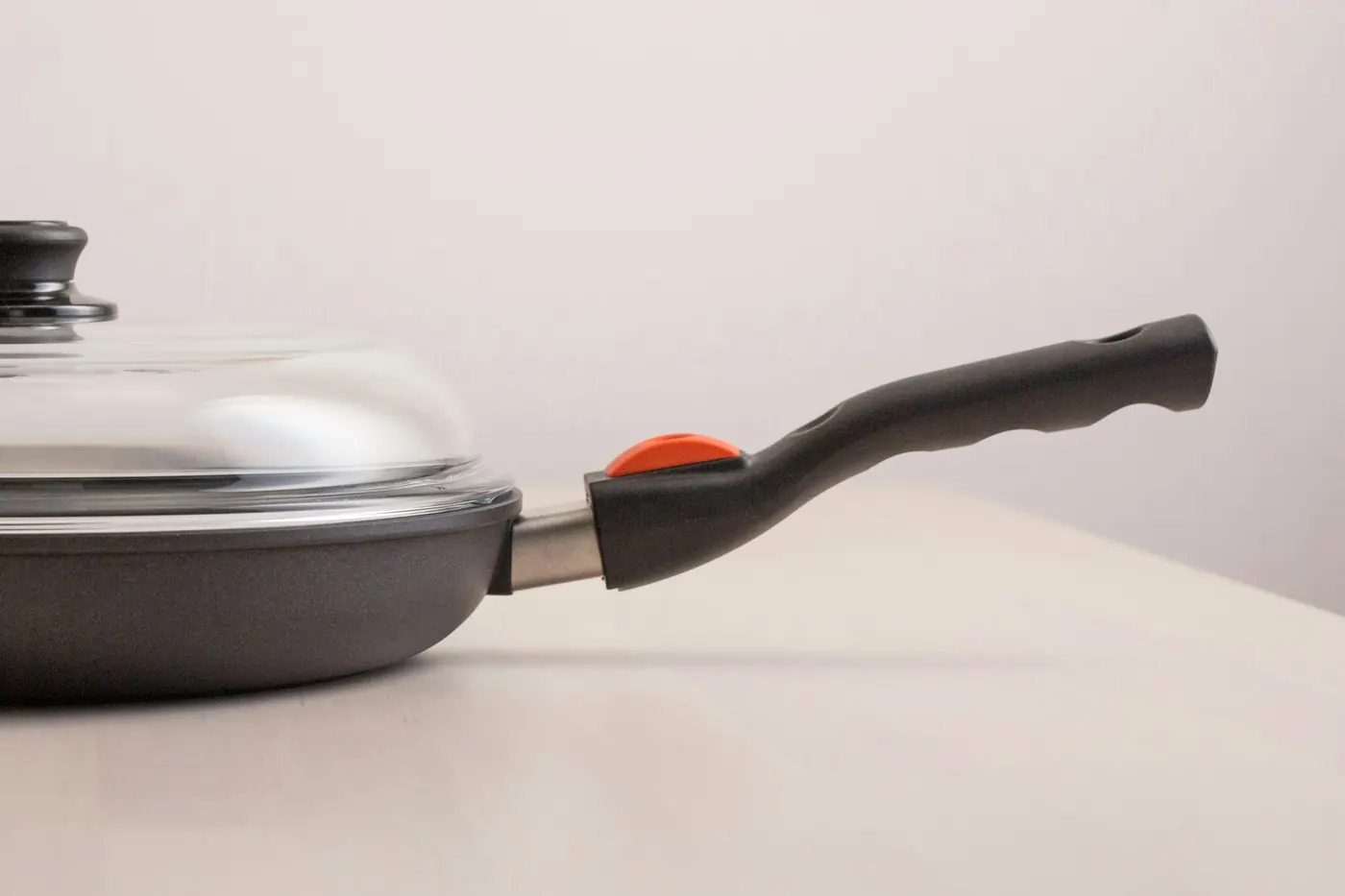
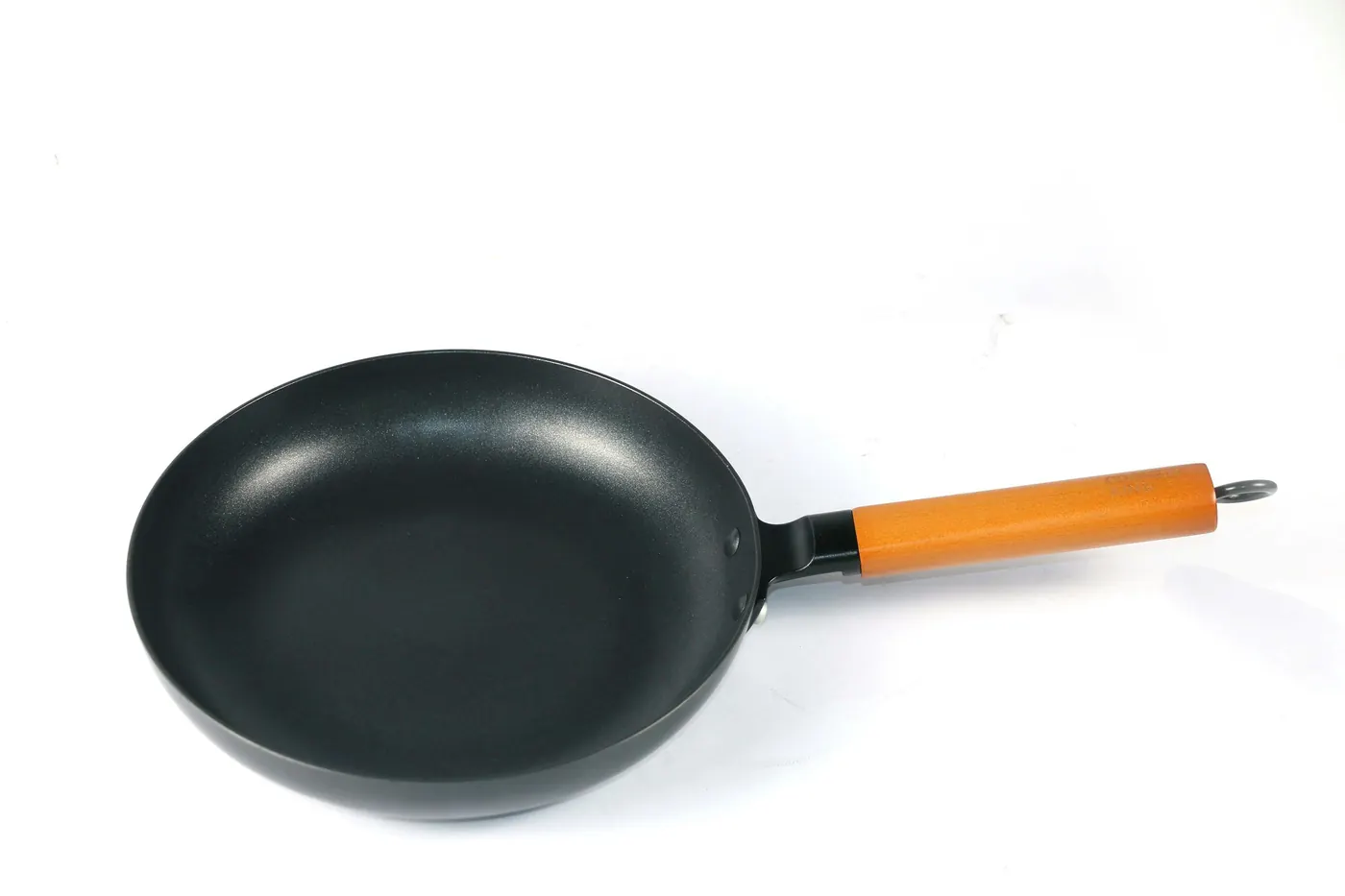
Sloped walls do the opposite job. ATK’s stainless skillet review says low, flaring sides encourage evaporation for better browning, and make it easier to pour off sauce, slide a spatula under food and tip food out of the pan. Its favorite skillet, the All-Clad D3 12-inch, has 2-inch sides; they are not much lower than a sauté pan’s, but because they angle outward they leave the space above the food open.
Cooking surface and size
The two pans are sized differently, which confuses shoppers. Skillets are sold by the diameter across the rim; sauté pans by how many quarts they hold. In practice, ATK says the 3- to 3.5-quart sauté pans it tested offer a cooking surface similar to a 12-inch skillet. Its favorite sauté pans measured 9.5 to 9.8 inches across the flat base, and it prefers 12-inch skillets with broad cooking surfaces of about 9.25 to 10.5 inches.
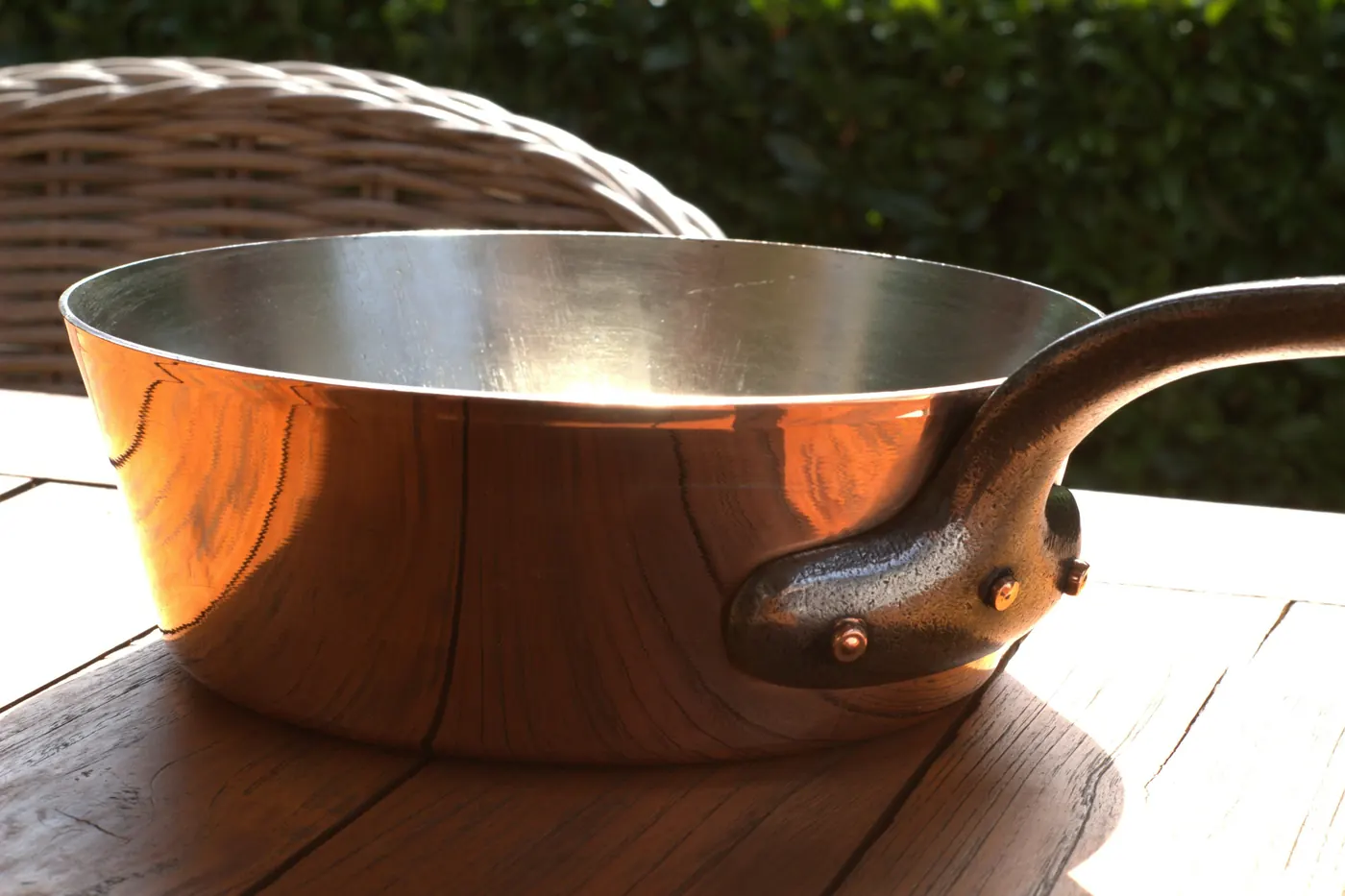
The reason a 12-inch skillet has a smaller floor than its name suggests is the slope: the rim measures 12 inches but the walls angle in to meet the base. A sauté pan’s straight walls waste less of its width. Made In’s 3.5-quart pan measures 10.5 inches across the top and, according to Made In, has a 9.8-inch cooking surface; the Amazon listing gives 9.5 inches.
For sizing, ATK says a 12-inch skillet provides room to cook for as many as six people and a 10-inch skillet suits two to four. A 3.5-quart sauté pan serves roughly the same number as a 12-inch skillet, with room for the liquid as well.
Browning and searing
Browning needs dry heat. When meat or vegetables release moisture, it has to evaporate quickly or the food steams in its own juices. ATK says a skillet’s low walls encourage evaporation, which is why it reaches for skillets most often when it is frying eggs or searing proteins. A skillet is the pan for skirt steak for fajitas, chicken thighs skin side down, or a quick batch of rajas that should char at the edges.
A sauté pan browns well too: ATK’s winning pan browned food evenly in its tests. But its straight walls hold more steam over the food, especially when the pan is crowded, so give the food a little more room and a hotter start if you sear in one. Where the sauté pan earns its place is the step after searing: brown the chicken, add onions, tomatoes and chipotle and a cup of broth, and the same pan becomes a braiser for chicken tinga without anything slopping over the rim.
For more on picking a searing pan, see our guide to the best skillet for chicken.
Liquid, splatter and shallow frying
ATK reaches for a sauté pan most often when it is trying to contain either liquid or large amounts of greens, and lists braising, shallow frying and cooking grains that finish in the oven among its jobs. In the sauté pan review it calls the pan one of its go-to pans for braising, shallow frying and cooking large amounts of greens, and the winner produced fluffy rice in the oven.
That list maps neatly onto Mexican home cooking. Arroz rojo starts by toasting the rice in oil, then takes tomato broth and a lid, and a sauté pan does both steps without a pan change. Picadillo, calabacitas, rajas con crema and a pot of chile verde all simmer in liquid that would creep up a skillet’s sloped sides. For shallow frying, such as chiles rellenos or a batch of tostadas, the taller straight walls catch more of the spatter than a skillet’s low rim.
A skillet handles liquid in small amounts: a pan sauce made from the browned bits after searing, or enough salsa to simmer chilaquiles for two. ATK lists pan sauces among a skillet’s jobs, and the low sides make the sauce easy to pour.
Weight, handles and tossing
ATK’s winning skillet weighs 2.8 pounds, and the testers found that skillets over 4 pounds empty were prohibitively heavy. The skillet review also notes that helper handles on some skillets add weight that throws the pan off balance; the All-Clad has none. A 12-inch skillet with sloped sides is the easier pan to toss with a flick of the wrist, and the easier one to tip a fried egg out of.
A sauté pan is heavier once it is full of braise. ATK’s winning sauté pan weighs 3 pounds 2 ounces empty, and the testers preferred models with a helper handle, because it helps support a heavy, liquid-laden pan, especially on the way into the oven. They also preferred long, straight handles, and moderately heavy pans: very heavy ones were hard to pour from, and very light ones felt flimsy. Tossing food in a sauté pan is possible, but the straight walls make it harder to flip food back into the pan than the curved lip of a skillet.
Lids and the oven
Sauté pans are often sold with a lid, because so many sauté pan jobs end with one: rice, braises, steaming greens. ATK’s testers preferred stainless steel lids; a glass lid steamed up so they couldn’t see the food anyway. Skillets are often sold without a lid, though ATK calls a lid a handy accessory that increases a skillet’s versatility for steaming and braising, and its winner was reviewed in the version sold with one. If you already own a skillet without a lid, our guide to the best stainless steel pan lid options can fill the gap.
Both pans in clad stainless go into the oven: All-Clad rates the D3 to 600°F and Made In rates its pan to 800°F. That makes either one fine for finishing a seared steak or baking rice.
Choose a sauté pan if… / Choose a skillet if…
Choose a sauté pan if…
- You often brown meat and then braise it in the same pan.
- You cook rice, greens or saucy dishes for four or more.
- You shallow-fry and want the walls to catch spatter.
- You want a pan that comes with a lid and a helper handle for the oven.
- You already own a good skillet.
Choose a skillet if…
- You can buy only one pan and you sear more than you simmer.
- You fry eggs, cook fish or make quesadillas that need to slide out.
- You want the best browning for steaks, chicken and fajita meat.
- You like to toss vegetables rather than stir them.
- You want the lighter pan to lift with one hand.
If you are deciding between a sauté pan and a saucepan instead, read our guide to saucepan vs pan.
One pick for each side
Both picks are the top-rated pans in America’s Test Kitchen’s current reviews of their categories, and both were in stock on Amazon when we wrote this. We have not cooked with either for this guide.
1. Made In 3.5-quart Stainless Clad Sauté Pan – Room to Brown, Then Braise
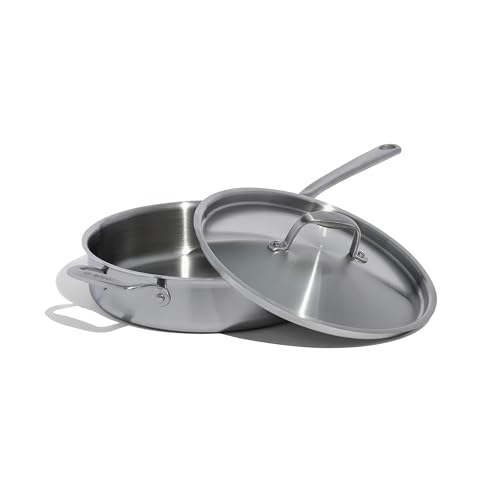
The Made In is the winner of America’s Test Kitchen’s sauté pan review. ATK says it had a roomy cooking surface and browned food evenly, its moderately high walls corralled splatters, and it produced fluffy rice in the oven. Its ATK specs line up with what the testers said they wanted: a 9.5-inch cooking surface, 2.4-inch walls, a long 8-inch handle and a helper handle.
The pan is 5-ply stainless clad, made in Italy, and works on gas, electric and induction cooktops, according to Made In. It is rated heat safe to 800°F, which covers any oven job. Made In gives the weight as 3 pounds and the depth as 2.5 inches; ATK measured 3 pounds 2 ounces. ATK’s spec table lists a lid, and the Amazon listing counts two units, the pan and its lid, though Made In’s own page does not describe the lid.
ATK lists the pan as dishwasher safe, but Made In says hand washing is preferred and advises heating and cooling the pan slowly to prevent warping. Bare stainless needs a preheated pan and a little fat for food to release cleanly.
Why we like it
- Winner of ATK’s sauté pan review
- Helper handle for a full pan, per ATK
- Oven safe to 800°F, per Made In
- 5-ply clad; works on induction
Key specifications
| Model | COOK-4L-STE-ISS |
|---|---|
| Material | 5-ply stainless clad |
| Size | 3.5 quarts; 10.5 inches across |
| Cooking surface | 9.5 in (ATK, listing); 9.8 in (Made In) |
| Walls | Straight, about 2.4 inches (ATK) |
| Weight | 3 lb 2 oz (ATK) |
| Lid | Included (ATK, listing); lid material not stated |
| Care | Hand wash preferred, per Made In |
Why we recommend it
It suits a cook who browns and then simmers: braised chicken, arroz rojo, chile verde, greens, on any stove including induction.
Skip it if you mostly sear and fry eggs; a skillet is lighter and better at those jobs.
Pros and cons
Pros
- Even browning and contained splatter, per ATK
- Very high oven rating
- Made in Italy
Cons
- Hand washing preferred by the maker
- Lid details not described by Made In
- Heavier to toss than a skillet
2. All-Clad D3 12-inch Stainless Fry Pan with Lid – Even Browning, Lid Included

America’s Test Kitchen calls the All-Clad D3 12-inch Fry Pan with Lid its longtime favorite stainless steel skillet, and this is the version it reviewed, sold with the lid. ATK measured it at 2.8 pounds with a 9.5-inch cooking surface, a 3-millimeter-thick bottom and 2-inch sides, and praised its clean design with no unnecessary frills: no helper handle to unbalance it.
The D3 is fully bonded tri-ply, an aluminum core between layers of stainless steel. ATK explains that the aluminum heats quickly while the stainless spreads heat evenly, resists reacting with acidic foods and stands up to dents. The flared walls are the skillet shape at its most useful: moisture escapes for browning, and a spatula slides easily under food. All-Clad’s listing adds a riveted handle shaped for an underhand grip, a flared edge for drip-free pouring and a precision-fit stainless steel lid.
All-Clad rates the pan oven and broiler safe to 600°F and compatible with any stovetop, including induction. The listing says it is made in Pennsylvania with global components and recommends hand washing. It carries a limited lifetime warranty.
Why we like it
- ATK’s longtime favorite stainless skillet
- Stainless steel lid included
- Fully clad tri-ply
- Oven and broiler safe to 600°F
Key specifications
| Model | 11644901318 |
|---|---|
| Material | Tri-ply: stainless steel, aluminum core |
| Size | 12 inches |
| Cooking surface | 9.5 in (ATK) |
| Walls | Flared, 2 inches (ATK) |
| Weight | 2.8 lb (ATK) |
| Lid | Stainless steel, included |
| Care | Hand washing recommended, per All-Clad |
Why we recommend it
It suits a cook who wants one pan for searing, frying, quick sautés and pan sauces on any stove, with a lid for steaming when needed.
Skip it if your cooking is mostly braises and rice; the sauté pan holds liquid with fewer spills.
Pros and cons
Pros
- Even browning, per ATK
- Light for a 12-inch clad pan
- Made in Pennsylvania with global components
Cons
- Hand washing recommended
- No helper handle when full
- Low sides limit how much liquid it holds
How we compared the two pans
We compared the sauté pan and the skillet on the differences that change at the stove: wall shape, cooking surface, evaporation and browning, liquid and splatter, weight and handles, and lids. The guidance comes from three America’s Test Kitchen sources: its explainer on the difference between a skillet and a sauté pan, its review of the best sauté pans and its review of the best stainless steel skillets. Product details come from the makers’ Amazon listings and Made In’s product page. We checked both picks were in stock on Amazon in the United States when we wrote this. We have not cooked with these pans for this guide, and we do not state which pans, if any, Julia’s uses.
Sauté pan and skillet questions, answered
Is a skillet the same as a frying pan?
Yes. In American kitchens the two names mean the same pan: a wide, flat base with low, sloping walls. ATK even treats All-Clad’s 12-inch fry pan as its favorite skillet.
Frying pan vs sauté pan: which should I buy first?
If you sear, brown and fry most nights, buy the frying pan first. If you cook a lot of braises, rice and saucy dishes, or you already own a good skillet, buy the sauté pan. Our guide to the best frying pan covers every type of skillet.
Saute pan vs frying pan: can one replace the other?
Partly. A sauté pan can sear and fry, though its straight walls hold more steam and make eggs harder to slide out. A frying pan can make a small pan sauce or simmer a little salsa, but its sloped walls spill when it is full of liquid.
Is a sauté pan good for searing steak?
Yes, especially if you finish with a sauce or a braise. For the hardest sear on a crowded pan, a skillet’s low, flared walls let moisture escape faster.
What size sauté pan matches a 12-inch skillet?
A 3- to 3.5-quart sauté pan. ATK says pans of that size offer a cooking surface similar to a 12-inch skillet.
Do I need a lid for each pan?
For a sauté pan, yes; most sauté pan jobs end with one, and many are sold with one. For a skillet it is optional, but ATK calls a lid a handy accessory for steaming and braising.
Our final word on saute pan vs skillet
The skillet is the pan for heat and speed: searing, browning, eggs and quick sautés, with walls that let steam escape and food slide out. The sauté pan is the pan for what comes after: braises, rice, greens and shallow frying, with straight walls that keep liquid and spatter in. If you can own only one, choose by what you cook most nights; if you cook for a family, you will use both.
To compare more sauté pans, start with our guide to the best saute pan; for skillets, see the best frying pan, and for sizzling plates, the best fajita skillet. Or let us do the cooking: see the menu or call to order.