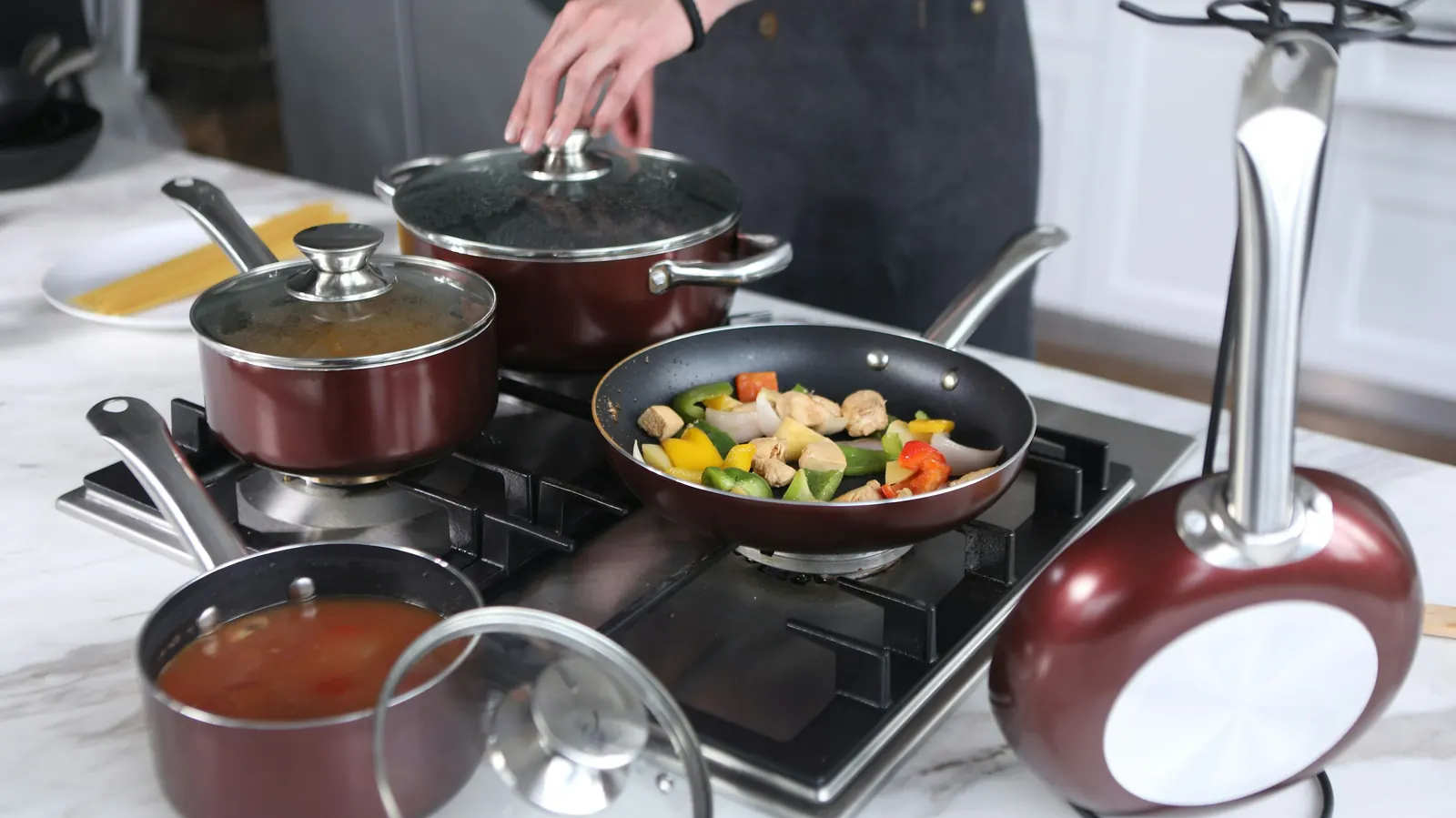
Walk into any kitchen during a dinner rush and two pans do most of the work. The saucepan, tall and narrow with a lid, holds the rice, the beans and the sauce. The frying pan, wide and shallow with sloping sides, sears the fajita meat, softens the onions and fries the eggs. They look like close relatives, and both get called “a pan”, but the shape of each one decides what it does well, and swapping them usually shows.
This guide puts the saucepan and the frying pan, also called a skillet, side by side. It explains the differences that matter at the stove, which jobs belong to which pan, and which one to buy first if you only have room or budget for one. At the end we name one of each from the same clad stainless line, so the comparison stays about shape rather than brand.
Julia’s earns a commission on purchases made through links on this page, at no cost to you. Recommendations are based on what a restaurant kitchen looks for, product specifications and verified buyer reports.
Quick verdict: saucepan, frying pan or both?
Buy a saucepan for anything that cooks in liquid: rice, beans, sauces, grains, boiled eggs and reheating. Its tall, straight sides and lid hold moisture in. Buy a frying pan for anything you want browned: meat, onions and peppers, eggs, tortillas for chilaquiles. Its low, flared sides let steam escape so food sears instead of stewing. Most kitchens need both. If you can only buy one, a 10-inch frying pan covers more everyday meals, but you will miss the saucepan the first time you cook rice.
The table sums up the differences; the sections after it explain each one.
Saucepan vs pan: the two side by side
| Saucepan | Frying pan (skillet) | |
|---|---|---|
| Shape | Tall, straight sides, small base | Low, flared or sloped sides, wide base |
| Common sizes | 1 to 4 quarts | 8, 10 and 12 inches across |
| What it holds | Liquid: water, broth, sauce | A film of fat; a little sauce |
| Moisture | Keeps it in, especially with the lid on | Lets it escape for browning |
| Lid | Usually included | Often sold without one |
| Handle | One long handle; helper handle on larger pans | One long handle; helper handle on 12-inch pans |
| Best jobs | Rice, beans, sauces, grains, boiling, reheating | Searing, sautéing, frying, eggs, pan sauces |
| Weak at | Browning (crowded, steamy) | Long simmering in liquid (evaporates, spills) |
Shape: why the sides decide everything
The single biggest difference is the walls. A saucepan’s sides rise straight up and are usually as tall as the pan is wide, or close to it. That keeps liquid deep over a small base, slows evaporation and makes it hard for anything to splash out. A frying pan does the opposite. America’s Test Kitchen’s stainless skillet review favors low, flaring sides because they encourage evaporation for better browning, and advises against tall, straight sides, which trap steam.
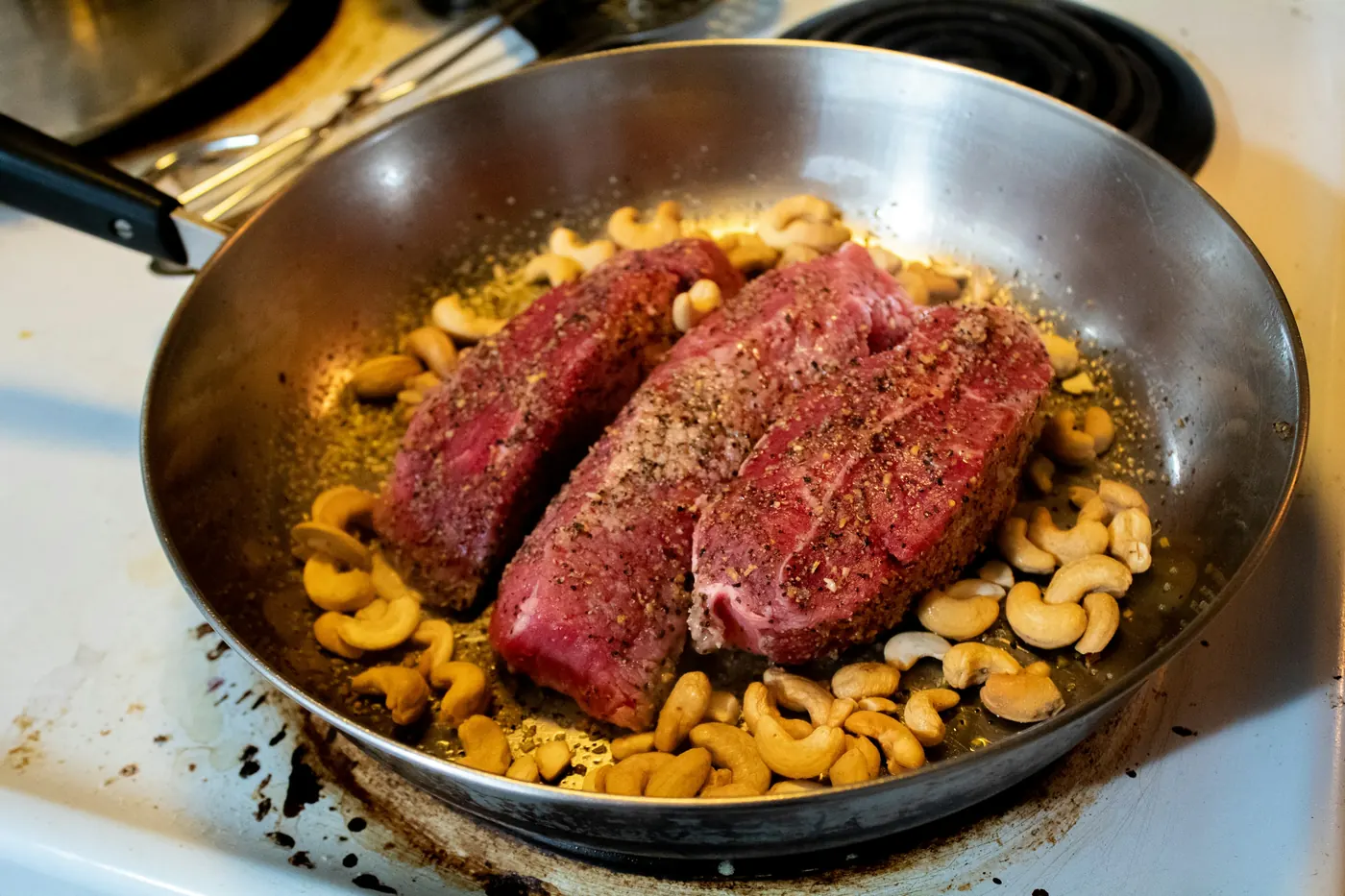
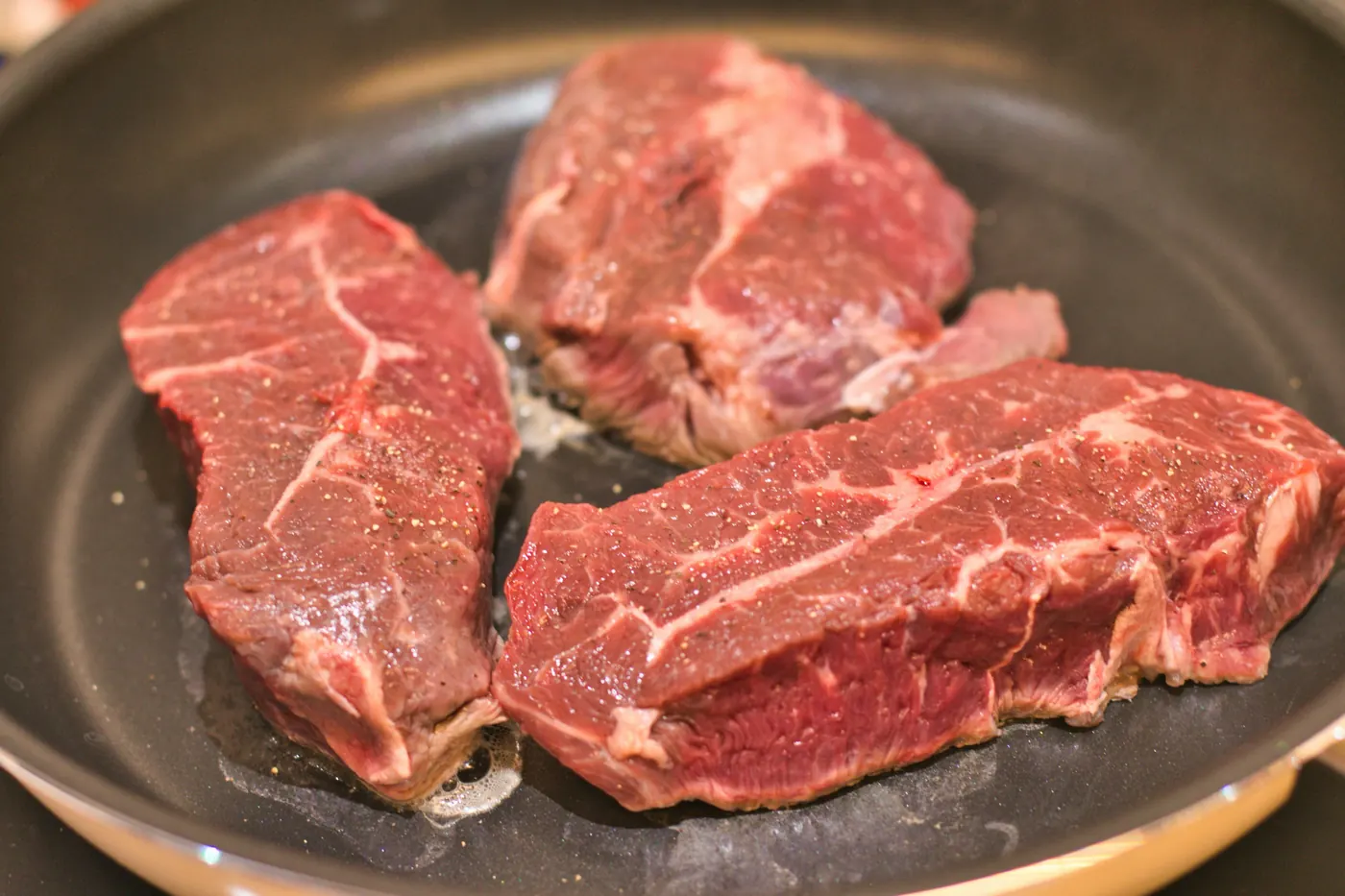
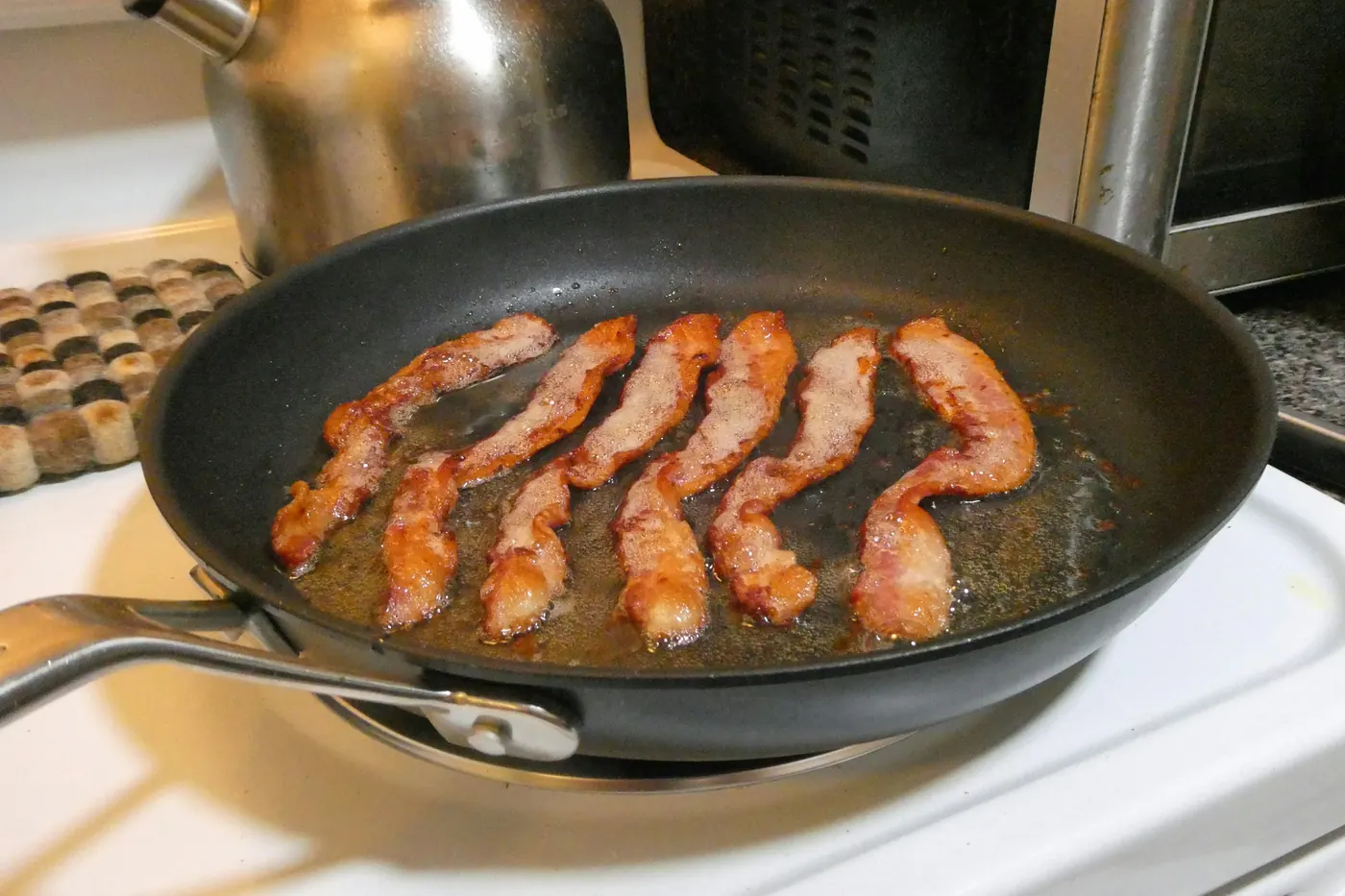
That is the whole story in one sentence: tall sides trap steam, low sides release it. When you sear steak for fajitas, you want the moisture coming off the meat to leave the pan at once, so the surface browns. In a saucepan, that same moisture rolls back down the walls and the meat turns gray and stews. When you cook rice, you want exactly the reverse: the steam should stay in the pan to finish the grains.
Size and capacity: quarts versus inches
Saucepans are sold by volume, frying pans by diameter, which tells you what each is for. America’s Test Kitchen calls a 4-quart saucepan the best all-purpose size for most cooks and suggests a 2-quart pan for cooking for one or two. For skillets, ATK says a 12-inch pan gives room to cook for as many as six, a 10-inch pan suits two to four, and an 8-inch pan handles small jobs like frying an egg.
Watch the cooking surface on a frying pan. Because the sides slope, the flat base is smaller than the rim-to-rim measurement; ATK prefers 12-inch skillets with a flat cooking surface of about 9.25 to 10.5 inches. On a saucepan, the base is small by design, and that is fine because the food is in liquid, not lying on the metal.
The lid: standard on one, optional on the other
A saucepan almost always comes with a lid, because most saucepan cooking depends on one. Rice, simmered beans and steamed vegetables all need trapped steam. ATK’s saucepan review says its testers liked lids that fit snugly, as these kept steam from escaping, and that pour spouts let steam leak and left rice pilaf unevenly cooked.
Frying pans are often sold without a lid, since searing and frying happen uncovered. ATK still calls a lid a handy accessory that increases a skillet’s versatility: it lets you steam vegetables, melt cheese over a quesadilla filling or keep a braise from drying out. Its winning stainless skillet comes with one. If your frying pan does not, a lid from a same-size pan usually fits.
Heat and surface area
A wide frying pan puts a lot of metal in contact with the food and the burner, so it heats food fast and evaporates liquid quickly. That makes it the right pan for anything that should cook in minutes: a pan of rajas, scrambled eggs with chorizo, a quick tomato sauce reduced hard. A saucepan’s small base and tall body heat the liquid more slowly and hold it at a steady simmer with little evaporation, which is what a pot of beans or a chile sauce for enchiladas needs over half an hour.
Construction matters in both. In a saucepan, ATK prefers fully clad construction, with three or more bonded layers running up the walls, and finds that disc-bottom pans heat erratically and let food scorch. In a skillet, ATK also looks for fully clad construction, a bottom about 3 mm thick and an empty weight around 3 pounds; it considered pans over 4 pounds too heavy.
What each pan does in a Mexican kitchen
Jobs for the saucepan
Arroz rojo is the saucepan’s signature job: the rice is toasted in oil, the tomato broth goes in, the lid goes on and the heat goes down. Our guide to Mexican rice vs Spanish rice explains why the toasting step matters. The saucepan also simmers beans, reheats refried beans, cooks down a red or green chile sauce, warms milk for hot chocolate or atole and boils eggs. Our guide to the best saucepan rice pans covers the features that matter most for rice.
Jobs for the frying pan
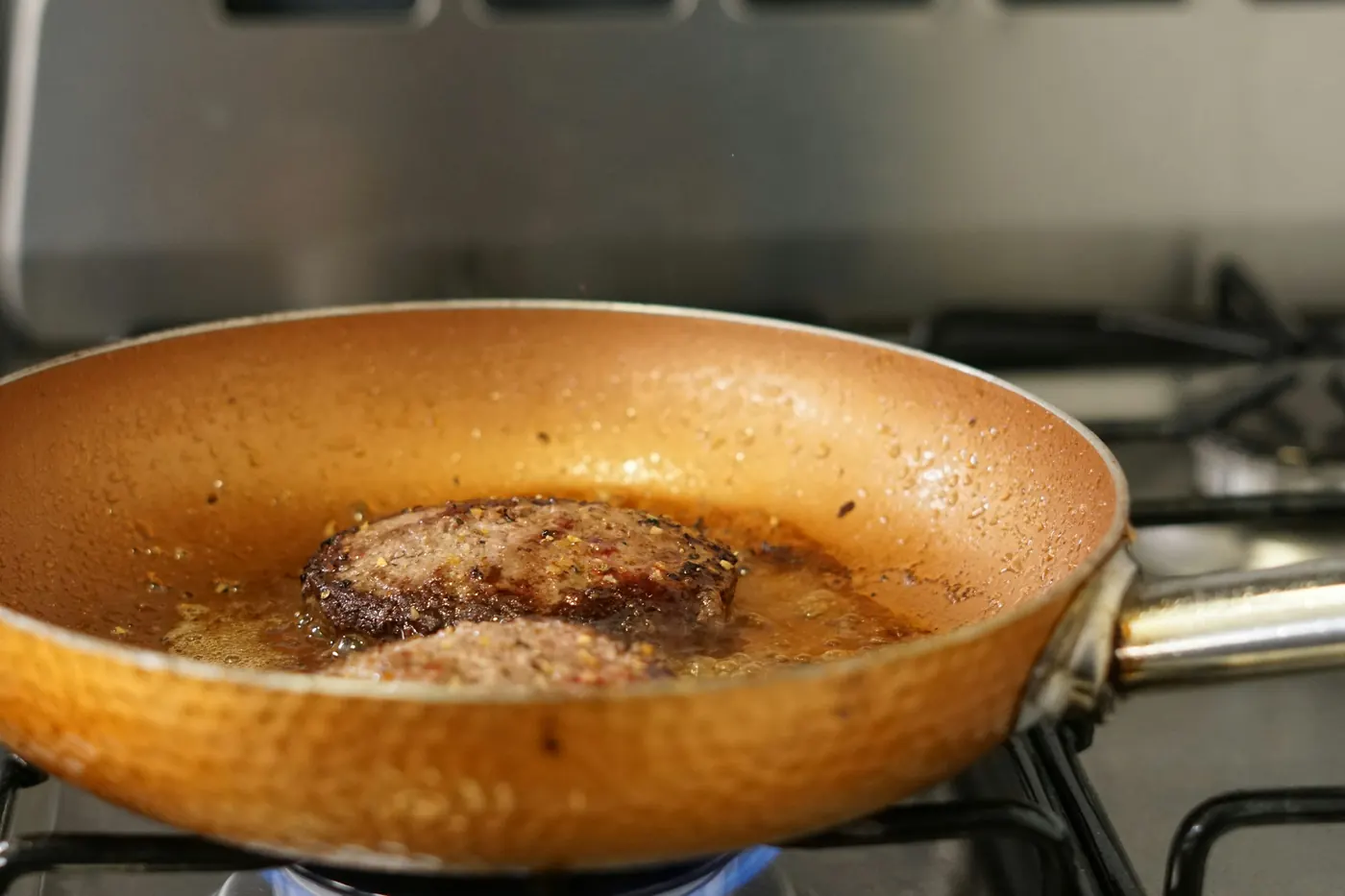
The frying pan sears steak and chicken for fajitas and tacos, softens onions and peppers, fries eggs for huevos rancheros, crisps tortilla strips and fries tortillas for chilaquiles, and browns chorizo. It also makes quick pan sauces after searing, because the wide surface reduces the liquid fast.
Where they overlap
Both can make a sauce, and both can reheat leftovers. A deep frying pan with a lid can cook rice, as plenty of home cooks know, though the wide base spreads the rice thin so it cooks faster and dries out sooner. A saucepan can fry a small batch of onions, but crowd it and they steam. When the job is in the middle, choose by the question “do I want the moisture in, or out?”
Saucepan vs skillet vs sauté pan
Three names cause most of the confusion. “Skillet” and “frying pan” mean the same thing in American kitchens: a pan with low, flared sides. A sauté pan is something in between: wide like a skillet but with straight sides two or three inches tall, usually with a lid and a helper handle. It holds more liquid than a skillet and browns better than a saucepan, which makes it good for braises and for rice dishes cooked in a wide layer. A saucepan is the tall, narrow pot. If you are choosing a first set, a saucepan and a skillet come before a sauté pan.
Handles, weight and storage
Both pans have one long handle, and on both it should stay cool and sit securely in your hand. A saucepan full of liquid is heavy at the far end, so ATK looks for a handle that is firmly attached and easy to grip, plus a helper handle on larger pans. A frying pan is lifted and tilted more often, to slide out eggs or pour off fat, so balance and weight matter more; ATK considered skillets over 4 pounds too heavy. For storage, saucepans nest by size; frying pans stack, ideally with a pan protector or towel between them.
Choose a saucepan if… / Choose a frying pan if…
Choose a saucepan if…
- You cook rice, beans or grains more than once a week.
- You make sauces that simmer for a while, such as enchilada sauce.
- You often boil eggs, pasta for one or two, or vegetables.
- You warm milk, soup or leftovers in small amounts.
- You want a pan where splashing and boil-overs are rare.
Choose a frying pan if…
- You sear meat, fish or chicken several times a week.
- You cook eggs most mornings.
- You sauté vegetables, onions and peppers for tacos and fajitas.
- You fry tortillas or tortilla strips.
- You want one pan that covers the most dinners if you can only buy one.
And if you cook from scratch most days, buy both. They do different jobs, and neither replaces the other well.
Our pick on each side
Both picks come from All-Clad’s D3 line, fully bonded tri-ply stainless steel. America’s Test Kitchen names All-Clad’s stainless saucepans its winners and the All-Clad D3 12-inch fry pan its winning stainless skillet. Using one line for both keeps the comparison about shape. If you want a lower-cost or nonstick alternative, see our guides to the best saucepan and the best nonstick pans.
1. All-Clad D3 3-quart Stainless Saucepan – Rice, Beans and Sauces

The D3 3-quart is a fully bonded tri-ply saucepan: an aluminum core between layers of stainless steel that runs from the base up to the rim, so the walls heat as well as the bottom. That is what keeps thick sauces and refried beans from catching at the edges and rice from scorching in a ring. In America’s Test Kitchen’s saucepan review, All-Clad’s stainless saucepans won in both the large and small categories, praised for uniform, steady heating and good visibility inside the pan.
Three quarts sits between ATK’s two winning sizes and suits most households: rice for four, a pot of beans to reheat, or a chile sauce reducing on the back burner. It comes with a lid, and the flared rim pours cleanly without a spout to let steam out.
It works on every stovetop including induction and is oven and broiler safe to 600°F. The Amazon title mentions the dishwasher, but All-Clad’s care line on the listing says hand wash only, which is what we would follow. It carries a limited lifetime warranty and is made in Pennsylvania with global components, according to the listing.
Why we like it
- Fully bonded tri-ply, base and walls
- All-Clad stainless is ATK’s saucepan winner
- Lid included; no pour spout
- Induction ready; oven safe to 600°F
Key specifications
| Model | 4203 |
|---|---|
| Size | 3 quarts |
| Construction | Tri-ply: stainless steel, aluminum core |
| Lid | Included |
| Oven-safe to | 600°F, including broiler |
| Induction | Yes |
| Dishwasher safe | Hand wash only, per All-Clad’s care line |
| Warranty | Limited lifetime |
Why we recommend it
It suits a cook who wants one saucepan for rice, beans, sauces and reheating that will last for decades.
Skip it if you want a pan that goes in the dishwasher; All-Clad says hand wash.
Pros and cons
Pros
- Even heating, per ATK’s review
- Works on gas, electric and induction
- Light interior shows browning
Cons
- Hand wash only
- Costs more than clad pans from Tramontina or Cuisinart
2. All-Clad D3 10-inch Stainless Fry Pan with Lid – Searing for Two to Four

The same tri-ply construction in a frying pan shape. America’s Test Kitchen’s stainless skillet review names the All-Clad D3 12-inch fry pan with lid as its winner and says fully clad construction helps it heat responsively and brown evenly, with low, flaring sides that encourage browning and evaporation. This is the 10-inch version, the size ATK says suits cooking for two to four, and it is lighter and easier to toss than the 12-inch.
All-Clad’s listing describes it for searing steaks, sautéing vegetables and cooking eggs, and unlike many frying pans it comes with a lid, which turns it into a pan that can steam vegetables, melt cheese or finish a dish covered. The handle is riveted and shaped for an underhand grip, and the flared edge pours without drips.
It is oven and broiler safe to 600°F, works on every stovetop including induction, carries a limited lifetime warranty and, according to the listing, is made in Pennsylvania with global components. All-Clad says hand wash only. Bare stainless needs a little fat and a properly preheated pan to release food; for eggs every morning, a nonstick pan is easier.
Why we like it
- D3 fry pan is ATK’s stainless skillet winner (12-inch)
- Lid included
- Induction ready; oven safe to 600°F
- 10-inch size for two to four people
Key specifications
| Model | 41106SC |
|---|---|
| Size | 10 inches |
| Construction | Tri-ply: stainless steel, aluminum core |
| Lid | Included |
| Oven-safe to | 600°F, including broiler |
| Induction | Yes |
| Dishwasher safe | Hand wash only, per All-Clad |
| Warranty | Limited lifetime |
Why we recommend it
It suits a cook who sears, sautés and makes pan sauces most nights and wants a stainless frying pan that browns evenly and lasts.
Skip it if you mostly cook eggs and delicate fish; a nonstick pan releases them with less effort.
Pros and cons
Pros
- Even browning, per ATK’s review of the D3 fry pan
- Comes with a lid
- Works on every cooktop including induction
Cons
- Hand wash only
- Bare stainless needs fat and preheating to release food
- Too small to sear for six; choose the 12-inch for that
How we compared the two
We compared the saucepan and the frying pan on the things that change at the stove: wall shape, evaporation, size, lids, heat and handling, and matched each to the jobs a Mexican home kitchen does most. Shape and size guidance comes from America’s Test Kitchen’s current reviews of saucepans and of stainless steel skillets, and its article on the differences between good and bad saucepans. Product specifications come from All-Clad’s Amazon listings, and we checked both pans were in stock on Amazon in the United States when we wrote this. We have not cooked with these pans for this guide.
Saucepan and frying pan questions, answered
What is the difference between a frying pan and a saucepan?
Shape. A saucepan has tall, straight sides and a lid, so it holds liquid and keeps moisture in; it is for rice, beans, sauces and boiling. A frying pan has low, flared sides, so moisture escapes and food browns; it is for searing, sautéing and frying.
Is a skillet the same as a frying pan?
Yes. In American kitchens the two names mean the same pan, with low, sloped sides. A sauté pan is different: it has taller, straight sides and usually a lid.
Saucepan vs skillet: which should I buy first?
If you can buy only one, a 10-inch skillet covers more everyday dinners. Add a 2- to 3-quart saucepan as soon as you can, because rice, beans and sauces are hard to do well without one.
Can I use a saucepan instead of a frying pan?
For small jobs, yes: a few onions, a single egg, a little garlic. For browning meat or anything in quantity, no. The tall sides trap steam and the small base crowds the food, so it stews instead of searing.
Can I cook rice in a frying pan?
Yes, if the pan is deep enough and has a lid that fits. The wide base spreads the rice thin, so keep the heat very low and check it sooner. A saucepan is more forgiving.
What size saucepan and frying pan should I own?
For most households, a 3-quart saucepan and a 10- or 12-inch frying pan. America’s Test Kitchen calls 4 quarts the best all-purpose saucepan size and recommends a 12-inch skillet for cooking for up to six.
Our final word on saucepan vs pan
The saucepan keeps moisture in and the frying pan lets it out, and that one difference settles almost every question about which to reach for. Buy a frying pan first if you sear and sauté most nights, a saucepan first if rice and beans are on the table most days, and both as soon as you can.
For more on each, compare our picks for the best saucepan, the best cast iron skillet and the best nonstick pans. Or skip the cooking: see the menu or call to order.