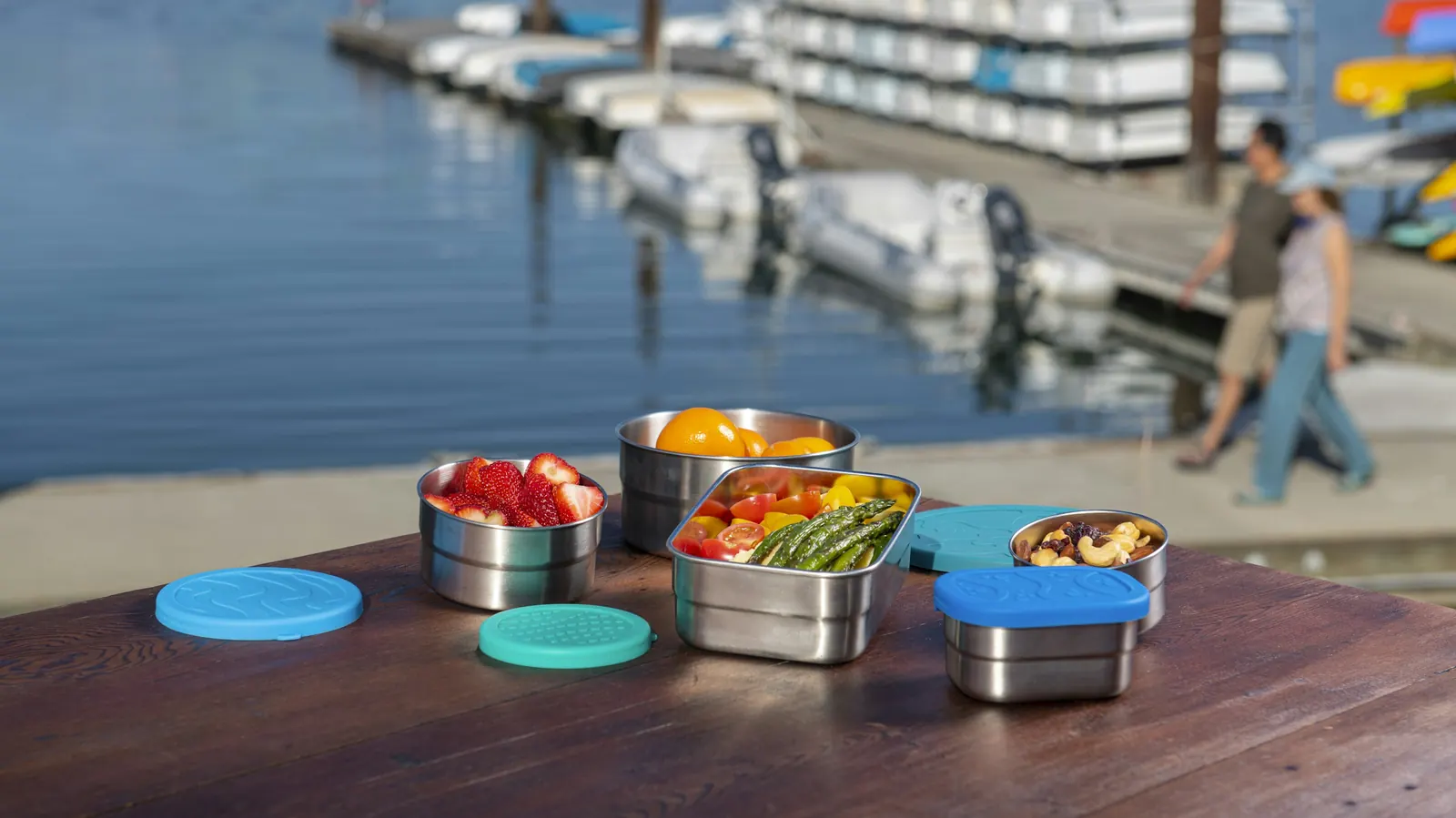
Stainless steel and glass are the two common ways to keep plastic away from the food itself, and both seal well when the lid is good. They part ways on three things that matter every day: whether the container can go in the microwave, whether you can see what is inside, and how much it weighs in a lunch bag. This guide compares them on those points and on the oven, freezer, breakage and cost class, then names one glass pick and two stainless picks.
We kept the claims tight. Heat limits come from the makers’ own listings, the microwave rule comes from the FDA, and the weight and breakage points come from named reviews. Where a line is our own kitchen sense, we say so.
Julia’s earns a commission on purchases made through links on this page, at no cost to you. Recommendations are based on what a restaurant kitchen looks for, product specifications and verified buyer reports.
Quick verdict: stainless steel or glass?
For most home kitchens, glass is the better main set, because it goes in the microwave and you can see the leftovers through the side. The FDA says metal pans should generally not be used in a microwave, and that one rule decides it for anyone who reheats at home. Choose stainless steel for food that travels: lunches, picnics, kids and anything that might be dropped. It is lighter than glass and does not shatter. If you never microwave in the container and most of your food leaves the house, stainless alone is a fine choice.
The table sums up the differences. The sections after it explain each one.
Stainless steel vs glass food storage containers, side by side
| Stainless steel | Glass | |
|---|---|---|
| Microwave | No (FDA: metal generally should not be used) | Yes, when the maker says so; lids usually off or vented |
| Oven | Some, to a stated limit (U-Konserve: 300°F); lids off | Many tempered sets (Glasslock: 450°F); lids off |
| Freezer | Yes on the picks below (makers) | Yes on most sets; leave headroom (ATK) |
| See what is inside | Only through a clear lid | Yes, from any side |
| Weight | Lighter (ECOlunchbox; Kitchen Stewardship) | Heavy (ATK) |
| If dropped | Can dent; does not shatter | Can shatter (ATK) |
| Best for | Lunches, picnics, kids, travel | Leftovers you reheat at home; meal prep |
| Cost class | Higher per container | Lower per container in big sets |
Microwave: the deciding difference
The FDA’s page on microwave ovens is clear on both materials. Microwaves pass through glass, paper, ceramic and plastic, which is why those containers are used for microwave cooking. Metal is the opposite: the FDA says that, generally, metal pans or aluminum foil should not be used in a microwave oven, because the microwaves reflect off them, which can cook the food unevenly and possibly damage the oven. It also tells you to follow your microwave’s own instructions on which containers to use.
That makes stainless steel a container you move food out of before reheating. Katie Kimball’s review of stainless containers at Kitchen Stewardship says the same thing in plain words: they cannot go in the microwave. Neither stainless pick on this page claims microwave use, so treat a plain steel box as microwave-free unless its maker says otherwise.
Glass needs only one check. America’s Test Kitchen notes that every glass set in its review was advertised as microwave-safe without the lid. Lids are where the limits sit, so heat with the lid off or vented as the maker says. If you reheat lunch at a work microwave, glass is the only one of the two that lets you do it in the same container.
Oven and freezer: both can, within limits
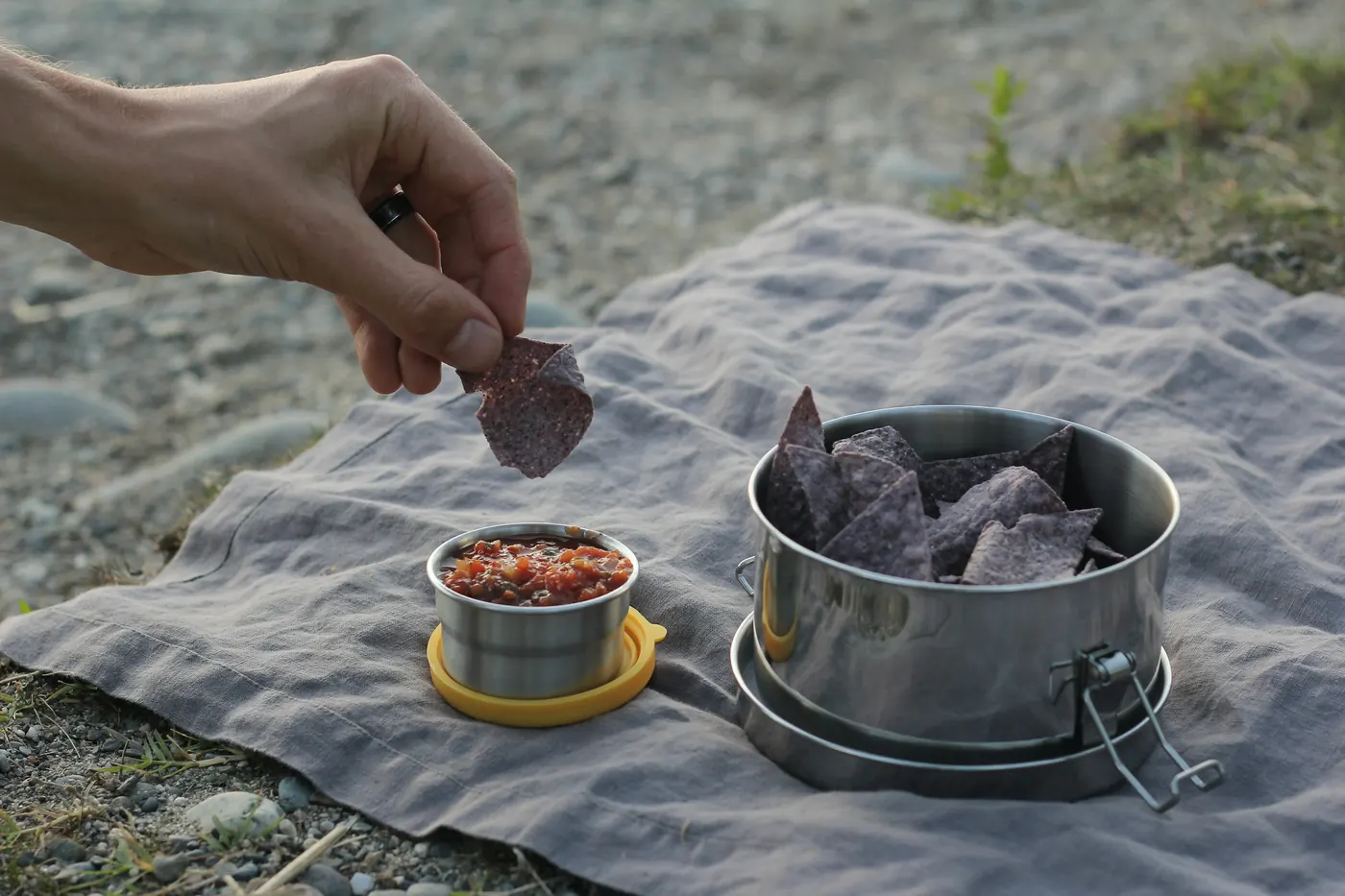
Both materials can go in the oven, but the limits differ. U-Konserve says its stainless containers are oven-safe up to 300 degrees and can go from freezer to oven. ECOlunchbox’s listing calls its Splash Box oven safe without giving a temperature. Neither listing says the lid goes in the oven, so as general kitchen sense take the silicone lid off first. Tempered glass goes hotter: Glasslock rates its tempered glass to 450°F, and ATK says most of the glass sets it reviewed were oven-safe to 450 or 500 degrees.
Not all glass is oven glass, though. ATK found that the Pyrex FreshLock set it reviewed was the only glass set in its test that was not oven-safe, because the maker does not recommend it. Read the label before you bake in any container. As general kitchen sense, not a maker rule: a 300°F limit is fine for warming tamales or holding enchiladas, but it is not a baking temperature, so stainless containers are for gentle reheating, not cooking.
For the freezer, both materials work when the maker lists them as freezer-safe. ATK’s glass advice is to leave 1 to 1.5 inches of headroom and put the top on after the food is frozen, because liquids expand. Steel does not crack the way glass can, but the same headroom keeps a lid from popping off a full container of caldo.
Seeing what is inside
This is the quiet advantage of glass. You can read a shelf of glass containers at a glance, which helps leftovers get eaten before they are forgotten. Kitchen Stewardship’s review lists it as the main drawback of stainless: you cannot see through the sides.
Makers have worked around it with clear lids. U-Konserve sells its containers with clear silicone lids, so you can look down into the box, and it etches the tare weight on each one for portioning. That helps in the refrigerator, where you look from above, less so on a crowded freezer shelf. If your household forgets about food in opaque containers, glass is the safer bet.
Weight and breakage: where steel earns its place
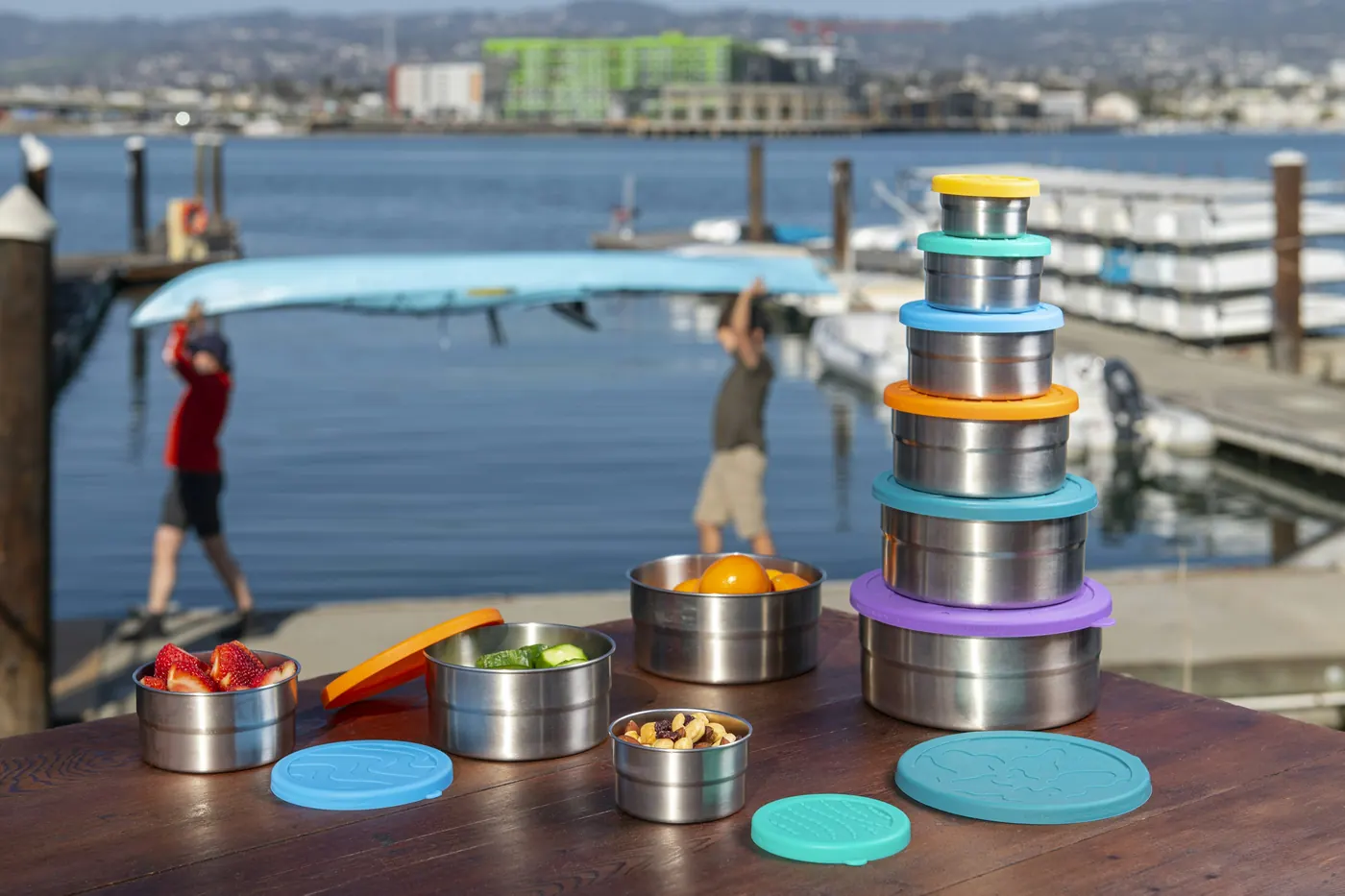
ATK’s glass review puts it bluntly: glass is heavy, less ideal for carrying, can weigh down a refrigerator shelf, and can shatter. ECOlunchbox says its steel-and-silicone containers are lighter than a comparable glass container and virtually non-breakable. Kitchen Stewardship’s reviewer called stainless lightweight and said switching from glass for carried food made a real difference.
That is the case for steel in a lunch bag or a child’s backpack. A dropped steel box may dent; a dropped glass box on tile is gone, and it leaves shards behind. For school lunches, our kids lunch box guide covers boxes made for small hands, and our lunch bag guide covers what to carry them in.
Lids, leaks and cleaning
On both materials, the lid decides whether a container leaks. The glass pick below uses a lid with four latching tabs and a removable silicone gasket. The stainless picks use a one-piece silicone lid that stretches over the rim. Glasslock says its latches hold an airtight seal; U-Konserve calls its lids airtight and leak-resistant, and ECOlunchbox calls the Splash Box leak-proof.
Cleaning favors simple lids. ECOlunchbox points out that every part of its box, lid included, goes in the dishwasher, with no embedded gasket to trap food. A removable gasket like Glasslock’s can come out for washing, but it is one more piece to lose. U-Konserve lists both its container and lid as dishwasher safe, and Glasslock lists its set as dishwasher safe.
What about chemicals?
Many people choose steel or glass to keep plastic away from food, so it is worth being exact. Both bases are free of plastic; the difference is in the lids. Many glass sets have plastic lids, and the stainless picks here have silicone lids. Makers’ marketing on this point is not evidence of a health benefit, and we make no health claim either way.
For the plastic in glass-set lids, the FDA’s microwave guidance is the practical rule: use containers made for microwave use, and follow the maker’s label. Lift the lid off or vent it as the maker directs. If you would simply rather have no plastic touching hot food, a glass base with the lid set aside does that.
Cost and how long each lasts
Without quoting prices, stainless containers usually cost more per container than glass bought in a large set, and they are often sold singly. In return they last: steel does not break, and a worn silicone lid is the part that gives out first. Glass is cheaper per piece in big sets but a broken base is a total loss. As general kitchen sense, a mixed kitchen often does best: a glass set at home and two or three steel boxes for lunches.
Choose glass if… / Choose stainless steel if…
Choose glass if…
- You reheat leftovers in the microwave, at home or at work.
- You like to see what is in the refrigerator without opening lids.
- You want to bake or reheat at higher oven temperatures in the same dish.
- Your containers mostly stay at home.
Choose stainless steel if…
- You carry lunches or picnic food and want a lighter box.
- Children handle the containers, or they may be dropped.
- You want a lid and base with no plastic at all.
- You never reheat in the container itself.
Our picks on each side of the stainless steel vs glass food storage containers question
One glass set and two stainless containers, one for the refrigerator and one for lunches. All three were in stock when we checked, and none of these exact listings appears on our other pages.
1. Glasslock Tempered Glass Food Storage Set, 12 Piece – Oven to 450°F and Latching Lids

Six square tempered-glass containers with six latching lids. The listing says the glass is oven-safe to 450°F and moves from freezer to microwave to the top rack of the dishwasher. Square shapes stack and nest, and you can see every portion of rice, beans or salsa through the sides.
Each lid has four latching tabs that press down a removable silicone gasket for an airtight seal, according to the listing, which is meant for soups and sauces that travel. As general kitchen sense, reheat with the lid off or loosened, and take the lid off before the base goes in the oven; the listing’s 450°F rating is for the glass.
This is the glass side of the choice at its best: microwave, oven and freezer in one container. The trade-off is weight. Six glass containers make a heavy stack, and this set is for the refrigerator and the work microwave more than a backpack.
Why we like it
- Tempered glass oven-safe to 450°F (listing)
- Microwave, freezer and dishwasher safe (listing)
- Removable gasket for washing
- See-through on every side
Key specifications
| Part number | 12004-12PC-TAPER |
|---|---|
| Material | Tempered glass base; latching lid with removable silicone gasket |
| In the set | Six square containers, six lids |
| Microwave | Yes (listing) |
| Oven | Glass to 450°F, no lid |
| Freezer | Yes |
| Dishwasher | Yes |
Why we recommend it
It suits a cook who reheats leftovers and meal-preps at home and wants one set that handles the microwave, oven and freezer.
Skip it if your food mostly leaves the house; the stainless picks are lighter and will not break.
Pros and cons
Pros
- Goes in the microwave and the oven
- Contents visible at a glance
- Latching, gasketed lids
Cons
- Heavy when full
- Can break if dropped
- Gaskets are one more part to wash
2. U-Konserve Stainless Steel Container, 30 oz – Clear Silicone Lid for the Refrigerator

A 30-ounce container in 18/8 stainless steel with a clear silicone lid. The clear lid answers the biggest complaint about steel, because you can see what is inside from above. U-Konserve etches the tare weight on the container, which helps if you portion by weight, and sells the same box in 15 and 50 ounces so the sizes nest and stack.
The listing says the container is oven-safe up to 300 degrees and can go from freezer to oven; take the silicone lid off first, since the listing does not say it goes in the oven. It is dishwasher safe, and U-Konserve calls the lid airtight and leak-resistant rather than leak-proof, so carry soups upright. It does not go in the microwave.
Thirty ounces is a good size for a lunch of rice, beans and a guisado, or a refrigerator portion of picadillo. It is sold singly, so building a set takes several purchases.
Why we like it
- Clear lid shows what is inside
- Freezer to oven up to 300°F (listing)
- Etched tare weight for portioning
- Nests with 15 and 50 oz sizes
Key specifications
| Model | UK202 |
|---|---|
| Material | 18/8 stainless steel; silicone lid |
| Capacity | 30 oz |
| Microwave | No |
| Oven | Up to 300°F, no lid |
| Freezer | Yes |
| Dishwasher | Yes |
Why we recommend it
It suits someone who wants steel for the refrigerator and lunches but still wants to see the contents without lifting the lid.
Skip it if you reheat in the container; it cannot go in the microwave.
Pros and cons
Pros
- No plastic in lid or base
- Light and will not shatter
- Clear lid
Cons
- Not for the microwave
- Lower oven limit than glass
- Sold one at a time
3. ECOlunchbox Splash Box, 24 oz – Leak-Proof Stainless Lunch Box With an All-Silicone Lid

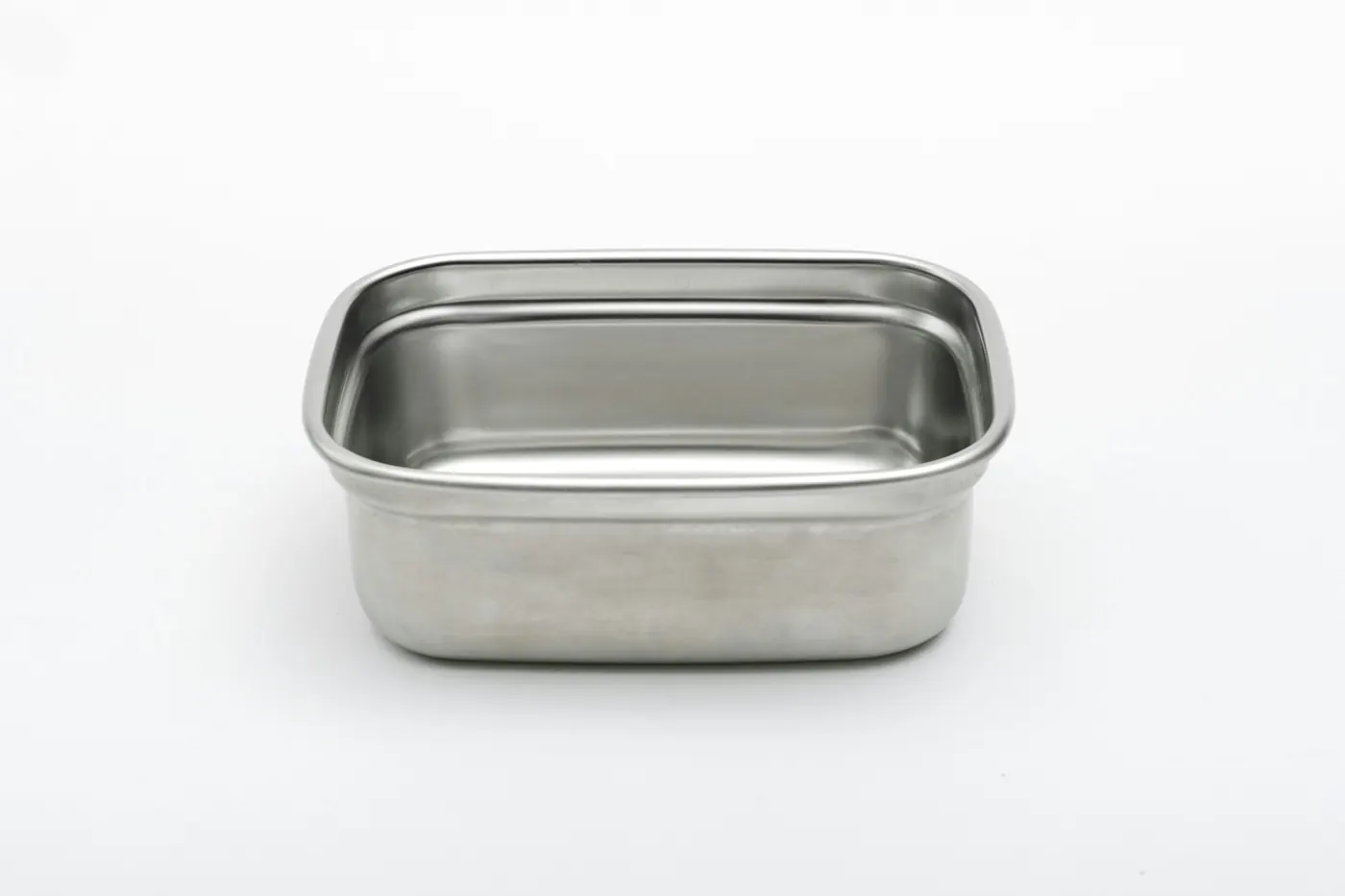
A 24-ounce rectangular box in 18/8 stainless steel with a silicone lid. ECOlunchbox says it holds 3 cups and measures 6½ by 4¾ by 2 inches, a main-dish size for work or a day out. The listing calls it leak-proof, lighter than a comparable glass container and virtually non-breakable.
Every part, lid included, is dishwasher safe, and there is no separate gasket to trap food. The box nests with other sizes in ECOlunchbox’s Seal Cup line. The listing calls it oven safe but gives no temperature, so treat the oven as a gentle-warming option with the lid off. It does not go in the microwave. ECOlunchbox offers a one-year limited warranty against manufacturing defects.
Why we like it
- Leak-proof silicone lid (listing)
- Lighter than glass, virtually non-breakable (listing)
- Whole box and lid go in the dishwasher
- One-year limited warranty
Key specifications
| Model | BWB-SB-1 |
|---|---|
| Material | 18/8 stainless steel; silicone lid |
| Capacity | 24 oz (3 cups) |
| Size | 6½ × 4¾ × 2 in |
| Microwave | No |
| Oven | Listed oven safe; no temperature stated |
| Dishwasher | Yes, lid included |
Why we recommend it
It suits anyone who packs a main dish for work, school or a hike and wants a light box that seals and will not break.
Skip it if you need to see the food from above; the U-Konserve’s clear lid does that.
Pros and cons
Pros
- Leak-proof for travel
- Simple two-piece cleaning
- Light in a lunch bag
Cons
- Not for the microwave
- No oven temperature stated
- Opaque lid
Stainless and glass container questions, answered
Can stainless steel food containers go in the microwave?
Not plain steel ones. The FDA says metal pans should generally not be used in a microwave oven, because microwaves reflect off metal. Move food to a glass or ceramic dish before reheating.
Is stainless steel or glass better for leftovers?
Glass, for most people: it reheats in the microwave and you can see the food. Stainless steel is better for carrying food out of the house.
Are stainless steel containers oven-safe?
Some are, to a limit the maker states. U-Konserve rates its containers to 300 degrees, below the 450°F many tempered glass sets reach. Always take silicone or plastic lids off first.
Do stainless steel containers keep food fresh as long as glass?
Freshness depends on the seal more than the base material. Both pick types here use airtight or leak-resistant lids; keep leftovers cold and eat them promptly either way.
Can glass containers go from the freezer to the oven?
Glasslock’s listing says its tempered glass moves from freezer to microwave. As general kitchen sense, let frozen glass come toward room temperature before a hot oven, and follow the maker’s instructions.
Which containers to buy first
If you reheat at home, start with a glass set and add one or two steel boxes for lunches. If most of your food travels, start with steel and keep a glass dish or plate for the microwave. For more glass sets, see our best food storage containers glass guide and our glass meal prep containers guide; for the plastic question, read glass vs plastic food storage containers; and for every material, our best food storage containers roundup. When the leftovers come back out, our guide to reheating Mexican leftovers covers the rest. And when you would rather someone else did the cooking, see the menu or call to order.