A whisk is the tool most cooks reach for without thinking, so it is a small shock when the drawer turns up empty. Maybe it broke, maybe it went to a friend’s house with a potluck dish, or maybe you are cooking in a rental with three forks and a can opener. The eggs still need beating, the vinaigrette still needs to come together, and the cream for the tres leches is waiting.
The good news is that whisking without a whisk is easy for most jobs. A fork beats eggs, a jar whips cream, and several tools you might already own, or could buy for the job, do some whisk work better than a whisk does. This guide covers the free methods first, then six tools that do the job, with what each one handles well and where it falls short.
Julia’s earns a commission on purchases made through links on this page, at no cost to you. Recommendations are based on what a restaurant kitchen looks for, product specifications and verified buyer reports.
Why people look for a whisk alternative
Usually it is one of three situations. The first is simply not having one at the moment it matters. The second is a cook who whisks rarely and doesn’t want another utensil. The third is a cook who has a whisk but finds it slow or tiring for a particular job, such as whipping a pint of cream or emulsifying a dressing every week.
It helps to split a whisk’s work into its real jobs: beating eggs, whipping cream or egg whites, mixing thin batters, and emulsifying dressings and sauces. A fork or a jar handles the first two at no cost. The tools below each take over one or more of those jobs, and a couple take them over with less effort than a whisk needs.
Quick verdict: the best whisk alternative
For most kitchens, the best whisk alternative you can buy is an immersion blender with a whisk attachment, such as the Ninja Immersion Blender & Whisk. It whips cream, egg whites and batters with a motor, then blends salsas and soups the rest of the week. If you only need to beat a couple of eggs, use a fork; for whipped cream with no tools at all, shake cold cream in a lidded jar. For a no-power tool that beats faster than a fork, a rotary egg beater such as Norpro’s is the old-fashioned answer.
No tool needed: a fork, a jar, or chopsticks
Before buying anything, try what is already in the kitchen. A fork is the usual stand-in for beating eggs. Tilt the bowl slightly and beat quickly so the tines pass through the yolk and white many times. It takes a little longer than a whisk and makes less foam, which matters for a soufflé and not at all for scrambled eggs, huevos rancheros or an egg wash for empanadas. Two forks held together, or a pair of chopsticks, add more tines and speed it up. That is general kitchen sense, not a tested claim.
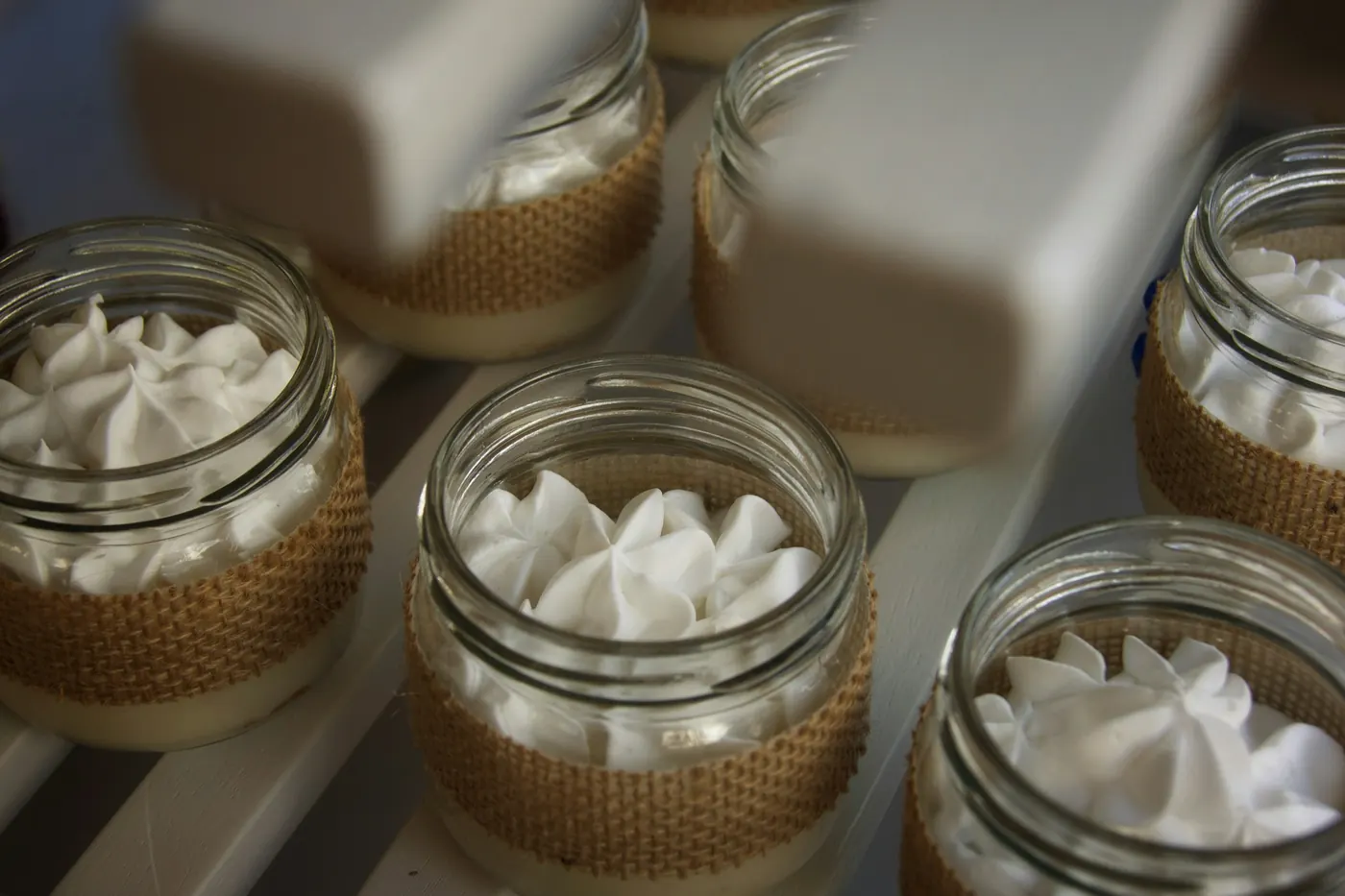
For whipped cream, the jar method works surprisingly well. Tasting Table’s Alison Spiegel describes it simply: put heavy cream and sugar in a jar with a lid, screw it on and shake. She stresses that the jar and the cream should both be cold, because cold ingredients and equipment speed the process up enormously, and says the cream stiffens in a matter of minutes. Leave room in the jar for the cream to move; a jar packed to the top has nowhere to slosh.
The same cold rule helps with any tool. America’s Test Kitchen’s advice for whipping cream by hand, from Andrea Geary and Emily Rahravan, is to chill both the cream and the bowl, use a bowl with at least eight times the cream’s volume, and move side to side rather than in circles, which applies more shear force and shortens the whipping time.
Five tools that do a whisk’s job, side by side
The five best kinds of whisk alternative, with what each maker or listing states. Each is reviewed in full below, along with a dressing mixer for vinaigrettes.
| Alternative | Type | Best for | How close to a whisk | Buy on Amazon |
|---|---|---|---|---|
Ninja Immersion Blender & WhiskBest overall
|
Immersion blender, 4 speeds, whisk attachment | Whipped cream, meringue, batters, plus blending | Faster for whipping; too much for one egg | View on Amazon |

Cuisinart Power Advantage 7-Speed Hand MixerBest for big batches
|
Electric hand mixer, 7 speeds | Cream, egg whites, cake batter, cookie dough | Does more than a whisk; not for sauces in a pan | View on Amazon |
Norpro 12-Inch Rotary Egg BeaterBest no-power pick
|
Hand-crank beater, 18/10 steel beaters | Eggs, thin batters, small amounts of cream | Faster than a whisk for eggs; no stiff dough | View on Amazon |

Bodum Schiuma Handheld Milk FrotherBest for small amounts
|
Battery frother wand, 2 AA | One or two eggs, a cup of dressing, cocoa | Quick in a cup; too small for a bowl | View on Amazon |

BlenderBottle Classic V2 Shaker, 20 ozBest shake-and-pour
|
Shaker bottle with wire whisk ball | Eggs for a scramble, thin batter, slurries | Fine for thin mixes; no whipping | View on Amazon |
How close each alternative gets to a whisk
Beating eggs
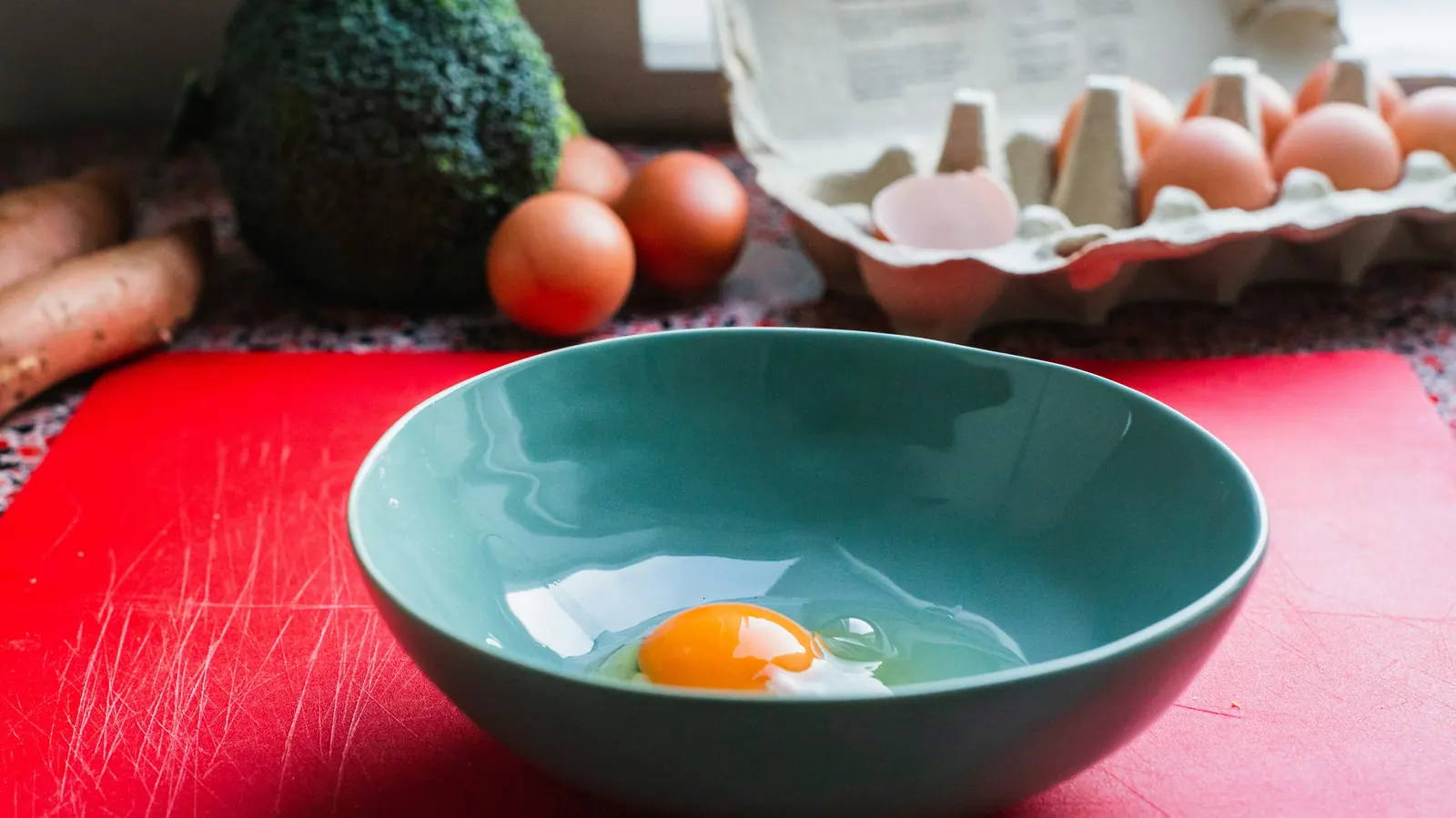
For two or three eggs, a fork is enough and nothing needs buying. For a dozen eggs for a breakfast taco spread, a rotary egg beater or a shaker bottle does the work faster and with less arm. A frother wand handles one or two eggs in a cup. Tasting Table’s Sara Klimek suggests frothing eggs before scrambling and stopping once the foam stabilizes so they aren’t over-beaten.
Whipping cream and egg whites
This is where powered tools earn their place. An immersion blender’s whisk attachment or a hand mixer whips a pint of cream in a fraction of the effort a whisk takes. A rotary beater works for small amounts. For no tools at all, the jar method makes whipped cream from cold cream. Egg whites to stiff peaks are hard work without a whisk or a motor; a fork will get you foam, not meringue.
Batters and dressings
Thin batters, like pancake batter from a mix or crepe batter, come together in a shaker bottle or under a rotary beater. Thick batters and cookie dough need a hand mixer or a sturdy spoon; a frother or a shaker won’t move them. Dressings emulsify well with a frother wand, if you add the oil slowly, as Klimek notes, or in a dressing mixer that does the stirring for you.
Sauces in the pan
Here a whisk is hard to replace. Smoothing a gravy, a roux-thickened sauce or a pot of atole on the stove is whisk work, and none of the tools below should go into a hot pan except an immersion blender built for it. A fork and patience, or a wooden spoon followed by a quick blend, is the fallback.
Our picks for whisking without a whisk
1. Ninja Immersion Blender & Whisk – Blends, Then Whips
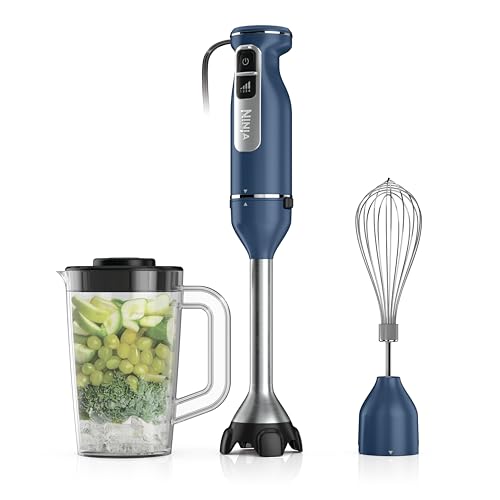
If you are going to buy something to stand in for a whisk, an immersion blender with a whisk attachment is the most useful choice, because it does whisk work faster and then does a blender’s work too. Ninja’s kit includes the PowerBase, a 9-inch stainless blending arm, a whisk attachment Ninja calls RapidWhisk, and a 4-cup blending vessel with a lid, according to the listing. Ninja says the whisk whips meringues, whipped cream and pancake batter.
The listing gives four speeds and a built-in pan guard on the blending arm so it can go straight into deep pots and pans, which makes it the one tool here that can smooth a soup or a salsa in the pot. The parts are listed as BPA-free and dishwasher safe, and the cord is 5 feet long. Ninja doesn’t give the wattage or the warranty in the listing. One caution from Reviewed’s immersion blender roundup (Cassidy Olsen and colleagues, updated July 2023): whisk attachments vary a lot, and a small whisk head took a while to whip cream on one model, so the attachment matters as much as the motor.
Why we like it
- Whisk attachment included, not sold separately (listing)
- Four speeds (listing)
- Pan guard on the blending arm for deep pots (listing)
- Dishwasher-safe parts (listing)
Key specifications
| Model | CI201ND |
|---|---|
| Type | Immersion blender with whisk |
| Power | Electric, corded; wattage not stated |
| Best jobs | Whipping, batters, blending soups and salsas |
| Capacity | Any bowl or pot; 4-cup vessel included |
| Included | Base, 9-inch arm, whisk, 4-cup vessel with lid |
| Cleaning | Dishwasher-safe parts |
| Warranty | Not stated in the listing |
Why we recommend it
It suits a cook who whips cream or egg whites now and then and also wants a tool for salsas, bean soups and smoothies, without giving up counter space.
Skip it if you only ever beat a couple of eggs; a fork does that, and a plug-in tool is more to wash.
Pros and cons
Pros
- Powered whipping in a drawer-sized kit
- Blends in the pot as well as whisks
- Sold by Amazon.com
Cons
- Wattage and warranty not in the listing
- A 2025 release, so few long-term reports
- No help with stiff dough
2. Cuisinart Power Advantage 7-Speed Hand Mixer – Beaters That Don’t Clog
A hand mixer is the obvious swap when the job is big: a pint of cream for tres leches, egg whites for a meringue, or a cake batter for a birthday. Cuisinart’s Power Advantage HM-7BCS has seven speeds, a swivel cord for right- or left-handed use, a heel rest so it stands on the counter between steps, and a storage case, according to the listing.
Cuisinart describes its beaters as easy-clean, with no center post. That matters: in America’s Test Kitchen’s hand mixer review (Chase Brightwell, June 2025), beaters with center posts clogged more often because ingredients couldn’t pass freely through the beater heads. The same review found that slow settings let you combine powdery and liquid ingredients without flinging them, and that hand mixers are not powerful enough for most bread or pizza doughs. The listing doesn’t give wattage, weight or warranty, and ATK did not review this exact model.
The trade-off against a whisk is that a hand mixer is for bowls, not pans. It won’t smooth a sauce on the stove.
Why we like it
- Seven speeds, including slow starts (listing)
- Beaters with no center post (listing)
- Heel rest and storage case (listing)
- Swivel cord for either hand (listing)
Key specifications
| Model | HM-7BCS |
|---|---|
| Type | Electric hand mixer |
| Power | Electric, corded; wattage not stated |
| Best jobs | Whipping, cake batter, cookie dough |
| Capacity | Any bowl |
| Included | Easy-clean beaters, storage case |
| Cleaning | Not stated in the listing |
| Warranty | Not stated in the listing |
Why we recommend it
It suits a cook who bakes often enough that a whisk feels slow, and who wants one tool for cream, batters and cookie dough.
Skip it if your whisking is mostly sauces and gravies in a pan; a hand mixer can’t do that job.
Pros and cons
Pros
- Handles bigger and thicker jobs than a whisk
- Beater design ATK’s findings favor
- Sold by Amazon.com
Cons
- Not for pans or hot sauces
- Wattage and warranty not in the listing
- Not for bread dough, per ATK’s general finding
3. Norpro 12-Inch Rotary Egg Beater – Hand-Cranked, No Plug Needed
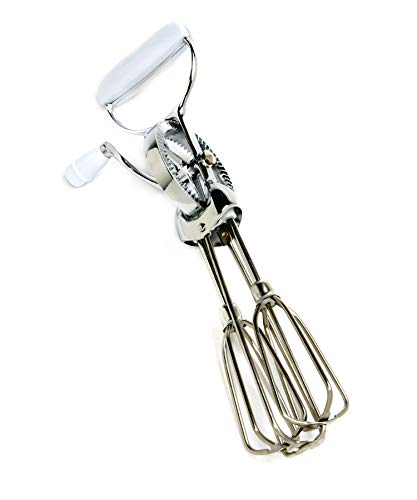
The rotary egg beater is the whisk’s mechanical cousin: turn the crank and two beaters spin through the bowl many times for every turn of your wrist. Norpro’s model 2268 is 12 inches long, with two 18/10 stainless steel beaters and gears of polished aluminum and nylon, according to the listing. It needs no power, so it works on a camping trip or during an outage, and it is quiet.
Tasting Table’s Wendy Leigh (December 2025) makes the case for these beaters: she calls them perfect for beating eggs, good for pancake and cake batters, and says a manual beater gives more control over the blending and the timing. She also notes the work takes a lot of wrist action. In our view that limits it to eggs, thin batters and modest amounts of cream; stiff dough will stall it. The listing says to wash it in warm soapy water.
Why we like it
- 18/10 stainless steel beaters (listing)
- Geared crank multiplies each turn (listing)
- No batteries or cord
- Fits any bowl or measuring cup (listing)
Key specifications
| Model | 2268 |
|---|---|
| Type | Rotary egg beater |
| Power | None (hand-cranked) |
| Best jobs | Eggs, thin batters, small amounts of cream |
| Capacity | Any bowl; 12 inches long |
| Included | Beater only |
| Cleaning | Warm soapy water |
| Warranty | Not stated in the listing |
Why we recommend it
It suits a cook who wants something faster than a fork but doesn’t want another appliance, or who cooks off the grid now and then.
Skip it if you need stiff peaks from a big batch of egg whites; a hand mixer gets there with far less effort.
Pros and cons
Pros
- No power needed
- Stainless beaters
- Sold by Amazon.com
Cons
- Light jobs only
- Gears mean more parts to clean around
- Warranty not in the listing
4. Bodum Schiuma Handheld Milk Frother – A Tiny Whisk With a Motor
A battery frother wand is a small spinning whisk, and it does more than foam milk. Bodum’s Schiuma has a flexible steel wand, a plastic handle and a single on/off button, and runs on two AA batteries, according to the listing. Bodum sells it for café drinks, but the same spinning coil beats an egg or two in a mug, mixes a cup of hot chocolate, or brings a small dressing together.
Tasting Table’s Sara Klimek (November 2022) lists those uses: frothing eggs before scrambling, making aioli and salad dressing by adding the oil in small amounts as it spins, and whipping cream if you start cold and add the cream gradually. The limit is size. In our view a frother is for a cup or a small bowl; in a big bowl the coil just spins in one spot. We chose this listing because Bodum is a known maker and the frother is sold by Amazon.com. The same Schiuma, in a different listing, is on our handheld frother guide.
Why we like it
- One-button, one-hand use (listing)
- Flexible steel wand (listing)
- Battery powered, no cord (listing)
- Small enough for any drawer
Key specifications
| Model | D3040-01 |
|---|---|
| Type | Handheld frother wand |
| Power | 2 AA batteries |
| Best jobs | One or two eggs, small dressings, cocoa |
| Capacity | A cup or small bowl |
| Included | Frother; batteries not stated |
| Cleaning | Not stated in the listing |
| Warranty | Not stated in the listing |
Why we recommend it
It suits a cook who makes small amounts: two eggs for breakfast, a jar of vinaigrette, a cup of cocoa or a matcha latte.
Skip it if you cook for a crowd; it is too small to whip a bowl of cream efficiently.
Pros and cons
Pros
- Tiny and cordless
- Good for dressings and eggs in a cup
- Sold by Amazon.com
Cons
- Too small for big bowls
- Needs batteries
- Cleaning guidance not in the listing
5. BlenderBottle Classic V2 Shaker, 20 oz – A Whisk Ball in a Sealed Bottle
A shaker bottle is a whisk you shake instead of stir. BlenderBottle’s Classic V2 has a loose wire whisk ball, which the maker calls the BlenderBall and lists as 316 stainless steel, inside a bottle with a screw-on, leak-proof lid and a flip cap, according to the listing. Crack eggs in, add a splash of milk and salt, shake, and pour straight into the pan. The same works for thin pancake batter from a mix, or a cornstarch slurry to thicken a sauce. That is general kitchen sense, not something BlenderBottle claims.
The listing gives 20 ounces of capacity, with markings up to 14 ounces in both ounces and milliliters, and says the bottle is dishwasher safe and BPA and phthalate free. It won’t whip cream or egg whites; the ball mixes, it doesn’t aerate much. We would keep it to cool mixtures, since the listing gives no guidance on hot liquids. The same Classic V2, in the 28-ounce size, is on our cocktail shaker alternative guide; we use it here because BlenderBottle is the maker behind the whisk-ball design.
Why we like it
- Stainless wire whisk ball (listing)
- Screw-on, leak-proof lid (listing)
- Ounce and milliliter markings (listing)
- Dishwasher safe (listing)
Key specifications
| Model | C03595 |
|---|---|
| Type | Shaker bottle with whisk ball |
| Power | None (shaken) |
| Best jobs | Beaten eggs, thin batter, slurries |
| Capacity | 20 oz; marked to 14 oz |
| Included | Bottle, lid, whisk ball |
| Cleaning | Dishwasher safe |
| Warranty | Not stated in the listing |
Why we recommend it
It suits a cook who makes scrambled eggs or pancakes for a family and likes mixing and pouring from one container.
Skip it if your whisking is mostly whipped cream or meringue; a shaker doesn’t whip.
Pros and cons
Pros
- Mix and pour from one container
- No splatter with the lid on
- Sold by Amazon.com
Cons
- Doesn’t whip
- Not for thick batters
- No guidance on hot liquids
6. OXO Good Grips Twist & Pour Dressing Mixer – Emulsifies With a Twist

Whisking a vinaigrette is one of the most common whisk jobs, and a dressing mixer does it without a whisk or a bowl. OXO’s Twist & Pour holds 14 ounces, about 1 3/4 cups, and has a bi-directional blade inside that OXO says mixes thin and thick dressings as you twist the non-slip ring, according to the listing. The container is listed as leakproof and airtight, so it mixes, serves and stores the dressing in one piece.
The listing gives a wide opening for adding ingredients, measurement markings, BPA-free materials and dishwasher-safe parts. It is a one-job tool: it is for dressings and thin sauces, like a lime and cilantro vinaigrette for a taco salad, and nothing else. If you already have a jar with a lid, shaking the dressing in it is the free version of the same idea.
Why we like it
- Built-in blade mixes as you twist (listing)
- Leakproof, airtight storage (listing)
- Measurement markings (listing)
- Dishwasher safe (listing)
Key specifications
| Model | 11159500 |
|---|---|
| Type | Dressing mixer with twist blade |
| Power | None (twisted) |
| Best jobs | Vinaigrettes and thin sauces |
| Capacity | 14 oz (1 3/4 cups) |
| Included | Container with blade and pour lid |
| Cleaning | Dishwasher safe |
| Warranty | Not stated in the listing |
Why we recommend it
It suits a cook who makes dressing every week and wants to mix, pour and store it in one container.
Skip it if you want a tool for eggs or cream too; this one only mixes dressings and thin sauces.
Pros and cons
Pros
- No bowl or whisk to wash
- Stores the dressing too
- Sold by Amazon.com
Cons
- One job only
- Small batch size
- Warranty not in the listing
Matching the tool to the job
- A few eggs: a fork, or a frother wand in a mug.
- Eggs for a crowd: a rotary beater or a shaker bottle.
- Whipped cream, no tools: cold cream in a lidded jar, shaken.
- Whipped cream or meringue, often: an immersion blender with a whisk or a hand mixer. Our best immersion blender and best hand mixer guides compare more models.
- Dressings: a jar, a frother, or a dressing mixer; see our best salad dressing shaker guide.
- Gravy, sauces and atole on the stove: buy a whisk after all. Our whisk reviews cover balloon, French, flat and ball whisks, and for Mexican hot chocolate see molinillo vs whisk.
Whisk alternative questions, answered
What can I use instead of a whisk?
For eggs, a fork or two forks held together. For whipped cream, a jar with a lid and cold cream. For powered help, an immersion blender with a whisk attachment, a hand mixer or a frother wand. For dressings, a jar or a dressing mixer.
How do you whisk without a whisk?
Use a fork, tilt the bowl, and beat quickly side to side. Keep cream cold and use a big bowl, as America’s Test Kitchen advises for hand whipping. For whipped cream with no utensil at all, shake it in a cold jar.
Can a fork replace a whisk?
For beating eggs and mixing thin batters, yes, with a little more time. For stiff egg whites or a big bowl of whipped cream, a fork is slow and tiring; a powered tool or a jar is a better swap.
Can I use a milk frother as a whisk?
For small amounts, yes. Tasting Table’s guide to frother uses covers beaten eggs, dressings, aioli and whipped cream. It is too small for a big bowl.
Is a hand mixer better than a whisk?
For big batches of cream, egg whites and cookie dough, a hand mixer is faster. For sauces in a pan, a whisk still wins. If you are weighing the reverse question, our hand mixer alternative guide covers what to use when you have a whisk but no mixer.
Our take on whisking without a whisk
Most whisk jobs don’t need a whisk. A fork handles eggs, a jar handles whipped cream, and a jar or a frother brings a dressing together. If you want to buy one tool, an immersion blender with a whisk attachment covers the most ground. If you whisk sauces on the stove, though, nothing here truly replaces a whisk, and a good one costs less than any appliance.
Hungry rather than cooking? See the menu at Julia’s or call to order.