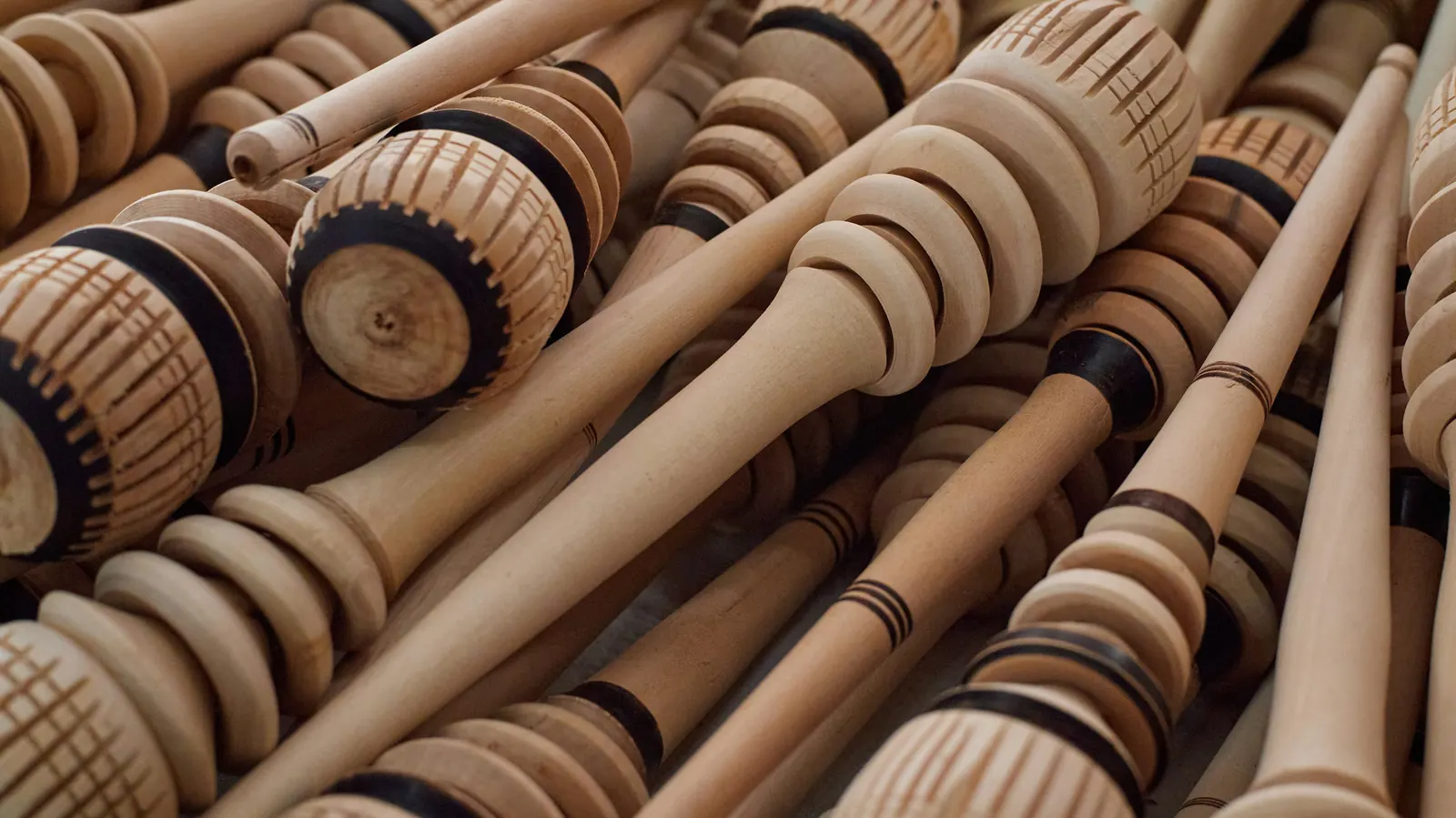
Mexican hot chocolate is meant to be served with foam on top, and there are two common hand tools for raising it. The molinillo is a carved wooden stick with loose rings around its head, spun between your palms. The whisk is the wire tool already in most kitchen drawers, moved with one hand. Both will turn a pot of milk and chocolate into a frothy drink, but they get there in different ways.
This guide sets the two side by side: how each one makes foam, how to use it, what the wood of a molinillo needs to last, and where an electric milk frother or a blender fits in. At the end there is one pick for each side, if you decide to buy.
Julia’s earns a commission on purchases made through links on this page, at no cost to you. Recommendations are based on what a restaurant kitchen looks for in a hand tool, the makers’ own listings and published sources, which we name.
Quick verdict: molinillo or whisk for hot chocolate?
Buy a molinillo if you make Mexican hot chocolate, champurrado or atole from tablets more than a few times a winter: it is built for a tall pot of hot liquid, its head breaks up the chocolate as it froths, and it is part of the ritual. Use a whisk if you make hot chocolate only now and then, or want one tool that also beats eggs and smooths sauces: it froths well enough and goes in the drawer with everything else.
The rest of this page explains why, one difference at a time.
Molinillo vs whisk: the differences side by side
The details below come from the makers’ listings and the sources named in each section. Molinillos are handmade, so sizes vary a little from piece to piece.
| Molinillo | Wire whisk | |
|---|---|---|
| How you move it | Spun between both palms, standing upright in the pot | Swept back and forth or in circles with one hand |
| How it makes foam | Carved head and loose rings beat air in as it spins | Wires cut air into the liquid with each stroke |
| Breaks up chocolate | Yes; the solid head presses and grinds pieces as it turns | Partly; best once the chocolate has melted |
| Best vessel | Tall pot, jug or traditional chocolatera | Wide saucepan or bowl |
| Material | Wood, carved in one piece | Stainless steel wires, or silicone-coated wires |
| Cleaning | Hand wash, air dry; never the dishwasher | Usually simple; check the maker’s dishwasher advice |
| Other uses | Atole, champurrado, warm milk drinks | Eggs, cream, batters, sauces, gravies |
| Typical length | About 8 inches (cup size) to 14.5 inches (pot size) | About 9 to 12 inches |
How each tool turns chocolate into foam
A molinillo is turned from a single piece of wood on a lathe, according to Masa America, which describes the dark bands on many of them as wood darkened by friction on the lathe rather than paint. The head is a thick, grooved knob, and one or more loose rings sit around the shaft just above it. Verve Culture’s description of its own molinillo sums up the job of each part: the solid head helps break down and dissolve the chocolate, and the loose rings whip air into the drink.
You hold the long, thin handle between your palms and rub your hands back and forth, so the head spins one way and then the other. Rick Bayless’s recipe for Mexican hot chocolate calls for rolling the handle quickly between your palms for about two minutes of vigorous beating, until the chocolate has dissolved and the drink is foamy.
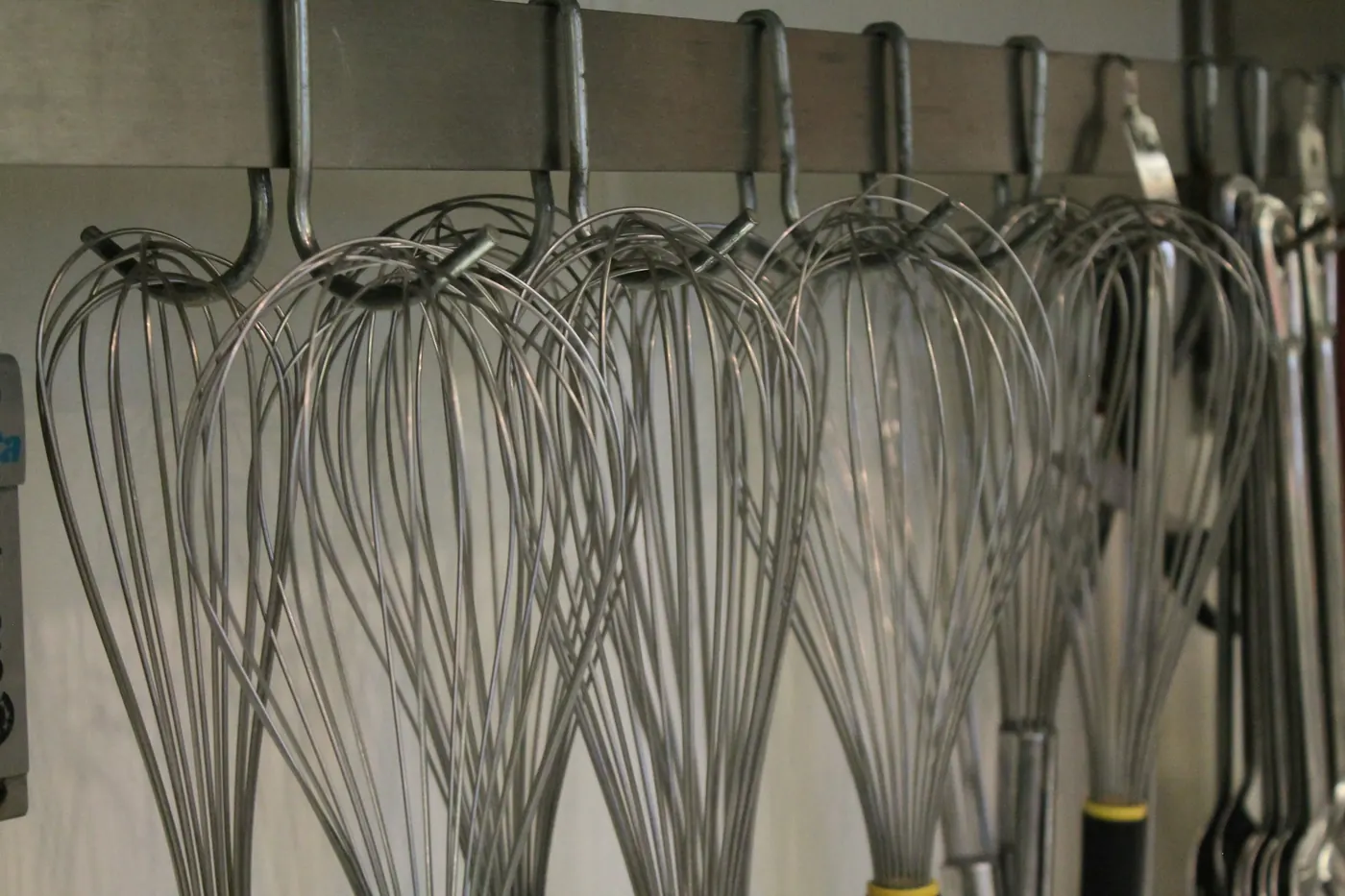
A whisk makes foam the same way it whips cream: each stroke drags its loops of wire through the liquid and folds in small bubbles. A balloon whisk, with a wide, rounded head and many wires, moves the most liquid with each stroke, which is why OXO describes its balloon shape as made for whipping and aerating. A narrow whisk mixes well but adds less air.
Where the head sits matters with both tools. Researchers at the National Autonomous University of Mexico (UNAM), who filmed molinillos at work and analyzed the images, reported that abundant foam forms when the molinillo is stirred at the air-liquid interface, the surface of the drink. In practice, that means keeping the head of the molinillo, or the wires of the whisk, near the top of the hot chocolate once the chocolate has dissolved, rather than down at the bottom of the pot.
Technique: getting a good head of foam
With a molinillo
- Heat the milk or water until it steams, then add the broken tablet.
- Stand the molinillo in the pot with its head on the chocolate and start spinning slowly, so the head presses the pieces apart.
- Once the chocolate has melted, spin faster and lift the head toward the surface.
- Many cooks take the pot off the heat to beat, then return it to warm, two or three times, as our guide to the best Mexican hot chocolate describes.
With a whisk
- Melt the chocolate fully first, stirring over gentle heat; a whisk does not grind pieces the way a molinillo head does.
- Tilt the pan slightly so the liquid pools deeper on one side, and whisk hard just under the surface.
- Use a pan wide enough for the whisk to move freely; a tall, narrow pot leaves the wires little room.
Either way, serve straight away and share the foam between the cups. Bayless’s own note on the recipe is that frothy Mexican hot chocolate waits for no one.

Pot, jug or saucepan: the vessel decides a lot
A molinillo was designed to work standing upright. Masa America notes that in Mexico it is used in a jarro, a jug that holds the drink, and the traditional chocolatera is the same idea: a tall, narrow pot that keeps the liquid deep enough to cover the head and high enough not to splash. A tall saucepan or a heatproof pitcher works the same way at home.
A whisk prefers the opposite. It needs width to sweep back and forth, so a wide saucepan, or a bowl you pour the hot chocolate into, gives it room. If you only own wide pans, that is a point in the whisk’s favor. If you have a tall pot that you warm milk in, it suits a molinillo well.
Materials and care of a wooden molinillo
Molinillos are carved from a soft, light wood. Masa America names Mexican alder (aile) as a typical choice because it is odorless and flavorless, so it does not change the taste of the chocolate, and Tasting Table also describes molinillos hand-carved from alder. Many sellers simply list hardwood without naming the species.
Care is short and strict. GLOBE ROCKET’s listing says to hand wash its molinillos in warm water, air dry them, use a small brush for the carved areas, and never put them in the dishwasher; Verve Culture gives the same hand-wash, air-dry advice. As with any wooden kitchen tool, do not leave it soaking in the sink, and let it dry fully, standing or hanging, before you put it away, so the wood does not crack or stay damp in the grooves. GLOBE ROCKET notes that the wood develops a natural patina with use; a chocolate-stained molinillo is a used one, not a dirty one.
A stainless steel whisk asks much less. Rinse it before chocolate dries on the wires, and wash it like any utensil. OXO lists its 9-inch whisk as dishwasher safe; its listing for the 11-inch balloon whisk does not say either way.
Milk frothers, blenders and other alternatives
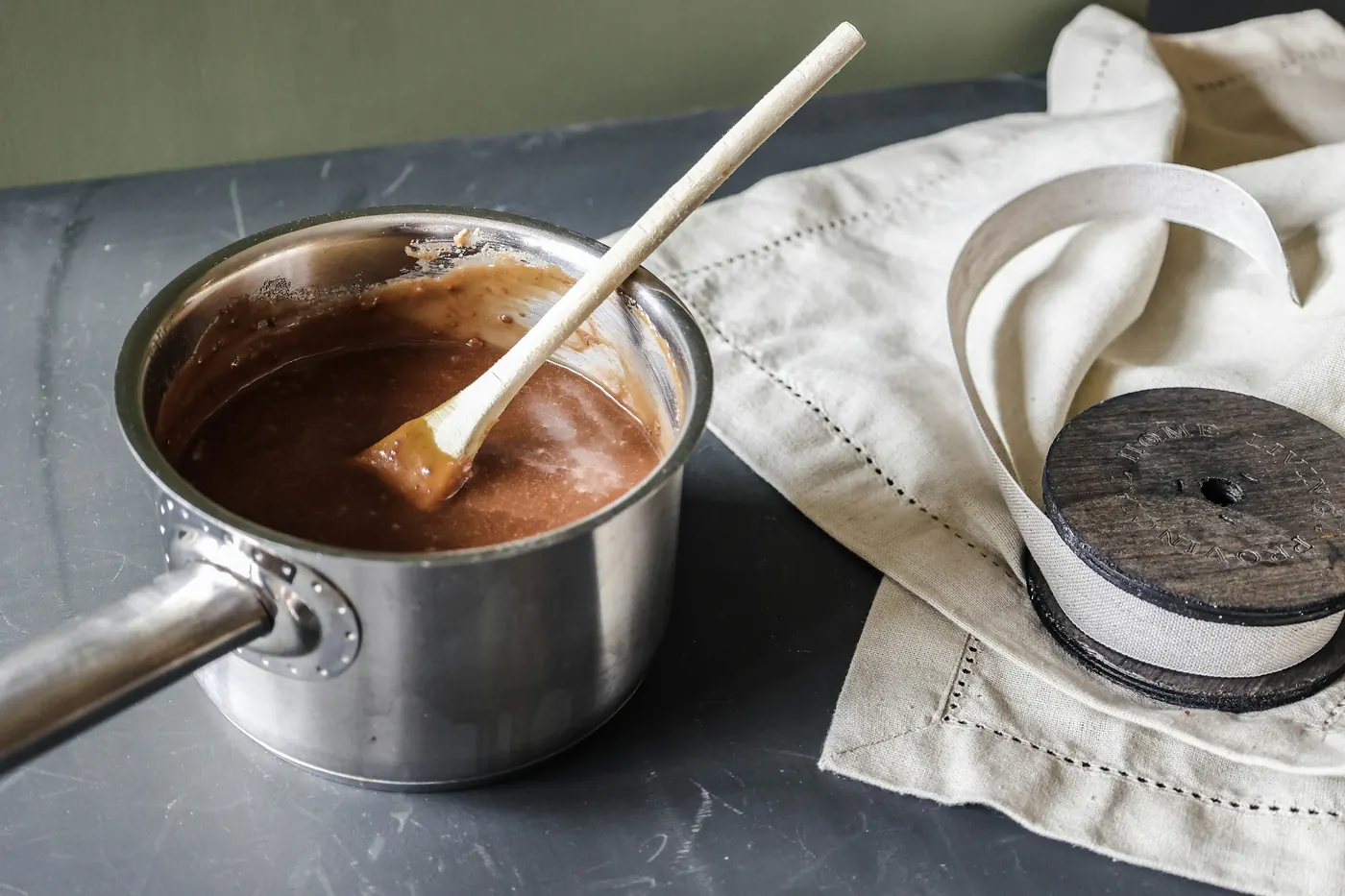
A battery-powered milk frother, the small wand with a spinning wire coil at the tip, is the other tool people reach for. It froths warm milk in a mug with no effort at all. What it does not do is dissolve chunks of chocolate: Mexican tablets are made with coarse sugar and need to melt fully in the hot liquid before frothing, so melt the chocolate in a pot first and use the wand at the end. We did not find a published comparison of wand frothers against a molinillo or whisk, so we make no claim about which gives the better foam.
A blender is the fastest route to a big head of foam. Rick Bayless gives it as the alternative to the molinillo: blend the hot chocolate for about 30 seconds until it is smooth and foamy, with the lid loosely covered or its center cap removed so steam can escape, or use an immersion blender in a tall pitcher. The vent matters: Bayless includes it to release pressure from the hot liquid, so do not skip it.
Before molinillos, chocolate in Mesoamerica was frothed by pouring it from one vessel to another from a height, according to the Rosenberg Library Museum and Masa America. When the molinillo replaced pouring is debated: some writers credit its spread to the Spanish colonial period, others argue that a frothing stick was already in use earlier. Either way, the pouring method still works and needs no tool at all, only a steady hand.
Choose a molinillo if… / Choose a whisk if…
Choose a molinillo if…
- You make Mexican hot chocolate from tablets regularly, especially through the holidays.
- You also make atole or champurrado.
- You warm milk in a tall pot or own a chocolatera.
- You enjoy the tradition, or want a tool that looks good hanging on the wall.
- You do not mind washing a tool by hand.
Choose a whisk if…
- You make hot chocolate only a few times a year.
- You want one tool for eggs, sauces and drinks.
- Your pans are wide rather than tall.
- You prefer tools that go in the dishwasher (check the listing).
- You often use powdered hot chocolate, which needs no grinding.
Our pick on each side
If you have decided which way to go, these are the two we recommend. Our guide to Mexican cooking tools covers the molinillo alongside the comal, molcajete and tortilla press.
1. GLOBE ROCKET Handmade Molinillo, Large – Carved in One Piece

This is the molinillo in the starter kit of our Mexican cooking tools guide. GLOBE ROCKET says each one is carved from a single piece of wood by artisans in Central Mexico, so every piece is slightly different, and the large size measures about 13.5 to 14.5 inches. That length suits a pot or jug of several cups, deep enough to cover the head while your hands stay well above the steam.
The listing describes the wood as food-safe hardwood, without naming the species, and suggests it for hot chocolate, champurrado, atole and warm milk in pots, pitchers or clay jugs. Use it the traditional way: roll the handle between your palms, start with the head on the chocolate, and lift it toward the surface as the drink foams.
Care follows the rules for any molinillo: hand wash in warm water, use a small brush for the carved grooves, air dry, and keep it out of the dishwasher. If you only make a single mug at a time, GLOBE ROCKET also sells a cup-size version of about 7.5 to 8.5 inches.
Why we like it
- Carved from a single piece of wood, per the listing
- Made by artisans in Central Mexico
- About 13.5 to 14.5 inches, a size for pots and jugs
- Clear care instructions from the seller
- Also sold in a cup size
Key specifications
| Model | Large (model number not stated) |
|---|---|
| Material | Hardwood, species not stated |
| Length | About 13.5 to 14.5 inches |
| Head | Carved head with loose rings |
| Handle | Long wooden shaft, rolled between the palms |
| Cleaning | Hand wash, air dry; not dishwasher safe |
| Made in | Central Mexico |
| Other uses | Champurrado, atole, warm milk drinks |
Why we recommend it
Choose it if Mexican hot chocolate is a regular in your house, or if you want the real tool for a holiday table. It is the right length for a family-size pot and comes with plain care instructions.
Skip it if you want something for the dishwasher, or if you make one mug at a time; the cup-size molinillo or a whisk suits that better.
Pros and cons
Pros
- Handmade in Mexico, in one piece
- Head breaks up chocolate as it froths
- Long enough for a tall pot
- Works for atole and champurrado too
Cons
- Hand wash only
- Wood species not stated
- Single-purpose tool
2. OXO Good Grips 11-Inch Balloon Whisk – Made for Whipping Air In

If you would rather froth with a whisk, choose a balloon whisk, and this is one of the most widely sold. OXO describes the balloon shape as made for whipping and aerating, which is exactly the job in a pot of hot chocolate: the wide head of wires moves plenty of liquid with every stroke.
The wires are polished stainless steel, and the handle is OXO’s soft, non-slip Good Grips design, shaped to sit in the palm. At 11 inches it is long enough to reach into a saucepan without your knuckles meeting the steam, and short enough to keep in a utensil crock. Outside of hot chocolate season it whips cream and egg whites, beats batters and smooths gravies, so it earns its place in the drawer all year.
Melt the chocolate fully before you whisk, because wires do not grind tablet pieces the way a molinillo head does. Stainless wires can scratch a nonstick pan; OXO sells a silicone-coated balloon whisk for nonstick cookware if that is what you cook in. The listing for this model does not say whether it is dishwasher safe.
Why we like it
- Balloon shape for whipping and aerating, per OXO
- Polished stainless steel wires
- Soft, non-slip handle that fits the palm
- Useful for eggs, cream and sauces as well
Key specifications
| Model | 74291 |
|---|---|
| Material | Polished stainless steel wires |
| Length | 11 inches |
| Head | Balloon-shaped |
| Handle | Soft, non-slip Good Grips handle |
| Cleaning | Dishwasher use not stated on the listing |
| Made in | Not stated |
| Other uses | Eggs, cream, batters, sauces |
Why we recommend it
Choose it if you make hot chocolate only now and then and want a tool that works hard the rest of the year. It froths a wide saucepan of chocolate well once the tablet has melted.
Skip it if you cook in nonstick pans; choose a silicone-coated whisk instead, or froth with a wooden molinillo.
Pros and cons
Pros
- Balloon head adds plenty of air
- Comfortable non-slip handle
- An everyday tool, not a single-use one
Cons
- Does not break up chocolate pieces
- Steel wires can scratch nonstick
- Dishwasher use not stated
How we compared the two
We compared the tools on what a kitchen asks of anything that froths a hot drink: how it makes foam, whether it deals with solid chocolate, which pots it suits, and how it is cleaned. Product details come from the GLOBE ROCKET, Verve Culture and OXO listings on Amazon. Technique comes from Rick Bayless’s published recipe; wood and history from Masa America, Tasting Table and the Rosenberg Library Museum; and the point about foam forming at the surface from a 2014 study by Enrique Galindo and colleagues at UNAM, published in Revista Digital Universitaria. We have not used either product ourselves.
Molinillo and whisk questions, answered
Can I use a whisk instead of a molinillo?
Yes. A balloon whisk froths Mexican hot chocolate well once the chocolate has melted completely. Use a wide pan and whisk hard just below the surface.
What is the difference between a molinillo and a whisk?
A molinillo is a carved wooden stick spun between the palms; its solid head breaks up chocolate and its loose rings beat in air. A whisk is a set of wire loops moved with one hand, and it is best with liquids that are already smooth.
How do you clean a wooden molinillo?
Wash it by hand in warm water, brush the grooves, and let it air dry fully. Do not soak it or put it in the dishwasher. Stains from chocolate are normal and part of its patina.
What size molinillo should I buy?
A large molinillo, about 14 inches, suits a pot or jug of several cups. A cup-size one, about 8 inches, is for a single mug. If you make hot chocolate for the family, buy the large one.
Does a milk frother work for Mexican hot chocolate?
It can froth the finished drink, but it will not melt or break up a tablet. Dissolve the chocolate in hot milk or water in a pot first, then froth it with the wand.
Our final word on frothing Mexican chocolate
If Mexican hot chocolate is a habit, or a holiday tradition alongside tamales, buñuelos and champurrado (our guide to Mexican Christmas food covers the rest of the table), buy a molinillo and a good tablet and enjoy the ritual. If you make it once in a while, the balloon whisk you may already own does the job. Either way, start with good chocolate; our guide to the best Mexican hot chocolate compares the tablets, discs and powders.
And if you would rather someone else did the cooking tonight, browse our menu or call to order.