Most wine in American homes lives in one of two places: a cabinet at room temperature or the door of the kitchen refrigerator. A wine fridge offers a third place, and the question is whether you need it. The answer comes down to two numbers, temperature and humidity, and to how long the bottle will wait before someone opens it.
A kitchen refrigerator is built to keep food safe, which means cold and dry. A wine fridge is built to hold wine at a steady cellar temperature, warmer than any food fridge, for months or years. This guide compares the two on temperature, humidity, time, serving, noise and where each one fits in the house, then says who should buy which and names one or two examples of each.
Julia’s earns a commission on purchases made through links on this page, at no cost to you. Recommendations are based on what a restaurant kitchen looks for, product specifications and verified buyer reports.
Quick verdict: do you need a wine cooler?
If you buy wine to drink within a few weeks, a regular fridge is fine for whites, rosé and sparkling, and reds can sit in a cool cupboard. Buy a wine fridge if you keep a case or more on hand, hold bottles longer than a couple of months, or live somewhere hot enough that no room in the house stays near 55°F. Wine Spectator’s Dr. Vinny says food refrigerators are not ideal for long-term wine storage because they run colder and drier than wine wants, but short stays do no harm.
The table sums up the differences; the sections after it explain each one.
Wine fridge vs regular fridge, side by side
| Wine fridge | Regular fridge | |
|---|---|---|
| Built for | Holding wine at a steady storage or serving temperature | Keeping food safe |
| Temperature | Settable, typically 41 to 64°F on compressor models and 46 to 66°F on thermoelectric ones (maker listings) | At or below 40°F, as the FDA advises |
| Humidity | Not usually controlled or stated by makers | Dry by design, to slow food spoilage (Wine Spectator) |
| Good for | Months to years of storage; ready-to-pour bottles | Bottles you will open within weeks |
| Food | Not for perishable food; too warm | Yes, that is its job |
| Shelving | Racks sized for 750 ml bottles lying down | Shelves and door bins; bottles stand or crowd the food |
| Where it goes | Any indoor room within the maker’s ambient range | Kitchen, garage or a second room |
Temperature: 40°F for food, about 55°F for wine
The FDA tells households to keep the refrigerator at or below 40°F. That number is about food safety, and it is where every kitchen fridge should sit. Wine wants something different. Wine Spectator recommends about 55°F for long-term storage of every style, red, white, sparkling and sweet, and Dr. Vinny says the most important thing about storage is that the temperature stays consistent.
That gap of 15 degrees or so is the whole reason wine fridges exist. You cannot set your kitchen fridge to 55°F without putting the milk, the salsa and last night’s carnitas in the danger zone, and you should not try. The reverse is also true: a wine fridge set for wine is too warm for perishable food. The two appliances are not interchangeable in either direction.
Wine fridges give you a range. The compressor models we looked at list 41 to 64°F, and Koolatron’s thermoelectric 20-bottle lists 46 to 66°F. You set one number for the whole cabinet, or two on a dual-zone model; our best dual zone wine cooler guide covers those.
Humidity: why corks care about the fridge
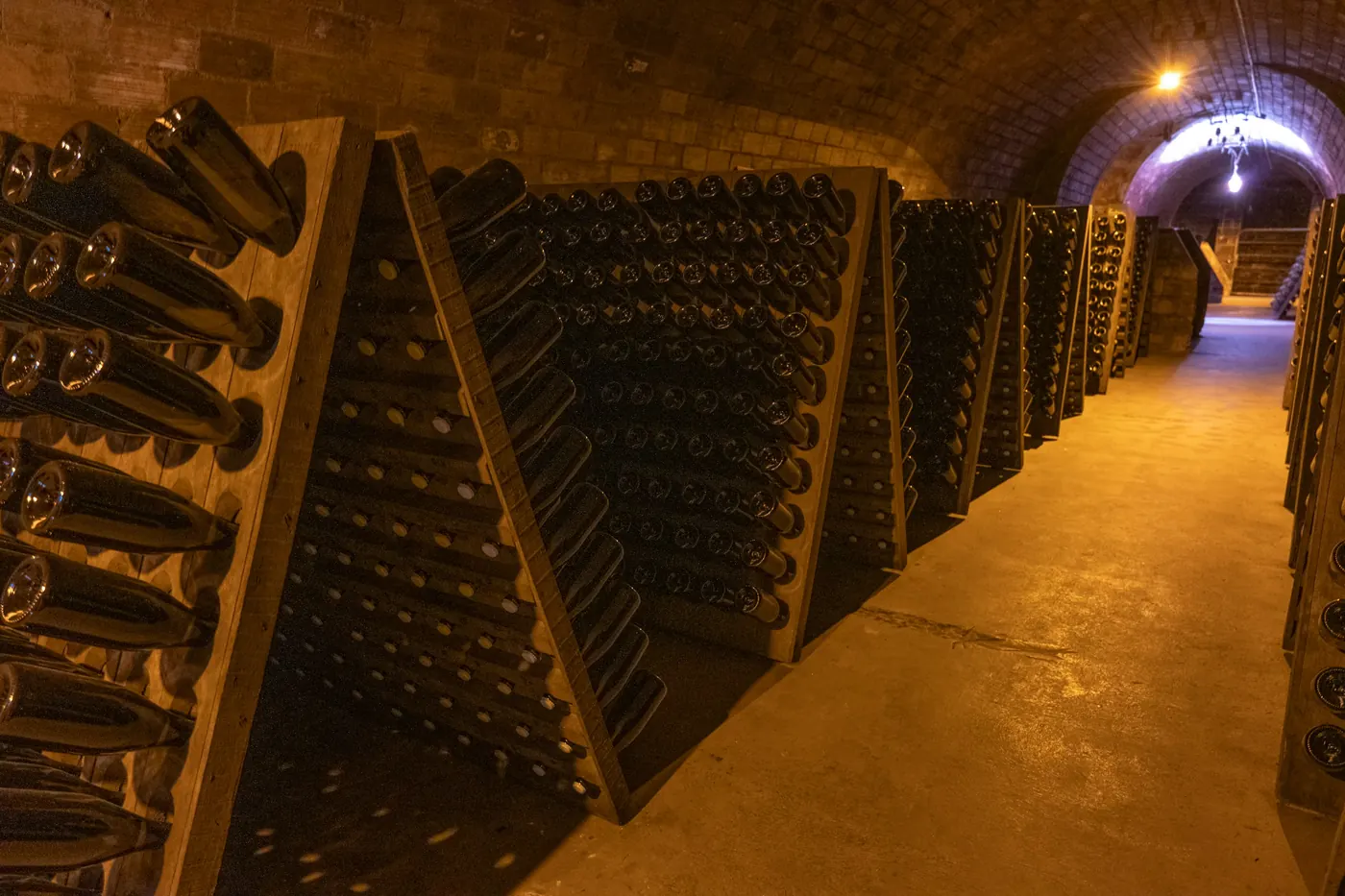
Temperature gets the attention, but humidity is the quieter reason a food fridge is a poor long-term home for wine. In Wine Spectator’s words, refrigerators are known for being quite dry, so as to delay food spoilage. Dr. Vinny gives about 60 percent humidity as the target for wine storage, and says the concern is the outside end of the cork: if a cork dries out, it can compromise the seal, let in air and age the wine before its time. Long stays in a fridge can also shrink corks and make them hard to pull.
Wine Enthusiast’s learning site, written by a wine educator for a company that sells wine coolers, adds a second worry: a shrunken cork can let strong smells from the fridge reach the wine. Keep that in mind as a seller’s view, but the logic follows from the dry-cork problem Wine Spectator describes.
Be clear about what a wine fridge does here. None of the listings we read for the picks below states a humidity figure or a humidity control. A wine fridge does not dry the air the way a food fridge does, and its warmer setting is gentler, but if humidity matters for a long-held collection, ask the maker before you buy. Sparkling wine is less affected: Dr. Vinny notes that the carbonation in a bottle of bubbly keeps the inside humid, so its cork is less likely to dry out than a still wine’s.
Time: how long wine can stay in a kitchen fridge
This is the question that decides most purchases. Dr. Vinny defines long-term as more than a couple of months, and that is when he would start to worry about a drying cork. Some wines survive a year or more in a fridge, he says, but he would avoid the risk. He also notes that cold is still better than heat, so a fridge beats a hot garage or the top of the refrigerator.
So the practical rule is simple. Bottles you plan to drink in the next few weeks can go in the kitchen fridge. Bottles you are keeping for months, or wines meant to age, belong somewhere steady and cool: a wine fridge, a cellar, or a closet that genuinely stays cool. Dr. Vinny also points out that ageworthy whites, such as some Chardonnays, age more slowly in a fridge, while wines made to drink young gain nothing by waiting there.
Serving: a fridge is too cold for most wine
A wine fridge is also a serving tool. Dr. Vinny suggests whites show best at about 40 to 50°F and reds at about 60 to 65°F. Koolatron’s manual for its 20-bottle cooler gives a similar guide: 46 to 59°F for whites and 59 to 65°F for reds. A bottle straight from a 40°F food fridge is colder than any of those, which mutes aroma and flavor, so Wine Spectator advises letting it warm a little before you pour.
For reds the gap runs the other way. A Houston kitchen in August is far warmer than 65°F, so a red from the counter is warm. A wine fridge holds both close to where you want them. If you only need a quick chill for a bottle at the table, a sleeve or bucket does that without a new appliance; our best wine chiller guide covers both.
One harmless surprise from cold storage: tiny clear crystals in white wine. Wine Spectator explains these are harmless tartaric acid crystals that can form at cold temperatures. They can look like sugar or glass, but they are neither.
Noise, vibration and light
Wine coolers come in two kinds. Compressor models work like a kitchen refrigerator and reach lower temperatures. Thermoelectric models have no compressor; Koolatron describes its 20-bottle as vibration free, and its manual says it needs a room between 59 and 77°F to work as rated, because it can only cool so far below the air around it.
Wine Enthusiast’s learning site claims the vibration of an ordinary compressor fridge interrupts wine’s maturation. That claim comes from a company that sells wine coolers, and we have not seen it measured, so treat it as a minor factor for bottles you will drink within months. Light is more straightforward: the wine fridges below have UV-protected or mirrored glass doors, per their listings, while a food fridge is dark except when you open it, which is fine for wine.
Space, placement and cost of running
A regular fridge you already own costs nothing more to use. Wine just takes shelf space from food, and a few bottles standing in the door or lying on a shelf soon crowd out the tortillas and the marinade. A second compact fridge solves that for drinks and food alike, but it runs at food temperatures, so it shares the same dry, cold limits for long storage.
A wine fridge needs its own floor or counter space, an outlet and room to breathe. Koolatron asks for about 2 inches at the sides and 4 inches at the back, keeps the unit indoors and away from sunlight and heat, and advises against extension cords. Freestanding coolers like the ones below should not be built into cabinetry; our best wine fridge value guide explains front-vented built-in models.
Capacity is quoted in standard 750 ml Bordeaux bottles. Wider Burgundy, Champagne and Riesling bottles take more room, so a 20-bottle cooler holds fewer of them. If you have a few bottles and not much floor, our best small wine cooler guide starts with countertop sizes.
Choose a wine fridge if… / Choose a regular fridge if…
Choose a wine fridge if…
- You keep a case or more of wine at home at any one time.
- You hold bottles longer than a couple of months, or buy wines to age.
- No room in the house stays near 55°F, which in a Texas summer is most houses.
- You want reds and whites ready to pour at serving temperature.
- Your kitchen fridge has no room to spare for bottles.
Choose a regular fridge if…
- You buy a bottle or two for the week and drink them soon.
- You mostly drink white, rosé or sparkling and like it cold.
- You would rather not give floor space to a single-purpose appliance.
- You want extra cold space for drinks and food, not just wine; then a compact second fridge earns its place.
Our picks on each side of the wine fridge vs regular fridge question
Two wine fridges, one compressor and one thermoelectric, show the main choice on that side. One compact refrigerator shows the regular-fridge side for someone who wants more cold space for drinks and food. All three were in stock with a new offer when we checked, and none appears on our other pages. They are different models from the picks in our best wine fridge value guide, which covers eight more coolers.
1. Wine Enthusiast 20-Bottle Compressor Wine Cooler – Steady Cooling for a Kitchen Corner
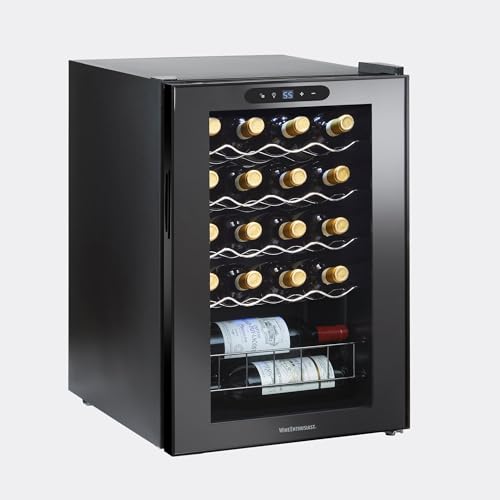
This is the wine fridge most households should look at first: a freestanding 20-bottle cabinet with compressor cooling. The listing gives a range of 41 to 64°F, set on a touchscreen with a temperature display, which covers cool storage near 55°F as well as cold whites and sparkling. Compressor cooling copes with a warm room better than thermoelectric cooling does, which matters in a Houston kitchen.
The listing gives the size as 25.13 inches high, 17 wide and 17.75 deep, with room for up to 20 standard Bordeaux bottles on removable wire shelves and white LED lighting inside. It is sold as freestanding, so give it open air around the sides and back and do not build it into a cabinet.
Wine Enthusiast’s warranty is one year on parts and labor and three years on the sealed system, according to the listing, and the seller we saw was Wine Enthusiast itself. The listing does not state a humidity figure, a noise level or a weight. Wine Enthusiast’s own product page was blocked to us, so the details here come from the Amazon listing only.
Why we like it
- Compressor cooling, 41 to 64°F (listing)
- 20 standard bottles in a 17-inch-wide cabinet
- Three-year sealed-system warranty
- Sold by the maker
Key specifications
| Model | 124934 |
|---|---|
| Type | Freestanding compressor wine cooler |
| Capacity | 20 standard Bordeaux bottles; 1.8 cu ft (title) |
| Temperature range | 41 to 64°F |
| Humidity | Not stated |
| Size | 25.13 x 17 x 17.75 in (H x W x D) |
| Placement | Freestanding |
| Warranty | 1 year parts and labor; 3 years sealed system |
Why we recommend it
It suits a household that keeps a case or more on hand and wants it at a steady temperature in a room that gets warm.
Skip it if you need to build it under a counter; it is freestanding only, and our wine fridge value guide names front-vented models.
Pros and cons
Pros
- Reaches 41°F for whites and sparkling
- Handles a warm room better than thermoelectric
- Long sealed-system warranty
Cons
- Not for built-in use
- No humidity, noise or weight stated
- One zone only
2. Koolatron 20-Bottle Thermoelectric Wine Cooler – Quiet Storage in a Cool Room

Koolatron’s WC20 is the thermoelectric alternative: no compressor, and cooling that the maker calls vibration free. The listing gives a range of 46 to 66°F and holds 20 standard 750 ml Bordeaux bottles on five removable wire racks, behind a mirrored, double-paned door that Koolatron says helps block UV light. External touch controls set the temperature without opening the door.
The trade-off is the room it sits in. Koolatron’s manual says to place it where the air is between 59 and 77°F, and rates its range at a 72°F room, plus or minus 5 degrees. In a hot room it will not get as cold, so it suits an air-conditioned dining room or bedroom better than a garage or a sunny kitchen. The manual also asks for about 2 inches at the sides and 4 at the back, indoor use only, and 24 hours for newly loaded bottles to reach temperature.
Warranty needs a check: the Amazon listing says one year limited, while the 2020 manual on Koolatron’s site says 90 days. Keep your receipt and confirm the terms with the seller, which was Koolatron Corporation when we checked.
Why we like it
- No compressor, vibration free (maker)
- 46 to 66°F, covering 55°F storage
- Mirrored double-paned door
- Clear placement rules in the manual
Key specifications
| Model | WC20 |
|---|---|
| Type | Freestanding thermoelectric wine cooler |
| Capacity | 20 standard 750 ml bottles |
| Temperature range | 46 to 66°F (rated at a 72°F room) |
| Humidity | Not stated |
| Size | Not stated on the listing |
| Placement | Freestanding, indoors, room 59 to 77°F |
| Warranty | 1 year limited (listing); 90 days (2020 manual) |
Why we recommend it
It suits someone storing up to 20 bottles near 55°F in a cool, air-conditioned room, who wants a quiet cabinet.
Skip it if the room runs hot or you want whites at 41°F; the compressor Wine Enthusiast goes colder and copes with heat.
Pros and cons
Pros
- Quiet, no compressor
- Covers cellar temperature
- Sold by the maker
Cons
- Struggles in a warm room
- Coldest setting 46°F
- Warranty terms differ between listing and manual
3. Midea 1.6 Cu. Ft. Compact Refrigerator – Extra Cold Space for Drinks

This is the regular-fridge side of the question: a compact refrigerator for someone whose kitchen fridge is full but who does not need a wine fridge. It runs at food temperatures, so it suits bottles of white, rosé and sparkling you plan to open soon, plus beer, soda and overflow food. It is not a place for long storage, for the same reasons as any food fridge.
Midea’s listing gives the size as 18.6 inches wide, 17.7 deep and 19.4 high, small enough for a counter, a bar corner or under a desk. Inside are one removable glass shelf, a chiller box and a door rack for 2-liter bottles. A mechanical dial sets the temperature; the listing gives its range as 28.4 to 35.6°F, colder than any wine wants, so let bottles warm before pouring. It is Energy Star certified, uses about 207 kWh a year and runs under 42 dB, per the listing, and the door is reversible.
Midea backs it with a full one-year warranty and two years on the compressor, according to the listing, and Amazon.com was the seller when we checked. The CPSC recalls we found under the Midea name cover window air conditioners and dehumidifiers, not refrigerators.
Why we like it
- Small footprint: about 19 inches each way
- Energy Star certified (listing)
- Reversible door
- Two-year compressor warranty
Key specifications
| Model | WHS-65LB1 |
|---|---|
| Type | Compact refrigerator with chiller box |
| Capacity | 1.6 cu ft |
| Temperature range | 28.4 to 35.6°F (listing) |
| Humidity | Not stated |
| Size | 18.6 x 17.7 x 19.4 in (W x D x H) |
| Placement | Freestanding; reversible door |
| Warranty | Full 1 year; compressor 2 years |
Why we recommend it
It suits a household that wants a few bottles cold and ready, plus drinks and food, without crowding the kitchen fridge.
Skip it if you keep wine for months; like any food fridge it is too cold and too dry for long storage.
Pros and cons
Pros
- Holds food as well as drinks
- Compact and low-energy (listing)
- Quiet, under 42 dB (listing)
Cons
- Too cold for wine storage or serving reds
- No wine racks; bottles stand or lie on one shelf
- Small capacity
How we compared the two
We have not used these appliances ourselves. The comparison draws on the FDA’s refrigerator guidance, on three Wine Spectator columns by Dr. Vinny about kitchen fridges, cellar humidity and serving temperatures, on Wine Enthusiast’s learning site (a seller’s view, labeled as such), on Koolatron’s WC20 manual and on the makers’ Amazon listings. We checked the three picks for stock and condition on Amazon and searched the CPSC recall database for Wine Enthusiast, Koolatron and Midea; we found no recall of a wine cooler or refrigerator from any of them.
Wine fridge and regular fridge questions, answered
Do you need a wine cooler?
Not if you drink what you buy within a few weeks. A wine cooler earns its place when you keep a case or more, hold bottles for months, or have no room that stays near 55°F.
Can I keep wine in a regular fridge?
Yes, for weeks. Wine Spectator’s Dr. Vinny would start to worry after a couple of months, when the cork can dry out in a fridge’s dry air. Let it warm a little before pouring.
Can a wine fridge store food?
Not perishable food. The FDA advises keeping a refrigerator at or below 40°F, and wine fridges run warmer; the thermoelectric pick here bottoms out at 46°F.
What temperature should a wine fridge be set to?
About 55°F for storage, per Wine Spectator. For serving, colder for whites and a little warmer for reds; a dual-zone model can do both at once.
Is a beverage fridge the same as a wine fridge?
Not quite. Beverage fridges are built around cans and run colder; our best beverage cooler guide covers them, and some hold a few bottles too.
Which one should hold your wine
For a bottle or two a week, the fridge you already own is fine, and the only rule is to drink it within weeks and let it warm a little first. Once you keep a case or more, or hold wine for months in a warm Texas house, a wine fridge is the better home. Start with a compressor model like the Wine Enthusiast 20-bottle, and see our best wine fridge value guide for more sizes. Once the bottle is cold, our best wine glasses guide covers what to pour it into.
Please enjoy wine responsibly. And when you would rather someone else did the pouring, see our drinks or call to order.