
“Wine chiller” means two different things, and it pays to know which one you are shopping for. Some people want a small wine fridge, a countertop or under-counter cooler that keeps a dozen bottles at serving temperature all the time. Others want something that takes one bottle from the counter to cold in a few minutes, or keeps an already cold bottle cold at the table: a freezer sleeve, a chiller stick, an insulated sleeve or a stone bucket.
In Houston the second problem comes up every weekend. A bottle of white or rosado on a patio table next to the grill at a backyard carne asada warms up fast. This guide covers both kinds of chiller, names nine worth buying, and explains which one fits the way you actually drink wine at home.
Julia’s earns a commission on purchases made through links on this page, at no cost to you. Recommendations are based on what a restaurant kitchen looks for, product specifications and verified buyer reports.
Quick verdict: which wine chiller to buy
If you want bottles ready to pour at any moment, the best wine chiller for most homes is the Ivation 12 Bottle Compressor Wine Cooler: a compressor cools it, so it is less bothered by a warm room than thermoelectric models, and Ivation gives a 41–64°F range. If you need to cool one bottle fast, buy the Vacu Vin Wine Cooler Sleeve, which Vacu Vin says chills a bottle in about 15 minutes once the sleeve has been frozen. To keep a cold bottle cold on the patio, choose the vacuum-insulated Huski Wine Chiller.
Below are five standouts side by side, then all nine chillers reviewed in full: five wine coolers first, then four quick-chill and keep-cold tools.
Five wine chillers compared
One pick for each kind of wine drinker, with the type, capacity and cooling method each maker or listing states. All nine chillers are reviewed in full below.
| Chiller | Best for | Type & capacity | Cooling (per maker) | Buy on Amazon |
|---|---|---|---|---|
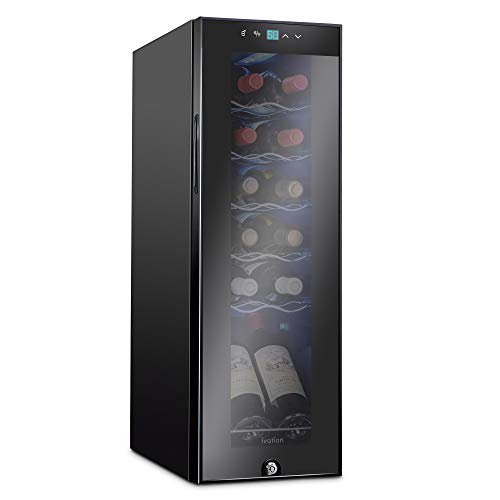
Ivation 12 Bottle Compressor Wine CoolerBest overall
|
Bottles always ready, warm kitchens | Freestanding wine fridge, 12 bottles | Compressor, 41–64°F | View on Amazon |

Koolatron 12 Bottle Dual Zone Thermoelectric Wine CoolerBest dual zone
|
Whites and reds at different temperatures | Countertop wine fridge, 12 bottles | Thermoelectric, two zones | View on Amazon |

Wine Enthusiast 6-Bottle Countertop Wine CoolerBest small cooler
|
A few bottles in a cool room | Countertop wine fridge, 6 bottles | Thermoelectric (solid-state) | View on Amazon |

Vacu Vin Wine Cooler SleeveBest quick chill
|
One warm bottle, cold in minutes | Freezer gel sleeve, one bottle | Passive, about 15 minutes after freezing | View on Amazon |
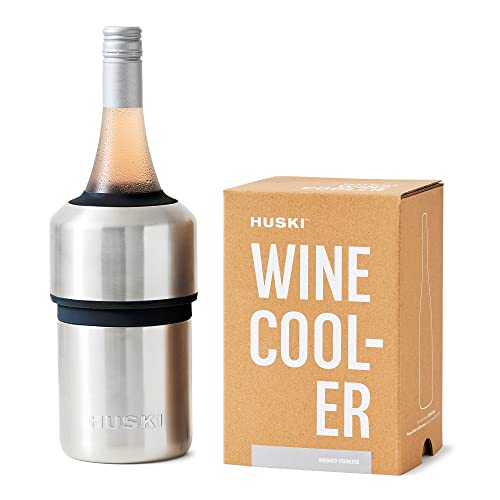
Huski Wine ChillerBest at the table
|
Keeping a cold bottle cold outdoors | Insulated sleeve, one 750 ml bottle | Passive, vacuum insulated | View on Amazon |
Product images from Amazon. Temperature ranges and timings are as stated by each maker or listing; check the listing before you buy.
Our picks for the best wine chiller
The first five picks are wine coolers: small refrigerators that hold bottles at a set temperature for days or months. The last four are bottle chillers: tools that cool one bottle quickly or keep it cold while you serve. A wine fridge solves the “is anything cold?” problem; a bottle chiller solves the “this bottle is warm and the guests are here” problem. Many households end up with one of each.
1. Ivation 12 Bottle Compressor Wine Cooler – Steady Cold in a Warm Room
Ivation’s 12-bottle cooler uses a compressor, the same basic system as a kitchen refrigerator, rather than the thermoelectric module most small wine coolers use. Ivation says that means its temperature is not affected by outside heat sources, and it lists a range of 41 to 64°F, low enough for sparkling wine and crisp whites.
It is a slim, upright fridge: the listing gives 9.92 inches wide, 17.72 inches deep and 31.18 inches tall, and a weight of 37.5 pounds. A built-in fan circulates air, the double-paned glass door is UV-resistant according to Ivation, and the racks are removable so you can fit wider bottles. Touch controls on the front set the temperature, and a lock button keeps the settings from being changed by accident.
For a home that keeps a few whites, a rosado and a sparkling wine on hand for weekend cookouts, twelve bottles is a sensible size. It is freestanding, not built-in, so give it space to vent and keep it indoors.
Why we like it
- Compressor cooling, per Ivation
- 41–64°F range covers whites and sparkling wine
- Narrow footprint, under 10 inches wide
- Settings lock and UV-resistant glass door
Key specifications
| Chiller | Ivation 12 Bottle Compressor Wine Cooler, IVFWCC121LB |
|---|---|
| Type | Freestanding wine fridge |
| Capacity | 12 bottles (1.2 cu ft) |
| Cooling | Compressor |
| Temp range | 41–64°F |
| Best for | Keeping whites and sparkling wine ready at all times |
Why we recommend it
It suits anyone who wants a dozen bottles at serving temperature without giving up refrigerator space, especially in a kitchen that gets warm in summer.
Skip it if you want separate zones for reds and whites; it holds one temperature throughout.
Pros and cons
Pros
- Compressor handles warm rooms better
- Cold enough for sparkling wine
- Slim and upright
Cons
- Single zone only
- Freestanding, not for built-in use
2. Koolatron 12 Bottle Dual Zone Thermoelectric Wine Cooler – Reds and Whites, Side by Side
Koolatron splits this cooler into two compartments that each hold six standard 750 ml bottles. The upper zone sets from 54 to 66°F and the lower zone from 42 to 66°F, according to Koolatron, so you can keep a lighter red slightly cool upstairs and whites or rosados colder downstairs.
It cools thermoelectrically, which Koolatron says gives quiet, vibration-free cooling. External touch controls let you switch zones, change the temperature and turn on the light without opening the door. Inside are four removable wire racks, and the door is mirrored, double-paned glass with an airtight seal. The listing gives the size as 20 inches wide, 10 inches deep and 26 inches tall, and the weight as 30.2 pounds.
Thermoelectric coolers work best in a room that stays reasonably cool, so put this one indoors and away from the oven, not in a garage or on a covered patio.
Why we like it
- Two zones with separate controls
- Lower zone reaches 42°F, per Koolatron
- Quiet, vibration-free cooling
- Controls work without opening the door
Key specifications
| Chiller | Koolatron WC12-DZ Dual Zone Wine Cooler |
|---|---|
| Type | Countertop or freestanding wine fridge |
| Capacity | 12 bottles (6 per zone) |
| Cooling | Thermoelectric |
| Temp range | Upper 54–66°F; lower 42–66°F |
| Best for | Households that drink both reds and whites |
Why we recommend it
It suits a home that keeps a few reds for dinner and a few whites or rosados for the grill, and wants both at the right temperature.
Skip it if the cooler will sit somewhere warm; Koolatron’s warranty is also short, at 90 days parts and labor according to the listing.
Pros and cons
Pros
- Separate red and white zones
- Quiet thermoelectric cooling
- Small enough for a counter
Cons
- Short 90-day warranty
- Needs a cool room to reach its lowest setting

3. Wine Enthusiast 6-Bottle Countertop Wine Cooler – Small and Quiet
Wine Enthusiast sells wine accessories and storage, and this is its smallest countertop cooler. It holds up to six Bordeaux-style bottles on metal racks, with a digital touchscreen and LED display for setting the temperature. The listing gives the size as 9.75 inches wide, 19.87 inches deep and 14.87 inches tall, small enough to sit on a counter or a sideboard.
It uses solid-state, or thermoelectric, cooling, which Wine Enthusiast says runs quietly. The maker is unusually clear about the limits: it recommends keeping the cooler where the room is below 75°F, says the lowest temperatures are reached when the room is about 60 to 65°F, and asks for at least 2 inches of space on both sides and 4 inches at the back and top. It is for freestanding use only, not built-in or under-counter, and has a one-year limited warranty.
The Amazon listing does not state the temperature range, so check with Wine Enthusiast if you need a particular setting.
Why we like it
- Compact enough for a counter
- Quiet solid-state cooling, per the maker
- Clear placement guidance from Wine Enthusiast
- One-year limited warranty
Key specifications
| Chiller | Wine Enthusiast 6-Bottle Countertop Wine Cooler, 272 02 06 03 |
|---|---|
| Type | Countertop wine fridge |
| Capacity | 6 bottles |
| Cooling | Thermoelectric (solid-state) |
| Temp range | Not stated on the listing; room below 75°F recommended |
| Best for | A few bottles in an air-conditioned room |
Why we recommend it
It suits an apartment or small kitchen where six bottles is plenty and the room stays cool.
Skip it if your kitchen runs warm in summer; by the maker’s own guidance, a thermoelectric cooler struggles above 75°F.
Pros and cons
Pros
- Small footprint
- Quiet
- Honest placement advice
Cons
- Temperature range not on the listing
- Needs a cool room
- Only six bottles
4. NewAir 15-Inch Dual Zone Wine Fridge, 29 Bottles – Built In Under the Counter

If you want a wine fridge that disappears into the cabinets, NewAir’s 15-inch model is built for it. It vents at the front, which is what lets it go under a counter, and it can also stand alone. Two independent zones hold up to 29 standard bottles on wood shelves, and the compressor cooling is designed to keep vibration low, according to NewAir.
The listing gives the size as 14.8 inches wide, 24.25 inches deep and 33.75 inches tall, and the weight as 73.8 pounds, so this is a real appliance rather than a countertop box. The door is UV-protected, double-pane glass with an integrated handle, and the listing includes a one-year limited warranty. The Amazon listing does not give the temperature range for each zone; check NewAir’s manual for the exact settings before you buy.
Twenty-nine bottles is more than most people need for weekend cookouts, but if you buy wine by the case it saves a lot of shuffling.
Why we like it
- Front venting for built-in installation
- Two independent zones
- Compressor cooling, per NewAir
- Holds up to 29 bottles
Key specifications
| Chiller | NewAir 15″ Dual Zone Wine Fridge, NWC029BS00 |
|---|---|
| Type | Built-in or freestanding wine fridge |
| Capacity | Up to 29 bottles |
| Cooling | Compressor |
| Temp range | Not stated on the listing |
| Best for | Under-counter installation, larger collections |
Why we recommend it
It suits a kitchen remodel or a home bar where a 15-inch cabinet space can become wine storage.
Skip it if you only want a few bottles cold; it is big, heavy and needs a proper spot.
Pros and cons
Pros
- Fits under a counter
- Dual zones
- Large capacity
Cons
- Zone temperatures not on the listing
- Heavy, at 73.8 pounds
5. Antarctic Star 12 Bottle Wine and Beverage Cooler – Wine or Cans for a Cookout

Antarctic Star’s small cooler is sold as both a wine cooler and a beverage fridge: the listing says it holds 12 standard bottles or 48 standard cans. That flexibility suits a cookout, when the same box might hold a few bottles of white, sparkling water and canned drinks for the people who are not drinking wine.
It uses a compressor and sets from 40 to 61°F with a touch panel, according to the listing, which notes that 55°F is generally considered a suitable storage temperature. The door is dual glass with an airtight seal and can be hinged on either side. The listing gives the size as 16.93 inches wide, 16.46 inches deep and 18.5 inches tall, and the warranty as one year.
The bottles lie on horizontal racks, and the listing says the door closes more easily when the two front leveling legs are extended slightly.
Why we like it
- Holds 12 bottles or 48 cans
- Compressor cooling to 40°F
- Reversible door
- Compact, countertop size
Key specifications
| Chiller | Antarctic Star 12 Bottle/48 Can Cooler, JC-36UEL-F |
|---|---|
| Type | Countertop wine and beverage fridge |
| Capacity | 12 bottles or 48 cans (1.3 cu ft) |
| Cooling | Compressor |
| Temp range | 40–61°F |
| Best for | Mixed wine and canned drinks |
Why we recommend it
It suits a household that wants one small, cold box for wine some weeks and canned drinks other weeks.
Skip it if wine is all you store; a dedicated wine cooler has racks shaped for bottles.
Pros and cons
Pros
- Wine or cans
- Compressor cooling
- Door hinges either side
Cons
- Single zone
- Door may need its legs adjusted to close well

6. Vacu Vin Wine Cooler Sleeve – Cold in About 15 Minutes
Vacu Vin’s sleeve is the simplest answer to a warm bottle. You keep the sleeve in the freezer, slide it over the bottle, and the cooling gel inside does the work. Vacu Vin says it chills wine in about 15 minutes after the sleeve has spent 6 hours in the freezer, and that it keeps the bottle cold for hours without ice, melting water or a bucket.
It is flexible, so it wraps snugly around most standard 750 ml and 0.7 to 1 liter bottles, according to the listing. That makes it useful for rosado, white and sparkling wine, and also for a bottle of red that needs taking down a few degrees on a hot day. It is light enough to pack for a picnic or a patio, and the listing says it is made in Europe.
The catch is planning: the sleeve must already be frozen. Keep it in the freezer full time and it is ready whenever you are.
Why we like it
- About 15 minutes to chill, per Vacu Vin
- No ice or dripping water
- Fits 750 ml to 1 liter bottles
- Light and portable
Key specifications
| Chiller | Vacu Vin Wine Cooler Sleeve, 38842606 |
|---|---|
| Type | Freezer gel sleeve |
| Capacity | One bottle, 750 ml to 1 liter |
| Cooling | Passive (frozen gel) |
| Temp range | Not stated; chills in about 15 minutes |
| Best for | A warm bottle that needs to be cold soon |
Why we recommend it
It suits anyone who buys wine on the way to a dinner or a cookout and needs it cold before the food is ready.
Skip it if you never think ahead to freeze it; a sleeve left in a drawer does nothing.
Pros and cons
Pros
- Fast, by the maker’s timing
- No mess
- Packs flat for travel
Cons
- Needs 6 hours in the freezer first
- Gel loses its chill over time
7. Houdini Wine Chiller and Pourer Stick – A Chiller Stick That Also Pours

A chiller stick goes inside the bottle instead of around it. You freeze the stainless Houdini stick, pour off a glass to make room, and push it into the neck. The listing says it keeps a bottle cold, aerates the wine as you pour and filters out sediment, and it claims up to 24 hours of cold when it is used to seal the bottle.
Read that carefully: treat 24 hours as the maker’s outer limit rather than what you will see on a hot patio, and expect this kind of tool to hold a white that is already cold rather than turn a warm one cold. The pourer doubles as the spout, so you serve without taking it out. To clean it, the listing says to twist off the cap and wipe it. It states no freezing time, weight or warranty.
For a red with grilled meat on a warm evening, a few degrees cooler is often exactly what the wine needs.
Why we like it
- Chills, aerates and pours in one, per the listing
- Pours through without removing it
- No ice and no dilution
- Small enough for a drawer
Key specifications
| Chiller | Houdini Wine Chiller and Pourer Stick, H2-15610T |
|---|---|
| Type | In-bottle chiller stick with pourer |
| Capacity | One bottle (pour a glass first) |
| Cooling | Passive (frozen insert) |
| Temp range | Not stated; up to 24 hours cold, per the listing |
| Best for | Cooling reds slightly, holding whites cold |
Why we recommend it
It suits a red-wine drinker in a hot climate, or anyone who wants a white to stay cold through a meal without a bucket.
Skip it if your main problem is warm white wine; a sleeve or a fridge does that job better.
Pros and cons
Pros
- Chills and pours in one
- Stainless steel, per the listing
- No water on the table
Cons
- Must pour a glass to fit it
- Freezing time not stated
- No warranty stated
8. Huski Wine Chiller – Keeps a Cold Bottle Cold for Hours
Huski’s chiller looks like a short, open-topped tumbler for a wine bottle. It is double walled and vacuum insulated, built from 304 (18/8) stainless steel with internal copper plating, and Huski says it keeps cold wine cold for up to 6 hours with no ice. Because it does not sweat, the table and your hands stay dry.
The height adjusts and an expandable lock holds the bottle firmly when you pour. Huski says it fits most 750 ml wine bottles and many Champagne bottles, and names some that do not fit, including Dom Pérignon, Bollinger, Krug and Korbel, so check your usual bottle shape.
An insulated chiller does not make a warm bottle cold; it holds the temperature the bottle already has. Start with a bottle from the fridge or a cooler and this keeps it there through a long meal on the patio.
Why we like it
- Up to 6 hours of cold, per Huski
- Vacuum-insulated stainless steel
- No condensation on the table
- Adjustable fit for most 750 ml bottles
Key specifications
| Chiller | Huski Wine Chiller, brushed stainless |
|---|---|
| Type | Insulated bottle sleeve |
| Capacity | One 750 ml bottle; some Champagne bottles |
| Cooling | Passive (vacuum insulation) |
| Temp range | Not stated; holds cold up to 6 hours |
| Best for | Outdoor meals, keeping a bottle cold |
Why we recommend it
It suits anyone who serves wine outdoors in warm weather and is tired of a dripping ice bucket.
Skip it if you need to chill a warm bottle; this only holds a temperature.
Pros and cons
Pros
- Long cold hold
- Dry table
- Sturdy stainless steel
Cons
- Does not chill warm wine
- Some wider bottles do not fit
9. Kota Japan White Marble Wine Chiller – Stone That Holds the Cold

A marble chiller is the oldest idea here: a heavy stone cylinder that you chill in the refrigerator, then stand a cold bottle inside. Kota Japan’s is solid natural marble, and the listing says the thick stone retains the cold longer and keeps bottles chilled without ice, dilution or condensation. It weighs 2.36 kilograms, according to the listing, so it does not tip.
The listing gives the size as 7 by 5 inches in the title and 4.5 by 6.5 inches in the size field, so measure against your tallest bottle before you buy. Its second life is as a utensil crock or vase on the counter, which matters if you only serve wine now and then.
Like the Huski, it keeps a cold bottle cool rather than chilling a warm one. The maker does not say for how long; stone simply warms more slowly than the air around it.
Why we like it
- Solid natural marble, per the listing
- Heavy base resists tipping
- No ice and no water on the table
- Doubles as a utensil holder
Key specifications
| Chiller | Kota Japan White Marble Wine Chiller |
|---|---|
| Type | Stone bottle chiller |
| Capacity | One 750 ml bottle |
| Cooling | Passive (pre-chilled marble) |
| Temp range | Not stated |
| Best for | Indoor dinners and countertop display |
Why we recommend it
It suits someone who wants a good-looking piece on the table that also keeps a bottle of white cool through dinner indoors.
Skip it if you want a stated cold-holding time; the listing does not give one.
Pros and cons
Pros
- Stable and heavy
- Dual use on the counter
- No moving parts
Cons
- Size figures on the listing differ
- No stated cold-holding time
Wine fridge or bottle chiller: which do you need?
Ask yourself one question: is the problem that nothing is cold when you want it, or that a bottle gets warm once it is open? If you regularly open a bottle of white, rosado or sparkling wine and the kitchen refrigerator is already full of tortillas, salsas and marinating meat, a wine fridge pays for its space. It also holds wine at a steady temperature, which is gentler than taking it in and out of a refrigerator door.
If you drink wine once in a while, or the issue is the patio, a bottle chiller is cheaper and takes no counter space. Freeze a sleeve or a stick and keep it ready for the day you need it, and set an insulated sleeve or a stone chiller on the table to keep the bottle cold once it is poured.
Wine Spectator’s columnist suggests whites show best at about 40 to 50°F and reds at about 60 to 65°F, and notes that most rooms are a lot warmer than 60°F, so even reds often benefit from a little time in the cold. Its serving temperature advice also covers the classic quick fix: a bucket of ice, water and salt cools a bottle faster than ice alone, and a bottle wrapped in wet paper towels can go into the freezer for a short while, as long as you do not forget it there.
How to choose a wine chiller
Compressor or thermoelectric. Compressor coolers, like the Ivation, NewAir and Antarctic Star, work the way a kitchen refrigerator does and reach lower temperatures in a warm room. Thermoelectric coolers, like the Koolatron and Wine Enthusiast, are quieter and have no vibration, but they cool relative to the room around them. Wine Enthusiast recommends a room below 75°F for its thermoelectric model; in a Houston kitchen in August, that rules out a sunny counter.
Capacity. Count the bottles you actually keep cold at once, then add a few. Six to twelve bottles covers most homes; a built-in fridge for 29 bottles makes sense if you buy by the case.
Zones. A single zone is fine if you mainly drink whites, rosados and sparkling wine. Choose dual zones, like the Koolatron or NewAir, if you also keep reds and want them a little warmer.
Where it will sit. Freestanding coolers need open space around them for air; Wine Enthusiast asks for 2 inches at the sides and 4 inches at the back and top. Only a front-venting model, like the NewAir, should go under a counter. None of these fridges is sold for outdoor use, so the patio is a job for a sleeve or an insulated chiller.
Speed or hold. Among the tools, a frozen sleeve chills a warm bottle; a chiller stick takes a few degrees off and holds; an insulated sleeve and marble only hold the temperature the bottle already has. Match the tool to the problem.
Ice and glasses. For drinks poured over ice, such as a tinto de verano or a spritz, good clear ice matters too; our guide to the best ice cube trays covers the options. And a chilled white tastes best in a glass with a bowl that suits it; see the best wine glasses.
Pour with care. A cold bottle on a hot day goes down easily. The NIAAA counts 5 fluid ounces of table wine at about 12 percent alcohol as one standard drink, so a 750 ml bottle holds about five. Keep water, agua fresca and food on the table, and plan the ride home.
How we selected these nine chillers
We started from what a restaurant expects of cold storage: it holds the temperature it claims, it fits where it has to go, and its maker is clear about its limits. We then looked at wine coolers and bottle chillers sold on Amazon in the United States by identifiable makers, checked that each was in stock when we wrote this, and took every specification from the maker’s listing. We covered both meanings of “wine chiller”, compressor and thermoelectric fridges and four different bottle tools, rather than several look-alike coolers. We checked the U.S. Consumer Product Safety Commission recall database for each electric cooler’s brand and found no wine cooler recalls for these brands. For serving temperatures we read Wine Spectator’s advice on what temperature to serve wine. Several Koolatron, Kalamera and NewAir models showed limited or delayed availability, so they are not here. We have not used these products ourselves; where a maker does not state something, we say so.
Wine chiller questions, answered
What is the best type of wine chiller?
It depends on the problem. For bottles always ready to pour, a small compressor wine fridge such as the Ivation. For chilling one warm bottle fast, a freezer sleeve such as the Vacu Vin. For keeping a cold bottle cold outdoors, an insulated chiller such as the Huski.
What is the best white wine chiller?
For whites and sparkling wine, look for a cooler that reaches the low 40s °F, like the Ivation (41°F) or the Antarctic Star (40°F), or the lower zone of the Koolatron (42°F). For a single bottle, a frozen sleeve chills it in about 15 minutes, according to Vacu Vin.
Which wine chiller brands are worth a look?
For coolers, Ivation, Koolatron, NewAir, Wine Enthusiast and Antarctic Star all publish clear specifications on their listings. For bottle chillers, Vacu Vin, Houdini and Huski are established names. Choose by cooling method, capacity and where it will sit rather than brand alone.
Is a wine chiller worth it for home?
If you open chilled wine every week and your refrigerator is crowded, a wine fridge frees space and keeps bottles steady. If you drink wine occasionally, a sleeve or chiller stick does the job for much less.
Can I keep a wine cooler in the garage or on the patio?
None of the coolers here is sold for outdoor use, and thermoelectric models in particular need a cool room; Wine Enthusiast recommends below 75°F. Keep the fridge inside and take a sleeve or insulated chiller outdoors.
How cold should rosé and white wine be?
Wine Spectator’s columnist puts whites at about 40 to 50°F. Rosado and lighter whites sit comfortably in that range; very cold wine tastes of less, so let a glass warm a little if it seems muted.
Keeping the next bottle cold
Buy the Ivation if you want a dozen bottles ready in a warm kitchen, the Koolatron if you keep reds and whites, and the Wine Enthusiast if six bottles in a cool room is enough. Keep a Vacu Vin sleeve in the freezer for emergencies, and set a Huski on the patio table to hold the cold through the meal.
More wine guides: wine aerators, bar carts.
Storing more than a few bottles? See our guide to the best value wine fridges.
Want it at the table, not in a fridge? See our guide to the best wine chillers and buckets.
For the rest of the wine kit, see our guides to the best wine opener and the best wine decanter, and read what aguas frescas are for something cold and alcohol-free to pour alongside. If you would rather someone else did the cooking tonight, see the menu or call to order.