A stuffed pork loin that holds its shape, a chicken that roasts evenly with its legs tucked in, a rolled flank steak that doesn’t unwind in the pan: all of it comes down to a few feet of string. Butcher’s twine is about the cheapest tool in a kitchen, and the wrong string is one of the easier ways to ruin a good piece of meat.
This guide covers the cotton twines worth buying, from a cone with its own cutter to a small ball for the drawer, and how to tell food twine from the hardware-aisle kind. Once your roast is tied, a good meat thermometer does the rest.
Julia’s earns a commission on purchases made through links on this page, at no cost to you. Recommendations are based on what a restaurant kitchen looks for, product specifications and verified buyer reports.
Quick verdict: which butcher’s twine to buy
For most kitchens, the best butchers twine is the Regency Wraps 500-foot cone on a holder: 16-ply cotton that Regency calls food grade and oven safe, with a cutter built in. If you want US-made cotton, choose Librett Durables. If you want the twine clean and contained at the cutting board, choose the Norpro stainless holder.
Below are the seven picks with what each maker states about material, ply and heat, then how to choose and how to use it.
Five cotton twines side by side
Our five standout picks, one for each kind of cook, with the details each listing states. All seven are reviewed in full below.
| Twine | Best for | Material | Length | Buy on Amazon |
|---|---|---|---|---|
| Frequent roasts and trussing | 16-ply cotton | 500 ft cone on holder | View on Amazon | |

Librett Durables Butchers Twine, Cotton, 370 ftBest US-made
|
Buyers who want US-made twine | 100% cotton | 370 ft | View on Amazon |
| Keeping twine clean at the board | 18-ply unbleached cotton | 220 ft in steel canister | View on Amazon | |

GoodCook Everyday Cotton Twine, 300 ftBest everyday ball
|
A drawer ball from a known brand | Unbleached cotton | 300 ft ball | View on Amazon |

HIC Kitchen Chef-Grade Cooking Twine, 1-Pound Cones, Set of 2Best for big batches
|
Sausage days and large batches | 16-ply natural cotton | 2 cones, approx. 1,140 ft each per title | View on Amazon |
Our picks for the best butchers twine
1. Regency Wraps Butcher’s Cooking Twine, 500 ft Cone on Holder – A Cone That Cuts Itself

This is the setup we would want on a prep table: a 500-foot cone of 16-ply cotton sitting on a wood holder with a built-in cutter. Regency Wraps sells it as a foodservice product, and the holder solves the two small annoyances of twine, which are a ball that rolls away and a pair of greasy scissors.
At 16-ply the listing calls it heavy weight, made to withstand meat prep and trussing, and a thick cotton line is what you want around a soft stuffed roast. The uses it names are the ones a home cook actually has: trussing a turkey, forming roasts, soufflé collars, bacon-wrapped filets, curing and smoking meats, and drying herbs.
The care rules are plain. Regency calls the twine food grade and oven safe, says to keep it away from flame, and says it is intended for single use to avoid cross contamination. So cut a fresh length for each roast, and throw it out afterward.
Why we like it
- 16-ply cotton, stated in the title
- 500 feet on a wood holder with a cutter
- Regency states food grade and oven safe
- Family-owned US company since 1985, per the listing
Key specifications
| Model | RW090 |
|---|---|
| Material | Cotton |
| Ply | 16-ply |
| Length | 500 ft |
| Format | Cone on wood holder with cutter |
| Heat guidance | Oven safe; keep away from flame |
| Food-safe wording | “Food Grade”, “food safe” |
| Made in | Not stated (company is US-based) |
Why we recommend it
It suits anyone who ties a roast or a bird more than a few times a year, or who wants the twine out and ready on a counter instead of buried in a drawer.
Skip it if you tie one turkey a year; a small ball takes up less room and is all you need.
Pros and cons
Pros
- Cutter and holder included
- Thick line for heavier roasts
- Long enough to last a busy kitchen
Cons
- Takes up counter or shelf space
- Single use, per the maker
- Not for direct flame
2. Librett Durables Butchers Twine, Cotton, 370 ft – Cotton, Made in the USA
Librett’s listing is short and specific, which we like on a product this simple. It says the twine is 100% all-natural cotton, made in the USA, food safe and oven safe, and sold in a 370-foot length. It is the only pick here with a clear country of manufacture on the listing, along with a statement that it is fully biodegradable and compostable.
The uses it names lean toward serious meat work: trussing and stuffing, forming roasts, a crown roast, bacon-wrapped filets, braciole, sausage making, smoking, curing and game. That makes it a natural match for anyone already grinding or stuffing at home.
Two details are worth checking on the page before you buy. The listing does not give a ply count, so you can’t compare thickness against the 16-ply picks, and its color field says brown, while the rest of this list runs white to natural.
Why we like it
- 100% all-natural cotton, per the listing
- Made in USA, per the listing
- Food safe and oven safe, per the listing
- 370 feet is a useful middle length
Key specifications
| Model | 248 |
|---|---|
| Material | 100% cotton |
| Ply | Not stated |
| Length | 370 ft |
| Format | Not stated |
| Heat guidance | Oven safe; broiler and flame not stated |
| Food-safe wording | “Food safe” |
| Made in | USA |
Why we recommend it
It suits a cook who cares where the twine comes from and wants a length that lasts a season or two without a big cone.
Skip it if you want a holder or cutter, or a stated ply; the listing gives neither.
Pros and cons
Pros
- Clear material and origin statements
- Good length for home use
- Biodegradable and compostable, per the listing
Cons
- Ply not stated
- No dispenser
- Listing does not say how it handles a broiler
3. Norpro Stainless Steel Holder with Cotton Cooking Twine, 220 ft – A Clean, Tangle-Free Canister
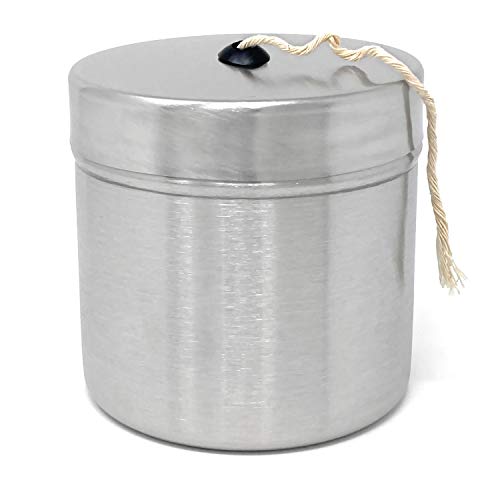
Twine gets dirty in a predictable way: you touch it with raw-meat hands, then put it back. Norpro’s answer is a brushed stainless canister with a hole in the lid, so the string feeds out from the center and the rest of the spool stays inside. The canister measures 3.25 inches each way, small enough to live beside a cutting board.
Inside is 220 feet of unbleached, all-natural 100% cotton at 18-ply, the highest ply among the home-size picks here. Norpro describes it as food safe and lists roasting, rotisserie and smoker use, along with herb bundles and sausage casings. It says to keep it away from open flames, and to hand wash or wipe the holder.
There is no cutter on the canister, so keep kitchen shears close by. Norpro also sells 220-foot cotton twine on its own as model 942, which is worth a look when the spool runs out.
Why we like it
- Center-pull lid keeps the spool inside
- 18-ply unbleached 100% cotton
- Stainless canister, 3.25 inches each way
- Norpro also sells 220-foot twine on its own
Key specifications
| Model | 941 |
|---|---|
| Material | 100% cotton, unbleached |
| Ply | 18-ply |
| Length | 220 ft |
| Format | Stainless canister, center pull |
| Heat guidance | Keep away from open flames |
| Food-safe wording | “Food-safe” |
| Made in | Not stated |
Why we recommend it
It suits a tidy cook who wants the twine out of the drawer, and anyone who has watched a loose ball roll through raw chicken juice.
Skip it if you tie roasts often, since 220 feet runs out sooner than the cones here, and you will still need scissors.
Pros and cons
Pros
- Keeps twine off the board
- Separate 220-foot twine is available
- Hand wash or wipe clean
Cons
- No cutter
- Shorter length than the cones
- One more thing on the counter
4. GoodCook Everyday Cotton Twine, 300 ft – A Simple Center-Pull Ball
GoodCook is the supermarket-aisle kitchenware brand, and this is its plain answer to the question: a 300-foot ball of unbleached cotton twine, described on the listing as food and oven safe. You pull it from the center, so the ball sits still while you work instead of rolling across the counter.
The listing names the jobs that fill most kitchens’ twine needs: binding a roast, trussing a turkey, tying bacon-wrapped filets and securing stuffed chicken breasts. It also gives the clearest heat rule on this page. Oven safe, not recommended under a broiler, and keep away from open flame.
That broiler note matters, because plenty of roast recipes finish with a blast of high heat. Snip the twine off first or switch to the oven’s normal heat for the last minutes. The listing gives no ply count, so treat it as a general-purpose line rather than one chosen for heavy roasts.
Why we like it
- 300 feet in a center-pull ball
- Unbleached cotton
- Stated as food and oven safe
- Clear broiler and flame guidance
Key specifications
| Model | 24262 |
|---|---|
| Material | Cotton, unbleached |
| Ply | Not stated |
| Length | 300 ft |
| Format | Center-pull ball |
| Heat guidance | Oven safe; not under broiler; keep from open flame |
| Food-safe wording | “Food safe” |
| Made in | Not stated |
Why we recommend it
It suits a home cook who wants one ball in a drawer for a holiday bird and the odd stuffed pork loin.
Skip it if you plan to tie heavy roasts and want a stated ply; choose Regency’s 16-ply or Norpro’s 18-ply instead.
Pros and cons
Pros
- Center-pull ball stays put
- Long enough for years of occasional use
- Plain, clear heat guidance
Cons
- Ply not stated
- Not for the broiler
- No cutter or holder
5. Beyond Gourmet Cooking Twine, 16-Ply Unbleached Cotton, 200 ft – A Stated Oven Limit

Most twine listings say oven safe and stop there. Beyond Gourmet gives a number: oven safe to 350 degrees Fahrenheit. That is a useful line to know, because a lot of roasting happens hotter than that, and it tells you to treat the twine as a slow-roast tool. The listing is equally direct about what it is not for, ruling out direct flame in the broiler or on the grill.
The twine itself is all-natural, unbleached, 16-ply chef-grade cotton, 200 feet long, and sold as single use and disposable. The maker notes that width and length may vary. The uses are the familiar set: trussing poultry, securing rolled or stuffed foods, charcuterie, sausage forming, curing and smoking.
One caution for comparison shoppers. HIC’s chef-grade twine, also on this list, has nearly the same specification and wording, so choose between the two by length rather than expecting a different twine.
Why we like it
- Oven limit stated: 350 degrees Fahrenheit
- 16-ply unbleached cotton
- 200 feet, an easy size to store
- Biodegradable, per the listing
Key specifications
| Model | 1651 |
|---|---|
| Material | Unbleached cotton |
| Ply | 16-ply |
| Length | 200 ft |
| Format | Not stated |
| Heat guidance | Oven safe to 350°F; no direct flame in broiler or on grill |
| Food-safe wording | Not stated in those words; sold for cooking |
| Made in | Not stated |
Why we recommend it
It suits a cook who wants a small amount of thick twine and a clear temperature to work with.
Skip it if your roast goes in above 350 degrees Fahrenheit, since that is past the limit the listing states.
Pros and cons
Pros
- Rare stated temperature limit
- Thick 16-ply line
- Compact size
Cons
- Short length
- Limit rules out hotter roasts
- Length and width may vary, per the listing
6. HIC Kitchen Chef-Grade Cooking Twine, 1-Pound Cones, Set of 2 – Bulk Cotton for Big Batches
If you make sausage, cure meats or tie roasts by the half dozen, small balls run out fast. HIC sells its chef-grade twine in 1-pound cones, and this listing packs two of them. The title gives approximately 1,140 feet per cone, with a note that length and width may vary.
The twine is natural 16-ply cotton. The listing says microwave and oven safe to 350 degrees Fahrenheit, and, like the Beyond Gourmet twine, it is not intended for direct flame in the broiler or on the grill. It is sold as single use and disposable, so the sheer length is the point: you can cut generously and throw it away.
A cone has no holder here. Stand it in a clean bowl or on a spindle so it can spin as you pull, or buy the Regency cone above if you would rather have the cutter included. This is a lot of twine for a typical house, so split it with a friend if you only roast now and then.
Why we like it
- Two 1-pound cones
- 16-ply natural cotton
- Microwave and oven safe to 350 degrees Fahrenheit, per the listing
- Covers sausage, curing and smoking jobs
Key specifications
| Model | 22198/2 |
|---|---|
| Material | Natural cotton |
| Ply | 16-ply |
| Length | Approx. 1,140 ft per cone, per title; may vary |
| Format | 2 cones, no holder |
| Heat guidance | Oven and microwave safe to 350°F; no direct flame in broiler or on grill |
| Food-safe wording | Not stated in those words; sold for cooking |
| Made in | Not stated |
Why we recommend it
It suits home sausage makers, hunters processing game, and anyone who ties food in volume.
Skip it if you truss a bird or two a year; this set will outlast your interest in it.
Pros and cons
Pros
- Huge length for the shelf space
- Thick 16-ply line
- Useful around the house too, per the listing
Cons
- No holder or cutter
- Limit of 350 degrees Fahrenheit
- More twine than most homes need
7. Regency Wraps Butchers Cooking Twine, 200 ft Ball – The Small Starter Ball

For a first ball of butcher’s twine, this is the small end of Regency’s range. It holds 200 feet, and the listing’s size field calls it 12-ply, which makes it thinner than Regency’s 16-ply cone. That suits smaller work: a stuffed chicken breast, a bacon-wrapped filet, a bundle of herbs for a stock pot.
The rest of the rules match the cone. Regency calls it heavy-weight natural food-grade cotton, oven safe, to be kept away from flame and intended for single use to avoid cross contamination. It names the same kitchen uses, plus plenty of household ones if the ball outlives your roasting plans.
It is worth noting that Regency sells a separate 200-foot ball at 16-ply. If you want the thicker line in a small size, check the ply in the title of the listing you open, since the two look alike.
Why we like it
- 200 feet, small enough for any drawer
- 12-ply cotton for lighter tying
- Regency states food grade and oven safe
- Same maker as our top pick
Key specifications
| Model | RW1651 |
|---|---|
| Material | Cotton |
| Ply | 12-ply |
| Length | 200 ft |
| Format | Ball |
| Heat guidance | Oven safe; keep away from flame |
| Food-safe wording | “Food grade”, “food-safe” |
| Made in | Not stated (company is US-based) |
Why we recommend it
It suits a small household or a first-time truss, where a cone or a canister would be more than the job needs.
Skip it if you tie large roasts often; the thinner line and shorter length are better for small jobs.
Pros and cons
Pros
- Takes up almost no space
- Food-grade wording from the maker
- Easy first purchase
Cons
- Thinner than the 16-ply picks
- Runs out fast with regular use
- No holder or cutter
How to choose butcher’s twine for your kitchen
Material. Cotton or linen, sold for food. Cook’s Illustrated warned against hardware-store nylon twine, saying it is probably not food-safe, and reported that a colored one leached dye onto a pork roast. It also advised against dental floss, which can cut through meat. If a package doesn’t say it’s for cooking, leave it for the garden.
Ply. Ply is the number of strands twisted together, and more strands usually means a thicker line. Sixteen-ply is the common kitchen weight on this page. Thick twine spreads pressure across a soft roast, while a thinner 12-ply is easier to knot around a small bundle. Some listings give no ply at all, and we say so.
Heat limit. Read this before you roast. Only Beyond Gourmet and HIC state a number, 350 degrees Fahrenheit, while the others say oven safe without one. GoodCook rules out the broiler, and every maker here that addresses flame says to keep twine away from it.
Format. A ball is cheap and stores anywhere. A center-pull ball stays still as you work. A canister or holder keeps the line clean, and a cone suits regular use. Pick by where the twine will live.
Length. A trussed chicken takes only a few feet, so 200 feet goes a long way in a home kitchen. Buy cones if you make sausage or tie several roasts at a time.
How we picked these seven twines
We have not used these products ourselves. We started from what a working kitchen asks of twine, then read each listing for material, ply, length and heat guidance, and kept only makers we could identify. Stock and offer condition were checked through Amazon’s product data. We used food-safe wording only where the maker’s listing gives it, and we say so where it doesn’t.
For material, we leaned on the Cook’s Illustrated piece on kitchen twine, which found that linen ties a little more easily while cotton works nearly as well for less money. None of the linen options we found met our bar: the one in stock from a known maker was a replacement roll whose listing says nothing about food use. So this page is all cotton. We left out Fox Run’s cooking twine because its listing doesn’t state the material, and a long run of Amazon-first bulk twines, since this is a food-contact product and nothing independent backed them up.
These picks rest on listing and maker details, not on our own use. Twine lengths and widths can vary, and some makers say so.
Butcher’s twine questions, answered
What is the difference between butcher’s twine and cooking twine?
In practice, nothing that matters. Makers use both names for the same cotton string sold for tying food. The thing to check is that the package says it is for cooking, not the name on the front.
Can butcher’s twine go in the oven?
Cotton twine sold for cooking is generally listed as oven safe, but follow the maker. Beyond Gourmet and HIC give a limit of 350 degrees Fahrenheit, and GoodCook says not to use its twine under a broiler. Keep it away from open flame in every case.
Can I use regular string or twine from the hardware store?
No. Cook’s Illustrated warned that hardware-store nylon twine is probably not food-safe and reported colorant leaching onto a roast. Buy twine that the maker sells for food.
Can I reuse butcher’s twine?
Regency says its twine is intended for single use to avoid cross contamination, and HIC and Beyond Gourmet describe theirs as single use and disposable. Cut a fresh piece each time.
Do I need twine to truss a chicken?
You don’t have to truss, but tying the legs and tucking the wings gives the bird a compact shape. Roasting it on a good roasting pan matters as well.
Our final word on kitchen twine
Buy the Regency cone if you tie food often, Librett if you want US-made cotton, the Norpro canister if you want it clean and close, and GoodCook or the small Regency ball if a roast is a holiday event. Making sausage at home? See our sausage stuffer guide and our butcher paper guide, cut the twine with good kitchen shears, and read how heat works across the kitchen in our guide to Mexican cooking methods.
And if you would rather someone else tied the roast tonight, see the menu or call to order.