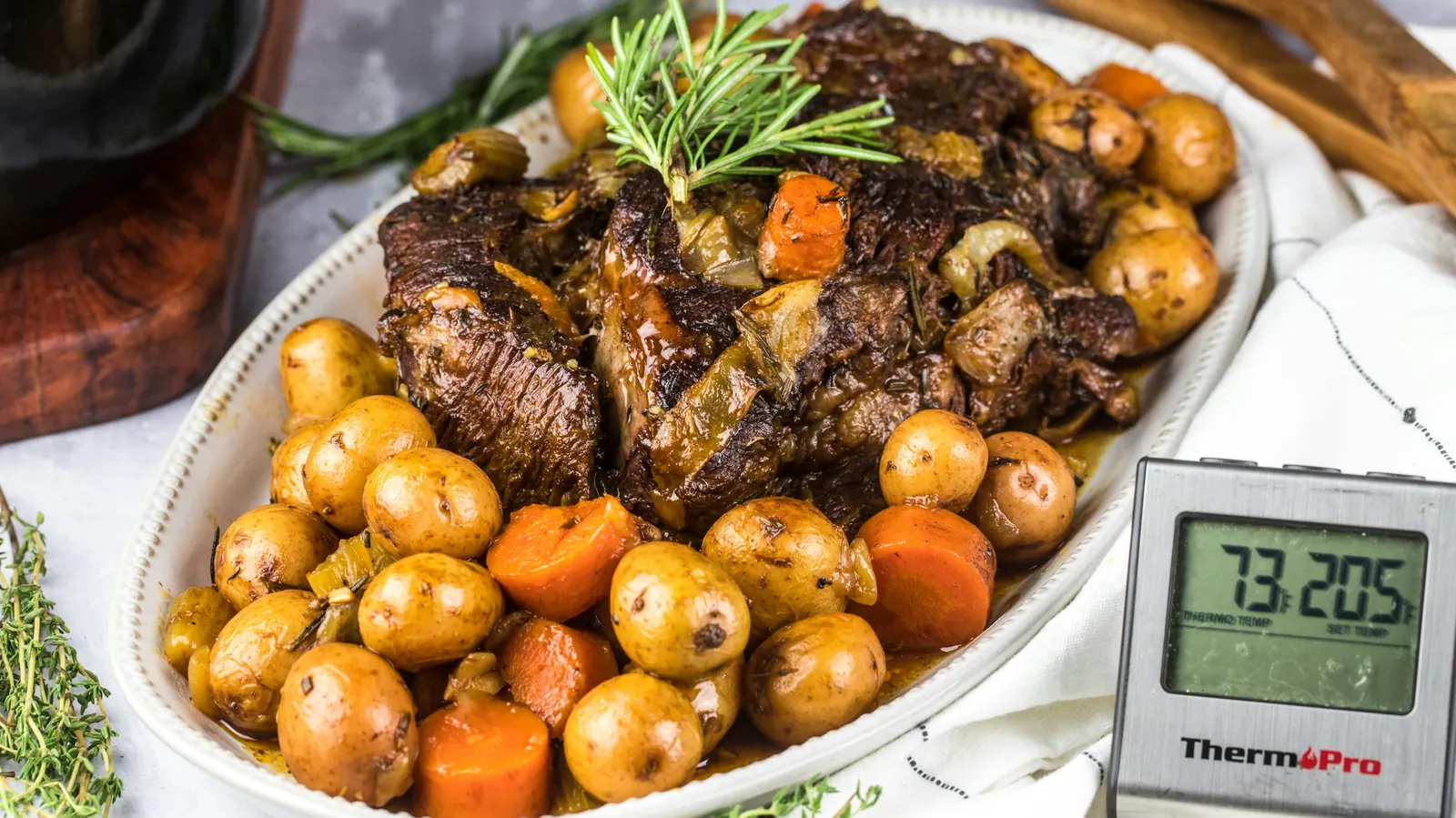
In a restaurant kitchen a thermometer is not a gadget, it is how you know. The cook working the line checks the thickest piece of pollo asado before it goes on the plate, the pork shoulder for carnitas gets a probe before it comes out of the oven, and a tray of reheated barbacoa gets checked too. Colour and touch help, but only a thermometer tells you the centre of the meat has reached a safe temperature.
This guide covers the two kinds of meat thermometer most home kitchens need: an instant-read you push into the meat for a quick check, and a leave-in probe that stays in a roast and alarms when it is done. We name seven worth buying, explain how to choose and calibrate one, and give the safe minimum temperatures from USDA FSIS.
Julia’s earns a commission on purchases made through links on this page, at no cost to you. Recommendations are based on what a restaurant kitchen looks for, product specifications and verified buyer reports.
Quick verdict: which meat thermometer to buy
The best meat thermometer for most kitchens is the ThermoWorks Thermapen ONE: ThermoWorks states a one-second read, ±0.5°F accuracy across cooking temperatures and an IP67 waterproof body, with a five-year warranty. On a budget, the ThermoWorks ThermoPop 2 reads in 2–3 seconds and is also rated IP67. For oven roasts, add a leave-in probe with an alarm such as the TempPro TempTrack CORE TP-16.
Five meat thermometers compared
Our five standout picks, one for each kind of cook. All seven thermometers are reviewed in full below.
| Thermometer | Best for | Type and read time (stated) | Water resistance | Buy on Amazon |
|---|---|---|---|---|

ThermoWorks Thermapen ONEBest overall
|
Most cooks who check meat often | Instant-read, 1 second | IP67 waterproof | View on Amazon |
ThermoWorks ThermoPop 2Best value
|
A first thermometer on a budget | Instant-read, 2–3 seconds | IP67 waterproof | View on Amazon |

CDN ProAccurate Thin Tip ThermometerBest pocket probe
|
A long thin stem you can calibrate | Instant-read, 6 seconds | IPX6 | View on Amazon |
TempPro (ThermoPro) TempTrack CORE TP-16Best budget leave-in
|
Oven roasts with an alarm | Leave-in probe, read time not stated | Not stated | View on Amazon |

Taylor 3-inch Leave-In Dial Meat ThermometerBest no-battery pick
|
Roasts with no batteries | Leave-in dial, read time not stated | Hand wash only | View on Amazon |
Product images from Amazon. Read times and water ratings are as the maker or its listing states them; “Not stated” means we could not find a figure.
Our picks for the best meat thermometer
The list starts with instant-read thermometers, fastest first, then moves to leave-in probes that stay in the meat while it cooks. If most of your cooking happens over charcoal, our best grill thermometer guide covers instant-reads chosen for the grill (the Thermapen ONE appears there too, because it is the category leader), and the wireless grill thermometer guide covers app-connected probes such as MEATER. We have not repeated those here.
1. ThermoWorks Thermapen ONE – One-Second Reads, Five-Year Warranty
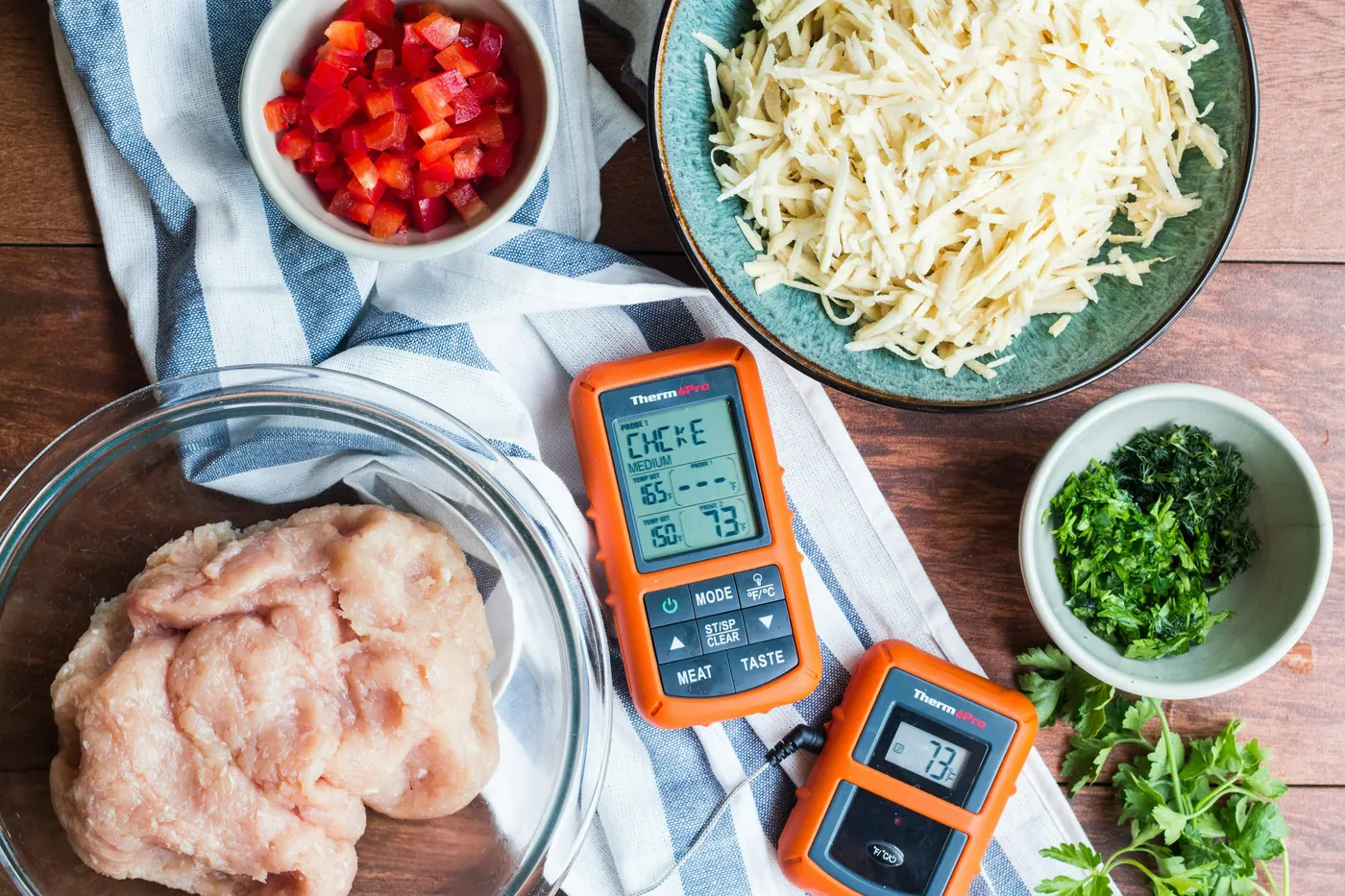
The Thermapen ONE is the instant-read thermometer the others get measured against. ThermoWorks states a one-second response, accuracy of ±0.5°F from -4 to 248°F (the band that covers every meat temperature a cook cares about), and a range of -58 to 572°F, so the same tool checks a pork loin, a pot of frying oil and a batch of candy.
The design is the familiar folding probe: a 4.3-inch probe swings out of the body, the thermometer wakes when you pick it up, and the display turns itself to face you in either hand. That matters when you are reaching into an oven to check the thickest part of a chicken thigh, or leaning over a hotel pan of pollo asado and need a number before the next order goes out.
ThermoWorks rates the body IP67 waterproof, includes a NIST-traceable calibration certificate with every unit, and publishes calibration trim instructions on its product page. It runs on one AAA battery for up to 2,000 hours and carries a five-year warranty. ThermoWorks marks this colour as a closeout on its own site, so the colours on offer may change; the thermometer itself is the same.
Why we like it
- ThermoWorks states a one-second response time
- ±0.5°F accuracy from -4 to 248°F, with a NIST-traceable certificate
- IP67 waterproof body, according to ThermoWorks
- Five-year warranty, the longest in this guide
Key specifications
| Model | Thermapen ONE (THS-AMN5-646) |
|---|---|
| Type | Instant-read, folding thermocouple probe (4.3 in) |
| Read time (stated) | 1 second (ThermoWorks) |
| Range | -58 to 572°F |
| Accuracy (stated) | ±0.5°F from -4 to 248°F; ±1.8°F outside that band |
| Water resistance | IP67 waterproof |
| Battery | 1 × AAA, up to 2,000 hours |
| Calibration | NIST-traceable certificate; ThermoWorks publishes trim instructions |
Why we recommend it
Buy it if you cook meat several times a week and want one thermometer that is fast, rated waterproof and backed for years. It is the one to reach for when a few seconds with the oven door open makes a difference.
Skip it if you only check a turkey once or twice a year; the ThermoPop 2 below covers that for far less.
Pros and cons
Pros
- Fastest stated read time here
- Tightest stated accuracy band
- Auto-rotating, motion-activated display
- Long warranty
Cons
- Costs several times more than the budget picks
- No alarm or leave-in mode
- Colour choices are being cleared out by ThermoWorks
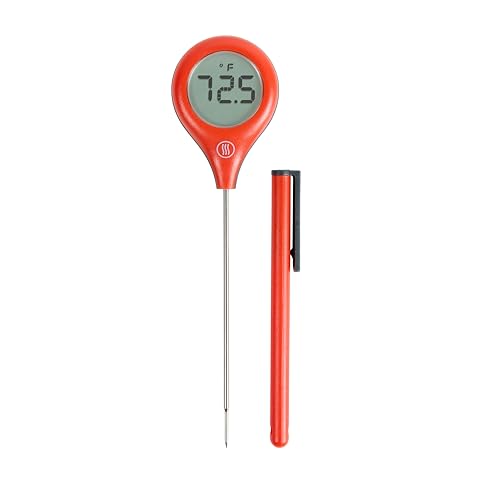
2. ThermoWorks ThermoPop 2 – ThermoWorks Accuracy in a Pocket Size
The ThermoPop 2 is ThermoWorks’ everyday pen-style thermometer: a fixed 4.5-inch probe on a slim body with a round, backlit display that rotates to stay upright. ThermoWorks states a 2–3 second response with the 4.5-inch probe and ±1°F accuracy from 14 to 208°F, which covers poultry, pork, beef and most reheating checks.
It is rated IP67 waterproof, so it can be rinsed under the tap after it has been in raw chicken, and each unit ships with a NIST-traceable calibration certificate. ThermoWorks lists one CR2032 coin cell and up to 4,000 hours of use, a ten-minute auto-off and a two-year warranty.
In a kitchen it is the thermometer that lives in an apron pocket or a drawer by the stove. It is slower than the Thermapen and its tighter accuracy band stops at 208°F (it is ±4°F from 392 to 572°F), but for checking meat it reads well inside the temperatures that matter.
Why we like it
- 2–3 second response with the 4.5-inch probe, per ThermoWorks
- ±1°F from 14 to 208°F
- IP67 waterproof with a NIST-traceable certificate
- Up to 4,000 hours on one coin cell
Key specifications
| Model | ThermoPop 2 (AZ-3125-CY) |
|---|---|
| Type | Instant-read, fixed pen-style probe (4.5 in) |
| Read time (stated) | 2–3 seconds (ThermoWorks) |
| Range | -58 to 572°F |
| Accuracy (stated) | ±1°F from 14 to 208°F; wider outside that band |
| Water resistance | IP67 waterproof |
| Battery | 1 × CR2032, up to 4,000 hours |
| Calibration | NIST-traceable certificate; user adjustment not stated |
Why we recommend it
This is the thermometer most home cooks should buy first. It is quick enough, rated waterproof and comes from the same maker as the Thermapen, with a two-year warranty.
Skip it if you want a probe that folds away, or a reading inside one second.
Pros and cons
Pros
- Low cost for a ThermoWorks thermometer
- Waterproof rating
- Long stated battery life
- Rotating backlit display
Cons
- Probe does not fold
- Slower than the Thermapen ONE
- Two-year warranty rather than five
3. Lavatools Javelin – Small Folding Probe, Magnetic Back

The original Lavatools Javelin is a compact folding thermometer with a 2.75-inch probe, a 1.5-inch display (as Lavatools states it) and magnets built into the back so it sticks to a range hood or fridge. It is smaller than the Javelin PRO that appears on our grill page, and it suits a kitchen drawer or a knife roll.
Lavatools lists a range of -40 to 482°F and accuracy of ±0.9°F from -4 to 302°F. Read speed is where the sources differ: the Amazon listing says 3–4 seconds, while Lavatools’ own page says a reading typically takes 4–5 seconds. We use the maker’s figure. It is rated IP65, which means splash resistant rather than waterproof, so rinse the probe and wipe the body rather than holding it under running water.
Lavatools says the Javelin does not need calibration, runs for 4,000-plus hours on one CR2032 cell and carries a limited three-year warranty. The short probe is fine for chicken pieces, chops and thinner cuts; for a deep pork shoulder you will want a longer probe.
Why we like it
- Folding 2.75-inch probe and magnetic back for storage
- ±0.9°F accuracy from -4 to 302°F, per Lavatools
- 4,000-plus hours on one coin cell
- Limited three-year warranty
Key specifications
| Model | Javelin PT12 |
|---|---|
| Type | Instant-read, folding probe (2.75 in) |
| Read time (stated) | 4–5 seconds (Lavatools); listing says 3–4 |
| Range | -40 to 482°F |
| Accuracy (stated) | ±0.9°F from -4 to 302°F |
| Water resistance | IP65 splash resistant |
| Battery | 1 × CR2032, 4,000+ hours |
| Calibration | Lavatools says calibration is not needed |
Why we recommend it
It suits cooks who want a folding thermometer that takes up very little space and lives on the side of the fridge. It is a good second thermometer for a busy kitchen, too.
Skip it if you need to reach the centre of large roasts or want a fully waterproof body.
Pros and cons
Pros
- Very compact folding design
- Magnetic back
- Good stated accuracy
- Long battery life
Cons
- Short probe for large roasts
- Splash resistant (IP65), not waterproof
- Slower stated read than the ThermoWorks models
4. CDN ProAccurate Thin Tip Thermometer – Long Stem with Field Calibration
CDN makes thermometers for commercial kitchens, and the DTQ450X is its pocket probe with a long, thin stem. CDN’s spec sheet lists a 4.75-inch stainless steel stem that narrows to a 1.5 mm tip, a range of -40 to 450°F, accuracy of ±2°F and a six-second response. It is NSF certified and comes with a sheath and pocket clip, the format you see clipped to a line cook’s sleeve.
Its practical strength is calibration. CDN lists one-button field calibration, so you can check it in ice water and correct it yourself, which is the kind of routine check a busy kitchen builds into its week. The housing is rated IPX6, protected against powerful water jets, and the display has hold, max and auto-off functions.
It is slower than the folding thermometers above and the display is small (CDN lists 0.875 by 0.5 inches). On warranty the sources disagree: CDN’s spec sheet says a five-year limited warranty, while the Amazon listing’s warranty field says two years, so check before you rely on it.
Why we like it
- One-button field calibration, per CDN
- Long 4.75-inch stem with a 1.5 mm thin tip
- IPX6 water rating and NSF certification
- Hold and max functions
Key specifications
| Model | DTQ450X |
|---|---|
| Type | Instant-read pocket probe (4.75 in stem) |
| Read time (stated) | 6 seconds (CDN) |
| Range | -40 to 450°F |
| Accuracy (stated) | ±2°F |
| Water resistance | IPX6 |
| Battery | 1 × LR44 button cell |
| Calibration | One-button field calibration |
Why we recommend it
It suits cooks who want a long, thin, pocketable probe they can calibrate themselves, and anyone who likes the commercial-kitchen format of a sleeve and clip.
Skip it if speed matters most; six seconds is the slowest stated read among the digital instant-reads here.
Pros and cons
Pros
- User calibration in one button
- Long, thin stem reaches the centre of thick cuts
- Commercial-style sheath and clip
- NSF certified
Cons
- Slow stated response
- Small display
- Warranty length differs between sources
Instant-read or leave-in: which one you need
An instant-read thermometer is a spot check. You open the oven or lift the lid, push the probe into the thickest part, read the number and pull it out. It is the tool for chicken pieces, chops, steaks, burgers and anything you cook quickly. A leave-in probe goes into a roast at the start and stays there, sending the temperature to a display outside the oven so you are not opening the door every twenty minutes.
Most kitchens that cook a lot of meat end up with both. The leave-in tells you when a pork shoulder is getting close; the instant-read confirms it in a second spot before you pull it, because the centre of a large cut is rarely the same temperature everywhere.
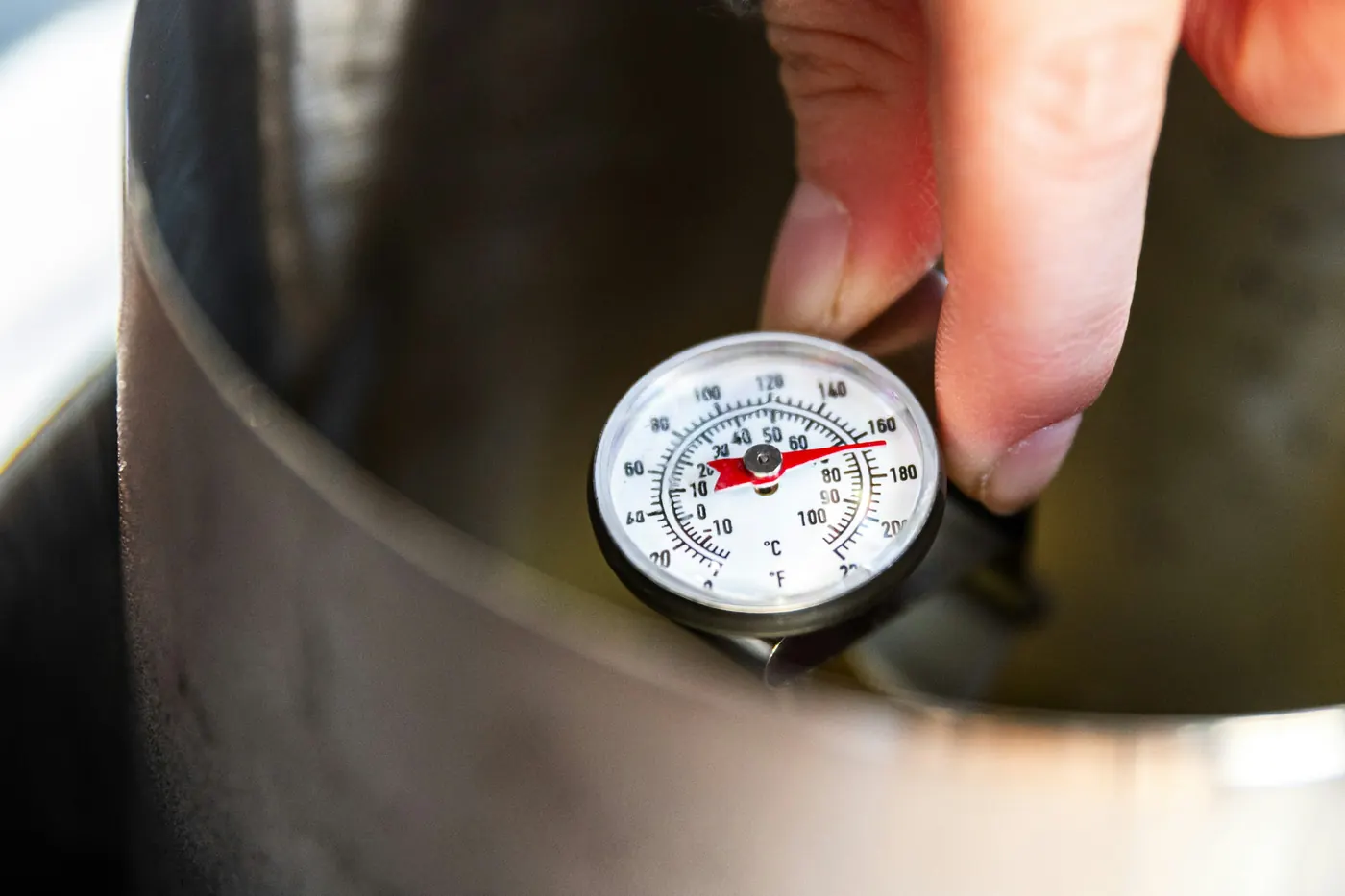
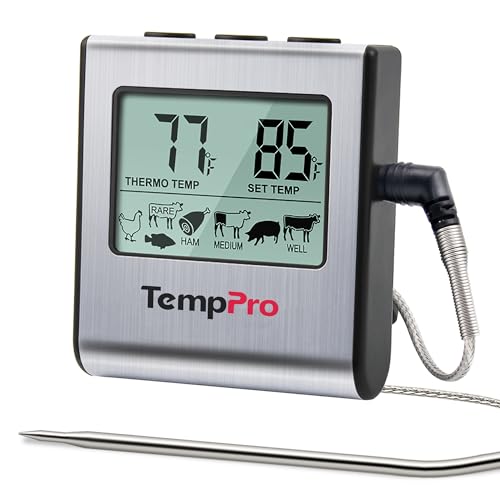
5. TempPro (ThermoPro) TempTrack CORE TP-16 – Leave-In Probe with Timer and Alarm
A leave-in probe thermometer answers a different question from an instant-read: instead of checking at the end, it watches the temperature the whole time the meat cooks and beeps when it reaches the number you set. The TP-16 from TempPro (the new name for ThermoPro) is the long-running budget version: a 6.5-inch stainless steel probe on a 40-inch stainless mesh cable that runs out of the oven door to a base with a large display.
According to the listing, the probe and cable withstand 716°F, the range is 32 to 572°F with 1-degree resolution and ±1.8°F accuracy, and the base includes a countdown timer of up to 99 hours 59 minutes. It comes with USDA-based preset temperatures that you can change, a magnetic back, a hanging hole and a tabletop stand.
For a pork shoulder going low and slow for carnitas, or a whole chicken roasting while you prep everything else, this is the tool that lets you keep the oven door shut. Neither TempPro’s page nor the listing gives a water rating, battery type or calibration method, so keep the base dry and wipe the probe and cable rather than soaking them.
Why we like it
- 40-inch stainless mesh cable and 6.5-inch probe, per TempPro
- Probe and cable rated to 716°F
- Alarm plus a timer of up to 99 hours 59 minutes
- Adjustable USDA-based presets
Key specifications
| Model | TempTrack CORE TP-16 |
|---|---|
| Type | Leave-in probe, wired base with timer |
| Read time (stated) | Not stated |
| Range | 32 to 572°F |
| Accuracy (stated) | ±1.8°F |
| Water resistance | Not stated |
| Battery | Not stated |
| Calibration | Not stated |
Why we recommend it
Buy it for oven roasts and long braises where you want an alarm rather than repeated checks. It also pairs well with an instant-read for spot-checking a second place in the meat.
Skip it if you want a waterproof tool or a wireless one; for wireless, see our wireless grill thermometer guide.
Pros and cons
Pros
- Low-cost way to monitor a roast without opening the oven
- Long cable and probe
- Built-in timer
- Several mounting options
Cons
- Single probe only
- No stated water rating
- Battery and calibration details not stated
6. Polder Classic Digital Thermometer and Timer – Simple Leave-In Probe, Flip-Top Display

Polder’s classic probe thermometer does one job: a step-down stainless steel probe goes into the roast, a 40-inch high-heat silicone cord runs out of the oven, and a counter unit shows the temperature and sounds an alert when it reaches your set point.
The listing gives a range of 32 to 392°F, readings in Fahrenheit or Celsius, a 24-hour countdown timer that also works on its own, a memory that recalls the last set temperature (useful when you roast the same cut repeatedly), and a flip-top display that stands on the counter or sticks to the fridge with magnets. It runs on one AAA battery, which is included.
Polder describes a sealed probe handle that helps prevent moisture damage, but it gives no water rating and no accuracy or calibration figure. Treat it like any corded probe: do not submerge the base, and wash the probe by hand.
Why we like it
- Step-down probe tip leaves a small hole, per Polder
- 40-inch high-heat silicone cord
- Remembers the last set temperature
- 24-hour timer that also works alone
Key specifications
| Model | THM-362-86 |
|---|---|
| Type | Leave-in probe, corded counter unit with timer |
| Read time (stated) | Not stated |
| Range | 32 to 392°F |
| Accuracy (stated) | Not stated |
| Water resistance | Not rated (sealed probe handle) |
| Battery | 1 × AAA (included) |
| Calibration | Not stated |
Why we recommend it
It suits cooks who roast the same few things and want a plain set-and-wait alarm with a timer built in, without presets to scroll through.
Skip it if you want a stated accuracy figure; Polder does not publish one on the listing.
Pros and cons
Pros
- Simple to set
- Silicone cord is flexible
- Memory for repeat cooks
- Magnetic, flip-top base
Cons
- Top of range is 392°F, lower than the TP-16
- No stated accuracy
- No water rating
7. Taylor 3-inch Leave-In Dial Meat Thermometer – No Batteries, Oven-Safe Dial
The Taylor 5939N is the old-school option: a stainless steel stem with a 3-inch dial and glass lens that stays in the roast for the whole cook. Taylor says it can stay in the oven or on the grill, and prints a roasting temperature guide on the dial. There is nothing to charge and no electronics to fail.
The sources differ on two points. Taylor gives a scale of 120 to 200°F, while the Amazon listing says 120 to 212°F; and the listing calls it dishwasher safe, while Taylor’s own page says hand wash only and do not immerse. We go with Taylor: wash it by hand. Neither gives a read time or accuracy figure.
Dial thermometers react slowly and need to sit deeper in the meat than a digital tip. USDA FSIS says bimetal dial thermometers usually need to be 2 to 2½ inches deep in the thickest part, so this suits roasts, a whole turkey breast or a pork shoulder, not a thin chop or a chicken thigh.
Why we like it
- No battery to run out mid-roast
- Oven-safe, according to Taylor
- 3-inch dial with printed temperature guide
- NSF certified, per Taylor
Key specifications
| Model | 5939N |
|---|---|
| Type | Leave-in bimetal dial (3-in dial) |
| Read time (stated) | Not stated |
| Range | 120 to 200°F (Taylor); listing says 120 to 212°F |
| Accuracy (stated) | Not stated |
| Water resistance | Hand wash only, do not immerse (Taylor) |
| Battery | None needed |
| Calibration | Not stated; check it in ice water (USDA FSIS) |
Why we recommend it
It suits cooks who roast large cuts occasionally and want a thermometer that never needs a battery and can stay in the oven.
Skip it for thin cuts and quick checks; a digital instant-read is faster and reads closer to the tip.
Pros and cons
Pros
- Works without power
- Can stay in the oven
- Inexpensive to replace
- Large dial
Cons
- Slow to respond
- Needs deep insertion, so not for thin cuts
- Range and care instructions differ between sources
Safe minimum temperatures, from USDA FSIS
A thermometer only helps if you know the number to look for. These are the safe minimum internal temperatures from the USDA Food Safety and Inspection Service’s safe minimum internal temperature chart:
| Food | Safe minimum internal temperature (USDA FSIS) |
|---|---|
| Beef, pork, veal and lamb steaks, chops and roasts | 145°F, then rest at least 3 minutes |
| Ground meats (beef, pork, veal, lamb) | 160°F |
| All poultry, including ground poultry and stuffing | 165°F |
These are safety minimums, not doneness targets. Carnitas, for example, are cooked well past the pork minimum because the cook wants the shoulder tender enough to pull apart; the thermometer confirms the floor, and a fork tells you when it is tender. For leftovers, our guide to reheating Mexican leftovers covers the method.
How to choose a meat thermometer
Read speed
Makers state read times from one second to six seconds for the digital instant-reads here. Speed matters most when the oven door or grill lid is open and heat is escaping. Read times are the makers’ own figures; treat them as a rough comparison between models, not a guarantee.
Stated accuracy, and where it applies
Look at the accuracy figure and the band it covers. ThermoWorks, for example, states ±0.5°F for the Thermapen ONE only from -4 to 248°F and a wider figure above that. For meat, the band from about 120 to 212°F is what counts. If a maker does not state accuracy, as with the Polder and Taylor here, you cannot compare it.
Water resistance
A meat thermometer gets raw juices on it, so it has to be washed. An IP67 rating (Thermapen ONE, ThermoPop 2) means the body is rated to survive brief immersion; IP65 and IPX6 mean protection against splashes and water jets, not submerging. Leave-in bases are usually not rated at all, so keep them dry.
Probe length and tip
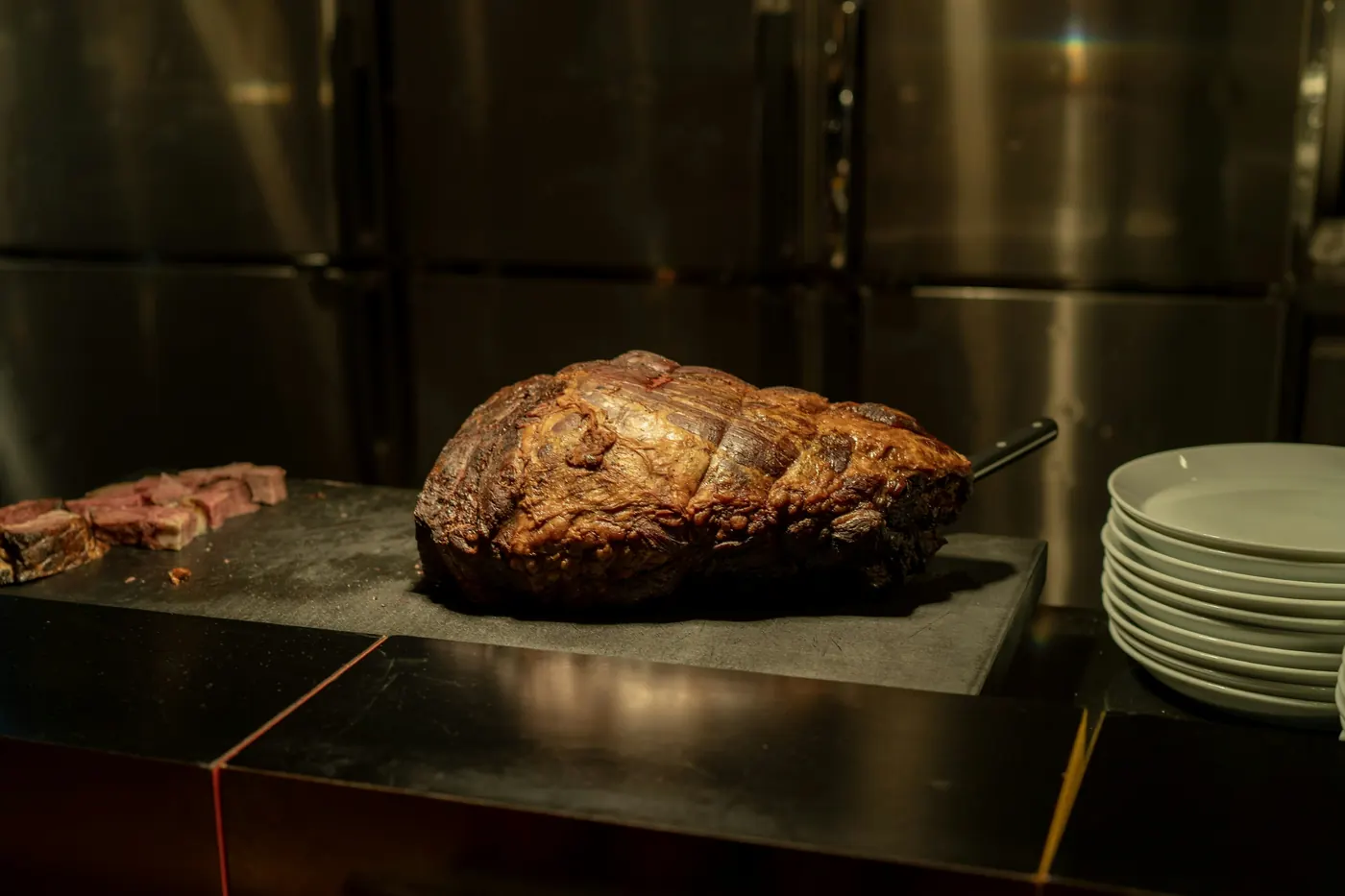
A longer probe reaches the centre of a big roast without your hand over the heat; a thin, stepped-down tip gives a reading closer to the point and leaves a smaller hole. Short probes like the Javelin’s 2.75 inches are fine for chicken and chops.
Calibration
Every thermometer should be checkable. USDA FSIS explains on its food thermometers page how to check one in ice water, which should read 32°F, or in boiling water, 212°F at sea level, and notes that many dial thermometers have a calibration nut under the dial. Some digital models, like the CDN, let you correct the reading with a button; ThermoWorks publishes trim instructions for the Thermapen ONE. If yours cannot be adjusted, FSIS says to take the difference into account or replace it.
Power
Coin cells and AAA batteries both last thousands of hours in these instant-reads, according to their makers. A dial thermometer needs no power at all, which is its main argument.
Where to put the probe
USDA FSIS says to place the thermometer in the thickest part of the food, away from bone, fat and gristle. For thin foods such as a burger or a chicken breast, FSIS says to insert the probe from the side so the tip reaches the centre, and to check irregular pieces in more than one place. For a whole chicken, that means more than one reading. Wash the probe in hot, soapy water after each use, especially after it has been in raw meat.
One thing an infrared thermometer cannot do is read the inside of meat: it measures surfaces. That makes it the right tool for a comal, a griddle or a pizza stone (see our guide to the best infrared thermometer for pizza ovens) and the wrong one for doneness.
How we chose these seven thermometers
We started from what a working kitchen needs from a meat thermometer: a reading you can trust at the centre of the meat, a body you can wash, and a way to check that it is still accurate. We looked at instant-read and leave-in models from ThermoWorks, Lavatools, CDN, TempPro (ThermoPro), Polder, Taylor, OXO and others, kept only those showing as in stock on Amazon when we checked, and took specifications from the makers’ own pages or spec sheets where we could read them, otherwise from the Amazon listing. Where sources disagree, the review says so. Safe temperatures and calibration advice come from USDA FSIS.
We left out OXO’s thermocouple model, which was not shipping right away, and OXO’s Chef’s Precision digital model, whose read speed and accuracy we could not confirm. We also skipped look-alike thermometers from sellers we could not identify, and wireless app thermometers, which have their own guide. We have not used these thermometers for this guide, and we did not rely on outside reviews such as America’s Test Kitchen, Serious Eats, Wirecutter or Consumer Reports, even where a listing quotes them.
Meat thermometer questions, answered
What is the best meat thermometer brand?
ThermoWorks is the brand many professional cooks know, and it publishes full specification tables, accuracy bands and calibration documents. CDN and Taylor make food-service thermometers, and Lavatools, TempPro and Polder make well-specified home models. A brand that states its accuracy, water rating and warranty is a better bet than one that does not.
What is the best meat thermometer for everyday home use?
An instant-read. The ThermoPop 2 is the everyday pick for most kitchens; the Thermapen ONE if you cook meat often and want the fastest stated read.
What is the best meat thermometer for the money?
The ThermoWorks ThermoPop 2. It is rated IP67, ships with a NIST-traceable certificate and states ±1°F accuracy in the meat range, at a fraction of the Thermapen’s cost.
Which meat thermometer does America’s Test Kitchen recommend?
We did not read or rely on America’s Test Kitchen, Consumer Reports, Good Housekeeping or other outside reviews for this guide, so we cannot speak for their picks. Our choices rest on maker specifications, listings and USDA guidance.
Can I leave an instant-read thermometer in the oven?
No. Instant-reads have plastic bodies and electronics that are not made to stay in the oven. Use a leave-in probe with a cable, like the TP-16 or Polder, or an oven-safe dial like the Taylor.
How often should I check calibration?
Check it whenever you doubt a reading, after a drop, and as a habit every so often. The ice-water check USDA FSIS describes takes a couple of minutes.
The thermometer to start with
Buy the Thermapen ONE if you cook meat most days, the ThermoPop 2 if you want the best value, and add a leave-in probe like the TP-16 when you start roasting and braising big cuts. Whatever you choose, check it in ice water now and then, and use the USDA FSIS temperatures as your floor.
On a budget? See our guide to the best cheap meat thermometers.
More specific guides: the best instant-read meat thermometers and the best wireless meat thermometers.
Related guide: Best turkey baster.
Related guide: Best butchers twine.
Related guide: Instant read vs probe thermometer.
A thermometer belongs with the other basics in our guide to Mexican cooking tools. And if you would rather someone else watched the carnitas tonight, see the menu or call to order.