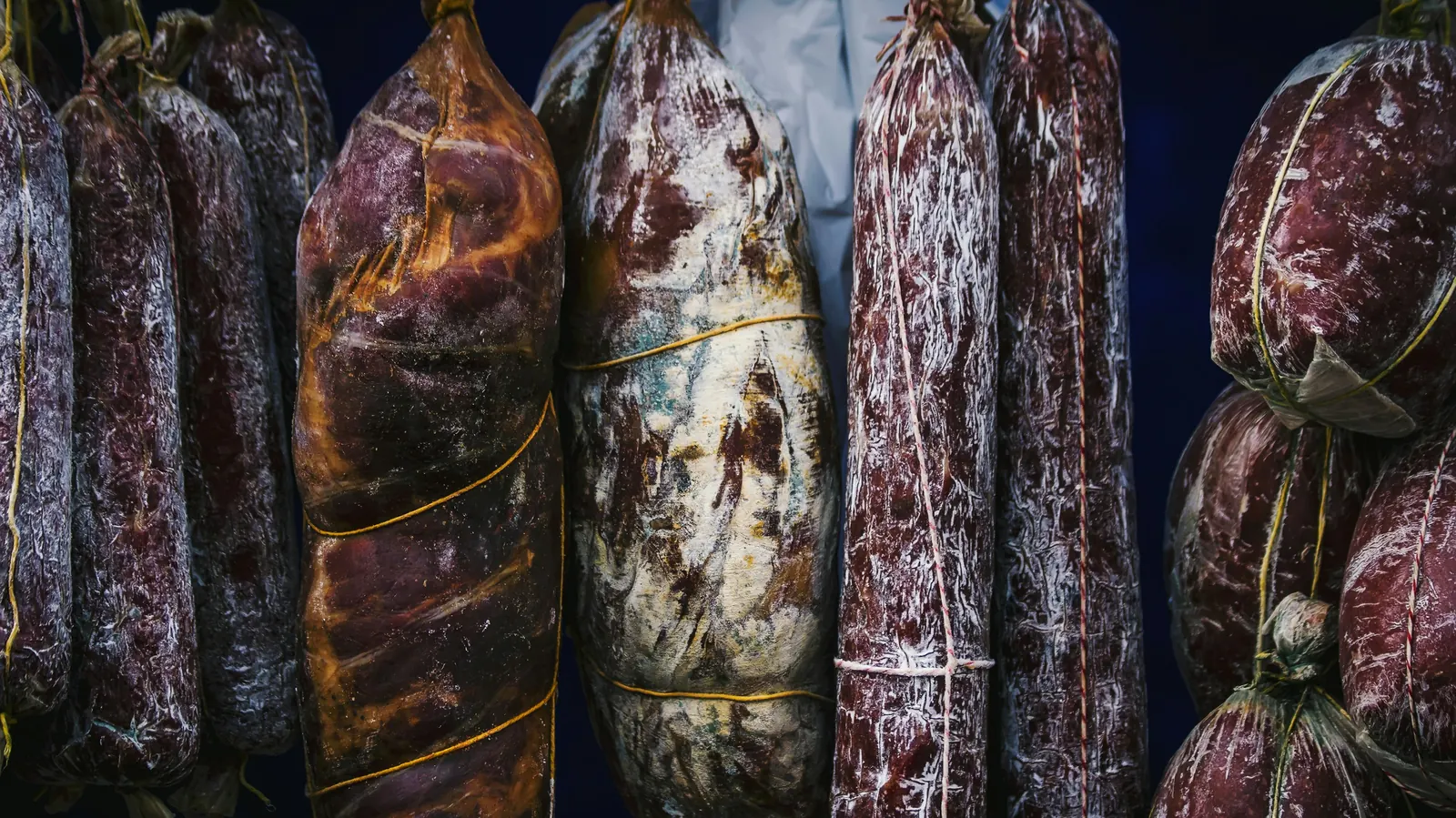
Charcuterie is the old craft of salting, curing, smoking and cooking meat so it keeps and tastes better. It is also a home project where a mistake can make someone seriously ill. So the book you learn from has to do more than give you a good recipe.
This guide covers eight books, from a first fresh sausage to Italian dry curing. The title most people ask for, Ruhlman and Polcyn’s Charcuterie, was not in stock as a new copy when we checked, so it is not a pick here. Note too that this page is about making charcuterie. If you want to arrange it on a board, that is a different book and a different guide.
Julia’s earns a commission on purchases made through links on this page, at no cost to you. Recommendations are based on what a restaurant kitchen looks for in a book, publisher and listing information, and the published reviews we name. We have not cooked from these books ourselves.
Quick verdict: the best charcuterie book for your first and next projects
For most serious cooks, choose Salumi by Michael Ruhlman and Brian Polcyn, the in-stock companion to their Charcuterie, with a Publishers Weekly review. If you want a large process manual, choose the Marianskis’ Home Production of Quality Meats and Sausages. If you are brand new, start with fresh links in Easy Sausage Making.
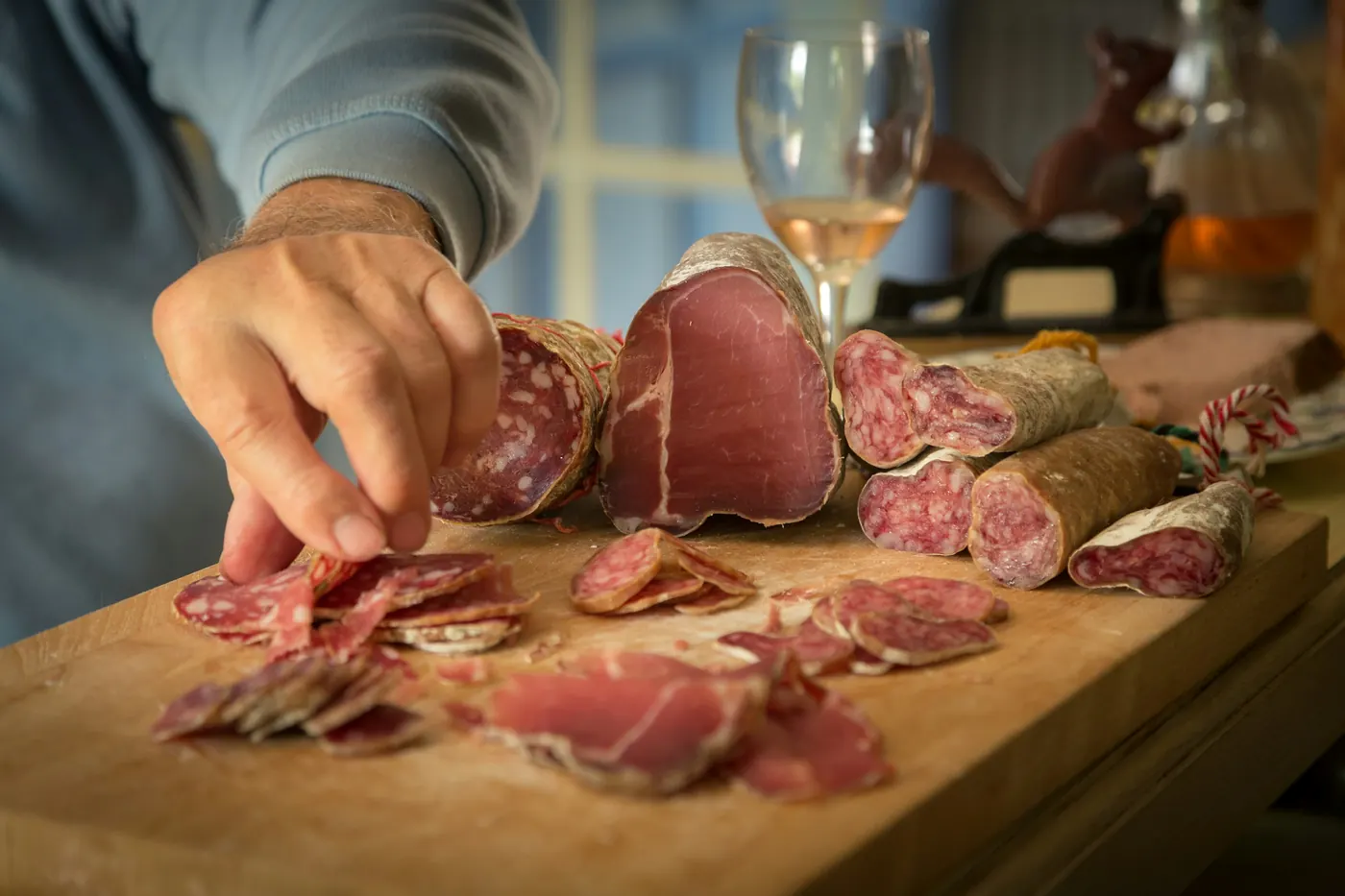
Five curing and sausage books side by side
Five of the eight, one for each kind of cook. All eight are described below.
| Book | Best for | Focus | Evidence | Buy on Amazon |
|---|---|---|---|---|

Salumi, Michael Ruhlman and Brian PolcynBest overall
|
Serious dry curing | Italian dry curing | Publishers Weekly | View on Amazon |
| A process manual | Meat and sausage process | Bookseller overview | View on Amazon | |

The River Cottage Curing and Smoking Handbook, Steven LambBest compact guide
|
A compact overview | Curing and smoking | Publisher description | View on Amazon |
| Cooked charcuterie | Pâté, confit, rillette | Publishers Weekly | View on Amazon | |

Easy Sausage Making, Will BudiamanBest first book
|
A first batch | Fresh sausage | Publisher description | View on Amazon |
Our picks for the best charcuterie book
1. Salumi, Michael Ruhlman and Brian Polcyn – The Craft of Italian Dry Curing
Publishers Weekly reviewed Salumi in 2012 as a follow-up to the authors’ “excellent” book Charcuterie. It reports coverage of whole-hog butchering, the roles of salt, mold and bacteria, eight core Italian cured cuts and nearly three dozen salami recipes, including a culatello made in a pig bladder.
We put it first for a practical reason. The authors’ earlier book, Charcuterie, is the title most people ask for, but it was not in stock as a new copy when we checked. Salumi is its in-stock companion from the same two authors and a major publisher, and it has a named review we could read. Be clear about what you are buying: this is a dry-curing book that asks for careful handling and controlled conditions, and it is not a first project.
Why we like it
- Named Publishers Weekly review
- Explains salt, mold and bacteria, per the review
- Eight core cuts and nearly three dozen salami recipes, per the review
Key specifications
| Author | Michael Ruhlman, Brian Polcyn |
|---|---|
| Publisher | W. W. Norton |
| Format | Hardcover |
| Published | 2012 |
| Pages | 288 |
| Skill level | Serious hobbyist (our reading of the review) |
| Focus | Italian dry curing |
Why we recommend it
It suits a committed cook who has a suitable curing space, or who plans to build one, and wants to understand the process.
Skip it if you are starting out with fresh sausage. Easy Sausage Making is a far gentler first step.
Pros and cons
Pros
- Strong authors and publisher
- Focused subject
- Reviewed by name
Cons
- Whole-hog and dry-curing projects are demanding
- Not the authors’ general Charcuterie, which was out of stock
2. Home Production of Quality Meats and Sausages, Stanley and Adam Marianski – A Large One-Volume Manual

The overview says the authors saw a need for a comprehensive one-volume reference on making meats and sausages at home. It sets the book against cookbooks that give recipes without explaining the process, and against professional texts that are technical and costly. The listing shows 708 pages.
It is aimed at serious hobbyists who want to understand the process well enough to experiment. Note that Bookmagic is a small press and not a large trade house, so we rate it as a specialist reference and not as a mainstream title. We read no trade review, and the forum praise our search surfaced could not be opened, so we do not rely on it.
Why we like it
- 708 pages, per the listing
- Process explained as well as recipes, per the overview
- Written for serious hobbyists, per the overview
Key specifications
| Author | Stanley Marianski, Adam Marianski |
|---|---|
| Publisher | Bookmagic |
| Format | Paperback |
| Published | 2012 |
| Pages | 708 |
| Skill level | Serious hobbyist (overview) |
| Focus | Meat and sausage process |
Why we recommend it
It suits a home sausage maker who wants one thick manual to learn from and return to.
Skip it if you want beautiful photographs or a quick read. By its own description this is a working reference.
Pros and cons
Pros
- Largest book here
- Process focus
- Paperback
Cons
- Small press, no trade review read
- Length may overwhelm a beginner
3. The River Cottage Curing and Smoking Handbook, Steven Lamb – Meat, Fish, Cheese and Vegetables
The publisher calls this a thoroughly practical guide to curing and smoking meat, fish, cheese and vegetables at home, in an accessible, compact form. It covers sourcing, butchering, smoking and curing across whole hog, cow, chicken, fish and vegetables. Steven Lamb wrote it, and Hugh Fearnley-Whittingstall wrote the introduction.
This is the book for someone who likes the idea of curing but does not want a large manual. River Cottage is a British series, so check that its advice on ingredients and cure products lines up with what you can buy in the US. We read no review, so the pick rests on the publisher.
Why we like it
- Accessible and compact, per the publisher
- Covers more than pork
- Established series and publisher
Key specifications
| Author | Steven Lamb |
|---|---|
| Publisher | Ten Speed Press |
| Format | Hardcover |
| Published | 2015 |
| Pages | 256 |
| Skill level | Accessible (publisher) |
| Focus | Curing and smoking |
Why we recommend it
It suits a curious home cook who wants a broad, readable start in curing and smoking.
Skip it if you want deep Italian salumi technique. Salumi goes much further there.
Pros and cons
Pros
- Compact
- Wide range of foods
- Trade publisher
Cons
- British series, so cross-check products
- No named review read
4. Pâté, Confit, Rillette, Brian Polcyn and Michael Ruhlman – The Cooked Side of Charcuterie

Publishers Weekly reviewed this in late 2018 and calls it a deep dive into charcuterie from Polcyn and Ruhlman. The review describes the recipes as demanding but well explained, and recommends the book to meat-loving cooks who want a challenge.
The subject matters here. Pâtés, confits and rillettes do not need a curing chamber, so this is a good way into the craft for a cook with only a home kitchen. The lead offer moved between a third-party seller and Amazon during our checks, so look at the seller and the arrival date before you buy.
Why we like it
- Named Publishers Weekly review
- Demanding but well explained, per the review
- Same author pair as Salumi
Key specifications
| Author | Brian Polcyn, Michael Ruhlman |
|---|---|
| Publisher | W. W. Norton |
| Format | Hardcover |
| Published | 2019 |
| Pages | 256 |
| Skill level | Ambitious cooks (review) |
| Focus | Pâté, confit, rillette |
Why we recommend it
It suits an ambitious cook who wants the cooked side of charcuterie more than long drying projects.
Skip it if you want quick recipes. Publishers Weekly is clear that these are a challenge.
Pros and cons
Pros
- Trade review read
- A clear single subject
- Major publisher
Cons
- Demanding recipes, per the review
- Lead offer moved between sellers during our checks
5. The Complete Art and Science of Sausage Making, Tonia Reinhard and others – Technique and Science Together

The title promises 150 homemade recipes, from chorizo to hot dogs. The publisher says it covers techniques for home kitchens and the science behind the process, with step-by-step instruction on tools and equipment. Lead author Tonia Reinhard is listed as MS, RD, FAND, and she wrote it with Brendan Reinhard and Brent Mitchell.
The word “healthy” in the subtitle is the publisher’s, and we make no health claim for homemade sausage. What we like is the pairing of science and technique, which is how a cook learns to fix a batch that went wrong. We read no review and could see only part of the overview.
Why we like it
- 150 recipes, per the title
- Science explained, per the publisher
- Step-by-step tools and equipment, per the publisher
Key specifications
| Author | Tonia Reinhard, Brendan Reinhard, Brent Mitchell |
|---|---|
| Publisher | Robert Rose |
| Format | Paperback |
| Published | 2016 |
| Pages | 272 |
| Skill level | Home cooks (publisher) |
| Focus | Sausage making |
Why we recommend it
It suits a home cook who wants to know why a sausage binds or breaks and likes a wide recipe range.
Skip it if you only care about whole-muscle curing. This book is about sausage.
Pros and cons
Pros
- Wide recipe range
- Science focus
- Paperback
Cons
- Rests on the publisher and listing
- Health language in the subtitle is marketing to us, not evidence
6. Charcuterie, FERRANDI Paris – Pâtés, Terrines and Savory Pies

FERRANDI Paris is a French culinary school, and the publisher presents this as a complete course in charcuterie. It lists 70 French recipes with step-by-step instructions, covering terrines, pâtés and savory pies as well as doughs, sausages and spreads with and without meat.
This one is about classic French preparations, many of them cooked, so like Pâté, Confit, Rillette it can work in a home kitchen. Its lead offer came from a third-party seller named BuyWorldwide when we checked, so review the seller and the arrival date. We read no review.
Why we like it
- 70 recipes, per the publisher
- Step-by-step instruction
- School-written course
Key specifications
| Author | FERRANDI Paris |
|---|---|
| Publisher | Flammarion |
| Format | Hardcover |
| Published | 2023 |
| Pages | 288 |
| Skill level | Serious home cook (our reading) |
| Focus | French charcuterie |
Why we recommend it
It suits a cook who likes structured instruction and wants French classics in particular.
Skip it if you want American smoking and curing, which this is not about.
Pros and cons
Pros
- Structured like a course
- Clear classic focus
- Established publisher
Cons
- Third-party seller when we checked
- No named review read
7. The Complete Guide to Smoking and Salt Curing, Monte Burch – Meat, Fish and Game at Home
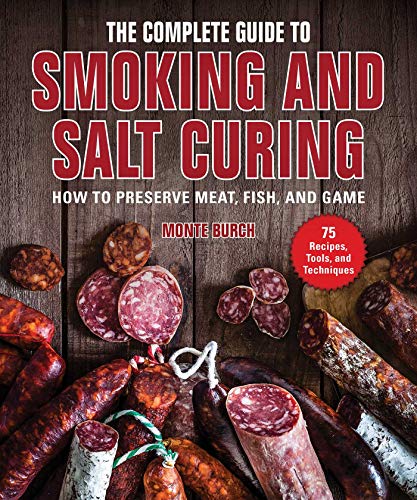
The publisher describes a practical handbook for making smoked and cured products at home, from store-bought meats to fresh fish and game. It is aimed at beginners and has full-color photographs. Monte Burch is described as an award-winning outdoor writer with more than forty years of experience smoking foods.
This has a very different feel from the Italian and French books above. It comes from an outdoors background, so it is the natural choice if your meat comes from a hunt or your fish from a trip. We read no review, so this pick rests on the publisher.
Why we like it
- Beginner focus, per the publisher
- Fish and game covered
- Full-color photographs, per the publisher
Key specifications
| Author | Monte Burch |
|---|---|
| Publisher | Skyhorse |
| Format | Paperback |
| Published | 2019 |
| Pages | 256 |
| Skill level | Beginner (publisher) |
| Focus | Smoking and salt curing |
Why we recommend it
It suits a hunter, an angler or a backyard cook who wants a plain handbook.
Skip it if you want refined charcuterie in the European style. Salumi and the Ferrandi book serve that better.
Pros and cons
Pros
- Beginner friendly, per the publisher
- Experienced author
- Paperback
Cons
- Rests on the publisher and listing
- Less about classic charcuterie
8. Easy Sausage Making, Will Budiaman – A Gentle Start With Fresh Links
The publisher presents this as a beginner’s guide that covers choosing tools, selecting cuts of meat and forming links. Recipes named include bratwurst, beef bangers, Spanish chorizo and Vietnamese shrimp sausage.
Fresh sausage is the sensible first step, because you cook it soon after you make it and skip long drying. That lets you learn grinding and stuffing without the risks of a long cure. The University of Georgia bulletin we cite below puts most sausages at fully cooked at an internal 160 °F, so keep a thermometer close by.
Why we like it
- Beginner focus, per the publisher
- Regional range of recipes
- Covers tools and meat cuts
Key specifications
| Author | Will Budiaman |
|---|---|
| Publisher | Callisto |
| Format | Paperback |
| Published | 2017 |
| Pages | 208 |
| Skill level | Beginner (publisher) |
| Focus | Fresh sausage |
Why we recommend it
It suits a complete beginner who wants to make a first batch and see if the hobby sticks.
Skip it if you already make sausage. A more experienced cook may outgrow it quickly.
Pros and cons
Pros
- Good starting point
- Practical tools advice
- Paperback
Cons
- Rests on the publisher and listing
- Not about dry curing
Safety first: what a curing book has to teach you
We asked this of every book, and we took the safety facts below from a source we read directly: the University of Georgia Extension bulletin on sausage making, Bulletin 1437 by Anand Mohan. USDA’s own sausage page and fact sheet could not be opened when we tried, so we do not quote them. These are general points, and they do not replace the instructions in your book or a recipe tested by a food safety authority.
Nitrite does real work, and too much is dangerous. The bulletin says nitrite protects against the growth of botulism-producing microorganisms, and it warns that too much nitrate or nitrite can be toxic to humans. It strongly recommends a commercial premixed cure, because the small quantities are hard to weigh on most scales.
Buy a scale and a thermometer before anything else. The bulletin names an accurate thermometer, a calibrated scale and a meat grinder as the three most important pieces of equipment. It says raw meat should not get warmer than 40 °F during processing.
Know whether a sausage still needs cooking. The bulletin calls most sausages fully cooked at an internal 160 °F, with 165 °F for ground chicken or turkey sausage. It says dry and semi-dry sausages are considered shelf stable because of low water activity, and that a sausage must have water activity below 0.85 and pH under 5.3 to be shelf stable. Measuring those takes equipment, so a first-time cook should start with fresh sausage that gets cooked.
Pork carries its own warning. The bulletin names the trichina parasite as a major concern and notes that most cases come from improperly treated or prepared pork products. Follow your book’s instructions closely, and do not improvise on cures, times or temperatures.
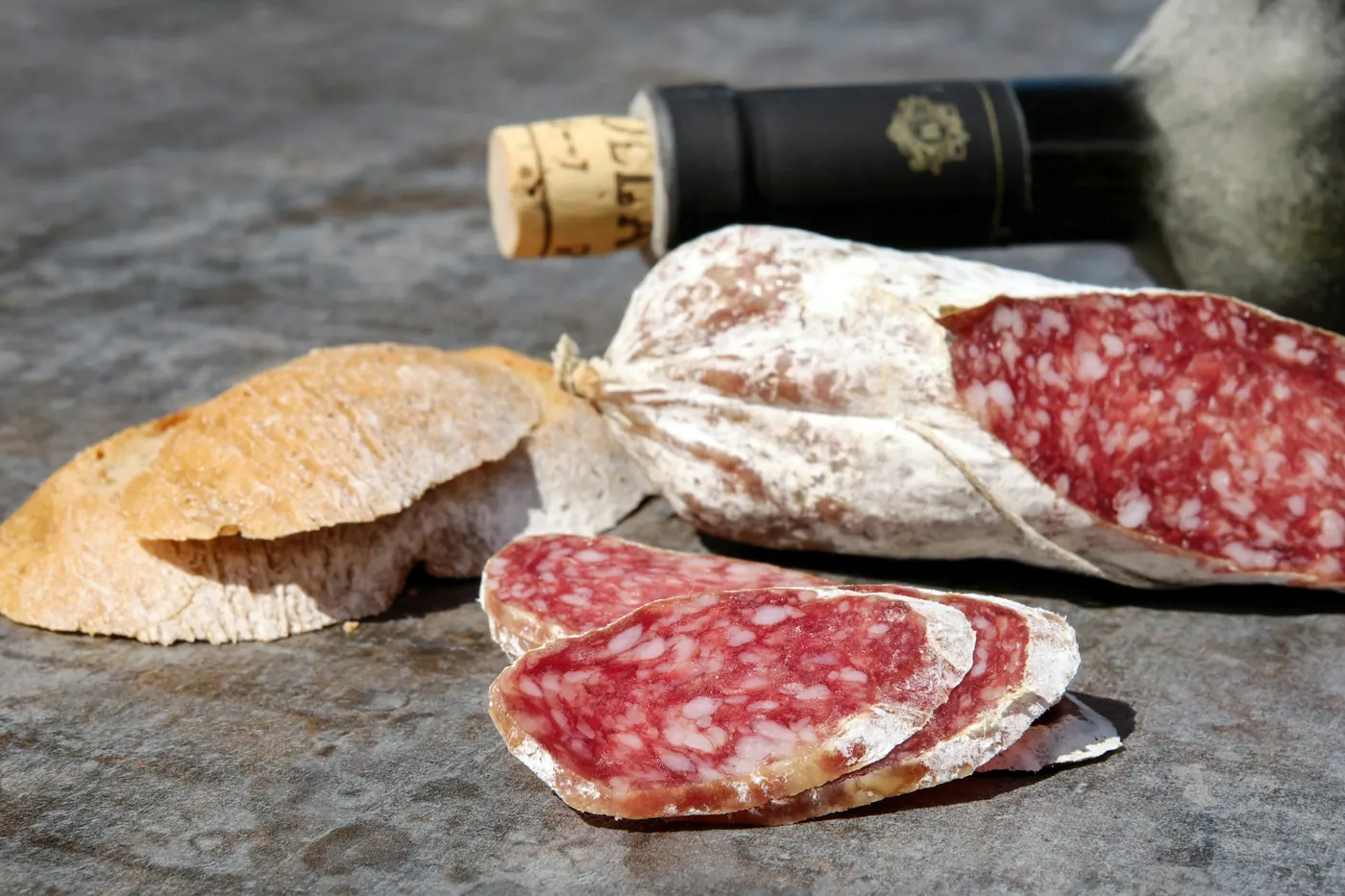
How to choose a charcuterie book for your kitchen
Be honest about your space. Dry curing asks for controlled conditions that many homes lack. Cooked charcuterie and fresh sausage need only a kitchen.
Choose the craft first. Italian salumi, French pâté, American smoking and fresh sausage are different skills, and these books mostly choose one. Pick the one you would actually eat.
Value explanation over recipes. You want to know why a step exists, because that is what keeps you from skipping it. The Marianski overview and the Publishers Weekly review of Salumi both speak to this.
Check the country of origin. British and French books may name products and cuts that differ from what a US shop sells. Confirm cure products against a US source before you use them.
Plan the equipment. A grinder and a slicer come next. Our meat slicer guide and butcher’s twine guide cover two of the tools.
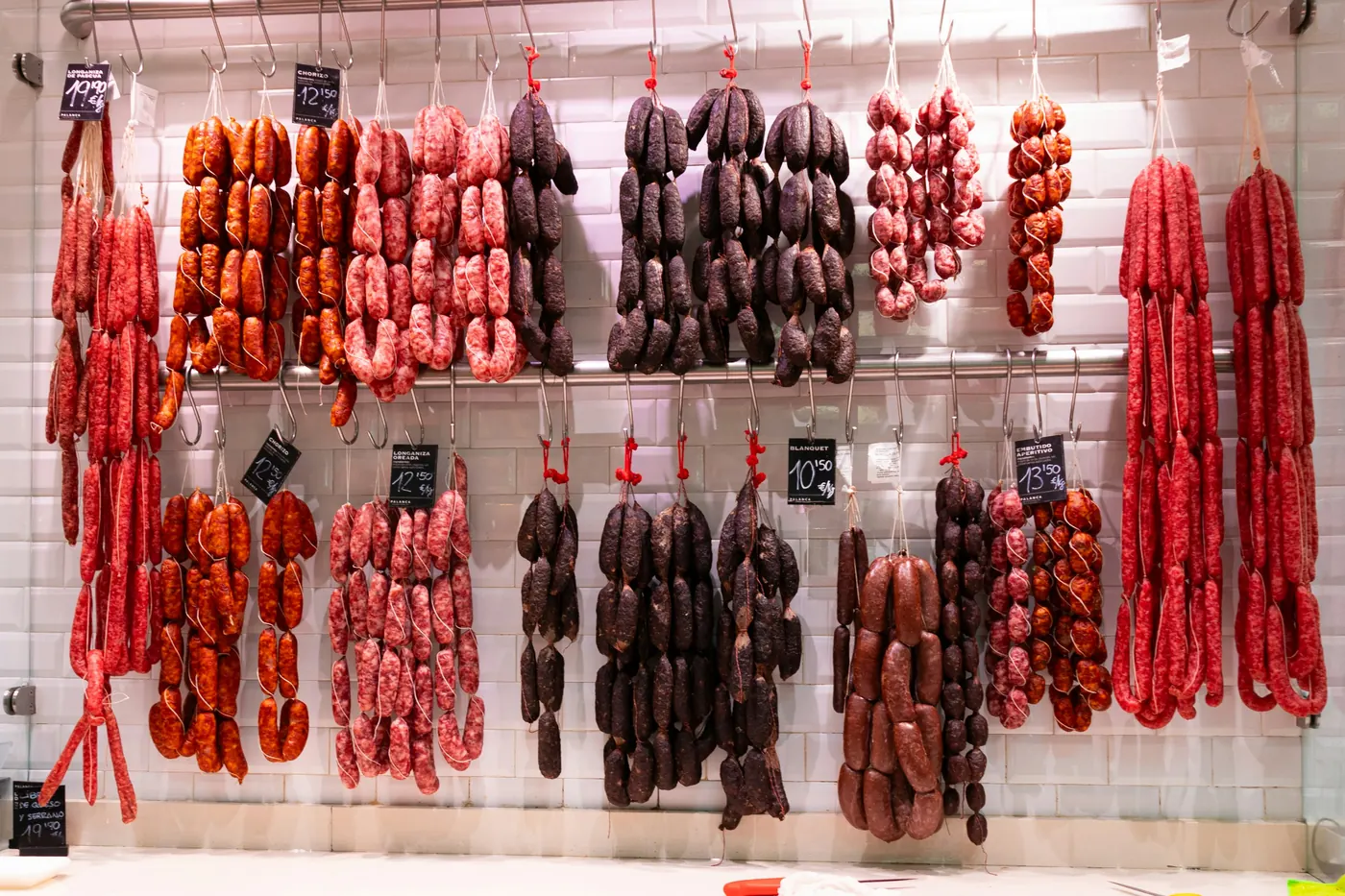
How we picked these eight charcuterie books
We searched Amazon’s Books index for charcuterie, curing and sausage titles, then kept those in stock as new copies from named authors. Seven are from trade publishers. Home Production comes from a small specialist press, and we say so. We left out self-published titles, books about arranging boards, and titles already covered on our other pages.
We have not made anything from these books, and we are not claiming any recipe in them is safe. We read two Publishers Weekly reviews and checked four other books there, which showed no review. Forum threads our search surfaced could not be opened, so we do not cite them. The rest rests on publisher overviews and the listing, as each pick states.
Curing and sausage making book questions, answered
Is the original Charcuterie by Ruhlman and Polcyn on this list?
No. It was not available as an in-stock new copy when we checked. If it returns, it is worth a look alongside Salumi.
What is the best first project?
Fresh sausage that you cook right away, since it skips long drying. Easy Sausage Making is written for that stage.
Can I cure meat without nitrite?
The University of Georgia bulletin says meats processed without nitrite are more susceptible to bacterial spoilage and flavor changes, and probably should be frozen until used. Follow your book, and do not leave out a cure a recipe calls for.
Which book covers smoking?
The River Cottage handbook and Monte Burch’s guide both have smoking in their titles. Our smoking cookbook guide looks at smoking for cooking.
Our final pick for the home curing shelf
Choose Salumi if you are ready for dry curing, and Easy Sausage Making if you are not yet. For what to serve with the finished product, our cheese book guide and charcuterie board guide pick up from here.
For chorizo someone else has already made, Julia’s is at 5402 N Highway 6 in Houston. Call to order at (346) 546-8283.