A child’s first cookbook does more than hand over recipes. It decides whether cooking feels like something they can do or something grown-ups do while they watch. In a restaurant kitchen you learn by watching someone’s hands, then doing the job yourself, badly at first. A good book for kids has to do that same work on paper, and that is harder than it looks.
Age matters more than anything else here. A book that delights a four-year-old will bore a ten-year-old, and a book for teens will frustrate both. This guide sets out eight books by age and temperament, from picture recipes for preschoolers to real food for teenagers, and says plainly which ones have a named review behind them and which rest on what the publisher and author tell us.
Julia’s earns a commission on purchases made through links on this page, at no cost to you. Recommendations are based on what a restaurant kitchen looks for in a cookbook, publisher information and published reviews, which we cite.
Quick verdict: the best cookbook for kids, by age
For most children from about seven or eight up, start with The Complete Cookbook for Young Chefs from America’s Test Kitchen Kids, which teaches real skills and rates each recipe by difficulty. For children who cannot read yet, choose Pretend Soup by Mollie Katzen and Ann Henderson. For teenagers, choose The Complete Cookbook for Teen Chefs.
The others cover a guided course for ages 8 to 12, a playful book packed with games, photo steps for early readers, food science for the curious, and bold recipes for confident young cooks.
Five kids’ cookbooks side by side
Five of the eight, one for each stage. Ages come from the publisher unless we say otherwise. All eight are described in full below.
| Cookbook | Best for | Ages | Size and format | Buy on Amazon |
|---|---|---|---|---|
| Kids who want to cook for real | Reviewer suggests 7 or 8 and up | 100+ recipes, hardcover | View on Amazon | |

Pretend Soup, Mollie Katzen and Ann HendersonBest for preschoolers
|
Children who cannot read yet | Ages 3 to 7 | Picture steps, hardcover | View on Amazon |

Cooking Class, 10th Anniversary Edition, Deanna F. CookBest for ages 8 to 12
|
A guided first course | Ages 8 to 12 | 73 recipes, hardcover | View on Amazon |
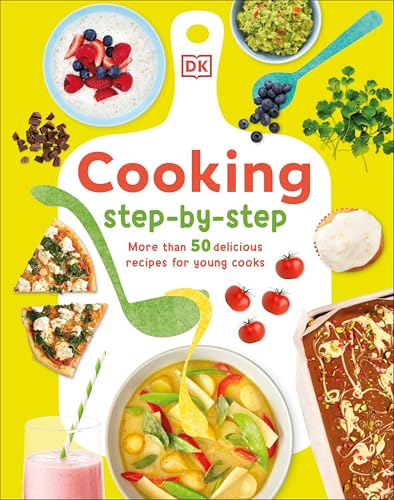
Cooking Step By Step, Denise SmartBest for early readers
|
New readers, ages 5 to 9 | Ages 5 to 9 | 50+ recipes, hardcover | View on Amazon |
| Teens cooking on their own | Ages 13 to 17 | 70+ recipes, hardcover | View on Amazon |
Cover images from Amazon. Formats are for the print editions linked; other editions differ.
Our picks for the best cookbook for kids, book by book
The eight run roughly from a child’s first steps in the kitchen to cooking alone. Named reviews back four of them: Young Chefs (Erin Azar), the Food Network book (Publishers Weekly), Young Scientists (Insider, quoted by the publisher) and Teen Chefs (Kirkus and Booklist, quoted by the publisher). The other four rest on the publisher’s and author’s details. We have not cooked from these books; where we describe a strength, we say whose view it is.
1. The Complete Cookbook for Young Chefs, America’s Test Kitchen Kids – Real Skills, Clear Steps

If one book has to carry a child from toast to a full family dinner, this is the one we would start with. It comes from the kids’ arm of America’s Test Kitchen, and its publisher describes more than 100 kid-friendly recipes. America’s Test Kitchen Kids’ own later catalog copy calls it a New York Times bestseller.
The most useful outside description we found comes from Erin Azar, writing in her newsletter The Scout. She calls it “colorful, modern, straightforward” and says it does not talk down to young cooks. According to Azar, it teaches real tool skills with knives, skillets and a food processor rather than simple assembly, and each recipe is rated from one to three hats for difficulty, with comments from kid testers.
Azar also points out sections on kitchen safety, cooking eggs and “decoding kitchenspeak,” and she suggests the book suits children as young as 7 or 8 and could last into early high school. That long working life is why it sits first here. A cookbook bought for an eight-year-old that still gets used at thirteen has done its job.
Why we like it
- Named review from Erin Azar in The Scout
- More than 100 recipes, per the listing
- Difficulty rated from one to three hats
- Teaches knife, skillet and food processor skills
Key specifications
| Author | America’s Test Kitchen Kids |
|---|---|
| Publisher | Sourcebooks Explore |
| Year | 2018 |
| Pages | 208 (Amazon listing) |
| Format | Hardcover |
| Recipes | More than 100 |
| Focus | Core cooking skills and family meals |
| Best for | Ages about 7 or 8 and up, per its reviewer |
Why we recommend it
If you are buying a single book for a child who already likes being in the kitchen, this gives them the most room to grow. The hat ratings let a child choose what to try next without a parent having to sort the recipes first.
Skip it if your cook is under about seven. The skills it teaches, knives and skillets included, need a reader and an adult close by, and our picks for younger children start lower.
Pros and cons
Pros
- Long useful life
- Clear difficulty ratings
- Covers safety and basic terms
Cons
- Too advanced for preschoolers
- Knife and stove work needs an adult at first
2. Pretend Soup, Mollie Katzen and Ann Henderson – Picture Recipes for Non-Readers
Pretend Soup is the book for the youngest cooks on this list. Penguin Random House lists it for ages 3 to 7, and describes recipes that a child as young as three can lead while an adult helps. The steps are told in pictures, with watercolor animals running through the book, so a child who cannot read can still follow along.
Mollie Katzen is the author of The Moosewood Cookbook, and she wrote this one with Ann Henderson. The recipes are vegetarian, and the publisher frames them as a way to practice counting, reading readiness, science awareness and patience as well as cooking. It is a slim book at 96 pages.
This pick rests on the publisher’s and authors’ details. Publishers Weekly’s page for this edition carries no review, so we are not citing a trade review for it. The book dates from 1994, and the case for it here is its stated age range and its picture-led format.
Why we like it
- Listed for ages 3 to 7
- Recipe steps shown in pictures
- Vegetarian recipes, per the publisher
- From the author of The Moosewood Cookbook
Key specifications
| Author | Mollie Katzen and Ann Henderson |
|---|---|
| Publisher | Tricycle Press (Ten Speed Press) |
| Year | 1994 |
| Pages | 96 |
| Format | Hardcover |
| Recipes | Not stated |
| Focus | Picture-led recipes for very young cooks |
| Best for | Ages 3 to 7 |
Why we recommend it
If your child is three, four or five and wants to stir something, this is the book. The picture steps put the child in charge of the recipe, which is the part young children enjoy most.
Skip it if your child already reads well and wants proper dinners. The book is short and made for a much younger cook, and a confident nine-year-old will move past it fast.
Pros and cons
Pros
- Works before a child can read
- Child leads, adult helps
- Hardcover
Cons
- Short book
- Outgrown quickly
- Recipe count not stated

3. Cooking Class, 10th Anniversary Edition, Deanna F. Cook – A Course in a Book
Deanna F. Cook was creative development director at FamilyFun magazine and has written a shelf of children’s cooking books. Cooking Class is the one that started that series. The publisher, Storey, lists it for ages 8 to 12 and says the recipes were tested by kids and written with photo steps for young cooks.
The subtitle promises 73 recipes, and they cover meals for every time of day. Storey says it also teaches the skills behind them, including cutting, whisking, frying, grilling, sautéing and simmering. Pull-out pages add place cards, mealtime conversation games, recipe cards and labeling stickers, which turn it into something closer to an activity for a rainy weekend.
This 10th anniversary edition adds new recipes and photos and moves to a sturdier paper-over-board format, according to the publisher. That matters more than it sounds in a book that will meet sticky hands. This pick rests on the publisher’s and author’s details; PW’s page for this edition shows no review.
Why we like it
- Listed for ages 8 to 12
- 73 recipes, per the subtitle
- Photo steps written for young cooks
- Pull-out cards and stickers
Key specifications
| Author | Deanna F. Cook |
|---|---|
| Publisher | Storey (Workman Publishing) |
| Year | 2024 (10th anniversary edition) |
| Pages | 188 |
| Format | Hardcover, paper over board |
| Recipes | 73 |
| Focus | Everyday recipes and basic kitchen skills |
| Best for | Ages 8 to 12 |
Why we recommend it
If you want a child to work through a book from the front, learning a little more each time, this has the most class-like feel. The extras also make it an easy gift.
Skip it if your child is drawn to harder cooking. It is written for beginners, and a child already at the stove may prefer the Young Chefs book above.
Pros and cons
Pros
- Friendly photo steps
- Skills taught alongside recipes
- Sturdier new format
Cons
- Pull-outs may not last
- Beginners only
- Rests on publisher details
4. The Big, Fun Kids Cookbook, Food Network Magazine – Puzzles, Trivia and 150 Recipes

This is the loudest book on the list, and that is part of the appeal. Publishers Weekly reviewed it, counted more than 150 recipes “that any kid can make” and called it “an exceptional introduction to cooking that children and even novice adult home cooks will enjoy.”
PW describes familiar kid favorites such as mac and cheese, plus “design your own recipe” sections, food facts, trivia quizzes and coloring pages. For a child who is more interested in playing with food ideas than in following instructions, those extras are a real way into the kitchen.
The review is also useful on supervision. It says some recipes can be made by young cooks ages 8 to 12 with minimal adult supervision, while others need help, and it singles out a giant s’mores cake that calls for a kitchen torch. Read a recipe before you hand it over.
Why we like it
- Reviewed by Publishers Weekly
- More than 150 recipes
- Trivia, quizzes and coloring pages
- Design-your-own recipe sections
Key specifications
| Author | Editors of Food Network Magazine (Maile Carpenter, editor) |
|---|---|
| Publisher | Hearst Home Kids |
| Year | 2020 |
| Pages | 192 |
| Format | Hardcover |
| Recipes | More than 150 |
| Focus | Fun recipes with games and food facts |
| Best for | Kids who like activities as much as cooking |
Why we recommend it
If your child loves a busy, colorful book and might not sit still for a skills course, this one is the easiest to get opened. It is also the largest recipe count among the children’s books here.
Skip it if you want a calm, step-by-step teacher. Publishers Weekly’s praise is for its fun and range, and not every recipe is one a child can do alone.
Pros and cons
Pros
- Named trade review
- Huge recipe range
- Playful format
Cons
- Some recipes need an adult
- Busier than a teaching book
5. Cooking Step By Step, Denise Smart – Photos at Every Stage
DK’s books are built around photographs, and this one uses them to take a young cook through basic skills such as chopping, mixing and stirring. Penguin Random House lists it for ages 5 to 9 and describes more than 50 easy recipes, with pictures alongside the written steps.
The recipes cover snacks, main meals and sweet treats, and the book includes pages on kitchen equipment, safety and cooking tips. According to the publisher, this new edition adds eight recipes and a refreshed look, and the dishes draw on readily available ingredients from around the world.
It sits neatly between Pretend Soup and the books for older children. At 144 pages it is short enough not to scare off a six-year-old, and the photographs help a child who reads slowly check what the bowl should look like. This pick rests on the publisher’s details; PW’s page for this edition shows no review.
Why we like it
- Listed for ages 5 to 9
- More than 50 easy recipes
- Equipment and safety pages
- Step-by-step photographs
Key specifications
| Author | Denise Smart |
|---|---|
| Publisher | DK Children |
| Year | 2024 (new edition) |
| Pages | 144 |
| Format | Hardcover |
| Recipes | More than 50 |
| Focus | Basic skills through easy recipes |
| Best for | Ages 5 to 9 |
Why we recommend it
If your child is starting to read and wants to do more than stir, this is the natural next step. The photographs give them a way to check their own work.
Skip it if your child is ten or older. The recipes are easy by design, and an older beginner will get more from Cooking Class or Young Chefs.
Pros and cons
Pros
- Clear photo steps
- Short enough for young readers
- Safety pages included
Cons
- Outgrown by about ten
- Rests on publisher details
6. The Complete Cookbook for Young Scientists, America’s Test Kitchen Kids – Why Food Does What It Does

Some children would rather know why popcorn pops than how to make dinner. This book is for them. Penguin Random House lists it for ages 8 to 12 and describes recipes and experiments that answer questions such as why some cheeses melt better than others and why popcorn pops.
The title promises more than 70 recipes, experiments and activities, and the publisher names skillet pizza, easy chocolate popcorn and a galactic mirror cake among them. It is the fourth book in the Young Chefs series, which means the same kid-tested approach as our top pick, pointed at food science.
The publisher’s page carries a short line from Insider, which says the cookbook “explains why food cooks the way it does.” For a child who likes a science fair, that is the whole pitch, and it works just as well as a project for a parent and child on a weekend afternoon.
Why we like it
- Listed for ages 8 to 12
- Pairs each idea with something to cook
- Insider praise, quoted by the publisher
- Same series as our top pick
Key specifications
| Author | America’s Test Kitchen Kids |
|---|---|
| Publisher | America’s Test Kitchen Kids |
| Year | 2021 |
| Pages | 240 |
| Format | Hardcover |
| Recipes | More than 70 recipes, experiments and activities combined |
| Focus | Food science through cooking |
| Best for | Ages 8 to 12 |
Why we recommend it
If your child takes things apart to see how they work, this book points that habit at the kitchen. The experiments give a reason to cook even for a child who is not hungry.
Skip it if you want dinner help. Experiments and activities share the book with the recipes, so there are fewer plain dinners than in a general cookbook.
Pros and cons
Pros
- Teaches the reasons behind recipes
- Good weekend project book
- Hardcover
Cons
- Less focused on everyday dinners
- Count mixes recipes with activities
7. The Complete Cookbook for Teen Chefs, America’s Test Kitchen Kids – Grown-Up Food for Older Cooks

Teenagers do not want a book with a cartoon on every page. This one is listed for ages 13 to 17, and Penguin Random House says its more than 70 recipes were tested and approved by thousands of teens. Sidebars explain why recipes work and how to improve them.
The range is what makes it interesting. The publisher names steak tacos with charred corn salsa, arepas, congee, hand-pulled biang biang noodles, cheeseburger sliders and apple-cider donuts, along with plain egg and cheese breakfast sandwiches. Booklist notes that it “offers cultural and vegetarian options.”
Both of the named reviews on the publisher’s page are warm. Kirkus calls it “a comprehensive cookbook designed for and tested by teen cooks” and sums it up as “top-notch recipes for junior top chefs.” Booklist calls it a “fun and friendly guide for teen foodies.”
Why we like it
- Listed for ages 13 to 17
- Kirkus and Booklist praise, quoted by the publisher
- Global dishes, including steak tacos
- Sidebars explain why recipes work
Key specifications
| Author | America’s Test Kitchen Kids |
|---|---|
| Publisher | America’s Test Kitchen Kids |
| Year | 2022 |
| Pages | 208 |
| Format | Hardcover |
| Recipes | More than 70 |
| Focus | Everyday and global cooking for teens |
| Best for | Ages 13 to 17 |
Why we recommend it
If you have a teenager who has outgrown kids’ books but would be lost in an adult cookbook, this is the best bridge we found. It treats them as cooks who can handle real food.
Skip it for younger children. The recipes assume a cook who can work more independently, and the Young Chefs book is the better fit below about thirteen.
Pros and cons
Pros
- Two named reviews
- Real dishes from many cuisines
- Explains the reasons
Cons
- Fewer recipes than the big kids’ books
- Too advanced for young children
8. MasterChef Junior Cookbook, MasterChef Junior – Ambitious Dishes for Show Fans

For the child who watches cooking competitions and wants to attempt something impressive, this is the book. Clarkson Potter describes 100 recipes inspired by dishes that contestants served across the first five seasons of the television show, along with cooking techniques, tips and advice for young aspiring chefs.
Christina Tosi wrote the foreword, and the publisher’s message leans on creativity, hard work and fun. That sets it apart from the other books here, which begin with what a child can manage. This one begins with what a child wants to try.
It is the only pick that rests on a show brand instead of an individual author or a test kitchen, and the publisher does not give an age range. Read through a few recipes before you buy it for a younger child, and expect to stay nearby. This pick rests on the publisher’s details; PW’s page for it shows no review.
Why we like it
- 100 recipes, per the publisher
- Techniques and tips for young cooks
- Foreword by Christina Tosi
- Inspired by contestants’ dishes
Key specifications
| Author | MasterChef Junior, foreword by Christina Tosi |
|---|---|
| Publisher | Clarkson Potter |
| Year | 2017 |
| Pages | 240 |
| Format | Paperback |
| Recipes | 100 |
| Focus | Ambitious recipes and techniques |
| Best for | Confident young cooks and show fans |
Why we recommend it
If your child already cooks well and is bored with snacks and pancakes, this gives them something to aim at. It suits a young cook who sees a hard recipe as a dare.
Skip it for a true beginner. The publisher sells it on bold recipes and techniques, it gives no age range, and it is a paperback, so it will wear faster in small hands.
Pros and cons
Pros
- Bold, motivating recipes
- Techniques included
- Popular show tie-in
Cons
- No stated age range
- Paperback
- Rests on publisher details
How to choose a kids’ cookbook
Five questions sort these out quickly. Start with the child, not the cover.
1. How old is the child, and can they read the recipe?
This is the question that matters most. Pretend Soup works before a child can read. Cooking Step By Step suits new readers, with photographs to check against. Cooking Class and the Food Network book assume a child of about eight or older, and Teen Chefs is for 13 and up. When in doubt, buy for the child’s reading level, not their age, since a book they cannot follow goes back on the shelf.
2. Does the book teach, or only list recipes?
Look for explained skills as well as dishes: how to hold a knife, what a word such as “simmer” means, why an egg sets. In a kitchen, skills transfer and recipes do not. Young Chefs and Cooking Class are the clearest teachers here, according to Azar and Storey respectively.
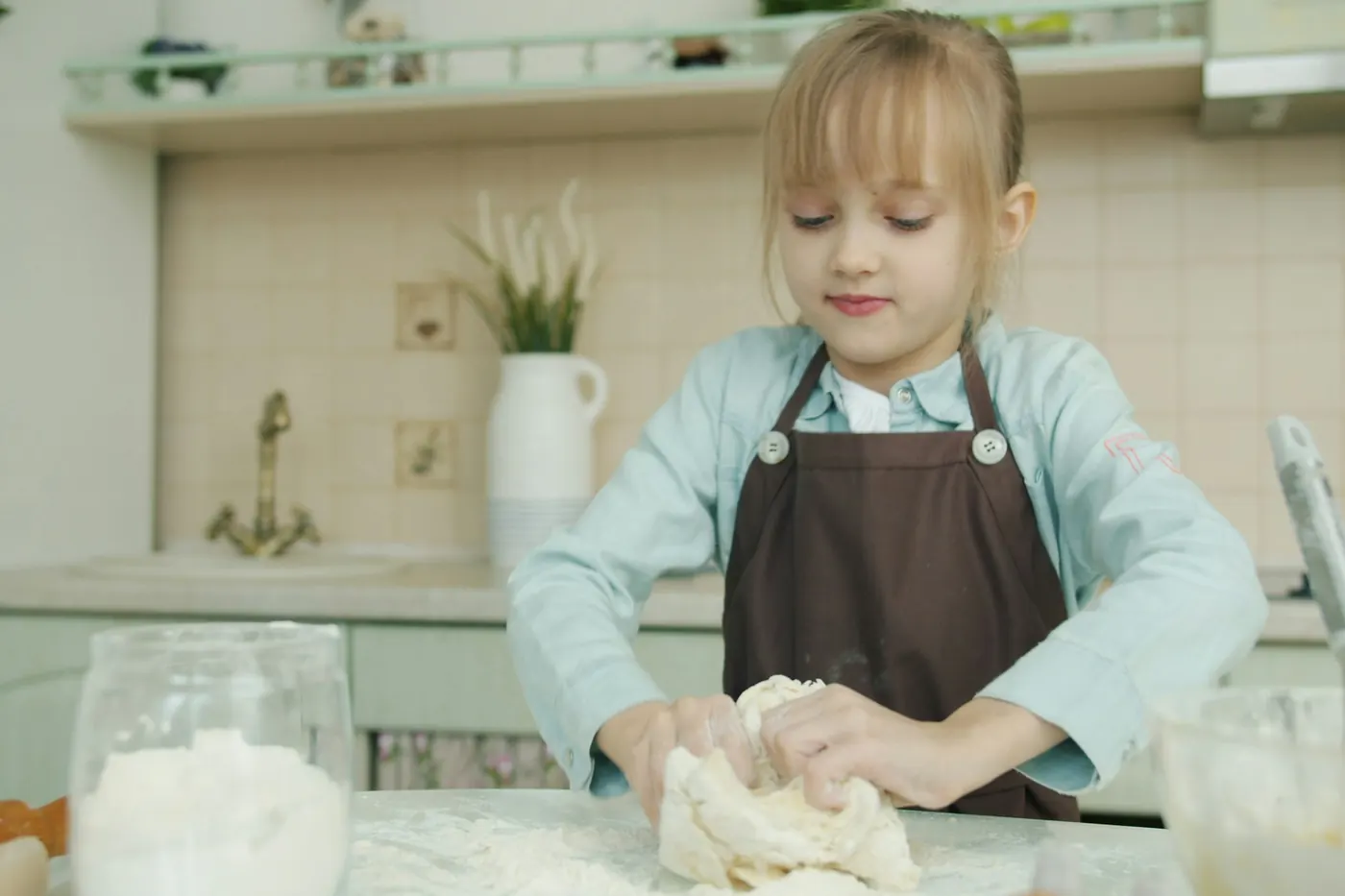
3. How much adult help will you actually give?
Be honest about this before you buy. Every book here involves heat, knives or both at some point. A cook of any age needs someone nearby the first few times at the stove. Publishers Weekly’s warning about the kitchen torch in the Food Network book is a fair reminder: read each recipe first, and decide which steps belong to the adult.
4. What will keep this child interested?
A child who loves puzzles may open the Food Network book every day. A child who asks why will get more from Young Scientists. A competitive child may want MasterChef Junior. The right book is the one that gets opened, and it is worth remembering that the best teaching book in the world does nothing if it stays closed.
5. Will the book survive the kitchen?
Seven of these eight are hardcovers in the editions we link; MasterChef Junior is a paperback. A cookbook for children will meet flour, batter and wet hands, so a sturdy binding is worth having. A simple cookbook stand keeps it open and out of the mess, and a set of measuring cups is the other thing a new cook reaches for right away.
How we chose these eight books for young cooks
We looked for books that teach a child something a working kitchen would respect: how to read a recipe, handle basic tools and finish a dish. We searched Amazon’s book listings and kept print editions in stock when we checked, then took the facts from the publisher’s pages, the Amazon listing and named reviews. We read Publishers Weekly’s page for each book by ISBN. Only the Food Network book had a PW review; the others had none on that page, and a review elsewhere may exist that we did not see. Young Chefs has Erin Azar’s newsletter review. Quotes from Kirkus, Booklist and Insider are as the publisher shows them, and we did not read those reviews in full.
Several well-known books did not make it because of stock. Katzen’s Honest Pretzels and Salad People and DK’s Complete Children’s Cookbook showed future availability, not stock on hand, and Gaby’s Latin American Kitchen from America’s Test Kitchen Kids, which would have been a natural fit for this site, showed only limited stock. We have not cooked from these books ourselves, and nothing here should replace an adult’s judgment about a child’s safety at the stove.
Kids’ cookbook questions, answered
What age should a child get their first cookbook?
Earlier than you might think. Penguin Random House lists Pretend Soup for children from age 3, working with an adult. DK’s Cooking Step By Step starts at 5, and most of the books here begin at about 8.
What is the best kids’ cookbook for a complete beginner?
For ages 8 to 12, Cooking Class by Deanna F. Cook, which Storey says teaches basic skills with photo steps. For a child who wants to go further, The Complete Cookbook for Young Chefs.
What is a good cookbook for a teenager?
The Complete Cookbook for Teen Chefs, listed for ages 13 to 17. Kirkus and Booklist both gave it warm notices, as quoted by the publisher, and its dishes are real food rather than kids’ food.
Is there a kids’ cookbook with Mexican recipes?
None of these is a Mexican book, though Teen Chefs includes steak tacos with charred corn salsa. An older child ready for an adult book could try our guide to the best Mexican cookbooks for beginners.
What else does a young cook need?
Very little: a stool if they need one, an apron, a bowl and a few basic tools. For dessert projects, our guide to the best ice cream maker for kids is a natural next project, and cookie cutters are an easy first tool.
Our final pick for young cooks
Buy The Complete Cookbook for Young Chefs if you want one book that teaches real skills and lasts for years. Choose Pretend Soup for a preschooler, Cooking Step By Step for an early reader, Cooking Class for a guided start at eight and Teen Chefs for a teenager. The Food Network book, Young Scientists and MasterChef Junior are the ones to pick when you know what gets your child excited.
Related guide: Best kids knife.
Related guide: Best kids baking set.
Related guide: Best kids baking cookbook.
And on the nights when nobody wants to cook, our notes on bringing kids to a Mexican restaurant may help, or see the menu and call to order.