
A rasp grater is the smallest tool in a Mexican kitchen that gets used all day. It takes the green skin off a lime for agua fresca or a lime crema without the bitter white pith, turns a block of dry Cotija or añejo into a fine snow over elote and beans, and shaves a stick of canela straight into a pot of café de olla or champurrado. It does the same for garlic, ginger and nutmeg, faster than a knife and finer than a box grater.
Microplane made the style famous, and its name is now used for the whole category, but several makers build rasps with etched blades, covers and non-slip feet. This guide compares nine rasp-style graters, from the long, narrow zester that most cooks picture to wider paddles and a short spice grater, on the things that decide how well they work: the blade, the handle, the cover and how they clean up.
Julia’s earns a commission on purchases made through links on this page, at no cost to you. Recommendations are based on what a restaurant kitchen looks for in a rasp grater, the makers’ own specifications, the details on each Amazon listing and a published equipment review from America’s Test Kitchen.
Quick verdict: which microplane grater to buy
For most kitchens, the best microplane grater is the Microplane Premium Classic Zester: the long, narrow rasp with a photo-etched blade made in the United States, a soft, grippy handle, end tabs that rest on a bowl and a protective cover. America’s Test Kitchen named it the best zester-style rasp. If you grate more cheese than citrus, the wider Microplane Gourmet Series Fine Grater covers more ground with each stroke, and for whole spices such as canela and nutmeg the short Microplane Specialty Spice Grater is easier to control.
The table below compares our five standout rasps. All nine are reviewed in full after it, followed by how to choose one and answers to common questions.
Five rasp graters compared
One pick for each kind of cook, with the blade and size each maker or listing states.
| Grater | Best for | Blade | Cover | Buy on Amazon |
|---|---|---|---|---|

Microplane Premium Classic ZesterBest overall
|
Lime zest, hard cheese, garlic | Photo-etched, made in USA | Included | View on Amazon |

Microplane Gourmet Series Fine GraterBest paddle
|
Grating more cheese per stroke | 5¼ × 2⅝ in etched surface | Included | View on Amazon |

Microplane Classic Zester GraterBest simple rasp
|
The original, no extras | Photo-etched, made in USA | Not stated on listing | View on Amazon |

Microplane Professional Series Fine GraterBest all-steel
|
Heavy use, no plastic handle | 5¼ × 2 5/16 in surface | Included | View on Amazon |

Microplane Specialty Spice GraterBest for whole spices
|
Canela, nutmeg, chocolate | Photo-etched; 9 in overall | Included | View on Amazon |
Product images from Amazon. Blade sizes, covers and origin are as stated by each maker or listing; most makers do not give a blade length, so check the listing before you buy.
Our picks for the best microplane grater
These nine rasps cover three shapes. Long, narrow zesters are the classic shape and the easiest to work around a lime or orange. Wider paddle rasps grate more cheese or garlic with each pass. Short spice graters give you control over a small nutmeg or a stick of canela. Each pick says who it suits, what the maker states, and one honest reason to skip it.
1. Microplane Premium Classic Zester – Grippy Handle, Proven Blade
The Premium Classic is the long, narrow Microplane that most cooks picture when they hear the name, with a softer handle than the original. Microplane says the blade’s tooth set takes the colored rind off citrus while leaving the bitter white pith behind, which is exactly what you want when you zest limes for agua fresca, a lime crema or the rim salt for a margarita. The same blade turns hard cheese into fine, fluffy shreds and garlic or ginger into a paste.
The blades are photo-etched from surgical-grade stainless steel in the United States, according to the listing, and the tool is about 12.8 inches long overall. The handle is a soft-touch grip, and plastic end tabs keep the blade off the counter and let you rest the far end on a bowl while you grate. Microplane includes a reusable protective cover, and the listing says it can go in the dishwasher, though rinsing it right after use with a brush on the underside is the simplest way to keep the teeth clean.
America’s Test Kitchen named the Premium Classic its best zester-style rasp grater and singled out the handle: it had a “soft, grippy plastic handle that was more comfortable and secure than most others in the lineup.” It comes in several colors; the green version is linked here.
Why we like it
- Photo-etched blade made in the USA
- Soft-touch handle, praised by America’s Test Kitchen
- Non-scratch end tabs rest on a bowl
- Protective cover included
Key specifications
| Model | 46727E (Premium Classic) |
|---|---|
| Blade type | Photo-etched stainless steel |
| Blade length | Not stated; about 12.8 in overall |
| Handle | Soft-touch plastic |
| Cover/guard | Reusable cover included |
| Dishwasher-safe | Yes |
| Made in | Blade made in USA |
Why we recommend it
It suits almost every home cook who wants one rasp for citrus zest, Cotija and garlic, and a handle that stays secure when your hands are wet.
Skip it if you mostly grate large amounts of cheese; a wider paddle covers more ground per stroke.
Pros and cons
Pros
- Comfortable, secure grip
- Narrow blade works around citrus
- Cover and end tabs included
Cons
- Narrow surface is slow for big batches
- Blade length not stated
2. Microplane Gourmet Series Fine Grater – Wider Blade, Faster Cheese
The Gourmet Series Fine Grater uses the same kind of fine, etched teeth as a zester on a much wider paddle. Microplane gives the grating surface as 5¼ by 2⅝ inches, roughly twice the width of a classic zester, so each pass over a wedge of Cotija, añejo or Parmesan produces more cheese. The listing names hard cheeses such as Parmesan, Asiago and Manchego, plus citrus, chile, ginger and garlic, and says the results are powder-like.
The frame is stainless steel, the handle is a soft TPE grip with a loop for hanging, and a non-slip base holds the paddle steady when you rest it on a cutting board or across a bowl. Microplane includes a reusable cover and says the grater is top-rack dishwasher safe. The blade is made in the United States.
America’s Test Kitchen chose it as its best paddle-style rasp, noting it “had lots of relatively flat, supersharp teeth across its large blade,” along with a grippy handle and a foot that anchors it to the board. The trade-off is that a wide paddle is a little clumsier than a narrow zester when you are working around a single lime.
Why we like it
- 5¼ × 2⅝ in grating surface
- Non-slip base for grating on a board
- Top-rack dishwasher safe, cover included
- America’s Test Kitchen’s paddle-style pick
Key specifications
| Model | 45004 |
|---|---|
| Blade type | Photo-etched stainless steel |
| Blade length | 5¼ × 2⅝ in grating surface |
| Handle | Soft-touch TPE with hanging loop |
| Cover/guard | Reusable cover included |
| Dishwasher-safe | Yes, top rack |
| Made in | Blade made in USA |
Why we recommend it
It suits cooks who grate cheese over beans, enchiladas and pasta often and want a rasp that finishes the job in fewer strokes.
Skip it if you mainly zest citrus; the narrow Premium Classic is easier to steer around a lime.
Pros and cons
Pros
- Wide, fast grating surface
- Steady on a board
- Cover included
Cons
- Less nimble around citrus
- Takes more drawer space
3. Microplane Classic Zester Grater – The Original Rasp
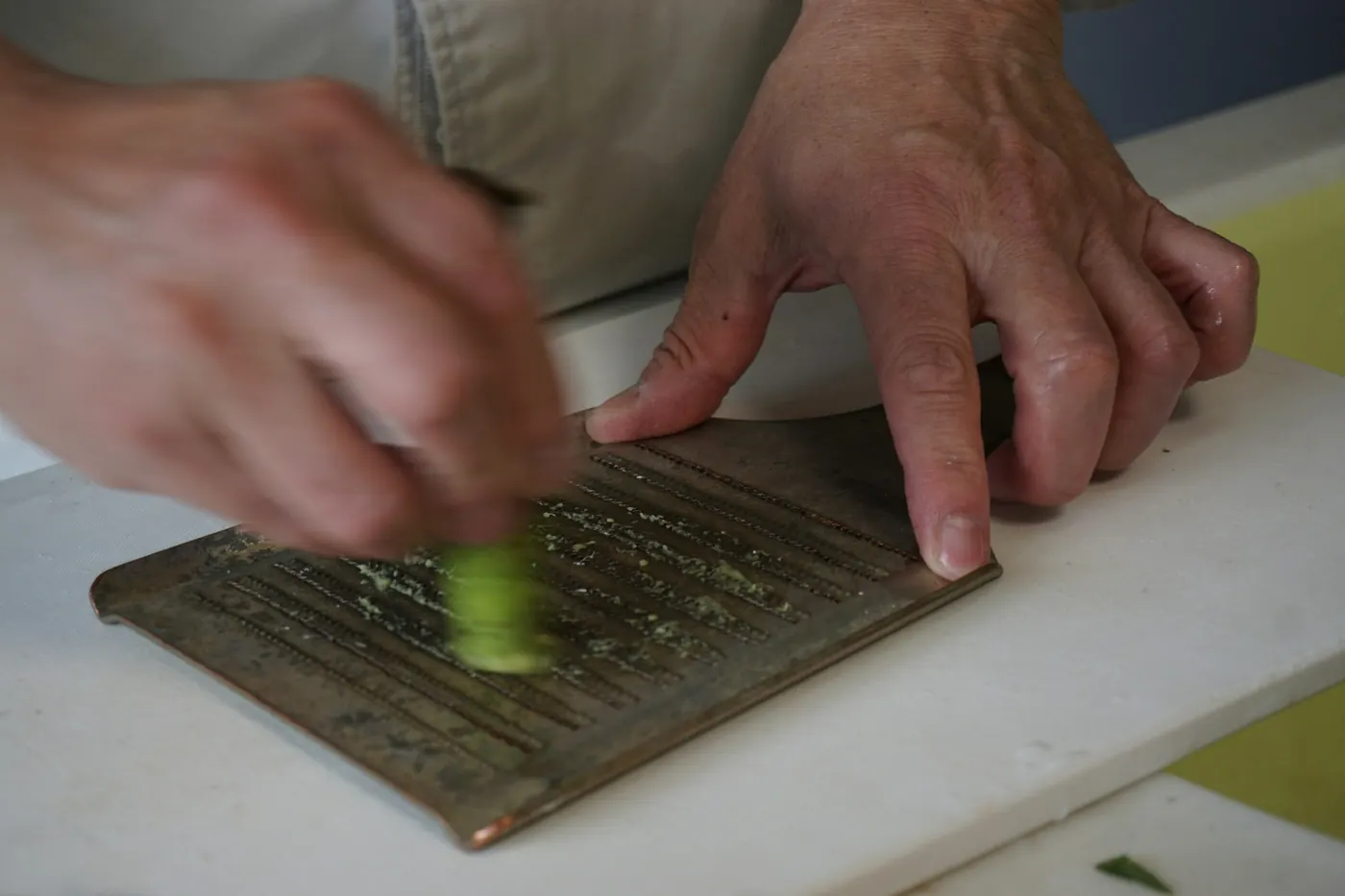
This is the original Microplane zester, a tool Microplane says was first developed for woodworking before cooks adopted it. The blade is the same idea as the Premium Classic: photo-etched, surgical-grade stainless steel made in the United States, with a tooth set designed to lift citrus zest without the pith and to turn hard cheese into light, fluffy mounds.
The difference is the handle. The Classic has a hard, BPA-free plastic handle rather than a soft-touch grip, and the listing does not mention the end tabs that the Premium version adds. Microplane notes that true stainless steel is magnetic, so the zester can hang on a magnetic knife strip, and the listing says it is dishwasher safe with a one-year warranty. Microplane sells a replacement cover that fits it, but the Amazon listing does not say one is in the box.
America’s Test Kitchen recommended the Classic and said it performed admirably and stayed sharp, but found its rounded handle “harder and not as grippy” as its preferred models. If you already own one, there is little reason to replace it.
Why we like it
- Same photo-etched US-made blade style
- Magnetic steel hangs on a knife strip
- Dishwasher safe
- One-year warranty, per the listing
Key specifications
| Model | 40020 |
|---|---|
| Blade type | Photo-etched stainless steel |
| Blade length | Not stated |
| Handle | Hard BPA-free plastic |
| Cover/guard | Not stated on listing |
| Dishwasher-safe | Yes |
| Made in | Blade made in USA |
Why we recommend it
It suits cooks who want the plain, proven Microplane zester and do not need a soft handle or end tabs.
Skip it if comfort matters; reviewers found the hard handle less secure than the Premium Classic’s.
Pros and cons
Pros
- Proven blade
- Simple, slim design
- Hangs on a magnetic strip
Cons
- Harder, less grippy handle
- Cover not listed as included
4. Microplane Professional Series Fine Grater – All-Stainless Build
The Professional Series Fine Grater is Microplane’s paddle rasp for kitchens that are hard on their tools. Instead of a plastic handle, the handle and frame are 18/8 stainless steel, which Microplane says was redesigned for durability. The whole tool measures 13 by 2⅝ by 1 inches, and the grating surface is 5¼ by 2 5/16 inches, slightly narrower than the Gourmet paddle.
Microplane lists hard cheese, citrus, garlic, chile, cinnamon and nutmeg as its jobs, so it covers everything from a pile of Cotija for a tray of enchiladas to a dusting of cinnamon on arroz con leche. A non-slip end piece steadies it on a board or bowl, a reusable protective cover is included, and it is dishwasher safe. Microplane says the blade is made in the USA and the grater is assembled in Mexico.
A steel handle will not crack or melt if it lands near a hot pan, but it is also harder and more slippery than a soft grip when your hands are wet.
Why we like it
- 18/8 stainless handle and frame
- 5¼ × 2 5/16 in grating surface
- Non-slip end and protective cover
- Dishwasher safe
Key specifications
| Model | Professional Series 2.0 Fine |
|---|---|
| Blade type | Etched stainless steel |
| Blade length | 5¼ × 2 5/16 in grating surface |
| Handle | 18/8 stainless steel |
| Cover/guard | Reusable cover included |
| Dishwasher-safe | Yes |
| Made in | Blade USA; assembled in Mexico |
Why we recommend it
It suits cooks who want a rasp with no plastic parts to wear out and grate cheese and spices often.
Skip it if you want a soft, grippy handle; the steel handle is less forgiving with wet hands.
Pros and cons
Pros
- Durable all-steel build
- Wide paddle surface
- Cover included
Cons
- Steel handle can feel slippery
- Heavier than plastic-handled rasps
5. Microplane Specialty Spice Grater – Short Rasp for Canela and Nutmeg
Whole spices are small, hard and slippery, and a long zester is awkward for them. Microplane’s Specialty Spice Grater is a short rasp, 9 inches long, made to grind cinnamon and grate nutmeg with the same photo-etched, US-made blade technology as its zesters. In a Mexican kitchen that means fresh canela shaved straight into café de olla, champurrado, atole or a pot of rice pudding, and nutmeg over rompope or a holiday ponche.
The listing describes a soft-touch handle shaped to fill the hand, a protective cover for storage, and a stainless blade that will not rust. Microplane suggests rinsing it in hot soapy water to remove spice oils, and says it can also go in the dishwasher. Its short length makes it easy to keep in a drawer or a utensil holder.
Microplane also lists hard cheese, lemon and ginger as jobs it can handle, but its small surface makes it slow for anything bigger than a nutmeg or a stick of cinnamon. Keep your fingertips clear as the spice gets small; that is when slips happen.
Why we like it
- Short, 9-inch rasp for small spices
- Photo-etched blade made in the USA
- Soft-touch handle and protective cover
- Dishwasher safe
Key specifications
| Model | 46116 |
|---|---|
| Blade type | Photo-etched stainless steel |
| Blade length | Not stated; 9 in overall |
| Handle | Soft-touch, BPA-free |
| Cover/guard | Protective cover included |
| Dishwasher-safe | Yes |
| Made in | Blade made in USA |
Why we recommend it
It suits cooks who grate canela, nutmeg or chocolate often and want a second rasp kept just for sweet spices.
Skip it if you want one grater for everything; it is too small for cheese or a pile of zest.
Pros and cons
Pros
- Good control on small spices
- Compact for storage
- Cover included
Cons
- Small grating area
- Blade length not stated

6. OXO Good Grips Etched Zester and Grater – Strong on Citrus

OXO’s rasp pairs an etched stainless surface with the soft Good Grips handle, and the listing names citrus, chocolate, hard cheese, garlic and ginger among its jobs. A non-slip foot keeps the end planted on a board or a bowl, there is a hole in the handle for hanging, and a blade cover comes in the box. The bright green handle is easy to spot in a crowded drawer, and the listing says it is dishwasher safe.
America’s Test Kitchen recommended it with reservations. Its reviewers found it excellent for lemon zest but slow on harder foods because “the teeth were too flat for other tasks,” and they found its bent shape a little awkward. That makes it a good fit for a cook who zests a lot of limes for drinks, salsas and marinades, and less of a fit as your only rasp for dry cheese.
OXO does not state a blade length or where it is made.
Why we like it
- Etched surface, strong on citrus zest
- Soft, slip-resistant handle
- Non-slip foot and blade cover
- Dishwasher safe
Key specifications
| Model | 11215400 |
|---|---|
| Blade type | Etched stainless steel |
| Blade length | Not stated |
| Handle | Soft Good Grips, hanging hole |
| Cover/guard | Blade cover included |
| Dishwasher-safe | Yes |
| Made in | Not stated |
Why we recommend it
It suits cooks who zest limes, lemons and oranges most of the time and like the OXO grip.
Skip it if you grate a lot of hard cheese; reviewers found its flat teeth slow on firmer foods.
Pros and cons
Pros
- Fine citrus zest
- Comfortable grip
- Cover included
Cons
- Slower on hard cheese
- Bent shape felt awkward to reviewers
7. KitchenAid Classic Etched Fine Grater – Grates in Both Directions

KitchenAid’s fine grater is built around what the maker calls bi-directional micro-serrations: the etched teeth cut on the push and the pull, so you can work back and forth instead of lifting and repeating a single stroke. KitchenAid suggests it for ginger, nutmeg and chocolate and for zesting lemons, limes and other citrus.
The head is 304 stainless steel with a soft foot, so you can grate straight into a bowl, onto a board or over a plate. The glossy ABS handle is shaped for balance and finished with a chrome-plated bolster and end cap. A plastic blade guard is included, the grater is dishwasher safe, and the listing mentions a one-year hassle-free replacement and a lifetime limited warranty.
KitchenAid does not state the blade length or where the grater is made. A glossy plastic handle is smart-looking but can be less grippy than a soft-touch one when your hands are wet with lime juice.
Why we like it
- Teeth cut in both directions
- 304 stainless head with soft foot
- Blade guard included
- Replacement and lifetime limited warranty
Key specifications
| Model | KE321OHOBA |
|---|---|
| Blade type | Etched, bi-directional micro-serrations |
| Blade length | Not stated |
| Handle | Glossy ABS, chrome bolster |
| Cover/guard | Plastic guard included |
| Dishwasher-safe | Yes |
| Made in | Not stated |
Why we recommend it
It suits cooks who like to grate with a quick back-and-forth motion and want a guard and a long warranty.
Skip it if you want an independent review behind your choice; we did not find one we could cite.
Pros and cons
Pros
- Two-way grating
- Guard included
- Strong warranty terms
Cons
- Glossy handle may slip when wet
- Blade size not stated
8. Cuisipro Surface Glide Dual Grater – Fine and Coarse in One

Cuisipro’s dual grater puts two surfaces on one long tool: a fine side for citrus zest, Parmesan, cinnamon and nutmeg, and a coarse side for softer cheeses and vegetables. That second surface is useful in a Mexican kitchen, where you may want a fine snow of Cotija on one dish and coarser shreds of queso or carrot for another, without pulling out a box grater.
The blade uses Cuisipro’s Surface Glide Technology, a repeated groove pattern that Cuisipro says grates more with less effort. Non-slip ends with feet hold it steady on a board or across a bowl, and a sliding cover protects your hands in the drawer. A Canadian retailer lists it at 14 inches long.
The Amazon listing does not say whether it is dishwasher safe, and retailers disagree, so hand washing is the safe choice. Cuisipro’s single fine rasp exists too, but it was nearly sold out when we checked.
Why we like it
- Fine and coarse surfaces on one tool
- Surface Glide grooves
- Non-slip ends with feet
- Sliding cover protects hands
Key specifications
| Model | 746887 |
|---|---|
| Blade type | Stainless, Surface Glide grooved (etching not stated) |
| Blade length | Not stated; about 14 in overall per a retailer |
| Handle | Not stated |
| Cover/guard | Sliding cover |
| Dishwasher-safe | Not stated |
| Made in | Not stated |
Why we recommend it
It suits cooks with a small kitchen who want a fine rasp and a coarse grater in one drawer slot.
Skip it if you want the simplest tool to clean; two surfaces mean more teeth to rinse.
Pros and cons
Pros
- Two textures in one
- Stable on a board
- Covered for storage
Cons
- Dishwasher care not stated
- Long for small drawers
9. Zyliss Rasp Grater – Cover That Doubles as a Scraper

Zyliss gives its rasp a small but useful idea: the protective blade cover doubles as a scraper, so you can clear the grated cheese or zest that clings to the back of the blade instead of wiping it off with a finger. Anyone who has lost half a lime’s zest to the underside of a grater will see the point.
The blade is acid-etched stainless steel, which Zyliss says gives fine, accurate results and lasting sharpness, and the listing names hard cheeses such as Parmesan and Pecorino plus firm vegetables like carrots and zucchini. Non-slip edges grip bowls and counters. The handle is made with up to 20 percent wheat straw to reduce plastic, according to Zyliss, and is light in the hand.
The Amazon listing does not state a blade length, dishwasher care or where it is made.
Why we like it
- Cover doubles as a scraper
- Acid-etched stainless blade
- Non-slip edges
- Lightweight wheat straw handle
Key specifications
| Model | E900062 |
|---|---|
| Blade type | Acid-etched stainless steel |
| Blade length | Not stated |
| Handle | Up to 20% wheat straw |
| Cover/guard | Cover that doubles as scraper |
| Dishwasher-safe | Not stated |
| Made in | Not stated |
Why we recommend it
It suits cooks who want a light, straightforward rasp and like the idea of scraping every bit of zest off the blade.
Skip it if you want full care and size details before you buy; the listing leaves several out.
Pros and cons
Pros
- Useful scraper cover
- Etched blade
- Grips bowls and boards
Cons
- Dishwasher care not stated
- Few published specifications
Etched or stamped: why the blade matters
The teeth on a rasp are tiny, and how they are made decides how it grates. Microplane, OXO, KitchenAid and Zyliss all describe their blades as etched. Etching uses a chemical process to cut each tooth, which leaves a sharp cutting edge rather than a punched hole with a burr. A sharp etched tooth slices zest and cheese into light shreds instead of tearing them, so you get fluffy Cotija and fine lime zest rather than wet, mashed bits.
Stamped graters, where the holes are punched through sheet steel, are common on box graters and cheap paddles. They work, but they need more pressure and tend to tear soft foods. Our guide to the best box grater covers the stamped and etched box styles, and the coarse paddles, for shredding Oaxaca cheese and vegetables in bulk; a rasp is the finer tool to keep beside it.
How to choose a rasp grater
Shape. A long, narrow zester is the most versatile: it works around a lime and still grates cheese. A wide paddle is faster for cheese and garlic. A short spice rasp is easiest for nutmeg and canela.
Blade. Look for an etched stainless blade from a maker that says so. Microplane states that its blades are photo-etched in the United States.
Handle. You will often be grating with wet or oily hands. America’s Test Kitchen’s reviewers preferred soft, grippy handles to hard plastic ones; steel handles are the most durable but the least grippy.
Feet and end tabs. A non-slip foot or end tabs let you brace the rasp on a board or across a bowl and grate with one hand on the food.
Cover. A rasp is sharp enough to cut a knuckle reaching into a drawer, and a cover also protects the teeth. Most picks here include one.
Cleaning. Rinse straight away, before cheese or citrus oil dries in the teeth, and brush the underside in the direction of the teeth rather than wiping across them. Several of these are listed as dishwasher safe; others do not say.
How to zest a lime without the pith
Wash and dry the lime. Hold the rasp in one hand, teeth up, resting its tip on a board or the rim of a bowl, and draw the lime across the blade in long, light strokes, turning it as each patch of green turns pale. Stop when you see white; the pith underneath is bitter. Tap the rasp or use a scraper to collect the zest from the underside, where much of it collects. Then halve the lime and juice it; our guide to the best citrus juicer covers presses for that step. If you are making agua fresca or a citrus syrup, a pass through a fine mesh strainer catches any stray zest you would rather not drink.
How we chose these nine rasp graters
We started from what a Mexican kitchen grates fine: lime, lemon and orange zest; dry aged cheeses such as Cotija and añejo; garlic and ginger for marinades; and whole canela and nutmeg for drinks and desserts. We then looked for rasp-style graters sold on Amazon in the United States from identifiable makers and checked each one’s stock with Amazon’s product data before writing. Blade type, sizes, covers, care and origin come from the makers’ listings and from Microplane’s own product pages; where a listing does not state something, we say “not stated”.
We read America’s Test Kitchen’s review of rasp graters and cite its findings where they apply. That review did not recommend the Deiss PRO zester, which its testers found too long and unwieldy, so we left it out. Several other candidates were nearly sold out when we checked, including Cuisipro’s single fine rasp, the black Microplane Premium Classic and the Microplane Master Series fine grater, and Rösle’s fine grater is a wide, stamped-style paddle that belongs with box graters. We did not use these graters for this guide, and we did not read reviews from Wirecutter or Serious Eats for this page, so we do not cite them.
Rasp grater questions, answered
Which microplane grater does America’s Test Kitchen recommend?
In its rasp grater review, America’s Test Kitchen named the Microplane Premium Classic Zester the best zester-style model and the Microplane Gourmet Series Fine Grater the best paddle-style model. It also recommended the Microplane Classic.
What about Wirecutter?
We did not read Wirecutter’s grater coverage for this guide, so we cannot tell you what it recommends. Our picks rely on maker specifications, listing details and America’s Test Kitchen’s review.
Is a Microplane the same as a zester?
Microplane is a brand; “microplane” is now used for any rasp-style grater. A traditional citrus zester has a few round holes that pull off thin strips of peel. A rasp grates the peel into fine, fluffy zest and also handles cheese, garlic and spices.
Can a microplane grater go in the dishwasher?
Many can. The Microplane, OXO and KitchenAid rasps here are listed as dishwasher safe, and the Gourmet Series on the top rack. The Cuisipro and Zyliss listings do not say. Rinsing immediately is still the best way to keep the teeth clear.
How long does a rasp grater stay sharp?
Makers do not give a figure, and it depends on use. America’s Test Kitchen found its top Microplane models impressively durable. Avoid grating straight onto a hard plate, and store the rasp with its cover on.
Can I grate Cotija on a microplane?
Yes. Dry, aged Cotija grates into a fine snow on a rasp, which is how it is often sprinkled over elote, beans and enchiladas. Soft, fresh cheeses are better on a coarse grater.
Our final pick for zest, cheese and canela
Buy the Microplane Premium Classic Zester if you want one rasp for almost everything. Choose the Gourmet Series Fine Grater for faster cheese, the Classic for the plain original, the Professional Series for an all-steel build, and the Specialty Spice Grater for canela and nutmeg.
A good rasp is a small tool that changes how much flavor ends up in a dish. If you are making horchata from scratch, a little freshly grated canela makes a difference; our guide to the best horchata mix covers both mixes and the from-scratch route. For garlic in bigger amounts, see the best garlic press.
Related guide: Best parmesan grater.
Related guide: Best nutmeg grater.
And if you would rather someone else zested the limes tonight, see the menu or call to order.