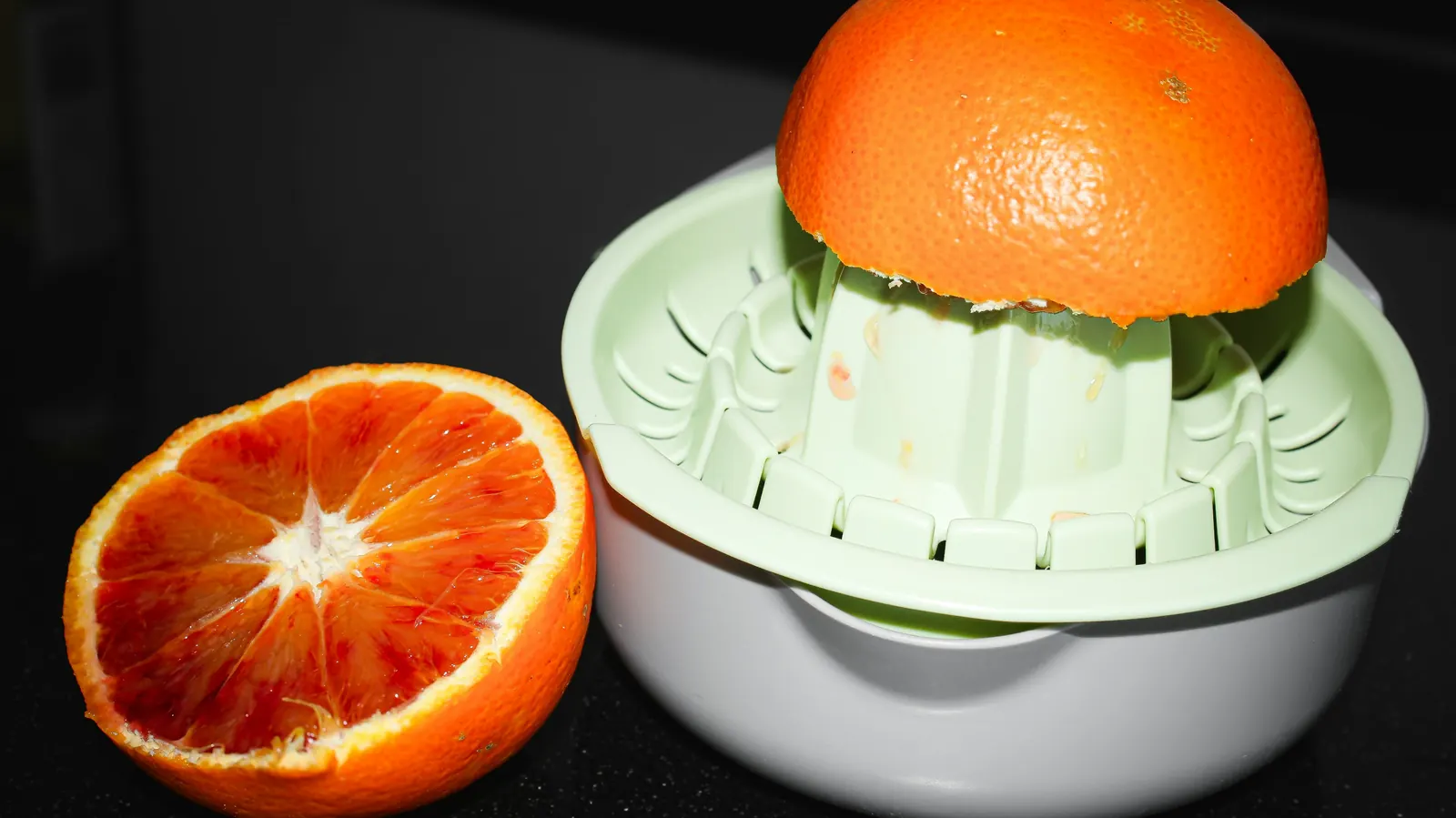
A citrus juicer does one job, but the jobs vary a lot. Squeezing a lime over a plate of tacos is not the same as juicing two dozen limes for a pitcher of margaritas or a bag of oranges for Sunday breakfast. The tool that is perfect for one can be slow, tiring or plain oversized for another, which is why the citrus juicer aisle runs from small hinged presses to cast iron levers and motorized machines.
This guide covers all of those types from a margarita and kitchen point of view, where limes come first and volume matters. It names the juicers worth buying, explains which kind suits the way you cook, and cites the independent reviewers whose findings back each pick.
Julia’s earns a commission on purchases made through links on this page, at no cost to you. Recommendations are based on what a restaurant kitchen looks for, product specifications and verified buyer reports, along with the published equipment reviews we cite.
Quick verdict: which citrus juicer to buy
If you juice often and want one machine for every fruit, the best citrus juicer is the Breville Citrus Press: a motorized lever press that America’s Test Kitchen named its winning electric juicer and that Reviewed found the fastest with the best yield. If you mostly juice limes a few at a time, the Chef’n FreshForce Citrus Juicer hand press is the top-rated handheld. For margaritas by the pitcher without electricity, a cast iron lever such as the Zulay Kitchen Cast Iron Juicer does the work with your arm instead of your grip.
The table compares the five standouts. Every juicer is then reviewed in full, with who it suits and who should skip it.
Five citrus juicers compared
Our five standout picks side by side, one for each kind of kitchen, with the details each maker or listing states. All nine juicers are reviewed in full below.
| Citrus juicer | Best for | Type & power | Cleaning (per maker) | Buy on Amazon |
|---|---|---|---|---|
Breville Citrus PressBest overall
|
Every citrus, lime to grapefruit | Motorized lever press, 110 watts | Cone, collector, filter and dome dishwasher safe | View on Amazon |
Chef’n FreshForce Citrus JuicerBest handheld
|
Limes and lemons, a few at a time | Geared hand press, manual | Top-rack dishwasher safe | View on Amazon |

Zulay Kitchen Cast Iron JuicerBest manual lever
|
Pitchers of margaritas, no outlet needed | Countertop lever press, manual | Not stated in the listing | View on Amazon |

Hamilton Beach Commercial Manual Citrus JuicerBest for bar volume
|
Home bars and big batches | Commercial lever press, NSF certified | Cone and funnel lift out for cleaning | View on Amazon |

BLACK+DECKER 32oz Electric Citrus JuicerBest value electric
|
Juice by the pitcher on a budget | Electric reamer, pressure activated | Dishwasher-safe, per the listing | View on Amazon |
Product images from Amazon. Details are as stated by each maker or listing; check the listing before you buy.
Our picks for the best citrus juicer
These nine juicers cover the four main types: motorized presses, electric reamers, manual lever presses and handheld tools. Each pick says what it is, what the maker states, what independent reviewers found where they reviewed it, and one honest reason to skip it.
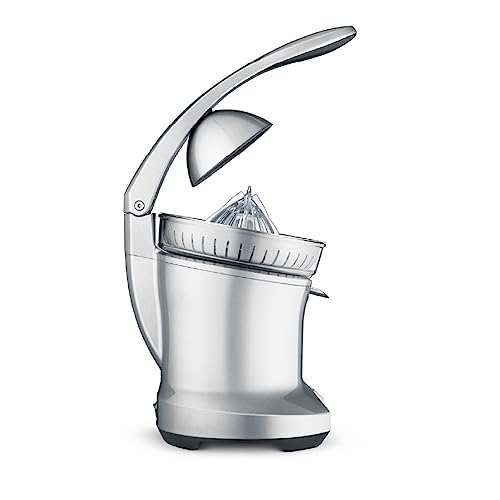
1. Breville Citrus Press – Top Yield on Any Size of Fruit
The Breville Citrus Press combines the two ideas that work best: a motor that spins the cone and a hinged arm that presses the fruit down onto it. You set the half on the cone, lower the arm, and the cone only starts turning once the arm is down and there is enough pressure on it, which Breville calls a dual switch safety. There is no grip strength involved and no fruit flying off a spinning reamer.
Breville says its single finned cone handles everything from the smallest lime to the largest grapefruit, so there are no extra cones to swap or store. The juice runs out through a drip-stop spout that you flip up to stop the flow. The cone, juice collector, filter and fruit dome all go in the dishwasher, and the motor is rated at 110 watts.
It is the most consistently praised electric juicer we found. America’s Test Kitchen named it the winner of its electric citrus juicer review, saying it handled every size of citrus and kept “consistently extracting almost all the juice from the fruits”, with a catcher angled toward the spout and parts that lift out easily. Reviewed found it the fastest juicer in its lineup with the best overall yield, and quiet, but called it “not an impulse buy” and overkill for a single lemon.
Why we like it
- Winner of America’s Test Kitchen’s electric citrus juicer review
- Fastest with the best yield in Reviewed’s lineup
- One cone fits limes through grapefruit
- Cone only spins once the arm is lowered
Key specifications
| Model | BCP600SILUSC |
|---|---|
| Type | Motorized lever press |
| Material | Not stated; silver finish |
| Power | 110 watts, 110 to 120 volts |
| Capacity/fruit size | Smallest lime to largest grapefruit; collector size not stated |
| Pulp control | Juice filter; no adjustable setting stated |
| Dishwasher-safe parts | Cone, collector, filter, fruit dome |
| Warranty | 1 year limited |
Why we recommend it
Choose it if you juice several times a week, switch between limes for margaritas and oranges for breakfast, or want the highest yield with the least effort. It is the one juicer here that independent reviewers rank at the top of its class on both speed and yield.
Skip it if you only need a lime or two at a time. It sits in the premium price tier and takes real counter space, and a hand press does a single lime just as well.
Pros and cons
Pros
- Top results from two independent reviewers
- No hand strength needed
- Handles any citrus size
- Main parts dishwasher safe
Cons
- Premium price tier
- Large footprint
- Overkill for a single lime
2. Chef’n FreshForce Citrus Juicer – The Handheld Reviewers Rank First
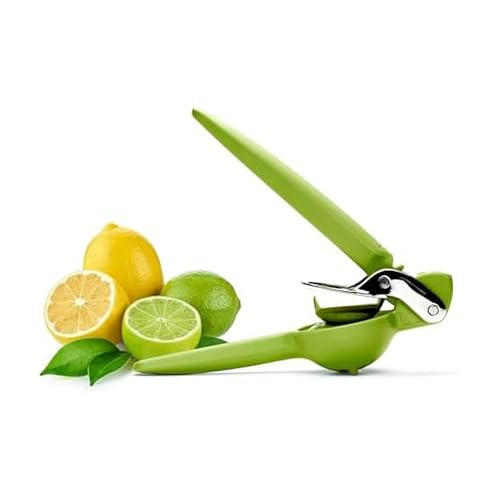
For most cooks, a hinged hand press is the right first citrus juicer, and this is the one reviewers keep choosing. The FreshForce has a patented dual-gear mechanism in its hinge that Chef’n says increases pressing power and reduces hand fatigue, and the company claims it gives 20% more juice than conventional handheld juicers. We found no independent measurement of that figure.
America’s Test Kitchen named the FreshForce the winner of its manual citrus juicer review, and Reviewed ranked it first overall, finding it fast and less messy than most, though too small for grapefruit. ATK measured the bowl at 3 inches across and found that press bowls of at least 3 inches worked best, because the fruit sits fully inside instead of bulging past the edges.
It is made of nylon and stainless steel, takes limes, lemons and other small citrus, strains seeds as it squeezes, and goes on the top rack of the dishwasher. This lime green version is the same tool as the yellow one ATK reviewed, in another color. For a deeper look at lime tools, see our guide to the best lime squeezer.
Why we like it
- Top pick of America’s Test Kitchen and Reviewed
- Dual-gear hinge adds squeezing force
- 3-inch bowl, the size ATK found works best
- Top-rack dishwasher safe
Key specifications
| Model | 102-159-018 |
|---|---|
| Type | Hinged hand press with dual gears |
| Material | Nylon and stainless steel |
| Power | Manual |
| Capacity/fruit size | Limes, lemons, small citrus; 3-inch bowl (per ATK) |
| Pulp control | Bowl strains seeds and pulp |
| Dishwasher-safe parts | Whole tool, top rack |
| Warranty | Not stated |
Why we recommend it
Choose it if limes and lemons are most of what you juice, from a squeeze over tacos to a round of margaritas. It costs a fraction of any electric press and lives in a drawer.
Skip it if you juice oranges or grapefruit regularly; the bowl is sized for small citrus, and a lever or electric press handles big fruit better.
Pros and cons
Pros
- Best-reviewed handheld press
- Gears reduce effort
- Compact and dishwasher safe
Cons
- Too small for grapefruit
- Still hand work for big batches
- Warranty not stated
3. Zulay Kitchen Cast Iron Juicer – Lever Power Without a Plug
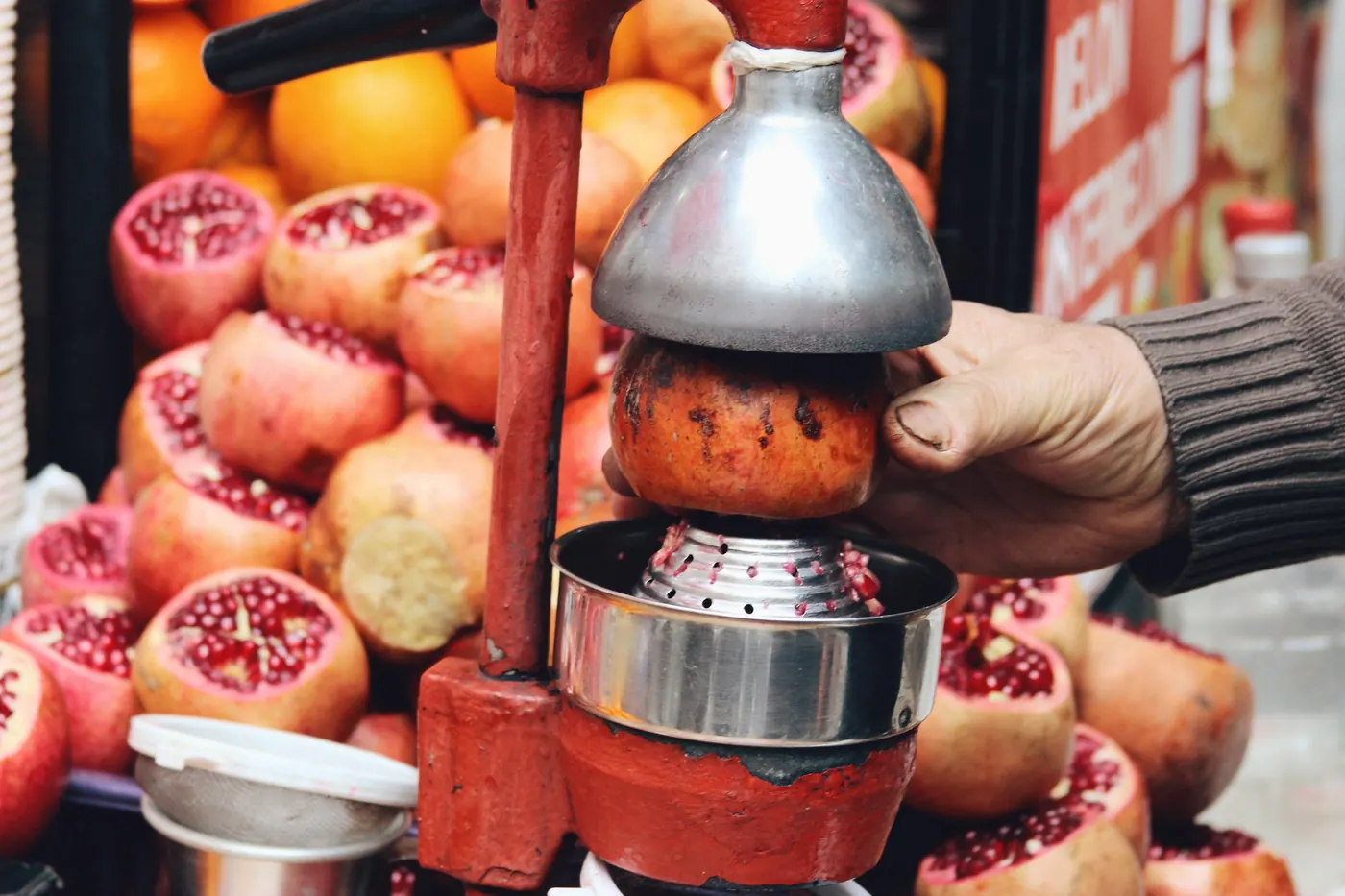
A countertop lever press is the classic juice-stand tool: a cone and cup on a heavy base, and a long arm that brings a press down over the fruit. Your arm and body weight do the work, so juicing twenty limes is a matter of minutes rather than a sore hand. Zulay’s version is heavy-duty cast iron with rubberized feet and a 5-inch bowl that the company says handles small limes up to large grapefruit.
Zulay says the lever arm gives “serious mechanical advantage” and that the press keeps seeds out of the glass and minimizes pulp. It is sold for home kitchens as well as bars, juice stands and restaurants, and comes in more than twenty colors.
America’s Test Kitchen highly recommended a Zulay Kitchen heavy-duty manual juice press as its favorite countertop model, calling it “speedy” and noting that it “yielded great volumes of juice with ease” across limes, lemons, oranges and grapefruit. ATK also found you need to hold the back steady while pulling, because it cannot be bolted down. ATK measured its press bowl at 4 inches, while this listing states 5, so we could not confirm it is the identical model; treat ATK’s verdict as a guide to the style.
Why we like it
- Lever does the work, not your grip
- 5-inch bowl for limes through grapefruit
- Heavy cast iron with rubberized feet
- No electricity needed
Key specifications
| Model | Cast Iron Juicer |
|---|---|
| Type | Countertop lever press |
| Material | Cast iron; stainless steel per the listing title |
| Power | Manual |
| Capacity/fruit size | 5-inch bowl; small limes to large grapefruit |
| Pulp control | Keeps seeds out, minimizes pulp (per listing) |
| Dishwasher-safe parts | Not stated |
| Warranty | Not stated |
Why we recommend it
Choose it if you make margaritas or agua de limón by the pitcher, host often, or juice outdoors where there is no outlet. It is the fastest manual way through a bag of limes.
Skip it if counter space is tight. It is heavy, it stays out, and it needs a steadying hand while you pull.
Pros and cons
Pros
- Fast for big batches
- Easy on the hands
- Takes any citrus size
Cons
- Heavy and bulky
- Must be held steady
- Care and warranty not stated
4. Hamilton Beach Commercial Manual Citrus Juicer – Built for Bar Service
This is the lever press from the restaurant-supply side of Hamilton Beach. The company says the extractor arm exerts up to 2,000 pounds of force, aiming for full juice output with minimal skin oil and pulp, which matters for margaritas, where bitter peel oil shows up quickly in the glass.
It is built for daily commercial use: metal components with an enamel finish that Hamilton Beach says resists wear from citrus acids, grip feet to stop it tipping, and a stainless steel strainer cone and plastic funnel that lift off for cleaning and sanitizing. It is NSF certified, meaning an independent organization has certified its design and construction for food service, and it carries a one-year parts and labor warranty, the clearest warranty of the manual presses here.
The listing names lemons, limes, oranges and grapefruit. We did not find an independent review of this model, so the recommendation rests on its commercial build, certification and the general findings on lever presses.
Why we like it
- NSF certified for food service
- Up to 2,000 pounds of pressing force, per Hamilton Beach
- Acid-resistant enamel finish
- One-year parts and labor warranty
Key specifications
| Model | 932 |
|---|---|
| Type | Commercial countertop lever press |
| Material | Metal with enamel finish; stainless cone, ABS funnel |
| Power | Manual |
| Capacity/fruit size | Lemons, limes, oranges, grapefruit |
| Pulp control | Stainless strainer cone; minimal pulp (per listing) |
| Dishwasher-safe parts | Not stated; cone and funnel remove for cleaning |
| Warranty | 1 year parts and labor |
Why we recommend it
Choose it if you run a serious home bar, cater parties, or simply want a press built to restaurant standards with a real warranty behind it.
Skip it if you juice once a week; it is a big, commercial-tier tool, and a home lever press or hand press covers occasional use for less.
Pros and cons
Pros
- Commercial build and certification
- Removable cone and funnel
- Clear warranty terms
Cons
- No independent review found
- Large and heavy
- Commercial price tier
5. Breville Citrus Press Pro – Die-Cast Steel and Adjustable Pulp
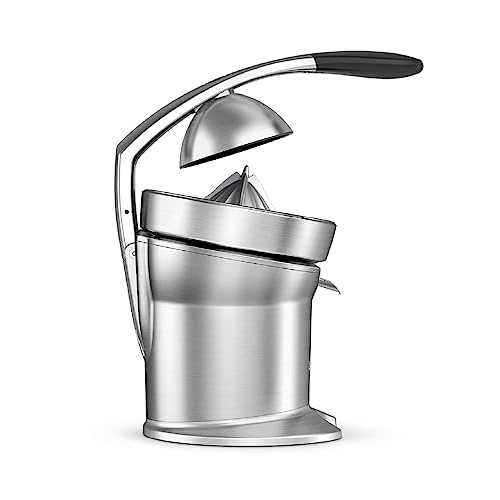
The Citrus Press Pro is the older, heavier sibling of our top pick. It works the same way, with a motorized cone and a lever arm that presses down, but the cone is die-cast stainless steel and the body is die-cast metal, both of which Breville says resist corrosive citric acid. The title also lists adjustable pulp control, which the standard Citrus Press does not claim.
Breville describes the cone as “Quadra-Fin”, finned and undulated to pull juice from any size of citrus. The same dual switch safety stops the cone until the arm is down, the drip-stop spout holds juice back, and the cone, collector, filter and fruit dome are dishwasher safe. Power is 110 watts, with a one-year limited warranty.
America’s Test Kitchen highly recommended it too, liking the heavy stainless reamer and the smooth three-hinge lever. But ATK found it “a little slower and yielded a bit less juice than its less-expensive sibling”, and concluded most people do not need to pay more for it. That is why it sits behind the Citrus Press here.
Why we like it
- Highly recommended by America’s Test Kitchen
- Die-cast stainless cone and metal body
- Adjustable pulp control
- Main parts dishwasher safe
Key specifications
| Model | 800CPXL |
|---|---|
| Type | Motorized lever press |
| Material | Die-cast stainless steel cone, die-cast body |
| Power | 110 watts, 110 to 120 volts |
| Capacity/fruit size | Limes to grapefruit; collector size not stated |
| Pulp control | Adjustable (per listing title) |
| Dishwasher-safe parts | Cone, collector, filter, fruit dome |
| Warranty | 1 year limited |
Why we recommend it
Choose it if you want an all-metal machine that feels built to last, and you care about setting the pulp level.
Skip it if yield and value come first; ATK found the cheaper Citrus Press slightly faster and slightly more productive.
Pros and cons
Pros
- Sturdy die-cast construction
- Pulp is adjustable
- Smooth lever action, per ATK
Cons
- Top price tier
- Slightly slower than the Citrus Press, per ATK
- Bulky
6. Cuisinart Pulp Control Citrus Juicer – Compact, With a Three-Year Warranty

An electric reamer is the simpler kind of electric juicer: you press the half onto a cone that spins under your hand, and the juice drains into a container below. Cuisinart’s has a single universal cone that it says takes the smallest lime to the largest grapefruit, and the cone reverses direction to pull more juice.
Its distinguishing feature is pulp control, with three settings from low to high, plus a “final spin” that Cuisinart says extracts more juice from the pulp left behind. An extra-long snap-up spout lets you fill a glass without drips. The parts are dishwasher safe, and Cuisinart backs it with a three-year limited warranty, the longest of any juicer on this page. Retailer listings give the motor as 25 watts.
Reviewed liked its yield, juice quality, quiet motor and compact size, but found the pulp control inconsistent: sometimes it clogged and sometimes it let too much pulp through. It is a sensible middle ground between a hand press and a motorized lever.
Why we like it
- Three pulp settings
- One cone for limes to grapefruit
- Three-year limited warranty
- Quiet and compact, per Reviewed
Key specifications
| Model | CCJ-500P1 |
|---|---|
| Type | Electric reamer, auto-reversing |
| Material | Black and stainless steel finish; other materials not stated |
| Power | 25 watts (retailer listings) |
| Capacity/fruit size | Smallest lime to largest grapefruit; container size not stated |
| Pulp control | 3 settings: low, medium, high |
| Dishwasher-safe parts | Yes, per Cuisinart |
| Warranty | 3 years limited |
Why we recommend it
Choose it if you want an electric juicer that stores in a cupboard, you care how much pulp ends up in the juice, and a long warranty matters to you.
Skip it if precise pulp control is the reason you are buying; Reviewed found the settings unreliable.
Pros and cons
Pros
- Longest warranty here
- Compact and quiet
- Good yield, per Reviewed
Cons
- Pulp control inconsistent, per Reviewed
- You hold the fruit down by hand
- Container size not stated

7. BLACK+DECKER 32oz Electric Citrus Juicer – A Pitcher of Juice for Less
The CJ625 is the electric juicer for people who want a pitcher of juice without paying for a lever press. It is pressure activated: press the half onto the cone and it spins, reversing direction automatically. Juice collects in a clear 32-ounce container with measurement markings that doubles as a pitcher, with a handle and a drip-free spout.
Pulp control is adjustable, and pulp collects in a removable basket you can empty between batches. The listing describes it as dishwasher-safe, and BLACK+DECKER gives a one-year warranty.
Reviewed named it the best electric citrus juicer it reviewed, handling small and large citrus with an easy-to-clean container. America’s Test Kitchen was more reserved: it found it quick with small and medium citrus, with a roomy carafe and parts that detach easily, but called it “extremely loud” and noted an extra strainer that adds to cleanup. For more juicers in this price range, see our guide to the best cheap citrus juicer.
Why we like it
- Reviewed’s best electric citrus juicer
- 32-ounce container with markings doubles as a pitcher
- Adjustable pulp with a removable basket
- Dishwasher-safe, per the listing
Key specifications
| Model | CJ625 |
|---|---|
| Type | Electric reamer, pressure activated |
| Material | Plastic container; cone material not stated |
| Power | Not stated |
| Capacity/fruit size | 32-ounce container; small and large citrus |
| Pulp control | Adjustable, with pulp basket |
| Dishwasher-safe parts | Yes, per the listing |
| Warranty | 1 year |
Why we recommend it
Choose it if you want electric juicing for parties and weekend breakfasts at a modest price, and like pouring straight from the container.
Skip it if noise bothers you; ATK called it extremely loud.
Pros and cons
Pros
- Low price tier for an electric
- Pitcher-style container
- Adjustable pulp
Cons
- Loud, per ATK
- Extra strainer to wash
- Power not stated
8. Waring Compact Electric Citrus Juicer – A Bar Juicer for Steady Volume

Waring sells this compact juicer to bars and restaurants, and it is built like it: a heavy-duty die-cast base, vibration-dampening feet for quiet, stable running, and a universal reamer that the listing says juices all types of citrus. Waring rates it at up to 120 oranges an hour.
It is a reamer, so you hold the fruit on the cone yourself, but it is designed to run for long sessions, which is the difference from a kitchen reamer. The listing gives a 34-ounce size, a one-year limited warranty and an ETL safety listing. It does not state the wattage, the pulp settings or whether parts are dishwasher safe, so check the listing or the manual if those matter to you.
We found no independent review of this model. It is here because it fills a gap between the kitchen electrics above and full commercial extractors: a small, sturdy machine for someone who juices limes for a home bar or a busy party most weekends.
Why we like it
- Built for bar and restaurant use
- Die-cast base with vibration-dampening feet
- Rated at up to 120 oranges an hour
- Compact footprint
Key specifications
| Model | BJ120C |
|---|---|
| Type | Electric bar reamer |
| Material | Die-cast base; other parts not stated |
| Power | Not stated in the listing |
| Capacity/fruit size | 34 ounces; all citrus, universal reamer |
| Pulp control | Not stated |
| Dishwasher-safe parts | Not stated |
| Warranty | 1 year limited |
Why we recommend it
Choose it if you juice in steady volume and want a commercial machine that still fits on a home counter.
Skip it if you want proven performance; no independent reviewer has published results on it, and the kitchen models above have.
Pros and cons
Pros
- Commercial construction
- Stable and compact
- Clear hourly rating
Cons
- No independent review found
- Power and care details not stated
- Hand-held fruit, no lever
9. OXO Good Grips Wooden Reamer – The Simplest Juicer There Is

A reamer is a ridged cone on a handle that you twist into the cut half of the fruit. OXO’s is solid FSC-certified beechwood with a natural oil finish and a large handle, and it takes up almost no room in a drawer.
Reviewed named it its best value, praising the yield and the flavor of the juice while calling it the slowest and messiest option. America’s Test Kitchen recommended it as a “compact, straightforward tool”, but found reamers in general slower than presses and their juice less aromatic, since a press also squeezes oils from the peel. ATK also warns the tip can poke through thin lime peels.
It earns its place for the single lime: juice straight over guacamole or a bowl of soup, rinse, and put it away. OXO says to hand wash it and dry it promptly.
Why we like it
- Reviewed’s best value; recommended by ATK
- Solid FSC-certified beechwood
- No moving parts
- Fits any drawer
Key specifications
| Model | 1064758 |
|---|---|
| Type | Handheld reamer |
| Material | Solid beechwood, natural oil finish |
| Power | Manual |
| Capacity/fruit size | Lemons and limes |
| Pulp control | None; no strainer |
| Dishwasher-safe parts | No; hand wash and dry promptly |
| Warranty | OXO satisfaction guarantee |
Why we recommend it
Choose it as a second tool for single limes, or if you rarely juice more than one fruit at a time.
Skip it if seeds in the juice bother you; there is no strainer, so juice into a small sieve or a separate cup.
Pros and cons
Pros
- Backed by two reviewers
- Lowest price tier here
- Nothing to break
Cons
- Slow and messy in volume
- No seed strainer
- Hand wash only
How to choose a citrus juicer
Five questions narrow the field quickly. The first one decides most of it.
1. How much juice do you make at once?
A lime or two at a time calls for a hand press or a reamer. A round of four margaritas is still comfortable with a geared hand press. A pitcher, a weekly batch of aguas frescas or orange juice for a family is where a lever press or an electric juicer pays off, because your grip stops being the limit.
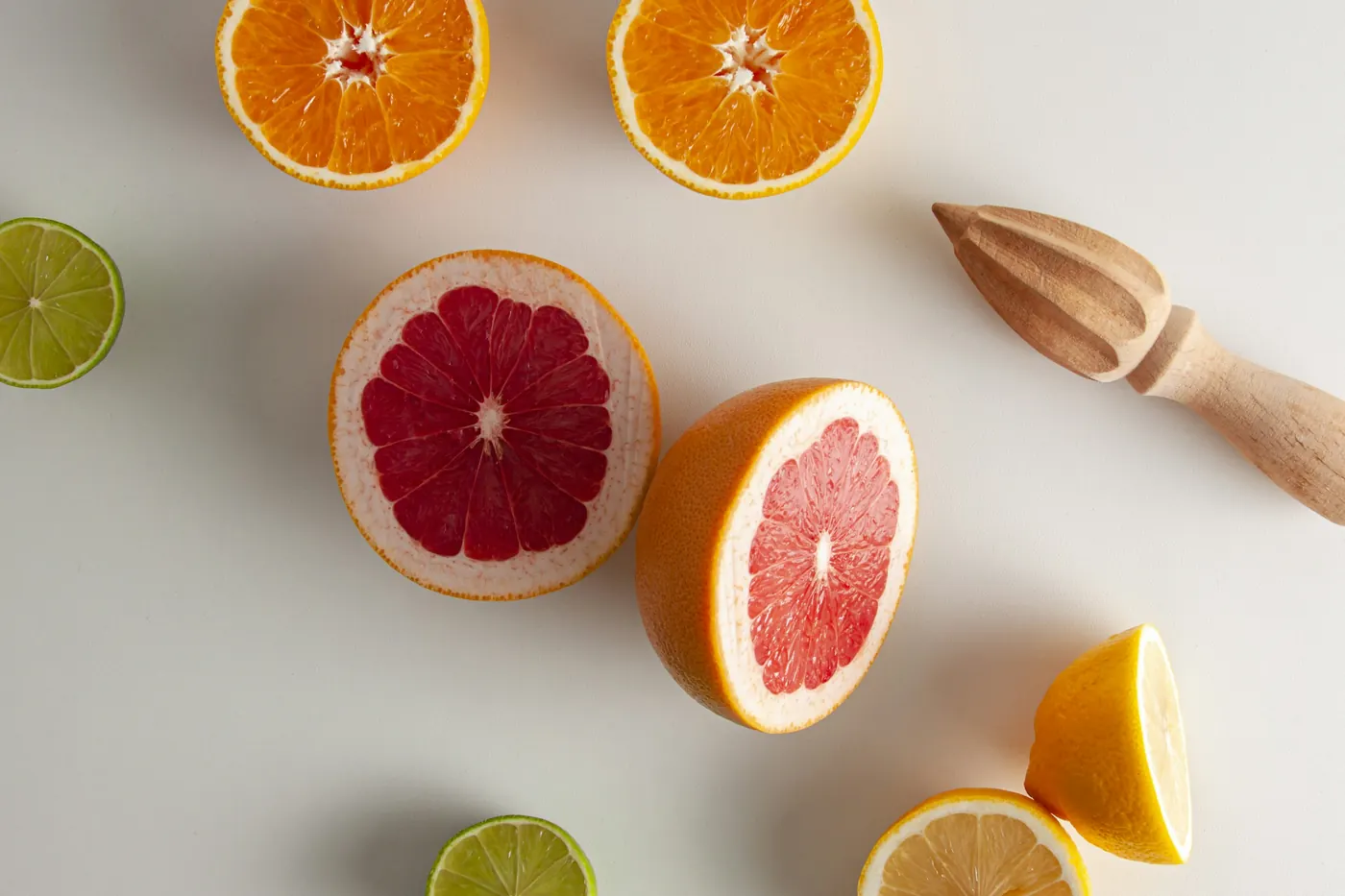
2. Which fruit, and how big?
Most limes in US supermarkets are Persian limes, which a University of Wisconsin Extension guide puts at about 2 to 2½ inches across; the small key limes common in Mexico run 1 to 2 inches, according to the Produce Market Guide. A hand press with a 3-inch bowl handles both, and lemons too. Oranges and grapefruit need a lever press or an electric with a large cone. If oranges are your main fruit, see our guide to the best citrus juicer for orange juice.
3. Manual or electric?
Manual tools are quicker to grab and wash for small jobs, and a lever press needs no outlet. Electric juicers save effort in volume. Among electrics, a motorized lever press (the Brevilles) holds the fruit for you, while a reamer (Cuisinart, BLACK+DECKER, Waring) needs you to press down and hold. America’s Test Kitchen found that a sharp, wide, tall reamer and a strainer with tall walls mattered more than auto-reversing rotation, which made no meaningful difference in its review, and that gentle pressure avoids bitter pith in the juice.
4. Your hands
Grip strength decides more purchases than people expect. Geared hand presses reduce effort, lever presses use your arm and body weight, and electric presses need almost none. Our guide to the best citrus juicer for arthritic hands goes into this in detail.
5. Cleaning, storage and warranty
Check which parts go in the dishwasher, where the juicer will live, and what the maker promises. Warranties on this page run from not stated, through one year, to Cuisinart’s three years. Acid is hard on bare metals, so look for stainless steel, enamel or an acid-resistant finish on anything the juice touches.
How we chose these nine citrus juicers
We started from what a kitchen that goes through a lot of limes needs: a high yield, few seeds in the glass, a tool that stands up to acid and daily use, and options for both a single lime and a party’s worth of margaritas. We searched the citrus juicers sold on Amazon in the United States, checked that each one was in stock with Amazon’s product data on the day of writing, and took specifications from the maker or the listing. For performance we relied on published reviews: America’s Test Kitchen’s electric citrus juicer review, its manual citrus juicer review and Reviewed’s citrus juicer ranking. We could not read Wirecutter’s or Serious Eats’ current citrus juicer pages, so we do not cite them. We left out juicers those reviewers did not recommend, near-identical models from sellers that publish no maker details, and an out-of-stock reviewed model. Two picks, the Hamilton Beach and the Waring, have no independent review we could find, and we say so in each. We have not used these juicers ourselves; where we describe how one performs, we say whose findings those are.
Citrus juicer questions, answered
What is the best type of citrus juicer?
It depends on volume. For a few limes or lemons, a geared hand press is the best kind of citrus juicer: cheap, fast and easy to wash. For pitchers and oranges, a lever press, manual or motorized, is faster and easier on the hands. America’s Test Kitchen found that presses generally gave more juice than reamers and were faster and less messy.
What do the reviews say is the top citrus juicer?
Among the reviews we could read, America’s Test Kitchen’s electric winner is the Breville Citrus Press and its manual winner is the Chef’n FreshForce. Reviewed ranked the Chef’n FreshForce first overall, the OXO wooden reamer as best value and the BLACK+DECKER CJ625 as best electric. We have not seen a current Consumer Reports rating for these models.
Is an electric citrus juicer better than a manual one?
Not automatically. Electric juicers save effort in quantity, but they take space, need washing and are no faster for one lime. A good lever press matches an electric for speed without a plug.
Which citrus juicer is best for margaritas?
For a round or two, the Chef’n FreshForce. For a pitcher, a lever press such as the Zulay or the Breville Citrus Press. Squeeze into a measuring cup rather than straight into the shaker so a stray seed stays out, and see our guide to frozen versus on-the-rocks margaritas for the drink itself.
What makes a quality citrus juicer?
A bowl or cone big enough for your fruit, a strainer that holds back seeds, surfaces that resist citrus acid, parts that come apart for cleaning and a clear warranty. A simple, well-made tool usually beats a complicated one.
Our final word on citrus juicers
If you juice a lot of different fruit, buy the Breville Citrus Press. If your juicing is mostly limes and lemons, the Chef’n FreshForce does the job for a fraction of the cost, and a lever press like the Zulay or the Hamilton Beach takes over when the margaritas are by the pitcher. For more tools for the bar, see our guide to margarita accessories and our comparison of a lime squeezer vs lemon squeezer.
Related guide: Best lemon zester.
Related guide: Best juice glasses.
Related guide: Manual vs electric citrus juicer.
And if you would rather someone else squeezed the limes, see our drinks or call to order.