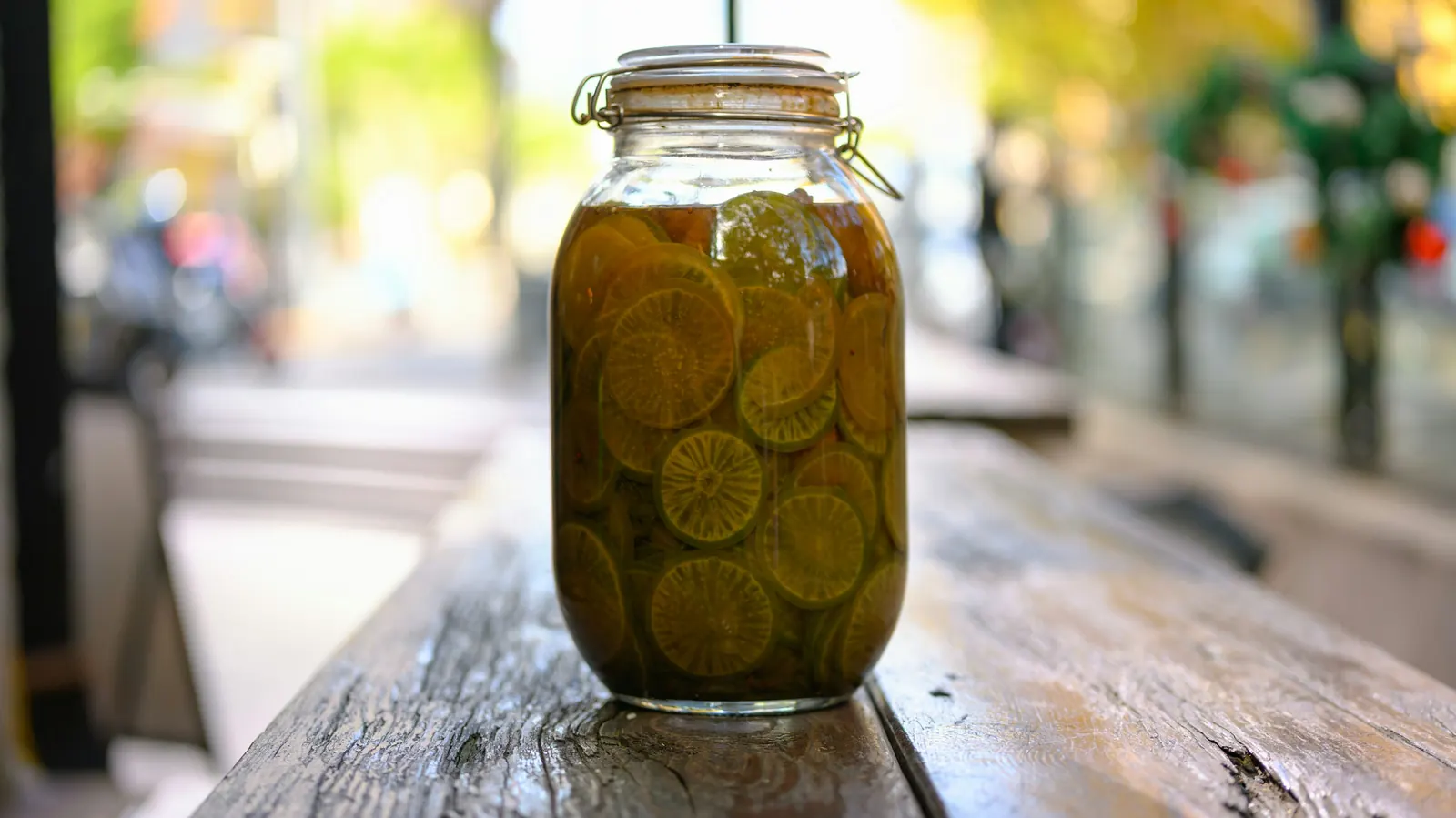
A pickle looks like the simplest thing in the kitchen. It is a vegetable, salt, a sour liquid and some patience. Any Mexican cook who has put up jalapeños and carrots in escabeche knows how much difference the balance makes, and how quickly a good jar disappears.
This guide gives seven books from named authors and established publishers, one for each kind of pickler. Some are older than the current canning guidance, so we also show you how to check any recipe you plan to store on a shelf.
Julia’s earns a commission on purchases made through links on this page, at no cost to you. Recommendations are based on what a restaurant kitchen looks for in a cookbook, the Amazon listing, publisher and author information and published reviews, which we name where we use them.
Quick verdict: the best pickling book to start with
For most cooks, start with Andrea Chesman’s The Pickled Pantry, with 150 recipes from apples to zucchini. For flavors beyond the dill jar, choose Karen Solomon’s Asian Pickles. For a short, friendly first book, choose Andrea Weigl’s Pickles and Preserves.
The other four cover cooking with pickles, Japanese home pickling, an illustrated gift book and kimchi.
Five pickles cookbooks side by side
Five of the seven, one for each kind of cook. All seven are described in full below.
| Cookbook | Best for | Recipes | Length | Buy on Amazon |
|---|---|---|---|---|
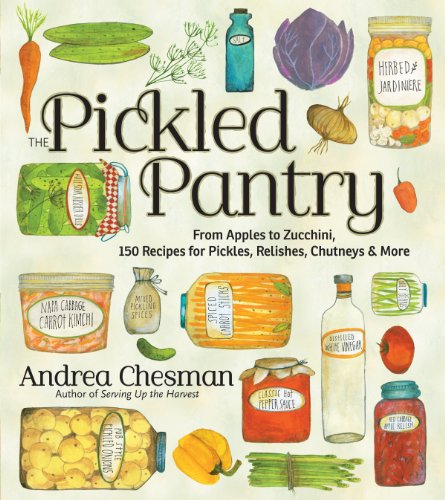
The Pickled Pantry, Andrea ChesmanBest overall
|
A garden-to-jar reference | 150 | 304 pages, paperback | View on Amazon |

Asian Pickles, Karen SolomonBest for Asian pickles
|
Asian pickling traditions | More than 75 | 208 pages, hardcover | View on Amazon |

Pickles and Preserves, Andrea WeiglBest short book
|
A short, Southern start | 50 | 106 pages, paperback | View on Amazon |

Grillo’s Presents Pickled, Grillo’s Pickles and Raphael Jacob KhutorskyBest for cooking with pickles
|
Eating pickles as well as making them | 100 | 224 pages, hardcover | View on Amazon |

Japanese Pickled Vegetables, Machiko TatenoBest for Japanese pickles
|
Japanese home pickling | 129 | 144 pages, paperback | View on Amazon |
Cover images from Amazon. Page counts and formats are from the Amazon listings for the editions linked. Recipe counts are from the publisher’s copy or the title.
Our picks for the best pickling book, one by one
All seven were in stock, in print and new, and sold by Amazon when we checked. We have not cooked from these books; where we describe a strength, we say whose view it is.
1. The Pickled Pantry, Andrea Chesman – Apples to Zucchini, 150 Recipes
Andrea Chesman writes cookbooks focused on traditional techniques and garden cooking, according to her publisher, and she teaches and gives cooking demonstrations across the United States. This is the broad, general pickling book on the page, with a title that promises 150 recipes from apples to zucchini.
The publisher describes classic pickling techniques and recipes for first-time picklers and experienced home canners alike. Examples include homemade sauerkraut, salt-cured dilly beans and rosemary onion confit, so it goes beyond the vinegar jar.
We found no Publishers Weekly review for this title and no quoted praise in the copy we read, so this pick rests on the publisher’s and author’s details. It came out in 2012, before the 2015 USDA guide revision, so check any canned recipe against the National Center for Home Food Preservation (NCHFP).
Why we like it
- 150 recipes, per the title
- Sorted across many fruits and vegetables
- For beginners and experienced canners, per the publisher
- Published by Storey
Key specifications
| Author | Andrea Chesman |
|---|---|
| Publisher | Storey Publishing |
| Year | 2012 |
| Pages | 304 |
| Format | Paperback |
| Recipes | 150 |
| Focus | Pickles, relishes, chutneys |
| Best for | Gardeners and first-timers |
Why we recommend it
If you want one pickling book to work through a garden or a farmers’ market, buy this. The breadth means you can look up whatever came home in the bag.
Skip it if you want the newest canning guidance built in. It dates from 2012.
Pros and cons
Pros
- Broad recipe range
- Traditional techniques
- Beginner to experienced
Cons
- Published in 2012
- No named review in our sources
2. Asian Pickles, Karen Solomon – Five Pickling Traditions
Karen Solomon’s book has the strongest praise on this page, though we read it through the publisher. It quotes Sandor Ellix Katz, author of The Art of Fermentation: “This is among the very best books I’ve encountered on pickling.” It also quotes Marisa McClellan, creator of Food in Jars, who calls it “required reading for all home preservers.”
The publisher describes more than 75 recipes across traditions from Korea, Japan, China, India and Vietnam, from quick pickles for beginners to methods that go well past basic brine. Named examples include whole leaf cabbage kimchi, umeboshi, coconut-cilantro chutney and daikon and carrot pickle.
We found no Publishers Weekly review at this ISBN. Some of the recipes are cured or fermented, as the subtitle says, so they work differently from a vinegar pickle. Our fermentation book guide covers that side in depth.
Why we like it
- More than 75 recipes, per the publisher
- Praised by Sandor Katz, via the publisher
- Quick recipes for beginners
- Five national traditions
Key specifications
| Author | Karen Solomon |
|---|---|
| Publisher | Ten Speed Press |
| Year | 2014 |
| Pages | 208 |
| Format | Hardcover |
| Recipes | More than 75 |
| Focus | Korea, Japan, China, India, Vietnam |
| Best for | Adventurous picklers |
Why we recommend it
If American dill jars no longer excite you and you can find some Asian grocery staples, this will keep you busy for a long while.
Skip it if you want classic cucumber pickles. Start with Chesman or Weigl instead.
Pros and cons
Pros
- Strong praise from peers
- Wide regional range
- Quick options included
Cons
- Specialty ingredients are likely
- No PW review at this ISBN
3. Pickles and Preserves, Andrea Weigl – A Short Southern Primer
This is the smallest book here, and that is its charm. Part of the Savor the South series from the University of North Carolina Press, it gives 50 classic and inventive recipes, from dilly beans to habanero gold pepper jelly, with instructions and troubleshooting tips.
Andrea Weigl was the food writer and editor at the News & Observer in Raleigh, North Carolina, for a decade, according to her publisher. The description, with its instructions and troubleshooting tips, suggests a practical book.
We found no Publishers Weekly review for this title and no quoted praise in the copy we read. Note that the book shares its pages with preserves, so not all 50 recipes are pickles. It also dates from 2014 on the listing, before the USDA guide’s 2015 revision, so check canning times with NCHFP.
Why we like it
- 50 recipes, per the publisher
- Troubleshooting tips included
- Written by a longtime food editor
- Short paperback
Key specifications
| Author | Andrea Weigl |
|---|---|
| Publisher | University of North Carolina Press |
| Year | 2014 |
| Pages | 106 |
| Format | Paperback |
| Recipes | 50 |
| Focus | Southern pickles and preserves |
| Best for | Southern cooks |
Why we recommend it
If you want a short book that you can read in an evening, especially for Southern flavors such as dilly beans and pepper jelly, this fits well.
Skip it if you want a big reference. At 106 pages, it will not last long if you pickle every week.
Pros and cons
Pros
- Short and practical
- Southern focus
- University press
Cons
- Only 50 recipes
- Pickles share the book with preserves
4. Grillo’s Presents Pickled, Grillo’s Pickles and Raphael Jacob Khutorsky – Cooking With the Whole Jar
Grillo’s started in 2008 from a wooden pickle cart in downtown Boston, according to the publisher, and this book pairs the brand with chef Raphael Jacob Khutorsky, who opened his first restaurant in New York’s East Village in 2023.
The publisher describes 100 recipes covering classic dill pickles and home pickling, including brining and canning, along with pickles in meals, snacks and cocktails. Sample dishes include Devilish Eggs, Pickle Brine Spatchcock Chicken and a boozy Pickleback Slush.
So this is two books in one: how to make the pickle and what to do with it. We found no quoted praise and no Publishers Weekly review at this ISBN, so it rests on the publisher’s details. It is also a brand’s book, which is worth keeping in mind.
Why we like it
- 100 recipes, per the publisher
- Covers brining and canning
- Uses for pickles in meals and drinks
- Recent, from 2024
Key specifications
| Author | Grillo’s Pickles, Raphael Jacob Khutorsky |
|---|---|
| Publisher | Abrams Books |
| Year | 2024 |
| Pages | 224 |
| Format | Hardcover |
| Recipes | 100 |
| Focus | Pickles and pickle-based dishes |
| Best for | Pickle fans |
Why we recommend it
If you already love pickles and want to use brine and spears in dinner as well as on a plate, this is the most fun book here.
Skip it if you want a serious study of technique. The recipes after the pickling section are about eating.
Pros and cons
Pros
- Lively recipes
- Uses the brine too
- Recent
Cons
- Brand-driven book
- No named review in our sources
5. Japanese Pickled Vegetables, Machiko Tateno – 129 Homestyle Recipes
Machiko Tateno is a chef who specializes in fermented and preserved foods, according to her publisher, and she trained at Ballymaloe Cookery School in Ireland before working as an executive chef in Tokyo. This is her first book translated into English.
The title gives 129 homestyle recipes for brined, vinegared and fermented pickles. The publisher says recipes are cross-referenced by vegetable and method, with vegetables easy to find in the West alongside traditional Japanese ones such as burdock and lotus root, and with regional pickling styles.
The publisher lists it as a 2020 IACP Cookbook Award finalist and a Gourmand award winner. We read that through the publisher, and we found no Publishers Weekly review at this ISBN. Our Japanese cookbook guide covers the wider cuisine.
Why we like it
- 129 recipes, per the title
- Cross-referenced by vegetable and method
- IACP finalist, per the publisher
- Many Western vegetables used
Key specifications
| Author | Machiko Tateno |
|---|---|
| Publisher | Tuttle Publishing |
| Year | 2019 |
| Pages | 144 |
| Format | Paperback |
| Recipes | 129 |
| Focus | Brined, vinegared, fermented pickles |
| Best for | Fans of Japanese food |
Why we recommend it
If you enjoy the small pickles that come with a Japanese meal and want to make them at home, this goes further than any other book here.
Skip it if you want big jars for the shelf. The publisher describes homestyle pickling, so check the method and storage for each recipe.
Pros and cons
Pros
- Deep on one tradition
- Easy cross-references
- Award recognition
Cons
- Some traditional vegetables need a specialty shop
- No PW review at this ISBN
6. Pickles, Illustrated, Karen Solomon – A Small, Drawn Guide

This is Karen Solomon’s second book on our list, and it is a very different object. Chronicle publishes it as an illustrated cookbook with 36 recipes and pickle lore from around the world, including Kimchi Day in Korea and the pickle holiday ornament.
The recipes fall into four flavor groups, called sour-ish, savory-ish, sweet-ish and spicy-ish, and use four methods: quick pickles, refrigerator pickles, fermentation and salt-curing. It gives salt guidance for each recipe, and named dishes run from pickled red onion and kosher dill to green strawberry salsa.
Publisher copy quotes Library Journal saying it “has something for every pickle lover.” We read that through the publisher and found no Publishers Weekly review at this ISBN. Quick and refrigerator methods make it a low-pressure place to start, and the publisher’s description does not mention a canner.
Why we like it
- 36 recipes, per the publisher
- Four methods explained
- Salt guidance for each recipe
- Praised by Library Journal, via the publisher
Key specifications
| Author | Karen Solomon, illustrated by Alice Oehr |
|---|---|
| Publisher | Chronicle Books |
| Year | 2025 |
| Pages | 152 |
| Format | Hardcover |
| Recipes | 36 |
| Focus | Quick, refrigerator, fermented, salt-cured |
| Best for | Gift buyers and new picklers |
Why we recommend it
If you are buying for a pickle lover, or want a small and cheerful way in, this is the obvious pick. Its illustrations also set it apart on a shelf.
Skip it if you want a big recipe collection. With 36 recipes, it is a taster.
Pros and cons
Pros
- Fun to read
- Beginner methods
- Recent, from 2025
Cons
- Few recipes
- Not a canning manual
7. The Kimchi Cookbook, Lauryn Chun with Olga Massov – Sixty Ways With Kimchi

Kimchi is a pickle, even if it does not always get called one, and it deserves a book of its own. Lauryn Chun founded the Mother-in-Law’s Kimchi line in 2009, based on her mother’s restaurant recipe, according to the publisher. Co-author Olga Massov is a Brooklyn food writer.
The publisher describes 60 recipes, with kimchi made by season, from long-fermented winter batches to quick summer ones, and then used in dishes such as dumplings, fried rice, steak ssam and ribs.
Publisher copy carries a lot of press, including a Serious Eats note that readers familiar with her brand “should be pleased to find many of her signature recipes tucked throughout the book.” We read that through the publisher, and we found no Publishers Weekly review for this title. Our Korean cookbook guide covers the wider kitchen.
Why we like it
- 60 recipes, per the publisher
- Seasonal kimchi styles
- Cooking with kimchi included
- Author founded a kimchi brand
Key specifications
| Author | Lauryn Chun, Olga Massov |
|---|---|
| Publisher | Ten Speed Press |
| Year | 2012 |
| Pages | 160 |
| Format | Hardcover |
| Recipes | 60 |
| Focus | Kimchi by season, cooking with it |
| Best for | Kimchi lovers |
Why we recommend it
If kimchi is your pickle, and you would like to make it through the year and also cook with it, this is the single-subject book to buy.
Skip it if you want variety across pickles. It stays on one subject, and much of it is fermentation.
Pros and cons
Pros
- Single-subject depth
- Seasonal approach
- Good press, via the publisher
Cons
- Narrow subject
- Published in 2012
How to choose a pickles cookbook
Five questions will narrow this list quickly.
- Will you store them on a shelf? Then the recipe needs a tested process. The National Center for Home Food Preservation says that processing pickles in a boiling-water canner prevents spoilage problems, and it says to “use only recipes with tested proportions of ingredients.”
- Is the book older than the guidance? The USDA guide to home canning has a 2015 revision, and some of these books came first. Older books may be out of date, so treat their canning times as something to check, not to trust.
- Do you want vinegar or fermented pickles? Most of these books cover both. Fermented jars behave very differently, so read our fermentation book guide if that is your main interest.
- Will you change the recipe? NCHFP says plainly, “Do not alter vinegar, food, or water proportions in a recipe or use a vinegar with unknown acidity.” It recommends white distilled and cider vinegars of 5 percent acidity. Change the spices if you like, and leave the ratio alone.
- Do you have the gear? Refrigerator and quick pickles need little. For canned jars, our canning funnel guide covers one tool that makes filling much neater.
How we chose these pickling books
We searched Amazon’s book listings first and kept print editions from named authors at established publishers, plain in stock with a new lead offer. We left out titles on our best fermentation book page, such as Fermented Vegetables and The Japanese Art of Pickling and Fermenting. Author, year, format and page count come from the Amazon listing. Recipe counts and descriptions come from the publisher’s copy, in some cases as carried by booksellers, unless we credit someone else.
Here is what stands behind each pick. None has a Publishers Weekly review that we could find at its ISBN, which does not mean no review exists anywhere. Asian Pickles, Pickles, Illustrated and The Kimchi Cookbook have praise we read only as quoted by the publisher, and Japanese Pickled Vegetables has awards listed by its publisher. The rest stand on the publisher’s and author’s details.
Stock ruled out some of the best-known names. The Joy of Pickling by Linda Ziedrich was low in stock, and Kevin West’s Saving the Season was not plainly in stock when we checked. We stopped at seven, because that was the honest count.
Pickling book questions, answered
What is the best pickling book for beginners?
The Pickled Pantry for range, which its publisher pitches at first-time picklers as well as experienced canners. Pickles and Preserves and Pickles, Illustrated are shorter options.
Which book covers quick pickles?
Pickles, Illustrated names quick and refrigerator pickles among its four methods, and Asian Pickles includes quick recipes for beginners.
Are old pickling books safe to follow?
Use them with care. NCHFP warns that many recipes in older cookbooks do not include processing instructions, and its pickling page says there must be a minimum, uniform level of acid to prevent the growth of botulinum bacteria. Check shelf-stable recipes against NCHFP’s current directions.
Can I use any vinegar for pickling?
NCHFP recommends white distilled and cider vinegars of 5 percent acidity and warns against vinegar of unknown acidity. Many specialty vinegars do not state it, so read the label.
Is kimchi a pickle?
It is a salted, fermented vegetable, and books on pickling often include it, as Asian Pickles does. The Kimchi Cookbook treats it as a whole subject.
Which pickling book should you buy first?
Buy The Pickled Pantry if you want one broad book. Choose Asian Pickles or Japanese Pickled Vegetables for a tradition you love, Grillo’s Presents Pickled to cook with pickles and The Kimchi Cookbook for one great subject. If live cultures interest you more than vinegar, go to our best fermentation book guide, and try our chamoy pickle guide for a snack with a Mexican accent.
And if you would rather let someone else cook tonight, see the menu or call to order.