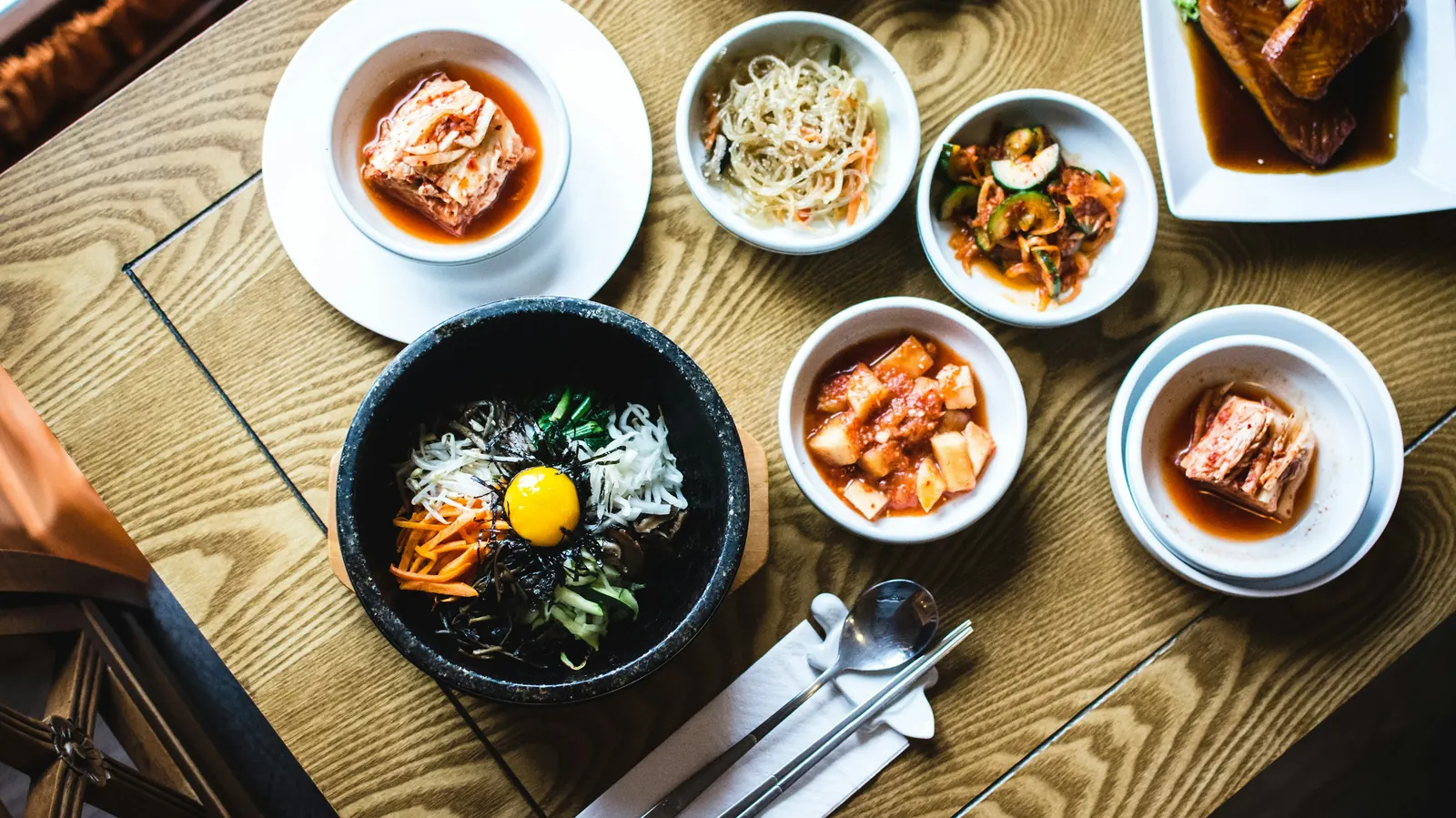
Korean cooking has a lot in common with a Mexican kitchen. Chile runs through it, grilled meat sits at the center of a good gathering, and the table fills up with small things that sharpen every bite: kimchi and pickles in one, salsas and pickled onions in the other. What it adds is a deep habit of fermentation, and a pantry of pastes and sauces that can look like a wall of unknowns at the grocery store. A good book solves that before it hands you a recipe.
The hard part is that “Korean cookbook” now covers very different books: a home cook’s teaching manual, a 496-page reference, a chef’s restaurant food, a family memoir with recipes. This guide picks eight from named authors at established publishers, and says what the named sources report and who each one suits. Where a pick rests on the publisher’s details alone, we say so in its entry.
Julia’s earns a commission on purchases made through links on this page, at no cost to you. Recommendations are based on what a restaurant kitchen looks for in a cookbook, publisher information and published reviews, which we name.
Quick verdict: the best Korean cookbook to start with
For most home cooks, start with Maangchi’s Big Book of Korean Cooking: everyday meals and celebration dishes in one volume, and Publishers Weekly said it “will be a go-to Korean cookbook.” If you are brand new to Korean food, choose her shorter Maangchi’s Real Korean Cooking. If you want the deepest reference, choose Phaidon’s The Korean Cookbook, with 350 recipes.
The other five cover a chef’s guided approach, Korean American family cooking, shortcut party food, a mother’s kitchen wisdom and side dishes.
Five Korean cookbooks side by side
Five of the eight, one for each kind of cook, with the details the publisher or a named review gives. All eight are described in full below.
| Cookbook | Best for | Recipes | Named source | Buy on Amazon |
|---|---|---|---|---|

Maangchi’s Big Book of Korean CookingBest overall
|
One big book for everything | Not stated | Publishers Weekly | View on Amazon |

Maangchi’s Real Korean CookingBest for beginners
|
Learning the basics | Not stated | Publishers Weekly | View on Amazon |

The Korean Cookbook, Junghyun Park and Jungyoon ChoiBest reference
|
The deep reference shelf | 350 | Rests on publisher details | View on Amazon |

Korean American, Eric KimBest Korean American
|
Family food, Korean and American | Not stated | Publishers Weekly | View on Amazon |

Banchan, Caroline ChoeBest for side dishes
|
Side dishes and small plates | 60 | Publishers Weekly | View on Amazon |
Cover images from Amazon. Page counts and formats are for the editions linked; other editions differ.
Our picks for the best Korean cookbook, book by book
Six of these eight have a named review we read and cite: five from Publishers Weekly alone, and My Korea from both PW and Cooks Without Borders. The Korean Cookbook and Umma rest on the publisher’s and authors’ details, and we say so in their entries. We have not cooked our way through these books; where we describe a strength, we say whose view it is.
1. Maangchi’s Big Book of Korean Cooking – Everyday Meals to Celebrations
Maangchi teaches Korean home cooking on her website, maangchi.com, and this is her second and larger book, written with Martha Rose Shulman. The listing gives 448 pages in hardcover. Publishers Weekly called it a magnificent follow-up to Maangchi’s Real Korean Cooking and said her easy style makes challenging recipes seem doable.
The range is the reason it sits first. PW describes everyday meals alongside celebration dishes, with chapters on street food, soups and stews, and vegan Buddhist temple cooking. It counts four types of bibimbap and seven kinds of kimchi, and it notes family stories, such as a spicy spinach side dish from her father’s hometown, along with a photographic guide to equipment and ingredients.
That guide matters if your nearest Korean grocery is a drive away, because it shows you what you are looking for before you go. PW closed by saying the book “will be a go-to Korean cookbook.” Neither PW nor the listing gives a recipe count, so we do not state one.
Why we like it
- Everyday and celebration cooking in one volume, per PW
- Chapters on street food, stews and temple cooking
- Photo guide to equipment and ingredients
- PW called it a likely go-to Korean cookbook
Key specifications
| Author | Maangchi with Martha Rose Shulman |
|---|---|
| Publisher | Harvest (reviewed as HMH/Rux Martin) |
| Year | 2019 |
| Pages | 448 |
| Format | Hardcover |
| Recipes | Not stated |
| Named source | Publishers Weekly |
| Best for | Cooks who want one wide book |
Why we recommend it
If you only buy one book on this list and you plan to cook Korean food often, buy this one. It covers the widest ground of the home-cooking titles here, and PW’s review speaks directly to how approachable it feels.
Skip it if you are a nervous beginner who wants a shorter first book. Her earlier title, next on this list, is the smaller place to start.
Pros and cons
Pros
- Very wide range of dishes
- Ingredient and equipment photos
- Vegan temple food chapter
Cons
- A large book to work through
- Recipe count not stated
2. Maangchi’s Real Korean Cooking – A Clear First Korean Book
This is the book that came first, and it is shaped like a course in how a Korean meal works. Publishers Weekly describes a broad introduction to home cooking: how a typical meal is put together, ingredient and equipment guidance for beginners, and recipes running through rice dishes, noodles, soups and stews, kimchi and pickles, snacks, side dishes, pancakes, special-occasion food and desserts.
PW called it “an essential cookbook for anyone who wants to learn to prepare authentic Korean cuisine.” The listing gives 320 pages in hardcover, well short of the Big Book‘s 448, and the title names bibimbap, bulgogi, kimchi and classic banchan as its ground.
We list both Maangchi books because they suit different moments. This one suits a cook starting from nothing, who needs to know what goes in the pantry and how a meal is built. The Big Book suits someone who already has that and wants more.
Why we like it
- Written with beginners in mind, per PW
- Explains how a Korean meal is put together
- Covers the staples from rice to kimchi
- Shorter than her later book
Key specifications
| Author | Maangchi |
|---|---|
| Publisher | Harvest (reviewed as Houghton Mifflin Harcourt) |
| Year | 2015 |
| Pages | 320 |
| Format | Hardcover |
| Recipes | Not stated |
| Named source | Publishers Weekly |
| Best for | First-time Korean cooks |
Why we recommend it
If Korean cooking is new to you, this is the safest first purchase here. It teaches the structure of the meal as well as the dishes, which makes every other book on this list easier to use.
Skip it if you already own the Big Book and cook from it comfortably, since both come from the same cook and share an approach.
Pros and cons
Pros
- Strong beginner guidance
- Wide spread of everyday dishes
- Named praise from PW
Cons
- Same author and approach as the Big Book
- Recipe count not stated
3. The Korean Cookbook, Junghyun Park and Jungyoon Choi – 350 Recipes From Seoul to Jeju
Phaidon’s book is built as a reference. It runs to 496 pages in hardcover with 350 recipes, according to the publisher, organized by traditional meal categories: pantry staples, fermented foods, rice, vegetables, raw food, noodles, stir-fries, grilled meats, soups, stews, hotpots, dumplings, porridges, rice cakes and desserts. It covers regional dishes and everyday home food from Seoul to Jeju Island.
The authors have serious kitchen backgrounds. Phaidon says Junghyun (JP) Park, born and raised in Seoul, runs four New York restaurants including Atomix and won the 2023 James Beard Award for Best Chef: New York State. It says Jungyoon Choi is a chef, culinary researcher and writer with 25 years of experience in Spain, Australia and Korea.
We should be clear about the evidence. Publishers Weekly’s page shows no review of this book, so this pick rests on the publisher’s and authors’ details. Phaidon’s page collects praise from The Guardian, Food & Wine, Saveur, Vogue and others, but we have not read those pieces ourselves. Its description of the book as the first comprehensive one on Korean home cooking is the publisher’s own claim.
Why we like it
- 350 recipes, per Phaidon
- Regional dishes from Seoul to Jeju Island
- Grouped by traditional meal categories
- Written by a chef and a culinary researcher
Key specifications
| Author | Junghyun Park and Jungyoon Choi |
|---|---|
| Publisher | Phaidon |
| Year | 2023 |
| Pages | 496 |
| Format | Hardcover |
| Recipes | 350 |
| Named source | None read; rests on publisher details |
| Best for | Cooks who want a reference |
Why we recommend it
If you already cook Korean food and want the book you check when another recipe leaves you wondering, this has the largest stated recipe count on the list.
Skip it if you want hand-holding. A reference built on category lists suits a cook who already knows the basics better than someone making a first batch of kimchi.
Pros and cons
Pros
- Largest stated recipe count here
- Wide regional coverage
- Strong author credentials
Cons
- Rests on publisher details, not a review we read
- A heavy reference for a first book
4. My Korea, Hooni Kim – A Chef Book Home Cooks Can Use

Hooni Kim is the chef behind Danji in New York, which Publishers Weekly identifies as Michelin-starred, and this debut was written with Aki Kamozawa. PW says the book follows the progression of a Korean meal, starting with banchan and moving through sections on kimchi, meat, seafood, cocktails and desserts. It praised the cultural context and the reliability of the variations, and it ended by saying the book “sets a high bar for Korean cookbooks.”
It has a second named review. Leslie Brenner, writing for Cooks Without Borders, called it “a rare chef cookbook” with recipes approachable and practical enough for home cooks. She said the seven recipes she made worked well and noted that the authors guide the reader more closely than most books do. She also found one recipe, a soy-poached black cod, too sweet and planned to cut the sugar.
Sources differ on length: the listing shows 352 pages and PW’s record shows 272. We use the listing, since that is the edition linked here.
Why we like it
- Follows the order of a Korean meal, per PW
- Two named reviews
- Close guidance through each recipe, per Brenner
- Useful pantry chapter, per Brenner
Key specifications
| Author | Hooni Kim with Aki Kamozawa |
|---|---|
| Publisher | W. W. Norton |
| Year | 2020 |
| Pages | 352 (listing; PW lists 272) |
| Format | Hardcover |
| Recipes | Not stated |
| Named source | Publishers Weekly; Cooks Without Borders |
| Best for | Cooks who like a guiding voice |
Why we recommend it
If you want a restaurant chef’s thinking without restaurant-only recipes, this has the strongest review support on the list, from two named sources.
Skip it if you want the widest range of dishes. It is a chef’s selection, and one reviewer did find a recipe too sweet.
Pros and cons
Pros
- Reviewed well by two named sources
- Clear guidance for home cooks
- Cultural context alongside recipes
Cons
- One reviewer found a recipe too sweet
- Page count differs between sources
5. Korean American, Eric Kim – Family Cooking From Atlanta
Eric Kim is a New York Times staff writer who grew up in Atlanta with Korean immigrant parents, and his book is about the food of that household. Clarkson Potter pairs the recipes with essays on leaving home and coming back as an adult, on what Thanksgiving means to a first-generation family and on his mother, Jean. It also covers the Korean pantry and the history of Korean cooking in America.
Publishers Weekly’s review called it a bold, delicious debut. It lists cheeseburger kimbap, soy sauce fried chicken, dishes built on Spam, a kimchi chapter, rice bowls, vegetable-focused dishes and a Thanksgiving menu that swaps the turkey for yangnyeom roast chicken.
The publisher lists it as an NPR Top Ten Cookbook of its year, an IACP Award finalist and a New York Times bestseller, among other honors. Anyone who grew up in a Mexican American kitchen will recognize the idea: food that belongs to a family and to two places at once, and is no less real for it.
Why we like it
- Bold, delicious debut, per PW
- Essays on family alongside recipes
- Pantry and history sections, per the publisher
- IACP Award finalist, per the publisher
Key specifications
| Author | Eric Kim |
|---|---|
| Publisher | Clarkson Potter |
| Year | 2022 |
| Pages | 288 |
| Format | Hardcover |
| Recipes | Not stated |
| Named source | Publishers Weekly |
| Best for | Cooks who like playful family food |
Why we recommend it
If you enjoy reading a cookbook as much as cooking from it, and your idea of a good dinner includes kimbap with a cheeseburger inside, this is the most personal book here.
Skip it if you want traditional Korean dishes done traditionally. Much of the appeal is in the Korean American twists.
Pros and cons
Pros
- Fun, inventive dishes
- Strong personal writing
- Pantry guidance
Cons
- Less traditional than the Maangchi books
- Recipe count not stated
6. Koreatown, Deuki Hong and Matt Rodbard – Korean Food in America

Chef Deuki Hong and writer Matt Rodbard wrote this as a tour of Korean food in the United States, with photographs, short essays and interviews about Koreatown communities. The publisher names Los Angeles, New York, Atlanta and Chicago among them, and the book runs from barbecue staples to less familiar stews, noodles, drinks and kimchis.
Publishers Weekly gave it a starred review, according to the publisher, and called it “a detailed and sharply written collection” with nearly 100 recipes. PW points out that the authors favor flavor combinations over cooking everything from scratch, with shortcuts such as packaged noodles and thawed dumpling wrappers. That makes it a practical book for a weeknight or a crowd.
It also has a useful take on kimchi. PW says the authors treat it as a pickling method rather than one dish, and give seven variations, including one with pineapple. Bar snacks such as fried chicken and braised pork belly get their place too, and guest chefs add Korean flavors to their own cooking.
Why we like it
- Starred PW review, per the publisher
- Shortcuts over scratch cooking, per PW
- Seven kimchi variations
- Essays on American Koreatowns
Key specifications
| Author | Deuki Hong and Matt Rodbard |
|---|---|
| Publisher | Clarkson Potter |
| Year | 2016 |
| Pages | 272 |
| Format | Hardcover |
| Recipes | Nearly 100 (PW); over 100 (publisher) |
| Named source | Publishers Weekly |
| Best for | Hosts and shortcut cooks |
Why we recommend it
If you want to cook Korean bar food and barbecue for friends without a long pantry project, this has the most relaxed approach on the list.
Skip it if you want to learn to make everything from scratch, since shortcuts are part of its method.
Pros and cons
Pros
- Fun party and bar food
- Sensible shortcuts
- Strong writing, per PW
Cons
- Less traditional scratch cooking
- Publisher and PW differ on recipe count
7. Umma, Sarah Ahn and Nam Soon Ahn – A Mother’s Kitchen Know-How

The subtitle explains the title: a Korean mom’s kitchen wisdom. Sarah Ahn, a social media manager at America’s Test Kitchen, wrote it with her mother, Nam Soon Ahn, a former restaurateur, according to the Korea Society’s page on the book. The publisher describes more than 100 family recipes, a grocery shopping guide, traditional and modern dishes, and mother-daughter conversations, with the recipes tested by ATK.
Publishers Weekly’s page shows no review, so this pick rests on the publisher’s and authors’ details. We did read one bookseller’s note: New York’s Kitchen Arts & Letters describes a book dense with lists, tips, sayings from the mother and step-by-step photographs, and it calls the book an immersive read rather than a quick introduction. The store says each dish has a photo, and that recipe names appear in English, transliterated Korean and Hangul.
Penguin Random House’s page lists it as a James Beard Award winner and a New York Times bestseller. We are reporting that page’s line and did not confirm the award on the foundation’s own list. The hardcover runs to 384 pages.
Why we like it
- ATK-tested recipes, per the publisher
- Grocery shopping guide included
- Step-by-step photos, per Kitchen Arts & Letters
- Recipe names in English and Hangul
Key specifications
| Author | Sarah Ahn and Nam Soon Ahn |
|---|---|
| Publisher | America’s Test Kitchen |
| Year | 2025 |
| Pages | 384 |
| Format | Hardcover |
| Recipes | 100 (title); more than 100 (publisher) |
| Named source | None read; publisher and bookseller details |
| Best for | Cooks who like detailed steps |
Why we recommend it
If you like precise, step-by-step instructions but want them attached to one family’s cooking, this is the book. The shopping guide also helps a cook who is new to a Korean grocery.
Skip it if you want a quick dip into Korean food. Its bookseller calls it an immersive read, and it asks for time and care.
Pros and cons
Pros
- Detailed steps and photos
- Shopping guidance
- Recipes tested by ATK
Cons
- Rests on publisher details, not a review we read
- Not a quick introduction
8. Banchan, Caroline Choe – Sixty Shareable Side Dishes
Banchan are the small shared dishes that fill a Korean table, and they do the job that salsas, pickled onions and beans do on a Mexican one: they turn a plate of rice and meat into a meal. Caroline Choe’s debut is the one book here given over to them, and the title promises 60 Korean American recipes.
Publishers Weekly says Choe sorts banchan into three groups: preserved and fermented, fresh, and braised or marinated in soy sauce. The review highlights kimchi variations, bold umami flavors, and meat and seafood dishes. It also notes that she stretches the definition to take in dishes such as pizza and a pork belly stir-fry. PW found the instructions simple and the tone relaxed, and concluded that the collection offers a lot of appealing variety.
It is the shortest book on this list at 208 pages in hardcover, which suits its narrow subject. Choe is a New York chef, artist, teacher and writer, according to her bookseller biographies.
Why we like it
- The only book here devoted to banchan
- Three clear groups of side dishes, per PW
- Simple instructions, per PW
- Kimchi variations included
Key specifications
| Author | Caroline Choe |
|---|---|
| Publisher | Chronicle Books |
| Year | 2024 |
| Pages | 208 |
| Format | Hardcover |
| Recipes | 60, per the title |
| Named source | Publishers Weekly |
| Best for | Cooks adding sides to any meal |
Why we recommend it
If you already make good rice and a main dish and want a table that looks and tastes Korean, this is the most direct way to get there. The preserved and fermented group also suits cooking ahead.
Skip it if you want a general Korean cookbook. It covers one part of the meal, and some recipes stretch what counts as banchan.
Pros and cons
Pros
- Focused on one useful skill
- Simple, relaxed instructions
- Short and easy to read through
Cons
- Narrow subject
- Fewest stated recipes on this list
How to choose a Korean cooking book
Four questions sort these books out quickly. Start with how much Korean food you already cook, then think about what you want to put on the table.
1. How much you know now
A beginner needs a book that explains the pantry and the shape of the meal. Maangchi’s Real Korean Cooking is pitched that way, according to Publishers Weekly, and Umma adds a grocery shopping guide. A confident cook gets more from the wider range of the Big Book or the reference depth of The Korean Cookbook.
2. Traditional, or Korean American
Maangchi, Park and Choi, and the Ahns are mainly about Korean home cooking. Eric Kim, Hong and Rodbard, and Choe write from the Korean American table, where cheeseburger kimbap and shortcut dumpling wrappers belong. Neither is more correct than the other, but you will be happier if you know which you want.
3. Your pantry and grocery access
Check what you can actually buy. Gochugaru, gochujang, doenjang and fish sauce do a lot of the work in this cooking, and a book that assumes all of them is frustrating if your store has none. Our guide to Mexican chiles is a reminder of how much a dried chile matters; Korean chile flakes are their own thing, not a swap for ancho. If your nearest Korean grocery is far away, a book with ingredient photos and a shopping guide is worth having.
4. What gear you own
Rice comes first. Korean meals sit on short-grain rice, and our guide to the best Japanese rice cooker covers machines built for that kind of grain. If you want barbecue at the table, see the best indoor Korean BBQ grill. For kimchi and other ferments, the best fermentation book goes deeper than a general cookbook can.
How we chose these eight Korean books
We looked for books a working kitchen would respect: written by people with a real connection to the food, clear about ingredients and published by an established press. We searched Amazon’s book listings and kept only print copies listed as new and in stock when we checked, with the lead offer sold by Amazon.com, and we left out anonymous or self-published-looking titles. We took the facts for each from the Amazon listing, the publisher’s page and named reviews. Publishers Weekly is the main review source, with Cooks Without Borders for My Korea. Publishers Weekly’s pages show no review of The Korean Cookbook or Umma, so those two rest on the publisher’s and authors’ details, plus one bookseller’s note for Umma. Where sources disagree on a page or recipe count, we say so. We have not cooked from these books ourselves; the strengths we describe are the publishers’ and reviewers’, and we name them.
Korean cookbook questions, answered
What is the best Korean cookbook for beginners?
Maangchi’s Real Korean Cooking. Publishers Weekly describes guidance on ingredients and equipment for beginners and an explanation of how a typical meal works. Umma is a good second choice if you like step-by-step photos.
Is there a good vegan Korean cookbook?
None of our eight picks is vegan throughout, but the Big Book has a chapter on vegan Buddhist temple cooking. For more plant-based options, see our guide to the best vegetarian cookbook.
Which Korean cooking book covers kimchi best?
Several cover it. PW counts seven kinds of kimchi in the Big Book and seven variations in Koreatown, and Korean American has a kimchi chapter. None of these is a dedicated kimchi book, so a cook who wants to go deep should pair one with a fermentation book.
Which book is best for Korean barbecue?
Koreatown covers barbecue staples, according to its publisher, and The Korean Cookbook has a grilled meats category. Maangchi’s Real Korean Cooking names bulgogi in its title. If you are buying a grill for the table, start with our indoor Korean BBQ grill guide.
Should I buy both Maangchi books?
Not at first. Start with Maangchi’s Real Korean Cooking if you are new, or the Big Book if you already cook some Korean food, and add a book from a different voice before a second one from the same author. If you already cook Asian food in a wok, our guide to the best wok cookbook covers that side of the shelf.
Our final pick for a Korean kitchen
Buy Maangchi’s Big Book of Korean Cooking if you want one book to cover nearly everything, and Maangchi’s Real Korean Cooking if you are starting from scratch. Choose The Korean Cookbook for reference depth, My Korea for a chef’s guided approach, and Korean American or Koreatown for food with a sense of fun. Umma and Banchan each do one job well. A book this size also sits better on a good cookbook stand.
And if you would rather eat something closer to home tonight, see the menu or call to order. For our own cooking, the best Mexican cookbooks is the place to go next.