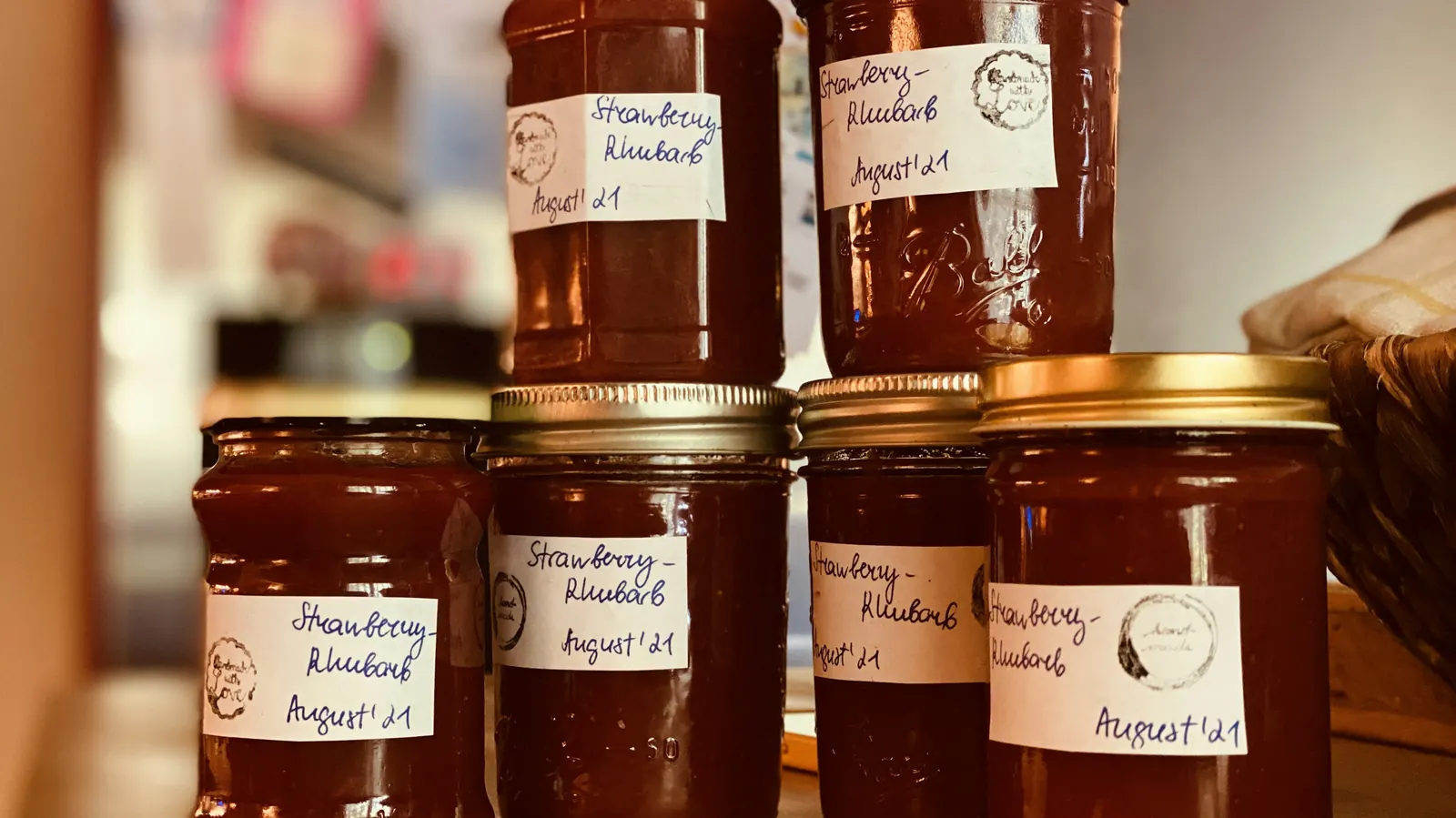
Jam is a small act of faith. You fill a hot jar in July and open it in January, and everything in between depends on the instructions you followed. That makes a preserving book different from most cookbooks, since a flawed cake recipe only costs you a cake.
This guide gives eight books from named authors, test kitchens and established publishers, for jam makers, beginners and people stocking a whole pantry. Older books may be out of date on safety, so we also explain how to check any of them against current guidance.
Julia’s earns a commission on purchases made through links on this page, at no cost to you. Recommendations are based on what a restaurant kitchen looks for in a cookbook, the Amazon listing, publisher and author information and published reviews, which we name where we use them.
Quick verdict: the best preserving book to buy first
For most home cooks, start with America’s Test Kitchen’s Foolproof Preserving and Canning, with 100 small-batch recipes and a warm Publishers Weekly review. For jam with real personality, choose Christine Ferber’s Mes Confitures. To preserve far more than fruit, choose Mary Bryant Shrader’s The Modern Pioneer Pantry.
The other five cover small kitchens, water bath basics, a very large jam collection, competition standards and pressure canning.
Five preserving books side by side
Five of the eight, one for each kind of cook. All eight are described in full below.
| Cookbook | Best for | Recipes | Length | Buy on Amazon |
|---|---|---|---|---|
| Careful first-timers | 100 | 310 pages, paperback | View on Amazon | |

Food in Jars, Marisa McClellanBest for small kitchens
|
Small kitchens, seasonal jars | 100 | 240 pages, hardcover | View on Amazon |
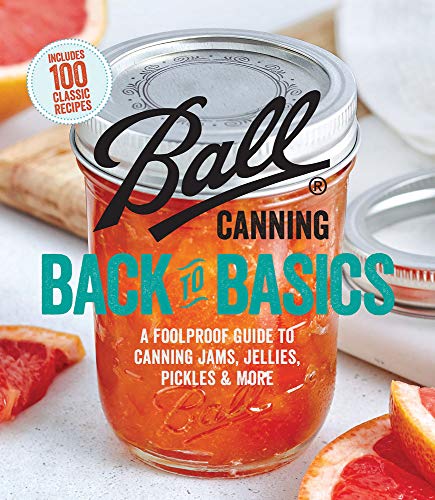
Ball Canning Back to Basics, Ball Home Canning Test KitchenBest first lessons
|
Water bath basics | 100 | 192 pages, paperback | View on Amazon |

Mes Confitures, Christine FerberBest for jam lovers
|
Flavor-led jam making | Not stated | 287 pages, hardcover | View on Amazon |

The Modern Pioneer Pantry, Mary Bryant ShraderMost methods
|
A whole-pantry plan | Over 115 | 304 pages, hardcover | View on Amazon |
Cover images from Amazon. Page counts and formats are from the Amazon listings for the editions linked. Recipe counts are from the publisher’s copy.
Our picks for the best preserving book, one by one
All eight were in stock, in print and new, and sold by Amazon when we checked. We have not cooked from these books; where we describe a strength, we say whose view it is.
1. Foolproof Preserving and Canning, America’s Test Kitchen – Small Batches, Clear Steps

This is the only book here with a Publishers Weekly review we could read in full, and that is a big part of why it leads the list. PW, writing in March 2016, said the photo-supported steps leave “no room for doubt on the part of the reader” and that “new initiates to food preservation will find this an essential kitchen companion.” PW lists it as Foolproof Preserving, at the same ISBN.
The publisher describes 100 recipes, most of them small batch, with yields of two or four jars and doubling options for the four-jar recipes. It covers sweet jams and jellies, savory jams and chutneys, vinegar-brined and fermented vegetable pickles, fruit in syrup and tomato preparations, with a troubleshooting section and a timeline for each recipe.
Small yields matter more than they sound. A two-jar batch fits a saucepan and a free Sunday hour, and a mistake costs you one bowl of fruit, not a whole flat.
Why we like it
- 100 recipes, per the publisher
- Yields of two or four jars
- Timeline given for each recipe
- Reviewed by Publishers Weekly
Key specifications
| Author | America’s Test Kitchen |
|---|---|
| Publisher | America’s Test Kitchen |
| Year | 2016 |
| Pages | 310 |
| Format | Paperback |
| Recipes | 100 |
| Focus | Small-batch jams, pickles, fruit, tomatoes |
| Best for | Careful first-timers |
Why we recommend it
If you have never sealed a jar and want every step spelled out, start here. The small batches also suit anyone who buys fruit a pound or two at a time.
Skip it if you want one big volume on pressure canning meat and soups. The publisher’s description centers on jams, pickles, fruit and tomatoes.
Pros and cons
Pros
- Strong PW review
- Small batches
- Troubleshooting included
Cons
- Yields are small if you have a big harvest
- Test-kitchen byline, no single voice
2. Food in Jars, Marisa McClellan – Seasonal Jars for Small Kitchens
Marisa McClellan has written about canning and preserving on her blog since 2009, and her publisher describes her as a full-time food writer and cooking teacher. This book collects 100 seasonal recipes, and the copy gives a fair picture of the range: apricot jam and rhubarb syrup in spring, three-citrus marmalade and cranberry ketchup in winter.
Publisher copy quotes Library Journal: “This is an excellent introduction to preserving.” We read that line through the publisher, and we found no Publishers Weekly review at this ISBN. The copy also points to stories from McClellan’s childhood, so it should read with some personality.
It dates from 2012, three years before the 2015 revision of the USDA home canning guide, so use the NCHFP cross-check described below before you rely on any process time.
Why we like it
- 100 seasonal recipes, per the publisher
- Small batches throughout
- Jams, pickles and chutneys together
- Praised by Library Journal, via the publisher
Key specifications
| Author | Marisa McClellan |
|---|---|
| Publisher | Running Press |
| Year | 2012 |
| Pages | 240 |
| Format | Hardcover |
| Recipes | 100 |
| Focus | Seasonal small-batch preserving |
| Best for | Apartment cooks |
Why we recommend it
If you cook in a small kitchen and like to make one jar-sized project at a time through the year, this suits you well. Its organization by season also helps at the market.
Skip it if you want the newest guidance built in. It came out before the 2015 USDA revision.
Pros and cons
Pros
- Friendly author voice
- Seasonal layout
- Small-batch focus
Cons
- Published in 2012
- No PW review at this ISBN
3. Ball Canning Back to Basics, Ball Home Canning Test Kitchen – The Jar Maker Teaches the Basics
Readers often look for the Ball Blue Book by name. The listings we found for it were used or low in stock, so we did not pick it. This shorter Ball title was in stock new, and it is credited to the test kitchen of the brand behind the jars.
The publisher describes water bath canning, the equipment you need and food safety, with beginner tutorials and step-by-step photos for each method. It gives 100 recipes for jams, jellies, fresh-pack pickles and savory sauces, plus low-sugar and flavor variation ideas.
Bear in mind that the brand sells home canning supplies, so it has a commercial interest in you canning at home. We found no Publishers Weekly review at this ISBN, so this pick rests on the publisher’s details.
Why we like it
- 100 recipes, per the publisher
- Step-by-step photos for each method
- Water bath method explained
- Low-sugar ideas included
Key specifications
| Author | Ball Home Canning Test Kitchen |
|---|---|
| Publisher | Oxmoor House |
| Year | 2017 |
| Pages | 192 |
| Format | Paperback |
| Recipes | 100 |
| Focus | Water bath canning basics |
| Best for | Absolute beginners |
Why we recommend it
If you want a short, plain first book from a name you will already see on the jar box, this is an easy choice. It keeps the job to water bath canning.
Skip it if you want depth or adventurous flavors. At 192 pages, it is a primer.
Pros and cons
Pros
- Beginner layout
- Short and focused
- Food safety covered
Cons
- No individual author
- No PW review at this ISBN
- The brand sells canning supplies
4. Mes Confitures, Christine Ferber – Jam as a Craft
Christine Ferber makes jams, pastry and confections by hand in Alsace, according to her publisher. The copy says chefs have long prized her work, and it names Alain Ducasse and the Troisgros family among the chefs she has worked with.
The recipes run by season, and the pairings are the draw: black cherry with Pinot Noir, and rhubarb with acacia honey and rosemary. The copy also covers tools and ingredients. We did not find a recipe total or a Publishers Weekly review at this ISBN, so this rests on the publisher’s copy and the author’s standing.
Treat it as a flavor book. It dates from 2002, so check how it seals and stores jam against current NCHFP directions before you put jars on a shelf.
Why we like it
- Recipes organized by season
- Unusual flavor pairings
- Author works by hand in Alsace, per the publisher
- University press hardcover
Key specifications
| Author | Christine Ferber |
|---|---|
| Publisher | Michigan State University Press |
| Year | 2002 |
| Pages | 287 |
| Format | Hardcover |
| Recipes | Not stated |
| Focus | Jams and jellies by season |
| Best for | Experienced jam makers |
Why we recommend it
If you have already made a few batches and now care more about flavor than about getting a seal, this is the book on the page you will read for pleasure.
Skip it if this is your first preserving book. It is older, and you should verify any safety step yourself.
Pros and cons
Pros
- Distinctive flavors
- Respected maker
- Seasonal structure
Cons
- Published in 2002
- Recipe count not found
- Some ingredients may need a mail order, per the publisher
5. The Modern Pioneer Pantry, Mary Bryant Shrader – Canning, Drying and Freezing
This is the newest book here and the broadest. DK describes water bath and pressure canning, pickling, fermenting, freezing, dehydrating and drying, with over 115 recipes and a pantry plan the author calls the Four Corners Pantry.
Mary Bryant Shrader created the Mary’s Nest YouTube channel, which her publisher says has over one million subscribers. The book carries QR codes in each chapter that link to instructional videos, which may help if you learn better by watching.
We found no Publishers Weekly review at this ISBN and no quoted praise in the copy we read, so this pick rests on the publisher’s and author’s details. Being recent does not by itself mean each recipe matches NCHFP, so the cross-check still applies.
Why we like it
- Over 115 recipes, per the publisher
- Water bath and pressure canning
- QR codes link to videos
- Published in 2025
Key specifications
| Author | Mary Bryant Shrader |
|---|---|
| Publisher | DK |
| Year | 2025 |
| Pages | 304 |
| Format | Hardcover |
| Recipes | Over 115 |
| Focus | Canning, pickling, freezing, drying |
| Best for | Stocking a whole pantry |
Why we recommend it
If you want one book that goes well beyond jam, and you garden or buy produce in bulk, this has the widest scope on the page.
Skip it if you only want jam and marmalade. Much of the book covers other jobs.
Pros and cons
Pros
- Widest range of methods
- Recent
- Video support
Cons
- No named review in our sources
- Fermenting is one topic of many, not the focus
6. The Jam and Marmalade Bible, Jan Hedh – Fruit, Nuts and Flowers

Jan Hedh is a baker and confectioner, known throughout Sweden according to Skyhorse, and the author of Artisan Breads and Swedish Breads and Pastries. The subtitle promises more than 250 recipes across fruits, vegetables, nuts and flowers.
Skyhorse describes chapters on the history of preserves, cooking technique, equipment, sterilizing jars and lids, and troubleshooting. The recipes run from classic and exotic fruit jams to savory vegetable spreads, chutneys, nut spreads and flower marmalades, along with pastries to serve with jam and advice on which cheeses suit which flavors.
We found no attributed praise and no Publishers Weekly review at this ISBN, so this rests on the publisher’s copy. The mention of sterilizing does not tell us whether the recipes follow the US boiling water process. Check that before you store jars at room temperature.
Why we like it
- More than 250 recipes, per the subtitle
- Flower marmalades and nut spreads
- Troubleshooting section
- Cheese pairing advice
Key specifications
| Author | Jan Hedh |
|---|---|
| Publisher | Skyhorse |
| Year | 2017 |
| Pages | 240 |
| Format | Paperback |
| Recipes | More than 250 |
| Focus | Jams, marmalades, savory spreads |
| Best for | Curious jam makers |
Why we recommend it
If you make jam often and have run out of ideas, this has the longest recipe list among the jam books here. A baker’s eye for serving jam is a pleasant extra.
Skip it if you want US canning instructions you can follow without checking. Compare the method with NCHFP first.
Pros and cons
Pros
- Huge recipe count
- Unusual flavors
- Baker author
Cons
- Check processing yourself
- No named review in our sources
7. Blue Ribbon Preserves, Linda J. Amendt – A Fair Champion’s Standards

Linda J. Amendt comes from the competition side of canning. Penguin Random House says she has competed in fair competitions since 1990 and won more than 600 awards, and it lists the book as a finalist for the 2002 IACP Cookbook Awards.
The range is wide: jams, jellies, marmalades, preserves, conserves, butters, curds, fruit and vegetable preserves, juices, sauces, pickles, vinegars and syrups. The publisher also mentions a canning guide with current methods and safety precautions.
That word “current” needs a date on it. The listing we checked is from 2001, well before the 2015 USDA revision, so read it for technique and judging standards and cross-check its processing against NCHFP. We found no recipe total or Publishers Weekly review at this ISBN.
Why we like it
- Author won more than 600 fair awards, per the publisher
- IACP finalist, per the publisher
- Very wide range of spreads
- Includes a canning guide
Key specifications
| Author | Linda J. Amendt |
|---|---|
| Publisher | Penguin |
| Year | 2001 |
| Pages | 384 |
| Format | Paperback |
| Recipes | Not stated |
| Focus | Jams, pickles, butters, curds |
| Best for | County fair competitors |
Why we recommend it
If you enter your jars at a county fair, or you simply want them to look and set as well as possible, the author’s experience is the reason to buy this.
Skip it if you want guidance you can follow without checking. It has the oldest listing date on the page.
Pros and cons
Pros
- Competition experience
- Very wide range
- Large paperback
Cons
- Dated 2001 on the listing
- Recipe count not found
- Needs a cross-check
8. The Homestead Canning Cookbook, Georgia Varozza – Water Bath and Pressure
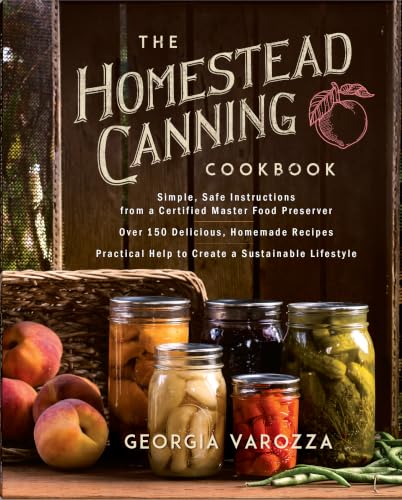
Most books above lean toward jam and pickles. This one covers water bath and pressure canning, with recipes for fruit, vegetables, meat, soups and sauces, and the title promises more than 150. The publisher also describes step-by-step instructions, the basics, equipment and how to fit canning into a busy schedule.
Georgia Varozza is a writer and editor in a small Oregon community who teaches food preservation, according to her publisher, and she also wrote the Homestyle Amish Kitchen Cookbook.
We found no quoted praise and no Publishers Weekly review at this ISBN, so this rests on the publisher’s details. Meat and most fresh vegetables are low-acid foods, so NCHFP’s guidance points to a pressure canner. Compare each recipe with its matching directions. Our pressure canner guide covers the equipment.
Why we like it
- 150+ recipes, per the title
- Covers both canning methods
- Meat, soups and sauces included
- Paperback format
Key specifications
| Author | Georgia Varozza |
|---|---|
| Publisher | Harvest House |
| Year | 2020 |
| Pages | 208 |
| Format | Paperback |
| Recipes | 150+ |
| Focus | Fruit, vegetables, meat, soups |
| Best for | Gardeners with a surplus |
Why we recommend it
If you have a garden surplus or want shelf-stable soups and meats as well as sweet spreads, this is the most practical pick here.
Skip it if you only want jam. A pressure canner is a real purchase, and it is not the tool jam recipes generally call for.
Pros and cons
Pros
- Both canning methods
- Wide food range
- Plain format
Cons
- No named review in our sources
- Less on flavor than the jam books
How to choose a jam and preserves book
Five questions matter more than the cover.
- When was it published? Check the date first. The National Center for Home Food Preservation (NCHFP) lists the 2015 revision of the USDA guide to home canning. A book older than that was written without it, and a newer date does not guarantee a match.
- Does it give processing directions? NCHFP warns that “many recipes passed down through the years or found in older cookbooks do not include instructions for processing.” If a recipe has no process, do not treat it as a recipe for shelf storage.
- What do you plan to preserve? Fruit spreads and pickles are the usual work of a boiling water canner. Low-acid foods, which NCHFP says include meat and most fresh vegetables, are a separate job with a pressure canner, so make sure the book covers that method.
- How much fruit do you buy? Small batch books suit a few pounds from the market. Bigger recipes suit a tree or a garden row.
- Do you have the tools? A wide funnel makes filling jars far easier. Our canning funnel guide covers that.
How we chose these preserving books
We searched Amazon’s book listings first and kept print editions from named authors and test kitchens at established publishers, plain in stock with a new lead offer. We left out titles on our fermentation book page. Author, year, format and page count come from the Amazon listing. Recipe counts and descriptions come from the publisher’s copy, in some cases as carried by booksellers, unless we credit someone else.
Here is what stands behind each pick. Foolproof Preserving and Canning has a Publishers Weekly review that we read ourselves. Food in Jars has a Library Journal line we read only as quoted by the publisher. The other six rest on the publisher’s and author’s details, and we found no Publishers Weekly review at those ISBNs. That does not mean no review exists anywhere.
Stock ruled out several familiar names. The Ball Blue Book listings we saw were used or low in stock, and Ball Complete Book of Home Preserving, Sherri Brooks Vinton’s Put ’em Up!, Pam Corbin’s Preserves and Rachel Saunders’s I Love Jam were low in stock. We have not checked every recipe in any of these eight against NCHFP, so that check remains yours.
Preserving book questions, answered
What is the best preserving book for beginners?
Foolproof Preserving and Canning for full instructions and small batches, or Ball Canning Back to Basics for a shorter start.
What is the best jam and preserves book?
Mes Confitures for flavor and The Jam and Marmalade Bible for sheer range. Check processing for both, since neither is a recent US safety guide.
Are old canning books safe to use?
Not without checking. The NCHFP canning FAQ warns that older cookbook recipes often leave out processing, and it does not recommend open kettle canning, because the temperatures reached are too low to destroy all spoilage and food-poisoning organisms. Use older books for ideas, and take methods from current guidance.
What should I do when a book disagrees with NCHFP?
Follow NCHFP. Its FAQ also says that if a jar fails to seal and the first attempt did not use an up-to-date, research-tested recipe, all jars, sealed or unsealed, may be unsafe and should be discarded.
Do I need a pressure canner for jam?
NCHFP’s directions for jam with added pectin use a short process in boiling water, corrected for elevation. See its site for each recipe. A pressure canner comes in for low-acid foods, which is why The Homestead Canning Cookbook and The Modern Pioneer Pantry cover it.
Which preserving book should you buy first?
Buy Foolproof Preserving and Canning if you want one careful first book. Choose Food in Jars for small kitchens, The Modern Pioneer Pantry for the whole shelf and Mes Confitures for pure flavor. Whichever you buy, keep the NCHFP site open beside it. If you would like to take jars in a livelier direction, go to our best fermentation book guide, and for spicy jars see our salsa cookbook picks.
And if you would rather let someone else cook tonight, see the menu or call to order.