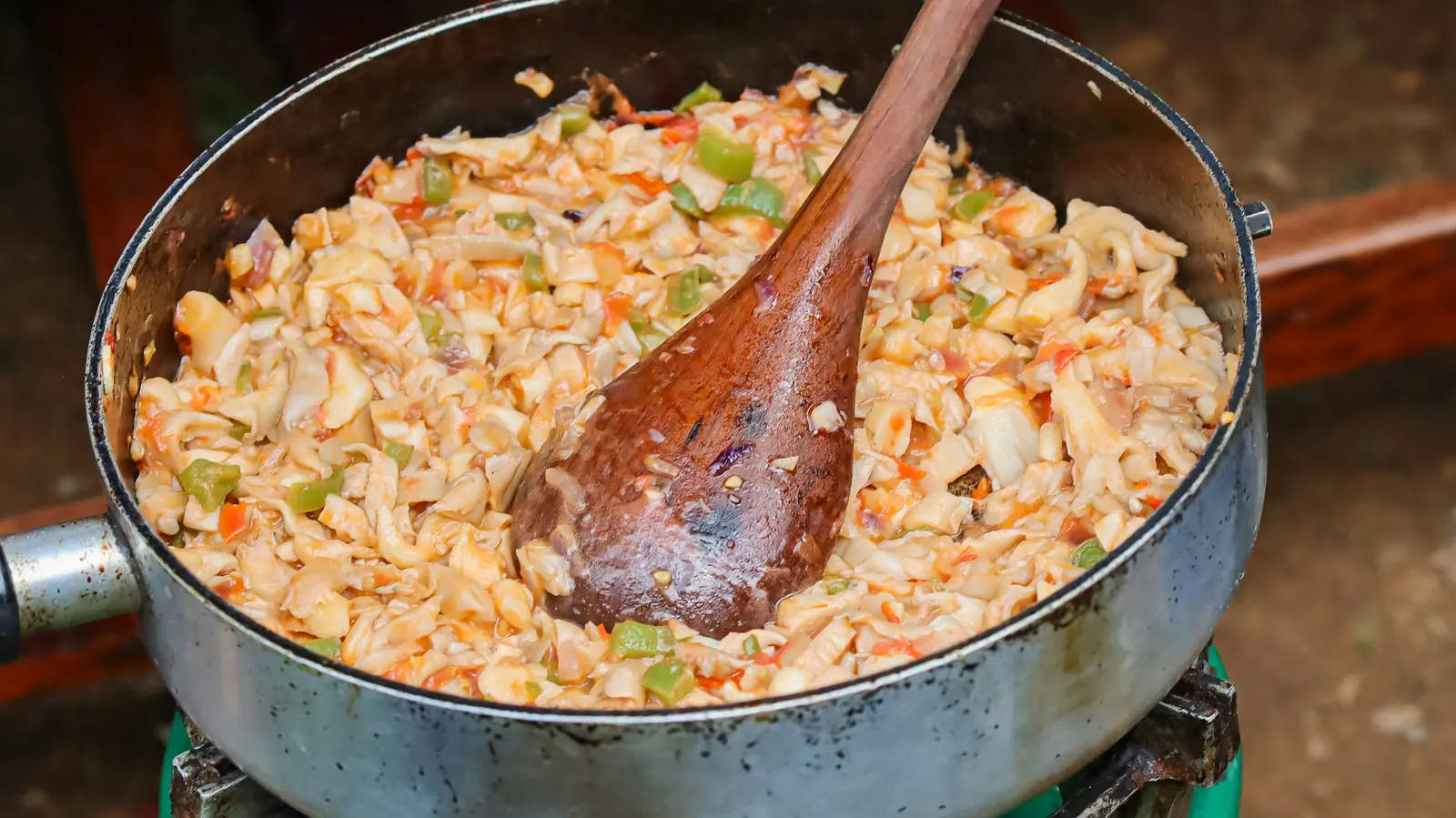
Rice is the quiet test of a saucepan. In a Mexican kitchen, arroz rojo starts with dry grains toasted in a little oil until they turn golden and smell nutty, then a blended tomato broth goes in, the lid goes on and the heat drops to the lowest simmer the burner can hold. For the next stretch nobody lifts the lid. Whether the rice comes out loose and even or stuck in a scorched ring depends almost entirely on two things: how evenly the base spreads that low heat, and how well the lid keeps the steam inside.
This guide is about saucepans chosen for that job. It covers heavy-bottomed clad stainless, enameled cast iron and nonstick pans from 2 to 4 quarts, and explains which features actually matter when the pan is sealed and you cannot see what is happening. Every specification comes from the maker or the Amazon listing.
Julia’s earns a commission on purchases made through links on this page, at no cost to you. Recommendations are based on what a restaurant kitchen looks for, product specifications and verified buyer reports.
Quick verdict: which saucepan to buy for rice
For most kitchens, the All-Clad D3 3-quart saucepan is the one to buy for rice: fully bonded tri-ply from base to rim, so low heat stays even, with a lid included and a size that holds rice for four. America’s Test Kitchen names the D3 line its saucepan winner. For rice for one or two at a lower cost, the Tramontina Signature 2-quart is fully clad too and has a stainless lid. Feeding six? The Cuisinart MultiClad Pro 4-quart gives you room. If you want slow, forgiving heat, the Tramontina Bestow enameled cast iron saucier holds a steady simmer, and the GreenPan Valencia Pro is the nonstick choice for easy cleanup.
The table below lines up the five pans most cooks should look at first. All seven are reviewed in full after it.
Five rice saucepans side by side
One pick for each kind of cook, with the construction and lid each maker or listing states.
| Saucepan | Best for | Construction | Lid | Buy on Amazon |
|---|---|---|---|---|

All-Clad D3 3-quart Stainless SaucepanBest overall
|
Rice for four, every day | Fully bonded tri-ply | Included | View on Amazon |
| Rice for one or two | Tri-ply clad, aluminum core | Stainless steel | View on Amazon | |

Cuisinart MultiClad Pro 4-quart SaucepanBest for family batches
|
Rice for six | Triple-ply, aluminum core | Included | View on Amazon |

Tramontina Bestow 3-quart Enameled Cast Iron SaucierBest enameled
|
Slow, steady simmering | Enameled cast iron | Cast iron, self-basting ridges | View on Amazon |
| Easy release and cleanup | Hard-anodized aluminum, ceramic coating | Glass (oven safe to 425°F) | View on Amazon |
Product images from Amazon. Construction, lids and care are as stated by each maker or its Amazon listing; check the listing before you buy.
Why rice is hard on a saucepan
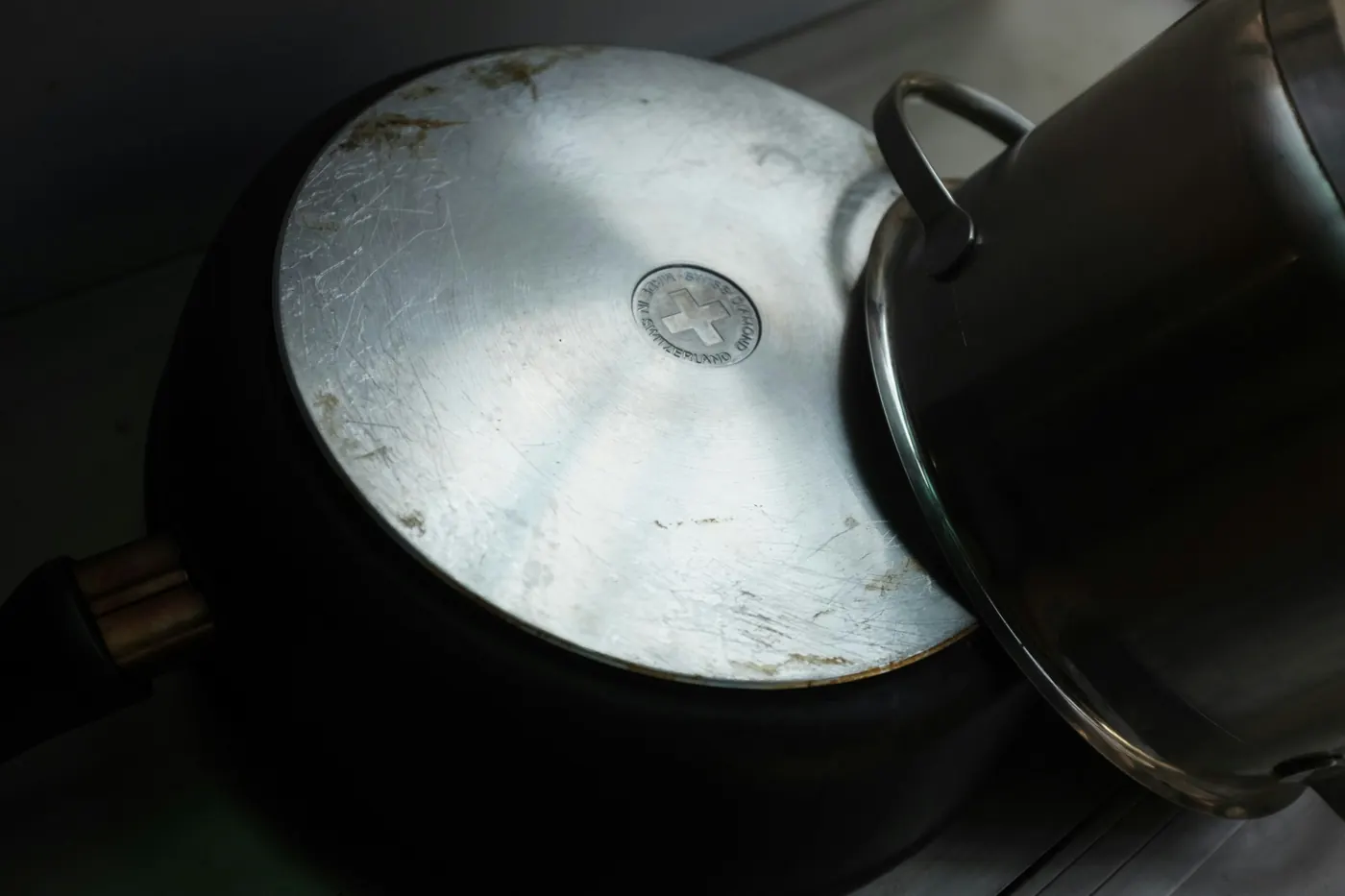
Most saucepan jobs forgive a weak pan. Boiling eggs or pasta water does not care about hot spots, because the water keeps moving and nothing touches the bottom for long. Rice is the opposite. Once the liquid is in and the lid is on, the grains settle into a still layer on the base and sit there while the burner runs as low as it will go. Any spot that runs hotter than the rest scorches the bottom layer before the top grains are tender. A thin pan, or one with a heavy disc stuck to a thin body, tends to concentrate heat in the middle or at the edge of the disc.
The lid is the other half. Rice cooks the last part of the way in its own steam. America’s Test Kitchen’s saucepan review says its testers liked lids that fit snugly because they kept steam from escaping, and that pour spouts let steam leak out and left a rice pilaf unevenly cooked. A lid that rattles, a vent hole or a spout all let water leave the pan faster than the recipe expects, so the bottom dries out and catches while the top is still firm.
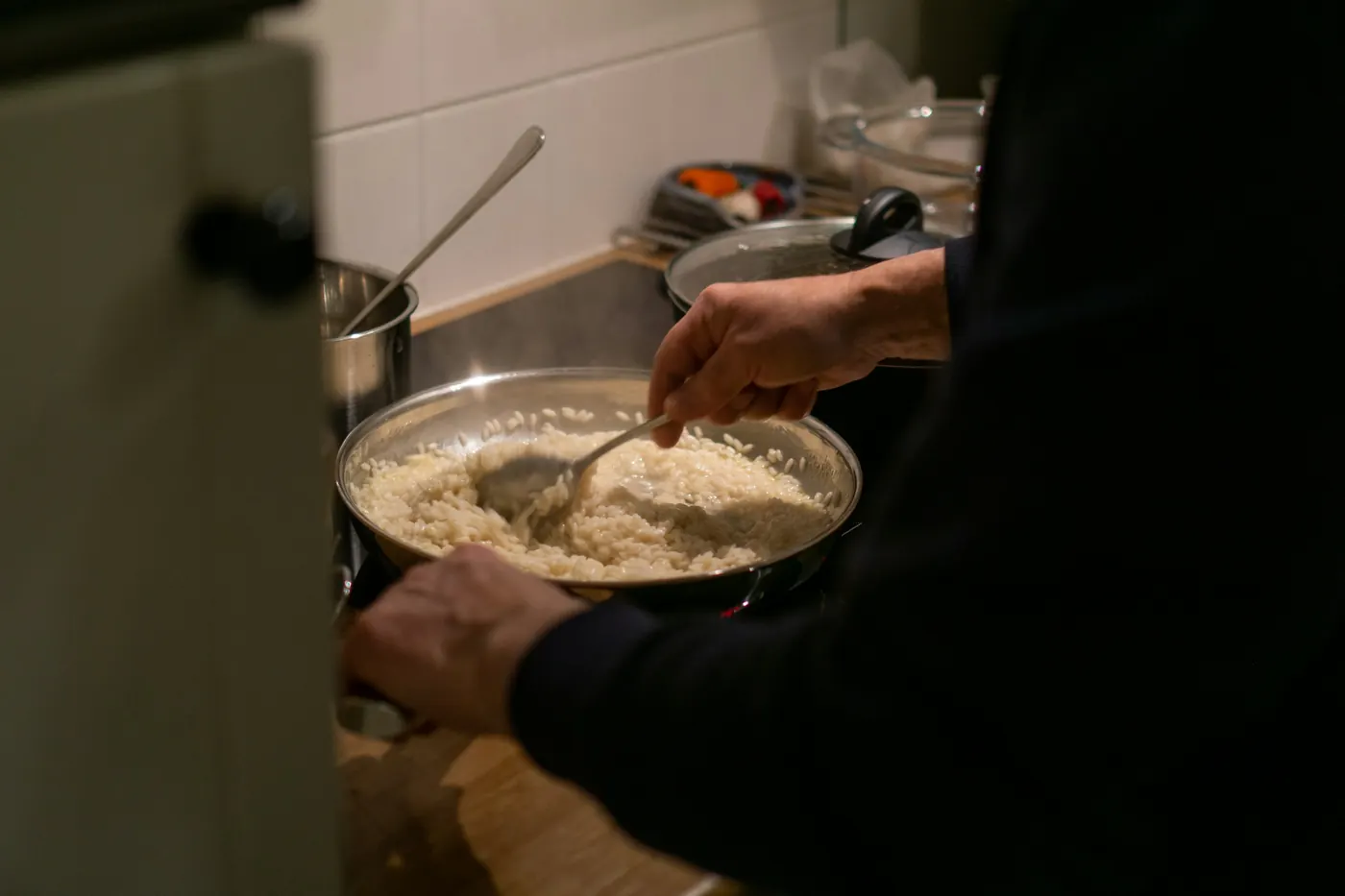
Mexican rice adds one more demand: the toasting step. The dry grains and sometimes a little onion and garlic are stirred in hot oil until they color, and that happens in the same pan before any liquid goes in. A pan with a stainless or enamel interior shows you the color clearly; a dark nonstick interior makes it harder to judge. If you want to know why that step matters and how it differs from Spanish rice, our guide to Mexican rice vs Spanish rice explains it.
A word on rice cookers, since they come up in every rice conversation. An electric rice cooker handles the timing and the low heat for you, and many households swear by one for plain white rice. It is a separate appliance, though, and it does not toast grains in oil the way a pan does. This guide sticks to saucepans, which also do every other job on the stove.
Seven pans for the best saucepan rice
These seven cover fully clad stainless in three sizes and two weights, enameled cast iron and two nonstick pans. Each lists the same eight specifications from the maker or the Amazon listing; “Not stated” means neither said.
1. All-Clad D3 3-quart Stainless Saucepan – Even Heat to the Rim
All-Clad’s D3 is fully bonded tri-ply: an aluminum core between layers of stainless steel that runs from the base all the way up the walls, rather than a disc stuck to the bottom. That matters for rice because the heat reaches the grains along the sides as well as from below, and the pan responds when you turn the burner down after the boil. In America’s Test Kitchen’s saucepan review, All-Clad’s stainless saucepans are the winners in both the large and small categories, praised for uniform, steady heating and good visibility inside the pan.
The 3-quart size sits between those two winners and suits most households: enough room for a standard pot of arroz rojo for four with space above the rice for steam. All-Clad’s listing names rice among the jobs it is meant for and gives it a flared rim for drip-free pouring, which is a rim, not a spout, so it does not open a gap under the lid.
It works on every stovetop including induction and is oven and broiler safe to 600°F. The Amazon title mentions the dishwasher, but All-Clad’s own care line on the listing says hand wash only, and that is what we would follow. It carries a limited lifetime warranty and is made in Pennsylvania with global components, according to the listing.
Why we like it
- Fully bonded tri-ply from base to rim
- All-Clad stainless is ATK’s saucepan winner
- Flared rim, no pour spout under the lid
- Induction ready; oven safe to 600°F
Key specifications
| Model | 4203 |
|---|---|
| Capacity | 3 quarts |
| Construction | Tri-ply: stainless steel, aluminum core |
| Lid | Included (material not stated) |
| Oven-safe to | 600°F, including broiler |
| Induction | Yes |
| Dishwasher safe | Hand wash only, per All-Clad’s care line |
| Warranty | Limited lifetime |
Why we recommend it
It suits a cook who makes rice several times a week and wants one saucepan that also handles sauces, beans and reheating for decades.
Skip it if the dishwasher is non-negotiable; All-Clad says hand wash.
Pros and cons
Pros
- Even heating, per ATK’s review of All-Clad stainless
- Works on gas, electric and induction
- Light interior shows the rice toasting
Cons
- Hand wash only
- Costs more than the Tramontina and Cuisinart
- Lid material not stated on the listing
2. Tramontina Signature Tri-Ply 2-quart Saucepan – Clad Build for Small Batches

Tramontina’s Signature line gives you fully clad construction for less: tri-ply with an aluminum core, a stainless steel lid that the listing says seals in moisture, and riveted stainless handles. It is made in Brazil and NSF certified, a standard used for commercial kitchen equipment.
Two quarts is the size America’s Test Kitchen suggests for cooking for one or two people, and it is the right pan for a cup of rice at a time. A smaller pan also matters more than it sounds: a single cup of rice spread across a wide 4-quart base sits in a thin layer that dries out quickly, while a 2-quart pan keeps it deeper and moister. ATK’s best buy among small saucepans is a 2-quart from Tramontina’s Gourmet range; the Signature is a related clad line, not that exact pan, so treat ATK’s verdict as a guide to the brand’s construction rather than a review of this model.
Tramontina rates it for every cooktop including induction, oven safe to 500°F and dishwasher safe, with a lifetime warranty.
Why we like it
- Tri-ply clad with an aluminum core
- Stainless lid, more durable than glass
- Dishwasher safe, per Tramontina
- NSF certified, lifetime warranty
Key specifications
| Model | 80116/022DS |
|---|---|
| Capacity | 2 quarts |
| Construction | Tri-ply clad stainless steel, aluminum core |
| Lid | Stainless steel |
| Oven-safe to | 500°F |
| Induction | Yes |
| Dishwasher safe | Yes |
| Warranty | Lifetime |
Why we recommend it
It suits a cook who makes rice for one or two and wants clad construction and a dishwasher-safe pan without paying for a premium name.
Skip it if you regularly cook rice for four or more; 2 quarts leaves little headroom once the liquid goes in.
Pros and cons
Pros
- Fully clad at a lower cost
- Stainless lid seals in moisture
- Goes in the dishwasher
Cons
- Small capacity
- Lower oven limit than the All-Clad or Viking
- Weight not stated
3. Cuisinart MultiClad Pro 4-quart Saucepan – Room for Family Rice
America’s Test Kitchen calls a 4-quart stainless saucepan the best all-purpose size for most cooks, and for rice it is the size that feeds six. Cuisinart’s MultiClad Pro is triple-ply with a core of pure aluminum bonded to a stainless interior; the listing says its “Heat Surround” construction spreads heat along the bottom and the sidewalls, which is what you want under a deep layer of rice.
The interior has measurement markings, which help when you are scaling a rice recipe up and want to check the liquid level. The listing describes a “flavor lock” lid, solid stainless riveted handles that stay cool on the stovetop, and drip-free pouring. Cuisinart says it is dishwasher safe and backs it with a lifetime warranty.
Two gaps: the Amazon listing we read does not state an oven limit or confirm induction compatibility, and Cuisinart’s own product page was not available when we checked. If you cook on induction, confirm on the box or with the seller before you buy.
Why we like it
- 4-quart size for rice for six
- Triple-ply with heat along bottom and sides
- Measurement markings inside
- Dishwasher safe, lifetime warranty
Key specifications
| Model | MCP194-20N |
|---|---|
| Capacity | 4 quarts |
| Construction | Triple-ply stainless steel, pure aluminum core |
| Lid | Included, “flavor lock” lid (material not stated) |
| Oven-safe to | Not stated on the listing |
| Induction | Not stated on the listing |
| Dishwasher safe | Yes |
| Warranty | Lifetime |
Why we recommend it
It suits a household that cooks rice, beans or soup for five or six and wants a clad pan that goes in the dishwasher.
Skip it if you mostly cook a cup of rice at a time; a smaller pan keeps a small batch from drying out.
Pros and cons
Pros
- Large, clad pan for family batches
- Measurement markings
- Dishwasher safe
Cons
- Oven limit not stated on the listing
- Induction not confirmed on the listing
4. Viking 5-Ply 3-quart Stainless Saucepan – Thick Walls, Steady Heat

If your burner runs hot even on its lowest setting, more metal between the flame and the rice helps. Viking’s 5-ply saucepan stacks a stainless interior, a triple aluminum core and a magnetic stainless exterior, according to the listing, which says the build is meant for even heating. Thicker walls take a little longer to come up to temperature, then hold it, which smooths out the small swings of a gas flame turned down low.
The 3-quart size handles rice for four. The handle is riveted and has what Viking calls a heat break, designed for cooler handling, and the listing rates the pan oven and broiler safe to 600°F and dishwasher safe. The magnetic exterior makes it induction ready, as the title states.
The listing does not describe the lid beyond saying one is included, and it does not state the warranty. America’s Test Kitchen has not reviewed this exact pan, so we cannot point you to a test; its general advice is to look for fully clad construction of three or more layers, which this exceeds.
Why we like it
- 5-ply with a triple aluminum core
- Oven and broiler safe to 600°F
- Dishwasher safe, per Viking
- Magnetic exterior for induction
Key specifications
| Model | 4015-1003S |
|---|---|
| Capacity | 3 quarts |
| Construction | 5-ply: stainless interior, triple aluminum core, magnetic stainless exterior |
| Lid | Included (material not stated) |
| Oven-safe to | 600°F, including broiler |
| Induction | Yes |
| Dishwasher safe | Yes |
| Warranty | Not stated on the listing |
Why we recommend it
It suits a cook on a strong gas range who wants a thick, heat-holding base under rice and is happy to put the pan in the dishwasher.
Skip it if you want a light pan; five layers of metal make a heavier saucepan, though Viking does not state the weight.
Pros and cons
Pros
- Thick 5-ply walls and base
- Dishwasher and induction ready
- High oven limit
Cons
- Weight and warranty not stated
- Slower to heat than tri-ply
5. Tramontina Bestow 3-quart Enameled Cast Iron Saucier – Slow, Forgiving Simmer
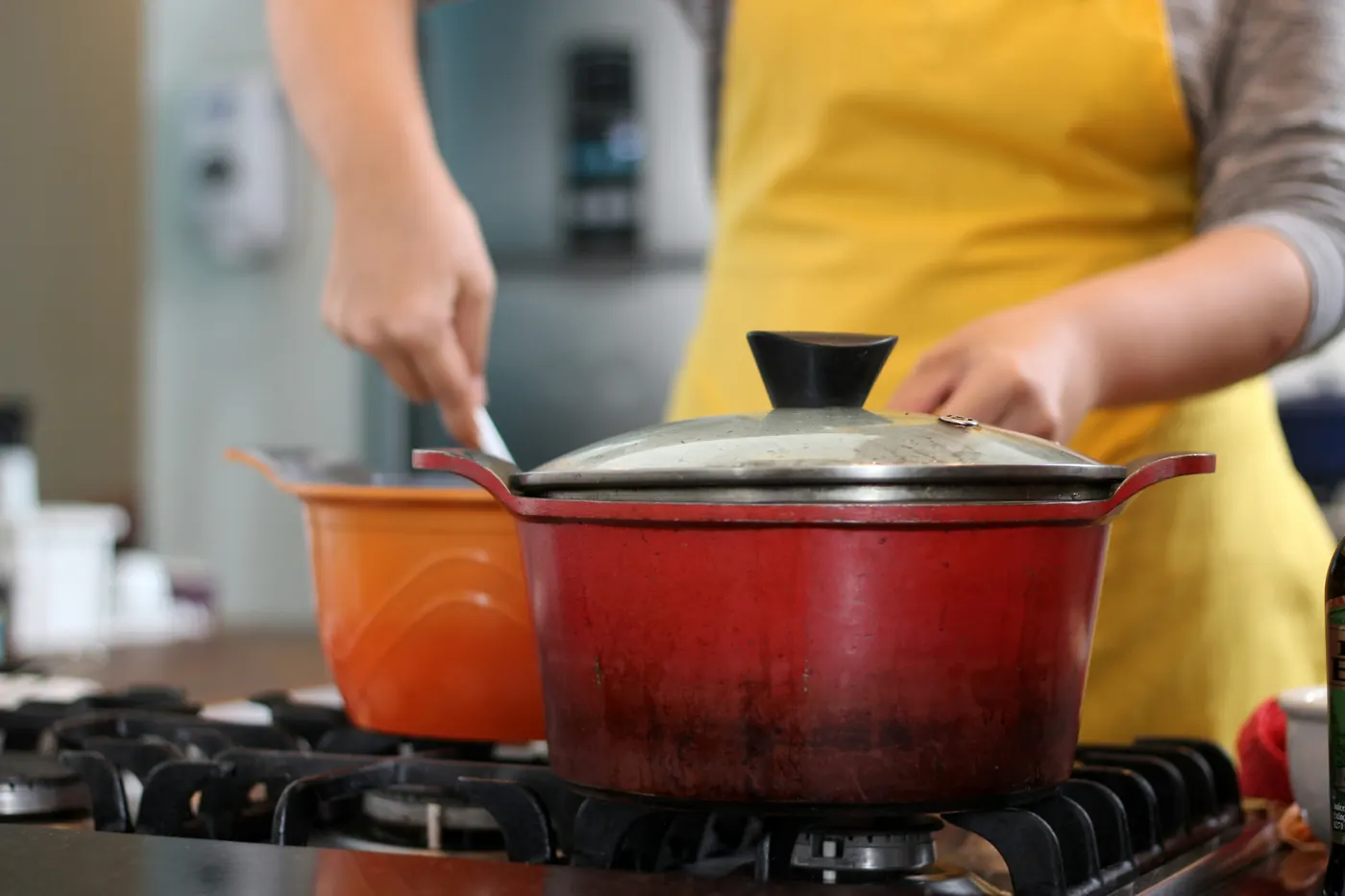
Enameled cast iron is the slow cooker of saucepans. It heats gradually and then holds that heat, so once the rice is covered and the burner is down, the temperature barely moves. That steadiness is forgiving with rice, and the heavy cast iron lid sits firmly in place. Tramontina’s Bestow is cast from what the listing calls HT150 iron, with a porcelain-enamel exterior and an off-white enamel interior that lets you watch the grains color as they toast.
This is a saucier, so the walls curve into the base instead of meeting it at a sharp corner, which makes it easier to stir rice and onion while toasting without leaving grains stuck in the edge. The cast iron lid has self-basting condensation ridges underneath, which the listing says collect steam and direct it back onto the food. It works on gas, electric, ceramic glass and induction and is oven safe to 450°F.
The trade-off is response time. Cast iron keeps cooking after you turn the heat off, so take it off the burner a few minutes sooner than a clad pan, and lift it with both hands. The listing does not say whether it is dishwasher safe; enameled cast iron is usually washed by hand. Tramontina backs it with a lifetime warranty.
Why we like it
- Holds a very steady low simmer
- Heavy cast iron lid with condensation ridges
- Rounded saucier walls for stirring
- Induction ready; oven safe to 450°F
Key specifications
| Model | 80131/071DS |
|---|---|
| Capacity | 3 quarts |
| Construction | Enameled cast iron (HT150), off-white enamel interior |
| Lid | Cast iron, self-basting ridges |
| Oven-safe to | 450°F |
| Induction | Yes |
| Dishwasher safe | Not stated |
| Warranty | Lifetime |
Why we recommend it
It suits a cook who wants rice to hold steady on the back burner and likes a pan that can go straight to the table.
Skip it if you need to cut the heat fast or struggle with heavy pans; cast iron is slow to cool and heavy to lift.
Pros and cons
Pros
- Very even, steady simmer
- Enamel needs no seasoning
- Works on every cooktop including induction
Cons
- Heavy, and weight not stated
- Slow to respond when you turn the heat down
- Dishwasher guidance not stated
6. GreenPan Valencia Pro 2-quart Ceramic Nonstick Saucepan – Easy Release on Induction

A nonstick saucepan takes the worry out of the bottom layer: if the rice does catch a little, it lifts off instead of welding to the pan, and cleanup is a quick wipe. GreenPan’s Valencia Pro has a hard-anodized aluminum body with what GreenPan calls a diamond-infused ceramic nonstick coating, which the listing says is metal utensil safe and free of PFAS, PFOA, lead and cadmium. A magnetized base makes it work on induction, which many coated aluminum saucepans do not.
The listing gives the capacity as 2.1 quarts, enough for rice for two or three. The pan is oven and broiler safe to 600°F; the glass lid is limited to 425°F. The handle is mirror-polished stainless with a V-shaped cutout that the listing says helps it stay cool. GreenPan says it is dishwasher safe.
Two trade-offs for rice. The glass lid lets you peek without lifting it, but America’s Test Kitchen found stainless lids more durable than glass. And a dark coated interior makes it harder to see how far the rice has toasted, so go by smell and time. Ceramic coatings in general do best at low to medium heat, which is where rice lives anyway.
Why we like it
- Ceramic nonstick, free of PFAS per GreenPan
- Works on induction
- Pan oven safe to 600°F
- Dishwasher safe
Key specifications
| Model | CC003791-001 |
|---|---|
| Capacity | 2.1 quarts |
| Construction | Hard-anodized aluminum, ceramic nonstick, induction base |
| Lid | Glass (oven safe to 425°F) |
| Oven-safe to | 600°F, including broiler |
| Induction | Yes |
| Dishwasher safe | Yes |
| Warranty | Not stated on the listing |
Why we recommend it
It suits a cook who wants rice to release cleanly every time and cooks on induction.
Skip it if this will be your only saucepan; a coating does not last as long as bare stainless.
Pros and cons
Pros
- Easy release and cleanup
- Induction compatible
- Glass lid lets you check without lifting
Cons
- Glass lid limited to 425°F
- Dark interior hides toasting color
- Warranty not stated on the listing
7. T-fal Specialty 3-quart Nonstick Saucepan – Low-Cost Coated Pan

T-fal’s Specialty saucepan is the plain, low-cost way to get a coated pan for rice. The listing describes T-fal’s ProGlide nonstick interior, an even-heat base and T-fal’s Thermo-Spot, a heat indicator that turns solid red when the pan is preheated, which is handy for knowing when the oil is ready to toast the rice.
Three quarts covers rice for four. The pan is dishwasher safe and oven safe to 350°F, carries a limited lifetime warranty and works on every cooktop except induction, according to the listing. The listing does not name the chemistry of the coating or the body metal, so we list both as not stated.
One detail matters for rice: the glass lid is vented. A vent lets some steam out, which can leave rice slightly drier than a recipe written for a sealed pan expects. If you find the bottom catching, add a spoonful or two more liquid next time. This is a fine first pan or a second pan for oatmeal and reheating; it is not the pan to buy for a lifetime.
Why we like it
- Nonstick at a low cost
- Thermo-Spot preheat indicator
- Dishwasher safe
- Limited lifetime warranty
Key specifications
| Model | 2100090421 |
|---|---|
| Capacity | 3 quarts |
| Construction | Not stated; ProGlide nonstick interior, even-heat base |
| Lid | Vented glass |
| Oven-safe to | 350°F |
| Induction | No |
| Dishwasher safe | Yes |
| Warranty | Limited lifetime |
Why we recommend it
It suits a first kitchen, a dorm or a cook who wants an inexpensive coated pan for rice and oatmeal on a gas or electric stove.
Skip it if you cook on induction or want a sealed lid; this one is vented and not induction compatible.
Pros and cons
Pros
- Low cost
- Easy release and cleanup
- Preheat indicator
Cons
- Vented lid lets steam escape
- Not for induction
- Low 350°F oven limit
How to choose a saucepan for rice
1. A base that spreads low heat
Rice spends most of its time over the lowest flame, so what matters is how evenly the base spreads gentle heat, not how fast it boils water. Fully clad pans (All-Clad, Tramontina, Cuisinart MultiClad Pro, Viking) carry the aluminum core up the walls. America’s Test Kitchen warns that disc-bottom pans, with a thick plate under a thin body, heat slowly at first and then run hot, and respond sluggishly when you change the setting. Enameled cast iron gets there a different way: thick iron that holds a steady temperature.
2. A lid that seals
Look for a lid that sits snugly in the rim without rocking, and avoid pour spouts and vent holes for rice; ATK found spouts let steam leak and left rice pilaf unevenly cooked. Stainless and cast iron lids are the most durable. Glass lets you check without lifting, but it can fog up and usually has a lower oven limit than the pan.
3. The right size for your batch
Match the pan to how much rice you make. For one or two people, about a cup of dry rice, a 2-quart pan keeps the layer deep enough to stay moist. For four, a 3-quart pan leaves room for steam. For six or more, go to 4 quarts. Rice roughly triples in volume as it cooks, and the liquid needs headroom to simmer without bubbling up under the lid. If you want two sizes at once, our guide to the best saucepan set compares sets with lids.
4. Stainless, enamel or nonstick
Stainless lasts the longest, takes metal spoons and shows you the rice toasting. Enameled cast iron holds the steadiest simmer but is heavy. Nonstick makes cleanup easy and forgives a slightly too-high flame, but the coating wears with time and a dark interior hides the toasting color. Our guide to the best nonstick pans explains how to look after a coated pan so it lasts.
5. Your cooktop
On induction, check the listing. Every pan here works on induction except the T-fal, which says it does not, and the Cuisinart, whose listing does not say either way.
6. Handles you can trust
You will hold the pan by one handle while you stir the rice in hot oil, and then again when you tip it to serve. A long handle that stays cool and is easy to grip matters more than it sounds; on 4-quart and cast iron pans, a helper handle on the other side makes lifting a full pan safer.
How we chose these seven rice saucepans
We started from what a working kitchen asks of a pan for rice: even heat at the lowest burner setting, a lid that holds steam, a light interior for toasting, and a body that survives years of daily use. We searched for saucepans sold on Amazon in the United States, checked each listing’s stock with Amazon’s product data, and kept only in-stock pans from identifiable makers, covering tri-ply and 5-ply stainless, enameled cast iron and two nonstick coatings, from about 1.8 to 4 quarts. Specifications come from the makers’ Amazon listings, and we wrote “Not stated” where a listing did not give a figure. We read America’s Test Kitchen’s current saucepan review and its article on the differences between good and bad saucepans. We have not cooked with these pans for this guide, and we do not say which pans the restaurant uses.
Rice and saucepan questions, answered
What is the best saucepan for rice?
A fully clad stainless saucepan of 2 to 4 quarts with a tight lid and no pour spout. The All-Clad D3 3-quart is our top pick; the Tramontina Signature 2-quart is the value choice for small batches.
Is stainless steel or nonstick better for cooking rice?
Both work. Stainless lasts longer and shows the toasting color clearly, which matters for Mexican rice; a thin crust on the bottom soaks off after a few minutes in warm water. Nonstick releases more easily and is quicker to clean but wears over time. Many kitchens own one of each.
Why does my rice burn on the bottom of the pan?
Usually one of three things: the heat is not low enough after the boil, the base has a hot spot, or steam is escaping through a loose or vented lid so the water runs out early. A heavier, fully clad or cast iron pan and a snug lid fix most of it. Letting the rice rest off the heat, lid on, for the last few minutes also helps.
Can I cook rice in a frying pan instead?
Yes, if it is deep enough and has a lid that fits. Wide pans spread the rice thin, so it cooks faster and dries out sooner. Our guide to saucepan vs pan explains which jobs suit each shape.
Do I need a rice cooker if I have a good saucepan?
No. A rice cooker handles timing for you, but a heavy saucepan with a good lid makes excellent rice and also toasts the grains first, which a basic cooker does not. Choose a cooker if you want to set it and walk away.
What size saucepan do I need for 2 cups of rice?
Two cups of dry rice makes roughly three times that volume once cooked, plus the liquid needs room to simmer under the lid. A 3-quart pan handles it comfortably; a 2-quart pan is too tight. For 3 cups or more, use a 4-quart pan.
Our final pick for rice
Buy the All-Clad D3 3-quart if you want one saucepan that makes even rice and handles everything else for years, the Tramontina Signature 2-quart for small batches on a budget, or the Cuisinart MultiClad Pro 4-quart if you feed a family. Choose the Tramontina Bestow enameled saucier for the steadiest simmer, or the GreenPan for easy release. Toast the rice, add the broth, put the lid on and leave it alone.
For saucepans beyond rice, see our main guide to the best saucepan, or find lower-cost options in our best value saucepan guide. Or let someone else make the rice: see the menu or call to order.