An electric stove is fussier about skillets than gas. A gas flame wraps around a pan with a dent in its base and cooks anyway; a coil or a glass-ceramic top heats only where the metal touches it. A skillet with a bowed, warped or ridged bottom sits on a few points, heats in patches and, on glass, can scratch the surface when you slide it. On electric, a flat, heavy base matters as much as the brand.
This guide is for skillets you put on an electric stove, coil or smooth top. It is not about electric skillets, the plug-in pans with their own thermostat; those are a different product, covered in our electric skillet guide. Here we name eight stovetop skillets with flat, stable bases in clad stainless, nonstick, carbon steel and cast iron, and pass on what range makers GE and Frigidaire say about cookware for their electric cooktops.
Julia’s earns a commission on purchases made through links on this page, at no cost to you. Recommendations are based on what a restaurant kitchen looks for, product specifications, maker information and range makers’ published guidance, which we name.
Quick verdict: which skillet for an electric stove to buy
The best skillet for an electric stove, if you can carry a 6-pound pan, is the Demeyere Atlantis Proline 12.6-inch fry pan: Demeyere says its flat base is built not to warp when heated, the 7-ply base spreads heat from a coil or radiant element out to the edge, and a helper handle makes it easy to lift rather than slide. For a coated pan, choose the Le Creuset Toughened Non-Stick PRO 12-inch; for value, the Cuisinart Chef’s Classic 12-inch stainless skillet; for carbon steel that resists warping, the Strata 11-inch Carbon Clad; and for cast iron that is lighter on glass, the Field Company No. 8.
For skillets in general, by size and material, see our guides to the best frying pan and the best 12-inch frying pan. This page looks only at how a skillet behaves on an electric element.
Five skillets for electric stoves at a glance
Our five standout picks, one for each kind of cook, with the base details each maker or listing states. All eight skillets are reviewed in full below.
| Skillet | Best for | Base (stated) | Glass top notes | Buy on Amazon |
|---|---|---|---|---|

Demeyere Atlantis Proline 12.6-inch Fry PanBest overall
|
Searing on coil or glass | 7-ply; 10.24 in flat base | Stainless; heavy, lift with helper handle | View on Amazon |

Le Creuset Toughened Non-Stick PRO 12-inch Fry PanBest nonstick
|
Eggs, fish, quesadillas | Hard-anodized, steel base (retailer) | All cooktops; moderate weight | View on Amazon |
| Everyday browning on a budget | Aluminum-encapsulated base | Stainless; 3.7 lb shipping weight | View on Amazon | |

Strata 11-inch Carbon Clad Frying PanBest carbon steel
|
Carbon steel sear without warping | 3-ply carbon/aluminum/stainless, 3.0 mm | Stainless outside; 2.7 lb | View on Amazon |

Field Company No. 8 Cast Iron Skillet with LidBest cast iron
|
Cast iron cooks with a coil or careful glass use | Machine-polished cast iron, 10.25 in | 4.5 lb skillet; lift, never slide | View on Amazon |
Product images from Amazon. Construction, weights and cooktop ratings are as each maker or listing states them; your range’s own manual has the final word on cookware.
Our picks: the best skillet electric stove cooks can count on
These eight cover the materials that work well on electric elements: clad stainless with a thick, flat base, nonstick on a stiff body, clad carbon steel and lighter cast iron. Each pick explains how it suits a coil or a smooth top and gives one honest reason to skip it.
1. Demeyere Atlantis Proline 12.6-inch Fry Pan – A Base Built Not to Warp
Demeyere is the maker that talks most directly about flatness. It says its flatbase technology means its Atlantis pans won’t warp when heated, and it lists this fry pan with “flat-base stability and hot-spot free cooking”. That is exactly the property an electric element rewards: a base that stays in full contact with a coil or glass surface when it gets hot, instead of doming up in the middle.
Zwilling, which owns Demeyere, lists a 12.60-inch top diameter, a 10.24-inch bottom diameter, 7-ply construction in the base, welded stainless handles (no rivets inside the pan), a Silvinox finish that keeps it silvery and easy to clean, and a net weight of 6.06 pounds. It is oven and broiler safe to 500°F, dishwasher safe, made in Belgium and covered by a lifetime warranty.
A 10.24-inch base is a good match for the large element on most electric ranges. The weight is the trade-off: on a glass top, set it down gently and use the helper handle to lift it rather than drag it. Stainless steel is one of the materials GE lists as recommended for its radiant glass cooktop.
Why we like it
- Flat base designed not to warp, per Demeyere
- 10.24-inch base suits a large element
- Welded handles, nothing to scrub around
- Made in Belgium, lifetime warranty
Key specifications
| Model | 25632 |
|---|---|
| Construction | 18/10 stainless, 7-ply base |
| Diameter | 12.6 in top; 10.24 in base |
| Weight | 6.06 lb |
| Base | Flatbase, “won’t warp when heated” (maker) |
| Cooktops (per maker) | All, including induction |
| Oven safe | 500°F, broiler safe |
| Care | Dishwasher safe |
Why we recommend it
Choose it if you want one stainless skillet that stays flat on an electric element for years and you do not mind the weight.
Skip it if a six-pound pan is hard for you to lift off a glass top without sliding it.
Pros and cons
Pros
- Maker states the base stays flat
- Large, flat contact area
- Helper handle for lifting
Cons
- Heavy at just over 6 pounds
- Stainless needs oil and preheating to release food
2. Le Creuset Toughened Non-Stick PRO 12-inch Fry Pan – Stiff Body, Tough Coating
Cheap nonstick pans are often thin aluminum, which is the kind GE warns against on glass: it lists heavyweight aluminum as recommended and says thin aluminum should not be used because of its low melting point. Le Creuset’s PRO pan is hard-anodized aluminum, which the listing says heats quickly and evenly, and retailers describe a fully encapsulated stainless steel base that resists warping and makes it work on induction.
The listing calls the coating triple-reinforced and four times stronger than before, with a textured interior that it says helps browning. It is safe for metal utensils and the dishwasher, works on all cooktops and is oven safe to 500°F (tempered glass lids to 425°F). Le Creuset gives a limited lifetime warranty.
On an electric stove, this is the pan for eggs, fish, quesadillas and anything delicate. Nonstick coatings last longest on medium heat, which suits electric elements that hold a steady setting. A 12-inch pan suits the large element; use the small one and the edges will lag.
Why we like it
- Hard-anodized body, not thin aluminum
- Steel base for warp resistance, per retailers
- Metal-utensil and dishwasher safe
- Oven safe to 500°F
Key specifications
| Model | TNSP2200-30 |
|---|---|
| Construction | Hard-anodized aluminum, reinforced nonstick |
| Diameter | 12 in |
| Weight | Not stated |
| Base | Encapsulated stainless steel (retailer) |
| Cooktops (per maker) | All, including induction |
| Oven safe | 500°F |
| Care | Dishwasher safe |
Why we recommend it
Choose it if you want a coated skillet that is stiff enough to stay flat on a glass top and tough enough for metal tools.
Skip it if you want a pan that lasts for decades; any nonstick coating wears out in time.
Pros and cons
Pros
- Easy release
- Works on every cooktop
- Dishwasher safe
Cons
- Coating has a finite life
- Weight not stated
3. Cuisinart Chef’s Classic 12-inch Stainless Skillet with Helper Handle – A Thick Disc Base for Less

Not every good electric-stove skillet is fully clad. This Cuisinart has an 18/10 stainless body with an aluminum-encapsulated base: a thick aluminum disc sealed in steel on the bottom of the pan. Cuisinart says the base heats quickly, spreads heat evenly and eliminates hot spots. On an electric element, where all the heat comes up through the bottom, a heavy disc base does most of the work a clad pan does.
The listing gives a 12-inch skillet with sloped sides that maximize the cooking surface, a mirror finish that does not discolor or react with food, a helper handle opposite the main one and a package weight of 3.7 pounds. The warranty is lifetime limited. This is the open skillet with no lid, so it is not the same as the lidded Chef’s Classic skillet some of our other guides mention.
The trade-off of a disc base is that the sides stay cooler than the floor, so it is better for searing and frying than for sauces that climb the walls. For an electric stove, the steady, flat bottom is what counts.
Why we like it
- Aluminum-encapsulated base spreads heat, per Cuisinart
- Helper handle for lifting off glass
- Stainless that does not react with food
- Lifetime limited warranty
Key specifications
| Model | 722-30H |
|---|---|
| Construction | 18/10 stainless, aluminum-encapsulated base |
| Diameter | 12 in |
| Weight | 3.7 lb (package) |
| Base | Encapsulated aluminum disc |
| Cooktops (per maker) | Not stated on listing |
| Oven safe | Not stated on listing |
| Care | Not stated on listing |
Why we recommend it
Choose it if you want a solid stainless skillet for an electric stove without paying for full cladding.
Skip it if you make a lot of pan sauces; the sides heat less evenly than a clad pan.
Pros and cons
Pros
- Heavy bottom for even heat
- Two handles
- Long warranty
Cons
- Sides not clad
- No lid
- Few stated specs
4. Strata 11-inch Carbon Clad Frying Pan – Carbon Steel That Stays Flat
Plain carbon steel pans are thin single sheets of steel, and some of them dome or rock on a flat electric top once they get hot. Strata’s answer is to clad it: a seasonable carbon steel cooking surface, an aluminum core and a stainless steel exterior, in a 3.0 mm body. The listing calls it warp-resistant and says the aluminum core spreads heat quickly and evenly.
The stainless outside is a plus on glass, since the base is smooth steel rather than raw, rusty-prone iron. The listing gives a weight of about 2.7 pounds, around half the weight of conventional carbon steel, Strata says. It is compatible with gas, electric and induction and oven safe to 800°F, and Strata asks you to avoid high heat on an empty pan and rapid temperature changes.
It arrives unseasoned, so you season it before first use, then hand wash, dry and lightly oil it like any carbon steel. Once seasoned, it browns and sears like iron for a fraction of the weight on your glass top.
Why we like it
- Clad construction resists warping, per the listing
- Light at about 2.7 pounds
- Smooth stainless exterior on the base
- No PTFE, PFOA or ceramic coating
Key specifications
| Model | CF-11 (Gen 2) |
|---|---|
| Construction | 3-ply: carbon steel, aluminum, stainless; 3.0 mm |
| Diameter | 11 in |
| Weight | About 2.7 lb |
| Base | Stainless exterior, warp-resistant (listing) |
| Cooktops (per maker) | Gas, electric, induction |
| Oven safe | 800°F |
| Care | Season first; hand wash, dry, oil |
Why we recommend it
Choose it if you want carbon steel’s sear on an electric stove without a thin pan that warps.
Skip it if you want to cook straight out of the box; it needs seasoning first.
Pros and cons
Pros
- Light for its size
- No coating to wear off
- Very high oven limit
Cons
- Arrives unseasoned
- Hand wash only
- Smaller than the 12-inch picks
5. Field Company No. 8 Cast Iron Skillet with Lid – Lighter, Smoother Cast Iron
Cast iron is where electric-stove advice splits. On a coil, it is fine. On a glass top, GE’s manual for its JP5030 radiant cooktop lists plain cast iron as not recommended unless designed specifically for glass cooktops, saying it is slow to absorb heat and will scratch the surface. Field Company, which makes cast iron, says it can be used on glass if you pick a skillet with a smooth base and a lighter weight, never slide it, lift it and set it down gently, and warm it on low before raising the heat.
If you want cast iron anyway, this is the kind to choose. The listing describes Field’s iron as machine polished, lighter and smoother than most modern cast iron, made in the USA and pre-seasoned with grapeseed oil. The No. 8 skillet is 10.25 inches across and weighs 4.5 pounds, much less than a typical 12-inch cast iron skillet. This bundle adds Field’s matching cast iron lid with self-basting ridges. It is a different size from the Field No. 10 in our cast iron skillet guide.
Check your own range manual first. Some makers forbid plain cast iron on glass, and dropping any heavy pan can crack the glass.
Why we like it
- 4.5 pounds, light for cast iron
- Machine-polished, smoother surface
- Made in the USA
- Matching lid included
Key specifications
| Model | No. 8 skillet and No. 8 lid |
|---|---|
| Construction | Cast iron, pre-seasoned |
| Diameter | 10.25 in |
| Weight | 4.5 lb (skillet) |
| Base | Cast iron; machine polished |
| Cooktops (per maker) | All stovetops, with care on glass |
| Oven safe | Yes; temperature not stated |
| Care | Hand wash, dry, oil |
Why we recommend it
Choose it if you cook on coils, or your glass-top manual allows cast iron and you want the lightest, smoothest kind.
Skip it if your range manual says no cast iron on the glass; follow the manual.
Pros and cons
Pros
- Light and smooth for cast iron
- Lid in the box
- Holds heat for searing
Cons
- Some glass-top makers advise against cast iron
- Slow to heat on electric
- Needs seasoning care
6. Made In 12-inch Stainless Clad Frying Pan, Antique Brass Handle – Five Layers, Full Cladding

Made In’s stainless frying pan is fully clad: five layers of metal run from the base up the walls. The listing gives a 12.5-inch total diameter, a 9.5-inch cooking surface, a depth of 1.75 inches and a length of 20 inches with the handle. This version has an antique brass handle; the pan body is the same five-ply stainless.
The outer layer is 430 stainless steel, which the listing says makes it work on any cooktop including induction. Full cladding helps on electric because the heat that comes up from the element travels up the sides too, so food at the edge cooks closer to the pace of food in the middle. The handle is riveted and designed to stay cool, and the pan is made in Italy.
The cooking surface of 9.5 inches is smaller than the 12-inch name suggests, because the walls flare out. Match that 9.5-inch floor to your large element rather than the pan’s rim size.
Why we like it
- Five-ply clad from base to rim
- Induction-ready 430 stainless exterior
- Made in Italy
Key specifications
| Model | COOK-12-FRY-ISS-G-FM |
|---|---|
| Construction | 5-ply stainless clad |
| Diameter | 12.5 in total; 9.5 in cooking surface |
| Weight | Not stated on listing |
| Base | Clad; 430 stainless outer layer |
| Cooktops (per maker) | Any, including induction |
| Oven safe | Not stated on listing |
| Care | Not stated on listing |
Why we recommend it
Choose it if you want a fully clad stainless skillet with a smart handle for an electric range.
Skip it if you want the biggest flat floor; the 9.5-inch cooking surface is smaller than the Demeyere’s.
Pros and cons
Pros
- Even heat up the sides
- Works on every cooktop
- Stay-cool handle
Cons
- Cooking surface smaller than the rim
- Weight and oven limit not on the listing
7. Tramontina Signature 12-inch Tri-Ply Ceramic Frying Pan – Clad Body, Ceramic Coating

This is Tramontina’s tri-ply clad stainless pan with a ceramic nonstick interior. The listing describes tri-ply clad stainless with an aluminum core for even heat on gas, electric or induction stovetops, a mirror-polished exterior and a riveted, mirror-polished stainless handle. It is oven safe to 500°F.
The point for an electric stove is the body: a clad stainless pan is much stiffer than a stamped aluminum nonstick pan, so it is less likely to bow on a hot element, and the smooth steel base is kind to glass. The ceramic coating makes eggs and quesadillas easier. This is the coated version of the uncoated Tramontina Signature clad pan in our frying pan guide, a different product for a different job.
Ceramic coatings release best when they are new and on moderate heat. Keep the element at medium and use a little oil to make the coating last.
Why we like it
- Clad stainless body under the coating
- Rated for gas, electric and induction
- Oven safe to 500°F
Key specifications
| Model | 80116/131DS |
|---|---|
| Construction | Tri-ply clad stainless, ceramic nonstick |
| Diameter | 12 in |
| Weight | Not stated on listing |
| Base | Clad, aluminum core |
| Cooktops (per maker) | Gas, electric, induction |
| Oven safe | 500°F |
| Care | Not stated on listing |
Why we recommend it
Choose it if you want easy release on a pan stiff enough to stay flat on an electric element.
Skip it if you sear on high heat often; ceramic coatings wear faster that way.
Pros and cons
Pros
- Stiff clad body
- Easy release
- Induction-ready
Cons
- Ceramic coating wears with time
- Care rules not on the listing
8. Scanpan HaptIQ 11-inch Fry Pan – Clad Body, Metal-Safe Nonstick
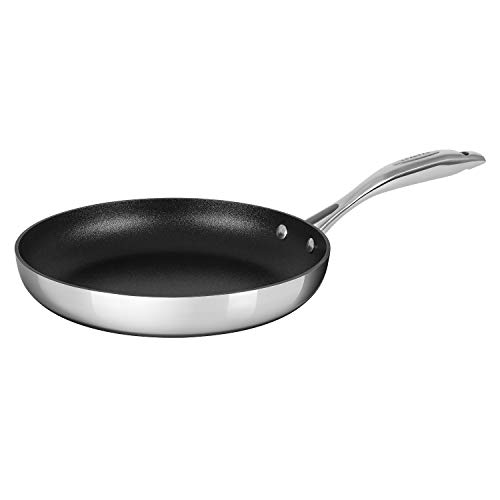
Scanpan’s HaptIQ line puts the Danish maker’s nonstick on a clad stainless and aluminum body instead of a plain aluminum one. The listing describes stainless steel-aluminum construction with a commercial-grade nonstick surface that is safe for metal utensils, PFOA-free, and oven safe to 500°F. Retailers describe five layers of clad aluminum and stainless, and list it for induction.
That clad body is what makes it a good fit for electric: stainless on the outside for a smooth base on glass, aluminum inside to spread the heat from the element. An 11-inch pan suits most large elements and many medium ones.
A retailer lists it as made in Denmark with a lifetime warranty. As with any nonstick, keep the heat moderate and avoid heating it empty.
Why we like it
- Clad body, not thin aluminum
- Metal-utensil-safe nonstick, per the listing
- Oven safe to 500°F
Key specifications
| Model | HaptIQ 11-inch fry pan |
|---|---|
| Construction | Stainless steel-aluminum clad (5-ply, retailer), nonstick |
| Diameter | 11 in |
| Weight | Not stated by the maker |
| Base | Stainless exterior |
| Cooktops (per maker) | All, including induction (retailer) |
| Oven safe | 500°F |
| Care | Not stated on listing |
Why we recommend it
Choose it if you want nonstick on a clad body and like to use metal tools.
Skip it if you need a 12-inch pan for big batches.
Pros and cons
Pros
- Stiff clad construction
- Metal-utensil safe
- High oven limit for nonstick
Cons
- Few maker specs on the listing
- 11 inches, not 12
How to choose a skillet for an electric stove
Flat comes first
GE’s owner’s manual for its radiant glass cooktops says all cookware must have flat bottoms and be the correct size, tells you to check pans for flat bottoms with a straight edge, and says pans with rounded, curved, ridged or warped bottoms are not recommended. Frigidaire’s manual for its coil-element ranges makes the same point from the other side: if a surface element does not seem to heat, lightweight or warped pans may be the cause, and it says to use only flat, evenly balanced, medium or heavyweight cookware. Lay a ruler across the bottom of any pan you already own; if you can see light under the middle, it will cook unevenly on electric.
Match the pan to the element
Frigidaire tells coil-range owners to select utensils with flat bottoms large enough to cover the heating element, because an undersized pan leaves part of the element exposed and can ignite clothing. A pan that is much bigger than the element has the opposite problem: the edges stay cool. Field Company suggests cookware no more than about an inch larger than the burner on a glass top. Compare the pan’s base or cooking-surface diameter, not the rim, with your element.
Heavier bases, within reason
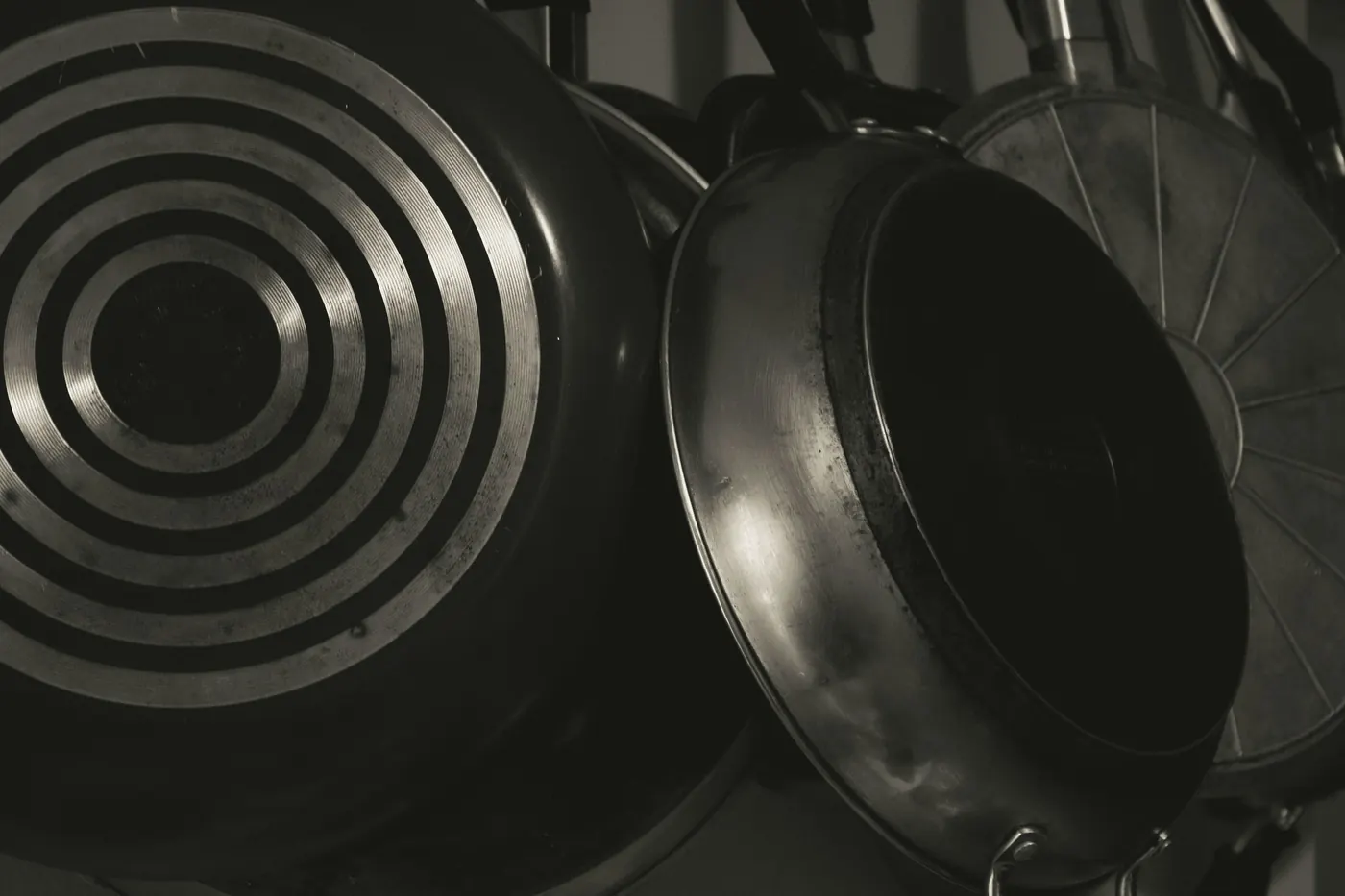
Medium to heavy pans heat more evenly on electric, Frigidaire says, while lightweight pans heat unevenly and burn food easily. GE recommends heavyweight aluminum and says thin aluminum should not be used on its glass cooktop. But very heavy pans bring their own risk on glass: they are harder to lift cleanly, and dropping one can crack the top. Clad stainless and clad carbon steel are the middle ground.
Cast iron on glass: follow your manual
GE’s JP5030 manual lists plain cast iron as not recommended on its radiant glass cooktop unless it is designed for glass, and recommends porcelain-enamel cast iron only if the bottom is coated. Other makers are more relaxed. Cast iron is fine on coil elements. If your glass-top manual allows it, use a smooth, lighter skillet, keep its bottom clean and dry, and lift it, never slide it.
Materials GE says to avoid on glass
The same GE manual says porcelain enamel on steel is not recommended, because heating an empty pan can melt the enamel onto the glass, and that glass-ceramic and stoneware perform poorly and can scratch the surface. It also warns that copper bottoms and aluminum can leave marks that need cleaning straight away. None of the skillets on this list has an enameled-steel, stoneware or glass body.
Clean, dry, and lift
GE says to place only dry pans on the surface elements, to put the pan in the center of the element, and not to slide cookware across the cooktop because the glass is scratch-resistant, not scratch-proof.
How we chose these eight skillets
We started from what range makers say about cookware for electric cooktops: GE’s owner’s manual for its JP5030 and JP5036 radiant glass cooktops and Frigidaire’s use and care manual for its coil-element electric ranges. Then we looked for skillets from established makers with a flat, stable base, stated by the maker or listing, that were in stock on Amazon when we checked. Specifications come from Zwilling’s Demeyere page, Field Company’s glass-top guidance, the Amazon listings and, where noted, retailer listings. Whirlpool’s cookware advice page did not load for us, so we do not quote it.
We have not cooked on these pans ourselves. We left out skillets already featured on our related frying pan and skillet guides, thin stamped-aluminum pans, and enameled-steel pans.
Skillets for electric stoves, answered
What is the best frying pan for an electric stove?
One with a flat, heavy base that matches your element. For most cooks, a clad stainless pan like the Demeyere Atlantis Proline, or a stiff hard-anodized nonstick like the Le Creuset Toughened Non-Stick PRO for delicate food.
Is an electric skillet the same as a skillet for an electric stove?
No. An electric skillet plugs into the wall and has its own heating element and thermostat. This guide covers ordinary stovetop skillets that work well on an electric range. For plug-in pans, see our electric skillet guide.
Can you use cast iron on a glass-top stove?
It depends on your range. GE’s JP5030 manual does not recommend plain cast iron on its glass cooktop unless it is made for glass. Others allow it with care. Check your own manual; if allowed, choose a smooth, lighter skillet and lift it rather than slide it.
Do skillets warp on electric stoves?
Thin pans can, especially when heated empty on high. Choose thick, clad or disc-based pans, preheat on medium, and avoid sudden temperature changes, which Strata also warns against. Demeyere says its Atlantis flatbase is built not to warp when heated.
Why does my coil element stay red but the pan cooks slowly?
Frigidaire lists lightweight or warped pans as a reason a surface element does not seem to heat well. Check the pan bottom with a straight edge and make sure the pan covers the element.
Our final pick for an electric range
Buy the Demeyere Atlantis Proline if you want a stainless skillet whose maker says its base stays flat when hot. Choose the Le Creuset PRO for nonstick, the Cuisinart Chef’s Classic for value, the Strata for carbon steel or the Field Company No. 8 for cast iron your manual allows.
For grilling on the same stove, see our grill pans for glass-top stoves; for tortillas, our comals for electric stoves. A good skillet is the start of chicken fajitas; our skillet for chicken guide has more. Or let us cook: see our menu and call to order.