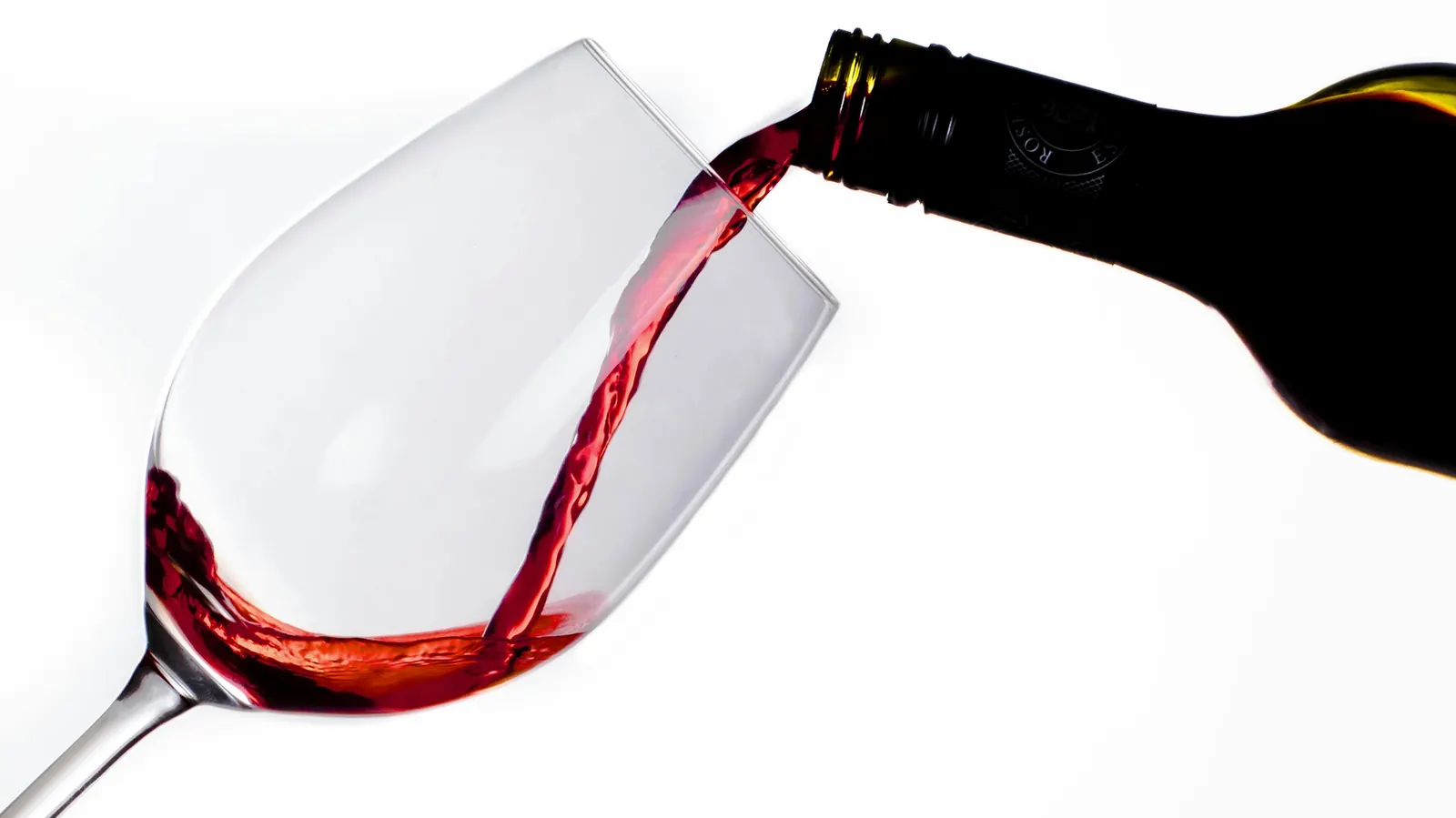
A young, bold red can taste tight and a little harsh straight out of the bottle, then open up after it has spent some time in the glass. That is air at work. A wine aerator is a small tool that tries to speed that up: the wine runs through a chamber that pulls in air as you pour, so the glass reaches the table already partly “breathed.”
Whether that makes a difference you can taste is a fair question, and we answer it honestly below. If you want one, though, there are real choices: handheld aerators you hold over the glass, pourers that sit in the bottle neck, shower funnels for a decanter and a battery-powered model that pours at the press of a button. This guide covers which type suits you and names the ones worth buying.
Julia’s earns a commission on purchases made through links on this page, at no cost to you. Recommendations are based on what a restaurant kitchen looks for, product specifications and verified buyer reports.
Quick verdict: which wine aerator to buy
For most people, the best wine aerator is the Vinturi Essential Red Wine Aerator: you hold it over the glass and pour through it, it comes with a no-drip base, and its filter screen catches cork bits and sediment, according to Vinturi. If you would rather leave the aerator in the bottle, choose the Vinturi On-Bottle Aerator, or the Rabbit Aerator Pourer on a budget. For older reds with sediment, pour through the Rabbit Aerator Shower Funnel into a decanter. And remember that swirling the glass is free.
Below are five standouts side by side, then all eight aerators reviewed in full.
Five wine aerators compared
One pick for each way of pouring, with the type and features each maker or listing states. All eight aerators are reviewed in full below.
| Wine aerator | Best for | Type | Sediment screen | Buy on Amazon |
|---|---|---|---|---|

Vinturi Essential Red Wine AeratorBest overall
|
Young reds, one glass at a time | Handheld, over the glass | Yes, filter screen | View on Amazon |

Vinturi On-Bottle Wine AeratorBest in-bottle
|
Pouring at the table, red or white | Pourer, sits in the bottle | Not stated | View on Amazon |

Rabbit Wine Aerator Pourer SpoutBudget pick
|
Drip-free pouring for less | Pourer, sits in the bottle | Not stated | View on Amazon |

Rabbit Wine Aerator Shower Funnel with Sediment StrainerBest for decanting
|
Whole bottles, older reds | Shower funnel for a decanter | Yes, removable strainer | View on Amazon |

Vinaera PRO Adjustable Electric Wine AeratorBest electric
|
Push-button pouring, adjustable | Battery-powered, sits on the bottle | Yes, built-in filter | View on Amazon |
Product images from Amazon. Features are as stated by each maker or listing; check the listing before you buy.
Our picks for the best wine aerator
These eight aerators cover every common style: a handheld aerator, three pourers that live in the bottle neck, two that aerate over a glass or decanter, an attachment for Coravin owners and one battery-powered model. Each pick says how it fits, whether it screens sediment, how to clean it and one honest reason to skip it. The flavor claims in each write-up are the maker’s, not ours.
1. Vinturi Essential Red Wine Aerator – Hold It Over the Glass
The Vinturi is the handheld aerator most people picture: a clear tube with a silicone grip that you hold over a glass while you pour the wine through it. Vinturi says its patented internal design speeds the wine up and lowers its pressure, which draws air in through side holes; you hear a distinctive sucking sound as it works, and Vinturi points to that sound as the sign of a genuine Vinturi.
It is made of what Vinturi calls specially formulated acrylic with a silicone body, and it includes a filter screen that, according to the listing, keeps cork bits and sediment out of the glass. A base is included so it can stand without dripping between pours. Vinturi designs this model for red wine and says it aerates in the time it takes to pour a glass. The listing gives a two-year warranty.
The handheld design is flexible: aerate one glass for yourself, or hold it over a decanter or pitcher and pour the whole bottle through it. The drawback is that it takes two hands, one for the bottle and one for the aerator.
Why we like it
- Aerates as you pour, one glass or a whole decanter
- Filter screen for cork bits and sediment, per the listing
- No-drip base included
- Two-year warranty
Key specifications
| Aerator | Vinturi Essential Red, model V1010 |
|---|---|
| Type | Handheld, held over the glass |
| Fits | Any glass or decanter (held above it) |
| Sediment screen | Yes, filter screen |
| Cleaning | Not stated on this listing |
| Best for | Young red wines |
| Warranty | Two years |
Why we recommend it
It suits anyone who mostly drinks young reds and wants to try aeration with the best-known tool, with the option of doing one glass or a whole bottle.
Skip it if you want one-handed pouring at the table; an in-bottle pourer is easier.
Pros and cons
Pros
- Works for a glass or a decanter
- Screens sediment
- Stand included
Cons
- Needs two hands
- Designed for red wine
- Can splash if poured too fast
2. Vinturi On-Bottle Wine Aerator – Pour Straight from the Bottle
Vinturi’s On-Bottle model puts the same idea into a pourer that sits in the neck of the bottle, so you pour one-handed straight into the glass. The listing says it fits most bottle openings and is designed for both red and white wines, and Vinturi claims it works on any wine in under 30 seconds.
Like the handheld model, it makes the Vinturi sound as it draws in air. It stays in the bottle through the meal, which suits a dinner table where the bottle gets passed around. The listing does not mention a sediment screen or cleaning instructions, so rinse it under warm water after use and check the packaging for anything more. The listing gives a one-year warranty.
Why we like it
- One-handed pouring, aerator stays in the bottle
- Designed for red and white, per Vinturi
- Fits most bottle openings
- One-year warranty
Key specifications
| Aerator | Vinturi On-Bottle, model V9060 |
|---|---|
| Type | Pourer, sits in the bottle neck |
| Fits | Most bottle openings (listing) |
| Sediment screen | Not stated |
| Cleaning | Not stated on this listing |
| Best for | Pouring at the table, red or white |
| Warranty | One year |
Why we recommend it
It suits dinners where the bottle stays on the table and everyone pours their own.
Skip it if your wines throw sediment; the listing does not mention a screen, so pour older reds through a strainer or decanter instead.
Pros and cons
Pros
- One-handed
- Red and white, per Vinturi
- Stays in the bottle
Cons
- No sediment screen mentioned
- Cleaning not described on the listing
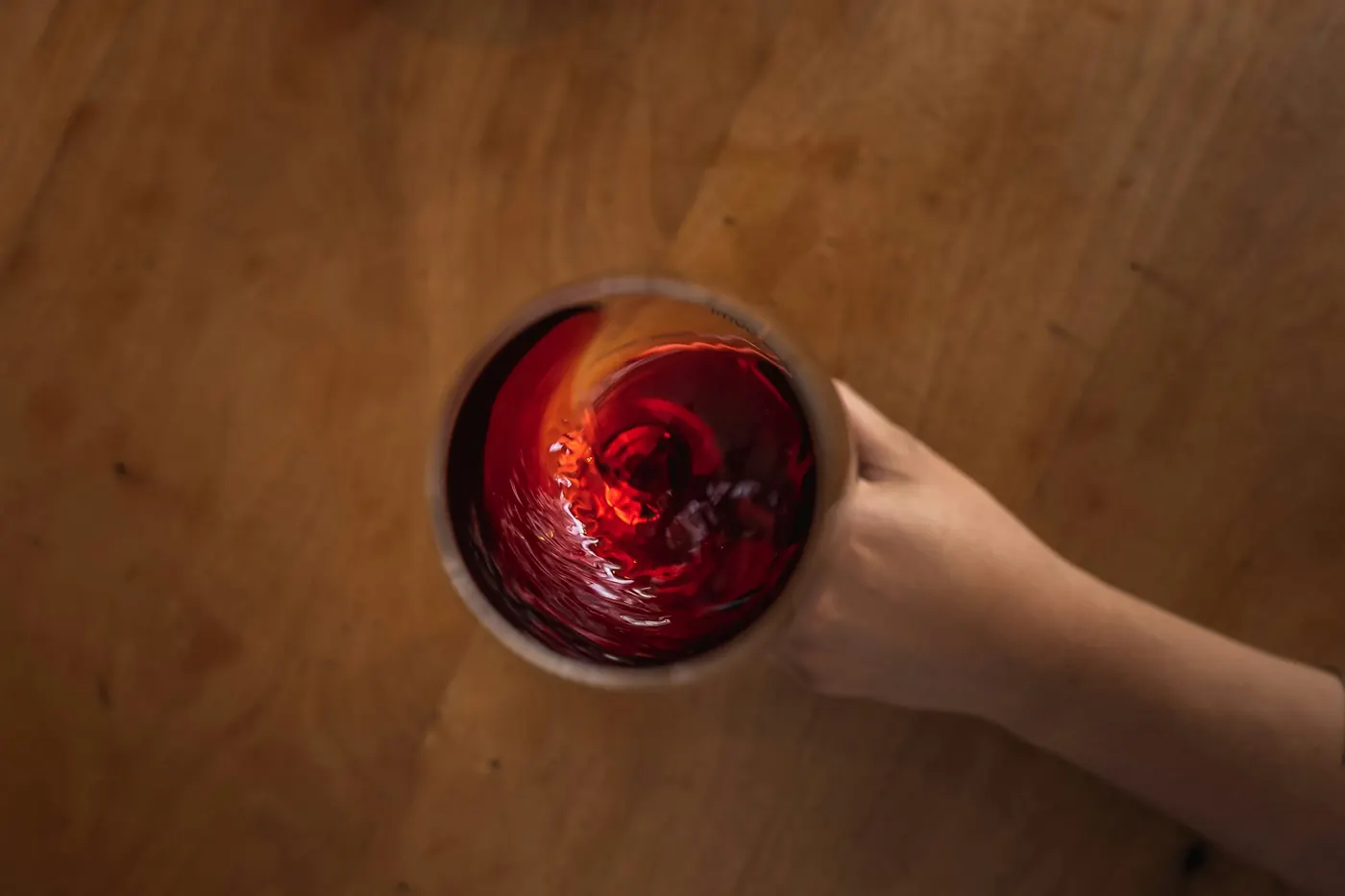
3. Rabbit Wine Aerator Pourer Spout – Drip-Free on a Budget
Rabbit’s aerator pourer is a short stainless and silicone spout that pushes into the bottle neck. The listing says the slim silicone base fits securely in all bottle types and lets you pour and aerate without drips, which on its own is worth having if you have ever ruined a tablecloth.
Rabbit says it aerates each glass as you pour, improving the wine’s bouquet and flavor; as with every aerator here, that is the maker’s claim. Care is simple: hand wash and air dry. Product information gives a five-year warranty, which is generous for a tool this inexpensive.
Why we like it
- Silicone base fits all bottle types, per the listing
- Drip-free pour
- Hand wash and air dry
- Five-year warranty
Key specifications
| Aerator | Rabbit aerator pourer, model W6127 |
|---|---|
| Type | Pourer, sits in the bottle neck |
| Fits | All bottle types (listing) |
| Sediment screen | Not stated |
| Cleaning | Hand wash, air dry |
| Best for | Everyday pouring, small budget |
| Warranty | Five years |
Why we recommend it
It suits anyone curious about aeration who does not want to spend much, and anyone who mainly wants a pourer that stops drips.
Skip it if you want sediment filtering; the listing does not mention a screen.
Pros and cons
Pros
- Inexpensive
- Stops drips
- Five-year warranty
Cons
- No sediment screen mentioned
- Hand wash only
4. Vintorio Wine Aerator Pourer – Large Chamber, Easy to Rinse
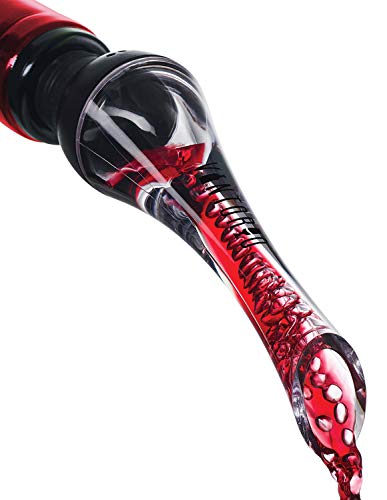
The Vintorio pourer has a larger aerating chamber than most in-bottle spouts, and Vintorio says its air intake uses the Bernoulli effect, the same principle Vinturi describes, to draw air into the wine as it flows. The rubber stopper is tapered and ribbed to seal bottles of all sizes, according to the listing, and the acrylic spout is notched and angled for drip-free pouring.
The detail that matters day to day is cleaning: the listing says it comes apart and can simply be run under water. Vintorio also offers a lifetime warranty, according to the product information. It is patented, the listing says, and widely copied, so make sure you are buying from the Vintorio brand listing.
Why we like it
- Large aerating chamber, per Vintorio
- Tapered, ribbed stopper fits bottles of all sizes
- Comes apart for rinsing
- Lifetime warranty
Key specifications
| Aerator | Vintorio aerator pourer, model VAPBLK1 |
|---|---|
| Type | Pourer, sits in the bottle neck |
| Fits | Bottles of all sizes (listing) |
| Sediment screen | Not stated |
| Cleaning | Comes apart; rinse under water |
| Best for | Everyday pouring, easy cleaning |
| Warranty | Lifetime |
Why we recommend it
It suits anyone who wants an in-bottle aerator that is easy to keep clean and backed by a lifetime warranty.
Skip it if your wines throw sediment; like most pourers, it does not list a screen.
Pros and cons
Pros
- Easy to take apart and rinse
- Drip-free spout
- Lifetime warranty
Cons
- No sediment screen mentioned
- Many look-alike copies on sale
5. Rabbit Wine Aerator Shower Funnel with Sediment Strainer – For a Whole Bottle
A shower funnel sits in the mouth of a decanter. As you pour, the wine spreads out and runs down the inside of the decanter in a thin sheet, which exposes more of it to air. Rabbit’s version is two pieces of 18/8 stainless steel, according to the listing: the funnel and a nested strainer that catches sediment and bits of cork.
That strainer is the real reason to own one. Older red wines can throw a sediment that you do not want in the glass, and the strainer lifts out so you can rinse it. The listing says the funnel is dishwasher safe. You will need a decanter or a glass pitcher to pour into; any carafe with a wide enough mouth will do.
Why we like it
- Removable sediment strainer, per the listing
- 18/8 stainless steel
- Dishwasher safe
- Aerates a whole bottle at once
Key specifications
| Aerator | Rabbit shower funnel, model W6118 |
|---|---|
| Type | Shower funnel for a decanter |
| Fits | Decanter or carafe mouth (size not stated) |
| Sediment screen | Yes, removable strainer |
| Cleaning | Dishwasher safe |
| Best for | Whole bottles, older reds with sediment |
| Warranty | Not stated |
Why we recommend it
It suits anyone who decants a bottle before dinner, especially older reds, and wants to catch the sediment while doing it.
Skip it if you do not own a decanter or pitcher; this funnel only works with one.
Pros and cons
Pros
- Catches sediment and cork
- Stainless steel, dishwasher safe
- Whole bottle in one go
Cons
- Needs a decanter or pitcher
- Not for a single glass

6. Rabbit Hands-Free Wine Aerator with Sediment Strainer – Rests on the Glass

This Rabbit set solves the two-hands problem of a handheld aerator. Clip on the included wings and the aerator rests on top of a wine glass by itself, so you only hold the bottle; take the wings off and it fits on a decanter instead, according to the listing. The wine runs through it and down the side of the glass or decanter.
The four-piece set includes the stainless steel aerator, the removable wings, a sediment filter that catches cork fragments and a stand that doubles as a drip catcher. Rabbit recommends gentle hand washing with soapy water to avoid scratching the finish. It measures 3.35 by 3.35 by 5.6 inches, per the listing.
Why we like it
- Rests on the glass, so one hand is free
- Wings come off to fit a decanter
- Sediment filter and drip stand included
Key specifications
| Aerator | Rabbit aerator with sediment strainer and stand, model 5283982 |
|---|---|
| Type | Hands-free, rests on a glass or decanter |
| Fits | Wine glass (with wings) or decanter |
| Sediment screen | Yes, sediment filter |
| Cleaning | Hand wash gently with soapy water |
| Best for | Single glasses without holding the aerator |
| Warranty | Not stated |
Why we recommend it
It suits anyone who likes the idea of a handheld aerator but does not want to juggle it with the bottle.
Skip it if your glasses have narrow or unusually wide rims; check that the wings will sit securely before relying on it.
Pros and cons
Pros
- Hands-free on the glass
- Works on a decanter too
- Sediment filter included
Cons
- Several small parts to keep track of
- Hand wash only
7. Coravin Timeless Aerator – For Coravin Owners Only

If you already own a Coravin Timeless system, the device that pours wine through a needle while leaving the cork in, this attachment aerates each glass as it pours. Coravin says it gives results equivalent to decanting for 60 to 90 minutes in a few seconds; that is the maker’s claim.
The important point is compatibility. The listing says it works exclusively with Coravin Timeless systems, so it is useless on its own, and Coravin sells a separate aerator for its Pivot system. Cleaning is a rinse with warm, clean water. Some Coravin Timeless kits already include this aerator, so check what came in your box before buying it separately.
Why we like it
- Aerates a glass while the rest of the bottle stays sealed
- Clips onto the Coravin Timeless system
- Rinse with warm water to clean
Key specifications
| Aerator | Coravin Timeless Aerator, model 802094 |
|---|---|
| Type | Attachment for Coravin Timeless |
| Fits | Coravin Timeless systems only |
| Sediment screen | Not stated |
| Cleaning | Rinse with warm water |
| Best for | Coravin owners |
| Warranty | Not stated |
Why we recommend it
It suits Coravin Timeless owners who want to aerate the single glasses they pour without opening the bottle.
Skip it if you do not own a Coravin Timeless; it will not work with anything else.
Pros and cons
Pros
- Aerates without uncorking
- Simple rinse to clean
Cons
- Only fits Coravin Timeless
- Already included in some Coravin kits
8. Vinaera PRO Adjustable Electric Wine Aerator – Push-Button and Adjustable
An electric aerator sits on top of the bottle and pumps the wine out through an aerating spout at the touch of a button, so you never tip the bottle. Vinaera’s PRO model adds an adjustable setting: the listing says you can fine-tune the amount of aeration to the style of wine, up to what it describes as the equivalent of three hours in a decanter. That equivalence is the maker’s claim.
It runs on six AAA batteries, which are not included, and the listing says a set aerates more than 100 bottles. A telescopic tube adjusts to different bottle heights, from a standard bottle up to a 1.5-liter magnum, and a built-in sediment filter keeps residue out of the glass. A countertop stand is included. We chose it over the Aervana electric aerator, which we could not find for sale on Amazon.
Why we like it
- Push-button pouring without tipping the bottle
- Adjustable aeration level, per the listing
- Built-in sediment filter
- Fits bottles up to a 1.5-liter magnum
Key specifications
| Aerator | Vinaera PRO, model MV7 |
|---|---|
| Type | Battery-powered, sits on the bottle |
| Fits | Standard bottles to 1.5 L magnum (telescopic tube) |
| Sediment screen | Yes, built-in filter |
| Cleaning | Not clearly stated on the listing |
| Best for | Push-button pouring, weak grip |
| Warranty | Not stated |
Why we recommend it
It suits anyone who finds lifting and tipping a full bottle awkward, and people who like gadgets and want to adjust the setting for different wines.
Skip it if you want something simple; it needs batteries, has more to clean and costs far more than a pourer.
Pros and cons
Pros
- No tipping the bottle
- Adjustable setting
- Sediment filter and stand included
Cons
- Needs six AAA batteries (not included)
- Cleaning instructions unclear on the listing
- Most expensive type of aerator
Do wine aerators actually work?
Air does change wine. Wine Spectator’s “Dr. Vinny” columnist explains that exposing wine to air starts both oxidation and evaporation, and that most wines, especially younger, more robust ones, become more expressive and aromatic with some exposure to air. Older wines can fade, and too much air eventually harms any wine.
Whether a pour-through aerator adds enough air to taste is less certain. The same column reports that the writer’s own blind tastings comparing aerated and un-aerated wine were inconclusive, questions makers’ claims to add the “proper” amount of air when that amount varies from wine to wine, and notes that for most people simply swirling the glass is plenty of aeration. The columnist has no objection to aerators, though, and points out that they are convenient: no decanter to get out for every glass.
So treat an aerator as a convenience and a bit of ceremony rather than a fix. The flavor and “hours of decanting” claims on these listings belong to their makers. If a wine tastes harsh, a few minutes in the glass with a swirl, or pouring it into a pitcher an hour before dinner, does much the same job for free.

How to choose a wine aerator for your table
Pick the type by how you pour. A handheld aerator suits one glass at a time and doubles for a decanter. An in-bottle pourer suits a dinner table where the bottle is passed around. A shower funnel suits whole bottles poured into a decanter. An electric aerator suits anyone who finds tipping a bottle hard.
Want a sediment screen? If you drink older reds or unfiltered wines, choose an aerator with a screen (Vinturi Essential, either Rabbit with a strainer, Vinaera PRO) or pour through a fine strainer.
Check how it cleans. Wine left to dry inside an aerator gets sticky. Look for one that comes apart (Vintorio) or is dishwasher safe (Rabbit funnel), and rinse it right after use either way.
Mostly reds. Makers aim most aerators at red wine, and the Wine Spectator column notes that younger, robust wines are the ones that tend to gain from air. Crisp whites and rosé are usually served cold and need little or no aeration. Sangria and wine punches certainly do not; they need a big bowl and ice, which our guide to the best punch bowl covers.
Do not let it speed up the evening. An aerator is about letting a glass of wine show its best, not about drinking faster. Pour moderately and keep water and food on the table.
How we chose these eight aerators
We started from what a restaurant table asks of a wine tool: it pours cleanly without drips, it is easy to clean and it does what it says without making promises it cannot keep. We then narrowed the field to aerators sold on Amazon in the United States by identifiable makers, checked that each was in stock when we wrote this, and took every specification from the maker’s listing. We covered every common type rather than listing near-identical pourers, and we left out unbranded copies of the popular designs. For whether aeration makes a difference, we relied on Wine Spectator, which we read in full. Three aerators we considered, from Corkas, Soireehome and Aervana, did not turn up for sale on Amazon when we checked. We have not used these products ourselves; the flavor claims quoted are each maker’s own.

Wine aerator questions, answered
What is the best type of wine aerator?
For most people, a handheld aerator such as the Vinturi Essential, because it works for one glass or a whole decanter and screens sediment. If you want to pour one-handed, an in-bottle pourer is more convenient.
Is an aerator the same as a decanter?
No. A decanter is a vessel you pour the whole bottle into, which gives the wine air over time and leaves sediment behind in the bottle. An aerator adds air during the pour. A shower funnel such as Rabbit’s combines the two.
Should you aerate white wine?
Usually there is little need. Whites are often served cool and fresh, and swirling the glass gives them all the air they need. Vinturi markets its On-Bottle model for both red and white wines if you want to try it.
Does a wine aerator make cheap wine taste better?
Makers say aeration softens and opens up young wines, and Wine Spectator’s columnist agrees that air tends to help younger, robust wines, but found the columnist’s own blind tastings of aerators inconclusive. It will not turn one wine into another.
How do you clean a wine aerator?
Rinse it under warm water right after use, before the wine dries. Take it apart if the maker allows, and only use the dishwasher if the maker says it is dishwasher safe.
What red wine goes with Mexican food?
Young, fruity reds tend to work with grilled meats such as carne asada, and a rich red from Baja California’s Valle de Guadalupe can stand up to mole. Those young reds are exactly the wines aerator makers have in mind.
The aerator we would keep by the wine rack
Buy the Vinturi Essential if you want to try aeration with the best-known handheld tool, the Vinturi On-Bottle or Rabbit pourer if you would rather pour one-handed, and the Rabbit shower funnel if you decant older reds and want to catch the sediment. Choose the Vinaera PRO only if tipping a bottle is hard for you. And before you buy any of them, try a swirl in the glass: it is the aerator everyone already owns.
For the glasses to pour into, see our guides to everyday glassware sets and cocktail glasses.
More wine guides: wine glasses, wine openers, wine decanters, wine chillers, bar carts.
And if you would rather someone else did the cooking tonight, see the menu or call to order.