
A cocktail shaker does three things at once: it chills a drink, dilutes it with a little meltwater, and mixes ingredients that will not combine by stirring alone, such as citrus, syrup and egg white. Any tight-sealing container can manage that once. A good shaker does it every time, opens easily when the metal is ice cold, holds enough for the drinks you make, and pours cleanly.
There are three main styles, Boston, cobbler and Parisian, and several respected makers, from Cocktail Kingdom and Barfly to Japan’s Yukiwa. This guide explains how the styles differ and which ten shakers are worth buying for a home bar, with a pick for every kind of drinker, from the person who makes a margarita on Friday to the one building a full bar cart.
Julia’s earns a commission on purchases made through links on this page, at no cost to you. Recommendations are based on what a restaurant kitchen looks for, product specifications and verified buyer reports.
Quick verdict: which cocktail shaker to buy
The best cocktail shaker for most home bars is the Cocktail Kingdom Koriko weighted shaking tin set: an 18-ounce and a 28-ounce tin, rated by the maker for two drinks, and rated Highly Recommended by America’s Test Kitchen. Add a Hawthorne strainer. If you want everything in one tool, choose the Cocktail Kingdom Usagi cobbler; for a classic two-piece shape, the Barfly Parisienne; and for beginners or the patio, the OXO Good Grips plastic shaker.
Ten shakers, five standouts at a glance
Our five standout picks, one for each kind of home bartender, with the specifications each maker or listing states. All ten shakers are reviewed in full below.
| Shaker | Best for | Type & material | Capacity | Buy on Amazon |
|---|---|---|---|---|

Cocktail Kingdom Koriko Weighted Shaking TinsBest overall
|
Most home bars; two drinks at once | Boston tin-on-tin, stainless steel | 18 oz + 28 oz tins | View on Amazon |
| One drink, no separate strainer | Cobbler, 18/8 stainless | 500 ml (17 oz) | View on Amazon | |

Barfly Parisienne Cocktail Shaker, 24 ozBest Parisian
|
A classic shape with only two parts | Parisian two-piece, stainless | 24 oz (700 ml) | View on Amazon |
| A gold-accented shaker that still works hard | Cobbler, stainless with gold-plated cap | 16.5 oz | View on Amazon | |

OXO Good Grips Plastic Cocktail Shaker, 20 ozBest for beginners
|
Beginners, patios and pools | Cobbler-style, plastic with gaskets | 20 oz (590 ml) | View on Amazon |
Product images from Amazon. Capacities and materials are as stated by each maker or listing; check the listing before you buy.
Our picks for the best cocktail shaker
These ten shakers cover every style you will find, two-piece tins, tin-and-glass Boston shakers, three-piece cobblers and the Parisian, in stainless steel, gold plate, glass, insulated steel and plastic. Each pick says who it suits and gives one honest reason to skip it. If you are shopping for a margarita shaker specifically, our guide to the best cocktail shaker for margaritas narrows the field for that one drink.
1. Cocktail Kingdom Koriko Weighted Shaking Tins – The Bar-Standard Tin Set
If you want one shaker that will do everything well for years, buy two tins. Cocktail Kingdom calls its Koriko tins “the industry-standard shaking tins preferred by professional bartenders”, and the set pairs a small 18-ounce (532 ml) tin with a large 28-ounce (830 ml) tin, both with a weighted base. The maker rates the pair for two drinks at once.
Tin-on-tin is the style most cocktail bars work with because it is fast, holds a lot of ice and has nothing to clog. You build the drink in the small tin, fill the large one with ice, angle the small tin in and press to seal. Cocktail Kingdom says its quality control gives “a perfect balance between flexibility and rigidity that ensures a tight seal with easy separation”, which is the whole game with tins: they must lock while you shake and let go with a tap afterwards.
Independent reviewers agree. America’s Test Kitchen rates the Koriko large and small weighted tins “Highly Recommended” in its cocktail shaker review. The one thing tins do not do is strain, so budget for a Hawthorne strainer; our cocktail shaker strainer guide covers which ones fit. The listing gives the stainless tins as dishwasher safe.
Why we like it
- 18-ounce and 28-ounce weighted tins, rated for two drinks
- Made for a tight seal and easy separation, per Cocktail Kingdom
- Highly Recommended by America’s Test Kitchen
- Nothing to clog with citrus pulp
- Dishwasher safe, according to the listing
Key specifications
| Model | KORIKO-SHAKER |
|---|---|
| Type | Boston, tin-on-tin |
| Material | Stainless steel (18/8 per retailer Boston General Store) |
| Capacity | 18 oz (532 ml) + 28 oz (830 ml); two drinks |
| Pieces | 2 tins |
| Weight | Not stated (weighted bases) |
| Dishwasher safe | Yes (listing) |
| Made in | Not stated |
Why we recommend it
Choose it if you shake drinks often, make two at a time, or simply want to learn on the tool most bartenders use. It is the most versatile shaker on this page.
Skip it if you want a shaker that works with nothing else to buy. Tins need a separate strainer, and the seal takes a few tries to master.
Pros and cons
Pros
- Two drinks per shake
- Tight seal, easy release (per maker)
- Weighted for stability
- Dishwasher safe
Cons
- Strainer sold separately
- Short learning curve
- Plain, utilitarian look
2. Barfly Superfly Heavyweight Shaker Tins – Thick Steel for Hard Use
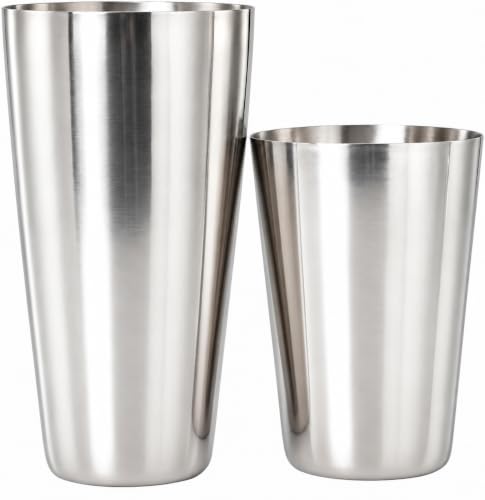
Barfly is the bar line of Mercer Culinary, a foodservice knife and tool maker, and the Superfly is its heaviest tin set. Like the Koriko pair it has a full-size 28-ounce (828 ml) tin and a half-size 18-ounce (532 ml) tin, but Barfly describes the steel as “ultra heavy-duty” and the tins as “heavyweight”, made “to maintain shape, hide wear, and perform consistently well”.
Thickness matters on a tin more than you might expect. A dented rim no longer seals cleanly, and a tin that gets knocked into the sink or dropped on a tile floor every so often is a tin that will eventually leak. Heavier walls resist that. Barfly also says the tins are made “to fit together perfectly, and release easily”, and that each one can be used on its own, the small tin as a mixing cup and the large one for stirring.
Barfly gives clear care advice: all its stainless steel is dishwasher safe, but it recommends hand washing in warm, soapy water and avoiding detergents with bleach or heavy chlorination. The listing does not give a drink capacity or a weight, though the sizes match the two-drink Koriko tins.
Why we like it
- Ultra heavy-duty stainless steel, per Barfly
- Standard 18-ounce and 28-ounce pairing
- Made to fit together and release easily
- Each tin usable on its own
- Clear care instructions from the maker
Key specifications
| Model | M37161 |
|---|---|
| Type | Boston, tin-on-tin |
| Material | Heavyweight stainless steel (grade not stated) |
| Capacity | 18 oz (532 ml) + 28 oz (828 ml) |
| Pieces | 2 tins |
| Weight | Not stated (heavyweight) |
| Dishwasher safe | Yes; hand washing recommended |
| Made in | Not stated |
Why we recommend it
Choose it if you are hard on your tools, share them with guests, or want a tin set that keeps its shape for years of weekend parties.
Skip it if you want the lightest tins for long rounds of shaking. Heavy walls add weight in the hand, and you still need a strainer.
Pros and cons
Pros
- Thick steel resists dents
- Two-drink sizes
- Tins work separately too
Cons
- Heavier in the hand
- Strainer sold separately
- Hand washing recommended

3. Cocktail Kingdom Usagi Heavyweight Cobbler Shaker, 500 ml – Shakes and Strains in One

A cobbler is the three-piece shaker most people picture: a cup, a lid with a strainer built in, and a small cap on top. The Usagi is Cocktail Kingdom’s heavyweight version in 18/8 stainless steel, with a one-drink capacity of 500 ml (17 oz) and, in the maker’s words, “made to an exacting standard for easy separation after shaking”.
The appeal is simplicity. There is no separate strainer to buy or wash, and the drink pours straight from the shaker into the glass. That makes a cobbler the friendliest shaker for one drink at a time, and the best fit for a small kitchen where every tool needs a drawer.
Cobblers have one well-known weakness, and the Usagi is not immune. Cold metal contracts as you shake, and the lid can lock tight. America’s Test Kitchen, which rates the Usagi “Recommended”, notes that its parts can “fit too tightly, especially after long shakes”. A twist rather than a pull, or a few seconds under warm water, frees it. The Amazon listing does not give care instructions; retailer Boston General Store says the mirror finish is dishwasher safe.
Why we like it
- Built-in strainer: nothing else to buy
- 18/8 stainless steel, heavyweight build
- Made for easy separation, per the maker
- Recommended by America’s Test Kitchen
Key specifications
| Model | Usagi Heavyweight Cobbler, mirror finish |
|---|---|
| Type | Cobbler, three-piece |
| Material | 18/8 stainless steel |
| Capacity | 500 ml (17 oz); one drink |
| Pieces | 3 (cup, strainer lid, cap) |
| Weight | Not stated (heavyweight) |
| Dishwasher safe | Not stated in listing; mirror finish yes per retailer |
| Made in | Not stated |
Why we recommend it
Choose it if you usually make one drink at a time and want a single, well-made tool that shakes, strains and goes back in the drawer.
Skip it if you make rounds for a group. One drink per shake is slow, and the strainer holes can clog with pulp.
Pros and cons
Pros
- All-in-one shaker
- 18/8 stainless steel
- Compact for small kitchens
Cons
- One drink per shake
- Lid can stick after long shakes (ATK)
- Care not stated in listing
4. Yukiwa UK 18-8 Cobbler Shaker, 360 ml – A Mid-Size Japanese Classic

Japanese bartending made the cobbler fashionable again, and Yukiwa is one of the best-known names in Japanese barware. Its UK 18-8 shaker is the plain three-piece kind: a tall cup, a built-in strainer and a cap, in 18-8 stainless steel. The listing gives the capacity as 360 ml (12.2 ounces), the height as 17 cm, the diameter as 7.8 cm and the weight as 230 g.
Note the size before you buy. 360 ml is about 12 ounces, enough for one drink with ice, such as a daiquiri or a classic margarita served up. It will not hold a long drink with lots of ice or juice. In return it stays compact, which is why smaller cobblers like this are popular for hard, fast shaking.
America’s Test Kitchen names a different, larger Yukiwa model, the Jumbo cobbler, its best classic cobbler shaker, while noting that it “sealed too tightly at times”. The listing for this shaker does not mention care, so rinse and dry it by hand to keep the polish bright.
Why we like it
- From Yukiwa, a Japanese barware maker
- 230 g, stated in the listing
- Classic three-piece design with built-in strainer
- Compact for short, strong drinks
Key specifications
| Model | UK 18-8, 360 ml (PSE06002) |
|---|---|
| Type | Cobbler, three-piece |
| Material | 18-8 stainless steel |
| Capacity | 360 ml (12.2 oz); one drink |
| Pieces | 3 (cup, strainer, cap) |
| Weight | 230 g |
| Dishwasher safe | Not stated |
| Made in | Not stated in the listing |
Why we recommend it
Choose it if you like the Japanese style of bartending, mostly make drinks for one, or want a simple cobbler with its size published.
Skip it if you make margaritas on the rocks or anything with a lot of juice. At 360 ml it is too small for long drinks or two at once.
Pros and cons
Pros
- Japanese maker
- Compact, with sizes published
- Built-in strainer
Cons
- Only 360 ml
- Care not stated
- Cobbler lids can stick
5. Barfly Parisienne Cocktail Shaker, 24 oz – Two Pieces, Classic Shape
The Parisian, or French, shaker is the third main style. It has two pieces like a Boston shaker, a base and a fitted metal top, but the shape of a cobbler and no built-in strainer. Bar supplier KaTom describes it as combining the practicality of the Boston with the look of the cobbler, and that is a fair summary.
Barfly’s version holds 24 ounces (700 ml) in heavy-duty stainless steel. The maker says it is “precision formed for easy separation after shaking” and that the “oversized top allows for optimal mixing”, giving the ice room to move. Two parts means less to wash than a cobbler and no small holes to clog, and the fitted top is made for this base, so the seal is more predictable than a pair of mismatched tins.
You strain it as you would tins, through a Hawthorne strainer. Barfly does not give a drink capacity, but 24 ounces leaves comfortable room for one generous drink and plenty of ice. Care follows Barfly’s usual advice: dishwasher safe, hand washing recommended, no bleach detergents.
Why we like it
- Two-piece design with no holes to clog
- Precision formed for easy separation, per Barfly
- Oversized top gives the ice room
- 24-ounce heavy-duty stainless steel
Key specifications
| Model | M37085 |
|---|---|
| Type | Parisian (French), two-piece |
| Material | Heavy-duty stainless steel |
| Capacity | 24 oz (700 ml) |
| Pieces | 2 (base and top) |
| Weight | Not stated |
| Dishwasher safe | Yes; hand washing recommended |
| Made in | Not stated |
Why we recommend it
Choose it if you like a classic-looking shaker but want only two pieces and a dependable seal, and you already own, or will buy, a Hawthorne strainer.
Skip it if you want everything in one tool. A cobbler strains on its own, and a tin set holds more.
Pros and cons
Pros
- Handsome, simple design
- Nothing to clog
- Heavy-duty steel
Cons
- Needs a separate strainer
- Drink capacity not stated
- Hand washing recommended
6. Crafthouse by Fortessa Footed Boston Shaker – A Grip You Can Hold

Crafthouse is Fortessa’s barware collection designed by Charles Joly, whom the listing describes as a World Champion Bartender. This is its two-piece Boston shaker in heavy-gauge stainless steel, with one detail no other shaker here has: an “architectural foot” at the base that, according to the listing, gives you a place to wrap your fingers for a secure hold and balances the shaker.
It has practical touches as well. The ribbed design is meant to improve grip, and the shaker is marked with 2-ounce, 4-ounce and 6-ounce volume lines, handy for building a drink without a jigger when you are in a hurry, though a jigger is still more accurate. The listing says it is designed to seal tightly to avoid spills, measures 11 by 3.5 inches when assembled, and is dishwasher safe.
Like any Boston shaker, it needs a strainer, and it takes a little practice to seal and break apart. Fortessa does not give a capacity in ounces or a drink count, so judge it as a full-size Boston shaker for one or two drinks.
Why we like it
- Designed by bartender Charles Joly, per the listing
- Footed base and ribbing for a secure grip
- 2, 4 and 6-ounce volume markings
- Heavy-gauge stainless steel, dishwasher safe
Key specifications
| Model | CRFTHS.5.1009 |
|---|---|
| Type | Boston, two-piece, footed |
| Material | Heavy-gauge stainless steel |
| Capacity | Not stated (2, 4, 6 oz markings) |
| Pieces | 2 |
| Weight | Not stated |
| Dishwasher safe | Yes (listing) |
| Made in | Not stated |
Why we recommend it
Choose it if you want a Boston shaker that looks like a designed object on a bar cart, or a handsome gift for someone who already mixes drinks.
Skip it if you want the plain efficiency of standard tins. Its shape is distinctive, and the listing leaves out the capacity.
Pros and cons
Pros
- Secure footed grip
- Built-in volume lines
- Dishwasher safe
Cons
- Capacity not stated
- Needs a strainer
- Boston learning curve

7. Houdini Boston Shaker, 24 oz Glass and Steel – See What You Are Mixing

The original Boston shaker pairs a metal tin with a mixing glass, and this Houdini set keeps that format: a stainless steel tin and a “no-chip glass”, 24 ounces in total, designed “for easy separation after shaking”, according to the listing. It measures 6.7 inches tall and 3.9 inches wide.
The glass half is the reason to choose it. You can watch the ingredients go in, which helps when you are learning to measure, and the glass works on its own as a mixing glass for stirred drinks. America’s Test Kitchen names a Houdini 24-ounce stainless steel and glass Boston shaker its best Boston shaker, while warning that Boston shakers in general “have a steeper learning curve” than cobblers.
Glass brings cautions too. It is heavier and more fragile than a second tin, and steel and glass contract at different rates in the cold, so the seal feels a little different from tin-on-tin. Houdini rates the set top-rack dishwasher safe.
Why we like it
- Glass half shows the drink as you build it
- Doubles as a mixing glass
- Designed for easy separation, per the listing
- Best Boston shaker pick at America’s Test Kitchen (24-ounce Houdini)
Key specifications
| Model | H9-15804T |
|---|---|
| Type | Boston, tin-on-glass |
| Material | Stainless steel tin, no-chip glass |
| Capacity | 24 oz |
| Pieces | 2 (tin and glass) |
| Weight | Not stated |
| Dishwasher safe | Top rack |
| Made in | Not stated |
Why we recommend it
Choose it if you are learning, teaching friends, or want one tool for shaken and stirred drinks.
Skip it if the shaker will live outdoors or near a pool. Glass can break; an all-steel shaker is safer there.
Pros and cons
Pros
- Visible build
- Works as a mixing glass
- Top-rack dishwasher safe
Cons
- Glass is heavier and breakable
- Needs a strainer
- Seal takes practice
8. Viski Two-Toned Heavyweight Cocktail Shaker, Gold and Gunmetal, 16.5 oz – A Weighty Cobbler with a Gold Cap

If you want a touch of gold on your bar cart, this is a sensible way to get it: a heavyweight cobbler with a built-in strainer, from Viski, which says the shaker was “designed exclusively by professionals for professionals”. This two-toned version pairs a gunmetal black finish with a polished gold-plated cap; the listing describes 1.35 mm stainless steel walls and calls it “nicely weighted”.
It holds 16.5 ounces, so it is a one-drink cobbler, much like the Usagi. Thick walls help a cobbler in two ways: the shaker feels steady in the hand, and a thicker cup is less likely to dent and lose its seal. The same heavyweight shaker is also sold in plain polished silver and in copper if you prefer one finish all over.
Plated and coated finishes need gentler care than bare steel. Viski does not give care instructions in the listing, so treat it as finished barware: wash by hand, avoid abrasive pads, and dry it straight away. Cocktail Kingdom, for comparison, marks its own gold-plated Koriko tins “hand wash only”. If you would rather have all-gold tins than a cobbler, those Koriko gold tins are the obvious alternative.
Why we like it
- Polished gold-plated cap over a gunmetal black finish
- 1.35 mm stainless steel walls, per Viski
- Built-in strainer
- Weighted feel in the hand
Key specifications
| Model | 10295 |
|---|---|
| Type | Cobbler, three-piece |
| Material | Stainless steel, gunmetal black finish, gold-plated cap |
| Capacity | 16.5 oz |
| Pieces | 3 (cup, strainer lid, cap) |
| Weight | Not stated (1.35 mm walls) |
| Dishwasher safe | Not stated; hand washing advised for plating |
| Made in | Not stated |
Why we recommend it
Choose it if you want a gold-accented shaker for a bar cart or a gift that is also a proper, heavy cobbler rather than a decoration.
Skip it if you want a shaker you can throw in the dishwasher. Plated and coated finishes need hand care, and it makes one drink at a time.
Pros and cons
Pros
- Gold and gunmetal finish on a sturdy cobbler
- Thick 1.35 mm walls
- All-in-one
Cons
- Finish needs hand care
- Gold on the cap only
- One drink per shake
9. Viski Paragon Insulated Cocktail Shaker, 23 oz – Dry Hands, Built-In Measure

Most shakers become painfully cold within seconds. The Paragon is vacuum insulated with double stainless steel walls, and Viski says the design keeps drinks chilled while preventing condensation, “so your hands stay comfortable and dry during every shake”. This is the matte black Obsidian finish; the same shaker comes in other colors.
It also does two jobs that usually need extra tools. The cap is a measure, with lines from 1 to 6 ounces, and the lid is threaded, which Viski calls a leak-proof seal, with a strainer built in. A threaded lid unscrews rather than pulls, so it avoids the stuck-lid problem of a pressed-on cobbler.
Insulation has a trade-off. A shaken drink chills because the ice is moving hard against cold walls, and the frost on a metal tin is how many bartenders know a drink is ready. With double walls you lose that signal, so shake for a steady count instead. The listing gives a 23-ounce capacity but no care instructions or steel grade.
Why we like it
- Vacuum-insulated double walls, no condensation
- Measuring cap from 1 to 6 ounces
- Threaded, leak-proof lid with built-in strainer
- Faceted pattern for grip
Key specifications
| Model | 11781 |
|---|---|
| Type | Cobbler-style, threaded lid |
| Material | Double-walled, vacuum-insulated stainless steel |
| Capacity | 23 oz |
| Pieces | Shaker, strainer lid, measuring cap |
| Weight | Not stated |
| Dishwasher safe | Not stated |
| Made in | Not stated |
Why we recommend it
Choose it if cold, wet hands put you off shaking, if you mix outdoors in the heat, or if you want to measure, shake and strain with a single tool.
Skip it if you judge a drink by the frost on the tin, or you want the speed of tins for a crowd.
Pros and cons
Pros
- Hands stay dry
- Built-in measure
- Threaded lid does not stick
Cons
- No frost to show it is cold
- Care not stated
- One drink at a time
10. OXO Good Grips Plastic Cocktail Shaker, 20 oz – Leakproof and Unbreakable
For a first shaker, or one that lives by the pool, OXO’s plastic shaker removes most of what can go wrong. The listing describes single-wall plastic holding up to 20 ounces (590 ml), with two silicone gaskets for a leakproof seal, a jigger cap with measurement markings and a built-in strainer.
The grip points are non-slip “even when they’re wet”, in OXO’s words, and the base is non-slip too. The gaskets are the real advantage for beginners: there is no metal-on-metal seal to learn, the lid stays on while you shake, and it comes off again without a fight. It will not dent, chip or break if it is dropped on a patio.
Plastic does not chill a drink through its walls the way steel does, so shake a little longer. OXO lists it as dishwasher safe and backs it with the OXO Better Guarantee for repair or replacement. Note that America’s Test Kitchen did not recommend OXO’s steel shaker, which is a different product from this plastic model.
Why we like it
- Two silicone gaskets for a leakproof seal
- Jigger cap with measurement markings
- Built-in strainer
- Non-slip grip and base
- Dishwasher safe; OXO Better Guarantee
Key specifications
| Model | 11327200 |
|---|---|
| Type | Cobbler-style with jigger cap |
| Material | Plastic, silicone gaskets (plastic type not stated) |
| Capacity | 20 oz (590 ml) |
| Pieces | Shaker, strainer lid, jigger cap |
| Weight | Not stated |
| Dishwasher safe | Yes |
| Made in | Not stated |
Why we recommend it
Choose it for beginners, patios, pools and camping, or as a spare so guests can make their own drinks without risking your good shaker.
Skip it if you want the fastest-chilling shaker or one to display. Steel does both better.
Pros and cons
Pros
- Will not break or dent
- Leakproof gaskets
- Measures, shakes and strains
Cons
- Chills more slowly than steel
- Plastic type not stated
- Utilitarian look
How to choose a cocktail shaker
Start with how many drinks you make at a time and how much you want to learn. Looks come last.
1. Style: Boston, cobbler or Parisian
- Boston shakers are two pieces: a large tin and either a smaller tin (tin-on-tin) or a mixing glass. They hold the most, have nothing to clog, and are what most bars use. You need a separate strainer, and America’s Test Kitchen notes they “have a steeper learning curve” to seal and unseal.
- Cobbler shakers are three pieces: a cup, a strainer lid and a cap. They need no other tools, which makes them the easiest start, but most make one drink at a time, the lid can stick when cold, and the strainer holes can clog with pulp, as bar supplier KaTom points out.
- Parisian or French shakers are two metal pieces, a base and a fitted top, with a cobbler’s shape and no built-in strainer. They are simple and handsome, and need a strainer like tins.
The best kind of cocktail shaker for most people who make drinks every week is a tin set. If you make one drink now and then and want the fewest tools, a well-made cobbler is the better buy.
2. Capacity
Drink capacity, not total volume, is the useful number. A shaker needs room for the drink, a good load of ice and space for the ice to move. Cocktail Kingdom rates its 18-ounce and 28-ounce tin set for two drinks and its 500 ml (17 oz) Usagi cobbler for one. Small Japanese cobblers of 250 ml suit short drinks only. If you often make drinks for two, buy tins.
3. Material and finish
Stainless steel is the standard: it chills quickly, does not react with citrus and lasts. Where a maker states the grade, it is usually 18/8 or 304, both designations for steel with about 18 percent chromium and 8 percent nickel. Glass lets you see the drink but can break. Plastic is light and unbreakable but chills more slowly. Gold, copper and black finishes are plating or coatings over steel, and makers such as Cocktail Kingdom mark plated tins hand wash only.
4. Weight and seal
A weighted tin has a thicker base, which Cocktail Kingdom says increases stability “for easier pouring with no spills”. Heavier walls, as on the Barfly Superfly and Viski two-toned cobbler, resist dents, and a dent in the rim is what ruins a seal. For cobblers, look for makers that state the parts are made for easy separation, and for any shaker, read buyer reports about lids sticking or leaking.
5. Strainer and tools
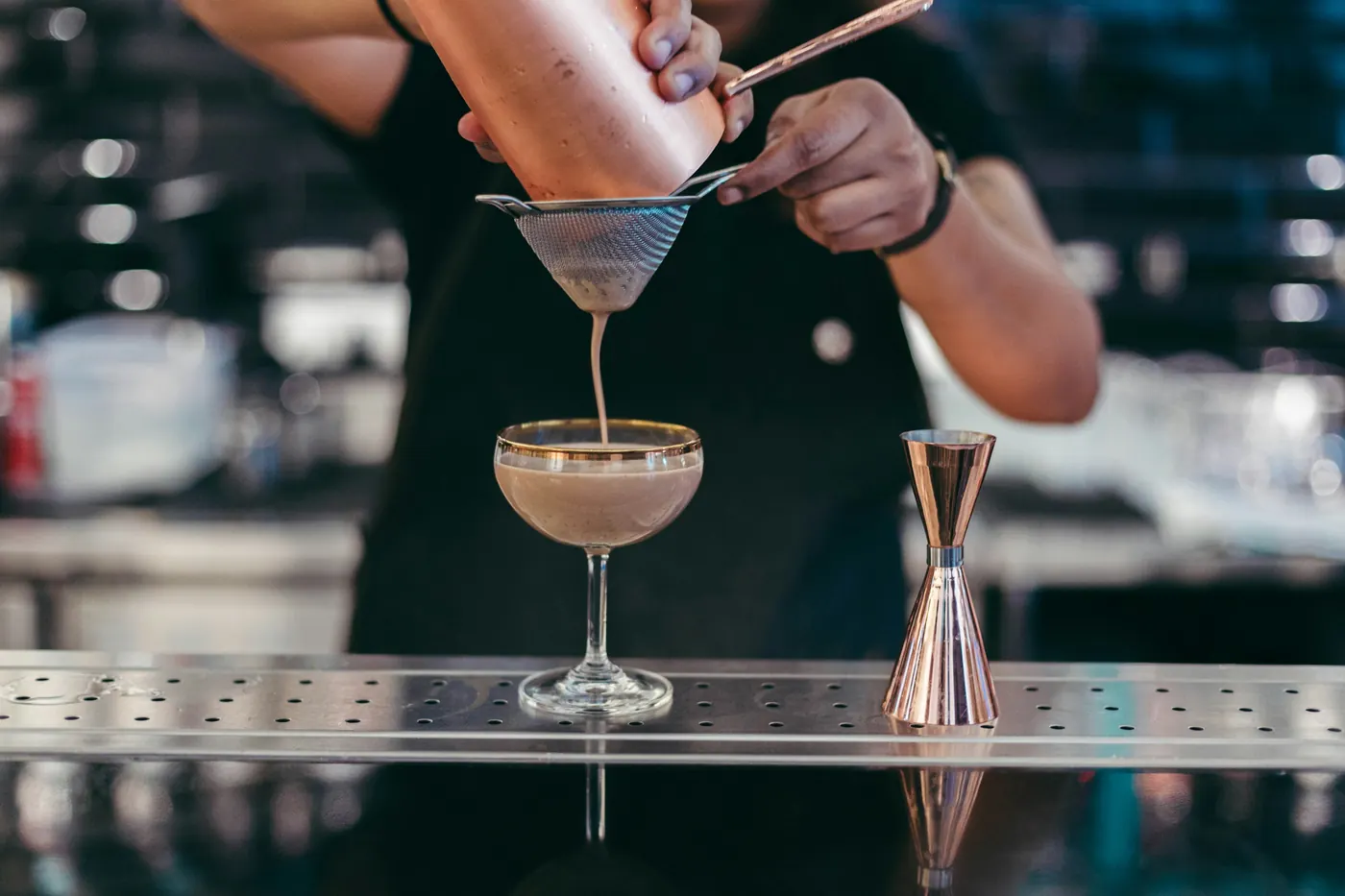
Tins, tin-and-glass Boston shakers and Parisian shakers need a Hawthorne strainer, and a fine-mesh strainer helps for drinks served without ice. Our best cocktail shaker strainer guide covers both. If you are starting from nothing, a bar set that bundles a shaker with a jigger, strainer and spoon can be simpler; see the best cocktail shaker set.
6. Budget
You do not need to spend much to make a good drink. A plain stainless cobbler or a basic tin set works, and our guide to the best cheap cocktail shaker covers the inexpensive end. Spend more for thicker steel, a better seal and a finish you will enjoy looking at.
How we picked these ten shakers
We looked at shakers sold on Amazon in the United States from identifiable makers, including Cocktail Kingdom, Barfly, Yukiwa, Crafthouse by Fortessa, Houdini, Viski and OXO, and confirmed each one’s style, capacity, material and care on its Amazon listing, noting where a detail came from a retailer instead. We chose shakers to cover every style, material and size rather than listing near-identical tins, and every pick was in stock when we checked. For independent views we cite America’s Test Kitchen’s cocktail shaker review, which rates several of these shakers, and KaTom’s guide to shaker types. Where we could not verify a detail, such as weight or country of manufacture, the specifications say “Not stated”. We have not used these products ourselves; where we describe how one performs, we say whose description it is.
How to use a cocktail shaker
- Chill the glass with ice and water while you build the drink.
- Build in the small tin or cobbler cup, measuring with a jigger.
- Add ice, plenty of fresh, hard cubes, to about two-thirds full.
- Seal. Angle the small tin into the large one and press; with a cobbler, press the lid and cap on firmly.
- Shake hard for 10 to 15 seconds, until a metal shaker frosts.
- Open and strain right away. Tap the large tin with the heel of your hand where the two meet, the method America’s Test Kitchen recommends for a stuck shaker, then strain over fresh ice.
Cocktail shaker questions, answered
What is the best brand of cocktail shaker?
There is no single best brand, but Cocktail Kingdom’s Koriko tins are the reference point: the maker calls them the industry standard, and America’s Test Kitchen rates them Highly Recommended. Barfly makes heavy, well-documented tins and Parisian shakers, Yukiwa is a respected Japanese cobbler maker, and OXO makes the friendliest shaker for beginners.
Which type of cocktail shaker is best for home use?
For anyone who makes drinks every week, a two-tin Boston shaker: it is fast, holds two drinks and has nothing to clog. For occasional drinks, a cobbler is easier because it has its own strainer. Both are good; it depends on how often you shake.
Is a gold cocktail shaker worth it?
Only for looks. Gold is a plating over stainless steel, so it shakes no better than plain steel, and plated barware should be washed by hand. If you want gold, choose a shaker that is good underneath, such as the Viski two-toned heavyweight cobbler with its gold-plated cap or Cocktail Kingdom’s gold Koriko tins.
Why does my cocktail shaker get stuck?
Metal contracts as it gets cold, America’s Test Kitchen explains, and the longer you wait, the tighter it gets. Open the shaker straight after shaking. Tap tins with the heel of your hand where they meet; twist a cobbler lid rather than pulling it, and run it under warm water if it still will not budge.
What does the New York Times or Wirecutter recommend?
Picks at Wirecutter, Serious Eats and other publications change over time, so check their current guides directly. We have cited America’s Test Kitchen, whose published review we could read in full; its top-rated shakers include the Cocktail Kingdom Koriko tins and a Houdini glass-and-steel Boston shaker, both on this page.
What are the best cocktails to make with a shaker?
Anything with citrus juice, syrup, cream or egg white: margaritas, daiquiris, whiskey sours and gimlets. Drinks made only of spirits, such as a martini or Manhattan, are traditionally stirred instead. Measure with a jigger, and remember that one U.S. standard drink is 1.5 fluid ounces of 40 percent spirit, according to the National Institute on Alcohol Abuse and Alcoholism. Drink responsibly and never drink and drive.
Our shaker for most home bars
Buy the Cocktail Kingdom Koriko weighted tins and a Hawthorne strainer if you want one shaker that does everything and lasts. Choose the Usagi cobbler if you make one drink at a time, the Barfly Parisienne for a classic two-piece shape, and the OXO plastic shaker if you are just starting or mixing outdoors. For a martini, see the best martini shaker.
By who is shaking: the best cocktail shakers for beginners, the best cocktail shakers for small hands and the best cocktail shakers for a home bar. Like insulated tins? See our look at the YETI Rambler and other insulated cocktail shakers. For the rest of the bar: the best cocktail tool sets, the best cocktail smoker sets and the best cocktail mixer sets, plus what to use as a cocktail shaker alternative when you have none.
Related guide: Best gifts for cocktail lovers.
For the rest of the home bar, our guide to margarita accessories covers the squeezer, jigger and glasses, and our guide to tequila types explains blanco, reposado and añejo. And if you would rather someone else made the drinks, see our drinks and the menu, or call to order.