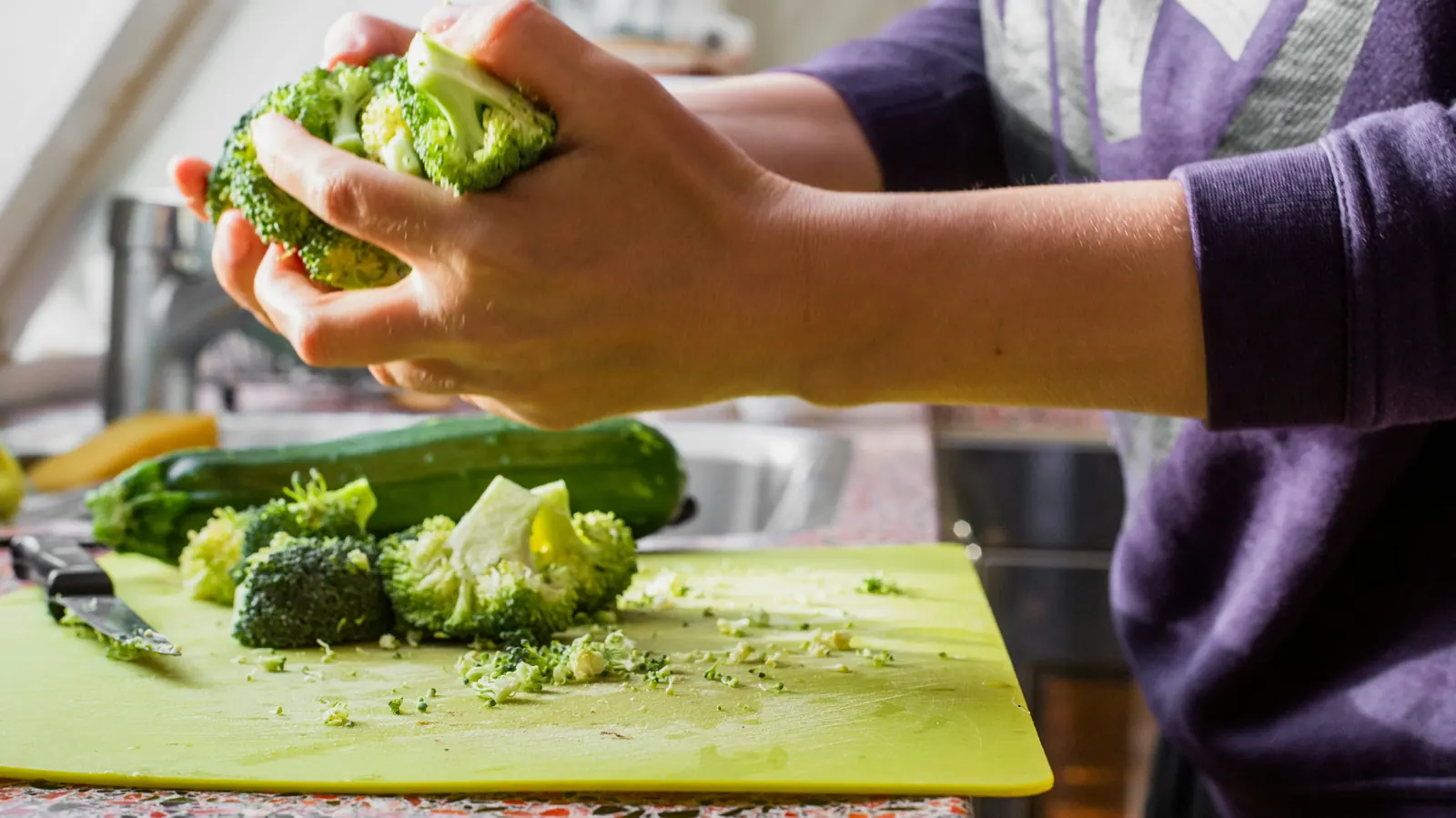
A blender and a food processor look like close cousins: a motor base, a container, a spinning blade. They are built for opposite kinds of food. A blender has a tall, narrow, sealed jar and a blade at the bottom that pulls everything down into a vortex, so it shines with liquids. A food processor has a wide, flat bowl and a long S-shaped blade that sweeps across the bottom, plus discs that slice and shred, so it shines with solids. Ask either one to do the other’s job and you get soup that won’t get smooth, or salsa that turns to juice.
In a Mexican kitchen the line is easy to see. Cooked salsa roja, horchata and aguas frescas belong in the blender. Pico-style salsas, masa-based doughs, shredded cabbage and cheese for a taco night belong in the processor. This guide compares the two job by job, says which to buy first, covers combo machines, and names one pick for each side.
Julia’s earns a commission on purchases made through links on this page, at no cost to you. Recommendations are based on what a restaurant kitchen looks for, product specifications and verified buyer reports.
Quick verdict: blender or food processor first?
Buy a blender first if most of what you make is liquid or meant to be smooth: blended salsas, soups, smoothies, frozen drinks, aguas frescas. Buy a food processor first if you chop, slice and shred a lot, make chunky salsas, or want to mix pie or pizza dough. America’s Test Kitchen sums it up: blenders give smoother results with liquids, food processors handle solids, and if you want both done well you will likely need both. For most home cooks who make salsas and drinks, the blender is the first buy; a combo machine is a fair middle way if space is short.
The table below sets out the differences; each section after it explains one job.
Blender vs food processor, side by side
| Blender | Food processor | |
|---|---|---|
| Container | Tall, narrow, sealed jar | Wide, flat bowl with a feed tube |
| Best with | Liquids and smooth textures (ATK) | Solids: chopping, mincing, slicing, shredding (ATK) |
| Salsa | Smooth, pourable, cooked salsas | Chunky salsas; ATK calls it “excellent” for salsa and pesto |
| Dough | Not a dough tool | Kneads pizza dough and cuts fat into flour for pie crust (ATK) |
| Purées and soups | Smoother; ATK prefers a blender for soup | Many bowls leak when filled with liquid (ATK) |
| Ice and frozen drinks | Crushes ice in a few pulses (ATK) | Not designed for it |
| Slicing and shredding | No | Yes, with discs |
| Cleaning | Jar, lid, blade; many have a self-clean cycle | Bowl, lid, blade, discs, pusher; more parts |
Salsa and pico de gallo: it depends on the texture
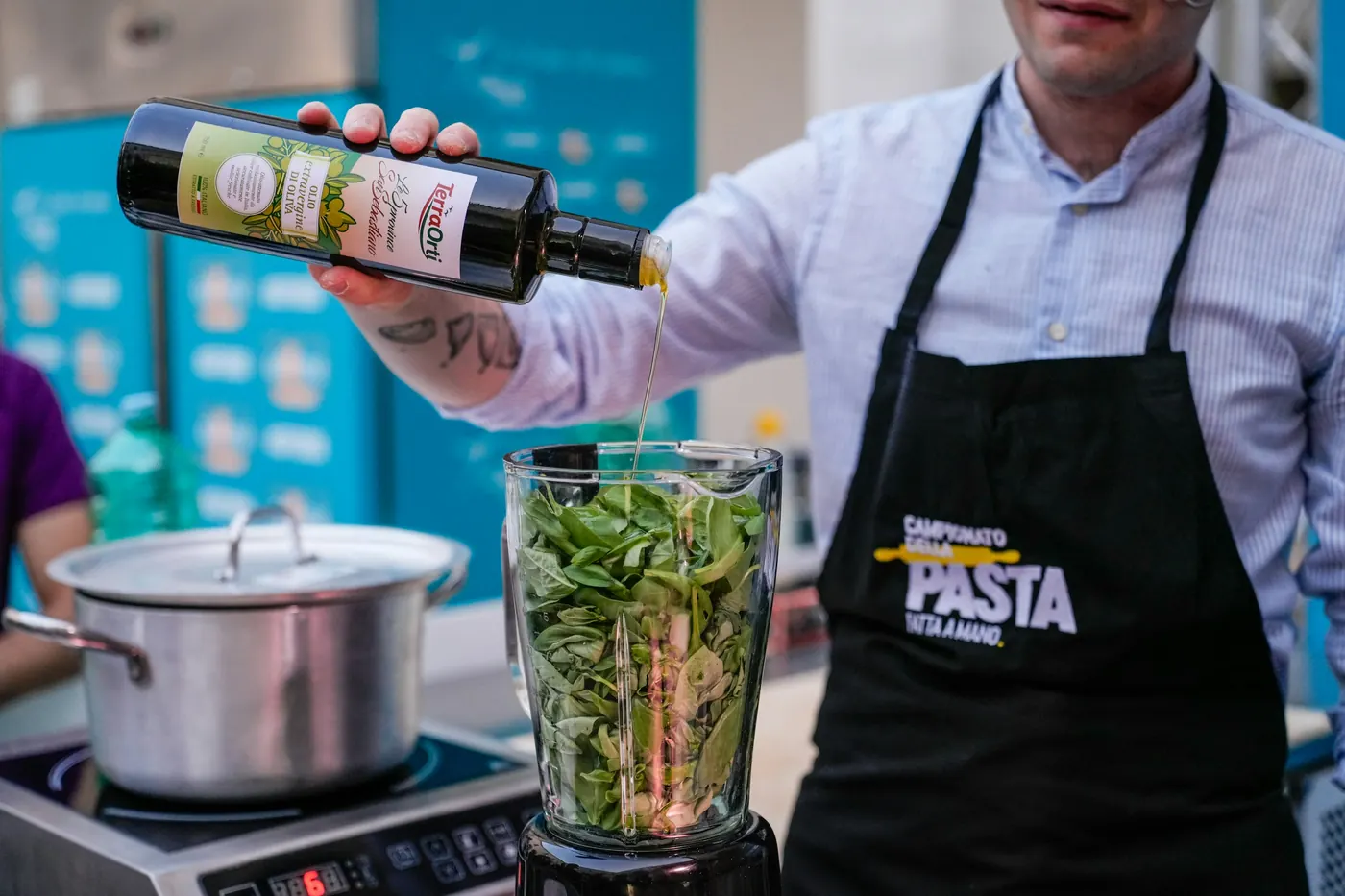
Salsa is where people most often argue about the two, and the answer is in the texture you want. A smooth, pourable salsa, such as a cooked salsa roja, a tomatillo salsa verde or a chile de árbol table salsa, wants a blender. The vortex pulls tomatoes, chiles and garlic through the blade until it is even and saucy.
A chunky salsa wants the food processor. America’s Test Kitchen’s food processor review, by Lisa McManus, says a good processor is “excellent for making salsa, pesto, and other chunky sauces.” Short pulses chop rather than liquefy, and the wide bowl gives the pieces room to move. Pico de gallo is the strictest case: it is a knife salsa at heart, and even a processor can bruise tomatoes into liquid if you hold the button. Pulse briefly, or chop the tomatoes by hand and use the processor for onion, chile and cilantro. Our best food processor for pico de gallo guide goes into that job, and our best blender for salsa guide covers the smoother styles. For the difference between the two great salsa families, see salsa roja vs salsa verde.
Dough and pastry: the processor’s job
A blender cannot knead dough. Its narrow jar and low blade are made to circulate liquid, not to push a stiff ball of dough around. A food processor can. ATK says its winner kneads pizza dough, and that the best machines made dough that was “silky, elastic, and thoroughly mixed.” It also notes that a good processor “cuts cold fat into flour so you get the flakiest pie crust,” which suits empanada dough as much as pie.
Capacity and power matter here. ATK found that processors with at least 11 cups are the most useful for most home cooks, and one lower-ranked model stalled from overheating on a double batch of pizza dough. Our best food processor for dough guide covers the machines built for it.
Purées, soups and smoothies: the blender’s job
ATK’s blender review says blenders are “fantastic for pureeing liquid-heavy foods such as soups, sauces, and smoothies,” because the sealed jar and vortex give more uniformly smooth results than a food processor. The food processor review agrees from the other side: ATK writes that it prefers “using a blender or an immersion blender for tasks such as pureeing batches of soup.”
There is a practical reason too. ATK warns that “not all food processors can hold large volumes of liquids,” because the spinning blade makes the liquid climb the walls, and only a few models have sealed bowls. Fill a processor too full with a soup or an agua fresca and it may seep out around the center. For horchata, smoothies or a pitcher of frozen drinks, the blender is the only sensible choice; ATK says crushing ice in a good blender “takes just a few pulses.”
Nut butters, hummus and thick pastes
This is the one job where both machines compete. ATK lists nut butters among a blender’s tasks, but notes that some blenders struggle with them, and one model it tested needed about 10 minutes and repeated scraping to turn almonds into butter. A powerful blender with a tamper does the job well. Vitamix’s manual adds a caution: for nut butters and oil-based foods, don’t run for more than one minute after the mixture starts to circulate, or it can overheat.
A food processor is the traditional home tool for nut butters and hummus. It is slower, with stops to scrape the bowl, but the wide bowl keeps a thick paste moving without a tamper, and there is less risk of the motor straining. If you make thick pastes often and own only a mid-range blender, the processor is the gentler choice. Our best blender for nut butter guide covers the blenders that can do it.
Chopping, slicing and shredding
Here a blender has nothing to offer. ATK says food processors are “great for chopping, mincing, slicing, and even shredding ingredients in seconds,” and the processor review adds that they are “perfect for big-batch cooking”: grating carrots, zucchini or potatoes, chopping onions, making bread crumbs and mincing herbs. For a taco night that means a mound of shredded cabbage, cheese and radishes in minutes rather than half an hour with a box grater.
If you only need chopping, a mini chopper can be enough; our best mini food processor guide covers those.
Cleaning and storage
A blender usually has fewer parts: a jar, a lid and a fixed or removable blade. Many have an automatic clean cycle; Breville’s Fresh & Furious has an Auto Clean setting, according to its listing. A food processor has a bowl, a lid with a feed tube, a pusher, a blade and one or more discs, and ATK says that being able to easily hand-wash and fully dry those pieces “is more important than you might think.” It also advises keeping the processor blade out of the dishwasher, because it can get dull.
Both take up space. The Cuisinart Custom 14 measures about 14.8 inches tall and weighs about 17.3 pounds, according to the retailer Abt, and Breville gives its blender’s height as 17.7 inches. Measure the space under your wall cabinets before you buy either.
What about a combo machine?
A blender and food processor combo shares one motor base between a blender pitcher and a processor bowl. It saves space and money, and it is a fair choice for a small kitchen. The trade-off, as our best blender food processor combo guide explains, is that a dedicated food processor usually has a bigger bowl and more discs, and a dedicated blender may have a stronger motor. If you plan to knead dough often or blend every day, two separate machines will serve you better. If you blend and chop now and then, a combo is the sensible buy.
Choose a blender if… / Choose a food processor if…
Choose a blender if…
- You make smooth salsas, soups, sauces or moles.
- Smoothies, frozen drinks, horchata or aguas frescas are regulars.
- You want the easier machine to clean.
Choose a food processor if…
- You chop, slice or shred vegetables and cheese in quantity.
- You like chunky salsas, pesto-style sauces or hummus.
- You make pizza, pie or empanada dough.
Our pick on each side of the blender vs food processor question
One pick per side, both from makers with a long record and both in stock when we checked. Neither listing appears on our other pages, but each is a different color of a model we cover elsewhere, chosen because each is ATK’s pick in its class. The Cuisinart Custom 14 is the winner in ATK’s food processor review and appears in our best food processor guide in another finish. The Breville Fresh & Furious is ATK’s favorite midpriced blender and appears in our best blender guide in silver. We chose a mid-priced blender rather than a high-end one so the two sides sit in a similar cost class.
1. Breville Fresh & Furious Blender, Damson Blue – Smooth Blends at a Middle Price

America’s Test Kitchen names the Fresh & Furious its favorite midpriced blender, saying it is easy to use and does “a great job with every task.” The listing gives an 1,100-watt motor, a 50-ounce BPA-free Tritan jug, five speed settings and nine one-touch programs, including smoothie, green smoothie and ice crush. Breville lists settings from mix and chop to purée and liquify, and an LCD display that counts up on speed settings and down on programs.
For a Mexican kitchen that covers blended salsas, soups, horchata and frozen drinks. The Assist Lid has a ring pull that is easy to remove but keeps the lid sealed while running, with an inner measuring lid, per the listing. Cleanup uses an Auto Clean setting.
ATK notes two drawbacks: it blends “just a touch less fine-textured” than its high-end top pick, and it stops automatically every 60 seconds, which can be annoying on long blends. The warranty is 3 years limited, per the listing. Breville gives the size as 6.9 by 8.3 by 17.7 inches.
Why we like it
- ATK’s favorite midpriced blender
- 1,100 W motor, 5 speeds plus 9 programs
- Ice crush and smoothie programs
- Auto Clean setting
Key specifications
| Model | Breville BBL620DBL |
|---|---|
| Type | Countertop blender |
| Power (stated) | 1,100 W |
| Capacity | 50 oz Tritan jug |
| Controls | 5 speeds, 9 one-touch programs |
| Size | 6.9 x 8.3 x 17.7 in (Breville) |
| Cleaning | Auto Clean setting |
| Warranty | 3-year limited |
Why we recommend it
It suits a cook who wants a capable everyday blender for salsas, soups and drinks without paying for a high-end machine.
Skip it if you want the finest possible texture and a longer warranty; the Vitamix 5200 in our best blender guide is ATK’s top pick.
Pros and cons
Pros
- Strong independent recommendation
- Useful preset programs
- Easy-release, tight-sealing lid
Cons
- Stops every 60 seconds (ATK)
- Louder than some rivals, per ATK
- Smaller jar than many full-size blenders
2. Cuisinart Custom 14-Cup Food Processor, Cream – Chops, Shreds and Kneads

The Cuisinart Custom 14 is the winner of ATK’s food processor review, which calls it “powerful, precise, and compact” and says its “smooth, simple bowl and blade design” makes it easy to handle, watch and clean. The 14-cup bowl is above the 11 cups ATK considers most useful, so it handles a double batch of salsa or a big pile of shredded cabbage.
The listing says it is powerful enough to knead bread dough and has an extra-large feed tube and stainless steel blades. The retailer Abt lists a 720-watt motor, a 4 mm slicing disc, a medium shredding disc and a chopping and mixing blade, and says all parts except the motor base are dishwasher safe. ATK suggests hand-washing the blade anyway, to keep it sharp.
One limit to know: ATK reports that a redesign of the chopping blade left slightly bigger gaps, so it could no longer work egg yolks into a single batch of mayonnaise. For salsas, dough and shredding that doesn’t matter. This listing is sold by a third-party seller, JADA Lifestyles, rather than Amazon, so check the seller and return terms before you buy.
Why we like it
- ATK’s winning food processor
- 14-cup bowl for big batches
- Kneads dough, per the listing
- Slicing and shredding discs included (Abt)
Key specifications
| Model | Cuisinart DFP-14CRM (Custom 14) |
|---|---|
| Type | Full-size food processor |
| Power (stated) | 720 W (Abt, for the Custom 14) |
| Capacity | 14-cup bowl |
| Controls | Not stated on this listing |
| Size | About 14.8 x 7.9 x 11 in, 17.3 lb (Abt) |
| Cleaning | All parts except motor base dishwasher safe (Abt); hand-wash blade (ATK) |
| Warranty | Not stated on this listing; Abt lists 3 years limited |
Why we recommend it
It suits a cook who chops, shreds and mixes dough regularly and wants one large, proven processor.
Skip it if you only chop small amounts; a mini chopper takes far less space.
Pros and cons
Pros
- Strong independent recommendation
- Large bowl, compact for its size (ATK)
- Simple design that is easy to clean
Cons
- Heavy, at about 17 lb
- Redesigned blade struggles with small-batch mayonnaise
- Sold by a third-party seller on this listing
Blender and food processor questions, answered
Can a blender replace a food processor?
Only partly. A blender handles purées, smooth salsas and drinks, and a strong one can make nut butter, but it can’t knead dough, slice or shred. ATK says that if you want liquids and solids both handled well, you will likely need both.
Can a food processor replace a blender?
Not for smooth liquids. ATK prefers a blender for puréeing soup, and warns that many processor bowls can’t hold large volumes of liquid. For smoothies, frozen drinks and aguas frescas, use a blender.
Which is better for salsa?
A blender for smooth, cooked salsas; a food processor for chunky ones. ATK calls the processor excellent for salsa and other chunky sauces. Pulse briefly either way.
Which is better for pico de gallo?
A knife is best, a food processor second. Pulse in short bursts and stop early, or the tomatoes turn watery. A blender will turn pico into a smooth salsa.
Is a combo machine worth it?
For a small kitchen or occasional use, yes. If you knead dough or blend daily, two dedicated machines usually do each job better.
Which machine goes on your counter first
For most kitchens that make salsas, soups and drinks, the blender is the first buy, and the food processor follows once you find yourself chopping and shredding in quantity or making dough. If you bake and prep more than you blend, reverse the order. And if you have room for only one base, a combo is a fair compromise. Whatever you choose, when you would rather someone else made the salsa, see the menu or call to order.