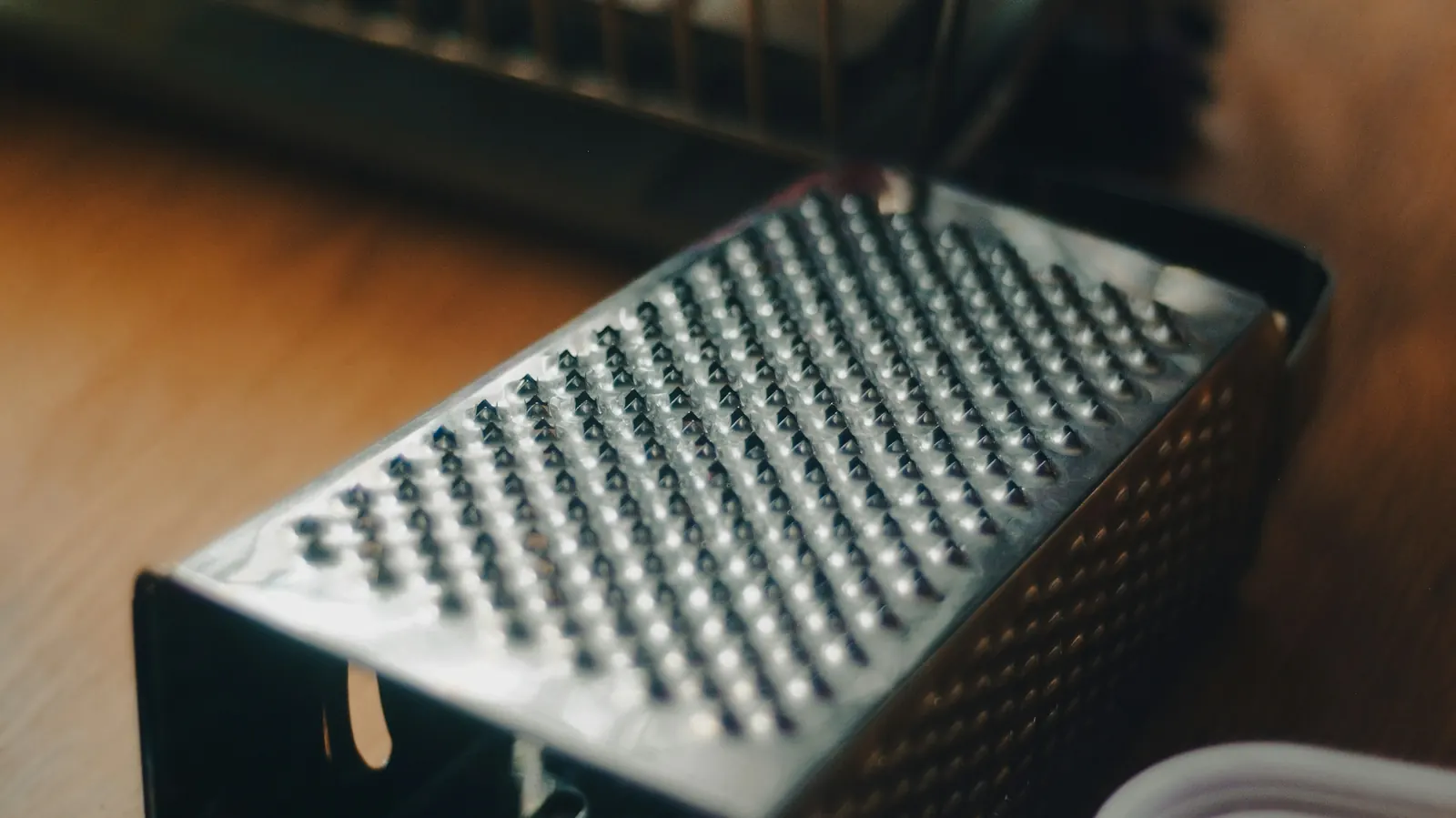
A box grater and a flat grater both turn a block of cheese into shreds, but they go about it differently. The box stands on the board on four sides, each cut a different way, and you push food down against it. The flat grater is a single plate, either a wide paddle with coarse holes or a narrow rasp with tiny teeth, that you hold over a bowl, a plate or the pot itself. One is a small workstation; the other is a single tool you can take anywhere.
In a Mexican kitchen both get used every day. Shredded cheese for enchiladas and quesadillas, cabbage and radish for tostadas, carrot for escabeche, onion grated into a marinade, cotija crumbled over elote, lime zest for a dressing. This guide compares the two on what matters at the board: stability, choice of cut, speed, mess, storage and cleanup, then names one good example of each.
Julia’s earns a commission on purchases made through links on this page, at no cost to you. Recommendations are based on what a restaurant kitchen looks for, product specifications and verified buyer reports.
Quick verdict: box or flat grater first?
Buy a box grater first if you want one grater for everything: it stands on its own, gives you coarse, medium, fine and slicing surfaces in one tool, and handles a pound of cheese for a pan of enchiladas without wearing out your wrist. Buy a flat grater first if your kitchen is small, you mostly grate a little at a time directly over food, or you already own a box grater and want something faster to grab and easier to wash.
The table sums up the differences; the sections after it explain each one.
Box grater vs flat grater, side by side
| Box grater | Flat grater (paddle or rasp) | |
|---|---|---|
| Shape | Four (sometimes six) sides around a hollow center | One plate with a handle |
| Cuts | Usually coarse, medium, fine and a slicing blade | One cut per grater: coarse, medium or fine |
| How you use it | Stands on a board or plate; push food down | Held at an angle or flat over a bowl; push food along it |
| Stability | High: wide base, handle on top | Depends on rubber feet and how you brace it |
| Best for | Big batches of cheese, cabbage, carrot, potato | Grating straight over food, quick small jobs, hard cheese, zest (rasp) |
| Mess | Shreds collect inside the box or in a container | Shreds fall where you aim, or scatter |
| Storage | Bulky; takes cabinet space | Slim; fits a drawer or hangs on a hook |
| Cleanup | Four surfaces, inside corners to brush out | One surface, open on both sides |
Stability: four sides on the board or one in your hand
The box grater’s main advantage is that it stands up by itself. Its base sits flat on a cutting board or plate, the handle is on top, and your free hand pushes food straight down. That geometry spreads the force into the board rather than into your wrist, which is why a box grater feels easier when you have a full block of Monterey Jack or a whole head of cabbage to get through.
A flat grater asks a little more of you. Most cooks brace the tip on a board or the rim of a bowl and hold the handle at an angle, or hold it flat over a plate. Good ones have rubber feet or pads at the tip so they don’t skate. It is a perfectly stable way to work once you are used to it, but on a long job you are holding the tool and pushing the food at the same time.
Choice of cut: four textures or one
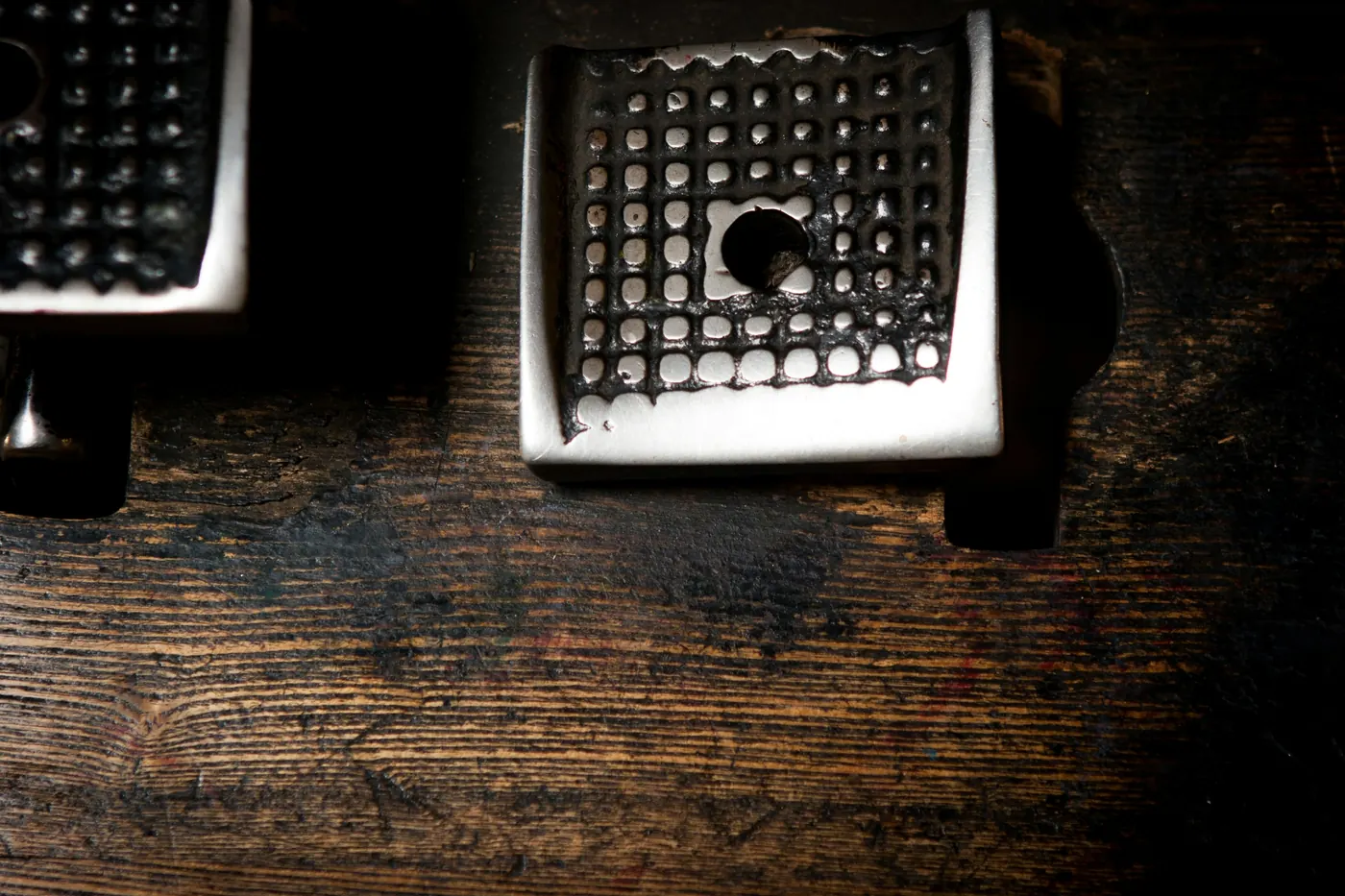
A typical box grater gives you a coarse side for shreds, a medium side, a fine side for hard cheese or grated onion, and a slicing blade for thin rounds of cucumber, radish or potato. One tool covers queso for tacos, shredded carrot for a slaw, finely grated tomato for a quick salsa base and sliced radish for pozole.
A flat grater does one thing. Paddle graters usually come as coarse or extra coarse for shredding cheese and vegetables, and rasp-style graters are fine, for citrus zest, garlic, ginger, nutmeg, canela and hard cheese. If you want more than one texture, you buy more than one flat grater. For the fine rasp side of this question, our guide to the best microplane grater compares zesters and fine graters in detail.
Speed and volume: the enchilada test
A tray of enchiladas or a stack of quesadillas for a family can take a pound of cheese. That is where the box grater earns its space: a tall coarse side gives you a long stroke, you can lean into it, and the shreds pile up inside the box or in a container under it instead of across the counter. Cabbage, carrots and potatoes for hash browns work the same way.
A wide coarse paddle can be just as fast per stroke, and an extra coarse plate with large holes moves quickly through soft cheese. The difference shows over a long job: holding the grater and steadying it while you push gets tiring sooner than leaning on a box. For a cup of cheese over a skillet of chilaquiles, the flat grater is quicker overall, because there is nothing to set up and nothing to empty.
Grating over the food: where a flat grater wins
Some jobs are better done right over the dish. Cotija over a cob of elote, a little cheese over a bowl of frijoles charros, lime zest over a finished salad or fresh nutmeg into a cup of champurrado: in each case you want the gratings to land exactly where you aim. A flat grater lets you do that; a box grater has to be lifted and tipped, and most of what it grates stays inside it.
Flat graters also suit small amounts. Grating a quarter of an onion into a marinade, a clove of garlic into a salsa, or a little hard cheese at the table is faster with a tool you can pick up, use and rinse in seconds.
Mess, storage and cleanup
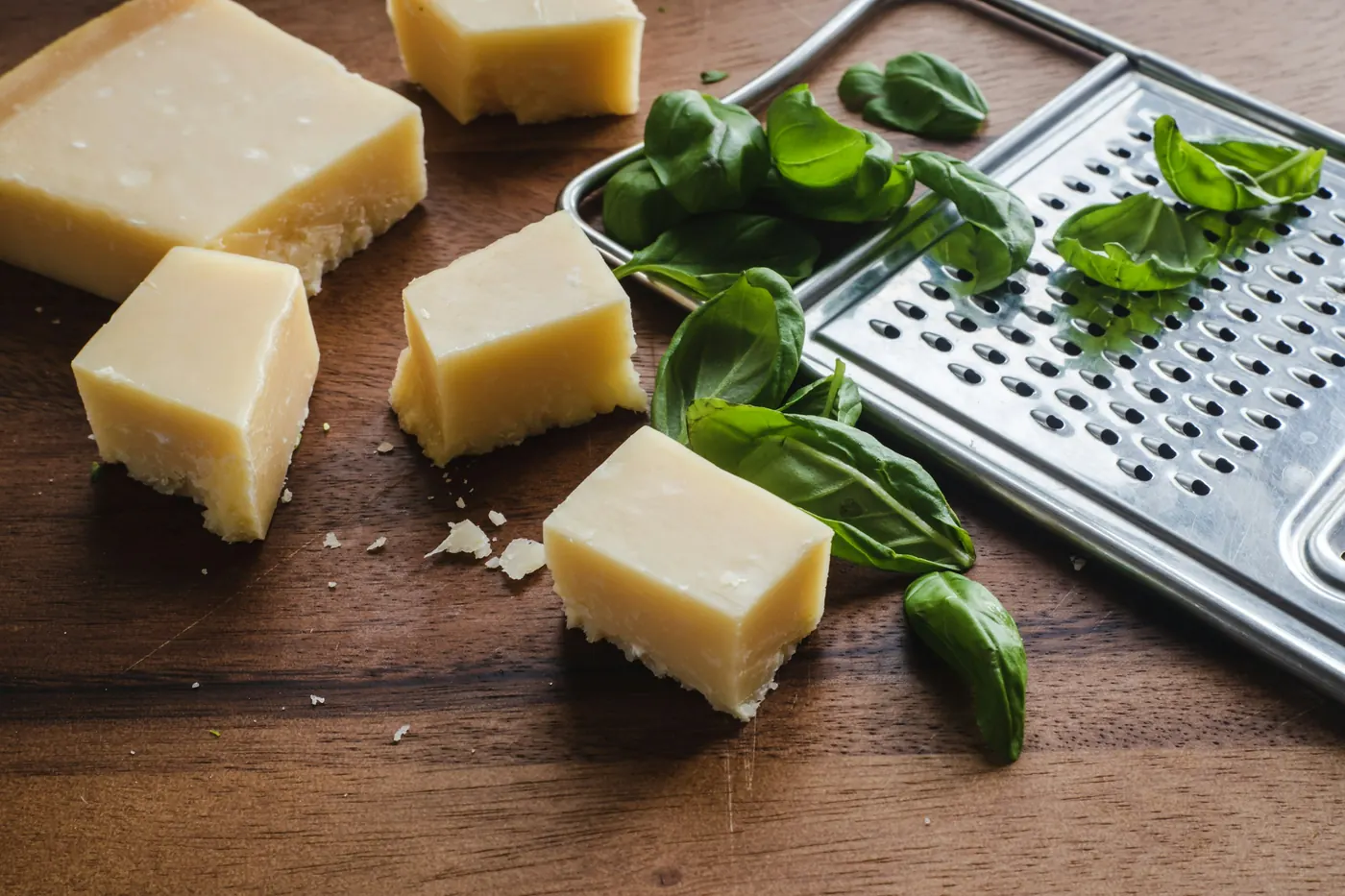
The box keeps things tidy while you work, because the shreds fall inside it. Some box graters, including our pick below, add a container that clips on the bottom and catches and measures what you grate. The trade-off comes later: four surfaces and the inside corners hold onto cheese, and a brush helps get the inside clean. Box graters are also bulky and need a shelf or cabinet spot.
A flat grater is open on both sides, so a rinse under the tap and a brush along the back clears it, and most stainless models go in the dishwasher. It fits in a utensil drawer or hangs on a rail. The catch is the blade: an exposed flat grater in a drawer can dull or cut fingers, so use the cover if it has one or hang it up.
Safety: watch the last inch
Both tools are sharp, and the risk is the same: the last inch of cheese or carrot, when your knuckles are close to the teeth. With either kind, stop before your fingers get close, or use the heel of the food as a handle and eat the stub. A box grater’s upright stance makes it a bit easier to keep fingers clear; with a flat grater, keep the stroke away from your bracing hand. Cut-resistant gloves are worth having if you grate often.
Choose a box grater if… / Choose a flat grater if…
Choose a box grater if…
- You want one grater with several cuts, including a slicing side.
- You regularly shred a pound of cheese or a whole cabbage at a time.
- You prefer a tool that stands on the board while you push down.
- You have cabinet space for something about a foot tall.
Choose a flat grater if…
- You usually grate small amounts straight over a dish.
- Your drawers have room but your cabinets don’t.
- You want the fastest cleanup.
- You already own a box grater and want a second, quicker tool.
Our pick on each side of the box grater vs flat grater question
One pick per side, both stainless steel from established housewares makers, both in stock when we checked. Neither repeats a pick from our box grater or microplane grater guides.
1. OXO Good Grips 4-Sided Box Grater with Container – Grate, Catch and Measure

OXO’s standard box grater is the plain, practical version of the idea. The listing describes coarse, medium and fine stainless steel grating surfaces plus a slicing surface, a soft non-slip handle, and a detachable container that clips on underneath to catch, measure, dispense and store what you grate. You can also grate onto a plate or cutting board with the container off.
The container is the useful part for cooks who follow recipes: retailer listings describe its clear sides as marked for 1/4, 1/2, 3/4 and 1 cup, with ounce equivalents, so a recipe that calls for a cup of shredded cheese needs no extra measuring cup. WebstaurantStore lists the grater at about 11.8 inches tall, 4.5 inches wide and just under 3 inches deep, and the listing describes a slim build meant to fit in drawers.
This is a different model from the etched OXO box grater with a removable zester in our box grater roundup; it uses conventional stamped grating surfaces and a lower-profile design. Its limits are those of most box graters: the container holds about a cup at a time, so on a big batch you empty it as you go, and the inside corners need a brush.
Why we like it
- Four surfaces, including slicing (listing)
- Clip-on container catches and measures
- Non-slip handle (listing)
- Slim enough for a drawer, per the listing
Key specifications
| Model | 1057961 |
|---|---|
| Type | Four-sided box grater |
| Cuts | Coarse, medium, fine, slicing |
| Size | About 11.8 x 4.5 x 2.9 in (WebstaurantStore) |
| Blade material | Stainless steel |
| Extras | Detachable measuring container |
| Care | Dishwasher safe (retailer listings) |
| Guarantee | OXO satisfaction guarantee (listing) |
Why we recommend it
It suits a cook who wants one grater for shredded cheese, slaw vegetables and sliced radish, and likes measuring as they go.
Skip it if you want photo-etched blades; the etched box graters in our roundup use those instead of stamped holes.
Pros and cons
Pros
- Container doubles as a measuring cup
- Four cuts in one tool
- Comfortable, non-slip handle
Cons
- Container fills quickly on big batches
- Stamped, not etched, surfaces
- Inside corners need a brush
2. Cuisipro Extra Coarse Flat Grater – Big Holes for Fast Shreds

Cuisipro’s flat extra coarse grater is a wide paddle for shredding, not a zester. Chef Supplies, a Canadian restaurant supplier, lists it as model 746165, a flat stainless steel grater measuring 11.5 by 4.7 inches with an extra coarse surface. That width gives a long, broad stroke for cheese, carrot, zucchini, potato and cabbage.
According to the listing, the handle is shaped to fit the hand, and two Santoprene pads at the base keep the grater steady when you brace it on a board or bowl. The listing says it is made of 304 stainless steel and is dishwasher safe, and it states a lifetime warranty. Because it is one open plate, it rinses clean faster than any box grater.
The extra coarse holes make chunky shreds that melt well on quesadillas and nachos, but they are too big for fine work: for hard cheese, garlic or citrus zest you still want a rasp. Note that the Amazon listing groups several variations; check that the selected item is the extra coarse flat grater before you buy.
Why we like it
- Wide 11.5 x 4.7-inch surface (Chef Supplies)
- Non-slip pads at the base (listing)
- 304 stainless steel, dishwasher safe (listing)
- Lifetime warranty stated on the listing
Key specifications
| Model | 746165 |
|---|---|
| Type | Flat paddle grater with handle |
| Cuts | Extra coarse |
| Size | 11.5 x 4.7 in (Chef Supplies) |
| Blade material | 304 stainless steel (listing) |
| Extras | Santoprene non-slip pads |
| Care | Dishwasher safe (listing) |
| Guarantee | Lifetime warranty (listing) |
Why we recommend it
It suits a cook who shreds cheese and vegetables a cup or two at a time and wants a grater that rinses clean and lives in a drawer.
Skip it if you need several textures from one tool; it only does extra coarse.
Pros and cons
Pros
- Fast shredding with large holes
- Slim, stores flat
- Quick to clean
Cons
- One cut only
- Too coarse for zest or hard cheese
- Listing groups several variations
Box and flat grater questions, answered
Is a box grater better than a flat grater?
Not better, just broader. A box grater gives you several cuts and a stable base for big jobs. A flat grater does one cut, but it is quicker to grab, grates straight over food and cleans faster. Many kitchens end up with one of each.
What is a flat grater called?
Wide ones with coarse or medium holes are usually sold as paddle graters or handheld graters. Long, narrow ones with fine teeth are called rasp graters or zesters; Microplane is the best-known maker, which is why many cooks call any rasp a microplane.
Which grater is best for cheese for tacos and enchiladas?
Use a coarse surface for melting cheeses such as Monterey Jack, cheddar or asadero; either a box grater’s coarse side or a coarse paddle works. For a large batch, the box grater is less tiring. Our guide to Mexican cheeses covers which cheeses melt and which crumble.
Can you zest a lime on a box grater?
You can use the fine side, but the zest sticks inside the box and it is easy to grate into the bitter white pith. A fine rasp is far better for zest because you can see the fruit and grate only the colored skin.
Are box graters dishwasher safe?
Most stainless box and flat graters are, including both picks here according to their listings. A quick brush under running water right after grating, before cheese dries on, makes either kind easier to clean.
Which grater goes in your drawer first
For most home kitchens, the box grater comes first because it covers shredding, fine grating and slicing in one tool and handles the big jobs, like cheese for a full pan of enchiladas. The flat grater comes second, as the fast tool for small amounts and for grating straight over the plate. If you choose only one and you cook for a crowd, choose the box.
For more box graters, including etched and six-sided models, see our guide to the best box grater. For thin, even slices in bulk, a mandoline slicer does what no grater can. And when you would rather someone else did the grating, see the menu or call to order.