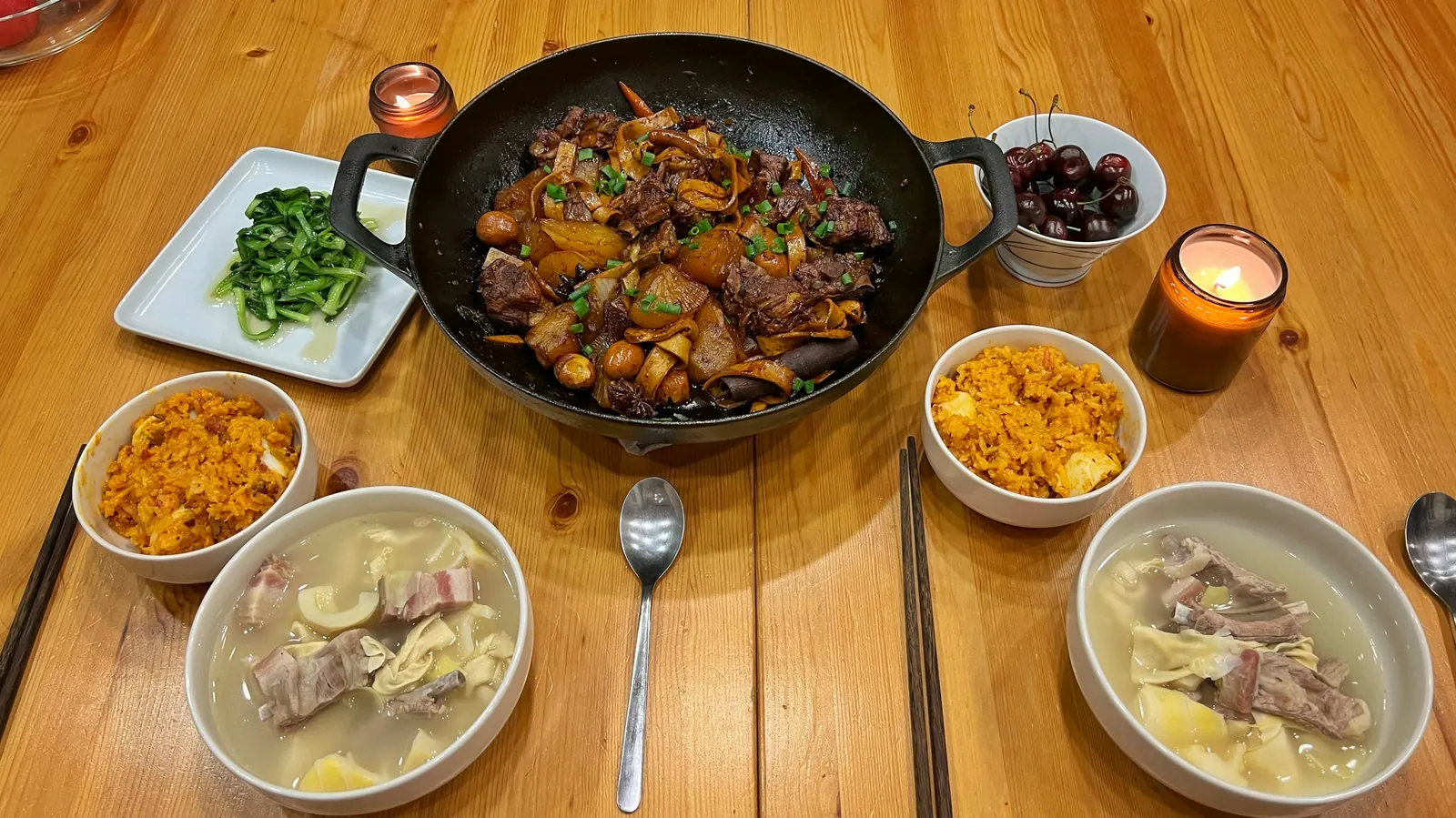
A braiser and a skillet look like cousins: both are wide, both are often cast iron, and both sear meat well. The difference is what happens after the sear. A skillet is an open pan with sloped sides and one long handle, built for cooking fast and uncovered. A braiser is a wide, shallow pot with two loop handles, straight-ish walls a couple of inches tall and a lid, built for browning first and then simmering slowly in a little liquid. One makes chorizo and eggs; the other makes chicken tinga, carnitas-style pork or calabacitas that cook down under a lid.
This guide compares the two by what they do: shape and walls, the lid, the liquid each can hold, handling, the stove and the oven, and care. It ends with which to buy first and one good example of each.
Julia’s earns a commission on purchases made through links on this page, at no cost to you. Recommendations are based on what a restaurant kitchen looks for, product specifications and verified buyer reports.
Quick verdict: braiser or skillet first?
Buy a skillet first. A heavy 12-inch skillet sears, fries, scrambles, toasts rice, reduces a quick sauce and bakes cornbread, and it is the pan most home cooks reach for every day. Buy a braiser second, or first if most of your cooking is browned meat finished in a sauce: tinga, chile verde, short ribs, chicken thighs in salsa roja. Its lid, taller walls and wide floor do slow, covered cooking that an open skillet cannot.
The table sums up the differences; the sections after it explain each one.
Braiser vs skillet, side by side
| Braiser | Skillet (frying pan) | |
|---|---|---|
| Shape | Wide, shallow pot; walls about 2 to 3 inches | Open pan; low, flared sides |
| Handles | Two loop handles | One long handle, sometimes a helper handle |
| Lid | Included, usually heavy and close-fitting | Usually sold separately |
| Common sizes | 3.5 to 5 quarts | 8, 10 and 12 inches across |
| Liquid | Holds a braising liquid or a sauce | A pan sauce or shallow oil |
| Usual materials | Enameled cast iron, clad stainless | Bare cast iron, stainless, carbon steel, nonstick |
| Tossing and flipping | Turning with tongs; no tossing | Easy to toss and slide food out |
| Best jobs | Braised chicken and pork, tinga, chile verde, stewed vegetables, one-pan rice | Searing, frying, eggs, chorizo, fajitas, quesadillas, cornbread |
Shape and walls: a shallow pot versus an open pan
Both pans give you a wide floor, which is what browning needs: food in one layer with space around it, so it sears instead of steaming. The walls are where they part. A skillet’s sides are low and flared so steam escapes quickly, a spatula reaches every corner and food slides straight out onto a plate. A braiser’s walls are taller and more upright. America’s Test Kitchen, in its braiser review, preferred walls of about 2 to 2.5 inches on a 3.5-quart model and noted that a 3.5-quart braiser’s base runs about 10 inches, around an inch wider than a typical 7-quart Dutch oven.
Those taller walls hold a braising liquid that comes partway up the meat, keep splatter in when you brown and let you stir a sauce without it slopping over. They also mean a braiser is not the pan for tossing peppers and onions or flipping a tortilla; a skillet is. If you are weighing a deep, straight-sided pan with a single handle instead, our sauté pan vs skillet guide covers that middle ground.
The lid changes the cooking
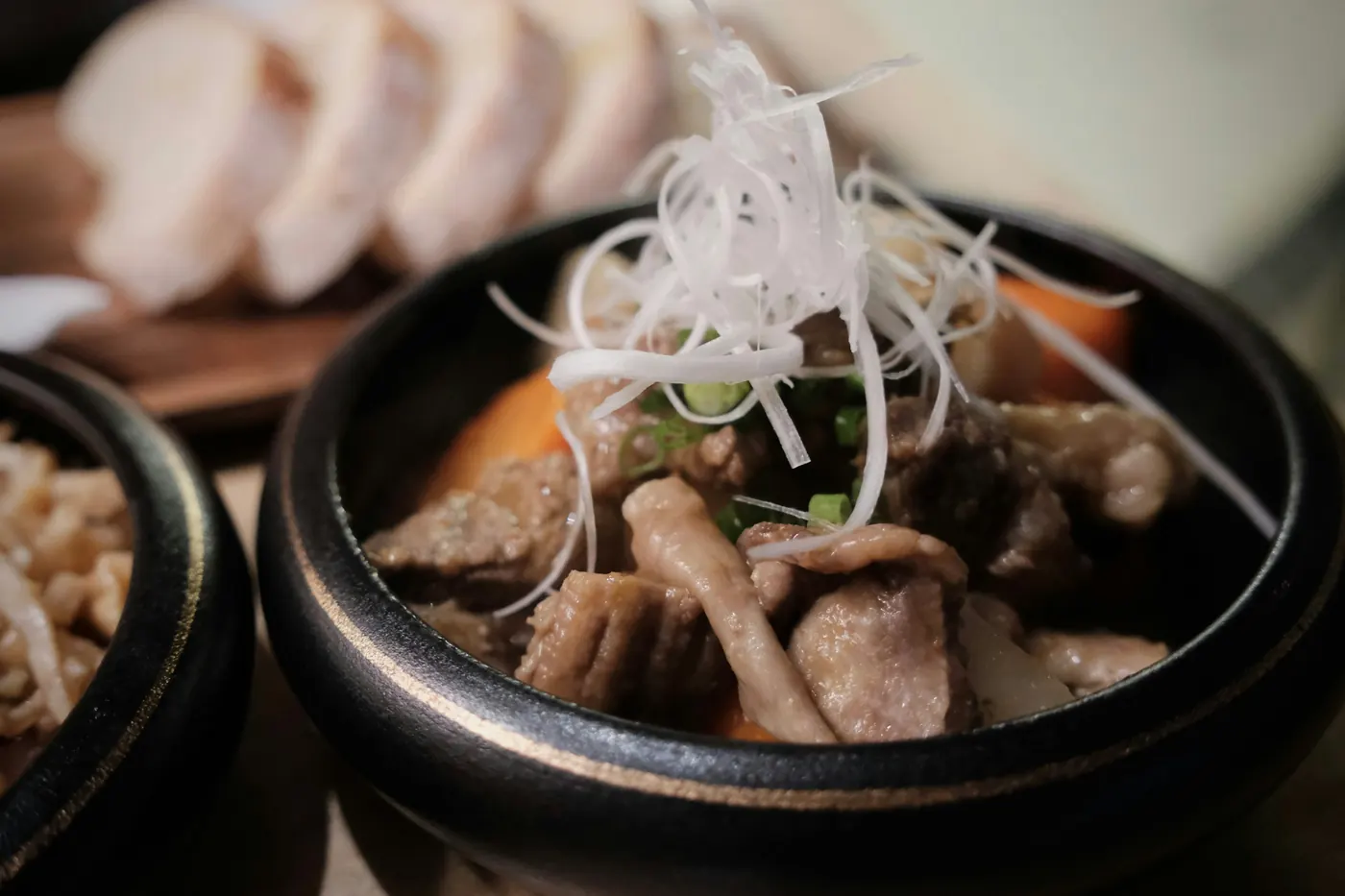
A braiser comes with its lid, and the lid is the point. Once meat is browned and the liquid is in, the lid holds in steam so the food cooks gently in a moist, closed space, on the stove or in the oven. That is how tough cuts such as pork shoulder or chicken thighs turn tender, and how a pot of tinga simmers for an hour without drying out.
Most skillets are sold without a lid. You can buy one to fit, and a lidded 12-inch skillet handles a short simmer, steamed vegetables or melting cheese over enchiladas. It still has low walls and only so much room for liquid. Our guide to the best cast iron skillet with lid compares skillets sold with a lid.
Liquid and evaporation: sauce or sear
A skillet is built to drive moisture off. That is what you want for a crisp sear, fajita vegetables that char instead of stewing, or a pan sauce that reduces in a few minutes. Pour in more than an inch of liquid, though, and a skillet is close to its limit.
A braiser is built for a middle amount: enough liquid to come part of the way up the food, with a wide surface so the sauce reduces when the lid comes off at the end. ATK notes that a braiser’s broad surface and short walls speed evaporation and make flipping easier than in a Dutch oven, and it warns to “be wary of using a braiser to cook anything with a lot of liquid, such as a soup.” So the braiser sits between the two: more liquid than a skillet, less than a Dutch oven. Our Dutch oven vs braiser guide covers the other side of that line.
Weight, handles and the oven
Cast iron is heavy in either shape. A 12-inch cast iron skillet weighs around 8 pounds, all of it hung from one handle, which makes it awkward to lift when full. A braiser can weigh more with its lid, but its two loop handles spread the load across both hands, which makes it easier to carry a full pot of braise from stove to oven to table.
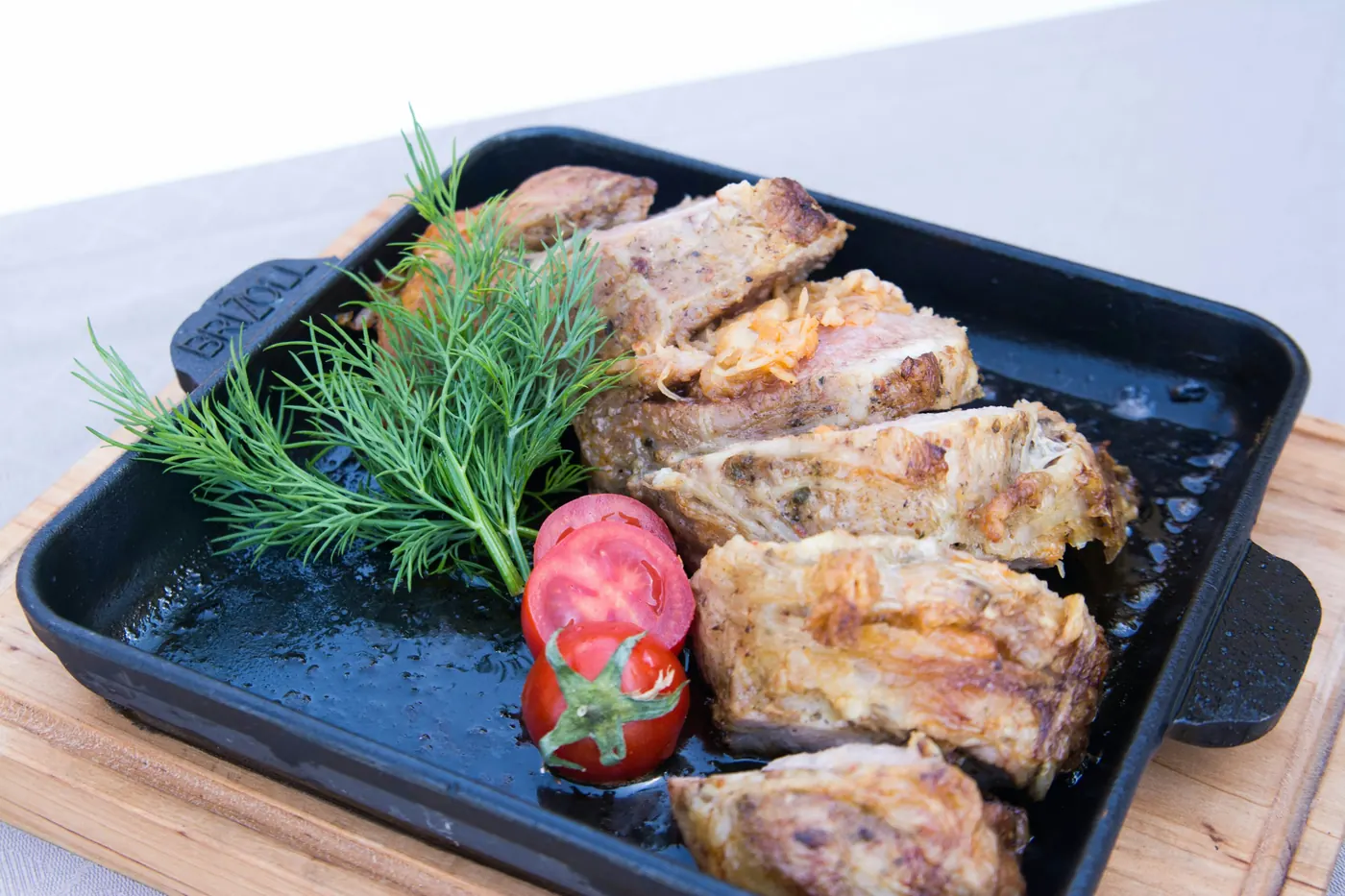
Both go in the oven, which is where many braises finish. A bare cast iron skillet has no plastic or wood to limit it; an enameled braiser is limited by its knob and lid, so check those ratings. A glass lid, for example, may carry a lower oven rating than the pot itself.
Materials and care
Braisers are usually enameled cast iron or clad stainless steel. Enamel needs no seasoning and handles acidic ingredients, which matters for tomato, tomatillo and vinegar-heavy braises that can strip seasoning from bare iron during a long simmer. ATK also advises not to heat enameled cast iron empty at high heat, so start a braiser over medium and add the fat before it gets very hot.
Skillets come in more materials: bare cast iron, carbon steel, stainless and nonstick. Bare cast iron follows Lodge’s routine: let it cool, hand wash with warm, soapy water, dry it promptly and wipe on a thin coat of oil. It builds seasoning over time and suits high-heat searing. Our guide to the best cast iron skillet covers seasoning in more detail, and the best frying pan guide covers stainless and nonstick.
Braiser vs frying pan for Mexican cooking
Think of the braiser as the pan for anything that simmers in its sauce after it browns. Chicken tinga starts with seared chicken and onions and finishes in a chipotle-tomato sauce. Chile verde is browned pork simmered in tomatillo salsa. Albóndigas brown and then cook through in broth. Arroz rojo can toast and steam in the same wide pot. Each one benefits from the wide floor for browning and the lid for the slow finish. Our guide to Mexican cooking methods explains where braising fits.
The skillet does the fast work: chorizo and eggs, papas con chorizo, fajita steak and peppers, quesadillas, refried beans mashed in their fat, tortilla strips for chilaquiles and cornbread in the oven. When a recipe says “fry”, “sear” or “sauté” and the food comes out of the pan in under twenty minutes, it is a skillet job.
Choose a braiser if… / Choose a skillet if…
Choose a braiser if…
- You already own a good skillet.
- You cook browned meat finished in sauce: tinga, chile verde, short ribs, chicken thighs.
- You want a lid that comes with the pan and a pot that goes from stove to oven to table.
- You cook acidic, tomato- or tomatillo-heavy dishes for long stretches.
Choose a skillet if…
- You are buying your first or only heavy pan.
- You sear, fry and sauté more than you simmer.
- You want to toss food, flip it and slide it out onto a plate.
- You want one pan for eggs, chorizo, fajitas and cornbread.
Our pick on each side of the braiser vs skillet question
The two picks show the classic version of each pan: an enameled cast iron braiser with its lid, and a bare cast iron skillet. Both were in stock when we checked. Both are other listings of models that appear elsewhere on the site (a different color of the Staub braiser, and the Lodge skillet sold with a handle holder), chosen because they are the clearest, most widely available examples of each pan.
1. Staub 3.5-quart Cast Iron Braiser with Glass Lid – Brown, Then Watch It Simmer

Staub’s 3.5-quart braiser is enameled cast iron, made in France, with a glass lid instead of a cast iron one, so you can watch a braise without lifting the lid. Zwilling, Staub’s parent company, lists it at 3.59 quarts and 7.72 pounds and calls it a 12-inch braiser; that size suits a family batch of chicken thighs or a pound and a half of pork in salsa verde.
The listing describes a black matte enamel interior that “results in exceptional browning,” a smooth enamel bottom that works on all stovetops, and an oven rating of 500°F. Retailers list Staub’s separately sold glass lids lower, at 220°C (about 428°F), so treat the lid as the limit for long, hot oven braises. Enamel needs no seasoning and stands up to tomato and tomatillo sauces. Staub states that its cookware is “Cadmium Free, Lead-Free, PFOA Free, PTFE Free, and PFAS Free” and says it has its products tested regularly by third parties.
The dark interior hides stains, but it also makes browning harder to judge by eye than on a light enamel, a trade ATK noted in its braiser testing.
Why we like it
- Glass lid shows the simmer
- Black matte enamel for browning
- Works on all stovetops
- Lead-free, per Staub
Key specifications
| Model | 14813006 |
|---|---|
| Type | Braiser with glass lid |
| Size | 3.5 qt; about 12 in across (Zwilling) |
| Weight | 7.72 lb (Zwilling) |
| Material | Enameled cast iron, black matte interior |
| Oven safe | 500°F pot; glass lid lower |
| Induction | Yes, all stovetops |
| Made in | France |
Why we recommend it
It suits a cook who already has a skillet and wants a pan for browning and then simmering tinga, chile verde or chicken in salsa for three or four people.
Skip it if you mostly fry and sear; a skillet does that faster and costs less.
Pros and cons
Pros
- Lid included
- No seasoning needed
- Handles acidic sauces
Cons
- Dark interior hides browning
- Glass lid has a lower oven limit
- Expensive for its size
2. Lodge 12-inch Cast Iron Skillet with Handle Holder – The Everyday Searing Pan

This is Lodge’s standard 12-inch pre-seasoned skillet, sold with a red silicone holder that slips over the hot handle. Lodge’s catalog lists the 12-inch skillet at 7.9 pounds, and twelve inches across gives room for two steaks, a pound of chorizo or a family batch of fajita vegetables. The listing describes a seasoning of 100 percent natural vegetable oil and a teardrop handle, and calls it an everyday pan for searing, sautéing, baking, frying and campfire cooking.
It is made in the USA, per the listing, and goes on the stove, in the oven and over a campfire. Lodge’s catalog says its cast iron works on any heat source, including glass-top stoves and induction, and Lodge sells a cast iron lid and a glass lid sized for this skillet if you want to cover it for a short simmer.
The drawback is weight: almost 8 pounds of iron on one main handle, which takes two hands when the pan is full. Bare iron also prefers short contact with acidic sauces; long tomato simmers are better in enamel.
Why we like it
- Handle holder included
- 7.9 lb, per Lodge’s catalog
- Works on induction (Lodge)
- Made in the USA
Key specifications
| Model | L10SK3 (listing part L10SK3ASHH41B) |
|---|---|
| Type | Flat skillet with silicone handle holder |
| Size | 12-inch round |
| Weight | 7.9 lb (Lodge catalog) |
| Material | Cast iron, pre-seasoned with vegetable oil |
| Oven safe | Yes (silicone holder off) |
| Induction | Yes (Lodge) |
| Made in | USA |
Why we recommend it
It suits almost anyone buying a first heavy pan: steak, eggs, chorizo, fajitas, rice and cornbread all start here.
Skip it if you can’t comfortably lift an 8-pound pan; a 10-inch skillet is lighter.
Pros and cons
Pros
- Sears and fries hard
- Inexpensive and long-lasting
- Holder for the hot handle
Cons
- Heavy on one handle
- No lid in the box
- Needs seasoning care
How we compared the braiser and the skillet
We have not cooked with these two pans for this guide. The comparison draws on how each shape handles heat and liquid, on America’s Test Kitchen’s braiser review, on Lodge’s catalog and care guidance, on Staub’s and Zwilling’s product and safety pages, and on the Amazon listings. Both picks were checked for stock and chosen to show each pan clearly rather than to rank every model; for more braisers, including light-enamel and stainless options, see our guide to the best braiser.
Braiser and skillet questions, answered
Braiser vs everyday pan: can a braiser replace a skillet?
Partly. A braiser sears and browns well and can stand in for a skillet on many nights, but its taller walls and loop handles make tossing, flipping and sliding food out awkward. Eggs, quesadillas and fajitas are easier in a skillet.
Braiser vs frying pan: which is better for searing?
Both sear well when heavy and fully preheated. A frying pan lets steam escape faster and reaches higher heat comfortably; an enameled braiser should be heated more gently, per ATK’s advice not to heat enamel empty at high temperatures.
Can I braise in a skillet with a lid?
For short braises with little liquid, yes. For long simmers or anything with a cup or more of sauce, a braiser’s taller walls and heavier lid do the job better, and enamel handles acidic sauces that can wear the seasoning on bare iron.
What size braiser pairs with a 12-inch skillet?
A 3.5- to 4-quart braiser, the most common size, feeds three or four people, according to ATK. Families of five or six may want a 5-quart model, which weighs and costs more.
Do braisers work on induction?
Cast iron braisers do, enameled or not, because cast iron is magnetic. Check the listing for stainless braisers; most clad stainless pans are induction-ready, but not all.
Which pan to put on the stove first
For most kitchens, the skillet comes first because it handles the widest range of quick cooking, from eggs to a seared steak. The braiser comes second, and for anyone who cooks tinga, chile verde, pork in salsa or chicken thighs that brown and then simmer, it quickly becomes the pot that never leaves the stovetop.
For a wider choice of braisers, see our best braiser guide. And when you would rather someone else did the braising, see the menu or call to order.