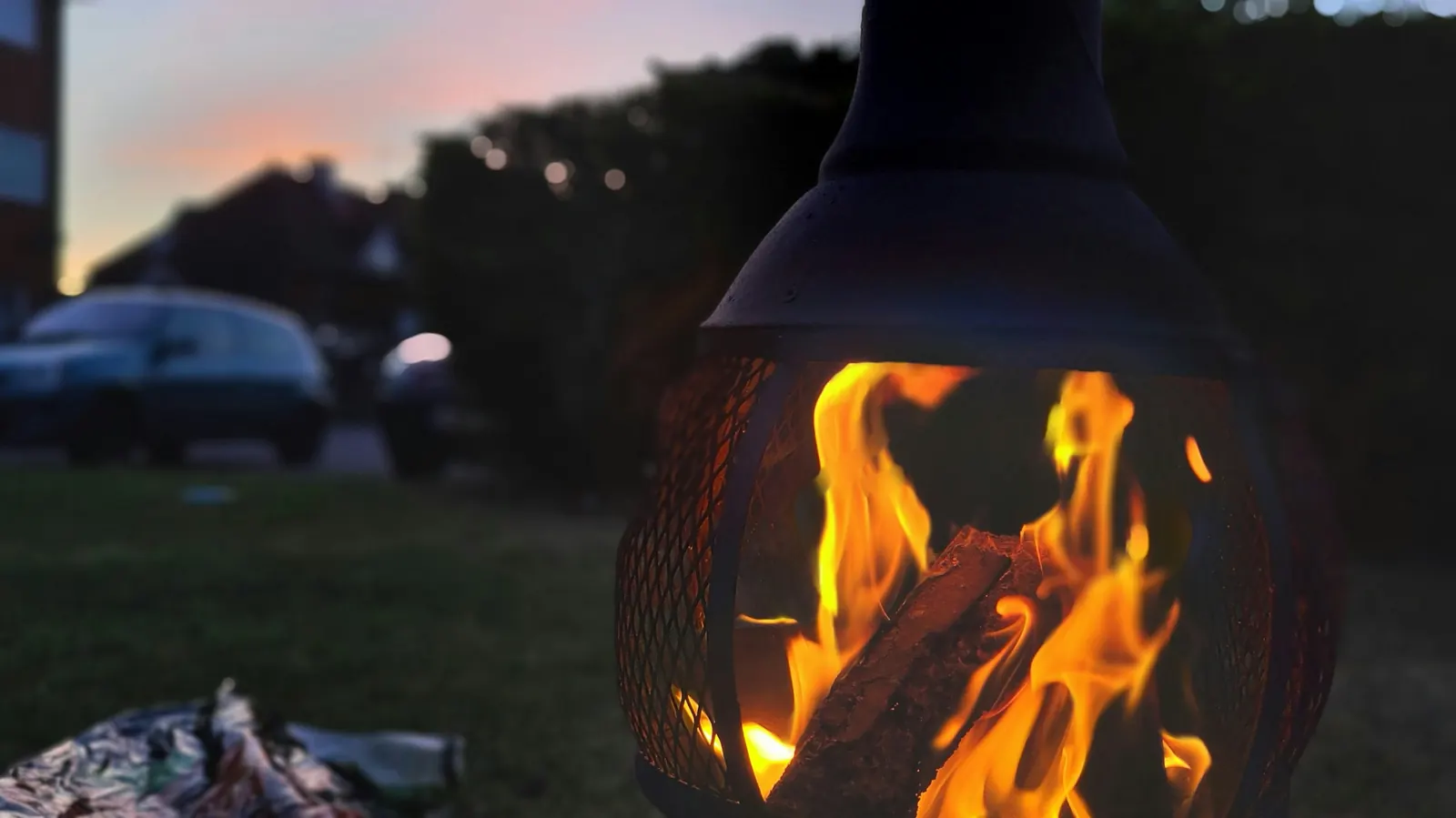
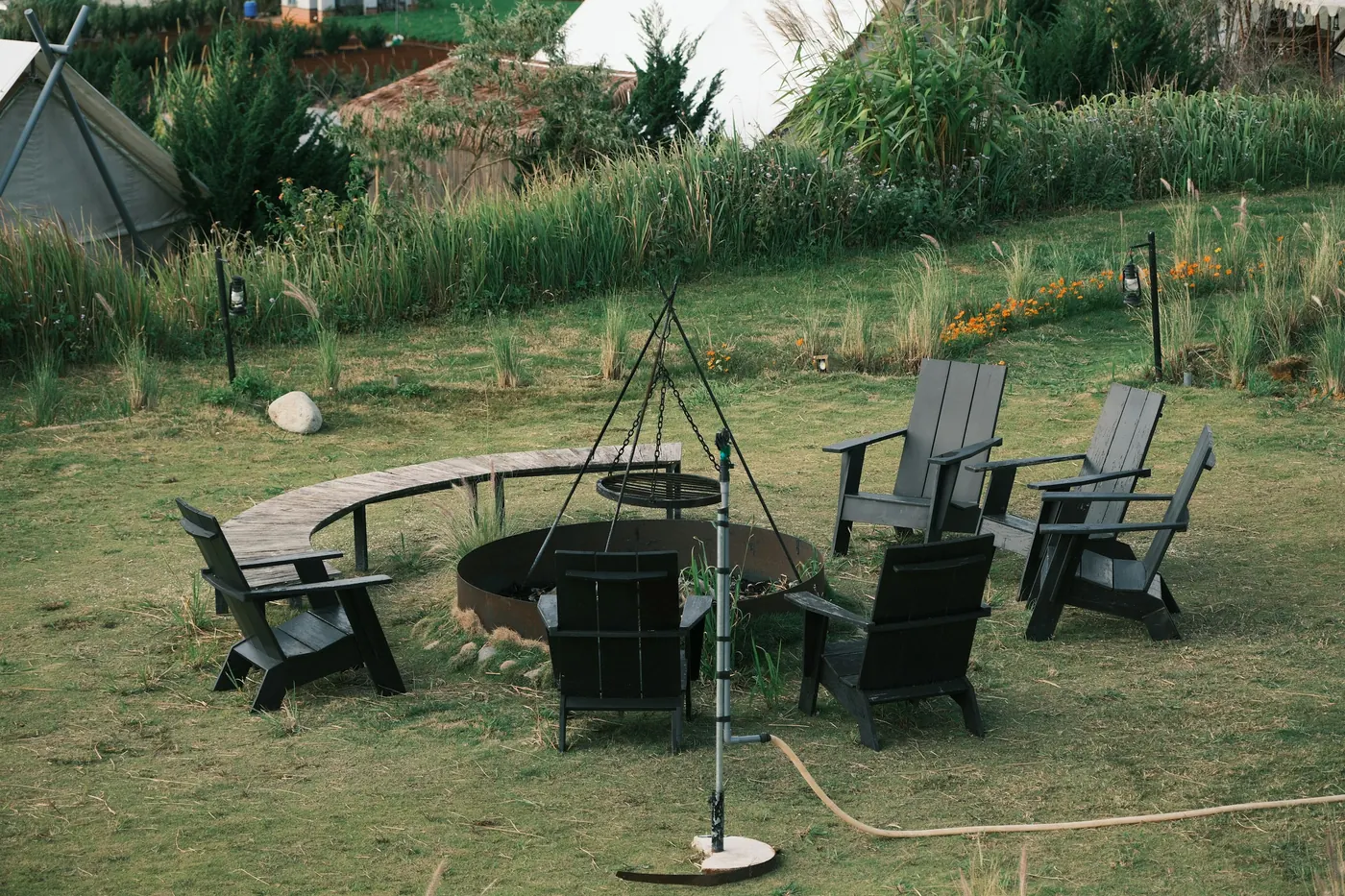
A chiminea and a fire pit both burn wood in the backyard, and from across the yard they can look like two versions of the same thing. Up close they behave very differently. A chiminea is a closed belly with one mouth and a tall chimney, so the fire sits inside and the smoke goes up the neck. A fire pit is an open bowl, so the fire is in plain view, the heat goes out in every direction, and the smoke goes wherever the wind sends it.
From a restaurant kitchen’s point of view, the useful question is not which one looks better on the patio but what each fire does: where the heat goes, what happens to the smoke, how the material holds up, whether you can cook over it, and what it asks of you to stay safe. This guide walks through each of those, then names one good example of each.
Julia’s earns a commission on purchases made through links on this page, at no cost to you. Recommendations are based on what a restaurant kitchen looks for, product specifications and verified buyer reports.
Quick verdict: chiminea or fire pit for your yard?
Choose a chiminea if you have a small patio, sit on one side of the fire, and want the smoke carried up and away by a chimney. Choose a fire pit if you want a fire that a group can sit all the way around, a wide bed of coals to cook over, and a fire you can see from every chair. For most families who want to gather and grill, a fire pit is the more useful buy; for a narrow patio or a couple, the chiminea makes more sense.
The table sums up the chiminea vs fire pit differences; the sections after it explain each one.
Chiminea vs fire pit, side by side
| Chiminea | Fire pit | |
|---|---|---|
| Shape | Rounded body, one front opening, tall chimney | Open bowl or ring, no chimney |
| Where heat goes | Mostly out of the front opening | All the way around the fire |
| Smoke | Drawn up the chimney, released above head height | Rises freely; drifts with the wind (“smokeless” pits reduce it) |
| Common materials | Clay, cast iron, cast aluminum, steel | Steel, stainless steel, cast iron, stone, or propane units |
| Seating | Best for a few people facing one side | Best for a circle of people |
| Cooking | Limited: small mouth, some sold with grates | Easier: wide coal bed, many grates and cooktops sold |
| Footprint | Tall and narrow | Low and wide |
| Main care issue | Clay needs shelter from weather; iron and steel rust | Ash cleanup; plain steel rusts |
Where the chiminea comes from
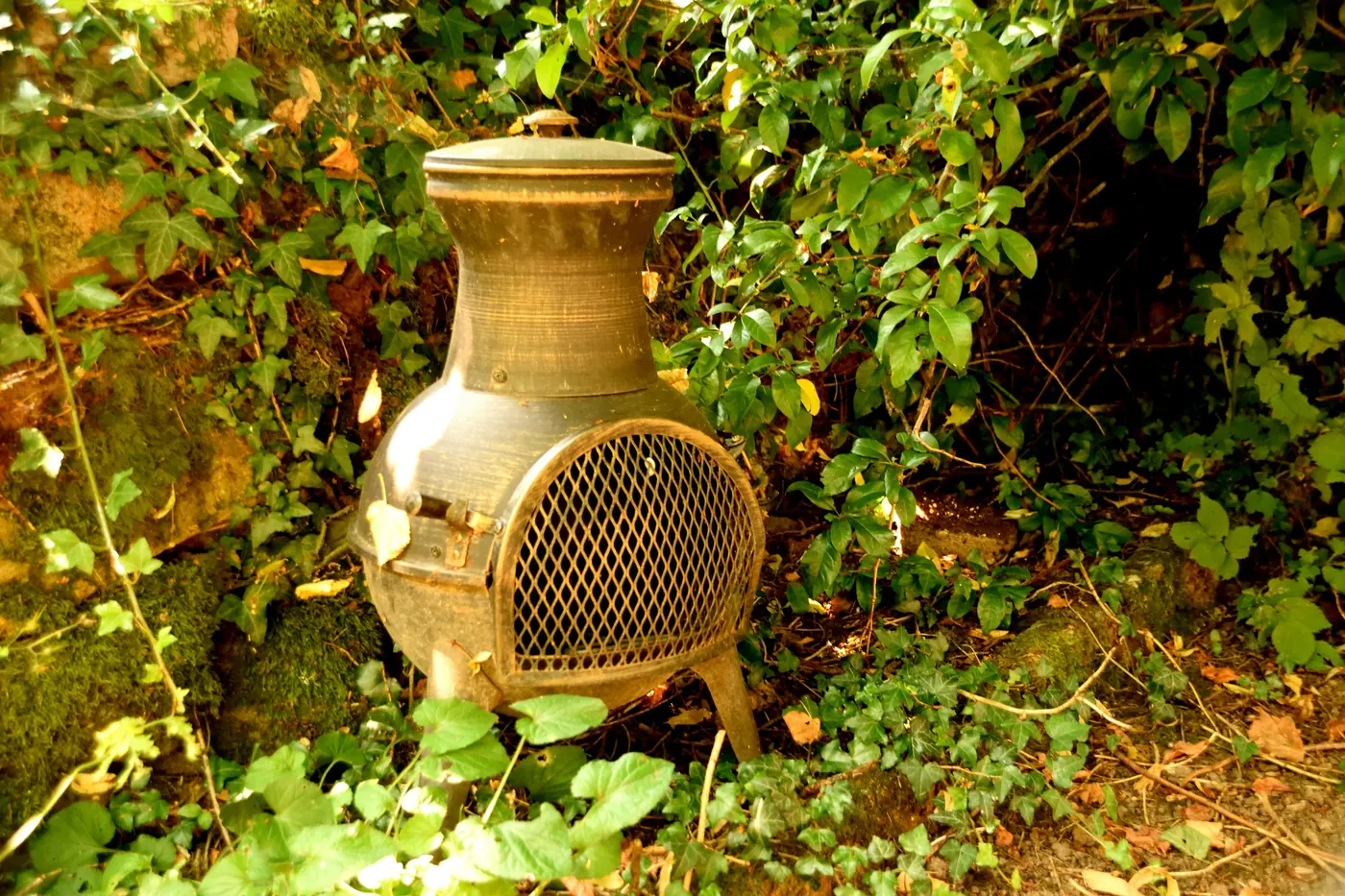
The name is Spanish. Merriam-Webster traces chiminea to the Spanish word for “fireplace, hearth, chimney,” itself borrowed from the French cheminée, and defines the thing as a freestanding earthenware or metal fireplace with a bulbous body, open in the front and topped by a tall chimney. The Oxford Advanced Learner’s Dictionary describes it as made of clay, with a round body and a tall narrow part for the smoke.
The clay chiminea is tied to Mexico in the way it is made and sold. Blue Rooster, an American maker of chimineas, describes its Grape Leaf model as “a Mexican design” and says the shape was originally produced in clay before it moved to cast aluminum. We could not find a museum or university source that dates the design, so treat age claims you see in shop listings as marketing rather than history. What is not in doubt is the idea: a fired clay belly that holds the fire and a chimney that carries the smoke up and away from the people sitting nearby.
Heat: one direction or all the way around
A chiminea throws most of its heat out of its single opening. Stand in front of the mouth and you feel it; walk behind it and you feel much less, apart from the warmth coming off the body itself. That makes a chiminea a good fit for a patio where the chairs all face one way, or for a corner where a fire pit would push people into the walkway.
A fire pit has no back. Heat goes out evenly in a circle, so everyone around it gets a share, and the fire is the center of the group rather than something you face. Some metal chimineas blur the line with a mesh-screened firebox that is open on every side; Sunnydaze, for example, describes one of its steel chimineas as radiating heat in all directions through a 360-degree mesh enclosure. A classic clay chiminea with one mouth does not.
Smoke: up a chimney or into the breeze
The chimney is the chiminea’s reason for being. Smoke rises up the neck and leaves well above head height, which is why people with a small patio or close neighbors often prefer one. Sunnydaze says the tall design of its Santa Fe chiminea “helps guide smoke upward and away from the fire area.”
An open fire pit has no chimney, so smoke goes where the wind takes it, and on a gusty evening that is often into someone’s face. “Smokeless” fire pits such as the Solo Stove Bonfire are sold on the promise of burning more cleanly. The USDA Forest Service’s Missoula Fire Sciences Laboratory measured two self-described smokeless pits and one traditional campground pit in a combustion chamber and found that all three produced much less fine smoke per kilogram of wood than the figure used for traditional fire pits in the national emissions inventory, which the researchers credited to their similar barrel design. They added an important condition: the low smoke depends on following the maker’s instructions and burning firewood with less than 20 percent moisture.
Dry, seasoned wood matters for both. Wet or green wood smokes in a chiminea too; the chimney just puts the smoke higher.
Clay, cast iron, steel and aluminum
A chiminea’s material decides how long it lasts and how you care for it. Clay is the traditional choice and the most decorative, but it is fired earthenware, so it can crack if it is knocked over, left out in freezing weather or heated too fast. Clay chiminea sellers such as Wiosi say theirs can last many years “if properly covered and stored during cold weather,” which tells you what the material needs.
Cast iron is heavy and durable but rusts. Oakland Living’s warranty for its cast iron chiminea says plainly that cast iron products “will eventually rust when exposed to the elements” and recommends covering them. Steel is lighter and usually less expensive; Sunnydaze says its steel chiminea “resists cracking and breaking better than clay or ceramic,” though plain painted steel will also rust over time. Cast aluminum, the material Blue Rooster uses for most of its chimineas, does not rust, according to the maker’s listing.
Fire pits run from thin painted steel bowls to cast iron to the 304 stainless steel of the smokeless pits, plus propane units that burn no wood at all. Our best fire pit guide compares those types in detail.
Cooking over a chiminea or a fire pit
This is where the fire pit wins for anyone who likes to cook outside. A wide bowl gives a broad bed of coals, and there is a whole category of grates, swing arms and cast iron cooktops made to sit over one. Carne asada, whole green onions, corn and chiles all want that kind of open, even heat. Our best fire pit grill guide covers the ones built for cooking, and our explainer on Mexican cooking methods shows why grilling over fire, asado and al carbón, is a style of its own.
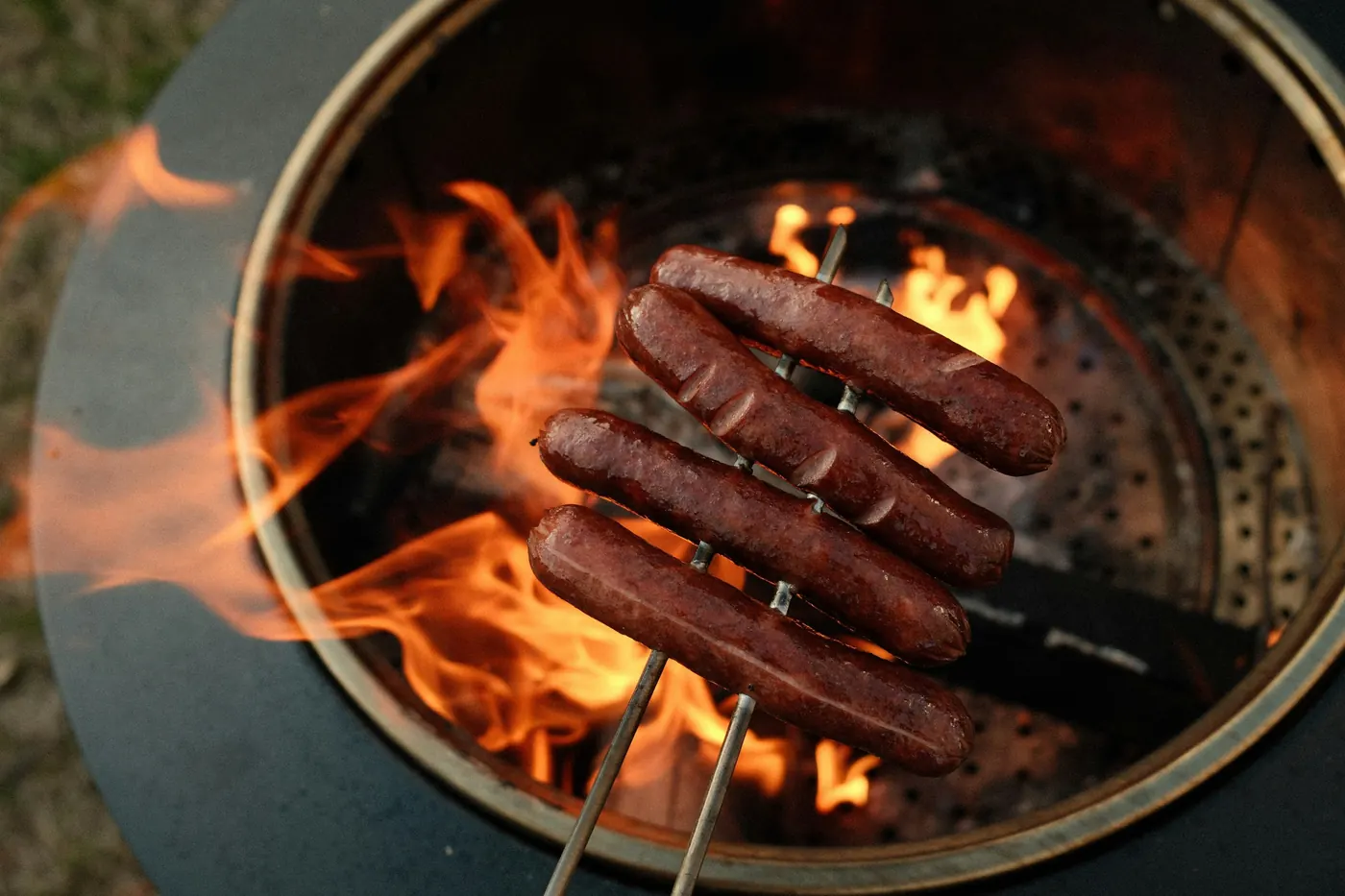
A chiminea’s small mouth makes it awkward to cook on. Some are sold with a cooking grate inside the firebox, and a few makers market theirs as a grill or a small pizza oven, but the space is tight and you are reaching into a hot opening. It is fine for skewers, a few sausages or roasting marshmallows, and not much more. If cooking is a big part of why you want a fire, buy the fire pit.
Safety: the same rules for both
A chimney does not make a chiminea safer in the ways that matter most. The U.S. Fire Administration’s advice applies to both: use chimneys, outdoor fireplaces and fire pits “at least 10 feet away from your home or anything that can burn,” closely watch children while a fire is going, use a metal screen over wood-burning fires to keep sparks in, and put the fire out before you leave the backyard. A chiminea’s chimney can carry sparks up and out, so check whether yours has a spark arrester screen at the top.
Smokey Bear, the U.S. Forest Service’s fire prevention program, adds the rest: check local fire restrictions before lighting, don’t build a fire in dry or windy weather, never burn trash, aerosol cans, batteries or glass, and put a fire out by drowning it, stirring, drowning again and feeling the ashes with the back of your hand until they are cool. Local burn rules and any county burn ban apply to backyard fires too, so check them first.
Handling either one hot calls for real heat protection. The leather gloves in our best charcoal grill accessories guide are the kind of thing to keep beside the fire for moving logs or a grate.
Cost: what moves a fire up a tier
We don’t quote prices because they change, but the tiers are easy to read. At the entry level sit small clay chimineas and thin painted steel fire bowls. In the middle are large steel chimineas and heavier fire pits with screens and grates included. At the top are cast aluminum or cast iron chimineas from specialist makers, and stainless smokeless fire pits and propane fire tables. What you pay more for is mostly thickness, resistance to rust, and in fire pits, cleaner burning. Accessories add up: covers, spark screens and cooking grates are often sold separately.
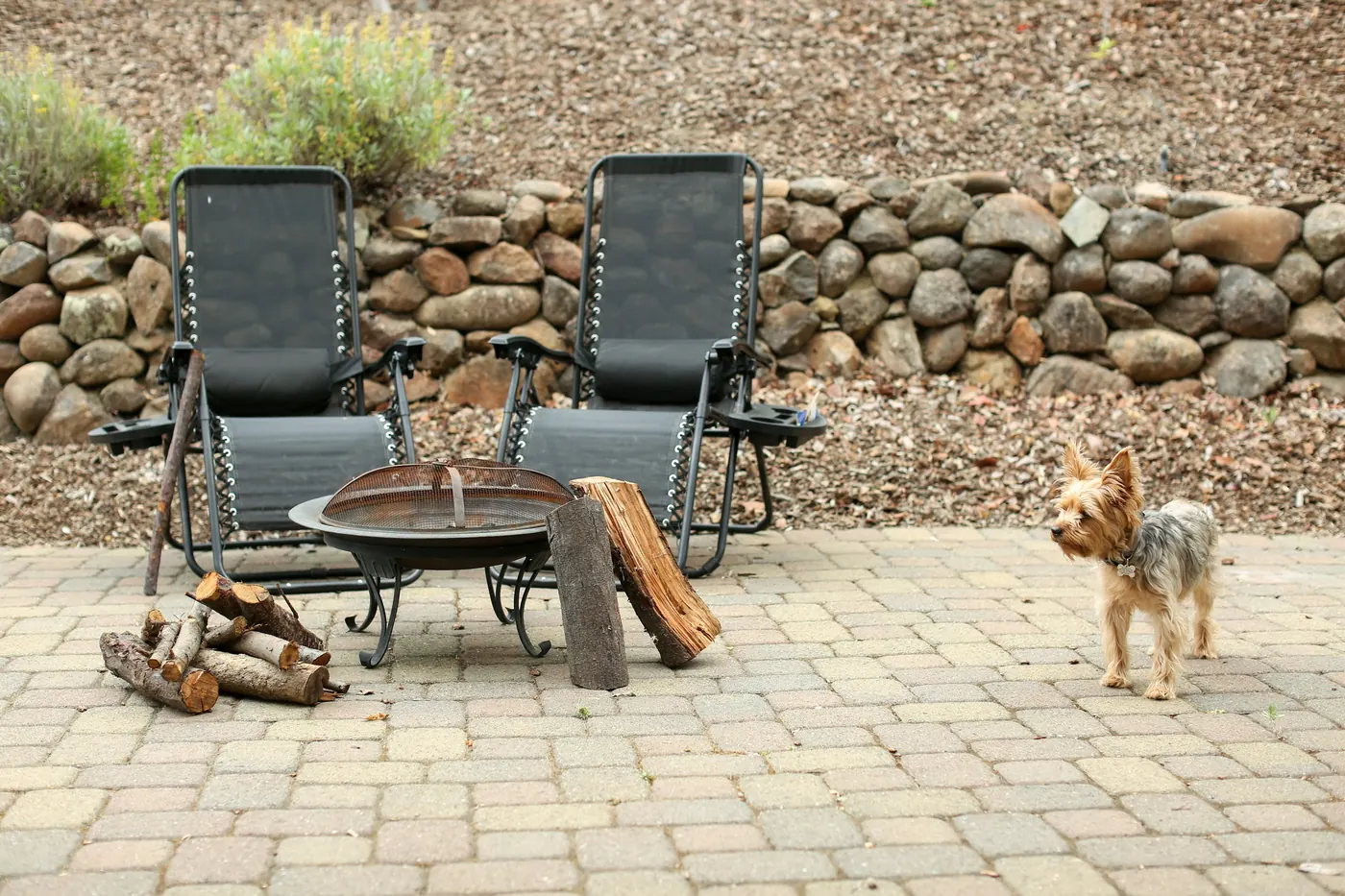
Choose a chiminea if… / Choose a fire pit if…
Choose a chiminea if…
- Your patio is small or narrow and the seats face one direction.
- You want the smoke carried up and away from the people sitting nearby.
- You like the look of a traditional clay or cast metal piece as part of the garden.
- Cooking over the fire is not a priority.
Choose a fire pit if…
- You want a group to sit all the way around the fire.
- You want to grill over open coals or add a cooktop later.
- You want the option of a low-smoke pit or a propane unit.
- You have open space and can keep it at least 10 feet from the house and anything that can burn.
Our pick on each side of the chiminea vs fire pit question
One steel chiminea from Sunnydaze, a brand that sells both chimineas and fire pits, and one stainless smokeless fire pit from the top of our fire pit guide. Both were in stock on Amazon when we checked.
1. Sunnydaze Santa Fe 50-inch Steel Chiminea – Smoke Up and Away
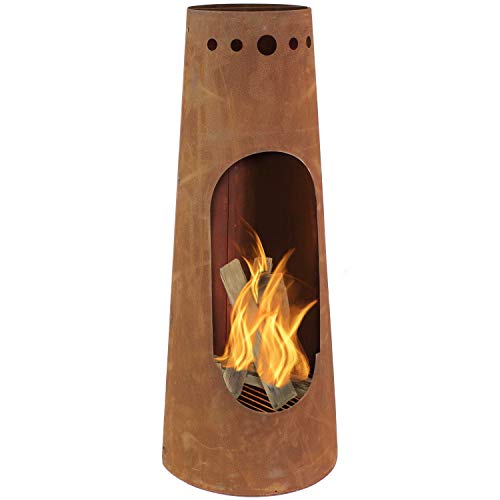
The Santa Fe is a large, plain steel chiminea in a rustic patina finish. Sunnydaze lists it at 50 inches tall, with a 19.75-inch base, a 12.5-inch top and a front opening of 26.75 by 11.25 inches, and a weight of 32.4 pounds. A 17.75-inch log grate comes in the box, along with the hardware and tools to assemble it.
Its tall neck is the point: Sunnydaze says the design helps guide smoke upward and away from the fire area. The listing also says the steel resists cracking and breaking better than clay or ceramic, which makes it a more forgiving choice than a clay chiminea for a family yard. The trade-off is that painted steel left in the weather will rust over time, so a cover is worth adding.
As with any chiminea, heat comes mostly out of the front, so set the chairs in an arc facing the opening.
Why we like it
- Tall neck carries smoke up, per Sunnydaze
- Steel resists cracking better than clay, per the listing
- Log grate included
- Full dimensions published
Key specifications
| Model | RCM-873 |
|---|---|
| Type | Wood-burning chiminea |
| Material | Steel, rustic patina finish |
| Size | 50 in tall; 19.75 in base |
| Weight | 32.4 lb |
| Spark screen | Not stated |
| Included | 17.75 in log grate, hardware, tools |
| Warranty | 1-year limited |
Why we recommend it
It suits a small patio where the seats face one way and the smoke needs to go up rather than sideways.
Skip it if you want to cook over the fire or seat a full circle of people; a fire pit does both better.
Pros and cons
Pros
- Chimney lifts the smoke
- Less fragile than clay
- Narrow footprint
Cons
- Painted steel can rust
- Heat mainly from the front
- No cover included
2. Solo Stove Bonfire 2.0 with Stand – Low-Smoke Fire for a Circle

The Bonfire 2.0 is the fire pit that answers the chiminea’s main argument, smoke. It is a 304 stainless steel pit with a high-heat ceramic coating, and Solo Stove describes its airflow design as smokeless. The listing gives a 19.5-inch diameter and a 21.75-pound weight, sized for four to six people, with a stand included. This listing is the gunmetal finish.
A removable ash pan and base make cleanup simpler than scooping ash out of a bowl. Solo Stove sells a stainless spark screen, the Bonfire Shield, separately, and the U.S. Fire Administration’s advice to keep a metal screen over wood fires makes it worth adding. A cast iron grill top made for the Bonfire is also sold separately if you want to cook over it.
Low smoke still depends on dry wood. The Forest Service study above found that clean burning held when users followed instructions and burned wood under 20 percent moisture.
Why we like it
- Smokeless airflow design, per Solo Stove
- Removable ash pan and base
- Stand included
- Screen and grill top sold to fit
Key specifications
| Model | Bonfire 2.0 with stand |
|---|---|
| Type | Smokeless wood fire pit |
| Material | 304 stainless steel, ceramic coating |
| Size | 19.5 in diameter |
| Weight | 21.75 lb |
| Spark screen | Sold separately (Bonfire Shield) |
| Included | Stand, removable ash pan |
| Warranty | Limited, manufacturing defects |
Why we recommend it
It suits a family that wants to sit all the way around a fire with less smoke than an open bowl, and maybe cook over it later.
Skip it if your patio is tight and everyone sits on one side; a chiminea uses that space better.
Pros and cons
Pros
- Less smoke with dry wood
- Easy ash cleanup
- Light enough to move
Cons
- Screen and grill top cost extra
- Smaller than group-size pits
- Smoke returns with damp wood
Fire pit vs chiminea questions, answered
Which gives off more heat, a chiminea or a fire pit?
Neither is simply hotter; they send heat in different directions. A chiminea pushes most of its heat out of the front opening, so the people facing it feel it most. A fire pit spreads heat in a full circle, so everyone around it gets some.
Is a chiminea less smoky than a fire pit?
Usually, around the seats, because the chimney carries smoke up and away. A smokeless fire pit narrows the gap; Forest Service researchers found such pits produced much less smoke than the traditional figure when burning dry wood as the makers instruct.
Can you cook on a chiminea?
A little. Some come with a grate and a few are marketed for grilling or pizza, but the small opening makes it awkward. For grilling carne asada or vegetables, a fire pit with a grate is the better tool.
Can a chiminea go on a deck or under a covered patio?
Follow the maker’s instructions for your model, and keep it in the open. The U.S. Fire Administration says to use outdoor fireplaces and fire pits at least 10 feet from your home or anything that can burn, and a covered patio puts a roof right above the chimney.
Are clay chimineas worth it?
They are the traditional form and look the part, but clay is fragile and needs shelter in cold, wet weather, as clay sellers themselves advise. If you want something you can leave outside with less worry, steel, cast iron or cast aluminum lasts longer.
Which fire belongs in your backyard
For most households that want to gather around a fire and cook over it now and then, a fire pit is the better choice, and the best fire pit guide covers wood, smokeless and propane models. For a small patio, a couple of chairs and smoke that goes up instead of sideways, a chiminea does the job and keeps the old clay-belly idea alive in steel.
Once the fire is going, our guide to how to eat fajitas covers what to put on the grill. Or let us do the cooking: see the menu or call to order.