Copper and stainless steel sit at opposite ends of the cookware shelf. Copper is the fastest common pan metal at taking up heat and letting it go, and it has the looks to match. Stainless steel is the tough, low-fuss metal most serious home kitchens are built on. The catch is that neither is quite what it seems: almost every copper pan has a stainless or tin lining, and most good stainless pans hide an aluminum or copper core.
So the real question is whether copper’s speed is worth its cost and care for the way you cook. This guide compares the two on heat, control, reactivity, care, induction, durability and cost class, using what the makers state and one named review that timed both metals side by side. Then it names one 11-inch pan for each side, from the same maker, so the comparison stays like for like.
Julia’s earns a commission on purchases made through links on this page, at no cost to you. Recommendations are based on what a restaurant kitchen looks for, product specifications and verified buyer reports.
Quick verdict: copper or stainless for your stove?
For most home cooks, clad stainless steel is the better buy. It is cheaper, tougher, works on induction without extra parts and needs no polishing. Choose copper if you make a lot of sauces, caramel, custards or delicate fish, want heat that answers the knob almost at once, and are happy to hand wash and either polish or accept a patina. If you want some of both, a copper pan with a steel base, like the Hestan CopperBond below, works on induction and needs no relining.
The table sums up the differences. The sections after it explain each one and where the claim comes from.
Copper vs stainless steel cookware, side by side
| Copper (lined) | Stainless steel (clad) | |
|---|---|---|
| Heat response | Fastest; reacts quickly to the knob | Slower; depends on the aluminum or copper core |
| Cooking surface | Stainless steel or tin lining | Bare stainless steel |
| Acidic food | Fine once lined; unlined copper reacts | Non-reactive |
| Induction | No, unless the pan has a steel base or you use an interface disc | Usually yes; check the label |
| Care | Hand wash; polish or accept a patina; tin needs retinning | Hand wash or dishwasher, per the maker |
| Durability | Softer metal; dents and scratches more easily | Resists scratches, dents and corrosion |
| Oven limit | Tin about 450°F; stainless-lined much higher | Often 500 to 600°F or more |
| Cost class | High to very high | Mid to high |
What you are really comparing
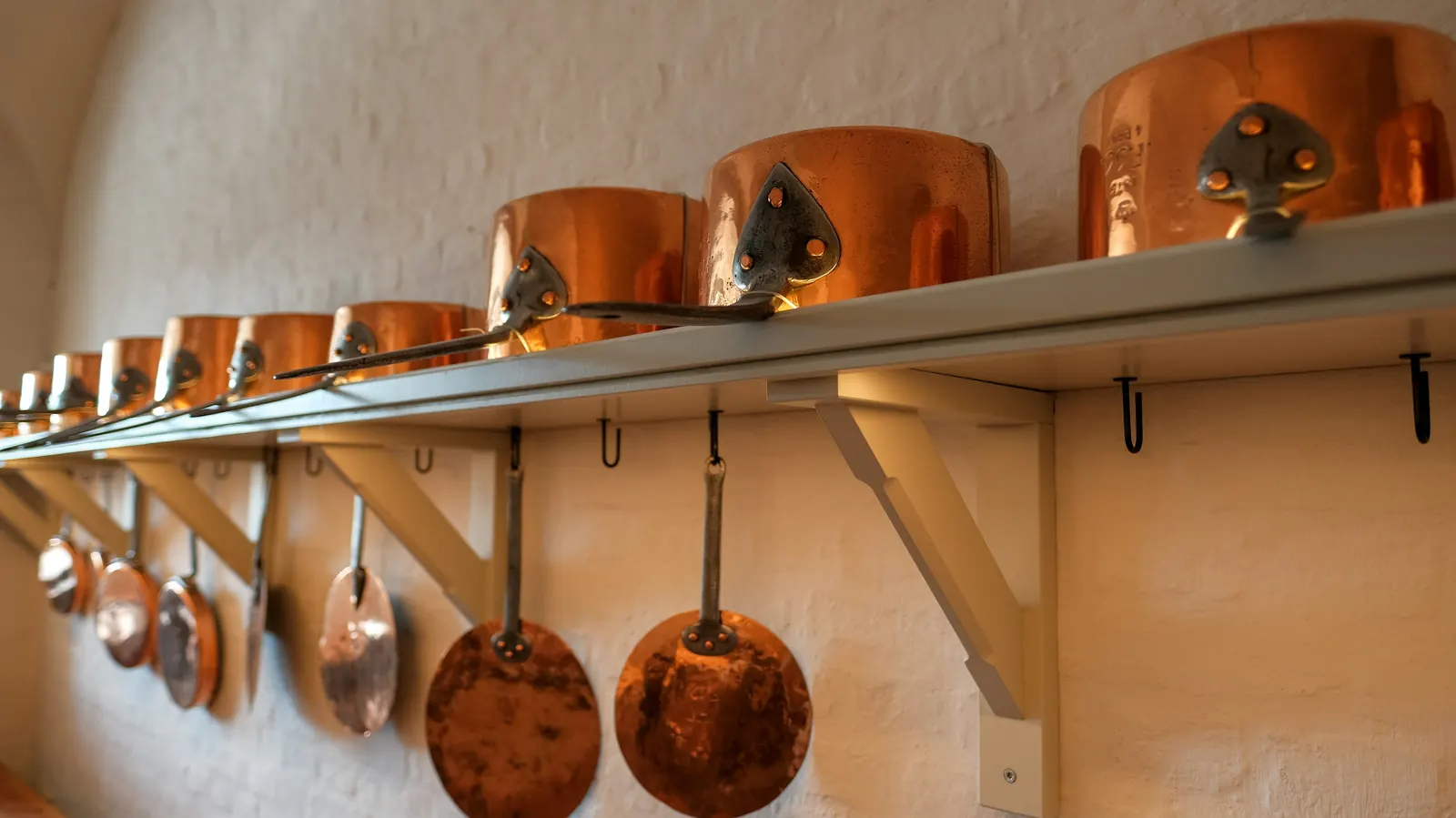
Copper reacts with acidic food, so copper pans are lined. Prudent Reviews, in a comparison by its editor Andrew Palermo, explains that copper cookware usually has a copper exterior and a tin or stainless interior, and that the lining is there because bare copper can give food a metallic taste. Hestan’s own guide to the two metals says the same: copper can react with acidic foods and is usually lined with stainless steel or tin.
Stainless steel has the opposite problem. It is non-reactive and tough but a poor conductor on its own, so better stainless pans are clad: layers of steel bonded around an aluminum or copper core. Hestan says plain stainless conducts heat poorly and that aluminum or copper cores improve it. That is why a modern copper versus stainless choice is often a choice between a thick copper body with a thin steel lining, and a steel pan with a thin aluminum core.
There is a middle ground too. Some pans, like Hestan’s CopperBond, bond a copper core between stainless layers and wrap a steel base around the bottom so the pan works on induction. Traditional French pans, like Mauviel’s M’Heritage line, are about 90 percent copper and 10 percent 18/10 stainless steel by Mauviel’s figures on its Amazon listings. For a full range of real copper pieces, our best copper cookware guide covers the main constructions in detail.
Heat and control: copper is faster, but not by magic
This is the reason people buy copper. Hestan calls copper “unparalleled” for heat conductivity and says it “responds instantly to changes in heat,” which helps keep sauces from splitting. That is a maker’s view, but Prudent Reviews put numbers on it. Heating 32 ounces of water in a copper pot and a tri-ply stainless pot, its reviewer reports that the copper pot reached a full boil in 4 minutes 5 seconds against 4 minutes 45 seconds for stainless. Taking the water to 150°F took 2 minutes 2 seconds in copper and 2 minutes 43 seconds in stainless.
The more telling number is what happened when the heat went off. After five minutes, the review’s copper pot had cooled to 124.5°F and the stainless pot was still at 131.9°F. Copper sheds heat faster, so when you turn the burner down, the pan follows. Prudent Reviews says that gives copper significantly more control, but that copper is also not very forgiving. That is a fair way to put it: a copper pan does what you tell it, mistakes included.
In practice the gap matters most for food that turns on a few degrees: caramel for flan, cajeta, butter sauces, custards, delicate fish. For searing carne asada or frying rice for arroz rojo, a good clad stainless pan gets hot enough and holds that heat when the meat goes in. As general kitchen sense, a heavier pan that holds heat is often an advantage for searing, not a drawback.
Copper’s speed also changes how you cook. Mauviel’s listings for its M’Heritage pans say its cookware conducts heat so well that burners should be run at about 60 to 70 percent of full power, and that you should not use high heat for long or leave an empty pan on a hot burner. If you are used to cranking a stainless pan to high, plan to adjust.
Reactivity and the lining
Lined copper is fine for tomatoes, tomatillos and lime, because the food only touches the lining. The lining is where the two kinds of copper pan split.
- Stainless-lined copper cleans like any stainless pan and takes higher oven heat. Prudent Reviews says stainless-lined copper can go up to 800°F in the oven, although each maker’s own limit is the one to follow; Hestan lists 600°F for CopperBond.
- Tin-lined copper is the traditional build. Prudent Reviews says tin is much less durable, may need retinning, and can start to melt at about 450°F. Hestan also notes that tin linings need periodic re-tinning.
Stainless steel pans skip the question. Hestan describes stainless as non-reactive, so it will not change the flavor of acidic or alkaline foods. For tomato-heavy cooking, both a stainless pan and a stainless-lined copper pan are safe choices; only bare or worn copper is the problem. If those sauces are your main use, our guide to enchilada sauces covers what goes into them.
Care and cleaning: where stainless pulls ahead
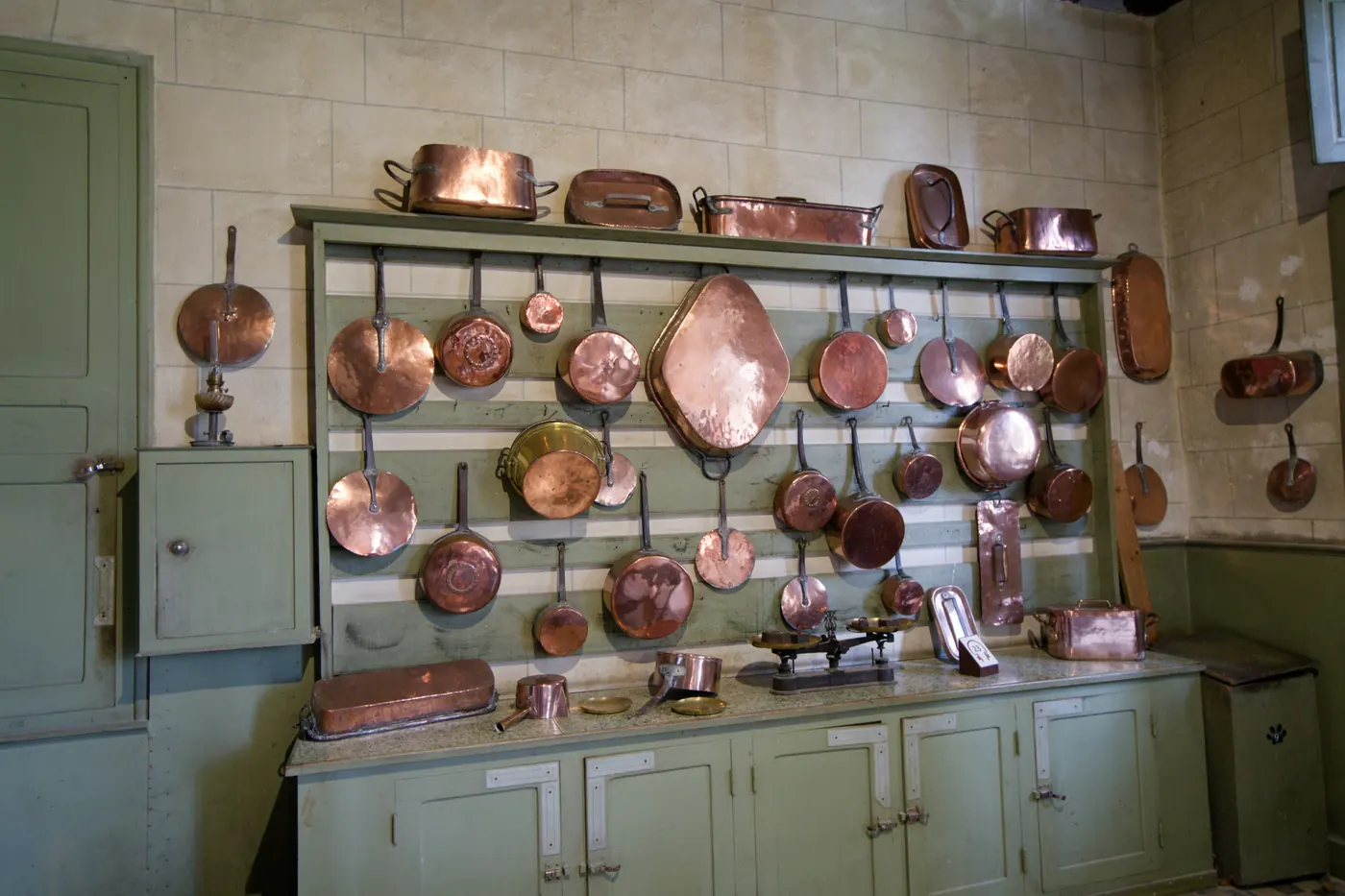
Copper asks for more. Prudent Reviews says copper needs hand washing, polishing and thorough drying, and should never go in the dishwasher. Hestan says copper tarnishes over time and needs regular polishing, though many cooks like the darker patina that builds if you skip it. Mauviel’s listings warn against scouring pads, steel wool, abrasive cleansers, bleach and oven cleaners.
Stainless is simpler. Hestan says stainless does not need special care or polishing. Some stainless pans are labeled dishwasher safe, the Hestan ProBond Luxe below among them, but Prudent Reviews warns that the dishwasher can scratch stainless whatever the label says. Read your maker’s care card. One thing to note: the Hestan CopperBond listing on Amazon says hand wash, while a Hestan blog post describes the CopperBond set as dishwasher safe. We follow the listing and say hand wash.
Induction: stainless wins unless the copper has a steel base
Induction heats only magnetic metal, and copper is not magnetic. Prudent Reviews says copper is not induction compatible for that reason, while most stainless steel is. Traditional copper needs a workaround: Mauviel’s listings say its M’Heritage pans work on induction only with a Mauviel interface disc, sold separately.
Some copper pans solve this with a built-in steel layer. Hestan says its CopperBond pans are induction compatible because of a stainless steel base wrapped around the bottom. If you cook on induction, that kind of pan or a clad stainless pan is the practical choice. Our best induction cookware set guide covers full sets for those stoves.
Durability and weight
Copper is a soft metal. Hestan’s guide calls it relatively soft and more prone to dents and scratches, adding that thicker copper lasts longer. Prudent Reviews says copper is prone to tarnishing, scratching and other cosmetic damage. Stainless, by Hestan’s account, resists rust, corrosion and scratching and is less likely to warp or dent. Neither source gives weights for the two metals, and neither of our picks’ listings states a pan weight, so we do not compare weight here.
The fair way to read this is that copper ages visibly and stainless hides wear. A well-kept stainless-lined copper pan can still last for decades; it just will not look new for long.
Cost and value
We don’t quote prices, but the order is clear. Prudent Reviews puts copper in a higher cost class than stainless and says copper is usually much more expensive. Hestan’s guide agrees that stainless is more affordable. Judge value by use: if a copper pan is the one you reach for every time you make caramel or a pan sauce, its speed earns its place. If it would hang on the wall most of the week, a clad stainless pan and the money saved will do more for you.
Choose copper if… / Choose stainless steel if…
Choose copper if…
- You make a lot of sauces, caramel, custards or delicate fish and want fast, precise control.
- You will hand wash and either polish the pan or enjoy the patina.
- You cook on gas or electric, or you buy copper with a built-in steel base for induction.
- You value the look of copper on the stove and at the table.
Choose stainless steel if…
- You want one tough pan for searing, sautéing and pan sauces that you do not have to baby.
- You cook on induction now or may in the future.
- You want the option of the dishwasher, if your maker allows it.
- You would rather spend less and put the difference toward other pans.
Our pick on each side of copper vs stainless steel cookware
One 11-inch pan per side, from the same maker, so the main difference is the metal in the core and on the outside. Both were in stock when we checked. Neither listing appears on our other pages, but each is a size of a line we cover elsewhere. The CopperBond pan is the same line as the 8.5-inch CopperBond pan in our best copper cookware guide, chosen here because its 11-inch size matches the stainless pick. The ProBond Luxe skillet is the same line as the 12.5-inch ProBond Luxe in our best stainless steel pans guide, chosen here because its 11-inch size matches the copper pick.
1. Hestan CopperBond 11-Inch Frying Pan – Copper Speed With an Induction Base
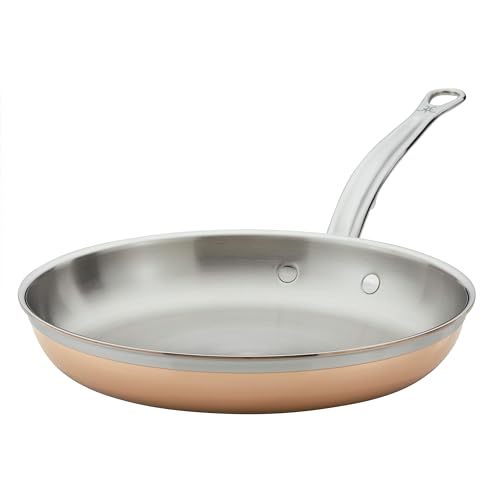
This is copper for cooks who don’t want copper’s usual compromises. Hestan’s listing describes a five-layer bonded build with a thick core of 100 percent copper, a copper and stainless exterior, and a non-reactive 18/10 stainless steel interior. A stainless steel base wraps around the bottom, which is what lets it work on induction.
It answers several of this page’s points better than traditional copper. The listing says it works on all cooktops including induction, goes in the oven and under the broiler up to 600°F, and is safe for metal utensils. The rims are sealed with stainless and flared for pouring. Hestan gives an 11-inch top diameter, an 8-inch cooking surface and 1.75 inches of depth, and says the pan is handcrafted in Italy with a lifetime warranty.
The trade-offs are care and cost class. The listing says to hand wash and dry with a soft cloth, and the copper on the outside will darken unless you polish it. Because the copper sits inside stainless layers, this is not the same as a thick solid-copper pan like Mauviel’s; it is a bonded pan with a copper core. The listing does not state a weight.
Why we like it
- Thick 100 percent copper core (listing)
- Works on induction thanks to a steel base (listing)
- Oven and broiler safe to 600°F (listing)
- Stainless cooking surface; metal utensil safe (listing)
Key specifications
| Model | 31590 |
|---|---|
| Construction | 5-layer bonded, 100% copper core, stainless base |
| Cooking surface | 18/10 stainless steel |
| Size | 11 in top, 8 in cooking surface, 1.75 in deep |
| Induction | Yes |
| Oven safe to | 600°F, broiler safe |
| Dishwasher | No, hand wash (listing) |
| Made in | Italy |
Why we recommend it
It suits a cook who wants copper’s quick response for sauces and fish, on any stove including induction, with a lining that never needs retinning.
Skip it if you want the dishwasher or the classic look and heft of solid French copper.
Pros and cons
Pros
- Copper core with induction compatibility
- High 600°F oven limit
- Lifetime warranty (listing)
Cons
- Hand wash only per the listing
- Copper exterior tarnishes without polishing
- Highest cost class on this page
2. Hestan ProBond Luxe 11-Inch Skillet – Tri-Ply Stainless, Dishwasher Safe

This is the stainless counterpart from the same maker and in the same size. Hestan’s listing describes Italian-made tri-ply clad stainless steel with its ProCore aluminum core, a mirror-polished exterior and a satin interior. Hestan claims the core gives 35 percent better heat conductivity; the listing does not say compared with what, so treat that as a maker claim.
It covers the stainless side of every comparison above. The listing says it works on all cooktops including induction, is oven and broiler safe to 600°F, and is dishwasher safe, with sealed rims that Hestan says prevent delamination. The handle, designed with chef Thomas Keller, has flush rivets so there is no crevice for food to build up. This is the pan for searing fajita steak, browning chorizo or building a pan sauce without thinking about polish.
What you give up is copper’s quick drop when you turn the heat down. Like any stainless pan, food will stick until you learn to preheat it and let meat release on its own. The listing does not state a weight. The 11-inch skillet is sold without a lid; Hestan sells an 11-inch version with a lid as a separate listing.
Why we like it
- Tri-ply clad with an aluminum core (listing)
- Induction compatible (listing)
- Dishwasher safe with sealed rims (listing)
- Oven and broiler safe to 600°F (listing)
Key specifications
| Model | 31780 |
|---|---|
| Construction | Tri-ply clad stainless, ProCore aluminum core |
| Cooking surface | Satin-finish stainless steel |
| Size | 11 in |
| Induction | Yes |
| Oven safe to | 600°F, broiler safe |
| Dishwasher | Yes (listing) |
| Made in | Italy |
Why we recommend it
It suits a cook who sears, sautés and finishes food in the oven on any stove, and wants a pan that goes in the dishwasher and needs no polishing.
Skip it if you mostly make delicate sauces and caramel and want the fastest possible response to the knob.
Pros and cons
Pros
- Dishwasher safe per the listing
- Works on induction
- No polishing or relining, ever
Cons
- Slower to respond than copper
- No lid with this listing
- Food sticks without preheating
Copper and stainless questions, answered
Is copper worth it over stainless steel?
For most home cooks, no. Prudent Reviews concludes that stainless is the better choice for most people because it is durable, easy to keep and simple to use. Copper is worth it if you cook a lot of temperature-sensitive food, value fast control, and accept hand washing and a higher cost class.
Is copper faster than stainless steel?
Yes, but the gap with good clad stainless is smaller than many expect. In Prudent Reviews’ water test, copper reached a boil about 40 seconds sooner than a tri-ply stainless pot, and it also cooled faster once the heat was off.
Can you cook tomato or lime dishes in copper?
Yes, if the pan is lined with stainless steel or intact tin. Unlined copper reacts with acidic food, which is why makers line it. Stainless steel is non-reactive.
Does copper cookware work on induction?
Not on its own, because copper is not magnetic. Mauviel’s traditional pans need its interface disc, while copper pans with a bonded steel base, like Hestan CopperBond, work directly.
Which is easier to clean?
Stainless. It needs no polishing and some pans are dishwasher safe. Copper should be hand washed and dried, and either polished or left to darken.
Our take: stainless for most, copper for the sauce maker
If you can have only one pan, make it clad stainless: it sears, goes in the oven, works on every stove and shrugs off the dishwasher if its maker allows. Add copper when you know what you will use it for, and you will enjoy it. For more choices on each side, see our best copper cookware and best stainless steel pans guides, or our comparison of hard anodized vs stainless steel if you are weighing nonstick too. And when you would rather someone else did the cooking, see the menu or call to order.