
A donut pan is a sheet of ring-shaped wells. It bakes cake batter into rings with a hole already in the middle, so there is no dough to roll, cut or fry. If you don’t own one, you can still make baked donuts. A muffin tin with a little foil, a mini Bundt pan, a small savarin mold or a plug-in donut maker all make a ring, and a cutter turns rolled dough into donuts the old way.
This guide covers the donut pan alternatives that genuinely work, how close each one gets to a real donut, and where each falls short. If you would rather buy the pan, our best donut pan guide reviews seven of them.
Julia’s earns a commission on purchases made through links on this page, at no cost to you. Recommendations are based on what a restaurant kitchen looks for, product specifications and verified buyer reports.
Why bakers skip the donut pan
- Donuts on a whim. You found a baked donut recipe and want to make it today, with the pans you have.
- A pan that does one thing. A donut pan bakes donuts and little else. A muffin tin or a mini Bundt pan works all year.
- Kids want to help. A countertop donut maker bakes a batch in minutes with no oven.
- You want the real thing. Yeast-raised, fried donuts come from rolled dough and a cutter, not from a pan at all.
Quick verdict: the best donut pan alternative
For most bakers, the best donut pan alternative is the muffin tin you already own, with a greased foil insert in each cup to make the hole. Taste of Home’s tested method uses 5-inch foil squares shaped around a finger; if you need a tin, the Wilton Silver 12-cup muffin pan is a sound pick. For a neater ring that looks finished, a Nordic Ware mini Bundt pan bakes 12 small fluted rings. For small, glossy rings, the Silikomart SF084 savarin mold releases easily. For speed with no oven, a DSP mini donut maker bakes six at a time. And for fried, yeast-raised donuts, a Winco doughnut cutter is the tool.
Five ways to make donuts without the pan
Our five picks, each a different way to get a ring-shaped donut without a donut pan, with what each maker or listing states.
| Alternative | How it makes the ring | Material | How close to a donut pan | Buy on Amazon |
|---|---|---|---|---|

Wilton Silver Non-Stick Muffin Pan, 12-CupBest overall
|
Foil insert in each cup | Nonstick steel, made without PFAS | Close; uneven edges | View on Amazon |

Nordic Ware Formed Mini Bundt Pan, 12 CavityBest shaped ring
|
Fluted mini Bundt wells | Nonstick aluminum, made in USA | Taller, fluted ring | View on Amazon |

Silikomart SF084 Oval Savarin Silicone Mold, 10 CavitiesBest for small rings
|
Small savarin rings | Platinum silicone, made in Italy | Mini, oval donuts | View on Amazon |

DSP Mini Donut Maker, 6 DonutsBest without an oven
|
Electric ring plates | Nonstick plates | Mini rings, fast | View on Amazon |

Winco CC-2 Stainless Steel Doughnut Cutter, 3 InchBest for fried donuts
|
Cuts rings from rolled dough | Stainless steel | Different donut: rolled dough | View on Amazon |
Baking donuts without a donut pan: the methods that work
A donut pan does two things. It holds a soft batter in shape while it sets, and its center post leaves the hole. Every method below copies one or both, with different results.
The muffin tin with foil
Taste of Home’s recipe for baked doughnuts without a doughnut pan, by Jenna Urben and tested by its Test Kitchen, uses 5 by 5-inch squares of foil. Fold each square over one finger, fold the sides up to make a cupped mold, press it into a muffin cup and grease it with cooking spray. Pipe the batter in until the molds are three-quarters full, using a zip-top bag with the corner snipped, and bake at 350°F for 10 to 12 minutes, until a toothpick in the center comes out clean. Cool them for 5 minutes in the pan, then move them to a rack.
Taste of Home is honest about the result: the doughnuts come out smaller than standard ones and are certainly not uniform in shape, but the flavor is there. It suggests buying a real doughnut pan if you bake them often. Tasting Table’s Cara O’Bleness describes a second way: spray each cup, fold a 9-inch square of foil into a strip, roll it into a tube, stand it in the center of the cup, and pour or pipe the batter around it. Remove the foil carefully once the donuts have cooled.
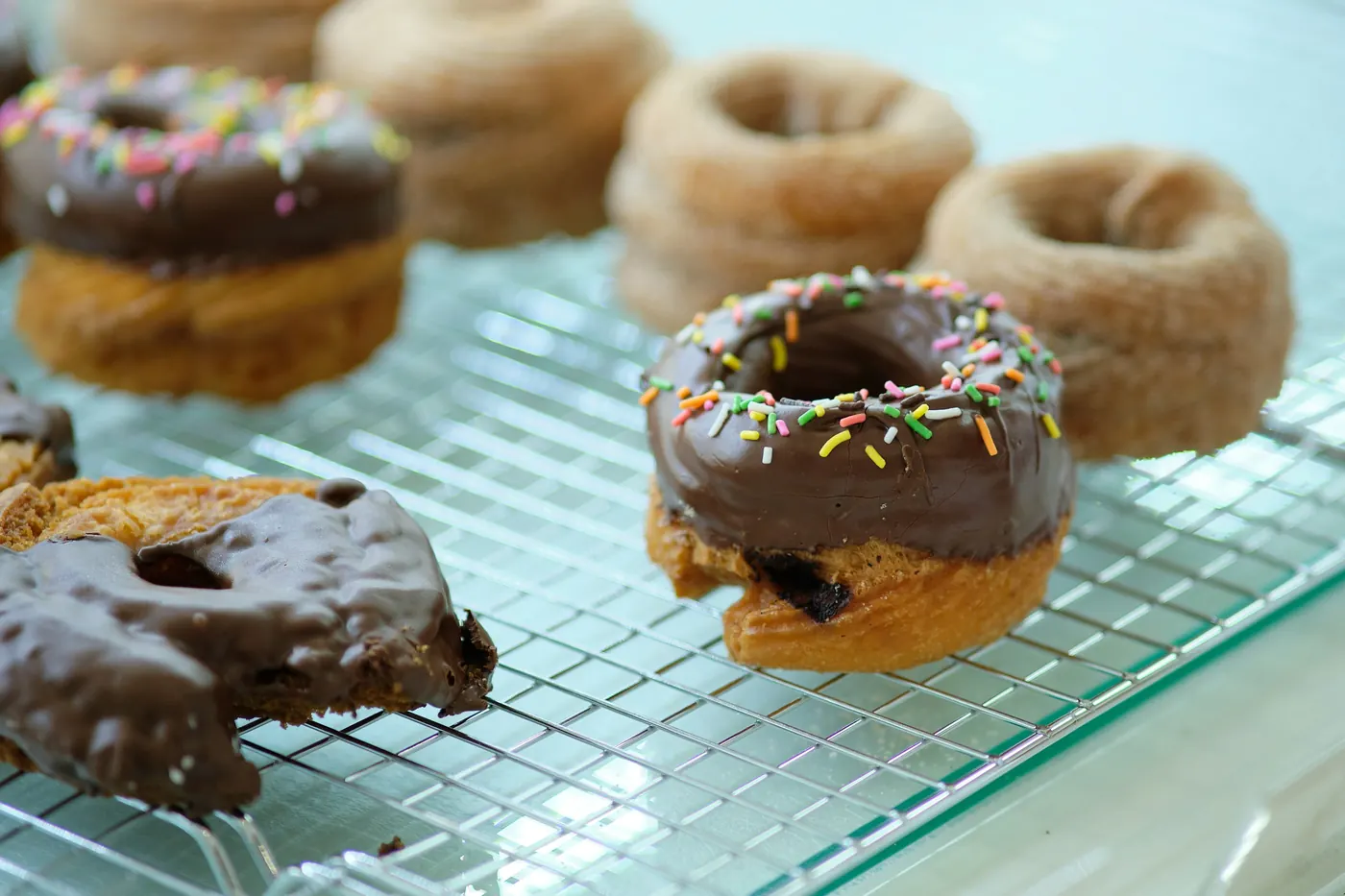
The mini Bundt pan or savarin mold
Both are ring pans already, with a center tube or post that leaves a hole. A mini Bundt bakes a taller, fluted ring that looks more like a small cake than a donut; a small savarin mold bakes a shallower, smooth ring that is closer in shape. Fill them less than you would a muffin cup, since the wells are small, and start checking early; that is general kitchen sense. Your recipe’s bake time is written for its own pan, so use a toothpick rather than the clock.
The countertop donut maker
A plug-in donut maker works like a waffle iron with ring-shaped plates. It bakes small donuts in a few minutes, with no oven to heat. The donuts come out mini and evenly browned on both sides, closer to a donut pan’s shape than any foil trick.
The doughnut cutter
This is a different donut. Instead of pouring batter into a mold, you roll out a firm dough, often a yeast dough, cut rings with a cutter and fry them. You get a classic raised or cake doughnut, but it takes more time and a pot of hot oil. Use a deep, heavy pot, a thermometer, and the oil temperature your recipe gives, and never leave hot oil unattended; that is general kitchen sense.
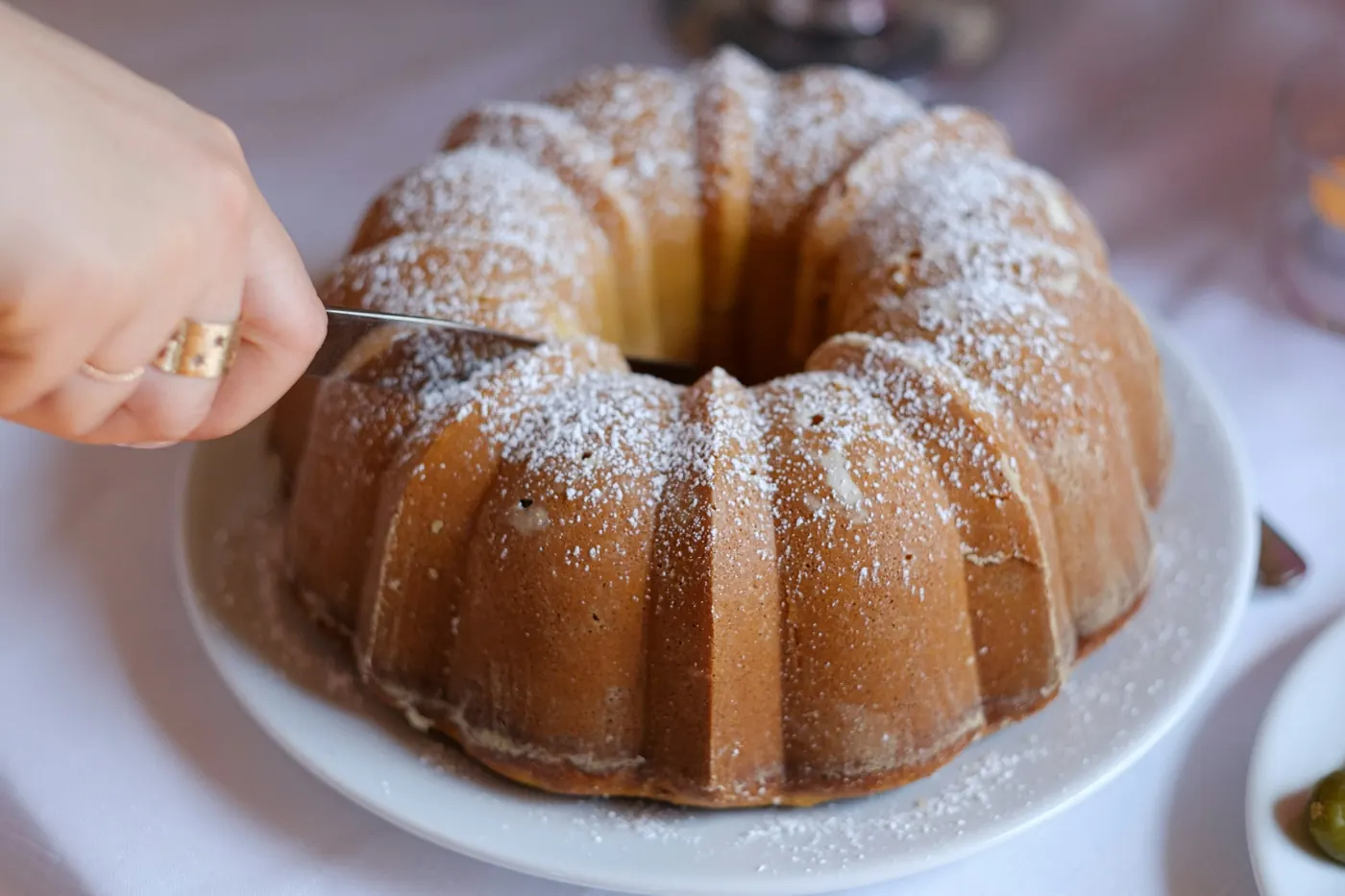
Our picks for the best donut pan alternative
Every pick was in stock with a new lead offer when we checked, and none appears as the same listing on our other pages. None of them is a donut pan.
1. Wilton Silver Non-Stick Muffin Pan, 12-Cup – Donuts With a Foil Trick
If you have a muffin tin, you have a donut pan in waiting. The foil methods from Taste of Home and Tasting Table both start with an ordinary 12-cup tin, and the result is a baked donut with a hole, if not a perfectly round one. If you don’t own a tin, Wilton’s listing describes this one as a 12-cup pan of cold rolled steel that spreads heat evenly, with a nonstick surface made without PFAS, dishwasher safe, with a 5-year limited warranty in the title.
A muffin tin is also the pan you will use most after the donuts are gone. Wilton lists muffins, cupcakes, bite-size frittatas and mini meatloafs. A nonstick, light-colored tin suits donuts, which brown fast in a dark pan; that is general kitchen sense. Grease the foil as well as the tin, since the batter touches both.
Expect smaller, less even donuts than a real donut pan makes, with crinkled edges where the foil folds. If that bothers you, our best donut pan guide covers the dedicated pans, and our muffin pan alternative guide covers what to do if you have no tin either.
Why we like it
- Works with both tested foil methods
- Nonstick, made without PFAS (listing)
- Cold rolled steel spreads heat evenly (listing)
- Dishwasher safe; 5-year limited warranty (listing)
Key specifications
| Model | 191011484 |
|---|---|
| Type | 12-cup muffin pan |
| Material | Cold rolled steel; nonstick made without PFAS |
| Donut size | Smaller than standard, per Taste of Home |
| How it makes the ring | Greased foil insert in each cup |
| Care | Dishwasher safe |
| Sold by (when checked) | Amazon.com |
Why we recommend it
It suits a baker who wants to try baked donuts once or twice and would rather own a pan that bakes muffins every week.
Skip it if you already have a muffin tin; use yours with the foil method.
Pros and cons
Pros
- A pan you will use all year
- Tested methods to follow
- Sold by Amazon.com when checked
Cons
- Donuts are smaller and uneven
- Foil takes time to shape
- Foil leaves crinkled edges
2. Nordic Ware Formed Mini Bundt Pan, 12 Cavity – A Fluted Ring, No Foil
A mini Bundt is a ring pan with a center tube in every well, so the hole comes built in and every donut matches. Nordic Ware’s listing describes twelve 2.5-inch cavities with a total capacity of 3 3/8 cups, in a lighter-weight formed aluminum pan with a premium nonstick interior, made in the USA. It says aluminum heats evenly and won’t rust or warp, and lists brownies, cakes, muffins and cereal treats among its uses.
The result is a taller, fluted ring rather than a flat donut. It takes a glaze beautifully, since the flutes catch it, and it looks finished on a plate. At 2.5 inches across, each one is closer to a mini donut than a full-size one, so a donut recipe will fill more wells than it would donut-pan cavities; that is general kitchen sense.
A fluted pan needs careful greasing in every groove, or the batter sticks in the ridges. The listing doesn’t give care instructions. If you want a full-size Bundt as well, see our best Bundt pan guide, and our Bundt pan alternative guide covers the reverse swap.
Why we like it
- 12 ring-shaped cavities, 2.5 in across (listing)
- Nonstick aluminum, won’t rust or warp (listing)
- Made in the USA (listing)
- Uniform rings with no foil to shape
Key specifications
| Model | 52816AMZ |
|---|---|
| Type | Mini Bundt pan, 12 cavities |
| Material | Formed aluminum; nonstick interior |
| Donut size | 2.5 in across; 3 3/8 cups total |
| How it makes the ring | Center tube in each well |
| Care | Not stated on the listing |
| Sold by (when checked) | Amazon.com |
Why we recommend it
It suits a baker who wants a neat, matching batch of glazed rings for a party and a pan that also makes mini cakes.
Skip it if you want the flat, classic donut shape; a savarin mold or donut maker is closer.
Pros and cons
Pros
- Built-in hole, matching rings
- Flutes hold glaze
- Made in the USA
Cons
- Taller and cakier than a donut
- Grooves need careful greasing
- Care not stated on the listing
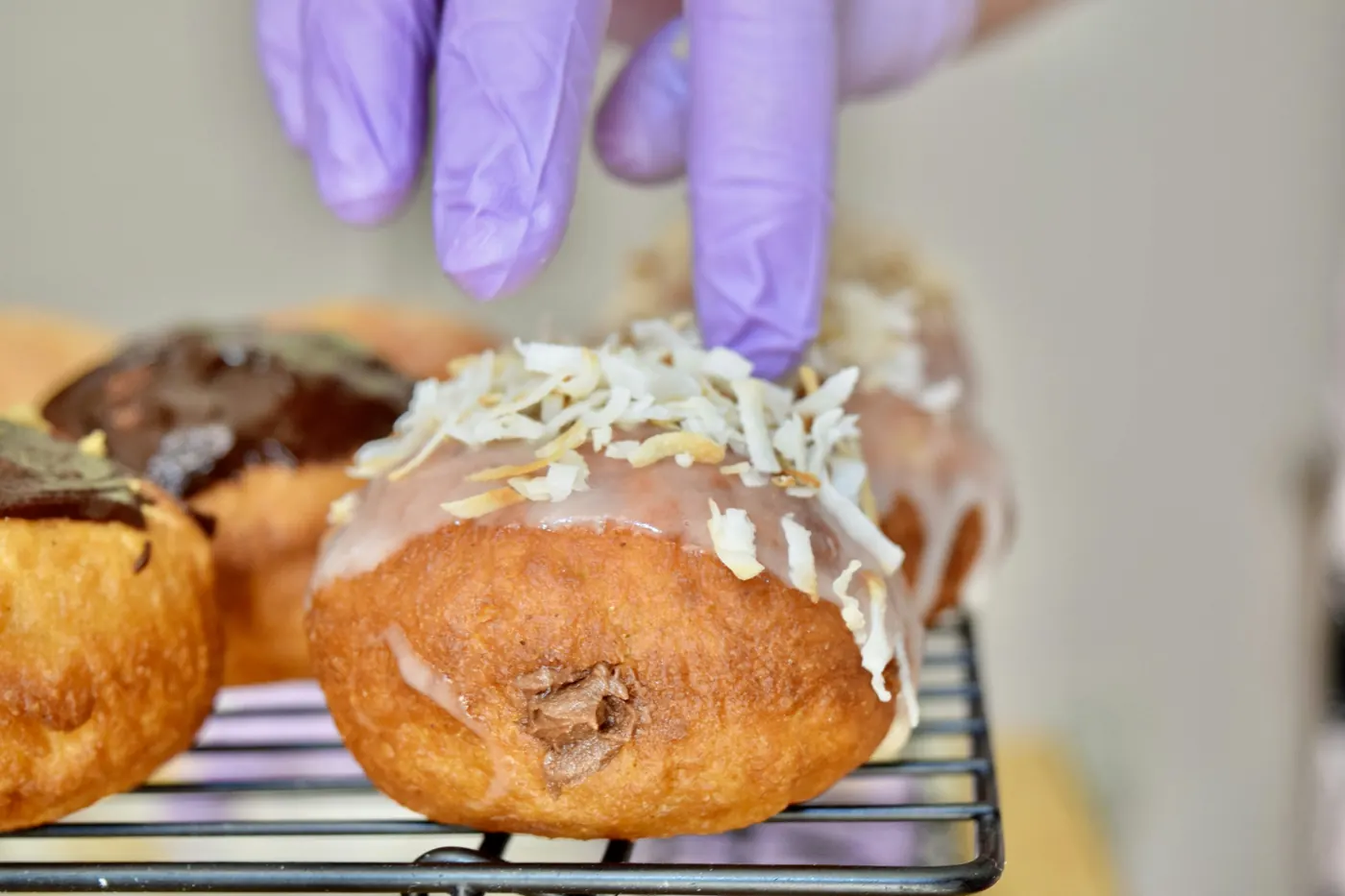
3. Silikomart SF084 Oval Savarin Silicone Mold, 10 Cavities – Small Rings That Pop Out
A savarin is a ring-shaped cake, and a small savarin mold is the nearest thing to a mini donut pan under another name. Silikomart’s listing describes ten oval savarin cavities, each about 2.05 by 2.76 inches and 0.94 inch high, holding 1.59 ounces. It is made in Italy of platinum-based food-grade silicone, rated from -76°F to 446°F, safe in the oven, microwave, fridge and freezer, and dishwasher safe. Silikomart says the glossy surface releases easily and guarantees it for 3,000 uses.
Flexible silicone is a real advantage for small donuts: you push each ring out from below instead of prying it from a metal well. The shallow, smooth shape is close to a baked donut, just oval and mini. Set the mold on a sheet pan before you fill it, since soft silicone is hard to move once full; that is general kitchen sense.
Silicone browns less than metal, so these come out paler, and ten small rings don’t use up a full donut recipe in one bake. It was sold by a third-party seller when we checked. For other silicone molds and pans, see our best silicone muffin pan guide.
Why we like it
- Ten small ring cavities (listing)
- Platinum food-grade silicone, made in Italy (listing)
- Rated -76°F to 446°F; dishwasher safe (listing)
- Guaranteed by Silikomart for 3,000 uses (listing)
Key specifications
| Model | SF084 |
|---|---|
| Type | Silicone savarin mold, 10 cavities |
| Material | Platinum-based food-grade silicone |
| Donut size | 2.05 x 2.76 x 0.94 in; 1.59 oz each |
| How it makes the ring | Center post in each cavity |
| Care | Dishwasher safe; -76°F to 446°F |
| Sold by (when checked) | The Chefs Collection (third-party seller) |
Why we recommend it
It suits a baker who wants bite-size glazed rings for a dessert platter and the easiest possible release.
Skip it if you want full-size donuts or deep browning; metal pans do both better.
Pros and cons
Pros
- Rings pop out from below
- Close to a baked donut’s shape
- Wide temperature range
Cons
- Mini and oval, not round
- Pale browning
- Sold by a third-party seller when checked
4. DSP Mini Donut Maker, 6 Donuts – Donuts in Minutes, No Oven
A donut maker is the fastest way to a ring-shaped donut. DSP’s listing describes a plug-in maker with nonstick ring plates that bakes six mini donuts in about three minutes, with red and green indicator lights that show when it is ready, and a surface that wipes clean. Pipe batter into the lower plate, close the lid and the donut bakes on both sides at once.
That is a real edge over a pan for families: no oven to preheat, a batch every few minutes, and kids can help pipe and decorate. The shape is closer to a donut-pan donut than any foil trick, just smaller.
It is another appliance to store and makes only six small donuts per batch. The listing doesn’t give wattage, ring size or a safety certification, and DSP is a brand sold mainly online; it came from the brand’s own storefront when we checked. If you would rather have a better-known brand, our best Dash appliances guide includes Dash’s mini donut maker.
Why we like it
- Six mini donuts in about three minutes (listing)
- Indicator lights show when it is ready (listing)
- Nonstick plates wipe clean (listing)
- No oven needed
Key specifications
| Model | Mini Donut Maker (no model number stated) |
|---|---|
| Type | Electric mini donut maker |
| Material | Nonstick plates; coating type not stated |
| Donut size | Mini; size not stated |
| How it makes the ring | Ring-shaped heated plates |
| Care | Wipe clean (listing) |
| Sold by (when checked) | DSP Personal Care (brand storefront) |
Why we recommend it
It suits a family that wants quick mini donuts on a weekend morning and would rather not heat the oven.
Skip it if counter and cupboard space are tight; a muffin tin does the job without another appliance.
Pros and cons
Pros
- Fast batches, no oven
- Even, round mini donuts
- Fun for kids to help with
Cons
- Six small donuts per batch
- No wattage or certification stated
- Another appliance to store
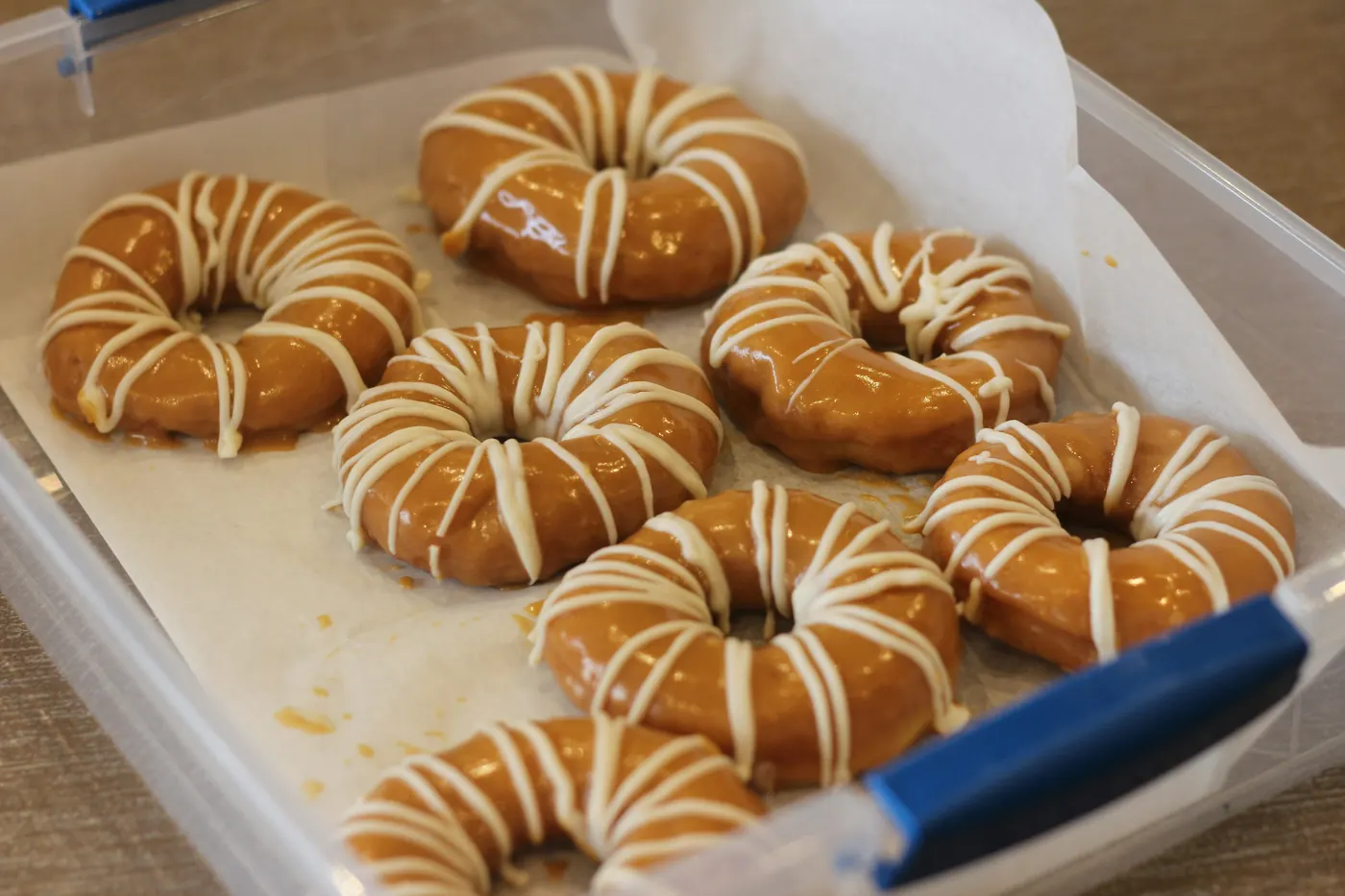
5. Winco CC-2 Stainless Steel Doughnut Cutter, 3 Inch – The Classic Fried Donut
Before donut pans, donuts came from rolled dough and a cutter, and they still do in most donut shops. A doughnut cutter stamps out the ring and the hole in one press. Winco’s listing describes a stainless steel doughnut cutter 3 inches across and 2 1/2 inches deep, from a maker of foodservice equipment, and the listing says Winco products are made for demanding kitchens.
This route gives you a different donut from the other picks: a raised yeast donut or a fried cake donut, light inside and crisp outside, rather than a baked cake ring. You also get the holes, which fry up as a bonus. Dip the cutter in flour between cuts so it releases cleanly; that is general kitchen sense.
The listing says little beyond the size and material: no care instructions, and no word on whether the center cutter comes out. Frying takes a heavy pot, a thermometer and care with hot oil, and yeast dough takes hours to rise. If you want to fry, our best cookie cutters guide covers round cutters you can pair with a small one for the hole.
Why we like it
- Cuts ring and hole in one press
- 3 in across, 2.5 in deep (listing)
- Stainless steel (listing)
- From a foodservice equipment maker
Key specifications
| Model | CC-2 |
|---|---|
| Type | Doughnut cutter |
| Material | Stainless steel |
| Donut size | 3 in across |
| How it makes the ring | Cuts rings from rolled dough |
| Care | Not stated on the listing |
| Sold by (when checked) | Amazon.com |
Why we recommend it
It suits a baker who wants real fried donuts, yeast-raised or cake, and doesn’t mind rolling dough and heating oil.
Skip it if you want baked donuts from a batter; a cutter can’t shape a pourable batter.
Pros and cons
Pros
- Classic fried donuts and holes
- Small, simple, stainless
- Sold by Amazon.com when checked
Cons
- Needs a firm dough and hot oil
- Thin listing details
- Much more time than a pan
Which alternative fits which donut
| What you want | Best alternative | What to watch |
|---|---|---|
| Baked donuts today, nothing to buy | Muffin tin with foil | Smaller, uneven rings |
| Neat glazed rings for a party | Mini Bundt pan | Grease every groove |
| Bite-size donuts for a platter | Small savarin mold | Pale browning in silicone |
| Quick donuts with kids, no oven | Mini donut maker | Six small donuts per batch |
| Raised, fried donuts | Doughnut cutter and a pot of oil | Hot oil safety; time for the dough to rise |
What we left out
We left out donut pans of every kind, metal and silicone, since our best donut pan guide covers them. We left out full-size savarin and ring molds: they bake one big ring that slices like a cake, not donuts, and our Bundt pan alternative guide covers them. We left out mini muffin tins for donut holes; without a center hole, they bake round donut muffins, a different treat. And we left out air fryers: by general kitchen sense, the shaping still comes from a cutter or a mold, both of which are here.
Donut pan alternative questions, answered
What can I use instead of a donut pan?
A muffin tin with a foil insert in each cup, a mini Bundt pan, a small savarin mold, a countertop donut maker, or a doughnut cutter for rolled, fried dough. The muffin tin method is the one with a tested recipe behind it, from Taste of Home.
How do you make a donut hole in a muffin tin?
Shape a greased piece of foil to take up the center of each cup. Taste of Home folds a 5-inch square over one finger and folds the sides up to make a mold; Tasting Table rolls a folded 9-inch square into a tube and stands it in the center. Pipe the batter around it, bake, and remove the foil once the donuts cool.
How long do donuts bake in a muffin tin?
Taste of Home bakes its foil-mold doughnuts at 350°F for 10 to 12 minutes, until a toothpick in the center comes out clean. Other recipes and pans vary, so use the toothpick test rather than the clock.
Can I use a Bundt pan for donuts?
A mini Bundt pan, yes: each well is a small ring with a hole, and the result is a fluted, cake-like donut. A full-size Bundt bakes one large ring cake instead.
Are baked donuts the same as fried?
No. Baked donuts are made from a batter and come out like a tender cake. Fried donuts are cut from a firmer dough, often a yeast dough, and come out lighter inside with a crisp outside. That is general kitchen sense; pick the tool for the donut you want.
Our last word on donuts without a donut pan
You don’t need a donut pan to bake donuts. A muffin tin and some foil make a respectable batch today, a mini Bundt pan or a small savarin mold makes neater rings, and a donut maker makes quick minis with no oven. If you want the fried kind, a cutter and a pot of oil are the classic route. If you bake donuts every month, the dedicated pan in our best donut pan guide is worth the space, and for a piping bag to fill any of these, see our best piping bags.
And when you would rather someone else made dessert, see the menu or call to order.