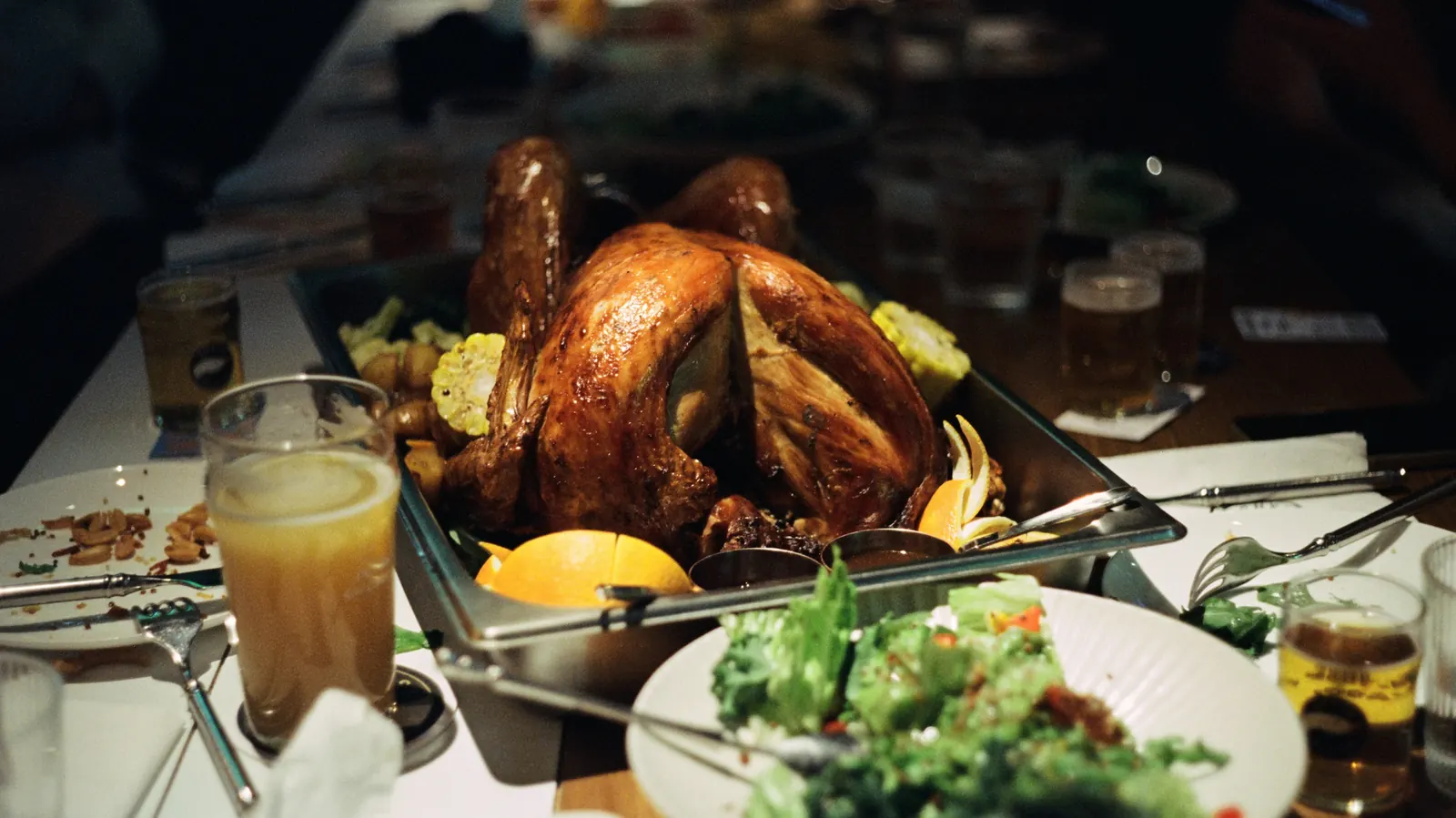
A fat separator lets the grease in pan drippings or stock float to the top, then pours the good juices out from underneath. It is handy at Thanksgiving and when you make stock, but plenty of kitchens get by without one. The same job can be done with a glass measuring cup and the fridge, a plastic bag, a ladle, a skimming scoop or a baster.
This guide covers the fat separator alternatives that genuinely work, how well each one does the job, and what each one can’t do. If you would rather buy the gadget itself, our best fat separator guide reviews eight of them.
Julia’s earns a commission on purchases made through links on this page, at no cost to you. Recommendations are based on what a restaurant kitchen looks for, product specifications and verified buyer reports.
Why cooks skip the fat separator
- The gravy is due now. The turkey is resting, the drippings are in the pan, and there is no separator in the cupboard.
- It’s a twice-a-year tool. Many cooks would rather use a measuring cup and a ladle they reach for every week.
- Stock day. A big pot of stock, pozole or birria broth is far more than a 4-cup separator holds, so skimming the pot or chilling it is the practical route.
- Small amounts. The juices from one chicken or a skillet of browned meat barely reach a separator’s spout.
Quick verdict: the best fat separator alternative
If you have time, the best fat separator alternative is the fridge: chill the drippings or stock in a lidded glass measuring cup such as the Anchor Hocking 2-cup and 4-cup set, and the fat sets on top so you can lift it off. If you need gravy now, use the same cup with a zipper bag inside it: let the cooled drippings settle, snip a bottom corner and let the juices run out, as Tasting Table describes. For a pot of soup or stock on the stove, a Fatsoff Soup Scoop or a plain OXO steel ladle skims the surface, and a Norpro stainless steel baster pulls juices from under the fat in a roasting pan.
Five ways to skim fat, side by side
Our five picks, each for a different way of getting fat off drippings or stock without a separator, with what each maker or listing states.
| Alternative | Method it serves | Material | Speed | Buy on Amazon |
|---|---|---|---|---|
| Chill and lift; holds a bag | Tempered glass, BPA-free lids | Hours to chill | View on Amazon | |

CLEARWARE Gallon Freezer Bags, Double Zipper, 200 CountBest for gravy tonight
|
Settle, snip a corner, drain | 3 mil plastic, BPA-free | Minutes, once cooled | View on Amazon |

Fatsoff Soup Scoop Fat SkimmerBest for a pot of stock
|
Skims fat off a hot pot | Heat-resistant plastic | Right away, no chilling | View on Amazon |

OXO Steel LadleBest tool from the drawer
|
Skims the surface by hand | Stainless steel | Slow; takes some juice | View on Amazon |

Norpro Deluxe Stainless Steel Baster with InjectorBest for roasting pans
|
Draws juice from under the fat | Stainless tube, silicone bulb | 1.5 oz per squeeze | View on Amazon |
Skimming fat without a separator: the methods that work
Every method relies on the same fact a separator does: fat is lighter than the juices, so it rises and sits on top. Tasting Table’s Catherine Nyorani puts it simply: the fat, being lighter, will naturally rise to the top. The methods differ in how you get the two apart and how long you wait.
Chill it and lift it off
Pour the drippings or stock into a container, refrigerate it, and the fat firms into a layer you can lift off with a spoon. It is the most thorough method and costs nothing, but it takes time and fridge space, as Tasting Table notes. It suits stock, soups and braises you make a day ahead. A narrow, tall container gives a thicker fat cap that is easier to lift than a thin film across a wide pan; that is general kitchen sense.
The bag method
This is the fastest way to make gravy without a separator. Tasting Table describes it step by step: let the drippings cool, line a glass measuring cup with a clean plastic bag, pour the drippings in through a strainer, and wait a few minutes for the fat to rise. Then snip a tiny hole in a bottom corner and let the juices run into the cup. Pinch the bag shut just before the fat reaches the hole. The article warns not to cut too much off, or everything pours out too fast.
Skim from the top
A ladle or a skimming scoop takes the fat off the surface of a pot while it is still hot. Tasting Table calls spoon skimming tedious and imprecise, since you either leave some fat or lose some flavorful juice, and that matches most cooks’ experience. A tool with a wide, shallow bowl works better than a deep soup ladle. Tilting the pot slightly so the fat pools on one side helps; that is general kitchen sense.
Draw the juices from below
A baster turns the job upside down. Tilt the roasting pan so the drippings pool in a corner, push the tip of the baster through the fat to the bottom, and draw up the juices underneath. It works for small amounts and leaves the fat behind in the pan. It is slow for a large batch, since a baster holds only an ounce or two at a time. This is general kitchen sense.
Cooling stock and soup safely, from Nebraska Extension
The chilling method means cooling a large amount of hot liquid, so the advice from Nebraska Extension’s guide to serving soup safely, which cites USDA, matters here. It says not to put a large pot of hot soup straight into the refrigerator, and to speed cooling by moving soup into shallow containers no more than two inches deep, or chilling it in an ice or cold water bath first. It says to refrigerate promptly and not to let soup sit at room temperature for more than two hours. Loosely covered food can go into the fridge while still warm, and should be covered once cool. It advises eating refrigerated soup within 3 to 4 days or freezing it, and reheating until steaming hot throughout, at least 165°F.
That pulls against the tall-container tip above. For a big pot of stock, split it into several smaller containers so each one cools quickly, then lift the fat from each. For a cup or two of drippings, a measuring cup in the fridge cools fast enough.
Our picks for the best fat separator alternative
Every pick was in stock with a new lead offer when we checked, and none appears as the same listing on our other pages. Two share a model with picks on other pages, through different listings; we say why under each one. None of them is a fat separator.
1. Anchor Hocking Lidded Glass Measuring Cup Set, 2-Cup and 4-Cup – Chill It, Bag It, Pour It

A glass measuring cup is the one tool that serves two of the best methods. With a lid, it takes drippings or stock to the fridge so the fat can set on top. Lined with a bag, it holds the bag upright for the snip-the-corner method Tasting Table describes. Anchor Hocking’s listing describes a 2-cup and a 4-cup glass measuring cup with red BPA-free lids that seal for refrigerator storage, red markings in cups, ounces and milliliters that it says won’t fade, and tempered glass that is dishwasher, microwave and fridge safe.
Clear glass shows you the fat line, so you know how much there is before you lift it off, and the markings tell you how much defatted juice you have for the gravy. The 2-cup size suits the drippings from a chicken; the 4-cup suits a turkey or a small batch of stock.
We also list this same cup without lids on our best liquid measuring cups guide; this lidded listing is the one that suits chilling, which is why we chose it. Let very hot drippings cool a little before pouring them into glass, and don’t move hot glass straight into an ice bath; that is general kitchen sense, since the listing gives no temperature limits.
Why we like it
- Lids seal for refrigerator storage (listing)
- Clear glass shows the fat line
- Markings in cups, ounces and milliliters (listing)
- Dishwasher, microwave and fridge safe (listing)
Key specifications
| Model | 14856ECOM |
|---|---|
| Type | Glass measuring cups with lids |
| Material | Tempered glass; BPA-free lids |
| Size | 2 cups and 4 cups |
| How it helps | Chilling; holds a bag for draining |
| Care | Dishwasher, microwave and fridge safe |
| Sold by (when checked) | Amazon.com |
Why we recommend it
It suits a cook who makes gravy a few times a year and stock now and then, and wants one tool that does both jobs and earns its space the rest of the year.
Skip it if you already own a glass measuring cup; add any lid or plate and it does the same job.
Pros and cons
Pros
- Works for chilling and the bag method
- Useful every day for measuring
- Sold by Amazon.com when checked
Cons
- Chilling takes hours
- Glass needs care with very hot liquid
- Same cups as a pick on another page
2. CLEARWARE Gallon Freezer Bags, Double Zipper – A Throwaway Separator
A clear plastic bag works as a bottom-pour separator you throw away afterward, fat and all. Set it inside a measuring cup, pour in the cooled drippings, let the fat rise, snip a bottom corner and let the juices drain out, pinching it shut as the fat gets close. CLEARWARE’s listing describes 200 gallon bags, 3 mil thick, with double zipper seals, leakproof and BPA-free, in four boxes of 50.
The thicker plastic is the reason to choose a freezer bag over a thin sandwich bag: it holds its shape in the cup and is less likely to split when full. Clear plastic lets you watch the fat line as it drops toward the hole. When you are done, zip the bag shut and throw away the fat in it, which keeps grease out of the sink.
Let the drippings cool before they go in. Tasting Table’s method starts with cooling, and the listing gives no heat rating for the bags. CLEARWARE is a brand sold mainly on Amazon, and its listing frames these as storage and freezer bags, so this use is a kitchen method, not maker guidance. Our best food freezer bags guide covers other brands for everyday storage.
Why we like it
- 3 mil thick freezer bags (listing)
- Clear, so you can watch the fat line
- BPA-free and leakproof (listing)
- 200 bags for storage the rest of the year (listing)
Key specifications
| Model | Not stated |
|---|---|
| Type | Gallon freezer bags, double zipper |
| Material | Plastic, 3 mil, BPA-free |
| Size | About 10.6 x 11 in; 200 bags |
| How it helps | Drain juices from a snipped corner |
| Care | Single use for this method |
| Sold by (when checked) | Clear Goods (third-party seller) |
Why we recommend it
It suits a cook making gravy on the day, with the turkey resting and no time to chill the drippings.
Skip it if you are working with chunky stew or very hot liquid; strain and cool it first, or use a ladle on the pot.
Pros and cons
Pros
- Fast once the drippings settle
- Fat goes in the trash, not the sink
- Large box covers everyday storage too
Cons
- Drippings must cool first
- A big snip pours too fast
- Amazon-first brand, third-party seller
3. Fatsoff Soup Scoop Fat Skimmer – Skims a Hot Pot, No Chilling
A separator is no help with a full stockpot; you can’t pour 12 quarts through a 4-cup pitcher. A skimming scoop works in the pot itself. Fatsoff’s listing describes the Soup Scoop as a tool that separates and traps floating fat from broths, soups and stews, made from sturdy heat-resistant plastic, dishwasher safe, and designed and made in the USA by its original inventor. It says it removes fat right away without waiting for the broth to chill, and works in large commercial pots or pots as small as 5.5 inches.
That makes it the best pick here for big batches of chicken stock, pozole or a pot of beans, where fat collects across a wide surface. Skim while the pot sits off the boil, so the fat stays on top rather than being churned back in; that is general kitchen sense.
The listing doesn’t explain exactly how the scoop traps the fat or give a heat limit for the plastic, and the brand’s website no longer loads, so this pick rests on the listing. Plastic shouldn’t rest against the hot side of the pot or sit in a pan over a burner; that is general kitchen sense. For the pot itself, see our best stock pot guide.
Why we like it
- Made for skimming fat from broths and stews (listing)
- Works hot, with no chilling (listing)
- Made in the USA (listing)
- Dishwasher safe (listing)
Key specifications
| Model | FSS-1 |
|---|---|
| Type | Fat skimming scoop |
| Material | Heat-resistant plastic (limit not stated) |
| Size | Fits pots from 5.5 in up (listing) |
| How it helps | Skims floating fat from a hot pot |
| Care | Dishwasher safe |
| Sold by (when checked) | Betzen Manufacturing |
Why we recommend it
It suits a cook who makes big pots of stock, soup or pozole and wants the fat off the same day.
Skip it if you mostly make gravy from a roasting pan; the bag or baster suits small amounts better.
Pros and cons
Pros
- Works in a full pot
- No waiting for the fridge
- Made in the USA
Cons
- Heat limit not stated
- Rests on the listing; no maker site
- A single-purpose tool
4. OXO Steel Ladle – The Skimmer You Already Use
A ladle is the oldest fat skimmer there is. Rest the bowl just below the surface where the fat collects, let the fat flow over the rim, and lift it out. OXO’s listing describes this one as a sturdy stainless steel ladle with an angled head that helps scoop and minimizes mess, a non-slip handle, and two pour spouts so left- and right-handed cooks can pour cleanly.
The spouts matter here: they let you tip skimmed fat into a waste cup in a thin stream instead of slopping it, and they help when you ladle the defatted stock out later. Steel won’t mind a hot pot, and it goes in the dishwasher, per the listing title.
A ladle is the least precise method on this page. As Tasting Table notes, spoon skimming tends to leave some fat or take some juice. It is fine for a quick tidy-up of a pot of soup, less so for clear gravy. Our best ladle guide covers other ladles, and this model is not one of its picks.
Why we like it
- Stainless steel, fine in a hot pot (listing)
- Two pour spouts for either hand (listing)
- Angled head helps scoop (listing)
- Dishwasher safe (listing)
Key specifications
| Model | 3120500 |
|---|---|
| Type | Deep ladle |
| Material | Stainless steel; non-slip handle |
| Size | Not stated |
| How it helps | Skims fat off the surface |
| Care | Dishwasher safe |
| Sold by (when checked) | Amazon.com |
Why we recommend it
It suits a cook who wants one tool for serving soup and taking the worst of the fat off it.
Skip it if you want clear, fat-free gravy; chilling or the bag method does that better.
Pros and cons
Pros
- Everyday tool, not a gadget
- Spouts pour skimmed fat neatly
- Sold by Amazon.com when checked
Cons
- Least precise method
- Deep bowl takes juice with the fat
- Bowl size not stated
5. Norpro Deluxe Stainless Steel Baster with Injector – Pulls Juices From Under the Fat
A baster reaches under the fat instead of skimming over it. Tilt the roasting pan, push the tip to the bottom of the pool and draw up the juices, leaving the fat behind. Norpro’s listing describes a stainless steel tube that won’t crack, chip or melt, a silicone bulb rated to 450°F, a 1.5-ounce capacity, a screw-on injecting needle and a cleaning brush, and says it draws up hot pan drippings with strong suction.
Stainless steel and a heat-rated bulb are the reasons to choose this baster for hot drippings straight from the oven. The same model appears on our best turkey baster guide through a different listing; we chose it again because it is the stainless, heat-rated option sold by Amazon.com. The tube is opaque, so you can’t see the fat line inside it; draw slowly and stop when the tip nears the fat layer. That is general kitchen sense.
At 1.5 ounces a squeeze, it is slow for a big turkey’s worth of drippings. It suits the juices from a chicken or a small roast, or topping up a gravy one squeeze at a time. It comes apart fully for cleaning with the brush, per the listing.
Why we like it
- Stainless tube won’t crack or melt (listing)
- Silicone bulb rated to 450°F (listing)
- Comes apart for cleaning; brush included (listing)
- Injector needle for marinades (listing)
Key specifications
| Model | 5898 |
|---|---|
| Type | Baster with injector |
| Material | Stainless steel tube; silicone bulb |
| Size | 10.5 in long; 1.5 oz capacity |
| How it helps | Draws juices from under the fat |
| Care | Disassembles; cleaning brush included |
| Sold by (when checked) | Amazon.com |
Why we recommend it
It suits a cook who roasts chickens and small cuts and wants a little clean juice for a pan sauce without pouring the whole pan out.
Skip it if you need to defat a quart or more; the bag method is far faster.
Pros and cons
Pros
- Works right in the roasting pan
- Heat-rated for hot drippings
- Also bastes and injects
Cons
- Slow for large amounts
- Can’t see the fat line in the tube
- Same model as a pick on another page
Which method fits which job
| What you are making | Best way to skim the fat | What to watch |
|---|---|---|
| Turkey gravy on the day | Bag in a measuring cup | Cool the drippings first; snip small |
| Stock or soup made ahead | Chill, then lift the fat | Shallow containers; refrigerate promptly |
| A big pot of pozole or stock, now | Skimming scoop or ladle | Some fat or juice is always lost |
| Pan sauce from a roast chicken | Baster from under the fat | Slow for large amounts |
| Browned ground meat | Tilt the pan and spoon it off | Don’t pour grease down the drain |
What we left out
We left out fat separators of every kind, including gravy pitchers with low spouts and bottom-release cups, since our best fat separator guide covers them. We left out fine-mesh skimmers: they catch foam and solid bits well, but liquid fat runs straight through the mesh, so they don’t do this job on hot liquid (general kitchen sense). Our best fine mesh strainer guide covers straining, which is still worth doing before the bag method. We also left out the paper towel and lettuce-leaf tricks; America’s Test Kitchen calls them messy, since they need fresh replacements every few strokes.
Fat separator alternative questions, answered
What can I use instead of a fat separator?
A plastic bag in a measuring cup, the fridge, a ladle or skimming scoop, or a baster. For gravy on the day, the bag method Tasting Table describes is the fastest. For stock made ahead, chilling and lifting off the fat is the most thorough.
How do I get fat off gravy without a separator?
Cool the drippings, strain them into a clean bag set in a glass measuring cup, wait a few minutes for the fat to rise, then snip a small hole in a bottom corner and drain the juices. Pinch the bag shut before the fat reaches the hole.
How long does it take for fat to rise to the top?
For pan drippings, a few minutes of standing, per Tasting Table. For a firm layer you can lift off, chill the liquid; how long depends on the amount and the container. Follow Nebraska Extension’s advice to cool it in shallow containers and refrigerate promptly.
Can I put hot stock straight into the fridge?
Not a large pot of it. Nebraska Extension says not to put a large pot of hot soup directly into the refrigerator, but to divide it into shallow containers no more than two inches deep, or chill it in an ice or cold water bath first. Loosely covered food can go in while still warm.
What do I do with the fat I skim off?
Let it cool and solidify, then throw it away in the trash, or keep it covered in the fridge for cooking. Don’t pour it down the sink. This is general kitchen sense.
Our last word on skimming fat
You don’t need a fat separator to get clean gravy or clear stock. A glass measuring cup and a bag handle gravy on the day; the fridge handles anything you make ahead; and a skimming scoop, a ladle or a baster cover the pot or the pan in between. If you make gravy every weekend and want the proper tool, start with our best fat separator guide, and to serve the result, our best gravy boat guide. For a broth where skimming matters, see pozole vs menudo.
And when you would rather someone else made the stock, see the menu or call to order.