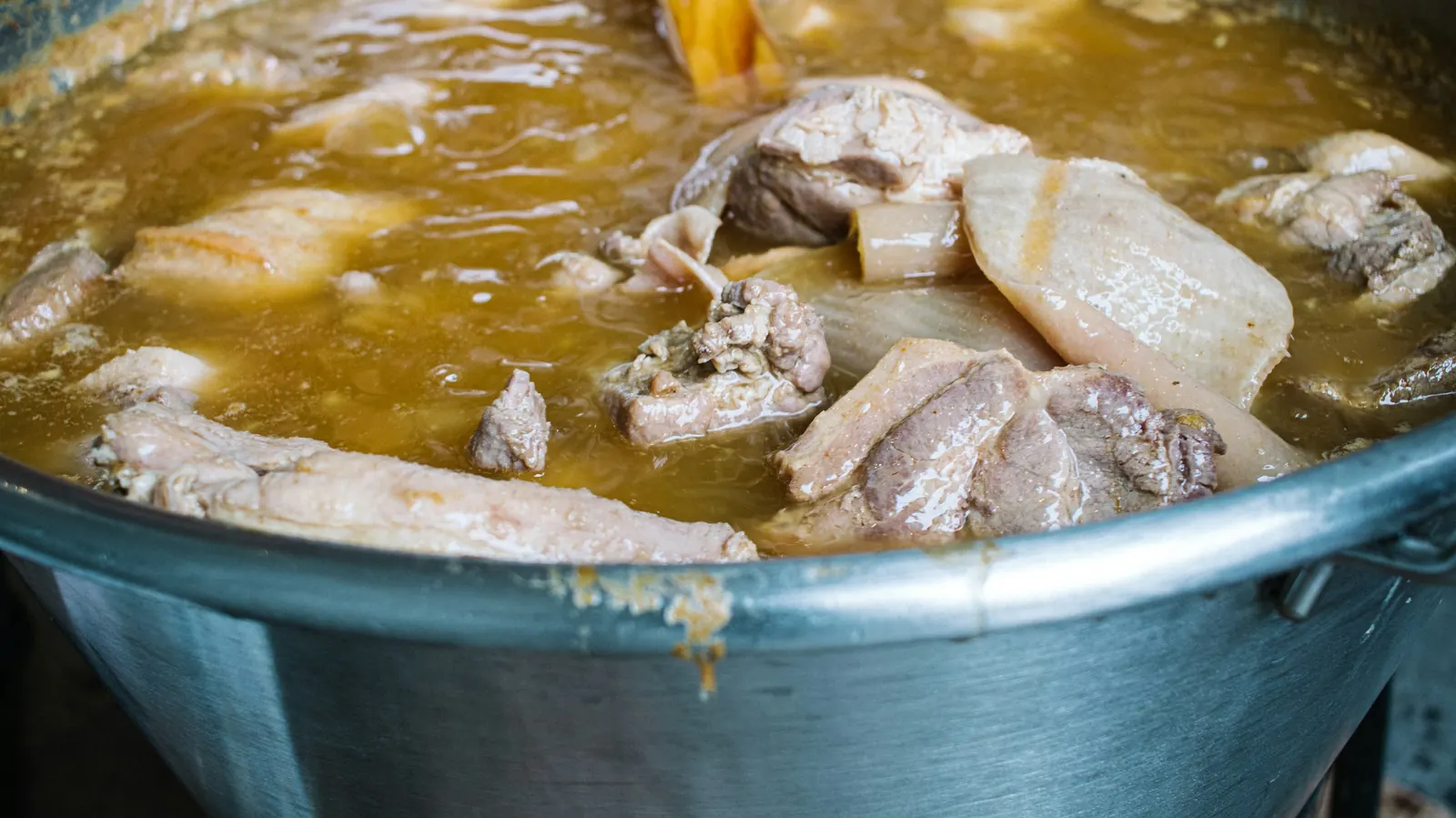
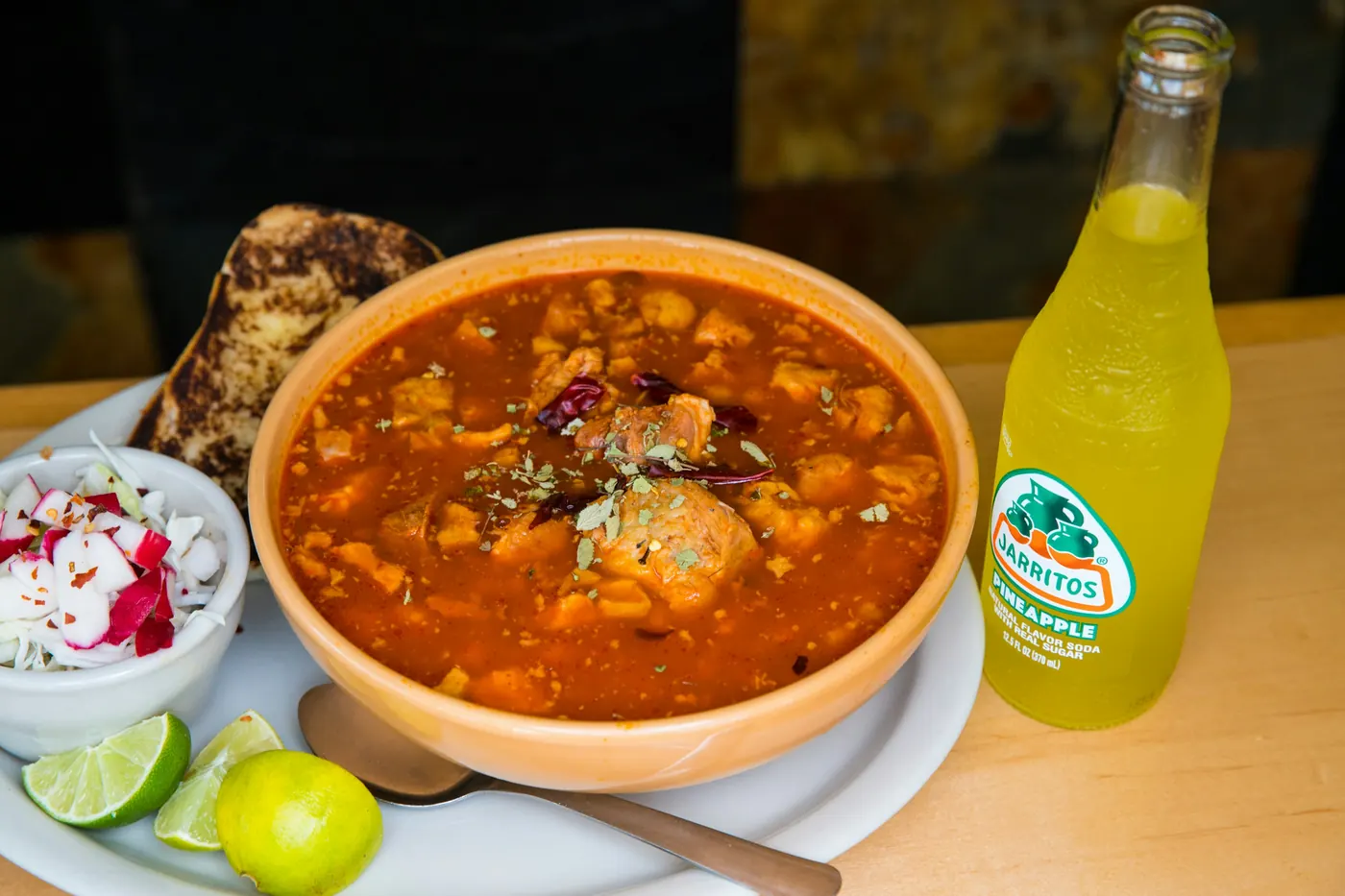
A stock pot is the largest pot in most kitchens, and it does simple work: it holds a lot of liquid and keeps it at a steady simmer. That makes it easy to overspend on one, and just as easy to buy one that is too small, too thin or too large for your stove. In a Mexican kitchen it gets plenty of use, from pozole and caldo de res to big batches of beans.
The main decision is between a fully clad pot and a pot with a disc base, and after that it comes down to size. This guide explains both, then names eight pots from 8 to 20 quarts from makers such as Tramontina, Made In, Demeyere and Vollrath.
Julia’s earns a commission on purchases made through links on this page, at no cost to you. Recommendations are based on what a restaurant kitchen looks for, product specifications and verified buyer reports. We have not used these products ourselves.
Quick verdict: which stock pot to buy
For most home kitchens, the best stock pot is the Tramontina Gourmet 12-Quart: it has a stainless body and a tri-ply disc base that works on induction, and its 16-quart sibling was a Serious Eats pick. If you brown a lot in the pot, spend more on the fully clad Made In 12-Quart. For big family batches, the Farberware Classic 16-Quart gives you more room in a plain design.
The rest of this page explains why, and which of these suits your stove and your cooking.
Five stock pots side by side
Our five standout picks, one for each kind of kitchen, with the specifications each maker or listing states. All eight pots are reviewed in full below.
| Pot | Best for | Capacity & build | Heat design | Buy on Amazon |
|---|---|---|---|---|
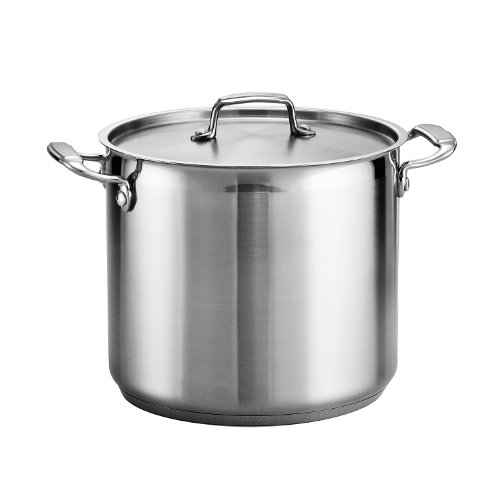
Tramontina Gourmet 12-Quart Stock PotBest overall
|
Most home kitchens | 12 qt, 18/10 stainless | Tri-ply disc base | View on Amazon |

Made In 12-Quart Stainless Clad Stock PotBest fully clad
|
Browning in the pot | 12 qt, 5-ply stainless clad | Fully clad body | View on Amazon |

Farberware Classic 16-Quart Stock PotBest 16-quart
|
Big family batches | 16 qt, stainless | Full cap base | View on Amazon |
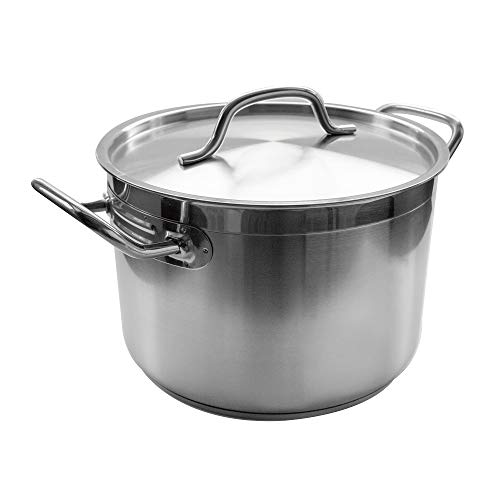
Update International 20-Quart Stock PotBest for a crowd
|
Parties and big events | 20 qt, stainless | 3-ply bottom, NSF-listed pot | View on Amazon |

Calphalon Premier 12-Quart Nonstick Stock PotBest nonstick
|
Chili and thick stews | 12 qt, hard-anodized nonstick | Induction not listed | View on Amazon |
Product images from Amazon. Capacities and features are as stated by each maker or listing; check the listing before you buy.
Our picks for the best stock pot
We list these by how well they suit a home kitchen, starting with the size most cooks should buy. None of them repeats an exact listing from our soup pot reviews, which lean toward everyday sizes.
1. Tramontina Gourmet 12-Quart Stock Pot – Disc Base, Stainless Lid
This is the size most cooks should buy, in the build that makes sense for a pot that mostly holds liquid. The body is 18/10 stainless steel, and an impact-bonded tri-ply base under it spreads heat across the bottom. Tramontina’s listing covers every stovetop including induction, an oven limit of 500°F and the dishwasher.
Serious Eats ran 19 stockpots through boiling, handling and browning trials for its 2023 review. It chose the 16-quart version of this Tramontina as its best large pot and the best value at that size, and said it shares the build of the 12-quart, which was also in the trial. The same review is honest about the cost of a disc base: the Tramontina scorched slightly when browning vegetables, so it needs more attention at that stage than a fully clad pot.
For stock, beans and pozole that is a fair trade. Sweat your onions over medium heat, stir often, and the rest of the job is a simmer.
Why we like it
- The 16-quart sibling was the Serious Eats pick for large pots
- Impact-bonded tri-ply base works on induction
- Stainless lid and cast riveted handles
- Oven safe to 500°F and dishwasher safe
- Lifetime warranty on the listing
Key specifications
| Model | 80120/000DS |
|---|---|
| Capacity | 12 quarts |
| Material | 18/10 stainless steel |
| Heat construction | Impact-bonded tri-ply base |
| Lid | 18/10 stainless steel |
| Stovetops | All, including induction |
| Oven safe | 500°F |
| Dishwasher safe | Yes |
Why we recommend it
Buy this one if you want a single large pot for soup, stock, tamale fillings and boiling corn, and you would rather put the money into the ingredients.
Skip it if you brown a lot of meat and vegetables in the pot itself. A fully clad pot such as the Made In below is more forgiving.
Pros and cons
Pros
- Sensible size for most homes
- Works on every stovetop
- Lid and pot both stainless
- Goes in the dishwasher
Cons
- Disc base means the walls do not carry much heat
- The 16-quart sibling scorched slightly in the Serious Eats browning trial
- No measuring marks stated on the listing
2. Made In 12-Quart Stainless Clad Stock Pot – Five Layers, Wall to Wall
Made In builds this pot from five layers of metal with an aluminum core, so the walls take part in the heating as well as the base. The listing says it is crafted in Italy, and a 430 stainless layer makes it work on induction.
It is also an unusual shape. The listing gives a total diameter of 12.44 inches and a depth of 6.5 inches, so this pot is much wider than it is tall. That gives you a broad floor for browning chicken pieces or chiles before the water goes in, and a broad surface for reducing. It also means the pot needs a large burner, and more liquid evaporates over a long simmer than it would from a tall, narrow pot.
This is the 12-quart size of the Made In stock pot on our soup pot page. We list it here because the 8-quart there is smaller than most stock batches need, and 12 quarts is the size this guide is about.
Why we like it
- Five-layer clad body with an aluminum core
- Wide floor for browning, at 12.44 inches across
- Induction ready
- Crafted in Italy, per the listing
Key specifications
| Model | COOK-12L-STK-ISS |
|---|---|
| Capacity | 12 quarts |
| Material | 5-ply stainless clad |
| Heat construction | Fully clad, aluminum core |
| Lid | Included, material not stated |
| Stovetops | All, including induction |
| Oven safe | Not stated |
| Dishwasher safe | Not stated |
Why we recommend it
Buy this if the pot will double as a browning pan, since Serious Eats found that full cladding handled browning best in its trials.
Skip it if you have small burners or a narrow cabinet. Check the 14.5-inch handle-to-handle width first.
Pros and cons
Pros
- Heat comes up the walls as well as the base
- Wide floor for browning
- Induction compatible
Cons
- Wide shape needs a large burner
- More evaporation than a tall pot
- Oven limit, dishwasher use and warranty are not stated on the listing
3. Demeyere Essential 5 8-Quart Deep Stock Pot – Five-Ply From Belgium

Serious Eats argues that 8 quarts is close to a Dutch oven in volume, and for many kitchens that is right. A smaller stock pot still earns a place if you lack storage, cook for two or three, or want a deep pot you can lift when it is full.
Demeyere, the Belgian maker, gives this one a five-ply build for heat conduction and retention, and says the flat base will not warp when heated. The handles are riveted 18/10 stainless, there is a pouring edge at the rim, and the listing rates it to 500°F on all cooktops including induction.
If you already own a large Dutch oven, compare capacities first. Our large Dutch oven guide covers that side of the choice.
Why we like it
- Five-ply construction, made in Belgium
- Flat base that the maker says will not warp
- Pouring edge at the rim
- Oven safe to 500°F
Key specifications
| Model | 20394 |
|---|---|
| Capacity | 8 quarts |
| Material | 5-ply stainless steel |
| Heat construction | 5-ply, per the listing |
| Lid | Included, fitted lid |
| Stovetops | All, including induction |
| Oven safe | 500°F |
| Dishwasher safe | Not stated |
Why we recommend it
Buy this if you want one deep, well-built pot you can carry to the sink, and your batches stay small.
Skip it if you make stock in quantity or cook for a crowd. Eight quarts fills up quickly once the bones go in.
Pros and cons
Pros
- Deep shape for its size
- Easier to lift when full than the larger pots here
- Flat, induction-ready base
Cons
- Small for true stock batches
- Close to a Dutch oven in volume
- Dishwasher use and warranty are not stated on the listing
4. Cuisinart Contour 12-Quart Stockpot – Watch It Through the Glass

Many large pots come with a metal lid, and you lift it to see what is happening. This Cuisinart has a flat tempered glass cover with a stainless rim, so you can check a simmer without letting the heat out.
The base is pure aluminum encapsulated in stainless, which puts it in the same disc-base family as the Tramontina. The stainless surface will not react with food, and Cuisinart backs the pot with a limited lifetime warranty.
Serious Eats preferred metal lids to glass in its review, so treat the glass as a convenience and not an upgrade. The listing does not state stovetop compatibility or an oven limit, so confirm them before you order, especially if you cook on induction.
Why we like it
- Tempered glass cover with a stainless rim
- Aluminum-encapsulated base
- Stainless surface that does not react with food
- Limited lifetime warranty
Key specifications
| Model | 466-26P1 |
|---|---|
| Capacity | 12 quarts |
| Material | Stainless steel |
| Heat construction | Aluminum-encapsulated base |
| Lid | Tempered glass, stainless rim |
| Stovetops | Not stated |
| Oven safe | Not stated |
| Dishwasher safe | Not stated |
Why we recommend it
Buy this if you like to watch a pot of beans or a slow caldo without lifting the lid every few minutes.
Skip it if you cook on induction and cannot confirm compatibility, or you would rather have a lid that survives a drop on a tile floor.
Pros and cons
Pros
- See the simmer without lifting the lid
- Non-reactive stainless surface
- Encapsulated base spreads heat
Cons
- Glass lid is more fragile than steel
- Stovetop, oven and dishwasher details are not on the listing
5. Farberware Classic 16-Quart Stock Pot – Big Capacity, Plain Build
Sixteen quarts is about the largest pot most home burners can handle, according to Serious Eats, and this is a plain way to get there. Farberware uses a full cap base with a thick aluminum core wrapped in stainless, and the listing title says it works on induction.
The stainless lid is the self-basting type, and the pot goes in the dishwasher if yours can fit it. The oven limit is 350°F, lower than most pots here. That matters little for a stock pot, but it does rule out finishing something in a hot oven.
Our soup pot page carries the 6-quart from this Classic line. We include the 16-quart because it answers a different need.
Why we like it
- Full cap base with a thick aluminum core
- Self-basting stainless lid
- Induction compatible, per the listing title
- Limited lifetime warranty
Key specifications
| Model | 50009 |
|---|---|
| Capacity | 16 quarts |
| Material | Stainless steel |
| Heat construction | Full cap base, aluminum core |
| Lid | Stainless, self-basting |
| Stovetops | Induction named in the title; others not stated |
| Oven safe | 350°F |
| Dishwasher safe | Yes |
Why we recommend it
Buy this if you cook for big family meals, tamale filling days or a weekend pot of menudo, and a 12-quart keeps falling short.
Skip it if you need to move it full by yourself. Sixteen quarts of water alone weighs about 33 pounds.
Pros and cons
Pros
- Large capacity
- Base built for quick, even heat
- Dishwasher safe
Cons
- Oven limit of only 350°F
- Heavy and awkward when full
- Base-only heating, like other disc pots
6. Update International 20-Quart Stock Pot – NSF-Listed for a Crowd
Update International sells foodservice gear, and this pot looks the part: 20 quarts of stainless with large riveted handles and a heavy 3-ply bottom. The listing says the pot is induction ready and NSF listed, while the cover that comes with it is not NSF listed.
A 20-quart pot goes past the size Serious Eats considers practical on a home burner. Water alone in a full pot weighs about 42 pounds, so plan to ladle it out in place and not carry it.
This pick rests on the listing and the maker’s details. The listing gives no oven limit, dishwasher guidance or warranty, so ask the seller if those matter to you.
Why we like it
- 20 quarts for large batches
- Heavy 3-ply bottom
- Induction ready
- Pot is NSF listed, per the listing
- Cover included
Key specifications
| Model | SPS-20 |
|---|---|
| Capacity | 20 quarts |
| Material | Stainless steel |
| Heat construction | 3-ply bottom |
| Lid | Stainless cover, not NSF listed |
| Stovetops | Induction ready; others not stated |
| Oven safe | Not stated |
| Dishwasher safe | Not stated |
Why we recommend it
Buy this if you make pozole for a big party a few times a year and need one pot that holds it all.
Skip it if you cook on a standard home range most of the time. Check your burner size and your stove maker’s guidance on weight first.
Pros and cons
Pros
- Very large capacity
- Foodservice-style handles
- Works on induction
Cons
- About 42 pounds of water when full
- Too large for many home burners
- Few care details on the listing
7. Vollrath Wear-Ever 20-Quart Aluminum Stock Pot – Tall, Narrow, Restaurant Style

This is the plain aluminum style sold to commercial kitchens. Vollrath says the tall, narrow shape lets liquid bubble up through the food to pull out flavor, and that heat spreads along the base and the sidewalls. The handles are solid welded aluminum for easy interior cleaning, and the rims are double thick to stay round for a better cover fit.
Aluminum has real limits, and Serious Eats avoided it for two of them: it reacts with acids and it can warp. Long tomato or tomatillo simmers are better done in stainless. Plain aluminum also will not work on an induction cooktop, and the listing does not mention a lid, so expect to buy a cover separately.
For a plain chicken or beef stock on a gas burner, those limits matter less.
Why we like it
- Tall shape suited to stock
- Welded handles leave a clean interior
- Double-thick rims hold their shape
- Limited lifetime warranty
Key specifications
| Model | 67520 |
|---|---|
| Capacity | 20 quarts |
| Material | Aluminum |
| Heat construction | Heat spreads along base and sidewalls |
| Lid | Not stated |
| Stovetops | Not stated; plain aluminum does not work on induction |
| Oven safe | Not stated |
| Dishwasher safe | Not stated |
Why we recommend it
Buy this if you make plain stock in quantity on gas and want the shape and build that foodservice suppliers sell.
Skip it if you cook acidic foods or use induction. Choose one of the stainless pots above.
Pros and cons
Pros
- Tall, narrow shape for stock
- No rivets inside
- Long-established foodservice line
Cons
- Reacts with acidic food
- No induction
- Serious Eats warns that aluminum can warp
- Lid not stated on the listing
8. Calphalon Premier 12-Quart Nonstick Stock Pot – Stacks and Cleans Up Fast
A nonstick stock pot makes sense for thick food that likes to catch on the bottom, such as chili or a heavy stew. This Calphalon has a hard-anodized body with a three-layer nonstick interior and a tempered glass lid.
The Space-Saving line stacks and nests, and Calphalon says that saves up to 30 percent of cabinet space, which helps with a pot this large. The listing rates it for the dishwasher and to 450°F in the oven, and gives a lifetime warranty.
Serious Eats avoided nonstick in its review, and a nonstick floor will not build the browned layer that flavors a stock. Treat this as a pot for convenience. The listing names gas, electric and glass stovetops and does not list induction.
Why we like it
- Nonstick interior for thick, sticky food
- Nests with other Space-Saving pieces
- Oven safe to 450°F
- Lifetime warranty on the listing
Key specifications
| Model | 2172354 |
|---|---|
| Capacity | 12 quarts |
| Material | Hard-anodized body, nonstick interior |
| Heat construction | Hard-anodized body |
| Lid | Tempered glass |
| Stovetops | Gas, electric, glass; induction not listed |
| Oven safe | 450°F |
| Dishwasher safe | Yes |
Why we recommend it
Buy this if chili, beans and thick soups are your main use and you hate scrubbing a large pot in a small sink.
Skip it if you want to brown bones or chiles in the pot for a deep stock, or you cook on induction.
Pros and cons
Pros
- Quick cleanup
- Saves cabinet space
- Glass lid for watching a simmer
Cons
- Does not build browned bits well
- No induction listed
- Glass lid, where Serious Eats preferred metal
How to choose a stock pot for your kitchen
Start with the size your stove and cabinet can actually take. Then decide how much you will brown in the pot, because that settles the question of base type.
1. Clad or disc base
A disc-base pot has a thick layer of aluminum bonded under a thinner stainless body. A fully clad pot runs the aluminum through the walls as well. Serious Eats found that cladding manages heat better and resists scorching, but it adds cost and weight. It also points out that stock pots mostly hold liquid, so cladding matters less here than in a skillet. In its trials the clad Cuisinart MultiClad Pro browned vegetables best, while the disc-base pots scorched a little.
If your pot will mainly hold water, stock and beans, buy a good disc base. If you start most recipes by browning in that same pot, full cladding earns its cost.
2. Capacity
Serious Eats suggests 12 quarts for most home cooks, because 8 quarts is close to a Dutch oven and 16 quarts is about as large as a home burner can handle. Remember that bones and vegetables take up room and you need headroom for a simmer, so a pot gives you a good deal less stock than the number on the label.
3. Material
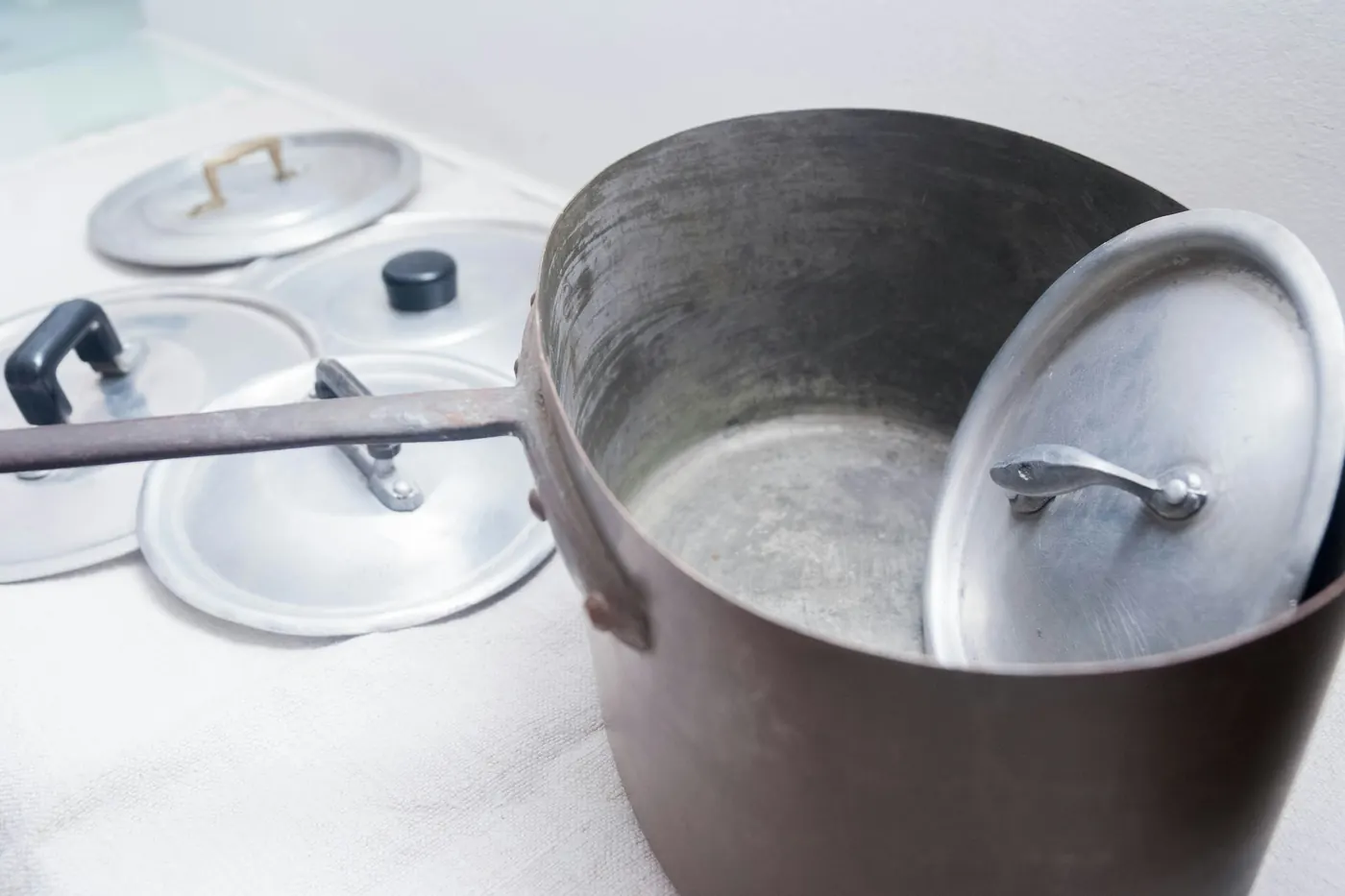
Stainless steel is the safe default. It will not react with tomato, lime or tomatillo, and it can take metal ladles and years of scrubbing. Plain aluminum is light and common in commercial kitchens, but it reacts with acid, can warp and will not work on induction. Nonstick cleans up fast but does not build the browned bits that flavor a stock. Serious Eats also skipped enameled steel, and we left enameled pots off this page.
4. Handles and lid
The Serious Eats team found handles set 3/4 to 1 inch from the wall the easiest to hold, and preferred riveted handles to welded ones and metal lids to glass. Try the grip with a folded towel or oven mitts if you can. You will be lifting this pot with both hands, often while it is hot.
5. Weight when full
Water weighs a little over 2 pounds per quart. That makes a full 12-quart pot about 25 pounds, a 16-quart about 33 and a 20-quart about 42, before you count the pot. If that is more than you want to carry, ladle the stock out in place and move the pot when it is nearly empty.
How we picked these eight pots
We started with the Serious Eats stockpot review from 2023, which put 19 pots through boiling, handling and browning trials, and with what the makers and Amazon listings state about each pot. The Tramontina is a sibling of a pot that review named as a pick. The other seven were not among the picks it named, so those entries rest on the listing and the maker’s details. We have not used these pots ourselves.
We kept to identifiable makers, checked that each pot was in stock on Amazon when we wrote this, and searched the saferproducts.gov recall database for each brand. We found no stock pot recalls from these brands. None of the pots on this page has an enameled or glazed food surface.
We did not repeat listings from our soup pot reviews or our guide to the best pasta pots with strainers. Two picks are larger sizes of lines on the soup pot page, the Made In and the Farberware, and each entry explains why. That page is also where you will find the Cuisinart MultiClad Pro, which Serious Eats chose as its best 12-quart.
Stock pot questions, answered
What size stock pot do I need?
For most homes, 12 quarts. An 8-quart pot suits small households, but it overlaps with a Dutch oven. Go to 16 quarts for big family batches, and past that only if you have a burner that can handle it.
What is the best stock pot for soup?
Any stainless stock pot works, and a 12-quart gives you room for bones and vegetables. For a smaller stock pot for soup, see our soup pot reviews.
Is a clad stock pot worth it?
Only if you brown in the pot. Serious Eats says a fully clad pot is preferable when the price is reasonable, but it also says cladding matters less for a pot that mostly holds liquid.
Can I steam tamales in a stock pot?
Yes, if you fit a rack or steamer insert above the water. A pot sold for the job is simpler, and our guide to the best tamale steamers compares them. What are tamales covers the dish itself.
Can I cook tomato or lime dishes in an aluminum stock pot?
It is better not to. Serious Eats avoided aluminum because it reacts with acids. Use stainless for tomato broths and anything with lime.
Will a stock pot work on induction?
It needs a magnetic base. The Tramontina, Made In, Demeyere, Farberware and Update are listed for induction. The Vollrath and Calphalon are not, and the Cuisinart listing does not say.
Our last word on stock pots
Buy the Tramontina Gourmet 12-Quart if you want one large pot that handles nearly everything. Choose the Made In if you brown in the pot, the Demeyere if storage is tight, the Farberware for big family batches and the Update for parties. The Cuisinart, Vollrath and Calphalon each suit a narrower job, as described above.
Related guide: Best soup cookbook.
Related guide: Best one pot cookbook.
Related guide: Best lobster pot.
Related guide: Best 20 quart stock pot.
Related guide: Stainless vs aluminum stock pot.
For the dishes that call for a pot this size, start with pozole vs menudo or our notes on charro beans vs refried beans. If you would rather let someone else watch the simmer, Julia’s is at 5402 N Highway 6 in Houston. See the menu and call to order.