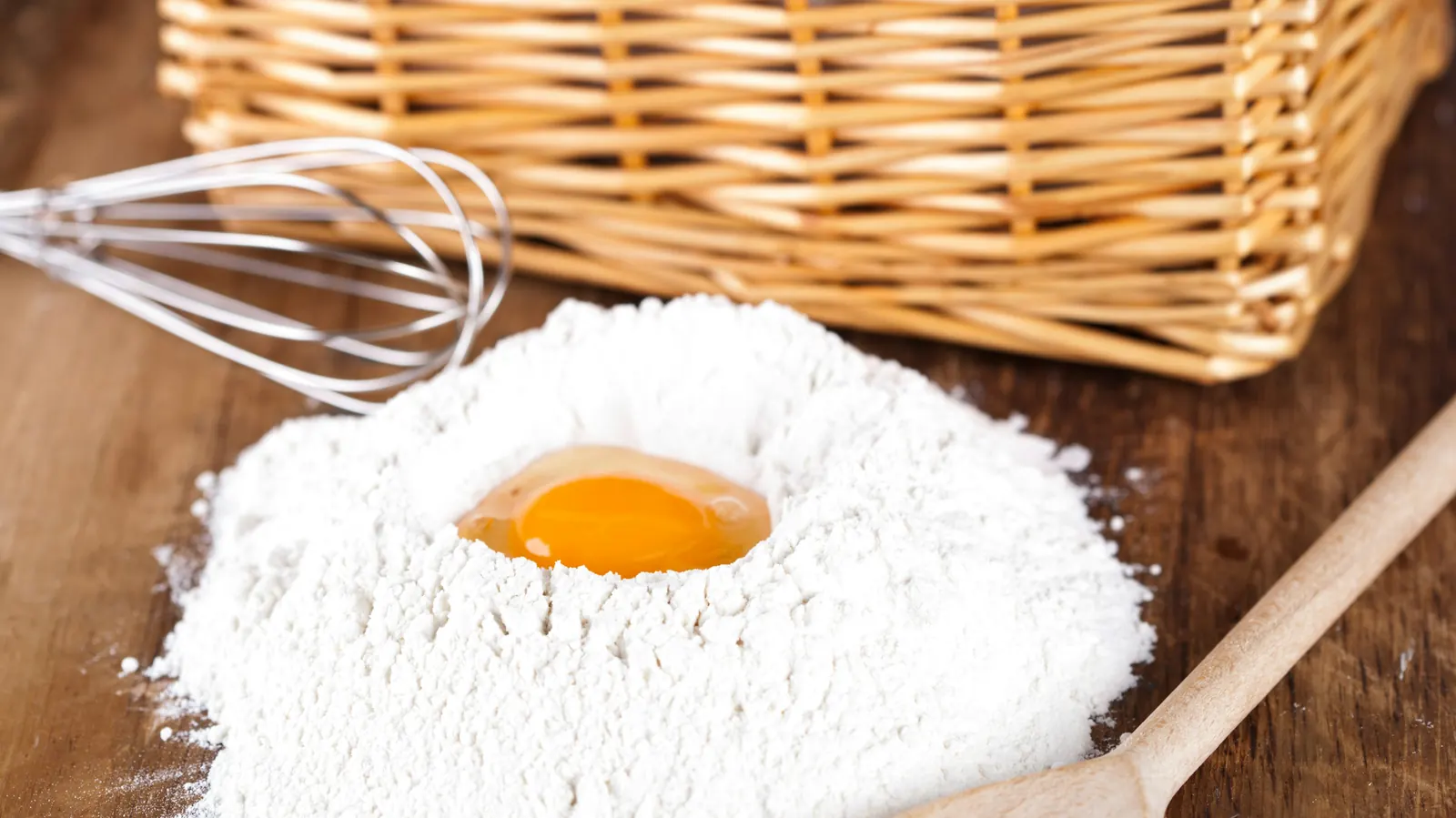
A recipe says “sift the flour” and there is no sifter in the drawer. Most of the time that is not a problem. Modern flour leaves the mill fine and clump-free, and both King Arthur Baking and America’s Test Kitchen say home sifting is now needed far less often than old recipes suggest. What you still need is a way to break up lumps, mix the leavening through evenly, and now and then dust a cake with powdered sugar.
This guide covers what to use instead of a flour sifter: a fine-mesh strainer, a wide drum sieve, a balloon whisk, a short pulse in a mini food processor, and a dredge for dusting. For each one we say how close it gets to a real sifter, what it misses, and when you should buy the sifter after all.
Julia’s earns a commission on purchases made through links on this page, at no cost to you. Recommendations are based on what a restaurant kitchen looks for, product specifications and verified buyer reports.
Why cooks look for a flour sifter alternative
- The recipe calls for it and you have none. Old cake and cookie recipes ask for sifted flour far more often than newer ones.
- A sifter does one job. A crank sifter is hard to clean properly and takes a shelf for a task many bakers do a few times a year.
- You already own the tools. A strainer and a whisk are in most drawers, and both can do most of a sifter’s work.
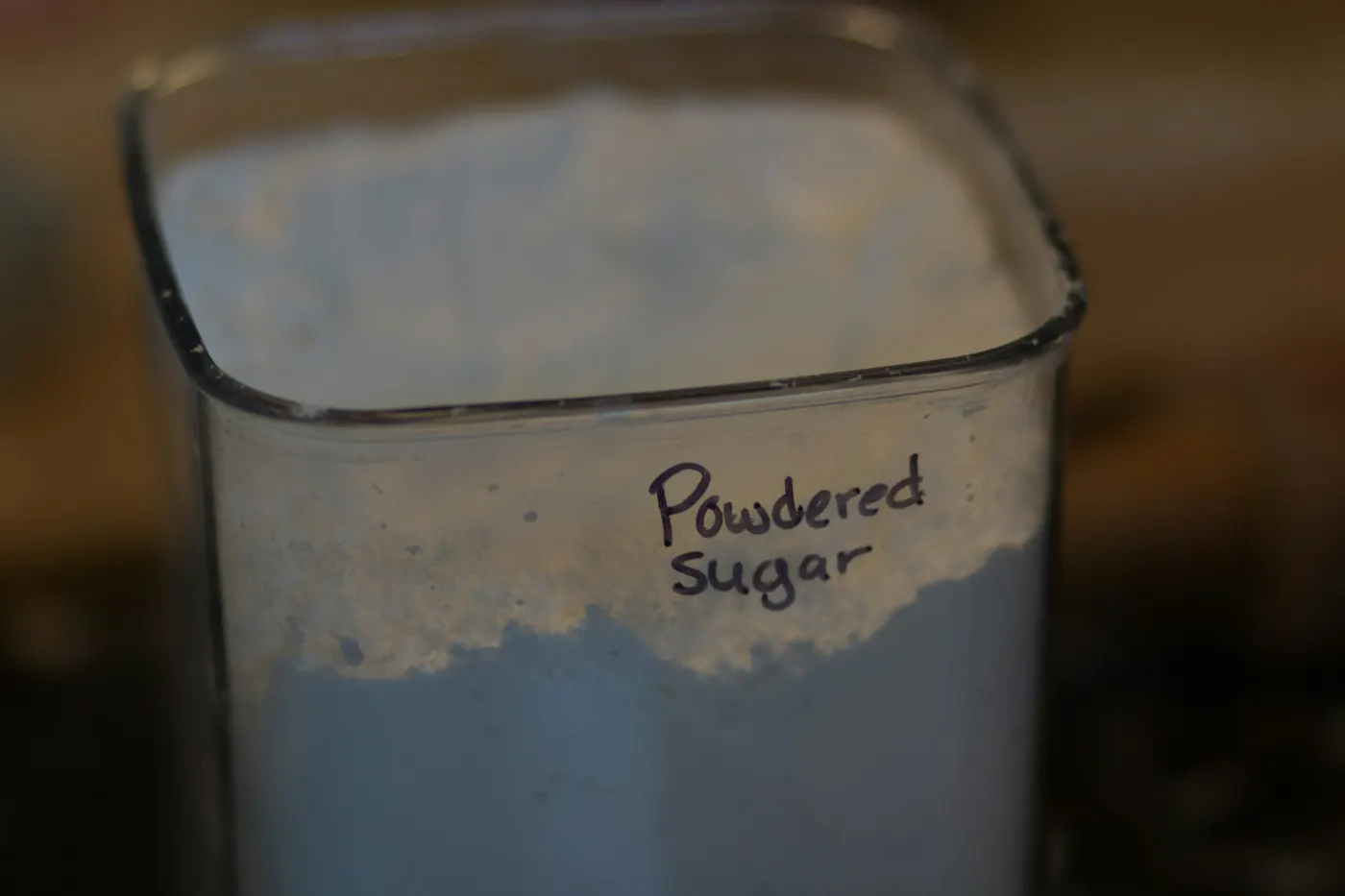
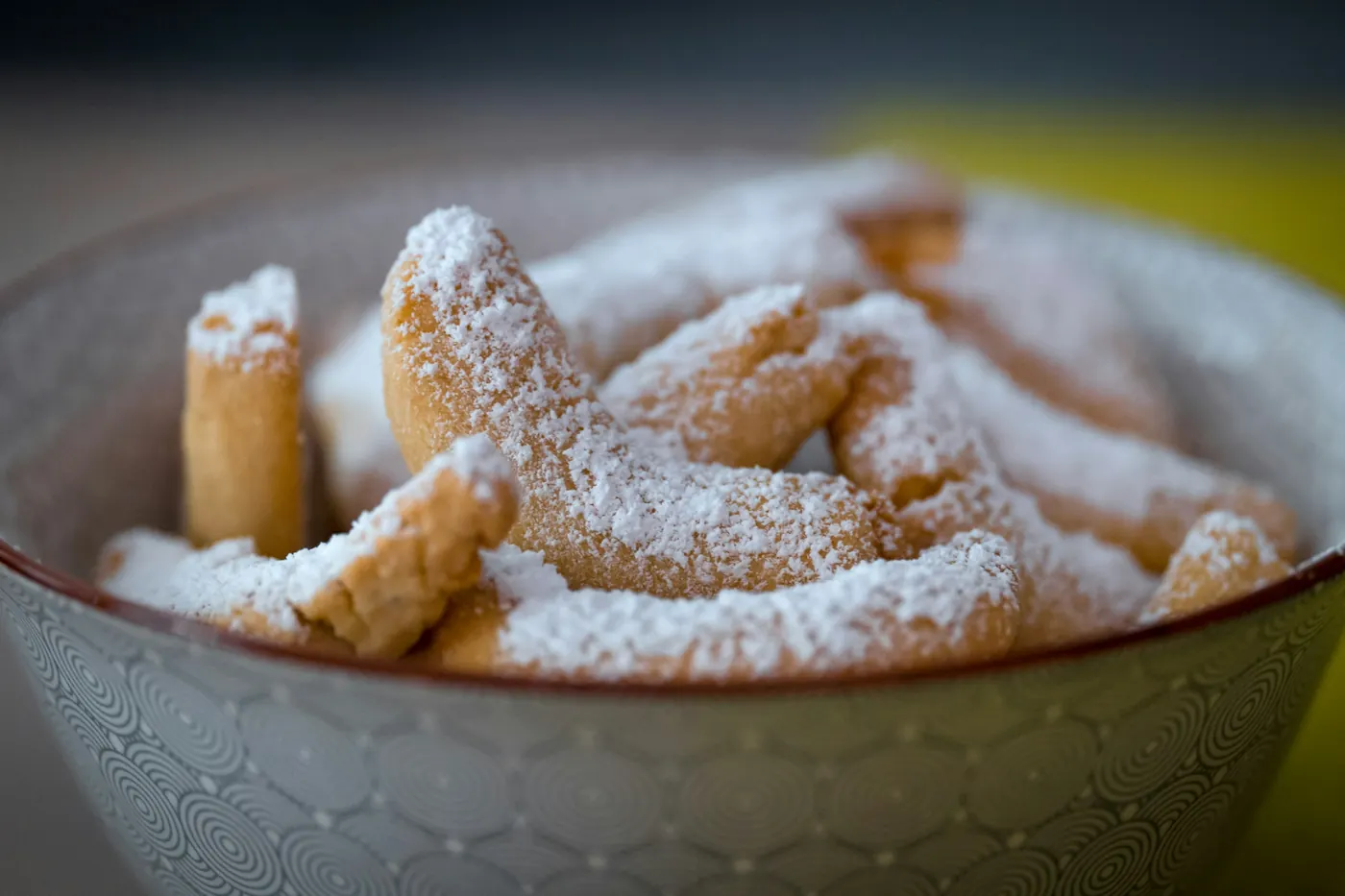
- Dusting, not sifting. For a snow of powdered sugar over buñuelos or a pound cake, a small shaker is easier than a sifter.
Quick verdict: the best flour sifter alternative
For most bakers, the best flour sifter alternative is a fine-mesh strainer such as the OXO Good Grips 6-Inch Double Rod Strainer: tap the flour through it over a bowl. King Arthur Baking and Bob’s Red Mill both name a strainer as the way to sift without a sifter, and it catches lumps the way a sifter does. If you only need to blend flour with baking powder and salt, a balloon whisk is enough; America’s Test Kitchen says to whisk dry ingredients whatever you bake. Use a wide drum sieve for big batches, a mini food processor pulse only to combine dry ingredients, and a dredge for dusting. Buy a real sifter only if you sift several cups at a time, often.
Five flour sifter stand-ins side by side
Our five picks, one for each kind of baker, with what each maker or listing states. All five are reviewed in full below.
| Alternative | Best for | Catches lumps? | Effort | Buy on Amazon |
|---|---|---|---|---|

OXO Good Grips 6-Inch Double Rod StrainerBest overall alternative
|
Single recipes of flour or cocoa | Yes, fine mesh | Low; tap the rim | View on Amazon |

Winco 12-inch Stainless Steel SieveBest for big batches
|
Several cups at once | Yes; mesh size not stated | Moderate; two hands | View on Amazon |
Norpro Balloon Wire Whisk Set of 3Best for blending dry ingredients
|
Mixing leavening into flour | Breaks soft lumps; removes nothing | Low; about a minute | View on Amazon |

Cuisinart 3-Cup Mini ChopperBest for pulsing
|
Scones, biscuits, pie dough | Breaks lumps; removes nothing | Very low; a few pulses | View on Amazon |

Winco 10 oz Stainless Steel DredgeBest for dusting
|
Powdered sugar, cocoa, flour on a board | Not for sifting; for a light coat | Very low; one hand | View on Amazon |
Product images from Amazon. Sizes and materials are as stated by each maker or listing; check the listing before you buy.
What a sifter does, and which part you actually need
King Arthur Baking describes a sifter as a tool that agitates dry ingredients such as flour, cocoa powder or confectioners’ sugar and pushes them through a mesh. In its 2024 article “Why sift flour?”, its answer to whether you still need to is “Occasionally — but for the most part, not anymore,” because modern flour does not need sifting to bake well. The same piece says you can sift through a fine-mesh strainer, and that a balloon whisk can approximate sifting, though the result “won’t be quite as fine as with a sifter or fine-mesh strainer.”
America’s Test Kitchen reaches the same place. Its article “Do I have to sift my ingredients?” explains that commercial flour now arrives clump-free, so sifting is rarely needed for batters mixed and baked at once, but that you should always whisk dry ingredients before adding the wet ones, so the leavening is spread evenly. If your ingredients have clumped, it says to sift them through a fine-mesh strainer set over a bowl, stirring and pressing with a spatula.
That splits a sifter’s work into three parts, and each alternative covers a different mix of them:
- Breaking up and catching lumps. Only mesh does this fully: a strainer or sieve.
- Blending and aerating. A whisk or a food processor pulse does this, and Bob’s Red Mill notes that sifting is “basically the same thing as aerating flour.”
- Dusting a finished surface. A small strainer or a dredge does this better than a big sifter.
One more reason to sift has mostly gone away with kitchen scales. King Arthur says the most accurate way to measure any baking ingredient is by weight, and America’s Test Kitchen notes that “1 cup sifted flour” (sift, then measure) and “1 cup flour, sifted” (measure, then sift) are not the same amount. If you weigh your flour, you can skip sifting for measurement and only sift for lumps. Our guide to kitchen scales for baking covers that switch.
Five tools that can stand in for a flour sifter
All five are from established makers and were in stock on Amazon, sold new, on the day of writing. Buy only what you are missing: most kitchens already own a strainer and a whisk.
1. OXO Good Grips 6-Inch Double Rod Strainer – Sifts and Strains
A fine-mesh strainer is the closest everyday tool to a sifter, because it has the one thing a whisk lacks: mesh that holds back lumps. Bob’s Red Mill calls a wire strainer “probably the easiest way to sift flour without a sifter,” and says to give the handle light taps so the flour passes through at a steady rate. King Arthur Baking and America’s Test Kitchen both name a fine-mesh strainer for the job too.
OXO’s 6-inch strainer has a fine stainless mesh held by a double rod frame that OXO calls extra sturdy, a non-slip handle and a loop that rests on the edge of a bowl or pot. Six inches is a good size for a single cake or a batch of polvorones: big enough to take a cup or two of flour at a time, small enough to dust cocoa over a tray. Hold it over a wide bowl, add the flour, and tap the rim or stir gently with a spoon.
It stays useful after baking day. The same strainer rinses rice and berries and catches seeds from a squeezed lime, which is why it beats a single-purpose sifter for a small kitchen. Our guide to fine-mesh strainers covers larger sizes.
Why we like it
- Fine stainless mesh, per OXO’s listing
- Bowl-rest loop keeps it steady while you tap
- Dishwasher safe, per the listing
- Strains liquids and rinses grains too
Key specifications
| Model | 38891 |
|---|---|
| Type | Fine-mesh strainer |
| Material | Stainless steel mesh and frame |
| Size | 6-inch |
| Catches lumps | Yes, fine mesh |
| Power | Manual |
| Cleaning | Dishwasher safe |
| Warranty | “Satisfaction Guaranteed,” per the listing |
Why we recommend it
Choose it if you bake a cake or a tray of cookies now and then and want one tool that sifts, dusts and strains.
Skip it if you sift five or more cups at a time; tapping a 6-inch strainer gets slow, and the wide sieve below is quicker.
Pros and cons
Pros
- Catches lumps like a sifter
- Rests on a bowl hands-free
- Goes in the dishwasher
Cons
- Small for big batches
- Mesh count not stated
- Fine flour can puff out as you tap
2. Winco 12-inch Stainless Steel Sieve – Wide and Flat for Volume
A drum sieve, or tamis, is a flat screen stretched across a shallow round frame. It has no handle, so it takes two hands, but its wide, flat mesh moves far more flour per tap than a bowl-shaped strainer. Winco, a foodservice supplier, lists this 12-inch sieve as made for sifting flour and dry ingredients in baking prep.
Set it over a large bowl or a sheet of parchment, pour in the flour, and shake or knock the frame side to side. For a double batch of a cake, or for the flour and sugar of a big holiday bake, it finishes in a fraction of the strokes a small strainer needs. It also presses soft cooked food through with a scraper, though that is not the job here.
Winco’s listing gives the diameter and material but not the mesh count, so we cannot say how fine it is against a sifter screen. Winco’s 10-inch size of this same sieve appears in our food mill alternatives guide for pressing purees; we chose the 12-inch here because a sifting job rewards the extra width.
Why we like it
- Listed for sifting flour and dry ingredients
- 12-inch flat screen moves volume quickly
- All stainless steel, per the listing
- No moving parts to clog
Key specifications
| Model | SIV-12 |
|---|---|
| Type | Drum sieve |
| Material | Stainless steel |
| Size | 12-inch diameter |
| Catches lumps | Yes; mesh count not stated |
| Power | Manual |
| Cleaning | Not stated |
| Warranty | Not stated |
Why we recommend it
Choose it if you bake in volume, or double recipes, and want sifting speed without a crank to clean.
Skip it if your cabinets are tight; a 12-inch round frame is awkward to store, and it is overkill for one cup of flour.
Pros and cons
Pros
- Fast for several cups
- Simple, open design
- Foodservice build
Cons
- Needs two hands and a wide bowl
- Mesh count and care not stated
- Bulky to store
3. Norpro Balloon Wire Whisk Set of 3 – Aerates in Any Bowl
When a recipe asks you to sift flour with baking powder, salt or cinnamon, the point is usually to mix them evenly, not to remove anything. A whisk does that well. King Arthur Baking says to put the flour in a large bowl and use a balloon whisk “until light and fluffy,” and America’s Test Kitchen says you should always whisk dry ingredients before you combine them with the wet.
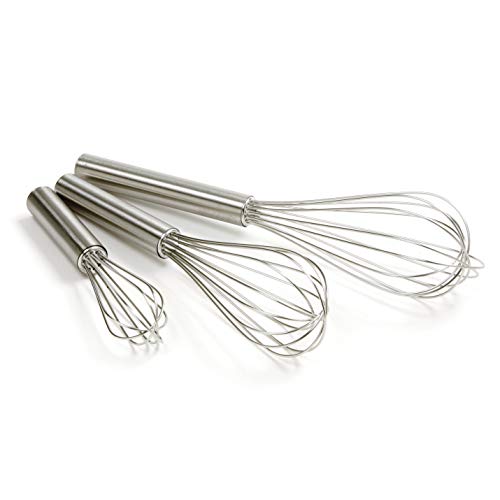
Norpro’s set gives three balloon whisks, 6, 8 and 10 inches long, each with a 7-wire head. The 10-inch suits a full bowl of cake flour; the 6-inch fits a measuring cup of cocoa and sugar for a hot chocolate mix. The listing names sifting and aerating dry ingredients and breaking up clumps among its uses.
Know the limit. A whisk breaks soft lumps but holds nothing back, so a hard lump of brown sugar or cocoa, or any debris in the bag, stays in the bowl. King Arthur says the result is not quite as fine as with a sifter or strainer. Our whisk reviews compare more shapes.
Why we like it
- The whisk method King Arthur Baking describes
- Three sizes, 6 to 10 inches
- 7-wire balloon heads, per the listing
- Dishwasher safe, per the listing
Key specifications
| Model | 2115 |
|---|---|
| Type | Balloon whisks, set of 3 |
| Material | Polished stainless steel |
| Size | 6, 8 and 10 inches |
| Catches lumps | No; breaks soft lumps only |
| Power | Manual |
| Cleaning | Dishwasher safe |
| Warranty | Not stated |
Why we recommend it
Choose it if your recipes call for sifting only to combine flour, leavening and spices, which is most modern cakes, muffins and quick breads.
Skip it if your flour or cocoa has clumped hard; you need mesh for that.
Pros and cons
Pros
- Fast and simple
- Three sizes for many jobs
- Nothing to clog
Cons
- Removes no lumps or debris
- Not as fine as a sifter
4. Cuisinart 3-Cup Mini Chopper – Combines Dry Ingredients in Seconds
A food processor is a fair stand-in when the dry ingredients are going to meet butter next, as in scones, biscuits or pie dough. America’s Test Kitchen’s cream scone recipe tells you to “whisk together or pulse six times” the flour, baking powder, sugar and salt, so it treats a few pulses and a whisk as equal ways to combine them. If you already plan to cut the butter in by machine, pulsing the dry ingredients first saves a step.
Cuisinart’s CCH-3 is a 3-cup chopper with separate chop and grind buttons, an auto-reversing blade and what Cuisinart calls a BladeLock system. Three cups is enough for the flour of a batch of scones or a single pie crust. The removable parts are dishwasher safe and the warranty is a limited 18 months, per the listing. Our guide to mini food processors covers larger bowls.
It is the least sifter-like tool on this list. A blade blends and breaks up lumps but does not catch anything, and it is a lot of machine to wash for a cup of flour. Use short pulses; we would not run it continuously on flour.
Why we like it
- America’s Test Kitchen gives pulsing as an option for dry ingredients
- Separate chop and grind controls
- Dishwasher-safe removable parts
- Limited 18-month warranty, per the listing
Key specifications
| Model | CCH-3 |
|---|---|
| Type | Electric mini chopper |
| Material | Not stated |
| Size | 3-cup work bowl |
| Catches lumps | No; breaks them up |
| Power | Electric; wattage not stated |
| Cleaning | Dishwasher-safe removable parts |
| Warranty | Limited 18 months |
Why we recommend it
Choose it if you make scones, biscuits or pie dough and want one bowl to combine the dry ingredients and cut in the butter.
Skip it if you bake cakes and want light, lump-free flour; a strainer does that better with less cleanup.
Pros and cons
Pros
- Fastest way to combine
- Also chops salsa and herbs
- Small footprint
Cons
- Removes no lumps or debris
- Three cups at most
- More to wash than a whisk
5. Winco 10 oz Stainless Steel Dredge – Even Dusting with One Hand
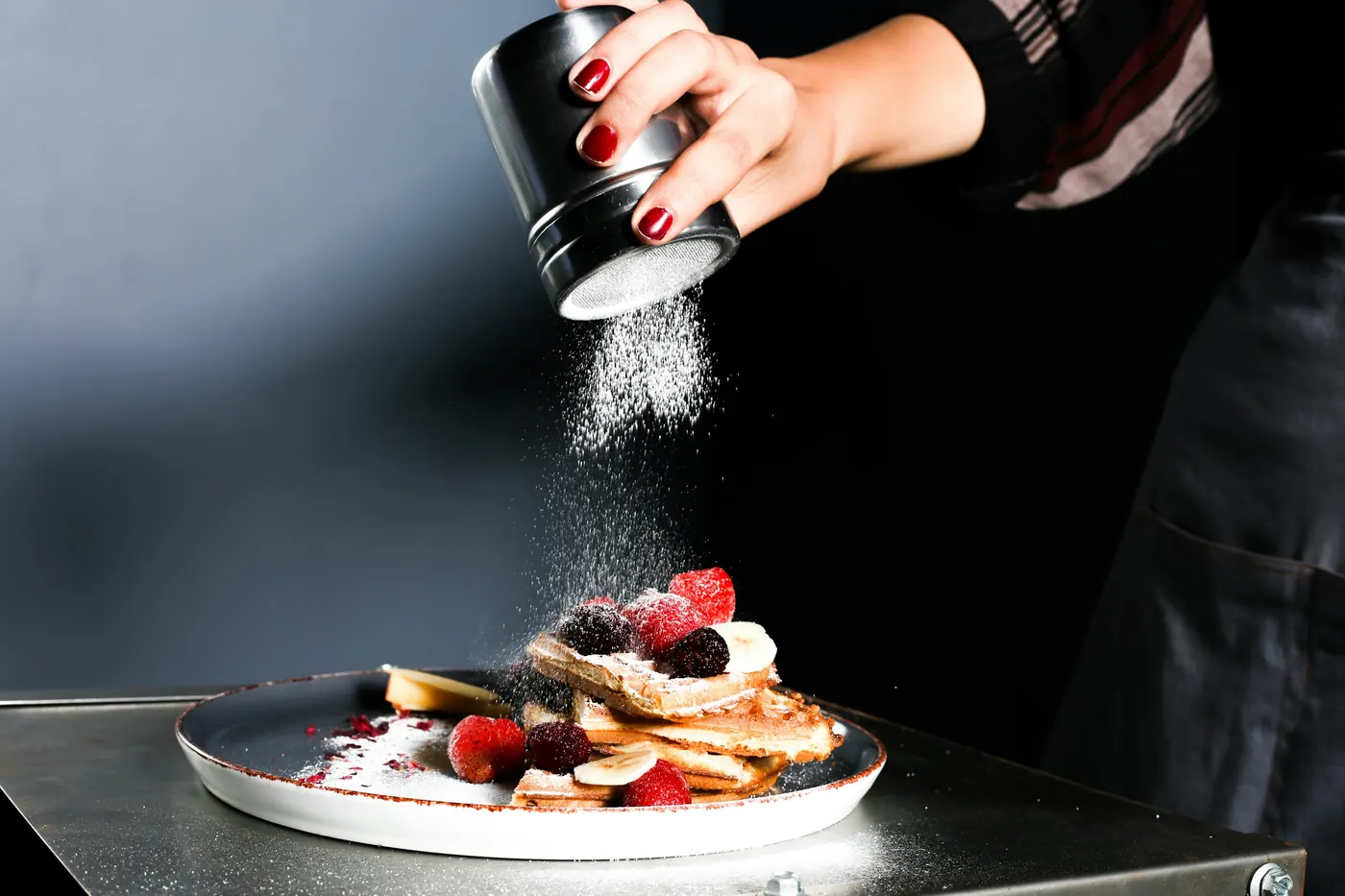
Many “sift” steps happen at the end of a recipe: powdered sugar over a cake, cocoa over a dessert, a little flour over a work surface. For those, a dredge is easier than either a sifter or a strainer. It is a can with a perforated lid and a handle, so you shake out a light, even coat with one hand and keep the rest stored in the same can.
Winco’s DRG-10 holds 10 ounces and is seamless stainless steel with a handle, per the listing, which gives its size as about 5 by 4.75 by 1.5 inches. Fill it with powdered sugar for buñuelos, polvorones or a pound cake, or with flour for rolling out tortillas or pie dough.
It is not for sifting flour into a batter; the holes meter powder out rather than screen it. Winco does not state the hole size, so very fine cocoa may come out faster than you expect. Shake it from a little height for the most even coat; that is general kitchen sense rather than a maker instruction.
Why we like it
- One-handed dusting with a handle
- 10-ounce capacity, per the listing
- Seamless stainless steel
- Stores the powder between uses
Key specifications
| Model | DRG-10 |
|---|---|
| Type | Dredge (shaker) |
| Material | Stainless steel |
| Size | 10 oz; about 5 x 4.75 x 1.5 in |
| Catches lumps | No; for dusting |
| Power | Manual |
| Cleaning | Not stated |
| Warranty | Not stated |
Why we recommend it
Choose it if most of your sifting is a finishing dust of powdered sugar or cocoa, or flour on the board.
Skip it if you need to sift flour into a batter; use the strainer for that.
Pros and cons
Pros
- Light, even coat
- Doubles as storage
- Small and simple
Cons
- Not a sifting tool
- Hole size not stated
- Care not stated
How to sift flour without a sifter
These steps follow what King Arthur Baking, America’s Test Kitchen and Bob’s Red Mill describe; the order is our kitchen’s habit rather than a published test.
- Weigh or measure first, as the recipe says. “1 cup sifted flour” means sift, then measure; “1 cup flour, sifted” means measure, then sift.
- Set a strainer over a wide bowl. A wide bowl catches the flour that drifts outward.
- Add the flour a cup or two at a time. An overfilled strainer spills over the rim.
- Tap the rim or stir gently. Bob’s Red Mill suggests light taps on the handle; America’s Test Kitchen suggests stirring and pressing with a spatula if lumps remain.
- Whisk in the rest. Add the leavening, salt and spices and whisk until even.
What we left out, and why
A fork can stir flour, but it is a weaker version of a whisk, so we did not give it a slot. A colander’s holes are too large to stop lumps. A countertop blender can combine dry ingredients, but flour packs under the blade and puffs out of the lid, and none of our sources recommend it. And a tea strainer works for dusting a single cup or plate, but it is too small for flour.
When a real flour sifter makes more sense
If you bake angel food or sponge cakes often, sift several cups of cake flour at a time, or follow old family recipes that call for sifting more than once, a crank or squeeze sifter is faster and less messy than tapping a strainer. King Arthur says sifting still helps in some recipes, and a sifter holds the flour in a closed body as you work. Our guide to the best flour sifter compares crank, squeeze and battery models from 1 to 8 cups.
Flour sifter alternative questions, answered
What can I use instead of a flour sifter?
A fine-mesh strainer is the closest substitute: tap the flour through it over a bowl. King Arthur Baking, America’s Test Kitchen and Bob’s Red Mill all name it. For blending only, a balloon whisk is enough.
Can I use a whisk instead of sifting?
Yes, for combining flour with leavening and salt. King Arthur says a balloon whisk approximates sifting, though the result is not quite as fine. A whisk will not remove hard lumps.
Do I need to sift flour at all?
Usually not. King Arthur Baking and America’s Test Kitchen both say modern flour arrives clump-free. Sift if your flour, cocoa or powdered sugar has clumped, or if the recipe measures sifted flour by volume.
Can I sift flour in a food processor?
You can combine and break up dry ingredients with a few pulses, as America’s Test Kitchen’s scone recipe allows, but a processor does not catch lumps or debris the way mesh does.
How do I dust powdered sugar without a sifter?
Use a small fine-mesh strainer and tap it over the dessert, or fill a dredge and shake it from a little height.
Our last word on sifting without a sifter
Start with what you own. A fine-mesh strainer does nearly everything a sifter does, and a whisk handles most modern recipes on its own. Add a wide sieve if you bake in volume and a dredge if you dust often, and buy a sifter only if you sift several cups at a time, often. If you would rather someone else did the baking tonight, call to order from Julia’s.