
Most flour no longer needs sifting to clean it. A sifter still earns its place for lump-prone powdered sugar and cocoa, for cake flour in a delicate sponge, and for blending leavening evenly through dry ingredients. When a tres leches sponge or a tray of polvorones is on the plan, a good sifter saves a lot of tapping on a sieve.
The right one depends on your hands and your batch size more than on the brand. This guide compares eight sifters from established makers: crank, squeeze, battery and a flat tamis, from 1 cup to 8 cups.
Julia’s earns a commission on purchases made through links on this page, at no cost to you. Recommendations are based on what a working kitchen looks for in a baking tool, the makers’ own specifications and Amazon listings. We have not used these products ourselves.
Quick verdict: which flour sifter to buy
Start with the Bellemain 3-Cup Hand Crank Flour Sifter. It holds enough for most recipes, its single mesh screen is simple to clear, and the volume marks are stamped into the metal. For bigger batches, choose the Norpro 8-Cup. If cranking or squeezing hurts your hands, choose the Norpro battery model.
The table below compares our five standout sifters. All eight are reviewed in full after it, followed by how to choose and answers to common questions.
Five flour sifters compared
One pick for each kind of baker, with the capacity and screen each maker or listing states.
| Sifter | Capacity | How it works | Screen | Buy on Amazon |
|---|---|---|---|---|

Bellemain 3-Cup Hand Crank Flour SifterBest overall
|
3 cups | Crank | Single fine mesh | View on Amazon |

Mrs. Anderson’s 5-Cup Hand Crank Flour SifterBest mid-size
|
5 cups | Crank | Fine wire mesh | View on Amazon |

Norpro 8-Cup Hand Crank Flour SifterBest for big batches
|
8 cups | Crank | Medium-fine mesh | View on Amazon |
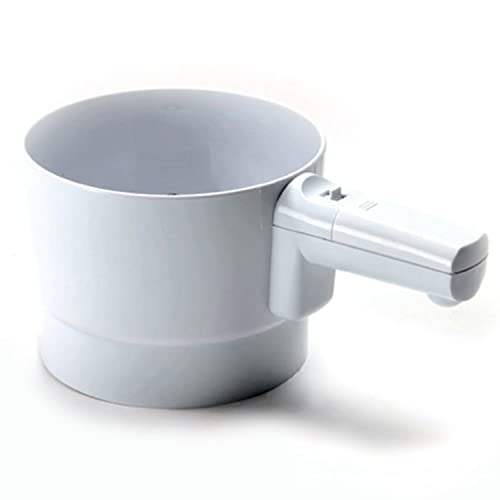
Norpro Battery-Operated 5-Cup Flour SifterBest for sore hands
|
5 cups | Battery (one C) | Stainless mesh | View on Amazon |

Fox Run 1-Cup Stainless Steel Flour SifterBest small sifter
|
1 cup | Squeeze handle | Fine mesh | View on Amazon |
Our picks for the best flour sifter
The picks run from the best all-round choice to the more specialized tools. Every one comes from a maker we could identify, and each was in stock when we checked.
1. Bellemain 3-Cup Hand Crank Flour Sifter – A Single Screen, Easy to Clear
A crank sifter suits most home bakers, and this is the one we would start with. It holds 3 cups, which covers most cake and cookie recipes in one fill. Turning the crank drives a double loop agitator across the screen, and the listing says that sweep leaves little behind.
The detail we like most is the single layer of mesh. Sifters with stacked screens can trap flour between the layers. One screen gives lumps less room to hide, and it is simpler to tap clean. Measurements are stamped into the metal and read from inside and outside, so there is no printed scale to wear off.
The body is stainless steel, which the listing calls rust resistant. Bellemain says the sifter works with coarse flours such as almond meal and oat bran as well as fine ones. It also pitches the crank as easier on sore hands than a squeeze handle. That is a seller making its own case, but it fits how the two designs work: a crank asks your wrist to turn, while a squeeze handle asks your grip to close again and again.
Why we like it
- Holds 3 cups, enough for most single recipes
- Single mesh screen, with no layers to trap flour
- Double loop agitator sweeps the screen
- Measurements stamped into the metal
Key specifications
| Model | TRTAZ11A |
|---|---|
| Capacity | 3 cups |
| How it works | Hand crank with double loop agitator |
| Screen | Single fine mesh |
| Body | Stainless steel |
| Volume marks | Stamped; read inside and out |
| Care | Not stated on listing |
Why we recommend it
It suits a home baker who sifts for cakes and holiday cookies and wants one tool that does most of the job without tiring the hand.
Skip it if you bake in big batches. You would refill it often, and the Norpro 8-cup further down is built for that.
Pros and cons
Pros
- Simple single-screen design
- Marks that will not rub off
- Works with coarser flours, per the listing
Cons
- Care instructions are not stated on the listing
- Amazon-first brand, so no long retail record to lean on
- Crank takes two hands
2. Mrs. Anderson’s 5-Cup Hand Crank Flour Sifter – More Room, a Wood Knob
Five cups is a useful step up. A layer cake or a double batch of cookies can go in at once, with room left so flour does not spill over the rim as you turn. Mrs. Anderson’s Baking is a line from HIC, an American kitchenware company, and this sifter is its larger crank model.
The body is stainless steel with a fine wire mesh, and the crank has a wood knob, which is a pleasant thing to hold. The listing says the crank rakes ingredients over the screen for steady, controlled sifting. It also lists all-purpose, bread, cake, coconut and gluten-free flours, plus powdered sugar.
Care is clear, which is more than most sifter listings manage. Hand wash in warm, soapy water and dry it thoroughly. That drying step matters, because damp flour left in a screen sets like paste. Set the sifter over a bowl with the mesh side down, measure in your ingredients and turn. The listing also suggests it for blending salt, baking soda and baking powder evenly into flour, which is the second good reason to own one.
Why we like it
- Holds 5 cups for larger recipes
- Fine wire mesh removes small lumps
- Wood knob on the crank
- Plain care instructions
Key specifications
| Model | 28015 |
|---|---|
| Capacity | 5 cups |
| How it works | Hand crank |
| Screen | Fine wire mesh |
| Body | Stainless steel |
| Volume marks | Not stated on listing |
| Care | Hand wash in warm, soapy water; dry thoroughly |
Why we recommend it
It suits a baker who regularly doubles recipes but does not want an 8-cup sifter taking up cabinet space.
Skip it if you need to read a measurement off the side. The listing does not mention volume marks, so use your cups or a scale.
Pros and cons
Pros
- Good middle size
- Clear care guidance
- Wood knob on the crank
Cons
- Not for the dishwasher, by its care instructions
- No volume marks mentioned
- Larger to store than a 3-cup
3. Norpro 3-Cup Rotary Hand Crank Flour Sifter – The Old-Fashioned Design
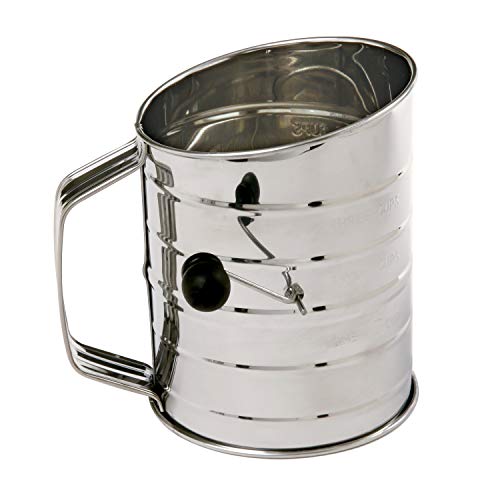
This is the sifter many people picture from a grandmother’s kitchen, and Norpro says as much. It is a 3-cup stainless steel body with a rotary crank and a 2-wire agitator, with volume markings on the inside and the outside.
Norpro aims it at light, delicate cakes such as angel food and sponge, where sifting does the most good. It also suggests it for flouring a work surface or dusting powdered sugar. That same light dusting is what finishes a tray of polvorones.
Compared with the Bellemain, the capacity and the layout are close. The main difference is the agitator, with two wires here against a double loop there. Norpro is also a familiar name in kitchen shops, which counts for something if you prefer an established maker over a newer brand. The listing does not state the care or the mesh size, so treat it like any other crank sifter: tap it out after use and keep it dry.
Why we like it
- Classic crank design
- 2-wire agitator
- Volume marks inside and outside
- Stainless steel body
Key specifications
| Model | 136 |
|---|---|
| Capacity | 3 cups (24 oz) |
| How it works | Hand crank with 2-wire agitator |
| Screen | Mesh size not stated |
| Body | Stainless steel |
| Volume marks | Inside and outside |
| Care | Not stated on listing |
Why we recommend it
It suits a baker who wants a simple, familiar crank sifter from an established kitchenware maker.
Skip it if you need written care instructions or a stated mesh size. This listing gives neither.
Pros and cons
Pros
- Familiar, simple design
- Markings on both sides
- Established maker
Cons
- Mesh size not stated
- Care not stated
- 3 cups only

4. Norpro 8-Cup Hand Crank Flour Sifter – Built for Big Batches
Eight cups is more than most homes need, but it makes sense for holiday baking, bake sales and anyone working through a full bag of flour. The listing describes it as meant for heavy baking volume and large batches, so you stop and refill less often.
The crank is a rotary system finished with a Bakelite knob, and the body is polished stainless steel. Note the screen: Norpro describes it as a medium-fine mesh. That is a good match for flour and for aerating dry ingredients, but it may not catch as much as a fine screen would if you want to hold back bran.
It is a large object, and that is the real cost. Check that you have a bowl wide enough to sit under it and a shelf to keep it on. Hand washing is recommended to protect the moving parts and the polish.
Why we like it
- 8-cup capacity means fewer refills
- Rotary crank with a Bakelite knob
- Polished stainless steel body
- Care guidance on the listing
Key specifications
| Model | 146 |
|---|---|
| Capacity | 8 cups |
| How it works | Hand crank |
| Screen | Medium-fine stainless mesh |
| Body | Polished stainless steel |
| Volume marks | Not stated on listing |
| Care | Hand wash recommended |
Why we recommend it
It suits someone who bakes in volume and is tired of refilling a 3-cup sifter halfway through.
Skip it if you sift one cake a month. It takes a lot of storage space for that job, and a 3-cup model will do.
Pros and cons
Pros
- Largest sifter on this page
- Bakelite knob on the crank
- Hand wash guidance stated
Cons
- Bulky to store
- Medium-fine mesh, not fine
- Needs a wide bowl
5. Norpro Battery-Operated 5-Cup Flour Sifter – No Crank, No Squeezing
Cranking and squeezing are both jobs for the hand, and not every hand wants them. Norpro says this one is for people who have trouble turning a crank or squeezing a handle. It runs on one C battery, which you buy separately, and holds 5 cups.
The screen is stainless steel mesh. The listing describes the rest as food-safe, BPA-free material. The listed color is white and the material is not named, so do not expect the feel of the stainless models here.
The listing is short. It does not give a motor speed, a noise level or care instructions. With a battery inside, we would keep it away from running water until you have read the instructions in the box. That is our caution, not Norpro’s wording. A battery sifter also has more that can stop working than a crank does, so it earns its place only if the hand-powered designs are a real problem for you.
Why we like it
- No cranking or squeezing
- 5-cup capacity
- Stainless steel mesh screen
- Described as BPA free
Key specifications
| Model | 140 |
|---|---|
| Capacity | 5 cups (40 oz) |
| How it works | Battery motor; one C battery, not included |
| Screen | Stainless steel mesh |
| Body | Food-safe BPA-free material; type not stated |
| Volume marks | Not stated on listing |
| Care | Not stated on listing |
Why we recommend it
It suits a baker with arthritis or a weak grip who still wants to sift without pain.
Skip it if your hands are fine. A plain crank sifter has no battery to replace and fewer parts to fail.
Pros and cons
Pros
- Easiest on the hands
- Generous capacity
- Stainless screen
Cons
- Battery not included
- Body material not named
- Care not stated on the listing
6. Mrs. Anderson’s 3-Cup Hand Squeeze Flour Sifter – One Hand Free

A squeeze sifter leaves your other hand free, which is handy when you are holding a bowl steady or dusting a pan. Instead of a crank, a spring-action handle rakes the ingredients over the screen each time you close your hand. It holds 3 cups and has a stainless steel body with fine wire mesh.
The listing says it takes minimal hand effort. We would read that with care. Each stroke is one squeeze, and a few cups of flour take a good many squeezes, so a crank is generally kinder over a long job. For a cup or two, or for a light dusting over a cake, a squeeze handle is quick and easy to control.
Care matches its crank sibling: hand wash in warm, soapy water and dry thoroughly. It shares the same list of suitable flours, including cake, coconut and gluten-free. A 5-cup version of the same sifter exists if you want more room.
Why we like it
- Works with one hand
- Spring-action handle
- Fine wire mesh
- Clear care instructions
Key specifications
| Model | 702 |
|---|---|
| Capacity | 3 cups |
| How it works | Spring-action squeeze handle |
| Screen | Fine wire mesh |
| Body | Stainless steel |
| Volume marks | Not stated on listing |
| Care | Hand wash in warm, soapy water; dry thoroughly |
Why we recommend it
It suits a baker who sifts in small amounts and wants a free hand for the bowl or the pan.
Skip it if you have arthritis or sift large amounts. Repeated squeezing is the very thing a crank avoids.
Pros and cons
Pros
- One-handed use
- Good for controlled dusting
- Clear care instructions
Cons
- Repeated squeezing can tire the hand
- No volume marks mentioned
- Hand wash only, by its instructions
7. Fox Run 1-Cup Stainless Steel Flour Sifter – Small Enough for a Drawer
Many jobs do not need a large sifter. A little powdered sugar over a batch of churros or a spoon of cocoa over a tres leches cake is enough for this one. At 3.25 by 5.75 by 3.5 inches, it is the size to keep in a drawer.
It is stainless steel with a fine mesh screen, and you squeeze the handle to work the sifter inside. Fox Run, a long-running supplier of kitchen goods, sells it as a one-handed tool. The listing wording is a little confused, calling it a “hand crack” in one line, but its description of the action is plain enough: squeeze the handle.
One cup is the limit, so this is not a sifter for a whole cake’s worth of flour. You would be refilling it several times. Think of it as a finishing tool that keeps a light hand on the dusting, and pair it with a larger sifter if you bake often.
Why we like it
- Compact at 3.25 by 5.75 by 3.5 inches
- Fine mesh for a light dusting
- One-handed squeeze action
- Stainless steel body
Key specifications
| Model | 4652 |
|---|---|
| Capacity | 1 cup |
| How it works | Squeeze handle |
| Screen | Fine mesh |
| Body | Stainless steel |
| Volume marks | Not stated on listing |
| Care | Not stated on listing |
Why we recommend it
It suits a cook who mostly dusts powdered sugar or cocoa, or who has little storage space.
Skip it if a recipe calls for several cups of sifted flour. It holds one.
Pros and cons
Pros
- Small and easy to store
- One-handed
- Fine mesh
Cons
- Only 1 cup
- Squeeze action tires the hand on long jobs
- Sparse listing with no care guidance
8. KitchenCraft 8-Inch Fine Mesh Tamis Drum Sieve – Flat, Wide and Dishwasher Safe

A tamis is a flat drum sieve, and it is the old professional answer to sifting. There are no moving parts: you tip flour onto the mesh and tap the rim, or push it across with a scraper. KitchenCraft says it works for sifting big batches of flour as well as straining purées, sauces and coulis.
At 20.5 cm, or about 8 inches, it has a wide flat screen, and it hangs from a built-in loop. KitchenCraft describes the construction as stainless steel that will not absorb odors or flavors, heat resistant to 100°C. It is the one sifter here that the maker clearly calls dishwasher safe, and it has a 12-month guarantee.
That double use is the reason to consider it. A tamis can also press a bean or salsa purée smooth, which a crank sifter cannot do. The trade-off is mess, since open mesh lets flour escape around the edge unless the sieve sits over a wide bowl or a sheet of parchment.
Why we like it
- No moving parts to break
- Sifts flour and strains purées
- Dishwasher safe
- Hanging loop for storage
Key specifications
| Model | KCSIEVE200 |
|---|---|
| Capacity | Not stated; 20.5 cm (8 in) across |
| How it works | Tap or push by hand |
| Screen | Fine mesh |
| Body | Stainless steel |
| Volume marks | None stated |
| Care | Dishwasher safe |
Why we recommend it
It suits a cook who wants one tool for sifting and for smooth purées, and who has wall space to hang it.
Skip it if you want tidy sifting straight into a bowl with no flour on the counter. A crank sifter with walls is neater.
Pros and cons
Pros
- Two jobs in one tool
- No moving parts
- Dishwasher safe
Cons
- Messier than a walled sifter
- Needs a wide bowl or parchment
- 12-month guarantee is short
How to choose a flour sifter for your kitchen
Start with how it moves
A crank turns an agitator across the screen and is the steady choice for several cups. A squeeze handle leaves one hand free but works your grip harder. A battery model takes the hand out of it. A tamis or a fine-mesh strainer has no moving parts at all, and you do the work by tapping.
Match the size to your batches
Three cups suits most single recipes. Five cups is the comfortable choice if you double recipes. Eight cups is for serious volume. A 1-cup sifter is a dusting tool. Buy for the size you make most often, since an oversized sifter is one more large thing in the cabinet.
Look at the screen
Fine mesh catches more. America’s Test Kitchen found in its strainer reviews that very fine mesh does a better job of holding back bran when you sift whole-wheat flour, while coarse mesh lets it pass. Few sifter listings give a mesh count, so go by the words “fine” and “medium-fine” and expect some variation. Also think about layers. A single screen is easier to clear than two or three stacked ones.
Read the care line
Moisture and flour make paste, and paste is what clogs a sifter. Most of these listings say to hand wash or give no guidance at all, and only the KitchenCraft tamis is clearly listed as dishwasher safe. Whichever you buy, tap it out after each use and let it dry completely before you put it away. If anyone in your home avoids gluten, keep a separate sifter for gluten-free flour, because a mesh screen is hard to clean perfectly.
Decide whether you need one at all
A plain strainer and a spoon will sift a cup or two in a pinch. If you already own a good one, you may only want a sifter for bigger or more frequent jobs. For accuracy, a kitchen scale for baking does more for your results than any sifter, because weight does not change when flour settles.
How we picked these eight flour sifters
We did not test these sifters. We read the makers’ specifications and Amazon listings, confirmed that each item was in stock, and looked for maker information on capacity, mesh, action and care. We then chose one sifter for each kind of baker, leaving out near-identical crank sifters from unfamiliar brands, however good their listings sounded. A sifter touches food every time you use it, so we kept to established makers.
We could not find a rigorous independent test of hand sifters from a major reviewer, so the ranking here is our reading of design and specifications, not a measured result. Where a claim comes from the seller, we say so. We also searched the CPSC recall database for these makers and for sifters and found no sifter recall.
Flour sifter questions, answered
Is a flour sifter necessary?
Often not. According to The King Arthur Baking School, as reported in The Spokesman-Review, flour is pre-sifted at the mill, so home sifting is usually unnecessary. It still helps with delicate sponges and with powdered sugar and cocoa, which tend to clump.
Does it matter if I sift before or after measuring?
Yes. Cook’s Illustrated explains that “1 cup sifted flour” should be sifted before measuring, while “1 cup flour, sifted” should be sifted after. It adds that a cup of flour sifted before measuring weighs 20 to 30 percent less than one sifted after measuring, which is a big enough gap to change a cake.
Which is better, a crank or a squeeze sifter?
For several cups, a crank is usually easier on the hand because you turn instead of gripping again and again. A squeeze handle is better for small amounts and leaves your other hand free.
Can I wash a flour sifter?
Follow the maker’s care line. The Mrs. Anderson’s sifters are hand wash and dry thoroughly, the Norpro 8-cup recommends hand washing, and the KitchenCraft tamis is dishwasher safe. Many other listings do not say. If you wet one, dry it completely, as damp flour turns to paste in the mesh.
Can a fine-mesh strainer replace a sifter?
Yes, for small amounts. A strainer does the job with some tapping, though it holds less and takes longer than a crank sifter. Our fine-mesh strainer guide covers those.
Our final pick for sifting flour
For most home bakers, the Bellemain 3-Cup Hand Crank Flour Sifter is the one to buy. Step up to the Mrs. Anderson’s 5-Cup if you double recipes, or to the Norpro 8-Cup for big batches. Choose the Norpro battery model if your hands need the rest.
Related guide: Flour sifter alternative.
A sifter works best as part of a small baking kit. Keep your flour in a good flour container so it stays dry, and level it with accurate measuring cups if you do not bake by weight. If you make flour tortillas at home, our tortilla press guide covers the next step. And if the baking plans fall through, see the Julia’s menu and call to order.