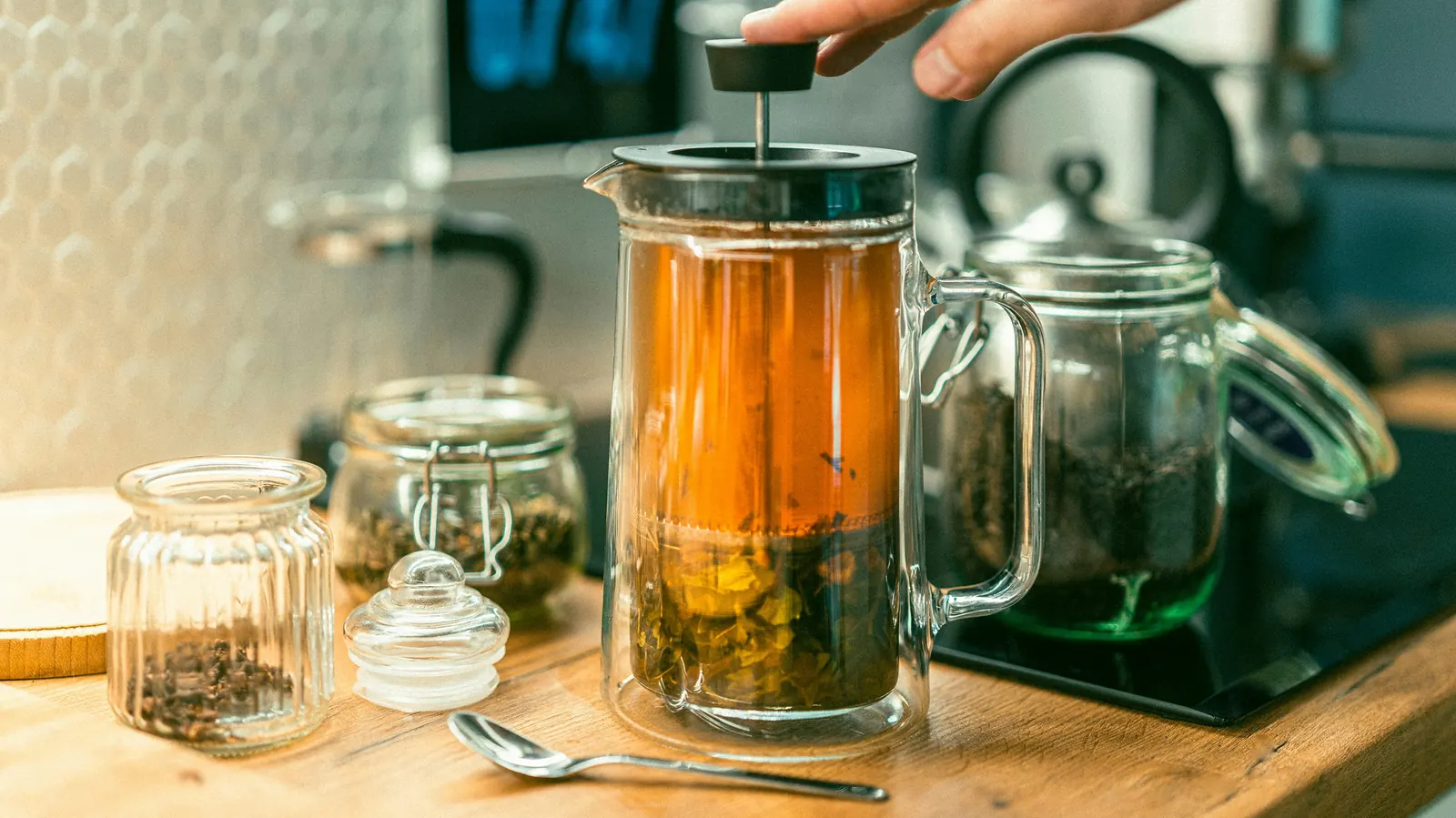
Most electric kettles on sale today come in one of two bodies: clear borosilicate glass that lets you watch the water boil, or stainless steel that hides it. Both heat water the same way, with an element under the floor of the jug, and both switch themselves off at the boil. The difference is in everything around that: how easy the kettle is to break, how hot the outside gets, how much scale you can see, how heavy it is to lift, and which parts of it touch your water.
This guide compares a glass vs stainless steel electric kettle on each of those points, gives a plain answer on which most kitchens should buy, and names two kettles on each side from makers you can identify, all in stock when we checked.
Julia’s earns a commission on purchases made through links on this page, at no cost to you. Recommendations are based on what a restaurant kitchen looks for, product specifications and verified buyer reports.
Quick verdict: which kettle material to buy
For most kitchens, buy stainless steel. It shrugs off knocks that would crack glass, and the best models keep plastic away from the water entirely. Buy glass if you want to see the water level and the boil at a glance, if you brew loose-leaf tea and like watching it, or if you want to spot scale early. Canstar Blue sums up the trade-off: stainless steel kettles “are more durable than glass kettles in the long run”, while glass is “easier to clean with less limescale build-up”. Neither material makes your water taste different, as kettle maker Chantal puts it: “Neither material changes water into something it is not.”
The table sums up the differences. The sections after it explain each one.
Glass vs stainless steel electric kettle, side by side
| Glass | Stainless steel | |
|---|---|---|
| See the water | Yes, the whole jug | Only through a window or inside markings, if any |
| Knocks and drops | “Prone to breaking” (Canstar Blue) | “Less likelihood of breaking” (Canstar Blue) |
| Outside temperature | Gets hot; handle only | Single-wall bodies “may feel hotter to the touch” (Chantal) |
| Scale | “More visible in glass” (Chantal) | Still forms, “particularly inside the kettle” (Chantal) |
| Weight | “Heavier” (Canstar Blue) | “Lightweight” (Canstar Blue) |
| Plastic touching water | Depends on the lid and filter; check the listing | Some models state none at all |
| Our picks | Cuisinart GK-15, Hamilton Beach 40853C | Breville IQ Kettle Pure, Cosori CEK-S152 |
Durability: steel wins for a busy counter
This is the main reason we put stainless steel first. A kettle lives next to the sink, gets filled under a tap, and is lifted on and off its base several times a day. Canstar Blue, an Australian consumer review site, lists “prone to breaking (if dropped or knocked)” as the first drawback of glass, and “more durable (less likelihood of breaking)” as a plus for steel. Chantal, which sells kettles in both materials, agrees in gentler terms: glass “is durable when properly made, but it is not as forgiving of accidental knocks as stainless steel.”
The glass in most electric kettles is borosilicate, a heat-resistant glass that makers choose because it copes with boiling water. What it doesn’t like is a knock against a faucet or a fall to a tile floor. If children help in the kitchen, or the kettle shares a cramped counter with a coffee maker and a stack of plates, steel is the calmer choice.
A steel kettle can dent, and a cheap one can spot or discolor, but it keeps working. That is general kitchen sense rather than a measured figure.
Seeing the water: glass’s real advantage
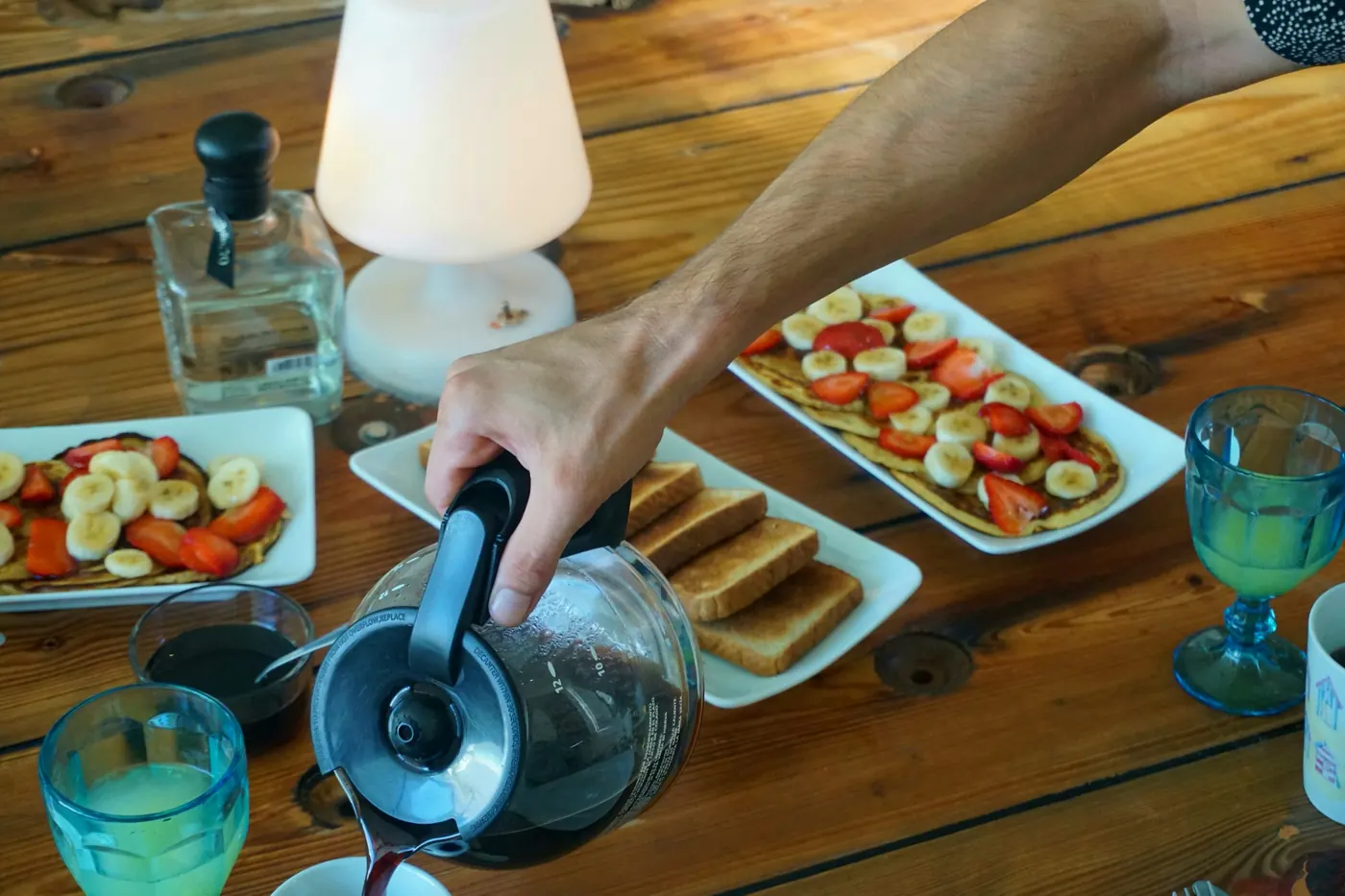
With a glass kettle you can see at a glance how much water is inside, whether it is rolling, and whether it needs a clean. Chantal lists “you can see the water level at a glance” as the first reason to choose glass. That helps when you boil only as much as you need: our Cuisinart pick has a one-cup marking for just that reason, and Cuisinart says it saves time and energy on single servings.
A steel kettle hides all of this. Some have a narrow window down the side. Others, like our Cosori pick, put fill marks on the inside wall instead, so you have to lift the lid to check. If you often boil a single mug, or you like watching tea leaves open in the water, glass makes the job easier. Our best transparent kettle guide covers more glass models.
Heat on the outside: both get hot, in different places
Neither kettle is cool to touch while it boils. On glass, the whole jug gets hot, so you hold it by the handle only. On steel, it depends on the build. Chantal says a stainless kettle’s exterior “may become warm during operation, depending on its construction,” and that “single-wall models may feel hotter to the touch.” Canstar Blue goes further and says steel “can feel hot on the exterior, even with a double-walled design”.
If small hands reach the counter, look for a double-wall steel kettle and still treat it as hot. For either material, keep the cord at the back of the counter and the kettle away from the edge.
Scale and cleaning: glass shows it, steel hides it
Hard water leaves white mineral scale on anything you boil it in, so a kettle of either material will need descaling now and then. The difference is how soon you notice. Chantal says “mineral deposits are also more visible in glass,” while on steel “water spots and mineral residue can still form, particularly inside the kettle.”
Canstar Blue says glass is “easier to clean with less limescale build-up” and “tends to attract less residue”. Seeing the scale is a real advantage, because you clean it before it builds up. With steel, make a habit of looking inside every few weeks. For glass, Chantal recommends cleaning products “that will not scratch its surface”. In either case, follow your kettle’s manual for descaling.

Weight: steel is lighter to lift
Canstar Blue lists “heavier than stainless steel kettles” as a drawback of glass and calls steel kettles “lightweight”. A full kettle of either material is mostly water, so the difference is modest, but if you have weak wrists or pour many times a day, a lighter jug is kinder. Check the stated weight if it matters; few listings give it.
Plastic and taste: look past the body
Many people choose glass or steel to avoid plastic. Canstar Blue’s advice is simple: “make sure that any kettle you buy is free of plastic parts.” The body material is only part of the story. Lids, spouts, filters and water windows are often plastic on both glass and steel kettles. Read the listing for what touches the water. Hamilton Beach, for example, says its glass kettle has borosilicate glass walls and a stainless steel heating plate inside. Cosori says the spout, inner lid and filter of its steel kettle are all 304 stainless steel.
On taste, Canstar Blue says glass kettles “can’t rust and are free from metal residue.” Chantal’s view is that neither material changes the water. We make no health claim either way. If plastic is your main concern, our best electric kettle with no plastic guide compares kettles on exactly that point.
Choose glass if… / Choose stainless steel if…
Choose a glass kettle if…
- You want to see the water level and the boil.
- You brew loose-leaf tea and like to watch it.
- You want to spot scale early and clean before it builds.
- The kettle sits somewhere it won’t get knocked.
Choose a stainless steel kettle if…
- The kettle lives on a busy, crowded counter.
- Children or several people use it.
- You want the fewest plastic parts touching the water.
- You prefer a lighter jug.
Our glass vs stainless steel kettle picks
Two glass kettles and two stainless steel kettles, all from makers you can identify, all sold by Amazon.com and all in stock with a new offer when we checked. None of these listings is on our other pages. For a wider range, see our best electric kettle guide.
1. Cuisinart 1.5L Glass Kettle GK-15 – A Simple Glass Kettle With a One-Cup Mark

The GK-15 is Cuisinart’s plain glass kettle: 1.5 liters, a blue light while it heats, and an automatic shut-off at the boil. What sets it apart for a glass buyer is the one-cup (240 ml) mark on the jug. Cuisinart says it lets you heat only the water you need, which saves time and energy for a single mug, and the clear body makes that mark easy to use.
The listing also names a nondrip spout, a hinged lid that opens with one hand, and a 360-degree base that suits left- and right-handed users. Cuisinart lists it as BPA-free, with a limited three-year warranty, which is longer than many kettles. The listing does not give the wattage, the temperature settings or the lid material, so we have marked those “Not stated”.
Why we like it
- One-cup marking for small boils
- Hinged lid you open with one hand
- Limited three-year warranty
- Sold by Amazon.com
Key specifications
| Model | GK-15 |
|---|---|
| Body | Glass |
| Capacity | 1.5 L |
| Temperature settings | None stated (boil only) |
| Auto shut-off | Yes |
| Wattage | Not stated |
| Warranty | Limited 3 years |
Why we recommend it
It suits someone who boils a mug or two at a time and wants to see exactly how much water is in the jug.
Skip it if you need temperature settings for green tea or pour-over coffee.
Pros and cons
Pros
- Clear one-cup mark
- Long warranty
- Simple to use
Cons
- No temperature control
- Wattage and lid material not stated
- Glass needs care around the sink
2. Hamilton Beach 1.8 Liter Glass Electric Kettle 40853C – A Big Glass Jug With a Steel Heating Plate

If you boil for a family, or fill a French press and a teapot at once, this 1.8-liter Hamilton Beach is the larger glass option. Hamilton Beach says the interior is BPA-free borosilicate glass walls with a stainless steel heating plate, which answers the plastic question better than most glass listings do.
The lid lifts off completely, so you can fill it under the tap and wipe the inside through the wide opening. That matters on a glass kettle, where you will see scale as it builds. It runs at 1,500 watts, and Hamilton Beach says it boils in less than three minutes with half a liter of water. It switches off at the boil, has boil-dry protection, and glows blue while heating.
Why we like it
- Borosilicate glass walls and a stainless steel heating plate, per Hamilton Beach
- Lift-out lid for filling and cleaning
- Large 1.8-liter capacity
- Auto shut-off and boil-dry protection
Key specifications
| Model | 40853C |
|---|---|
| Body | Borosilicate glass |
| Capacity | 1.8 L |
| Wattage | 1,500 W |
| Boil time (maker) | Under 3 minutes with 0.5 L |
| Auto shut-off / boil-dry | Yes / yes |
| Warranty | Not stated in the listing |
Why we recommend it
It suits a household that boils a full jug at once and wants a glass kettle that says plainly what the water touches inside.
Skip it if counter space is tight or you want temperature presets.
Pros and cons
Pros
- Clear statement of interior materials
- Wide opening for cleaning
- Big capacity
Cons
- No temperature control
- Heavier when full
- Warranty not stated in the listing
3. Breville IQ Kettle Pure BKE830XL – Brushed Steel With Tea Settings

The IQ Kettle Pure is Breville’s brushed stainless steel kettle with five one-touch settings for black, green, white and oolong tea and for French press coffee. That makes it the pick for anyone who wants steel’s toughness and also brews drinks that suffer from fully boiling water.
Breville’s soft-top lid releases steam gently, and Breville says it is designed to stop splashing. A keep-warm button holds the water at temperature for 20 minutes, which helps when you steep tea and want a second pour. The jug holds 57 ounces, about seven cups, runs at 1,500 watts, and lifts off a 360-degree base that stores its cord. It has auto shut-off and boil-dry protection, and a one-year warranty.
Why we like it
- Five temperature settings for tea and coffee
- 20-minute keep-warm
- Soft-top lid that releases steam gently
- Brushed stainless steel body
Key specifications
| Model | BKE830XL |
|---|---|
| Body | Brushed stainless steel |
| Capacity | 57 oz (7 cups) |
| Temperature settings | 5 presets |
| Keep-warm | 20 minutes |
| Wattage | 1,500 W |
| Warranty | 1 year |
Why we recommend it
It suits a tea or coffee drinker who wants a tough steel kettle with set temperatures and a keep-warm button.
Skip it if you need to see the water level through the body, or want the plainest kettle possible.
Pros and cons
Pros
- Temperature presets
- Keep-warm function
- Durable steel body
Cons
- Only one-year warranty
- Interior materials not detailed in the listing
- Can’t see scale without looking inside
4. Cosori Stainless Steel Electric Kettle CEK-S152 – No Plastic Where the Water Goes

If you are choosing steel to avoid plastic, this is the one to look at. Cosori says the interior, spout, inner lid and filter are all 304 food-grade stainless steel, and that the water level marks are inside the jug rather than in a plastic window. It is a plain boil-only kettle with 1.7 liters of capacity and 1,500 watts.
Cosori uses a Strix auto shut-off and adds boil-dry protection. It also claims better heat retention than its own glass kettle, the Cosori 171 That is a maker’s comparison rather than an independent one. The trade-off is the one every steel kettle has: you lift the lid to check the water level and the scale.
This is a different, plainer model from the Cosori kettle in our no-plastic guide, which adds temperature presets.
Why we like it
- Interior, spout, inner lid and filter in 304 stainless steel, per Cosori
- Fill marks inside, no plastic window
- Strix auto shut-off and boil-dry protection
- Sold by Amazon.com
Key specifications
| Model | CEK-S152-VUS |
|---|---|
| Body | Stainless steel |
| Capacity | 1.7 L |
| Temperature settings | None stated (boil only) |
| Wattage | 1,500 W |
| Auto shut-off / boil-dry | Yes / yes |
| Warranty | Not stated in the listing |
Why we recommend it
It suits someone who wants a tough everyday kettle with no plastic touching the water and doesn’t need temperature settings.
Skip it if you want to see the water as it heats.
Pros and cons
Pros
- Clear plastic-free interior statement
- Durable steel body
- Large capacity
Cons
- No temperature control
- Water level only visible inside
- Warranty not stated in the listing
How we compared glass and steel kettles
We read two sources that compare the materials directly: Canstar Blue’s “Glass vs stainless steel kettle” guide by Megan Birot, and Chantal’s “Electric Kettle: Glass or Stainless Steel?”, from a maker that sells kettles in both materials. Where they disagree, as on taste, we say so. For the picks, we used the maker details in each Amazon listing and counted only kettles whose listing names the body material, from makers you can identify, sold by Amazon.com and in stock with a new offer when we checked. We did not test these kettles ourselves.
Thinking about a stovetop kettle instead? Our electric vs stovetop kettle guide covers that choice, and gooseneck kettle vs regular explains when a narrow spout is worth it.
Glass and stainless steel kettle questions, answered
Is a glass or stainless steel electric kettle better?
For most kitchens, stainless steel, because it handles knocks better. Glass is better if you want to see the water and spot scale early.
Does a glass kettle make water taste better?
Not in any way we could confirm. Canstar Blue says glass can’t rust and avoids metal residue, while Chantal says neither material changes the water. Scale and old water affect taste more, so clean and refill either kind often.
Do glass electric kettles break easily?
Borosilicate glass handles boiling water, but it can crack if knocked or dropped. Canstar Blue lists “prone to breaking” as the main drawback of glass.
Does a stainless steel kettle get hot on the outside?
Yes. Chantal says single-wall models may feel hotter to the touch, and Canstar Blue says steel can feel hot even with a double wall. Hold any kettle by the handle.
Which kettle has less plastic?
It depends on the model, not just the material. Check what the lid, spout, filter and water window are made of. Cosori says its CEK-S152 has no plastic in contact with the water.
Our final word on glass and steel kettles
If you buy one kettle for a busy kitchen, make it stainless steel: the Breville IQ Kettle Pure if you brew tea at set temperatures, or the Cosori CEK-S152 if you want a plain boil with no plastic touching the water. Choose glass, such as the Hamilton Beach 40853C or the Cuisinart GK-15, if seeing the water matters more to you than a little extra toughness. For tea brewed right in the kettle, see our best electric kettle with tea infuser guide. And when you’d rather someone else made the café de olla, call to order.