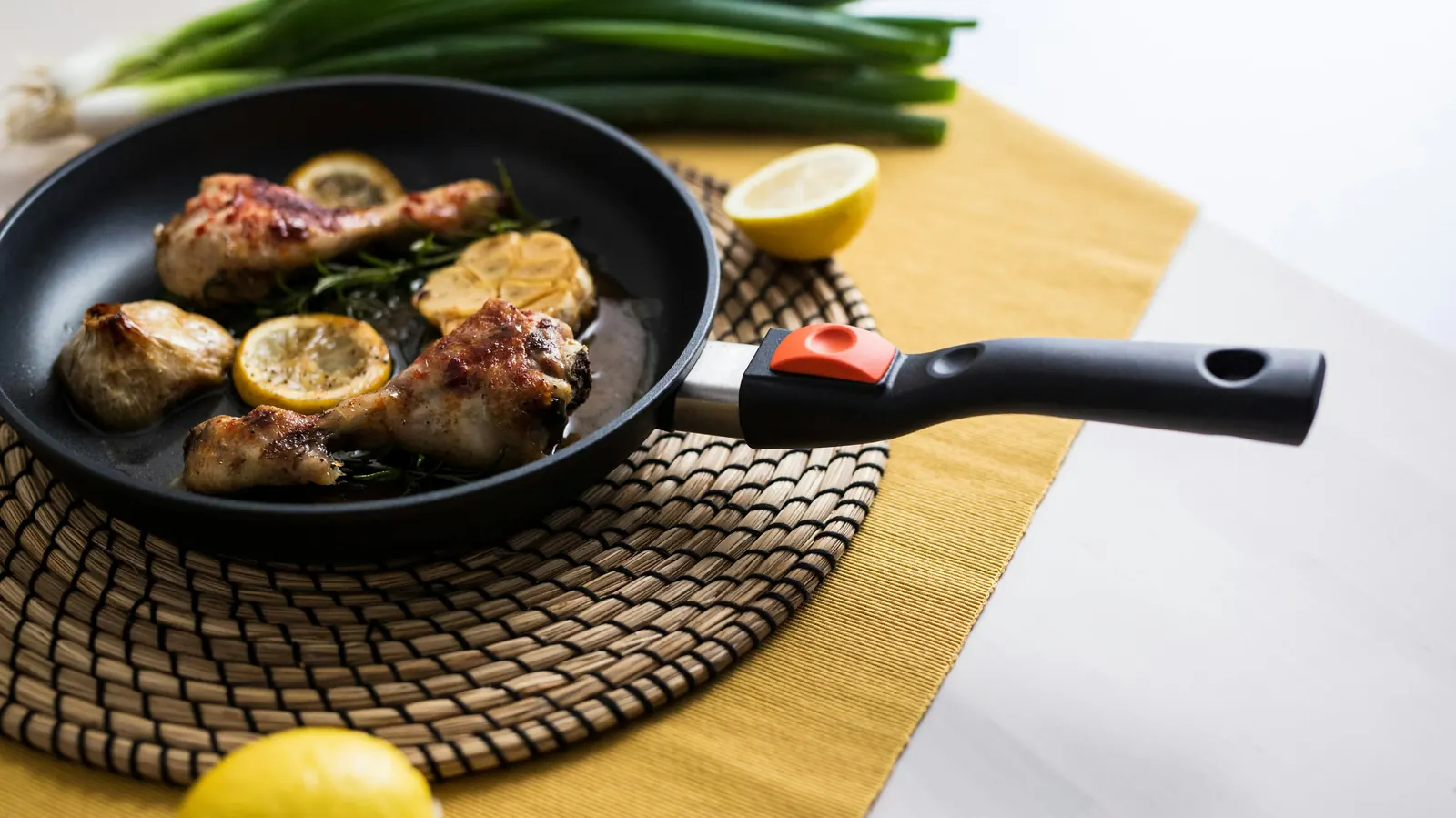
A grill pan and a skillet can be the same size, the same cast iron and the same price, and still cook a steak two different ways. The skillet’s flat floor puts the whole face of the meat on hot metal and gives you an even, dark crust. The grill pan’s ridges touch the meat only in stripes, lift it out of its own fat and leave the marks most people associate with an outdoor grill. In a Mexican kitchen both have a job: a flat pan for chorizo, eggs and rice, a ridged one for nopales and a quick carne asada when the grill outside isn’t lit.
This guide compares the two by what happens to the food: contact and crust, fat, versatility, heat, cleanup and the stove you have. It ends with which to buy first and one good example of each.
Julia’s earns a commission on purchases made through links on this page, at no cost to you. Recommendations are based on what a restaurant kitchen looks for, product specifications and verified buyer reports.
Quick verdict: grill pan or skillet first?
Buy a skillet first. A flat 12-inch pan sears steak with a fuller crust, fries eggs, toasts rice, cooks chorizo, holds a pan sauce and goes in the oven; a grill pan does one of those things better and most of them worse. Buy a grill pan second, or first only if most of what you cook is steak, chicken, burgers and vegetables and you want grill marks and drained fat without going outside.
The table sums up the differences; the sections after it explain each one.
Grill pan vs skillet, side by side
| Grill pan | Skillet (frying pan) | |
|---|---|---|
| Cooking surface | Raised ridges with channels between | Flat floor, sloped sides |
| Contact with food | Stripes along the ridges | Whole surface |
| Result on meat | Grill marks, less overall browning | Even, edge-to-edge crust |
| Fat | Drains into the channels, away from food | Pools around food; can be used for basting or frying |
| Liquids and sauces | Poor: sauce runs into the grooves | Good: pan sauce, eggs, rice, shallow frying |
| Common shapes | Square or round, 10 to 12 inches; two-burner rectangles | Round, 8, 10 and 12 inches |
| Cleanup | Grooves need scraping | One flat surface to wipe |
| Best jobs | Steak and chicken with marks, burgers, nopales, onions, zucchini | Searing, frying, eggs, chorizo, rice, sauces, cornbread |
Contact and crust: stripes or a full sear
Browning happens where food touches hot metal. In a skillet, that is the entire underside of a steak, which is why a heavy flat pan gives the deep, even crust that steakhouse cooks chase. America’s Test Kitchen’s stovetop steak method, for instance, uses a cast iron skillet heated until the oil just smokes and enough oil to keep the meat in contact with the pan as it shrinks.
On a grill pan, only the tops of the ridges touch the food. The result is dark stripes with paler meat between them, the look of a grill without the smoke. ATK’s grill pan review notes that “the taller the ridges, the more deeply they mark food,” and it preferred ridges at least a fingertip-width apart. That is the trade: you get marks that read as grilled, but less total browning, and browning is where much of the flavor comes from.
Fat and moisture: drained or pooled
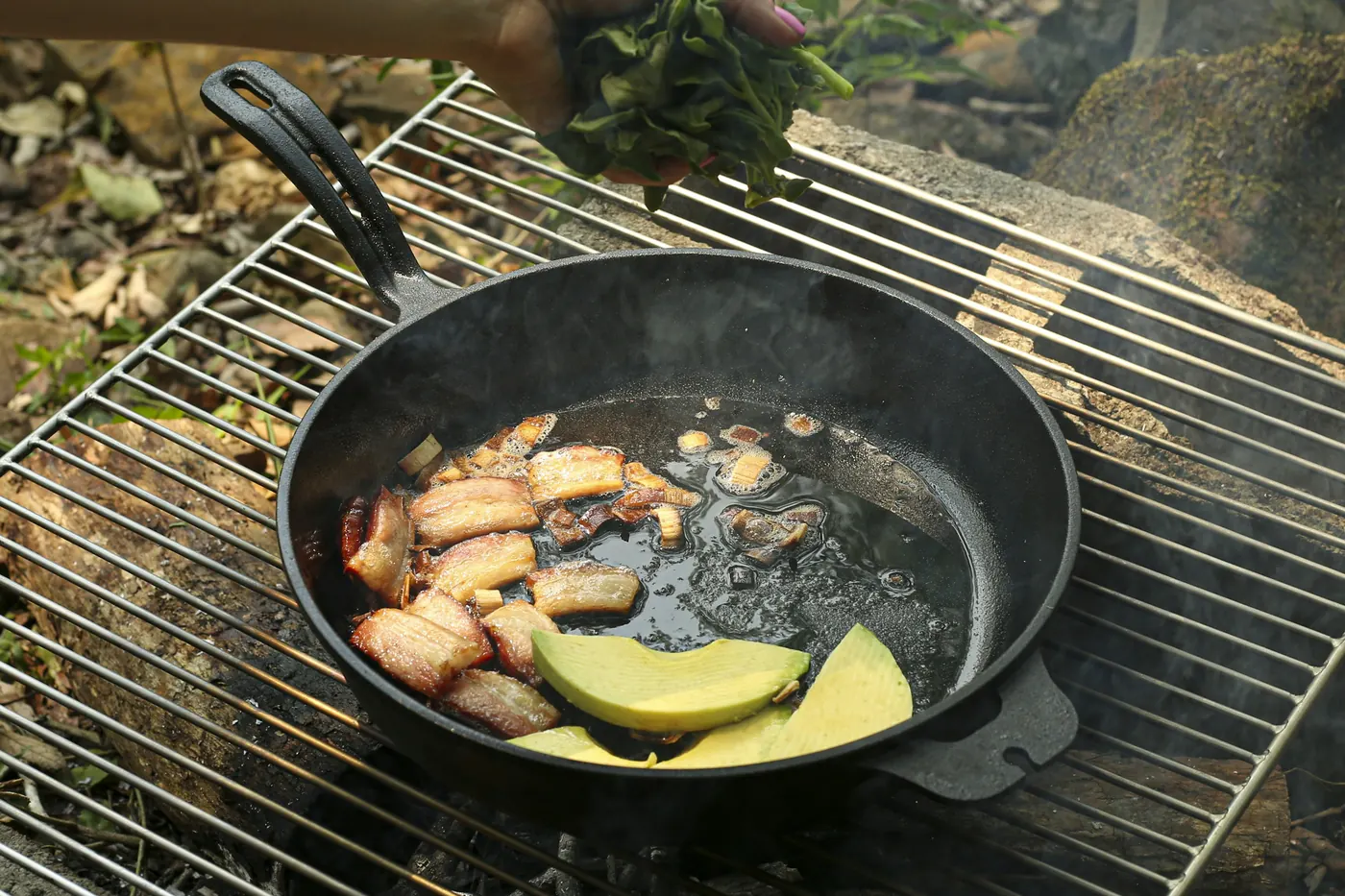
The channels in a grill pan are there to carry fat away. Lodge’s listing for its square grill pan describes searing and grill marks “while channeling excess grease away,” which is why grill pans suit burgers, bacon-wrapped jalapeños, chicken thighs with the skin on and fattier steaks: the meat does not sit in what renders out of it.
A skillet keeps the fat where the food is. That is a problem for a big batch of burgers, but it is what you want for many other jobs: chorizo that cooks in its own fat, eggs basted in butter, tortilla strips fried for chilaquiles, or a steak basted with butter and garlic at the end. Moisture behaves the same way. In a skillet, the juices from fajita vegetables reduce and coat them; on a grill pan they run into the grooves and scorch, so vegetables there should be dry and lightly oiled.
Versatility: one job or twenty
This is where the skillet wins easily. A flat pan with sides can sear, sauté, shallow fry, scramble, toast rice before the broth goes in, simmer a quick salsa, reduce a pan sauce and bake cornbread in the oven. A grill pan grills. You can warm a tortilla on it, but it comes out striped and only partly toasted, and you cannot cook anything liquid at all.
That is the main reason we suggest the skillet first. If you own one pan, it should be the one that covers the most meals. A grill pan earns its place once you already have a flat pan and find yourself wanting marks on chicken, steak and vegetables more than once a week. For the full range of flat pans, our best frying pan guide compares stainless, nonstick, cast iron and carbon steel.
Heat: why mass matters in both
Both pans work best heavy and fully preheated. A cold piece of meat pulls heat out of whatever it lands on, and a thick cast iron pan has more heat to give before the surface cools, so the crust or the marks keep forming instead of the meat steaming. Lodge lists its 12-inch skillet at 7.9 pounds and its 10.5-inch square grill pan at 6.68 pounds in its trade catalog, so in cast iron the two are similar in mass.
The difference is how the heat reaches the food. In a skillet, it conducts straight in across the whole floor. In a grill pan, the ridges carry heat to the food in lines, and the hot air in the channels does a little of the rest. Lodge’s advice applies to both: let cast iron preheat, start at medium-low and work up, and don’t assume you need the highest flame; it calls cooking too hot a common mistake. A grill pan that is hot all the way through marks better than a cold one blasted on high, which mostly makes smoke.
Cleanup, smoke and care
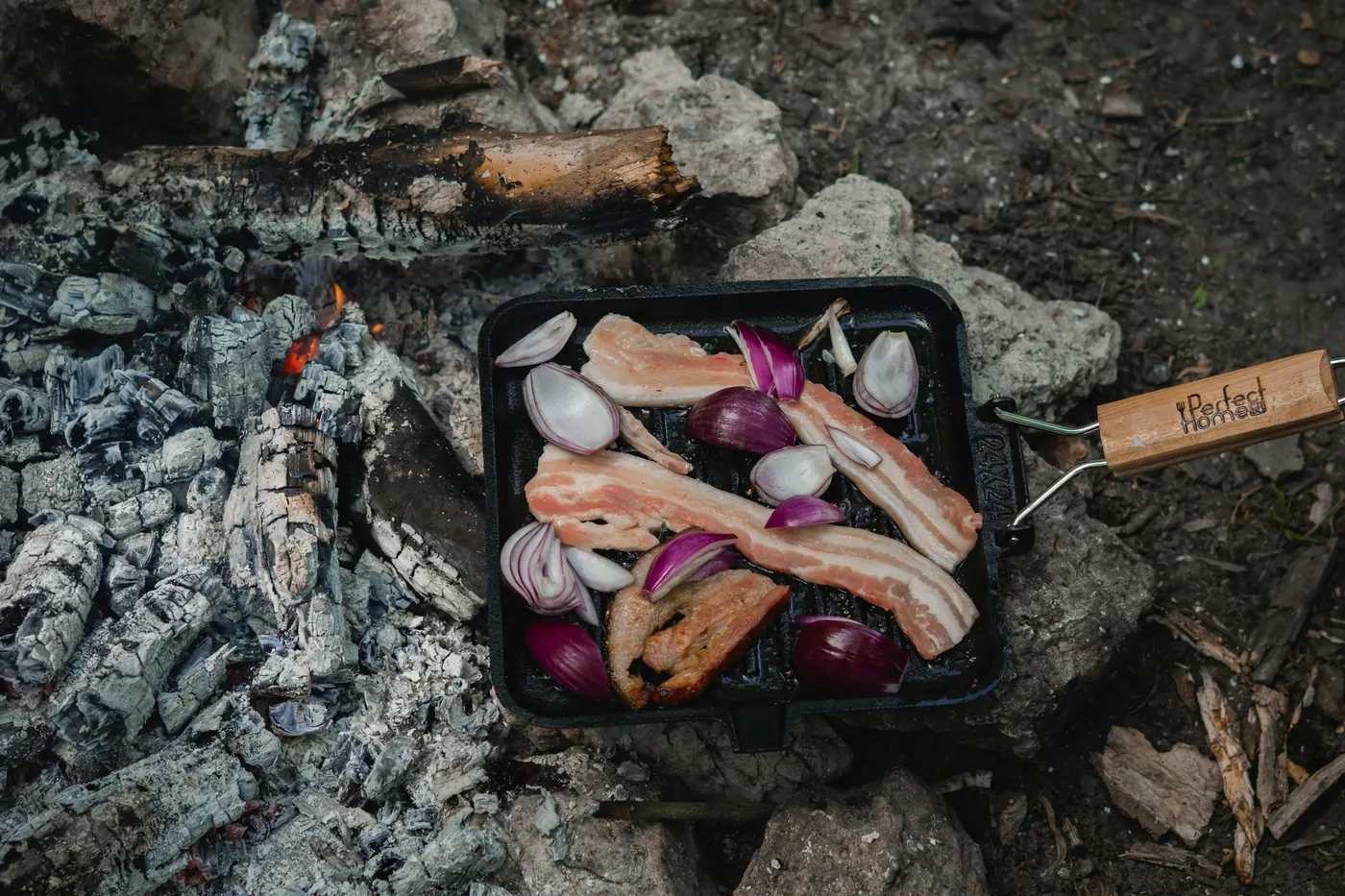
A skillet has one flat surface; a wipe and a rinse handle most of it. A grill pan has grooves that catch fat and stuck-on marinade, and they need scraping, ideally while the pan is still warm. ATK liked grill pans with widely spaced ridges partly because they are easier to scrub. Fat collecting in hot channels also smokes more than fat spread across a flat pan, so a grill pan wants the hood fan on.
Care follows the material, not the shape. Bare cast iron, either kind, follows Lodge’s routine: let it cool, hand wash with warm, soapy water, dry it promptly and wipe on a thin coat of oil. Enameled and nonstick versions of both pans are easier to clean but ask for gentler heat. Our best cast iron skillet guide covers seasoning and care in more detail.
Grill pan vs frying pan for Mexican cooking
Think of the grill pan as the indoor stand-in for the grill. It is the right pan for nopales brushed with oil and salted, for green onions and jalapeños charred whole to serve beside carne asada, for chicken thighs marinated in achiote, and for skirt steak when the weather says no to the patio. Our guide to how to eat fajitas covers how those grilled pieces come together at the table.
The skillet does the rest of the menu: chorizo and eggs, papas con chorizo, refried beans mashed in their fat, rice toasted before simmering, and steak for tacos when you want the deepest crust and the drippings to toss with onions. For tortillas, neither is ideal; a flat griddle or comal is better, and griddle vs pan explains why.
Choose a grill pan if… / Choose a skillet if…
Choose a grill pan if…
- You already own a good skillet.
- You cook steak, chicken, burgers or vegetables several times a week and want grill marks.
- You want fat to drain away from fattier cuts as they cook.
- You have no outdoor grill, or can’t use it much of the year.
Choose a skillet if…
- You are buying your first or only heavy pan.
- You want the fullest crust on steak and a pan sauce afterward.
- You cook eggs, chorizo, rice, beans or anything with liquid.
- You want one pan that goes from stove to oven for cornbread or a frittata.
Our pick on each side of the grill pan vs skillet question
Both picks are Lodge cast iron, made in Tennessee, which keeps the comparison fair: same material, similar weight, different surface. Both were in stock when we checked.
1. Lodge 10.5-inch Square Cast Iron Grill Pan – Grill Marks on the Stove

Lodge’s square grill pan is the plain, durable version of the idea. Its catalog lists it at 6.68 pounds (the online store gives 7.33), and the listing describes high-heat searing and bold grill marks while excess grease is channeled away. The square shape gives more usable room than a round pan of the same width: two steaks, four burgers or a layer of nopales fit across the ridges.
It is pre-seasoned with iron and oil only, per the listing, made in the USA, and goes on stovetops, in the oven, on a grill or over a campfire. Lodge’s catalog says its cast iron works on any heat source, including glass-top stoves and induction, and lists a matching 10.5-inch square glass lid.
The trade-offs are the ones every grill pan has: stripes rather than a full crust, grooves that need scraping, and no way to make a sauce in it.
Why we like it
- Ridges drain fat, per the listing
- Square shape fits two steaks
- Works on induction (Lodge)
- Made in the USA
Key specifications
| Model | L8SGP3 |
|---|---|
| Type | Ridged square grill pan |
| Size | 10.5-inch square |
| Weight | 6.68 lb (Lodge catalog) |
| Material | Cast iron, pre-seasoned with iron and oil only |
| Induction | Yes (Lodge) |
| Made in | USA |
| Care | Hand wash, dry, oil |
Why we recommend it
It suits a cook who already has a skillet and wants grill marks on steak, chicken and vegetables indoors.
Skip it if it would be your only pan; a flat skillet covers far more cooking.
Pros and cons
Pros
- Grill marks and drained fat
- Heavy iron holds heat
- Inexpensive
Cons
- No sauces or liquids
- Grooves take scraping
- Heavy with one handle
2. Lodge 12-inch Cast Iron Skillet – The Pan That Does the Most
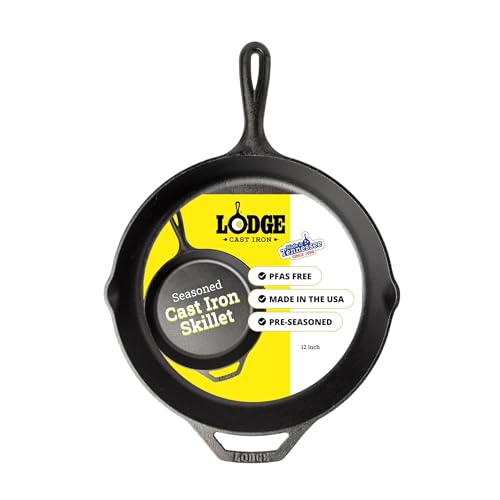
The 12-inch Lodge is the flat counterpart: the same foundry, pre-seasoned, and listed at 7.9 pounds in Lodge’s catalog. Twelve inches across gives room for two steaks without crowding, a pound of chorizo or a family batch of fajita vegetables. The listing describes a pre-seasoned finish that is smooth and easy-release and improves with use, and an easy-grip teardrop handle.
It goes on the stove, in the oven and over a campfire, per the listing, and Lodge’s catalog says its cast iron works on any heat source, including induction. Lodge sells both a cast iron lid and a glass lid sized for it if you want to braise or steam.
Its drawback is weight: nearly 8 pounds of iron on one main handle takes two hands when the pan is full.
Why we like it
- 7.9 lb, per Lodge’s catalog
- Wide enough for two steaks
- Stove, oven and campfire
- Matching lids from Lodge
Key specifications
| Model | L10SK3 |
|---|---|
| Type | Flat skillet |
| Size | 12-inch round |
| Weight | 7.9 lb (Lodge catalog) |
| Material | Cast iron, pre-seasoned with vegetable oil |
| Induction | Yes (Lodge) |
| Made in | USA |
| Care | Hand wash, dry, oil |
Why we recommend it
It suits almost anyone buying a first heavy pan: steak, eggs, chorizo, rice, cornbread and pan sauces all start here.
Skip it if you can’t comfortably lift an 8-pound pan; a 10-inch skillet is lighter.
Pros and cons
Pros
- Full, even crust
- Handles liquids and sauces
- Inexpensive and long-lasting
Cons
- Heavy
- Handle gets hot
- No grill marks
Grill pan and skillet questions, answered
Is a grill pan better than a skillet for steak?
For crust, no: a flat skillet browns the whole surface and leaves drippings for a sauce. A grill pan gives grill marks and lets fat drain. Choose by the result you want; if you can own only one, the skillet does more.
Grill pan vs normal pan: what is the difference?
A normal frying pan has a flat floor and sloped sides. A grill pan has raised ridges on the floor, usually with lower sides, so food sits above the fat and takes marks only where the ridges touch it.
Can a skillet replace a grill pan?
Mostly. A skillet cooks everything a grill pan does, with a fuller sear but no marks and no drained fat. A grill pan cannot replace a skillet for eggs, rice, sauces or frying.
Do grill pans really drain fat?
Yes, into the channels between the ridges, which keeps it off the food; Lodge’s listing describes its grill pan channeling excess grease away. The fat stays in the pan, so pour it off or blot it as you cook.
Do grill pans work on induction or glass tops?
Cast iron grill pans and skillets do, according to Lodge, which says its cast iron works on any heat source, including glass-top stoves and induction. Lift heavy iron rather than sliding it. Some nonstick aluminum grill pans are not induction-ready, so check the listing.
Which pan goes on your stove first
For most kitchens, the skillet comes first because it handles the widest range of cooking, from eggs to a seared steak with a pan sauce. The grill pan comes second, and for anyone who wants grill marks on chicken, steak and vegetables through a Houston summer or a rainy week, it quickly earns its spot next to the skillet.
If the grill pan wins, our guide to the best grill pan compares cast iron, enameled and nonstick models.
For steak in particular, our best cast iron skillet steak guide compares skillets and grill pans side by side. And when you would rather someone else did the grilling, see the menu or call to order.