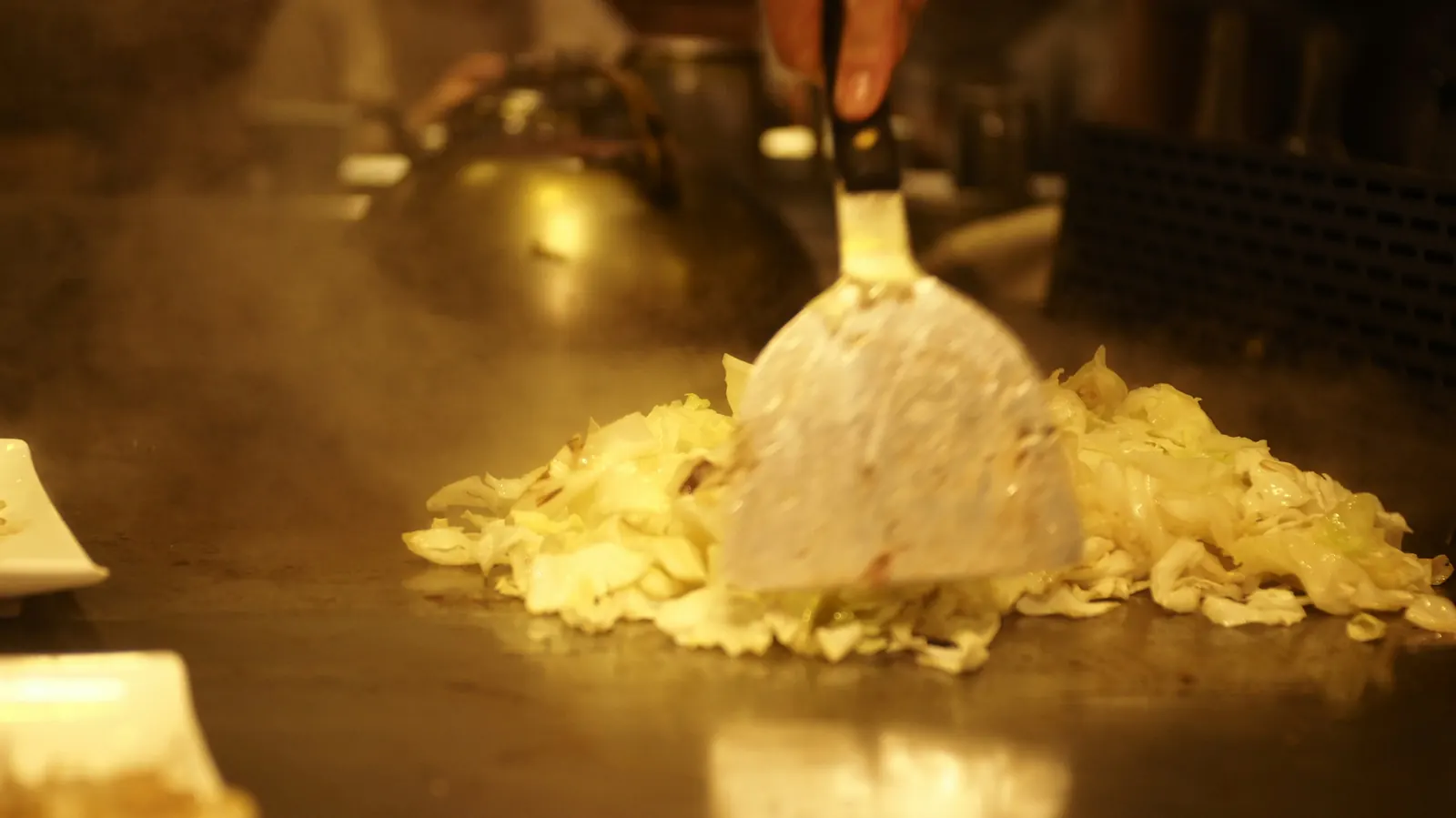
Stand at the line in a busy Mexican kitchen and you will see both at work. The flat-top griddle warms tortillas by the dozen, browns quesadillas in rows and chars onions and peppers for fajitas. A few feet away, frying pans handle the jobs that need walls: eggs basted in their own fat, rice toasted before the broth goes in, a sauce reduced around a piece of chicken. Neither replaces the other, but at home most people have room or budget for one first.
This guide compares the two the way a cook does, by what happens to the food. It covers shape, surface area, heat, fat and liquid, stovetop fit, care and storage, then tells you which to buy first and names one good example of each.
Julia’s earns a commission on purchases made through links on this page, at no cost to you. Recommendations are based on what a restaurant kitchen looks for, product specifications, maker information and published equipment reviews, which we name.
Quick verdict: griddle or frying pan first?
Buy a frying pan first if you cook a bit of everything: its sides hold oil, eggs and sauce, and a 12-inch pan covers searing, sautéing, frying and simple pan sauces. Buy a griddle first if your cooking is mostly flat food in batches: pancakes, tortillas, quesadillas, smash burgers, bacon and eggs for a family. A two-burner griddle gives you roughly twice the flat space of a 12-inch pan, but it cannot hold a liquid. Most kitchens end up with both.
The table sums up the differences; the sections after it explain each one.
Griddle vs pan, side by side
| Griddle | Frying pan (skillet) | |
|---|---|---|
| Shape | Flat plate, low lip or none; round, square or long rectangle | Round, with flared sides about 2 inches tall |
| Common sizes | 10–11 inches (one burner); about 16–20 inches long (two burners) | 8, 10 and 12 inches across |
| Usable surface | Nearly all of it, edge to edge | Smaller than the rim; a 12-inch pan has about 9.5–10 inches of flat floor |
| Holds liquid or oil | A thin film only | Yes: shallow oil, sauces, eggs |
| Flipping | Easy: spatula comes in from any side | Walls get in the way of a wide spatula |
| Lid | Rarely | Often available |
| Best jobs | Tortillas, quesadillas, pancakes, burgers, bacon, fajita vegetables | Searing, sautéing, frying, eggs, rice, pan sauces |
| Weak at | Anything wet, saucy or deep | Big batches of flat food |
Shape: walls or no walls
The whole difference starts at the edge. A frying pan, also called a skillet, has sloped sides that hold in fat and liquid while letting steam escape. America’s Test Kitchen’s stainless skillet review praises “low, flaring sides that encourage excellent browning and evaporation”, and that is the frying pan’s sweet spot: tall enough to contain, low enough to brown.
A griddle has no real walls. Some have a lip of a fraction of an inch or a drip channel around the edge, but the surface runs flat to the rim. That is ideal for anything you flip with a wide spatula or your fingertips, which is why a comal, the round Mexican griddle, has no sides at all. It is also why a griddle cannot fry an egg in a pool of butter, toast rice before simmering it, or finish a sauce.
Surface area: how much fits at once
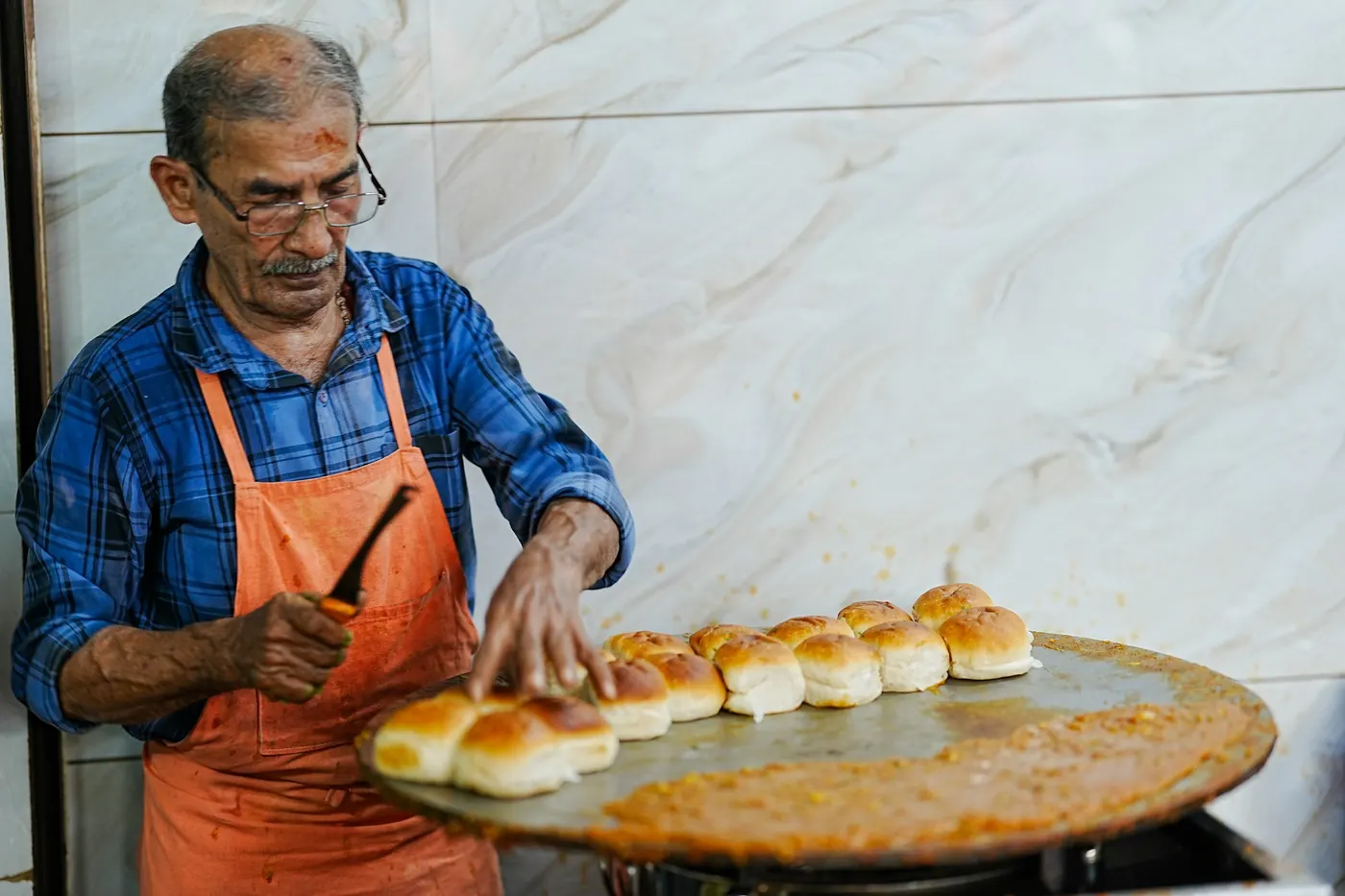
A 12-inch frying pan is not 12 inches of cooking space. Because the sides flare out, the flat floor is smaller: America’s Test Kitchen lists its winning 12-inch stainless skillet at 9.5 inches of cooking surface, and its best-buy 12-inch cast iron skillet at 10 inches. That fits four pancakes, two or three corn tortillas, or one folded quesadilla.
A two-burner griddle changes the arithmetic. Lodge’s Double Play measures 16.75 by 9.5 inches, nearly all of it usable, so a row of four or five tortillas or six pancakes fits at once. For a family breakfast or taco night, that means fewer rounds at the stove and food that comes off together. A single-burner round or square griddle has about the same area as a frying pan, but every inch of it is reachable with a spatula.
Heat: one burner or two
A frying pan sits over one burner, and good ones spread that heat evenly to the edges. ATK credits the All-Clad D3’s three bonded layers, aluminum between steel, with “deep, uniform browning”. Because the pan is close to the burner’s size, the whole floor heats at roughly the same rate.
A long griddle spans two burners, and that brings its own rules. Lodge advises choosing two burners that sit close together and nearest in size to the griddle, setting both to the same temperature, and giving the griddle time to preheat; it also warns that large cookware on a small burner develops hot spots. Even done right, the strip between burners usually runs a little cooler. Experienced cooks use that: a hot zone for searing, a gentler zone for warming tortillas or holding finished food. ATK adds that two-burner cast iron and carbon steel griddles work best on cooktops with a bridge element connecting two burners.
Material matters as much as shape. Cast iron, whether griddle or pan, heats slowly and holds heat well, so a cold tortilla or a raw patty does not drop the temperature much. Clad stainless heats faster and responds sooner when you turn the flame down. Lodge recommends warming cast iron for three to five minutes over medium-low before turning it up.
Fat, liquid and mess
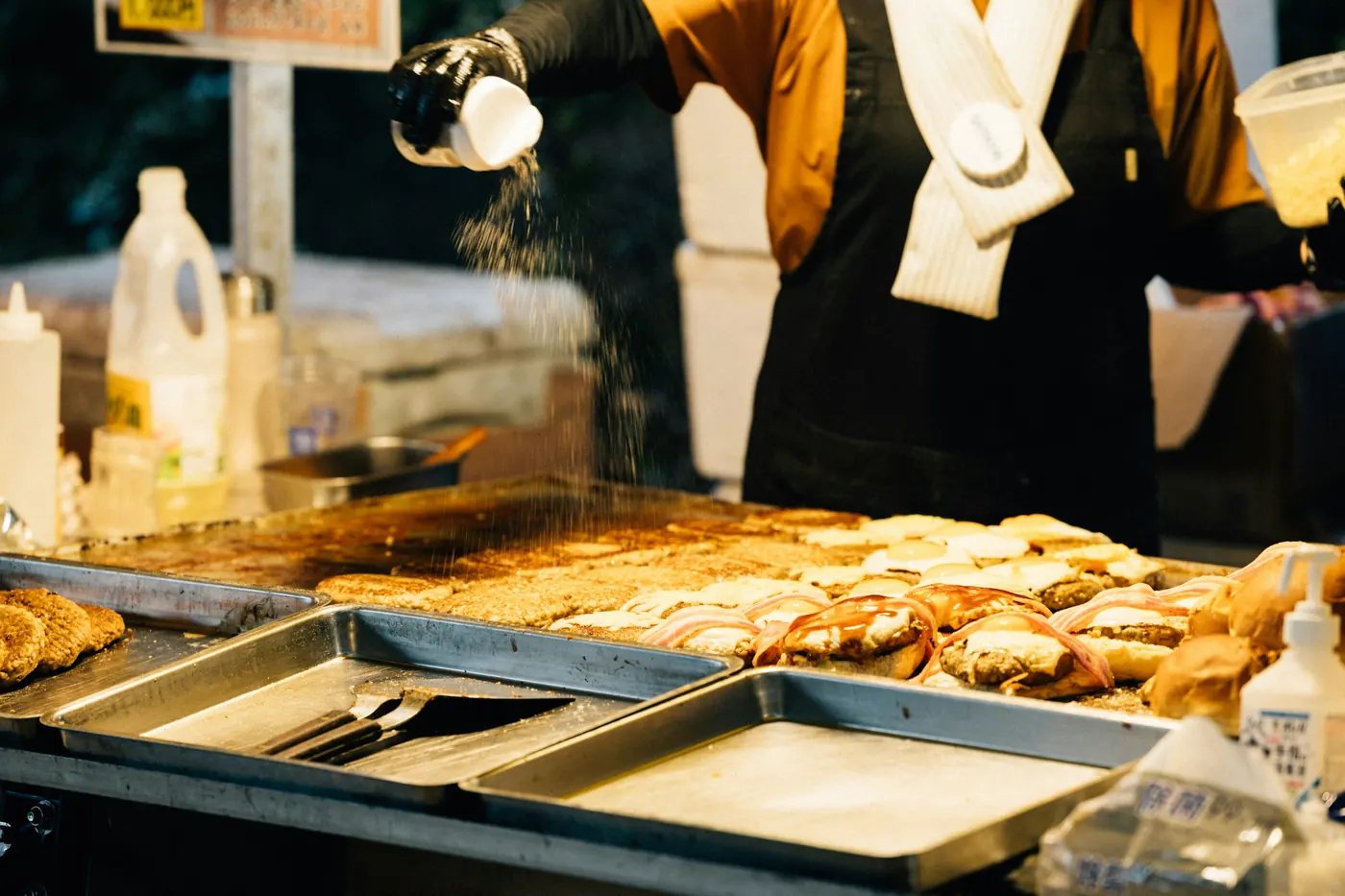
This is where the frying pan wins outright. Its walls keep a quarter inch of oil in place for frying tortilla strips for chilaquiles, hold a splash of broth while chicken finishes cooking, and contain the juices that come off fajita steak. On a griddle, liquid runs to the edge and onto the stove. Fatty foods are manageable on a griddle with a drip channel or raised sides, but a flat, open plate is a poor choice for a big batch of bacon.
The griddle’s strength is the opposite: dry heat. Tortillas, quesadillas and pancakes want a hot, dry or barely oiled surface, and they brown better when they are not crowded. Onions and peppers spread thin across a griddle sear instead of steaming, which is the texture you want for fajitas. If you are new to them, our guide to how to eat fajitas explains how the pieces come together at the table.
Griddle vs skillet for Mexican cooking
In a Mexican kitchen the split is clear. The griddle, or comal, is for tortillas, quesadillas, toasting dried chiles and charring tomatoes, onions and garlic for salsa. Our guide to what a quesadilla is shows why a flat surface suits it: you need room to fold and flip. The frying pan is for huevos rancheros, chorizo with eggs, refried beans mashed in their fat, rice toasted before simmering and the meat for tacos and fajitas when you want a deep sear and a little sauce.
If tortillas are the main event, a round comal is the most direct tool; our guide to the best comal for tortillas covers them, and comal vs cast iron skillet answers the same question for one-burner pans.
Stovetops, storage and care
Both work on gas, electric and induction if the maker says so; the two picks below are both rated for induction. On glass and induction tops, Lodge recommends lifting cookware rather than sliding it. A two-burner griddle needs two burners of similar size side by side, which not every compact range has.
Storage is the griddle’s weak point. A 12-inch frying pan hangs on a hook or stacks with other pans. A two-burner griddle is 17 to 20 inches long and, in cast iron, often nine pounds or more, so it needs a deep drawer, a spot in the oven or a permanent place on the stove. Many cooks simply leave it over two burners.
Care follows the material, not the shape. Bare cast iron, griddle or pan, is hand washed, dried at once and wiped with oil. Clad stainless can be scrubbed hard; All-Clad recommends hand washing its D3 pans. Enameled iron needs no seasoning.
Choose a griddle if… / Choose a frying pan if…
Choose a griddle if…
- You cook tortillas, quesadillas or pancakes several times a week.
- You feed four or more and want breakfast or taco fillings done in one round.
- You like smash burgers, grilled sandwiches or fajita vegetables with a hard sear.
- You have two burners side by side and space to store a long plate.
Choose a frying pan if…
- You want one pan that does the most different jobs.
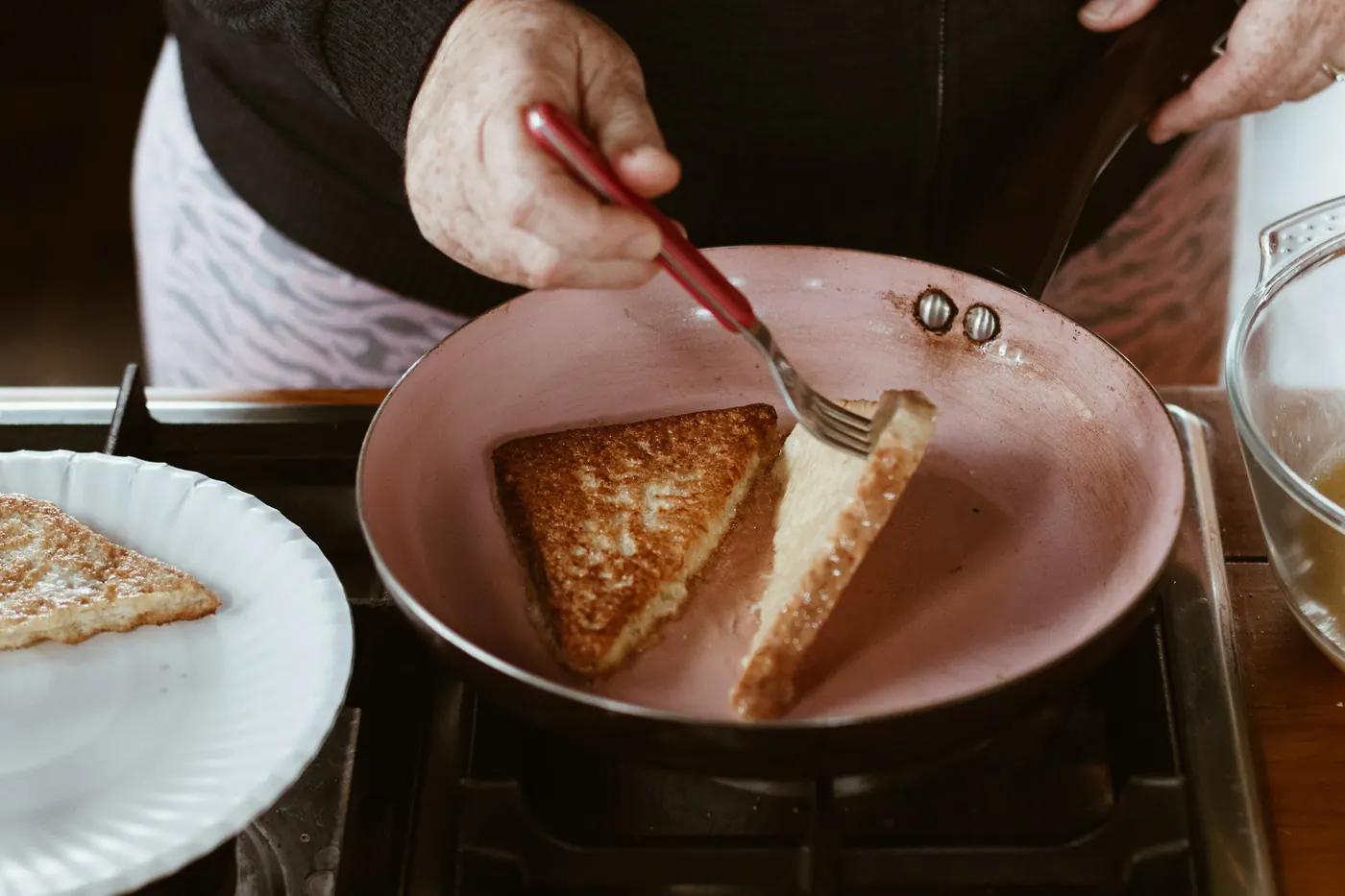
- You fry in shallow oil, cook eggs in butter or finish dishes in a sauce.
- You want a lid for steaming, melting cheese or keeping food moist.
- Your stove is small or storage is tight.
If you cook from scratch most days, plan on both. The frying pan comes first for most people because it does more, and the griddle earns its place the first time you cook tortillas for a crowd.
Our pick on each side of the griddle vs pan question
We chose one well-documented example of each: a two-burner cast iron griddle, because that is where a griddle most clearly beats a pan, and the 12-inch stainless frying pan America’s Test Kitchen names as its winner. For more choice, see the best frying pan and the best cast iron skillet, or the best stainless steel griddle pan for a lighter griddle.
1. Lodge Double Play Reversible Grill/Griddle, 16.75 x 9.5-inch – A Batch at Once

Lodge’s Double Play is the griddle to buy if you want to see what a griddle does that a pan cannot. It is a 16.75 by 9.5-inch cast iron plate that sits across two burners, flat on one side for tortillas, quesadillas, pancakes and eggs, and ridged on the other for burgers and vegetables with grill marks.
Lodge lists it at 9.35 pounds, seasons it with vegetable oil so it is ready to use, and rates it for any stovetop including induction, plus the oven, grill and campfire. It is made in the USA. Cast iron’s slow, steady heat suits batch cooking: once the plate is hot, a row of cold tortillas or raw patties does not pull the temperature down much.
Preheat it the way Lodge advises, over two matched burners at the same setting, and expect a slightly cooler strip in the middle. Care is hand wash, dry and oil.
Why we like it
- About twice the flat surface of a 12-inch frying pan
- Flat griddle side plus a ridged grill side
- Rated for every stovetop, including induction
- Pre-seasoned and made in the USA
Key specifications
| Model | LDP3 |
|---|---|
| Type | Reversible cast iron griddle, two burners |
| Size | 16.75 x 9.5 in |
| Sides | Low edge; 0.62 in overall height |
| Weight | 9.35 lb (Lodge) |
| Lid | None |
| Heat sources | Any stovetop including induction; oven, grill, campfire |
| Care | Hand wash, dry, oil |
Why we recommend it
It suits a family cook who makes tortillas, quesadillas, pancakes or burgers in batches and has two burners side by side.
Skip it if you need to fry in oil or make a sauce; with almost no edge, it cannot hold liquid, and it is heavy to lift to the sink.
Pros and cons
Pros
- Big, flat batch surface
- Two cooking sides
- Works on induction
Cons
- Heavy at 9.35 lb
- Needs two matched burners
- Long to store
2. All-Clad D3 12-inch Stainless Fry Pan with Lid – Even Browning, Lid Included

America’s Test Kitchen calls this its “longtime favorite skillet” and names it the winner of its stainless steel skillet review. It is fully bonded tri-ply, an aluminum core between layers of stainless steel, which ATK credits with deep, even browning, and its low, flaring sides let steam escape so food sears instead of stewing.
ATK lists it at 2.8 pounds with a 9.5-inch cooking surface and 2-inch sides, and says its weight and balance sit between sturdy and easy to handle. That makes it the pan for the jobs a griddle cannot do: eggs fried in butter, chorizo browned in its own fat, rice toasted before the broth goes in, or a pan sauce built on what the meat left behind. The included lid turns it into a pan that can steam vegetables or melt cheese over a filling.
All-Clad rates it for every stovetop including induction and for the oven and broiler up to 600°F, makes it in Pennsylvania with global components, and recommends hand washing. It carries a limited lifetime warranty.
Why we like it
- ATK’s winning 12-inch stainless skillet
- Tri-ply construction for even browning
- Light for its size at 2.8 lb
- Lid included; oven safe to 600°F
Key specifications
| Model | D3 12-inch Fry Pan with Lid |
|---|---|
| Type | Tri-ply stainless steel frying pan |
| Size | 12 in; 9.5 in cooking surface (ATK) |
| Sides | 2 in, flared (ATK) |
| Weight | 2.8 lb (ATK) |
| Lid | Included, stainless steel |
| Heat sources | Any stovetop including induction; oven and broiler to 600°F |
| Care | Hand washing recommended |
Why we recommend it
It suits a cook who wants one pan for searing, sautéing, frying and pan sauces most nights, and a pan that will last.
Skip it if you mostly cook eggs and pancakes and want them to release without care; bare stainless needs a properly preheated pan and some fat, and a nonstick pan or a griddle is easier for those.
Pros and cons
Pros
- Even, deep browning
- Holds oil, sauce and liquid
- Lid included
Cons
- Food sticks without a good preheat
- Hand washing recommended
- Smaller flat area than a griddle
Griddle and frying pan questions, answered
Frying pan vs griddle: can one replace the other?
Partly. A frying pan can do most griddle jobs one or two pieces at a time; a griddle cannot do the frying pan’s wet jobs at all. That is why the frying pan is usually the first purchase, and the griddle the second.
Griddle vs skillet: what is the difference?
“Skillet” and “frying pan” mean the same pan in American kitchens, so the answer is the same: the skillet has sloped walls that hold fat and liquid, the griddle is a flat plate with little or no edge. For the difference between a skillet and its taller, straight-sided cousins, see saucepan vs pan.
Can you make pancakes in a frying pan?
Yes, two to four at a time in a 12-inch pan. The sloped sides make the edge pancakes harder to flip, and you will cook more rounds than on a griddle, but the result is the same if the pan is evenly preheated.
Is a griddle better for tortillas?
Yes. A flat surface lets you flip tortillas with fingertips or a spatula and fit more at once. A round griddle, or comal, handles one or two; a two-burner griddle handles four or five.
Do you need oil on a griddle?
Corn tortillas go on a dry, hot griddle. Pancakes, eggs and quesadillas need a thin film of oil or butter, especially on a new cast iron griddle while its seasoning builds.
Which one goes on your stove first
For most home cooks, the frying pan comes first because it handles the widest range of cooking, from eggs to rice to a seared steak with a pan sauce. The griddle comes next, and for anyone who cooks tortillas, quesadillas or pancakes for a family, it quickly becomes the pan that never leaves the stove.
If a griddle wins, our guide to the best cast iron griddle compares reversible, two-burner and round models.
And on nights when you would rather someone else worked the griddle, see the menu or call to order.