More and more recipes give ingredients in grams, and a digital scale is the easiest way to follow them. But a scale is not the only way to measure well. Cooks baked from cups and spoons for generations, and with the right tools and a careful method, volume measuring gets you close enough for most recipes.
This guide covers the kitchen scale alternative that works for each kind of ingredient: nesting cups and spoons for dry goods, adjustable cups for sticky ones, angled cups for liquids and mini spoons for pinches of spice. We also explain how to turn grams into cups using King Arthur Baking’s published weight chart, and where accuracy drops when you do.
Julia’s earns a commission on purchases made through links on this page, at no cost to you. Recommendations are based on what a restaurant kitchen looks for, product specifications and verified buyer reports.
Why measure without a scale, and what it costs you
Bakers are clear that a scale is the better tool. King Arthur Baking says the best step you can take toward better, more consistent baking is to use weight measurements, and its weight chart opens by recommending a digital scale. The reason is flour. King Arthur notes that the amount of flour in 1 cup can vary greatly depending on how you measure: pack it into the cup and you will have much more flour than if you lightly scoop it in. By weight, King Arthur’s 120 grams for a cup of all-purpose flour is always the same.
So what you give up without a scale is consistency, mostly with flour and other fluffy or packable dry ingredients. What you lose is smaller than it sounds if you use the right method:
- Flour and powders: the biggest risk. Use King Arthur’s fluff, sprinkle and scrape method, below, and the error shrinks a lot.
- Sugar, rice, beans and grains: pour freely and settle evenly, so a level cup is fairly repeatable (general kitchen sense).
- Liquids: a liquid measuring cup read at eye level is reliable. Water and milk both come to 227 grams a cup on King Arthur’s chart.
- Sticky ingredients: honey, peanut butter and shortening cling to a cup, so some never makes it into the bowl. An adjustable cup fixes that.
- Tiny amounts: a teaspoon of baking soda or a pinch of cumin weighs only a few grams, and spoons are often the easier tool here even for cooks who own a scale.
Quick verdict: the best kitchen scale alternative
For most kitchens, the best kitchen scale alternative is a good set of stainless measuring cups and spoons, such as the OXO Good Grips 8-piece stainless set, used with King Arthur’s fluff, sprinkle and scrape method and its ingredient weight chart for converting grams. Add a KitchenAid angled measuring cup set for liquids, and a KitchenArt Adjust-A-Cup or Dreamfarm Big Upcup for honey, peanut butter and shortening. If you bake bread or follow European recipes often, buy a scale anyway; our best kitchen scale guide covers the ones worth owning.
Five measuring tools that replace a scale, side by side
Our five standout picks, one per kind of ingredient, with the details each maker or listing states. All six tools are reviewed in full below.
| Tool | Type | Best for | Sizes | Buy on Amazon |
|---|---|---|---|---|
| Nesting cups and spoons | Flour, sugar, dry goods | 1/4 to 1 cup; 1/4 tsp to 1 tbsp | View on Amazon | |

KitchenAid Easy View Angled Measuring Cups, Set of 3Best for liquids
|
Angled liquid cups | Water, milk, broth, oil | Set of 3 (sizes not stated) | View on Amazon |

KitchenArt 2-Cup Adjust-A-CupBest adjustable cup
|
Plunger cup | Shortening, honey, peanut butter | 1/8 cup to 2 cups | View on Amazon |

Dreamfarm Big Upcup Adjustable Measuring Cup, 2 CupBest for sticky and liquid
|
Adjustable-base cup | Sticky and liquid, one cup | 1/4, 1/2, 1, 1 1/2 and 2 cups | View on Amazon |
| Measuring spoons on a ring | Leaveners, salt, spices | 1/4, 1/2, 1 tsp; 1 tbsp | View on Amazon |
Product images from Amazon. Details are as stated by each maker or listing. Check the listing before you buy.
How to measure accurately by volume
Flour: fluff, sprinkle and scrape
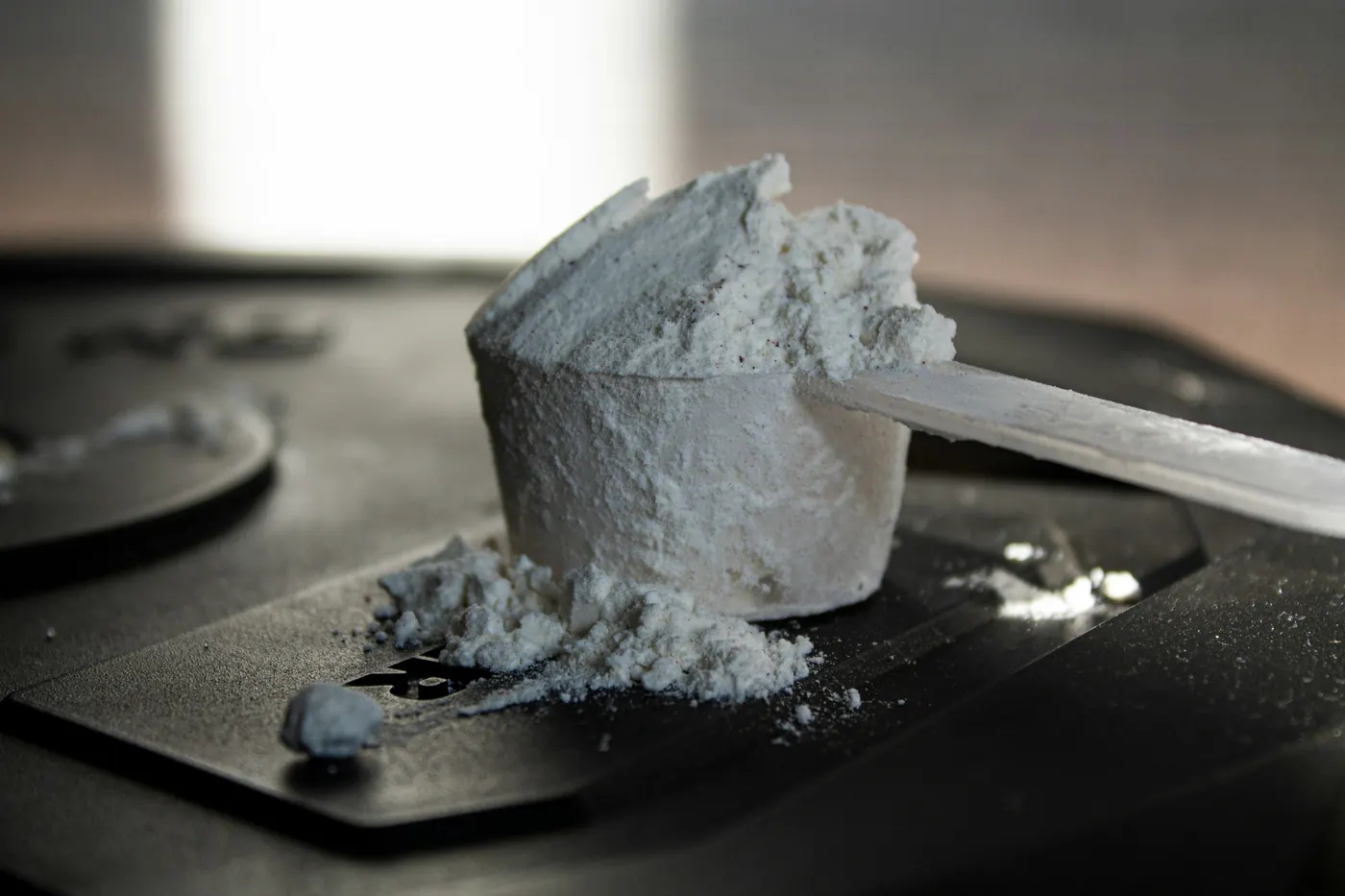
King Arthur Baking uses what it calls the fluff, sprinkle and scrape technique for all of its recipes. In its guide to dry and liquid measuring cups, King Arthur describes it this way: fluff the flour in its container with a spoon, spoon it into a dry measuring cup until it overflows, then level it with the back of a butter knife. Because dry ingredients do not level themselves, you need to sweep the top flush with the cup. Never dip the cup into the bag and pack it; that is where the extra flour comes from.
Dry cups for dry, liquid cups for liquid
King Arthur says liquid measuring cups are for oil, milk, water and other liquids, and dry cups are for flour, sugar, nuts and grains, plus thick ingredients like sour cream, peanut butter and yogurt that do not level themselves. It is impossible, King Arthur says, to get an accurate reading of flour in a liquid cup, because you cannot fluff, scoop and level it. For liquids, set the cup on the counter, get down to eye level and read the bottom of the curved surface.
Converting grams to cups
When a recipe gives only grams, King Arthur’s ingredient weight chart lets you work backward. A few figures from the chart:
| Ingredient | Volume | Grams (King Arthur chart) |
|---|---|---|
| All-purpose flour | 1 cup | 120 |
| Granulated white sugar | 1 cup | 198 |
| Brown sugar, packed | 1 cup | 213 |
| Butter | 8 tablespoons (1/2 cup) | 113 |
| Masa harina | 1 cup | 93 |
| Water or milk | 1 cup | 227 |
| Long-grain rice, dry | 1/2 cup | 99 |
| Honey | 1 tablespoon | 21 |
So a recipe calling for 240 grams of all-purpose flour is about 2 cups, measured King Arthur’s way. Two cautions. First, these figures assume King Arthur’s method; a packed cup will not match them. Second, other publishers use slightly different weights per cup, so if a recipe comes from a cookbook with its own chart, use that one. Note how light masa harina is: a cup weighs much less than a cup of flour, so do not swap them cup for cup by weight. Our best masa harina for tamales guide covers the brands.
Six measuring tools to use instead, reviewed
We chose tools that make volume measuring as repeatable as possible, from makers that state their sizes and materials: OXO, KitchenAid, KitchenArt, Dreamfarm, Cuisinart and Norpro. Each was in stock on Amazon US, sold new, when we checked. Specifications come from the makers’ listings; measuring methods come from King Arthur Baking or are labeled general kitchen sense. We have not measured with every tool here.
1. OXO Good Grips Stainless Steel Measuring Cups and Spoons, 8-Piece – Flat Rims for Clean Leveling

If you are going to measure flour by volume, the cup matters. You want a dry cup with a flat rim you can sweep a knife across, sturdy enough not to bend, with markings that will not wash off. OXO’s stainless set has all of that. OXO says the cups are designed to make leveling easy for greater accuracy, and the measurement markings are etched in permanently.
The set has four cups, 1/4, 1/3, 1/2 and 1 cup, and four spoons, 1/4, 1/2 and 1 teaspoon and 1 tablespoon. The handles are magnetic, so cups and spoons snap together for storage and come apart one at a time, and they have OXO’s soft, non-slip grip.
OXO’s four-piece cup set appears on another of our measuring cup pages. We include this eight-piece set here because it adds the matching spoons, which is what someone replacing a scale needs: one set that covers both cups and teaspoons. The set skips 2/3 and 3/4 cup, so those take two scoops.
Why we like it
- Designed for easy leveling, per OXO
- Etched, permanent markings
- Cups and spoons in one set
- Magnetic handles keep the set together
Key specifications
| Model | 11180500 |
|---|---|
| Type | Nesting dry cups and spoons |
| Material | Stainless steel, soft-grip handles |
| Sizes | 1/4, 1/3, 1/2, 1 cup; 1/4, 1/2, 1 tsp, 1 tbsp |
| Pieces | 8 |
| Markings | Etched |
| Care | Not stated |
Why we recommend it
It suits a home baker who wants one solid set for dry ingredients and will measure flour the careful way.
Skip it if you already own good cups and spoons; the method matters more than the brand.
Pros and cons
Pros
- Made for leveling
- Markings will not rub off
- Cups and spoons together
Cons
- No 2/3 or 3/4 cup
- Sold here by a third-party seller
2. KitchenAid Easy View Angled Measuring Cups, Set of 3 – Read Liquids from Above
Liquids are the easy part of measuring without a scale, as long as you read the cup properly. King Arthur’s advice is to set the cup on the counter and read it at eye level. An angled cup takes the crouching out of it: KitchenAid says the angled design lets you view measurements without lifting the cup.
This is a set of three clear cups with black, non-slip handles and pouring spouts, and KitchenAid says they measure wet and dry ingredients and are dishwasher safe. The listing does not give the three sizes, so check the photos before you buy. KitchenAid backs the set with a one-year hassle-free replacement and a lifetime limited warranty.
Use these for water, milk, broth, oil and the stock for a pot of rice or beans. For flour, use the dry cups above; King Arthur says flour cannot be measured accurately in a liquid cup.
Why we like it
- Angled markings readable from above
- Pour spouts and non-slip handles
- Dishwasher safe
- Lifetime limited warranty, per KitchenAid
Key specifications
| Model | KQ289OSOBA |
|---|---|
| Type | Angled liquid measuring cups |
| Material | Clear plastic, black handles |
| Sizes | Not stated |
| Pieces | 3 |
| Markings | Angled, read from above |
| Care | Dishwasher safe |
Why we recommend it
It suits any cook converting a recipe’s liquid weights to cups who wants a quick, accurate reading without bending down.
Skip it if you need to heat liquids in the cup; the listing does not say it is microwave safe.
Pros and cons
Pros
- No crouching to read
- Three cups in one set
- Strong warranty
Cons
- Cup sizes not listed
- Microwave use not stated
3. KitchenArt 2-Cup Adjust-A-Cup – Pushes Sticky Ingredients Out Clean
Weighing is at its best with sticky ingredients, because you can scrape them straight into the bowl on the scale. A plunger cup is the volume answer. KitchenArt’s Adjust-A-Cup is a clear sleeve with an inner canister: you slide it to the amount you want, from 1/8 cup to 2 cups, fill it, then push the plunger to send everything out.
That matters for shortening, lard, peanut butter, honey and sour cream, where a regular cup leaves a coating behind. In a Mexican kitchen, it is a neat way to measure lard or shortening for tamale masa or flour tortillas without scraping a cup with a spatula. KitchenArt says the cup measures liquids, dry and semi-solid ingredients in metric or standard units, and the listing title says conversions are included.
It is made of ABS and SAN plastic with silicone, and it collapses to 6 inches tall for storage, per the listing. As general kitchen sense, a plunger cup is slower than a scoop for plain flour; keep it for the sticky jobs.
Why we like it
- Adjusts from 1/8 cup to 2 cups
- Plunger pushes sticky ingredients out
- Metric and standard markings
- Collapses for storage
Key specifications
| Model | 23401 |
|---|---|
| Type | Adjustable plunger cup |
| Material | ABS and SAN plastic, silicone |
| Sizes | 1/8 cup to 2 cups |
| Pieces | 1 |
| Markings | Metric and standard |
| Care | Not stated |
Why we recommend it
It suits a cook who measures shortening, lard, nut butters or honey often and is tired of scraping cups.
Skip it if you mostly measure flour and liquids; a plain cup is quicker for those.
Pros and cons
Pros
- Nothing left in the cup
- Wide range in one tool
- Stores small
Cons
- Plastic, not steel
- Care not stated in the listing
4. Dreamfarm Big Upcup Adjustable Measuring Cup, 2 Cup – Scrapes Itself Clean
Dreamfarm’s Big Upcup solves the same problem a different way. Instead of a plunger, the base of the cup moves. Dreamfarm says it raises to five set measurements, 2, 1 1/2, 1, 1/2 and 1/4 cup, and a water-tight seal around the base wipes the inside clean as it moves. Push it all the way to the top and it scrapes out the last of the peanut butter, mayonnaise or honey.
Because the base seals, the Upcup also measures liquids, so one cup can cover thin and thick ingredients. The cup is BPA-free Tritan with milliliter and fluid-ounce markings printed in red and embossed so they will not rub off, per Dreamfarm. It takes liquids up to 212°F and is dishwasher and microwave safe.
The trade-off against the KitchenArt is fewer steps: five fixed sizes rather than a sliding scale. For a recipe calling for 3/4 cup of honey, you would measure 1/2 and then 1/4.
Why we like it
- Moving base scrapes itself clean
- Measures sticky and liquid ingredients
- Embossed markings, per Dreamfarm
- Dishwasher and microwave safe
Key specifications
| Model | DFUP2485 |
|---|---|
| Type | Adjustable-base cup |
| Material | BPA-free Tritan |
| Sizes | 1/4, 1/2, 1, 1 1/2, 2 cups |
| Pieces | 1 |
| Markings | mL and fl oz, printed and embossed |
| Care | Dishwasher and microwave safe |
Why we recommend it
It suits a cook who wants one cup for honey, oil and milk alike, and likes that it goes in the microwave and dishwasher.
Skip it if you need odd amounts like 1/3 or 3/4 cup in one go; the KitchenArt slides to more sizes.
Pros and cons
Pros
- Sticky and liquid in one cup
- Markings will not wear off
- Dishwasher and microwave safe
Cons
- Five fixed sizes only
- Markings in mL and fl oz, not cup fractions
5. Cuisinart Stainless Steel Measuring Spoons, Set of 4 – The Basics on a Ring

Spoons are where volume measuring holds up best against a scale. Baking soda, baking powder, salt and ground spices are used in such small amounts that many home scales, which typically read in 1-gram steps, cannot weigh them precisely, which is general kitchen sense rather than a maker claim. A level teaspoon is the practical tool even in kitchens that own a scale.
Cuisinart’s set is simple: stainless steel teaspoons in 1/4, 1/2 and 1 sizes plus a tablespoon, held on a storage ring, and dishwasher safe, per the listing. Level each spoon with the back of a knife, just as you would a cup.
One note from King Arthur Baking: kosher salt’s larger grains fit differently into measuring spoons than table salt, so a teaspoon of one is not the same amount of salt as a teaspoon of the other. Use the salt the recipe names.
Why we like it
- Stainless steel
- Four essential sizes
- Storage ring
- Dishwasher safe
Key specifications
| Model | CTG-00-SMP |
|---|---|
| Type | Measuring spoons |
| Material | Stainless steel |
| Sizes | 1/4, 1/2, 1 tsp; 1 tbsp |
| Pieces | 4 and a ring |
| Markings | Not stated |
| Care | Dishwasher safe |
Why we recommend it
It suits a kitchen that already has cups but needs a sturdy set of spoons for leaveners, salt and spices.
Skip it if you want 1/8 teaspoon or a half tablespoon; this set covers only the basics.
Pros and cons
Pros
- Simple and sturdy
- Dishwasher safe
- Sold by Amazon.com
Cons
- Only four sizes
- Ring must come off to use one spoon
6. Norpro Mini Stainless Steel Measuring Spoons, Set of 5 – Tad, Dash, Pinch, Smidgen, Drop

Old recipes, and many family ones, say “a pinch of cloves” or “a dash of cayenne.” These are amounts far below anything a home scale can weigh, and Norpro’s mini spoons give them a fixed size. The set has five spoons labeled tad, dash, pinch, smidgen and drop, with the names imprinted on the handles; Norpro says the point is to keep measures consistent and take the mystery out of what each term means.
The spoons are narrow enough to fit into a spice jar, per Norpro, which suits ground cumin, Mexican oregano, cinnamon and chile powders. They are stainless steel, held on a ring, and dishwasher safe.
This is a specialist tool. You will reach for it less often than a teaspoon, and the listing does not give the volumes in teaspoons, so treat the names as Norpro’s own standard.
Why we like it
- Fixed sizes for pinch and dash
- Names imprinted on handles
- Fits in spice jars, per Norpro
- Dishwasher safe
Key specifications
| Model | 3080 |
|---|---|
| Type | Mini measuring spoons |
| Material | Stainless steel |
| Sizes | Tad, dash, pinch, smidgen, drop |
| Pieces | 5 and a ring |
| Markings | Imprinted names |
| Care | Dishwasher safe |
Why we recommend it
It suits a cook working from family recipes with pinches and dashes who wants to make a dish the same way every time.
Skip it if your recipes are in teaspoons; a standard set covers them.
Pros and cons
Pros
- Makes tiny amounts repeatable
- Fits spice jars
- Dishwasher safe
Cons
- Teaspoon equivalents not stated
- Specialist use
When you really should buy a scale
Volume measuring is fine for most cooking and a lot of baking: cakes, cookies, muffins, quick breads, tortillas, rice and beans. It is weakest where small differences in flour or water change the result. Yeast bread, sourdough and recipes written in grams with no cup measurements are the clearest cases, since you would be converting every ingredient and stacking small errors (general kitchen sense). Our best kitchen scale for baking guide covers scales made for that.
Kitchen scale alternative questions, answered
What can I use instead of a kitchen scale?
Measuring cups and spoons, used carefully. For flour, follow King Arthur Baking’s fluff, sprinkle and scrape method; use a liquid cup for liquids; and convert grams to cups with a published chart such as King Arthur’s ingredient weight chart.
How many cups is 100 grams of flour?
King Arthur’s chart puts a cup of all-purpose flour at 120 grams, so 100 grams is a little more than 3/4 cup. That assumes King Arthur’s measuring method; a packed cup weighs more.
How accurate are measuring cups compared with a scale?
Less consistent, especially for flour. King Arthur says the amount of flour in a cup can vary greatly with how you measure, while 120 grams is always the same. With a careful method the difference is small enough for most everyday baking.
Can I measure flour in a liquid measuring cup?
Not accurately. King Arthur says you cannot fluff, scoop and level flour in a liquid cup, so the reading will be off. Use a dry cup with a flat rim.
How do I measure honey or shortening without a scale?
Use an adjustable cup such as the KitchenArt Adjust-A-Cup or Dreamfarm Big Upcup, which push the ingredient out so none stays behind. A light coat of oil in a regular cup also helps sticky ingredients slide out (general kitchen sense).
Is a cup of masa harina the same weight as a cup of flour?
No. King Arthur’s chart gives 93 grams for a cup of masa harina and 120 grams for a cup of all-purpose flour, so measure masa by the recipe’s own units.
Our final word on measuring without a scale
Start with a good set of dry cups and spoons, such as OXO’s stainless set, and learn King Arthur’s fluff, sprinkle and scrape method; that alone fixes most volume measuring problems. Add KitchenAid’s angled cups for liquids and an adjustable cup for sticky ingredients, and keep King Arthur’s weight chart bookmarked for recipes written in grams. If you find yourself converting every recipe, it is time for a scale.
For more on the tools, see our guides to the best measuring cups, the best liquid measuring cups and the best measuring spoons, or go back to the best kitchen scale picks.
And if you would rather someone else did the measuring tonight, see the menu or call to order.