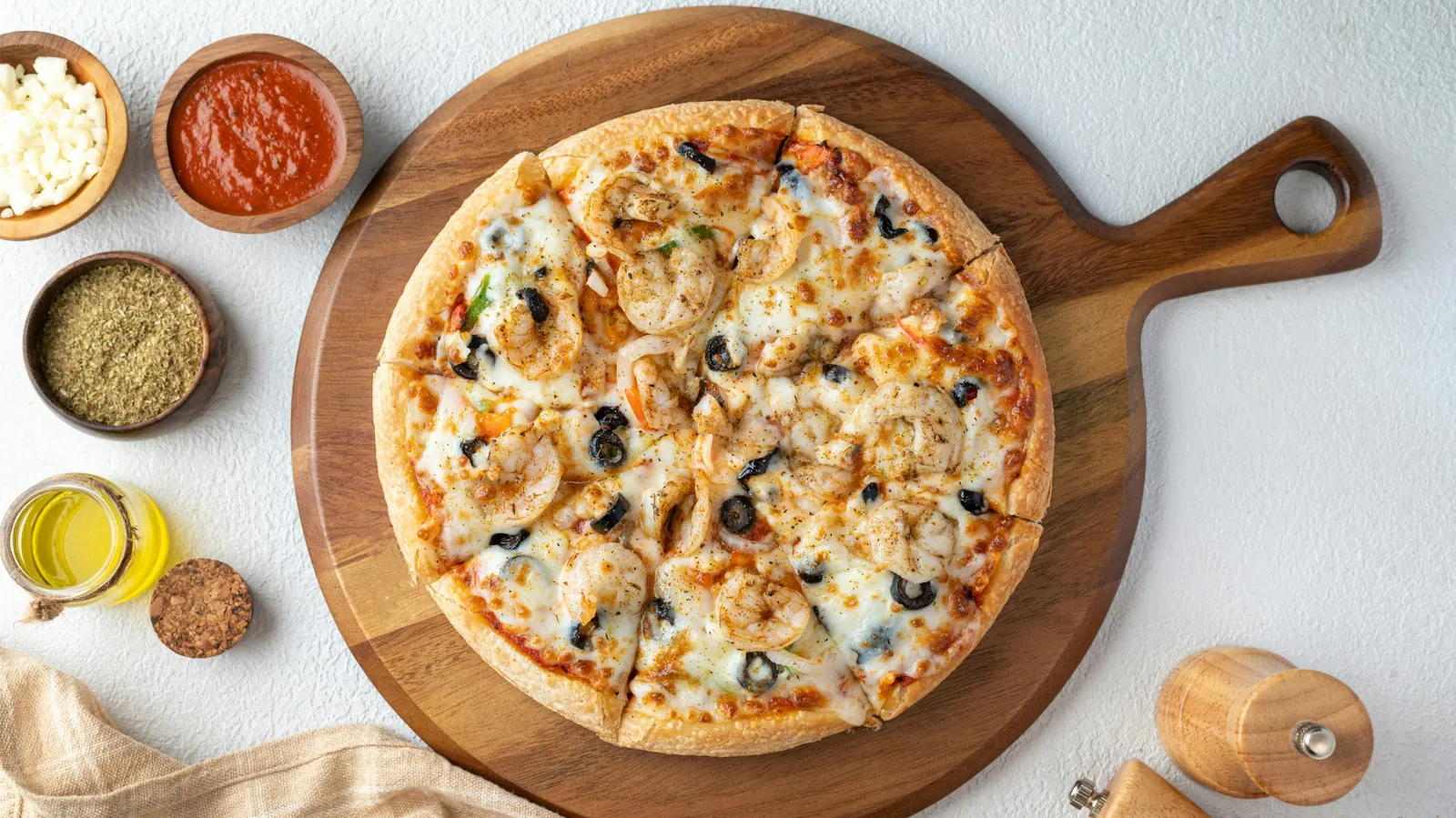
The pizza is out of the oven, the cheese is still bubbling and the pizza wheel is nowhere to be found. Or you never bought one, because a tool that only cuts pizza seemed like one gadget too many. Either way, you don’t have to tear the pie apart by hand. Several tools you may already own will cut it cleanly, and one or two of them do some jobs better than a wheel.
This guide covers the pizza cutter alternative that suits each kitchen: kitchen shears for clean slices that leave the toppings in place, a long chef’s knife pressed and rocked across the pie, a small mezzaluna, a bench scraper for thin crusts and a long serrated knife for thick pan pizza. For each one we say how well it cuts, which pizzas it suits and what it gives up.
Julia’s earns a commission on purchases made through links on this page, at no cost to you. Recommendations are based on what a restaurant kitchen looks for, product specifications and verified buyer reports.
Why people cut pizza without a pizza cutter
- No wheel in the drawer. A pizza wheel does one job. Many kitchens manage with what they have.
- Wheels drag toppings. A wheel rolls over the cheese and can pull it along with it, especially on a loaded pie. Shears and a straight-down knife cut without that drag.
- Square and pan pizzas. Luke Field, writing for Food Republic in 2023, recommends scissors for square pies such as Sicilian and Detroit-style, the way al taglio pizza is cut in Rome.
- Pans you don’t want scratched. A metal wheel run across a nonstick pan can mark it. Lifting the pizza onto a board first, or using shears above the pan, avoids that.
A sharp wheel or rocker made for pizza is still the quickest way to cut a big round pie into even slices. Our guide to the best pizza cutter covers wheels, rockers and pizza scissors, and the best cheap pizza cutter guide covers simple restaurant-supply wheels. This page is for the tools that are not pizza cutters but do the job.
Quick verdict: the best pizza cutter alternative
For most kitchens, the best pizza cutter alternative is a good pair of kitchen shears like the Wüsthof Come Apart Kitchen Shears: they cut a slice cleanly without dragging the toppings, work on round or square pies and come apart to wash. If you’d rather use a knife, a Mercer Renaissance 10-inch chef’s knife is long enough to press across most home pizzas. The HIC Kitchen mezzaluna rocks through a small pie or a flatbread, a Dexter-Russell dough cutter chops thin crusts in straight presses, and a Victorinox 10.25-inch bread knife handles thick pan pizza.
Five ways to slice pizza without a cutter, side by side
Our five picks, one per kind of pizza night, with what each maker or listing states. All five are reviewed in full below.
| Tool | How it cuts | Best pizza | Cleaning | Buy on Amazon |
|---|---|---|---|---|

Wüsthof Come Apart Kitchen ShearsBest overall
|
Snips from the edge in | Round or square, thin to medium | Blades come apart to wash | View on Amazon |
| Press down, then rock | Round pies up to about 12 inches | Hand wash only | View on Amazon | |

HIC Kitchen Mezzaluna Rocking ChopperBest rocker
|
Rocks through in short sections | Small pies and flatbreads | Hand wash | View on Amazon |

Dexter-Russell Sani-Safe 6 x 3-Inch Dough CutterBest for thin crust
|
Straight presses, no sawing | Thin and cracker crusts | Not stated; carbon steel blade | View on Amazon |

Victorinox Swiss Classic 10.25-Inch Bread KnifeBest for pan pizza
|
Serrated edge saws through crust | Thick pan and Sicilian-style | Dishwasher safe, per the listing | View on Amazon |
Which tool for which pizza
The crust decides more than the tool does. This is how the alternatives line up.
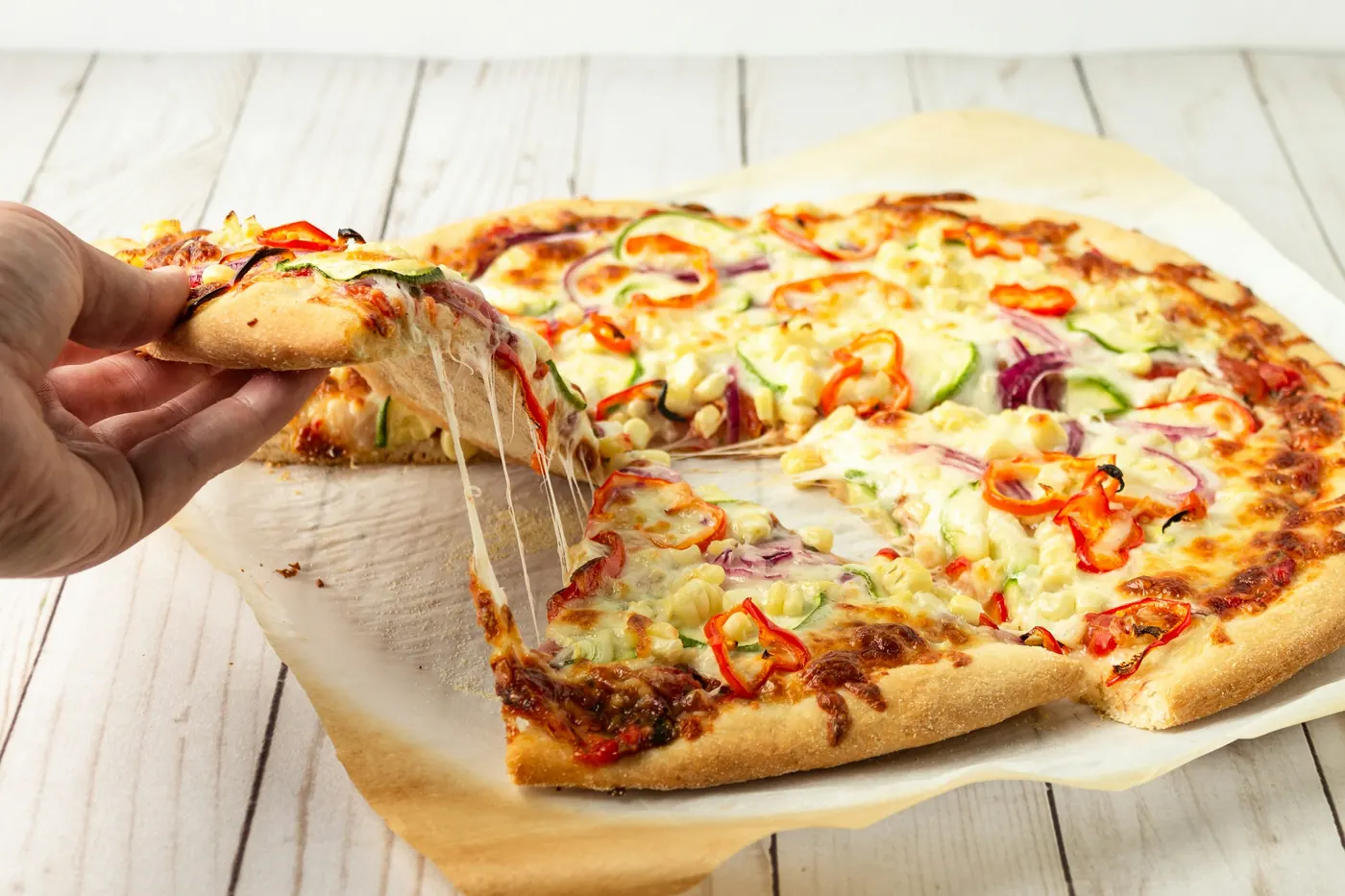
- Thin, New York or Neapolitan-style. Shears give the cleanest result, because they cut from above and below at once and don’t push the toppings around. A long knife pressed straight down works too.
- Square pies: Sicilian, Detroit, sheet-pan. Shears, as Food Republic’s Field suggests, or a long serrated knife for a thick, crisp-bottomed crust.
- Cracker-thin and flatbreads. A bench scraper or a mezzaluna, pressed straight down, cuts a crisp crust in short sections without shattering it across the whole pie.
- Big party pies. Here a knife shorter than the pizza is slow, because you cut each line in two or three sections. Mashed’s Abby Tariq, reporting chef Ann Kim’s advice from Food & Wine, notes that a chef’s knife is a good substitute as long as it spans the pizza’s full width. For 16-inch pies, shears or a proper rocker from our pizza cutter guide are easier.
Five tools to use instead of a pizza cutter
1. Wüsthof Come Apart Kitchen Shears – Clean Slices, Toppings Left in Place
Kitchen shears are the pizza cutter alternative that many cooks end up preferring. You slide the lower blade under the crust at the edge and snip toward the center, and because the blades cut from both sides at once, the cheese and toppings stay where they are instead of being pushed along by a wheel. Mashed’s piece on chef Ann Kim’s pizza-cutting advice lists kitchen shears among the alternatives, for clean cuts that keep the toppings intact. Shears also let you cut on the pan or the board without the blade touching the surface much, and they handle square pies as easily as round ones.
Wüsthof is a family-owned knife maker from Solingen, Germany, and its listing describes these as come-apart shears for many kitchen jobs, from snipping herbs and cutting twine to trimming chicken skin. The blades pull apart at the pivot, which is the main reason to choose them for pizza: melted cheese and grease collect around the joint, and shears that separate are much easier to get properly clean. The listing does not give the length, blade steel or dishwasher guidance; washing by hand is the safe default, which is general kitchen sense.
The limits: on a large pie you are snipping a fair distance, and a very thick or crunchy pan crust takes some hand strength. Let the pizza cool for a minute so the cheese doesn’t string from the blades. For other pairs, see our best kitchen shears guide; if you want shears built only for pizza, with a shoe that protects nonstick pans, the Dreamfarm Scizza is in our pizza cutter guide.
Why we like it
- Cuts without dragging the toppings
- Works on round and square pies
- Blades come apart for cleaning
- Solingen maker, per the listing
Key specifications
| Model | 1049594907 |
|---|---|
| Type | Come-apart kitchen shears |
| How it cuts | Snips from the edge in |
| Best pizza | Round or square, thin to medium crust |
| Length | Not stated |
| Material | Not stated |
| Cleaning | Blades separate; care not stated |
| Warranty | Not stated |
Why we recommend it
It suits anyone who wants one tool that cuts pizza neatly and then goes on to herbs, chicken and twine the rest of the week.
Skip it if you mostly serve big, thick-crust pies; snipping through them is slow work.
Pros and cons
Pros
- Toppings stay put
- Any pizza shape
- Easy to clean properly
Cons
- Slow on large pies
- Thick crusts take grip
- Few specs in the listing
2. Mercer Culinary Renaissance 10-Inch Chef’s Knife – Long Enough to Press Across the Pie
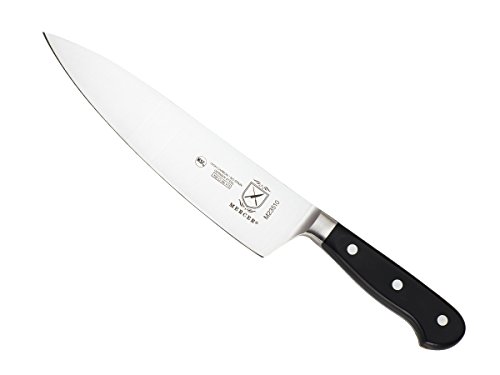
A chef’s knife cuts pizza well if you use it like a rocker rather than a knife. Field’s Food Republic piece advises pressing the blade firmly into the pie and rocking it back and forth, the way you would use a mezzaluna, instead of slicing with a sawing motion that drags the cheese. Mashed’s report of Ann Kim’s advice adds the other half: the knife has to span the pizza’s full width to do it in one cut.
That is why we chose a 10-inch blade rather than the more common 8-inch. Ten inches of edge, plus the length you can rock along, crosses most home pizzas up to about 12 inches in one line. Mercer says this Renaissance knife is precision-forged from high-carbon German steel, with a triple-riveted handle and a rounded spine for a comfortable grip, and it carries a lifetime warranty. Outside pizza night it is a full-size chef’s knife for onions, herbs and garlic.
The costs: Mercer says to wash it by hand and never put it in the dishwasher, and a 10-inch knife is a lot of blade for a small kitchen or a nervous cook. Don’t cut on a pizza stone or steel; slide the pizza onto a wooden board first, as our pizza cutter guide also advises, or the edge will dull fast. If you already own a long chef’s knife, use it. Our best large chef knife guide covers others.
Why we like it
- 10-inch blade spans most home pizzas
- Forged high-carbon German steel, per Mercer
- Lifetime warranty
- A full-size chef’s knife the rest of the week
Key specifications
| Model | M23530 |
|---|---|
| Type | 10-inch forged chef’s knife |
| How it cuts | Press down, then rock |
| Best pizza | Round pies up to about 12 inches |
| Length | 10-inch blade |
| Material | High-carbon German steel; triple-riveted handle |
| Cleaning | Hand wash only |
| Warranty | Lifetime |
Why we recommend it
It suits cooks who want a big everyday knife that also cuts pizza cleanly in one press per line.
Skip it if a long blade makes you uneasy; shears are easier to control.
Pros and cons
Pros
- One cut per line on most pies
- Useful for every meal
- Lifetime warranty
Cons
- Hand wash only
- Large for small kitchens
- Needs a board, not the pan
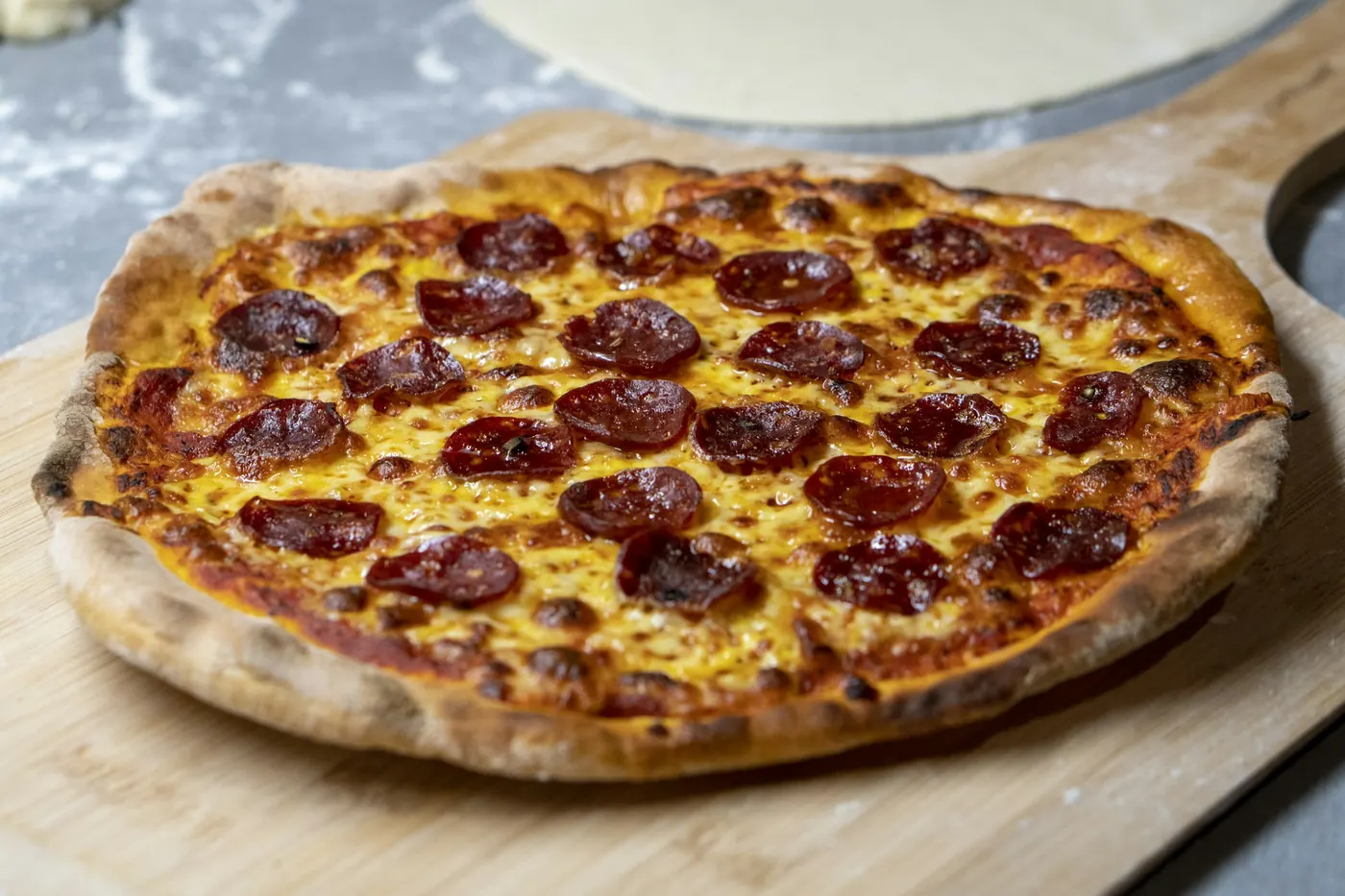
3. HIC Kitchen Mezzaluna Rocking Chopper – A Small Rocker You’ll Use for Herbs Too
A mezzaluna is a curved blade with a handle at each end, and a pizza rocker is really just a very long one. A herb-size mezzaluna does the same thing on a smaller scale: you press it into the pizza and rock it from end to end, and it cuts straight down so the cheese stays put. HIC Kitchen’s listing names slicing pizza and flatbreads among its jobs, along with mincing garlic and herbs, chopping vegetables and nuts, and making chopped salads, salsa and guacamole.
The listing gives the blade as 6.75 by 5.25 inches, in stainless steel with rubberwood handles, and suggests rocking side to side for soft foods and an up-and-down motion for dense ones. On pizza that means two or three overlapping rocks per line on a medium pie, which is fine for a weeknight but slower than a full-length rocker. HIC says to hand wash it in warm, soapy water; the wooden handles are another reason to keep it out of the dishwasher.
The trade-off is length. A 6.75-inch blade is ideal for a personal pizza, a quesadilla or a flatbread, and makes uneven lines across a 14-inch pie unless you take care to line each rock up. If you want the full-width version, the rockers in our pizza cutter guide do one press per line.
Why we like it
- Pizza and flatbreads named in the listing
- Cuts straight down, no dragging
- Minces herbs and garlic too
- Steady double handles
Key specifications
| Model | 42148 |
|---|---|
| Type | Single-blade mezzaluna |
| How it cuts | Rocks through in short sections |
| Best pizza | Personal pies, flatbreads, quesadillas |
| Length | 6.75 x 5.25 in |
| Material | Stainless steel blade; rubberwood handles |
| Cleaning | Hand wash |
| Warranty | Not stated |
Why we recommend it
It suits cooks who make small pizzas, flatbreads and quesadillas and also want a herb chopper.
Skip it if you mostly cut large pies; it takes several rocks per line.
Pros and cons
Pros
- Clean, straight-down cut
- Two tools in one
- Compact to store
Cons
- Short for big pies
- Hand wash only
- Bare blade needs careful storage
4. Dexter-Russell Sani-Safe 6 x 3-Inch Dough Cutter – Straight Presses for Thin Crust
If you make pizza from scratch, you may already own the next-best cutter: the bench scraper you used to divide the dough. Its blade is a straight, sharp-ish edge about six inches long. Press it straight down through a thin or cracker crust, lift, move along and press again, and you get clean, straight lines with no sawing at all. It is general kitchen sense rather than a maker’s claim, but it works especially well on crisp crusts that a wheel tends to crack or skid on.
Dexter-Russell’s listing describes a 6 by 3-inch carbon steel blade that is “sharp and rigid” and made to slice and portion dough, with a textured polypropylene handle. It is NSF certified and made in the USA, according to the listing, and Dexter-Russell pitches it for scraping counters and carrying chopped vegetables to the pan as well as cutting dough. Every pizza you make, it will divide the dough, clean the board and cut the finished pie.
The limits: six inches means several presses per line on a full pie, and a scraper can’t get through a thick, bready crust cleanly. The blade is carbon steel, which can rust if it is left wet; the listing does not give care instructions, so dry it right after washing. That is general practice for carbon steel.
Why we like it
- Cuts thin crusts without sawing
- Also divides dough and scrapes the board
- NSF certified, made in USA, per the listing
- Rigid 6 x 3-inch blade
Key specifications
| Model | S196 (02469) |
|---|---|
| Type | Dough cutter and bench scraper |
| How it cuts | Straight presses |
| Best pizza | Thin and cracker crusts, flatbreads |
| Length | 6 x 3-in blade |
| Material | Carbon steel blade; polypropylene handle |
| Cleaning | Not stated |
| Warranty | Not stated |
Why we recommend it
It suits home pizza makers who want one tool for dough day and serving time, and anyone who favors thin, crisp crusts.
Skip it if your pizzas are thick and soft; a long knife or shears do better.
Pros and cons
Pros
- Clean lines on thin crust
- Earns its place on dough day
- Made in the USA
Cons
- Several presses per line
- Carbon steel can rust
- Not for thick crusts

5. Victorinox Swiss Classic 10.25-Inch Bread Knife – Through Thick Pan Crusts
Thick pan pizzas, Detroit and Sicilian-style squares and focaccia-like sheet pies have a crust that a wheel struggles to get through and a straight knife has to be forced into. A long serrated knife is made for exactly that kind of crust: the teeth bite into a crisp, fried bottom and saw through soft, thick bread. Lift the pizza out of the pan onto a board, cut through the toppings with a light first stroke, then saw gently through the crust.
Victorinox lists this Swiss Classic bread and pastry knife with a 10.25-inch curved stainless steel blade with a wavy, serrated edge, a lightweight ergonomic handle, and says it is made in Switzerland and dishwasher safe. The length is enough to cross a quarter-sheet pan pizza, and the rest of the time it slices bread, bolillos and cakes.
The honest limit is that sawing is exactly what Field warns against for ordinary pizza, because it drags the cheese. On a thin pie a serrated knife pulls the toppings around; use shears or a straight blade there. For thick, crusty squares, it is the right tool. Our best bread knife guide covers other long serrated knives.
Why we like it
- Serrated edge bites into crisp pan crust
- 10.25-inch blade crosses a sheet-pan slice
- Dishwasher safe, per the listing
- Swiss made
Key specifications
| Model | 6.8633.26B |
|---|---|
| Type | Curved serrated bread and pastry knife |
| How it cuts | Saws through crust |
| Best pizza | Thick pan, Detroit and Sicilian-style |
| Length | 10.25-inch blade |
| Material | Stainless steel |
| Cleaning | Dishwasher safe |
| Warranty | Not stated |
Why we recommend it
It suits anyone who bakes pan or sheet pizza at home, and anyone who needs a bread knife anyway.
Skip it if you mostly make thin, round pies; sawing drags their toppings.
Pros and cons
Pros
- Best on thick crusts
- Long blade
- Dishwasher safe
Cons
- Drags toppings on thin pies
- Slower than a press cut
- Warranty not stated in listing
Getting clean slices with whatever you have
A few habits make any of these tools work better. They come from the sources named, or are labeled as general kitchen sense.
- Cut soon, but not instantly. Field’s Food Republic piece says professional chefs cut within seconds of the pie leaving the oven, while the cheese and crust are still pliable, and Mashed reports Ann Kim’s advice that pizza “starts to toughen up” once it settles. Our pizza cutter guide suggests a short rest so molten cheese doesn’t slide. A minute or so is a fair middle ground.
- Move it to a board. Cutting on a hot stone or steel dulls blades, and metal on a nonstick pan can scratch it. Slide the pizza onto a wooden board with a peel or spatula; that is general kitchen sense, and our parent guide says the same.
- Press, don’t saw. Field advises pressing a knife in and rocking it rather than slicing. The exception is a thick pan crust, where a serrated knife’s sawing is the point.
- Keep the edge sharp. Field recommends sharpening at home every two to three months and professionally every year or two, and notes that dull tools raise the risk of injury.
- Cut in halves first. On a round pie, cut it in half, then quarters, then eighths, so each cut lines up with the center. General kitchen sense, and it hides a short blade’s limits.
How we chose these five tools for slicing pizza
We started from the tools a kitchen is likely to own already, shears, a long chef’s knife, a mezzaluna, a bench scraper and a bread knife, and chose one from an identifiable maker for each, matched to a style of pizza. We left out pizza wheels, pizza rockers and pizza scissors, which are pizza cutters and live in our pizza cutter guide, and we did not repeat any product from our kitchen shears, chef knife, bench scraper or bread knife guides. Every pick was listed in stock and sold new when we checked.
Specifications come from each maker’s Amazon listing. For the cutting methods we read Luke Field’s piece on cutting pizza for Food Republic (2023) and Abby Tariq’s report for Mashed (2022) of James Beard Award-winning chef Ann Kim’s advice, which Mashed sourced from Food & Wine. Where a statement is general kitchen sense rather than a sourced fact, we say so. We have not used these products ourselves. We also searched the U.S. Consumer Product Safety Commission’s recall database for each brand and found no recall covering any of these five products.
Pizza cutter alternative questions, answered
What can I use instead of a pizza cutter?
Kitchen shears give the cleanest slices and keep the toppings in place. A long chef’s knife pressed and rocked across the pie works well, as does a mezzaluna on smaller pizzas. A bench scraper suits thin crusts, and a serrated bread knife suits thick pan pizza.
Is it better to cut pizza with scissors or a knife?
For most home pizzas, scissors: they cut from both sides at once, so the toppings don’t slide, and they work on any shape. A knife is faster on a round pie if it is long enough to cross the whole pizza in one press.
How do you cut pizza with a knife without dragging the cheese?
Use the longest straight knife you have, press it straight down and rock it from tip to heel rather than sawing. Food Republic’s Field compares the motion to a mezzaluna. A sharp edge matters more than the type of knife.
Can I cut pizza in the pan?
Shears are the safest tool for that, because the blades do the cutting above the pan. Running a knife or a metal scraper across a nonstick pan can scratch the coating; for anything else, slide the pizza onto a board first.
Can I use a bench scraper to cut pizza?
Yes, on thin and cracker crusts. Press it straight down in sections. It can’t cleanly cut a thick, bready crust.
Our pick for pizza night without a cutter
Kitchen shears are the alternative worth owning: they cut cleanly, work on every shape of pizza and spend the rest of the week on herbs and chicken. A long chef’s knife is the backup, and a serrated knife takes over for thick pan pizza. If you make pizza every week, a dedicated wheel or rocker from our best pizza cutter guide will still be quicker.
And if the pizza can wait for another night, see the menu or call to order.