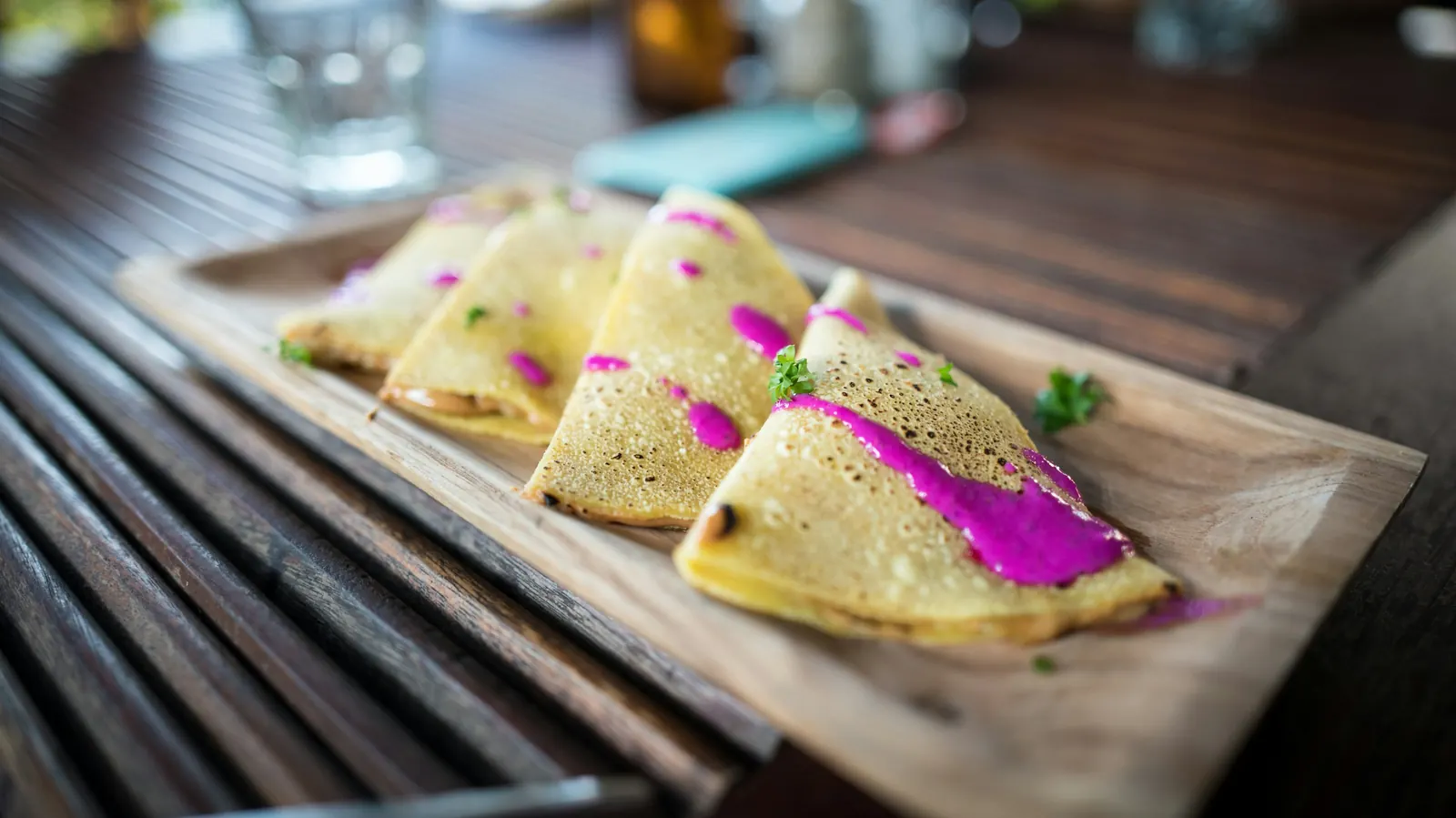
A quesadilla maker and a panini press look like close cousins: two hot nonstick plates, a hinged lid, a light that tells you when it is ready. On the counter they behave quite differently. A quesadilla maker is built around one round tortilla and a plate that presses it into six sealed wedges. A panini press is a rectangular grill that flattens whatever you put between its plates, and the better ones open out into a griddle.
If quesadillas are the only reason you are shopping, the choice comes down to how you like them, how many you make at once and how much counter and cupboard space you have. This guide compares the two side by side, explains each difference in plain terms and names one well-known model on each side.
Julia’s earns a commission on purchases made through links on this page, at no cost to you. Recommendations are based on what a restaurant kitchen looks for, product specifications and verified buyer reports.
Quick verdict: quesadilla maker or panini press?
Buy a quesadilla maker such as the Nostalgia Taco Tuesday Deluxe if you make quesadillas often, want them sealed and pre-cut into neat wedges with almost no attention, and like an appliance that stores upright in a narrow gap. Buy a panini press, ideally one with flat griddle plates like the Cuisinart Griddler Deluxe, if you want one machine for quesadillas, sandwiches, burgers and pancakes, cook thick or heavily filled quesadillas, or want to make more than one at a time.
The rest of this page explains the reasoning, one difference at a time.
Quesadilla maker vs panini press, side by side
The figures below come from each maker’s Amazon listing and website, and from retailer specification pages where the maker does not publish a figure. Where nobody publishes a number, the table says so.
| Quesadilla maker (Nostalgia Taco Tuesday Deluxe 10-inch) | Panini press (Cuisinart Griddler Deluxe) | |
|---|---|---|
| Plate shape | One 10-inch round, molded into 6 wedges | Two rectangular plates; 240 sq in opened flat |
| Plate surface | Nonstick, wedge-sealing pattern | Reversible: grill side and flat griddle side, ceramic nonstick |
| Seals the edges | Yes, the plate pinches each wedge closed | No; it flattens and browns |
| Thick fillings | Two-position latch for thin or thick | Adjustable top cover |
| Heat control | None stated; power and ready lights | Dual-zone control; sear to 500°F; full range not stated |
| Opens flat | No | Yes, 240 sq in of cooking surface |
| Power | Not stated | 1800 W |
| Cleaning | Wipe the nonstick surface clean | Removable plates and accessories listed as dishwasher safe |
| Storage | Stands upright | About 15.7 x 14.6 x 7.6 inches, 17.7 lb |
| Warranty | 1-year limited | 3-year limited |
Wedge-sealing versus flat grilling
This is the difference that matters most. A quesadilla maker’s plate has raised ridges radiating from the center. When the lid closes on two flat tortillas, those ridges pinch the tortillas together along six lines and around the rim. Nostalgia describes it this way: the cooking plate creates six sectional pieces that “seal in” the ingredients. The result comes out already portioned into wedges, with the cheese held inside each one rather than running out the sides. That makes it tidy for kids, for a buffet or for anyone eating a quesadilla with their hands.
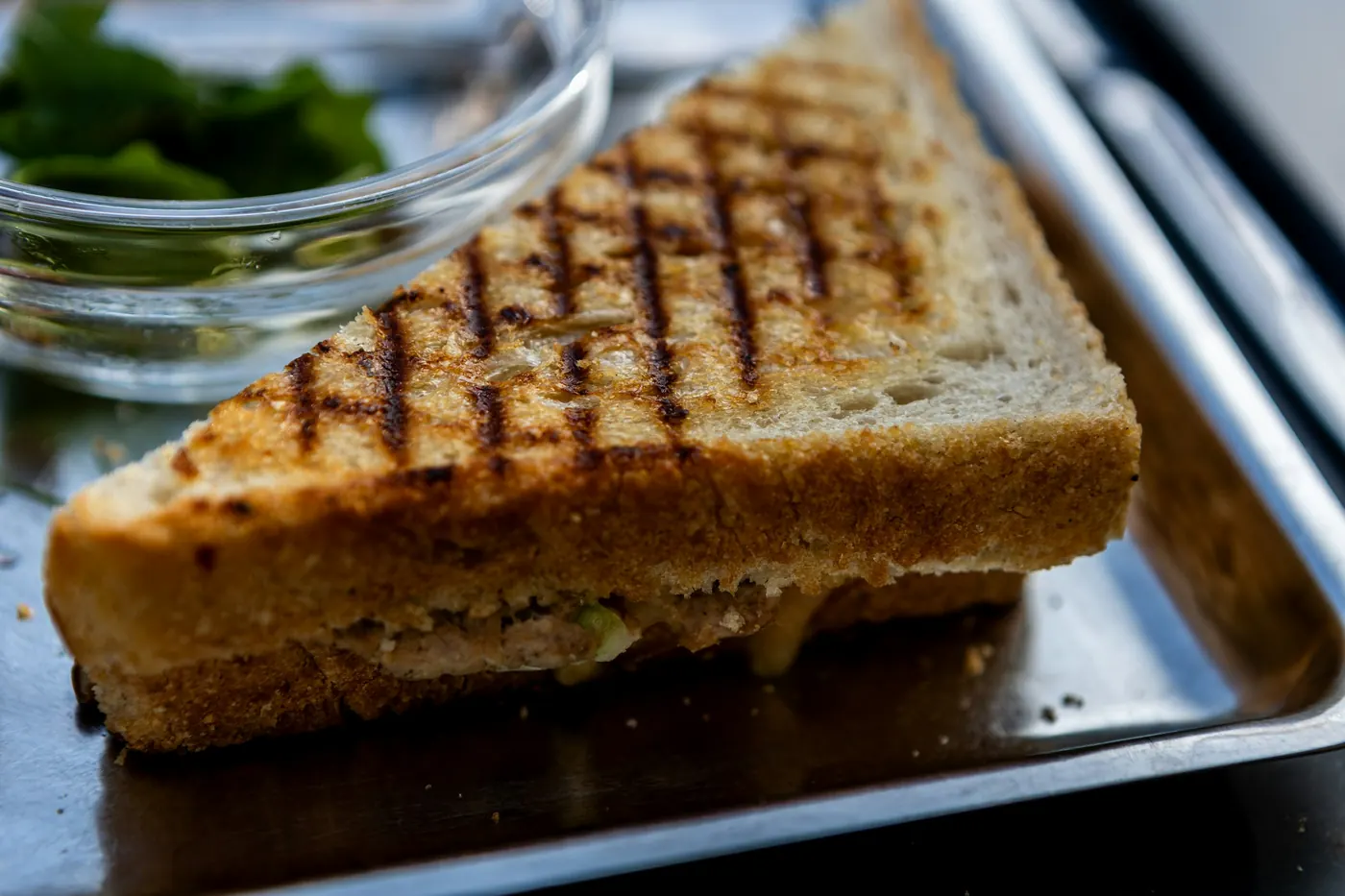
A panini press does no sealing. It presses the food flat and browns both sides at once. A ridged plate leaves grill stripes; a flat griddle plate gives an even, golden surface closer to what a comal or skillet produces. You make the quesadilla the way most home cooks already do, either one tortilla folded into a half-moon or two tortillas stacked, and cut it yourself afterward. The edges are only held closed by melted cheese, as they would be in a pan.
Neither result is more correct. A quesadilla from a comal, the way it is made in much of Mexico, is usually a folded tortilla with no sealed seams at all; our explainer on what a quesadilla is covers the regional versions. The sealed wedge is an appliance shape, and you either like it or you do not.
Plate types and what they do to a tortilla
The quesadilla maker’s plates are fixed in purpose: nonstick, wedge-patterned, one round shape. Nostalgia does not list removable plates for the Taco Tuesday Deluxe, and its care instruction is simply to wipe the cooking surface clean.
Panini presses vary much more, and the plates decide how good a quesadilla you get. Many basic presses have ridged plates only. Hamilton Beach’s listing for its 25460 press, for example, says its 8 x 10-inch ribbed plates fit two quesadillas, but you will get grill marks every time. Ridged plates press the tortilla only where the ridges touch, so the browning comes in stripes rather than across the whole surface.
The Cuisinart Griddler Deluxe is a different kind of press. Its plates are reversible, with a grill side and a flat griddle side, and Cuisinart lists six ways to use it: contact grill, panini press, full grill, full griddle, half grill and half griddle, or top melt. Flip both plates to the griddle side, close the cover, and you have something close to a heated comal pressing from both sides. America’s Test Kitchen makes the same general point in its panini press review: removable, reversible plates give you both ridged and flat cooking.
Sizes and how many quesadillas each makes
Quesadilla makers are sized by the round plate. The Nostalgia Taco Tuesday Deluxe comes in 8-inch and 10-inch versions, Elite Gourmet sells an 11-inch model, and Nostalgia also makes a double unit with two 5-inch plates side by side for street-taco-size tortillas. Whatever the size, a single-plate maker makes one quesadilla per round. Buy the size that matches the tortillas you actually use. Food Network Kitchen, reviewing quesadilla makers, warned that machines designed for 10-inch tortillas can press filling out when you use smaller tortillas, and a pair of small corn tortillas will not fill a 10-inch plate.
A panini press is sized by its rectangle. The Griddler Deluxe lists 240 square inches of cooking surface with both plates opened flat; Cuisinart does not give the size of each plate, so measure your largest tortilla against the closed plate before you count on stacking a flat, unfolded quesadilla. Folding is the safer habit with a press: a half-moon from a large flour tortilla, or two smaller folded ones side by side. Opened flat, the Griddler Deluxe gives you both plates as one griddle, so several folded quesadillas fit at the same time. You lose the top plate’s pressing, so you flip them with a spatula as you would on a comal.
Thick fillings, cheese and leaks
Overstuffing is where quesadilla makers struggle. Food Network Kitchen found that the makers it reviewed had trouble with thick quesadillas unless the tester pressed down hard on the lid, which sometimes ended with “fillings being squeezed out.” Nostalgia’s answer on the Taco Tuesday Deluxe is a two-position latch on the lid, one for thin quesadillas and one for thicker, stuffed ones. Keep fillings to an even layer and stop short of the rim, so the sealing ridges meet tortilla rather than chicken.
A good panini press handles thickness better because its top plate floats. The Griddler Deluxe has an adjustable top cover for thicker food, and a top plate that floats to the height of the food and presses it evenly is the feature America’s Test Kitchen lists first in what to look for in a press. Food Network Kitchen came to the same view from the other side: griddles suit thick or heavily filled quesadillas, though they need more attention while cooking.
Heat control and speed
A quesadilla maker is deliberately simple. The Nostalgia has two indicator lights, one for power and one for ready, and no temperature dial. You preheat, load, close and wait a few minutes. That is a strength if you want an appliance anyone in the house can use without thinking.
The Griddler Deluxe gives you control. Cuisinart lists dual-zone temperature control, so the two plates can run at different settings, and a sear function that reaches 500°F for up to two minutes; the listing does not give the full temperature range. A lower setting lets the cheese melt fully before the tortilla over-browns; a higher one gives a crisper shell. America’s Test Kitchen has not reviewed the Deluxe; for the smaller Griddler GR-4NP1 it noted knobs that felt “a bit wiggly and imprecise” and “long temperature cycles”, so expect some variation in browning between batches. The extra power and the larger plates also mean more preheating than a small single-purpose maker.
What else each one can cook
A quesadilla maker makes quesadillas. Elite Gourmet’s listing mentions grilled cheese and corn tortilla snacks, and Food Network Kitchen sums up the category as appliances “meant to do just one thing well.” If you already own a skillet or a comal, a quesadilla maker is about convenience, not new abilities.
The panini press earns its space by doing more. The Griddler Deluxe grills, griddles and presses, and its top melt mode melts cheese over open-faced food. For a Mexican kitchen that also means tortas pressed on the grill side, fajita vegetables on the griddle, and warming tortillas for a crowd with the plates opened flat. If you want to know how a flat griddle compares with the real thing, our guide to the comal versus a cast iron skillet explains why even, steady heat matters for tortillas.
Cleaning and storage
The quesadilla maker is the easier one to put away. Nostalgia says the unit stands upright for storage, which suits a narrow cabinet or the side of a pantry shelf. Cleaning is a wipe of the nonstick surface once it has cooled. The catch is that cheese that escapes into the wedge ridges has to be wiped out of the grooves, since Nostalgia does not list the plates as removable.
The Griddler Deluxe takes much more room, about 15.7 by 14.6 by 7.6 inches and 17.7 pounds according to Kohl’s, but it is easier to clean thoroughly. The plates come off, and Cuisinart lists them and the accessories as dishwasher safe. America’s Test Kitchen’s general advice for presses is more cautious: it suggests hand-washing removable plates because the dishwasher “will degrade their nonstick surface.” Hand-washing costs a few minutes and is the safer habit for any nonstick plate.
Choose a quesadilla maker if… / Choose a panini press if…
Choose a quesadilla maker if…
- Quesadillas are the main thing you want it for, and you make them often.
- You like sealed, pre-portioned wedges that hold their filling, for kids or a party platter.
- You want something with no settings that anyone can use.
- Your storage space is narrow and you need it to stand upright.
- Your tortillas are a consistent size that matches the plate.
Choose a panini press if…
- You want one appliance for quesadillas, tortas, grilled cheese, burgers and breakfast.
- You fill your quesadillas thickly and do not want them squeezed out.
- You want to cook several at once on an open griddle.
- You prefer a folded, comal-style quesadilla to a sealed wedge.
- You want temperature control and plates you can take off to wash.
Our pick on each side
If you have decided which way to go, these are the two machines we would point you to. For more dedicated quesadilla makers, including 8-inch, 11-inch and double models, see our guide to the best quesadilla maker.
1. Nostalgia Taco Tuesday Deluxe 10-Inch Quesadilla Maker – Sealed Wedges, Thick or Thin

The Taco Tuesday Deluxe is a straightforward single-purpose quesadilla maker with one feature that addresses the category’s main weakness. Its 10-inch nonstick plate is molded so that, when the lid closes, it divides the quesadilla into six sealed wedges, according to Nostalgia. A two-position latch on the lid lets you choose between a thin quesadilla and a thicker, stuffed one, which matters because overfilling is where most quesadilla makers push the filling out.
There are no settings to learn: two indicator lights show power and when the plate has preheated. Nostalgia says it cooks six wedges in minutes, and the unit stands upright for storage. Cleaning is a wipe of the nonstick surface once it has cooled. Nostalgia also sells an 8-inch version of the same design if your tortillas are smaller.
The listing does not state wattage or the assembled dimensions, and the plates are not described as removable, so plan to wipe cheese out of the wedge grooves while the plate is still slightly warm but safe to touch.
Why we like it
- Plate seals the quesadilla into six wedges
- Two-position latch for thin or thick fillings
- Power and ready lights, no settings to manage
- Stands upright for storage
- Also sold in an 8-inch size
Key specifications
| Model | TCTEQM10RD |
|---|---|
| Cooking surface | 10-inch round, 6 wedges |
| Plates | Nonstick, wedge-sealing; removable not stated |
| Power | Not stated |
| Controls | Power and ready indicator lights; two-position latch |
| Size | Not stated; stands upright to store |
| Cleaning | Wipe the nonstick surface clean |
| Warranty | 1-year limited |
Why we recommend it
Choose it if quesadillas are a weekly habit in your house and you want them sealed, portioned and ready with no fuss, from an appliance that tucks into a narrow cupboard.
Skip it if you want to cook anything other than quesadillas, or more than one at a time.
Pros and cons
Pros
- Sealed, pre-cut wedges
- Latch for stuffed quesadillas
- Simple to use
- Compact upright storage
Cons
- One quesadilla per round
- No temperature control
- Wattage and size not stated
2. Cuisinart Griddler Deluxe Panini Press – Grill, Griddle and Top Melt in One

The Griddler Deluxe GR-150NAS is the larger model in Cuisinart’s long-running countertop grill line, and it is our pick on this side because of its plates. They are removable and reversible, with a grill side and a griddle side and a ceramic nonstick coating, according to the listing. Turn both plates to the flat side and it cooks a folded quesadilla much as a comal would, pressed from above and below.
Cuisinart lists six ways to use it: contact grill, panini press, full grill, full griddle, half grill with half griddle, and top melt, where the lid sits above open-faced food to melt the cheese. The top cover adjusts for thick sandwiches and stuffed quesadillas, and the unit opens flat to 240 square inches of cooking surface. Dual-zone temperature control lets the two plates run at different settings, and a sear function reaches 500°F for up to two minutes; the listing does not give the full temperature range. It is rated at 1800 watts.
The plates and accessories are listed as dishwasher safe, although hand-washing nonstick plates will help them last, and a scraping tool and drip tray are included. It comes with a three-year limited warranty. It is a big machine: Kohl’s lists it at about 15.7 x 14.6 x 7.6 inches and 17.7 pounds. America’s Test Kitchen has not reviewed the Deluxe; it recommended the smaller Griddler GR-4NP1 while noting imprecise knobs and long temperature cycles.
Why we like it
- Reversible grill and flat griddle plates
- Six cooking modes, including top melt
- Adjustable top cover for thick fillings
- Dual-zone temperature control
- Three-year limited warranty
Key specifications
| Model | GR-150NAS |
|---|---|
| Cooking surface | 240 sq in opened flat; plate size not stated |
| Plates | Removable, reversible grill/griddle; ceramic nonstick |
| Power | 1800 W |
| Controls | Dual-zone temperature; sear to 500°F; full range not stated |
| Size | About 15.7 x 14.6 x 7.6 in; 17.7 lb (Kohl’s) |
| Cleaning | Plates and accessories dishwasher safe |
| Warranty | 3-year limited |
Why we recommend it
Choose it if you want one countertop appliance that makes quesadillas several at a time, presses tortas and grilled cheese, and doubles as a griddle for pancakes or warming tortillas for taco night.
Skip it if counter and cupboard space are tight or you only ever make quesadillas: it is much bigger and heavier than a quesadilla maker and does not seal or portion them.
Pros and cons
Pros
- Flat griddle side for comal-style quesadillas
- Cooks several at once when opened flat
- Temperature control for each zone
- Removable plates
Cons
- No sealed wedges
- Large and heavy to store
- Full temperature range not stated on the listing
How we compared the two
We looked at what a kitchen asks of any machine that cooks tortillas: how evenly it browns, how it treats the filling, how many it makes at once, how easy it is to clean and where it lives between uses. Specifications come from Nostalgia’s and Cuisinart’s Amazon listings and websites, and from retailer specification pages where the makers do not publish a figure. For how these appliances behave in use we relied on Food Network Kitchen’s quesadilla maker review and America’s Test Kitchen’s panini press review. We have not used either machine ourselves, and each observation names its source.
Quesadilla maker and panini press questions, answered
Can you make a quesadilla in a panini press?
Yes. Fold a tortilla over the filling, or stack two smaller ones, close the lid and let the press brown both sides at once. Flat griddle plates give an even, golden surface; ridged plates give grill stripes. A floating hinge helps with thick fillings.
Is a quesadilla maker worth it if I already have a skillet?
Only for convenience. A skillet or comal makes an excellent quesadilla; the maker adds sealed wedges, hands-off cooking and portioning. If you make quesadillas several times a week, that convenience can be worth the cupboard space.
Why does the filling squeeze out of my quesadilla maker?
Usually the quesadilla is overfilled, or the tortillas are smaller than the plate. Food Network Kitchen reported filling squeezed out when testers pressed hard to close the lid on thick quesadillas. Use tortillas that match the plate size, spread the filling evenly and keep it back from the edge, and use a thick-filling latch if your maker has one.
Can a quesadilla maker make panini or grilled cheese?
It can make a small grilled cheese, and Elite Gourmet mentions grilled cheese in its listing, but the round wedge plate cuts the sandwich into pieces and is not built for thick bread. For real panini and tortas, a press is the right tool.
Which is easier to clean?
A panini press with removable plates is easier to clean thoroughly, because the plates come off. A quesadilla maker is quicker to wipe down and put away, but cheese can collect in the wedge grooves. Wipe either one while it is still slightly warm but cool enough to touch safely.
Our final word on quesadillas at home
If quesadillas are the point and you love a sealed, tidy wedge, a quesadilla maker such as the Nostalgia Taco Tuesday Deluxe does that one job simply and stores in very little space. If you want a machine that cooks quesadillas the folded, comal-style way, handles thick fillings and also presses tortas, grills burgers and doubles as a griddle, choose a panini press with flat plates, such as the Cuisinart Griddler Deluxe. Whichever you pick, good tortillas make the biggest difference; our guide to corn versus flour tortillas explains which to use, and our guide to taco bar supplies covers the rest of the kit for a taco or quesadilla night.
And if you would rather someone else made the quesadillas tonight, see our menu or call to order.