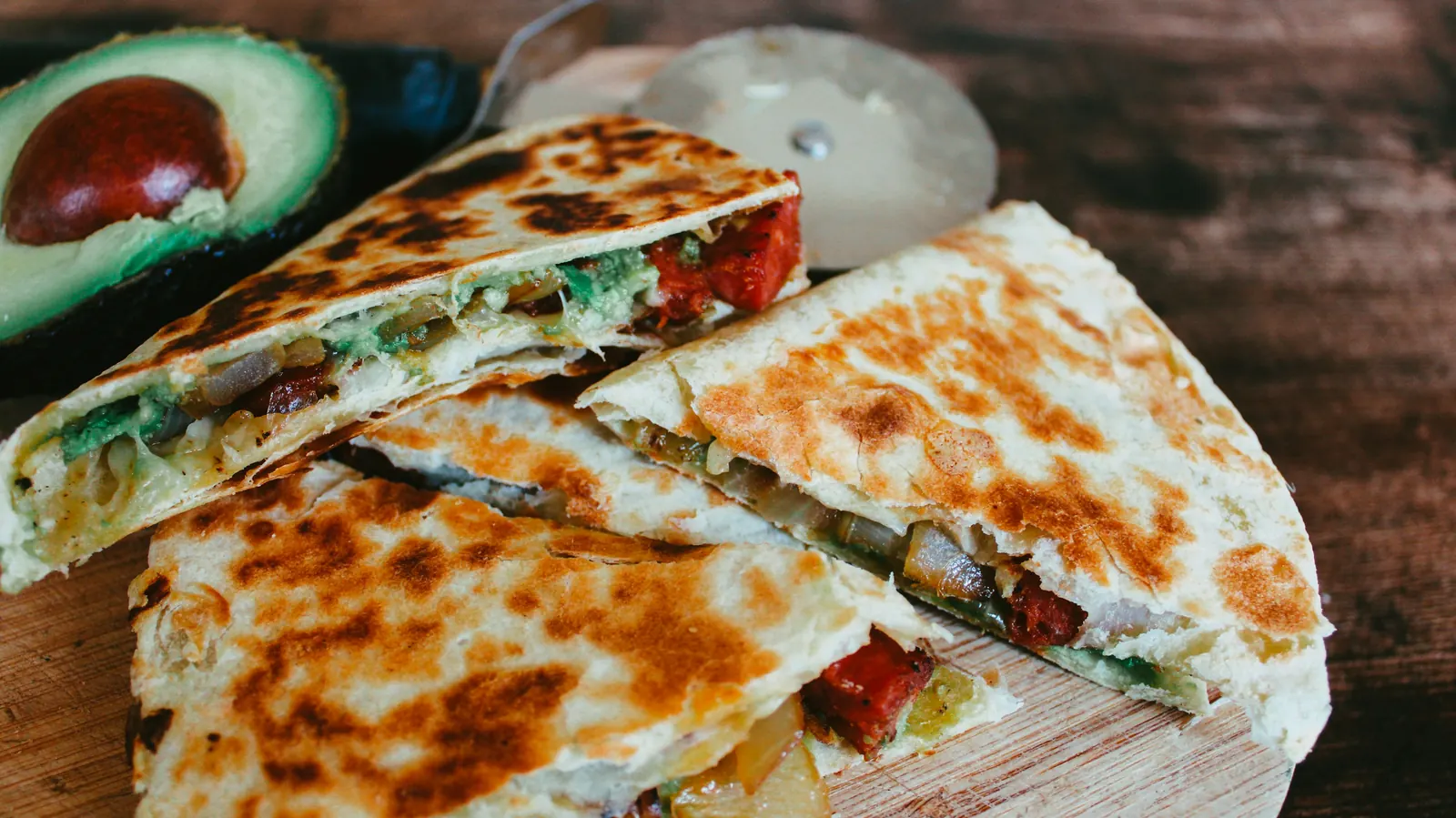
The quesadilla is the most familiar thing on a Mexican menu and the one most changed in translation.
What Americans picture is a real dish. It is just not the one the word describes in most of Mexico.
The short answer
In Mexico a quesadilla is usually a corn tortilla folded over a modest filling and cooked on a griddle, served with salsa and guacamole on the side. In the United States it is typically a large flour tortilla filled with a lot of cheese, griddled flat and cut into wedges. Both are legitimate. The American version is bigger, cheesier and built as a meal.
The Mexican version
Smaller and less cheese-driven than the name implies.
Mexican Food Journal, describing quesadillas and sincronizadas, is blunt about the gap: quesadillas in Mexico are not the cheese-filled extravaganzas Americans are used to. A typical one is a corn tortilla with a small amount of cheese, served with a good salsa and some guacamole on the side.
The same source calls them a staple in every Mexican home and in fondas, the small family restaurants found throughout the country. This is everyday food, not a shareable appetizer.
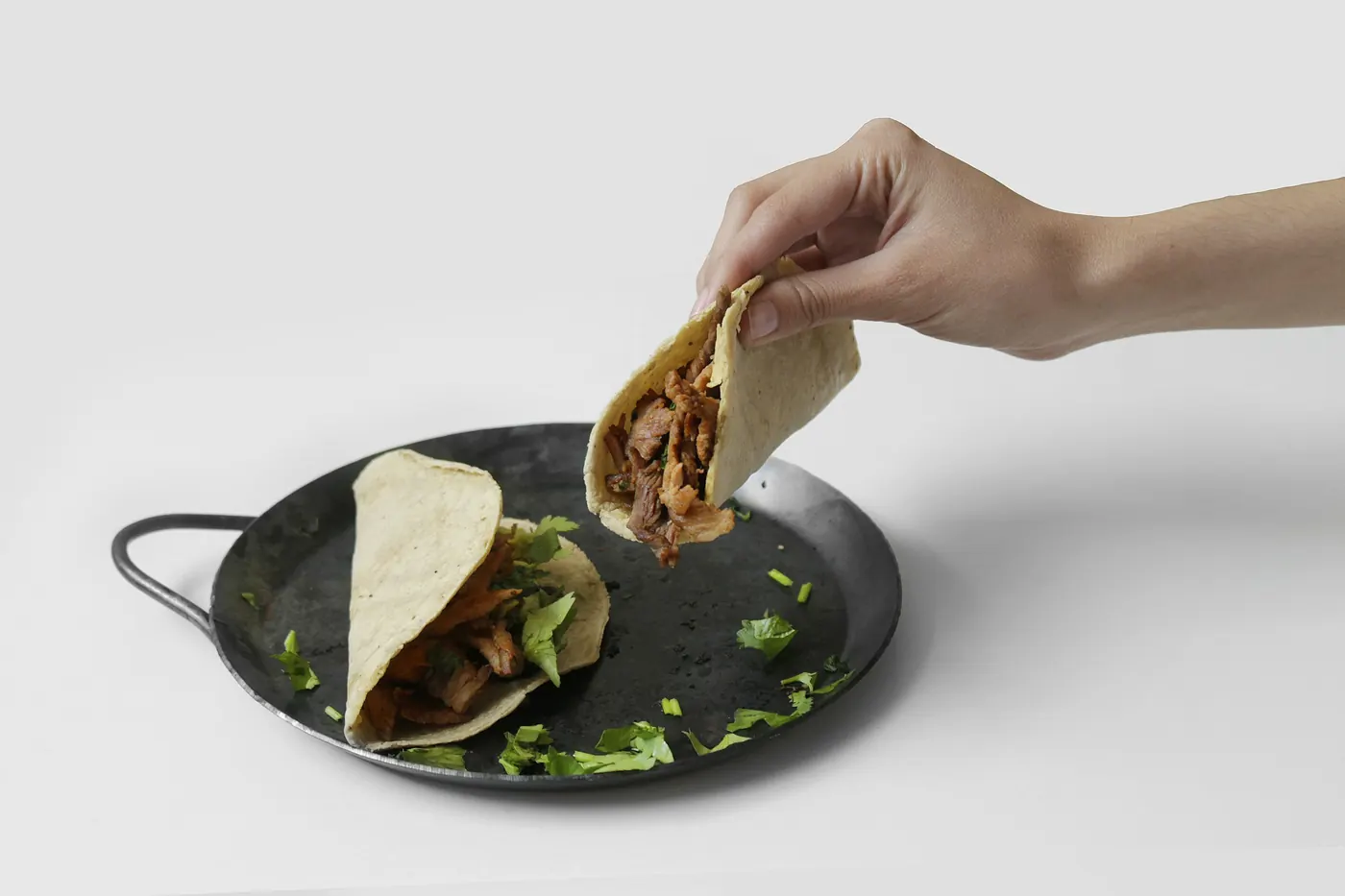
It is also folded rather than stacked. One tortilla, bent over its filling, cooked on a comal until the cheese goes.

The corn and flour split
Geographic, and it follows the same line as everything else in Mexican cooking.
The same source places flour-tortilla quesadillas in northern Mexico — Sonora, Chihuahua, Nuevo León, Tamaulipas — where wheat grows and the flour tortilla is standard. Corn is the default elsewhere.
That is the same divide our corn and flour guide traces, and the same one behind flautas and taquitos.
Texas sits at the northern end of that line, which is why flour-tortilla quesadillas are the norm here and nobody finds it strange.
The Mexico City cheese question
The most-repeated fact about quesadillas, and it is genuinely true.
In Mexico City, a quesadilla does not automatically contain cheese. You ask for con queso if you want it. Elsewhere in Mexico the cheese is assumed, on the reasonable grounds that queso is in the word.
What a Mexico City quesadilla contains instead is whatever filling you name: mushrooms, squash blossom, huitlacoche, chicharrón prensado, tinga, potato. The cheese is one option among many.
This is a live and slightly heated national argument rather than a settled piece of trivia. It is also, practically, a good reason to say what you want when ordering anywhere in Mexico.

Which cheese
Only some cheeses do what a quesadilla needs, and it is a specific requirement.
Mexican Food Journal lists Oaxaca, asadero, manchego and Chihuahua as the good options. What those share is that they melt into strands rather than breaking into oil and solids.
Oaxaca cheese is the classic: a stretched-curd cheese wound into a ball, pulled apart in ribbons, and the source of the stretch people photograph. Queso fresco will not do this — it crumbles and stays crumbled.
Yellow cheese in a quesadilla is a Tex-Mex habit rather than a Mexican one. It melts differently, tastes different, and is not a mistake so much as a different tradition.
The physical difference is real. Oaxaca and asadero are stretched-curd cheeses, worked while warm so the proteins align into long fibers, and those fibers are what pull apart under heat. Cheddar is not made that way, so it softens into a pool rather than into strands. Both taste fine; only one does the thing people expect a quesadilla to do.
Quesadilla, sincronizada, gringa
| Name | What it is | Tortillas |
|---|---|---|
| Quesadilla | One tortilla folded over a filling | One, folded |
| Sincronizada | Ham and cheese between two tortillas | Two, stacked |
| Gringa | Al pastor and cheese between two | Two, stacked |
| US quesadilla | Large flour tortilla, folded, cut in wedges | One, folded |
| Mulita | Meat and cheese between two small tortillas | Two, small |
The sincronizada row is the useful one. Mexican Food Journal defines it as a ham and cheese quesadilla whose name translates as “synchronized,” most often made with flour tortillas though corn is an option.
The distinction is structural: one folded tortilla is a quesadilla, two stacked ones is something else. American kitchens fold, which puts the US version closer to a quesadilla than to a sincronizada despite the size.
On Julia’s menu
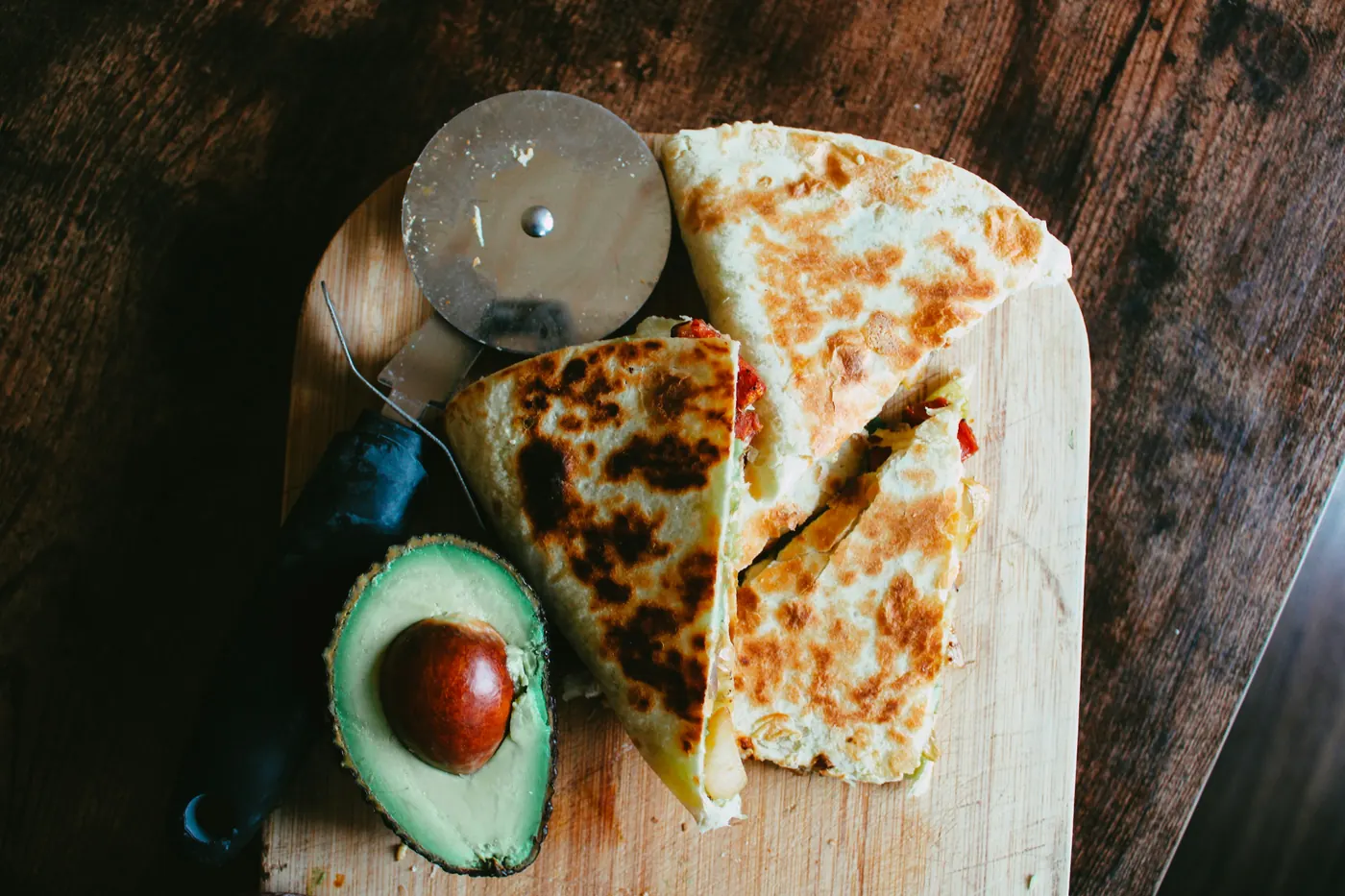
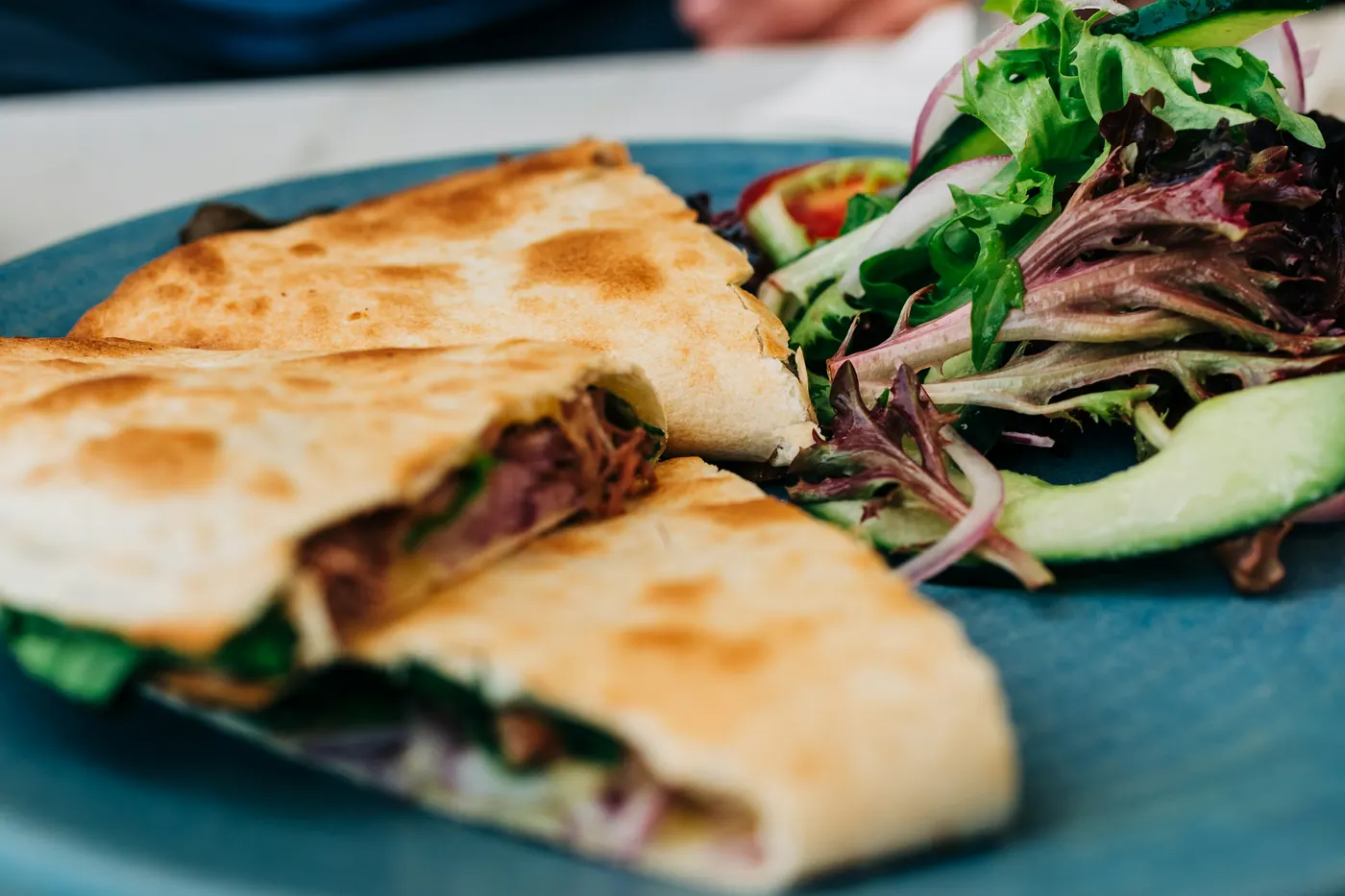
The quesadillas on Julia’s appetizer list are a homemade flour tortilla filled with melted Oaxaca cheese and your choice of meat, served with guacamole and sour cream.
Three details are worth reading. Homemade flour tortilla is the northern-Mexican and Texan form, made in house. Oaxaca cheese is the correct melting cheese rather than yellow cheese, which is a deliberate choice on a menu that uses cheddar elsewhere. And guacamole and salsa on the side is exactly the Mexican serving convention described above.
Six versions are offered: chicken fajita, beef fajita, brisket, shrimp, cheese and spinach. The plain cheese one is the cheapest and the most traditional.
The spinach version also appears inside the sampler platter, alongside nachos Tejanos, camarones adobados and taquitos de pollo — which our guide to ordering for a group covers as a shared starter.
Getting one right
Three things separate a good quesadilla from a disappointing one, and none of them is the amount of cheese.
Heat, then filling, then fold. The tortilla goes on a dry hot surface first and warms through before anything else happens. Cold tortilla plus cold cheese produces a leathery result no amount of time fixes.
Not too full. Overfilled, the cheese escapes, burns on the griddle and the middle stays cold. A thin even layer melts faster and stays inside.
Rest before cutting. Straight off the heat, molten cheese runs out the moment you cut it. A minute on the board lets it set enough to hold.
The other tell is what arrives alongside. Salsa and guacamole on the side is the Mexican convention; a quesadilla sent out bare is missing half its seasoning.
Frequently asked questions
What is a quesadilla?
A tortilla folded over a filling, usually including cheese, and cooked on a griddle. Corn in most of Mexico, flour in the north and in the United States.
Do quesadillas in Mexico have cheese?
Usually, but in Mexico City you have to ask for it. Elsewhere it is assumed. The filling is often something else entirely.
What cheese is used?
Oaxaca, asadero, Chihuahua or manchego — cheeses that melt into strands. Queso fresco crumbles and does not work.
What is the difference between a quesadilla and a sincronizada?
A quesadilla is one tortilla folded. A sincronizada is ham and cheese between two stacked tortillas.
Why are American quesadillas so much bigger?
They are built as a meal rather than a snack, on a large flour tortilla, and cut into wedges to share. It is a different dish wearing the same name.
The short version
One folded tortilla, a melting cheese, a griddle. Corn in most of Mexico, flour in the north and here, and in Mexico City you have to ask for the cheese.
Julia’s makes them on a homemade flour tortilla with Oaxaca cheese, in six versions, on the menu.