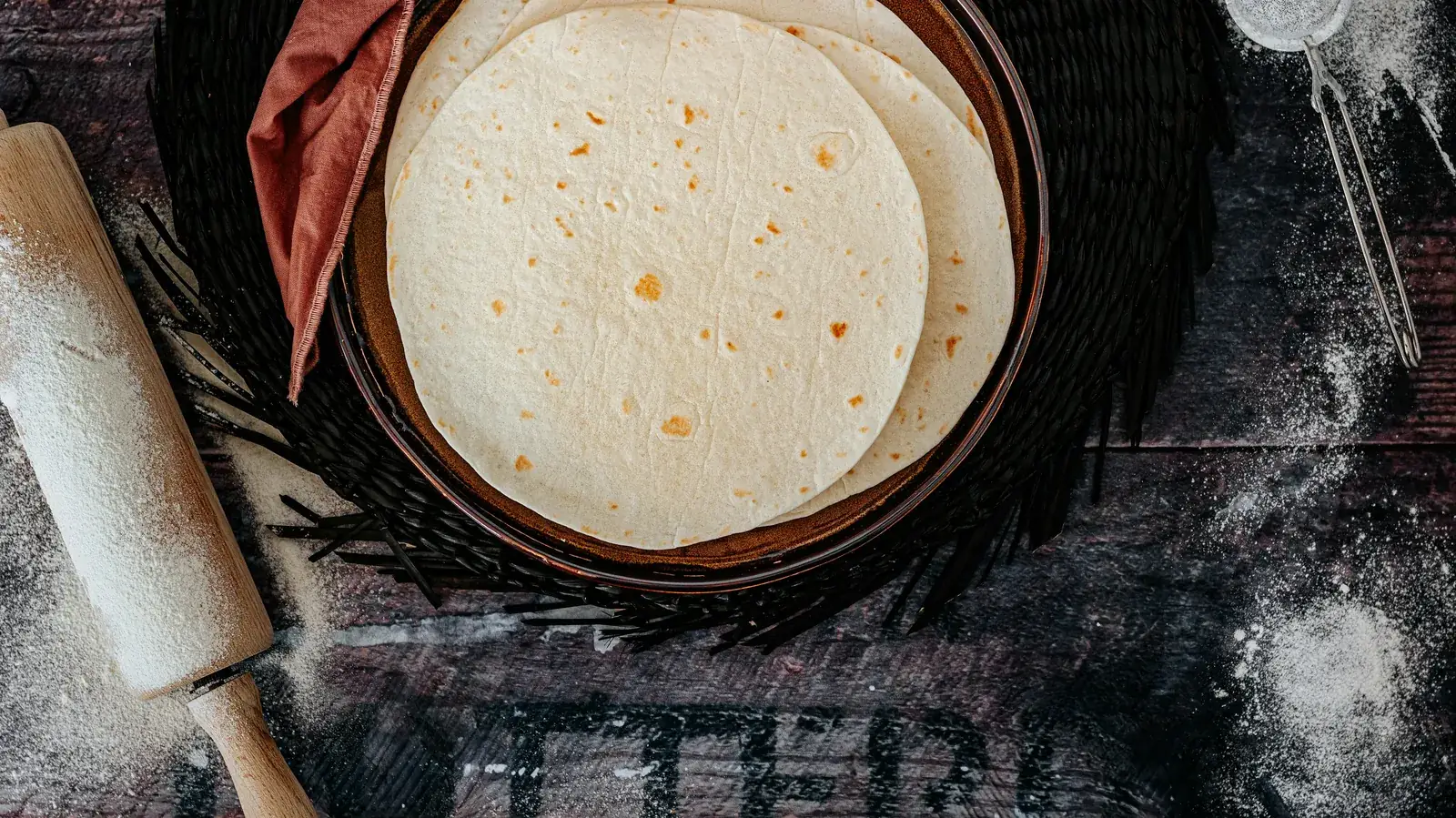
Most Mexican restaurants ask you a version of the same question at some point in the order: corn or flour? It is usually asked quickly, as though the answer is obvious, and plenty of people pick one at random.
The two are genuinely different products, and one suits some dishes noticeably better than the other.
The short answer
Corn tortillas are made from ground maize, are smaller and firmer, and hold up to wet fillings without falling apart. Flour tortillas are made from wheat flour and fat, are larger, softer and stretchier, and suit heavier or rolled dishes. Corn has the stronger flavor; flour is the more forgiving wrapper.
What each one is actually made of
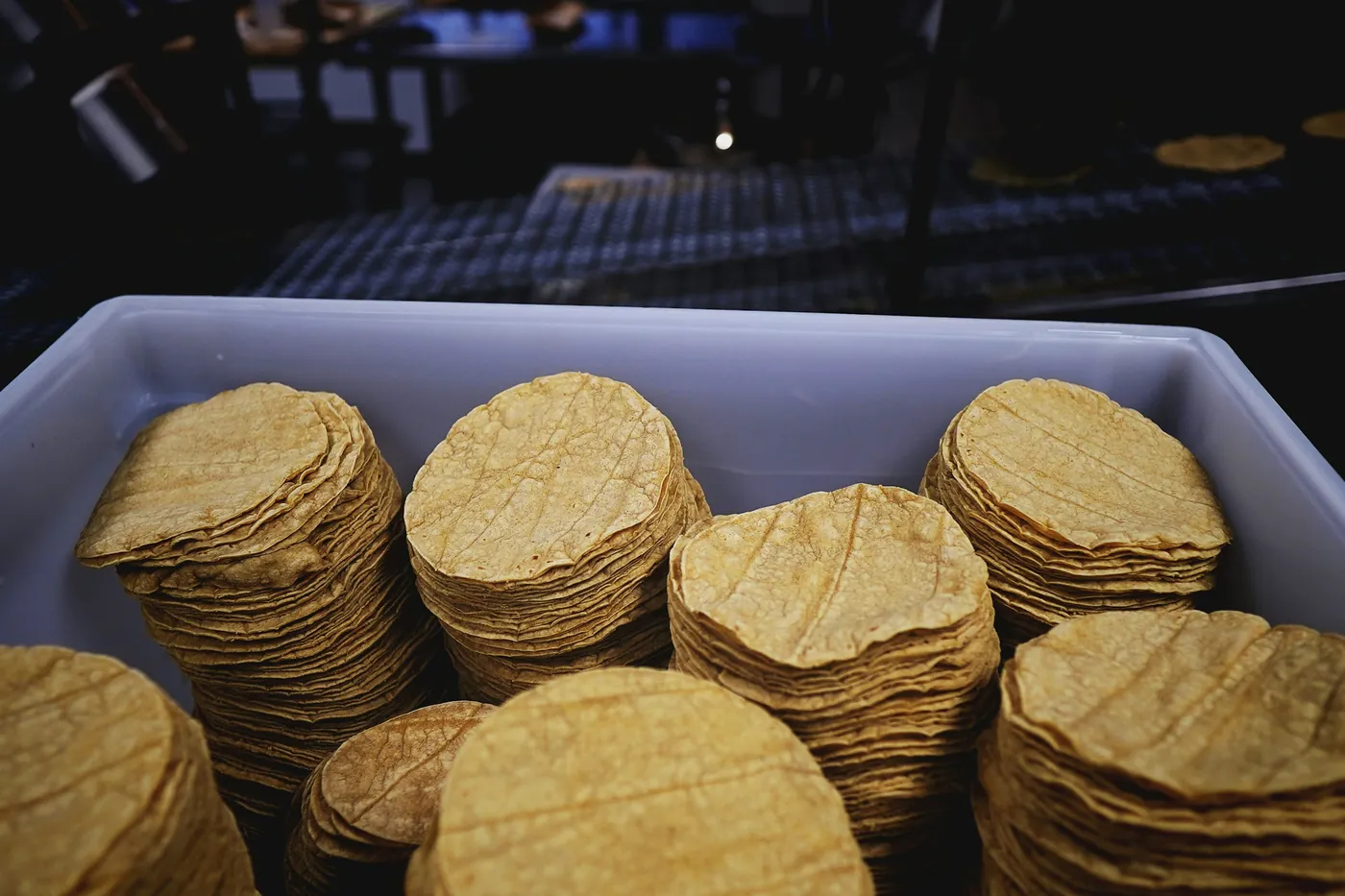
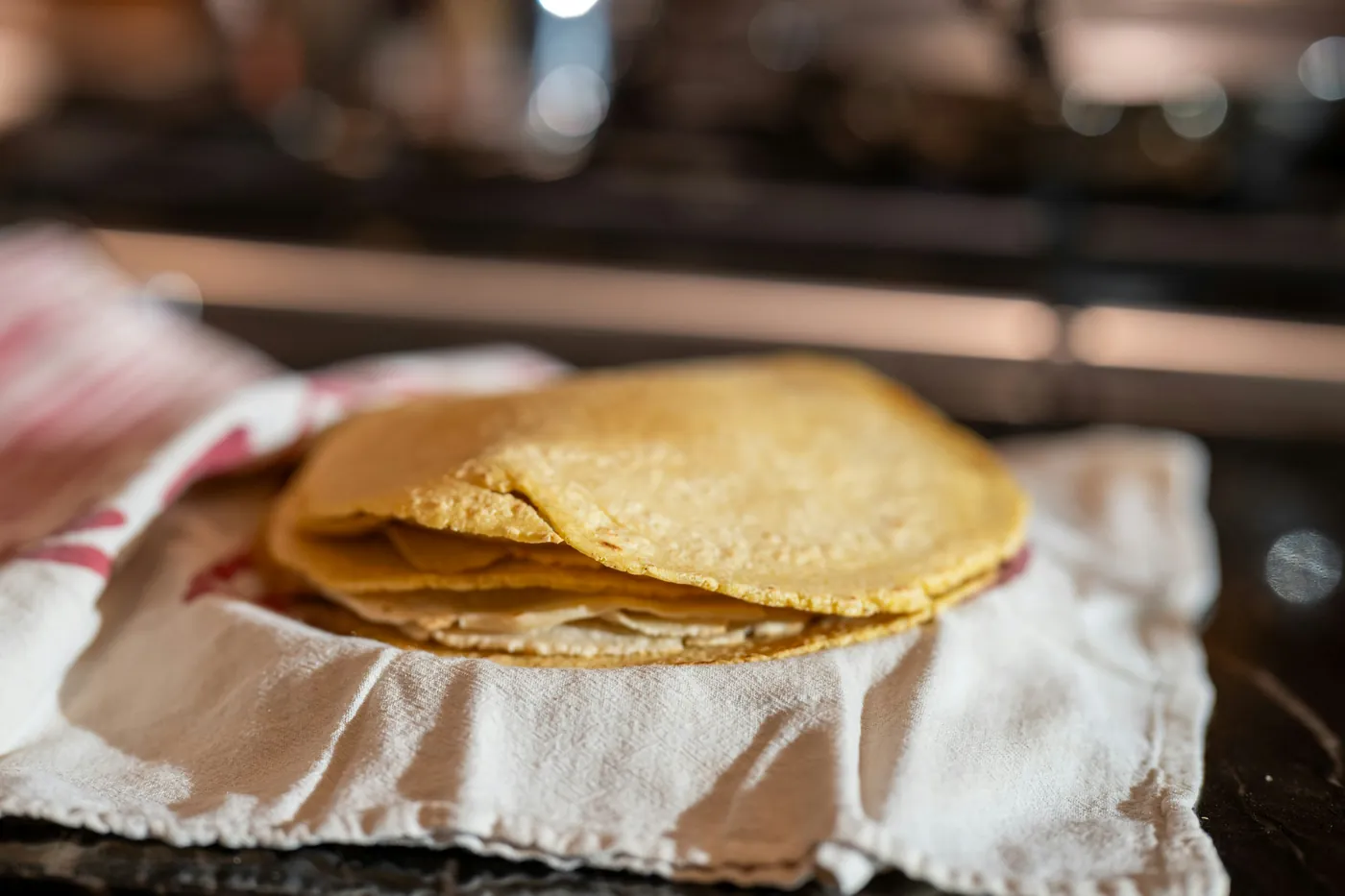
A corn tortilla is masa — maize that has been cooked and soaked in an alkaline solution, then ground — pressed flat and cooked on a hot griddle. There is very little else in it.
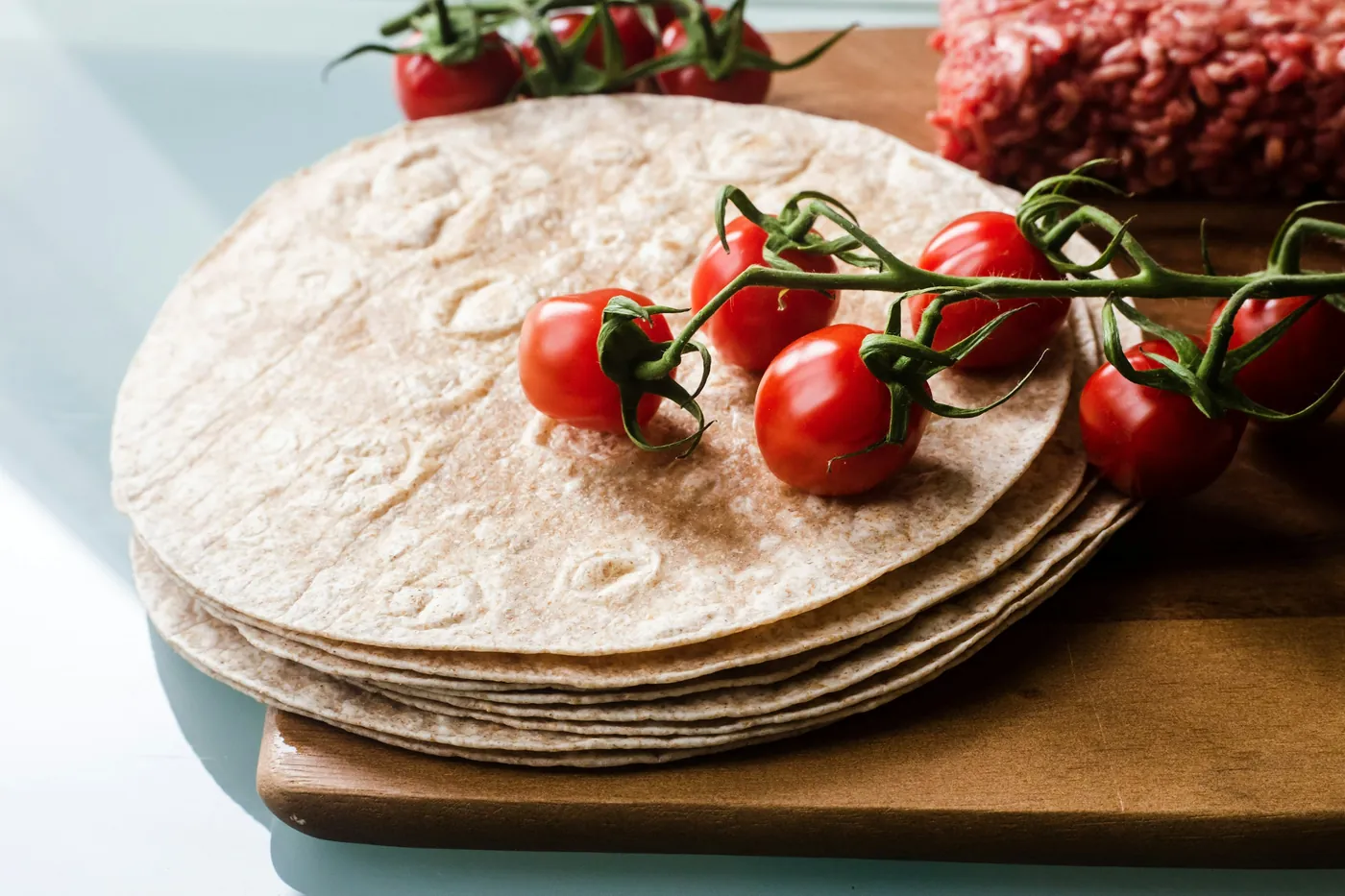
A flour tortilla is wheat flour, water, salt and some kind of fat. The fat is what makes it pliable, which is why flour tortillas stretch and fold without cracking while corn tortillas will split if you push them too far.
Why corn tortillas are smaller
Masa has no gluten, so there is nothing holding a corn tortilla together except the starch itself. Rolled thin and made large, it would tear. Keeping them small and slightly thicker is what makes them work.
This is also why corn tortillas are usually doubled up under a heavy filling. It is not a garnish — it is structural.
Why flour tortillas stretch
Wheat flour has gluten, and the fat in the dough coats it. The result is a tortilla you can roll, fold and overfill without it giving way. That is exactly what a burrito or a loaded fajita needs.
Corn vs flour at a glance
| Corn tortillas | Flour tortillas | |
|---|---|---|
| Made from | Masa — nixtamalized ground maize | Wheat flour, water, salt and fat |
| Typical size | Small, around 4–6 inches | Larger, often 8 inches or more |
| Texture | Firmer, slightly grainy, can crack | Soft, stretchy, folds without tearing |
| Flavor | Distinct toasted corn flavor | Mild, mostly a neutral wrapper |
| Handles wet fillings | Well — absorbs less liquid | Less well — can go soft |
| Gluten | None from the corn itself | Contains wheat gluten |
| Best with | Street tacos, saucy braised meats | Fajitas, quesadillas, anything rolled |
Which to choose, dish by dish
Rather than picking a favorite, it is easier to match the tortilla to what is going in it.
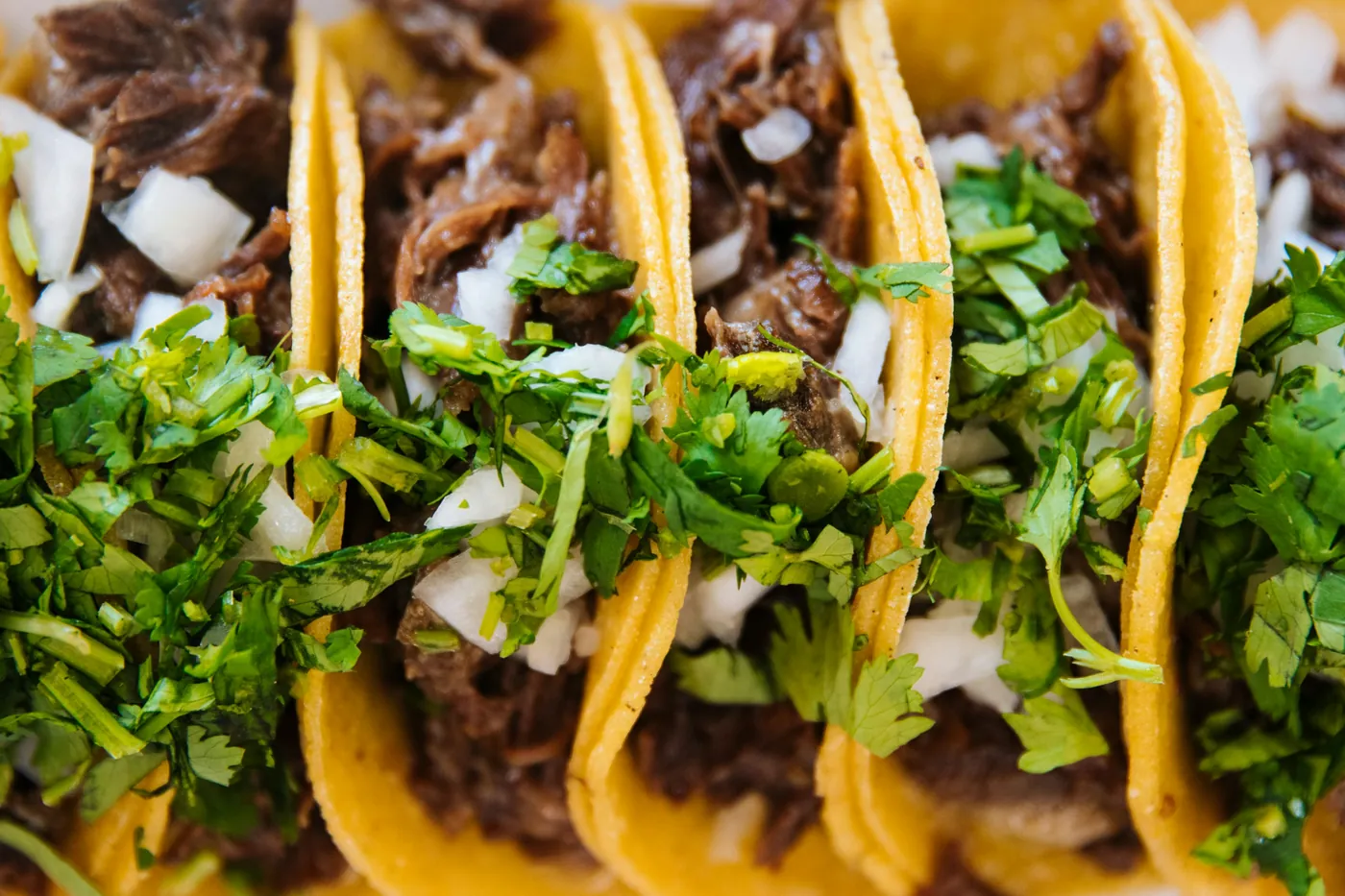
Choose corn for tacos and saucy meats
Anything braised, stewed or served in its own juices does better in corn. Cochinita pibil, carne guisada and birria-style beef all fall into this group. Corn resists the liquid instead of soaking it up, and its flavor stands up to a strong sauce rather than disappearing under it.
Choose flour for fajitas and anything rolled
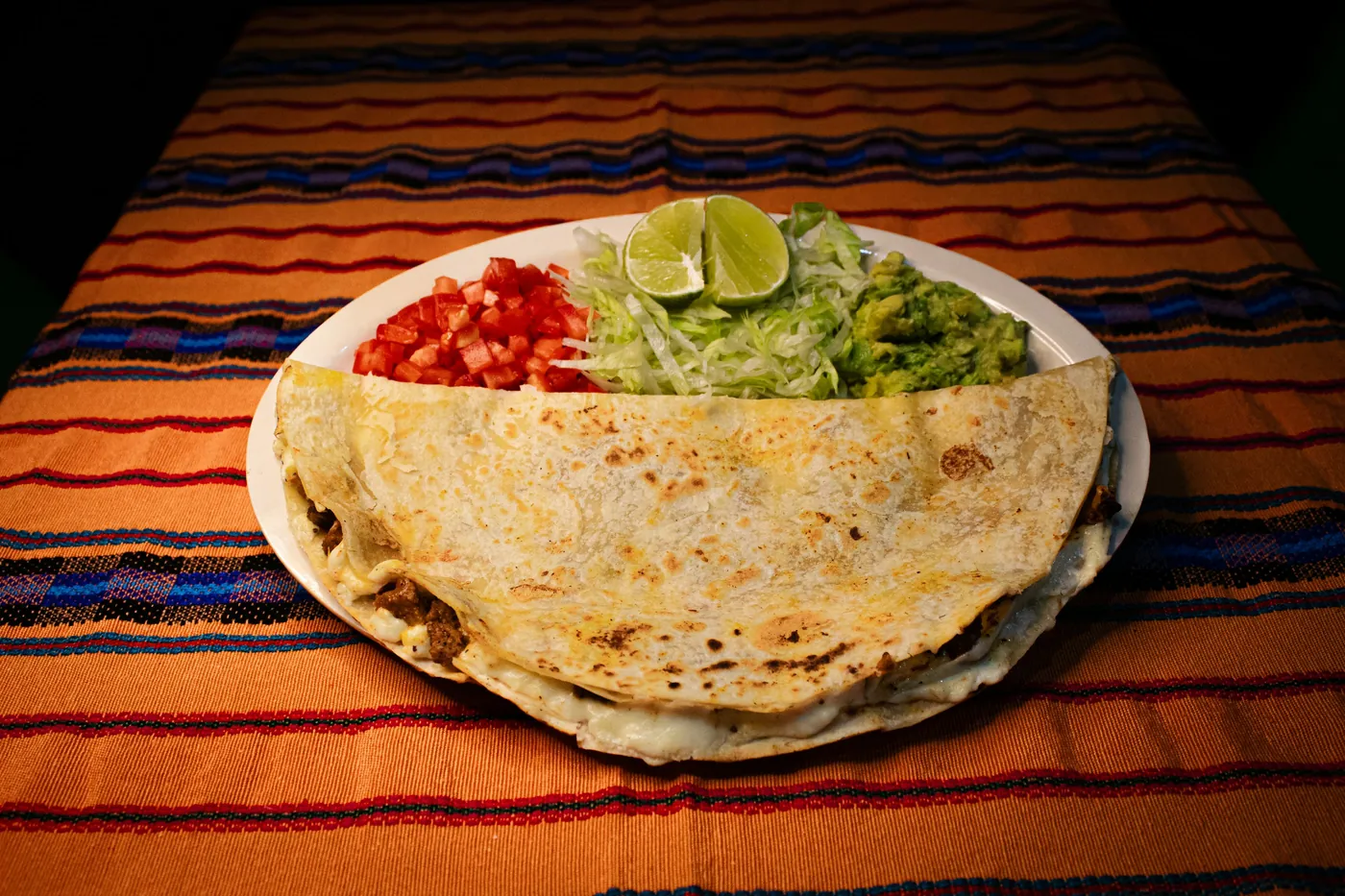
Fajitas are the clearest case. You are loading grilled meat, peppers, onions, guacamole and pico into one tortilla, then folding it. A small corn tortilla will not survive that. (If the difference between the two dishes is not obvious, we have set out how tacos and fajitas are served differently.) Quesadillas are the same — they need a large, flexible round that can be folded over melted cheese and cut into wedges.
When it genuinely does not matter
For drier fillings in modest quantities, pick whichever you prefer. Grilled chicken, cheese, or a simple plate of tamales alongside rice and beans will work in either. This is the situation most diners are actually in, and personal preference is a perfectly good tiebreaker.

Is one healthier than the other?
The honest answer is that they are closer than most people assume. Houston Methodist’s dietitians compared the two and found broadly similar nutritional profiles, with corn tending to carry more fibre and fewer calories, and flour carrying more iron and calcium.
The bigger variable is usually what goes inside the tortilla and how many you eat, not which type you picked.
A note on gluten
Corn contains no gluten, and that leads people to assume corn tortillas are automatically safe for coeliac disease. In a restaurant, that assumption is not safe on its own. Some corn tortillas include wheat flour in the blend, and a shared kitchen introduces the possibility of cross-contact regardless of the recipe.
If you are avoiding gluten for medical reasons, tell your server and ask them to check with the kitchen. That is the only reliable answer, and it is a normal question for restaurant staff to field.
How the choice comes up at Julia’s
Julia’s asks the corn-or-flour question on a lot of its plates rather than deciding for you.
Several of the house specialties come with a choice of corn or flour tortillas, including the cochinita pibil, the brisket birria and the carne guisada — all dishes where the corn option is worth considering for the reasons above.
The fajita plates also offer either, and the quesadillas are built on a homemade flour tortilla because the dish requires one. If you are unsure, the sauciest thing on your plate is a reasonable guide.
What happens when corn tortillas are fried
A surprising amount of a Mexican menu is simply corn tortillas in another state.
Tortilla chips are corn tortillas cut into wedges and fried. Tostadas are whole ones fried flat and used as an edible plate. Sopes are thicker rounds of masa with a pinched rim, griddled and then loaded with toppings. Taquitos are corn tortillas rolled tight around a filling and fried until crisp. Quesadillas are folded rather than rolled.
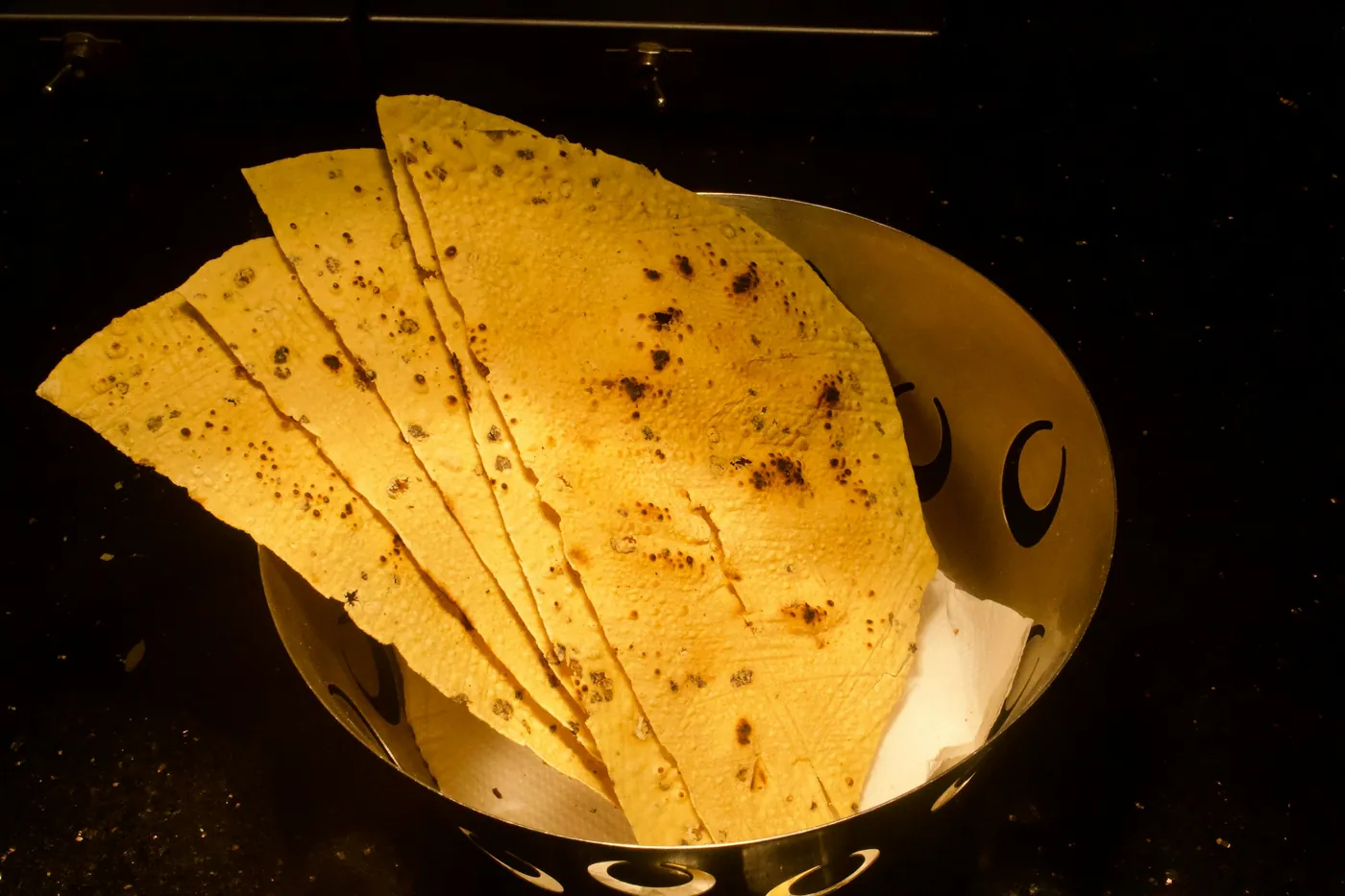
This explains a pattern worth noticing: whenever a dish needs to hold a rigid shape or turn genuinely crisp, it is built on corn. Flour behaves differently under heat and does not crisp the same way. Julia’s sopes and taquitos de pollo both sit in the appetizer section for exactly that reason.
It also means the corn-or-flour question only ever applies to the soft tortillas served alongside a dish. The fried items are not a choice — they only work one way.
Frequently asked questions
Why are corn tortillas served two at a time?
To stop them tearing. A single small corn tortilla under a wet filling will often split before you finish it, so doubling gives it enough strength to hold. It is standard practice for street tacos rather than an extra portion.
Which tortilla is more traditional?
Corn, by a long way. Maize tortillas predate the arrival of wheat in Mexico. Flour tortillas are associated with northern Mexico and the Texas border region, which is why they feature so heavily in Tex-Mex cooking.
Do corn tortillas taste different?
Yes, noticeably. Corn has a toasted, slightly sweet flavor that comes through in the finished dish. Flour is much milder and mostly recedes behind the filling. If you want to taste the tortilla itself, choose corn.
Should I warm tortillas before eating?
Restaurants generally serve them warm already, which matters more for corn than for flour. A cold corn tortilla is stiff and prone to cracking; warming makes it flexible again. If a basket has been sitting a while, it is fine to ask for a fresh one.
The short version
Corn for saucy, chopped, braised fillings and for anyone who wants to taste the tortilla. Flour for fajitas, quesadillas and anything you need to roll or overfill.
If you would rather see which dishes give you the choice, the full food menu lists it dish by dish, and the kitchen is happy to swap where the dish allows it.
New to ordering Mexican food more generally? Start with our walkthrough of a Mexican restaurant menu.