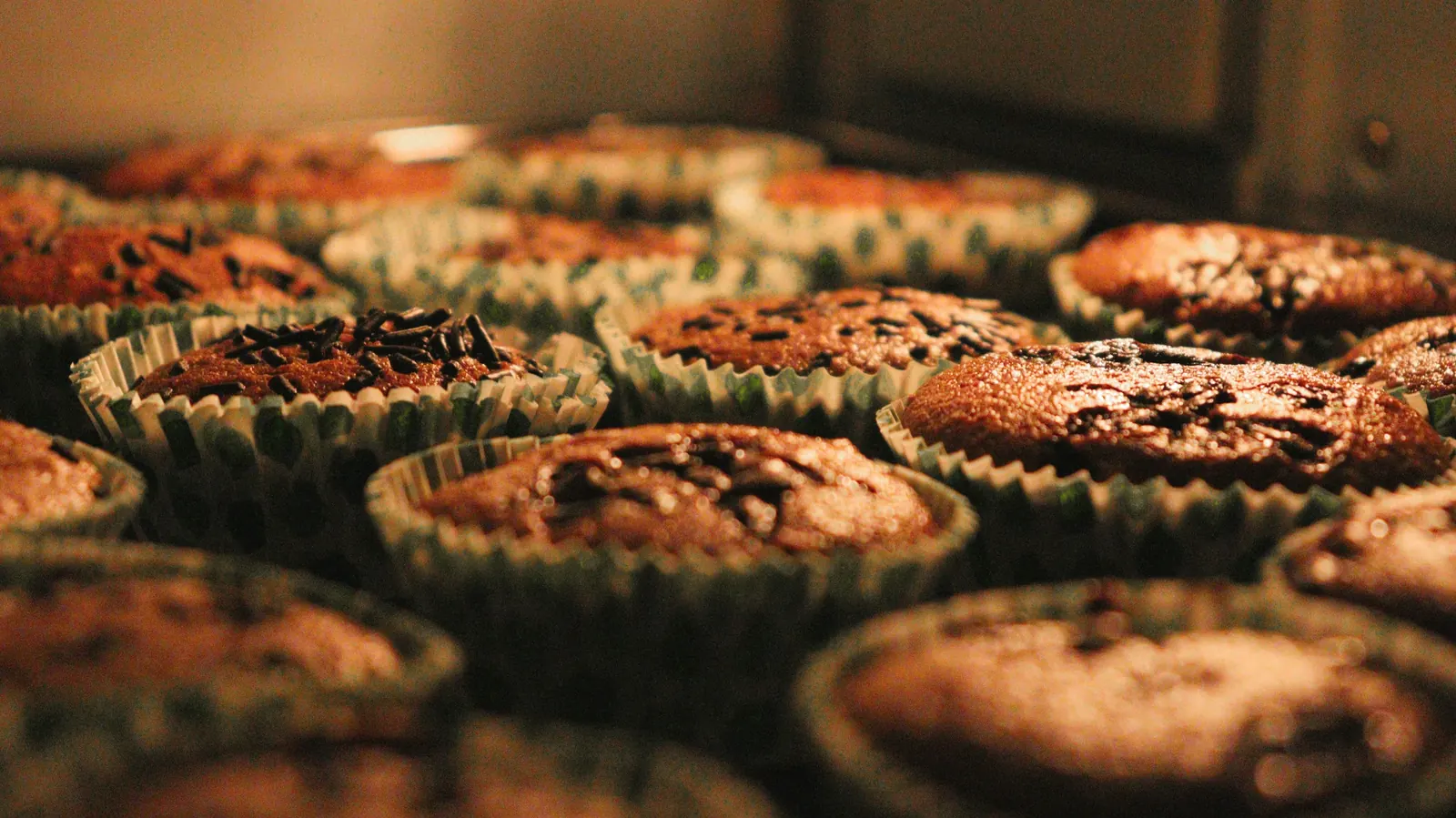
A silicone muffin pan and a metal muffin tin hold the same batter in the same twelve cups, and both will give you muffins. The difference shows up at the edges. Metal pulls heat into the batter fast and browns the sides and base; silicone passes heat slowly and keeps them pale and soft. That one fact explains most of what follows: how the crust turns out, how the muffins come out of the cups, and why a floppy silicone pan wants a sheet pan under it.
In a restaurant kitchen the sheet pans, hotel pans and muffin tins are almost all metal, for the same reason the comal is: metal is predictable over and over. This guide compares silicone and metal on browning, release, support, care and storage, says plainly which one most home bakers should buy, and names one silicone pan and two metal tins worth a look.
Julia’s earns a commission on purchases made through links on this page, at no cost to you. Recommendations are based on what a restaurant kitchen looks for, product specifications and verified buyer reports.
Quick verdict: silicone or metal for muffins?
Buy a metal muffin tin if you want muffins with browned, slightly crisp sides and a domed, colored top, which is what most people mean by a good muffin. A light-colored nonstick tin is the safest all-round choice. Buy a silicone pan as a second pan, or as your only pan if easy release, egg bites and freezer-to-oven baking matter more to you than browning, and choose one with a built-in steel frame so it doesn’t sag. Both a named review and a university study found that silicone muffins come out paler than metal ones.
The table sums up the differences; each one is explained below.
Silicone vs metal muffin pan, side by side
| Silicone muffin pan | Metal muffin pan | |
|---|---|---|
| Browning | Pale sides and less top color (Cook’s Country; UNH study) | Browned sides and base; dark pans brown fastest (Quaker) |
| Crumb | Moister, with greater volume in one study (UNH) | Drier edge, more crust |
| Release | Flex the cup and push out; cool first | Nonstick coating, grease or paper liners |
| Support | Floppy pans need a sheet pan; framed pans don’t | Rigid on its own |
| Typical oven limit | 428°F (Trudeau) | 450°F on many nonstick tins (Farberware, USA Pan) |
| Freezer to oven | Yes, on many (Trudeau) | Not a usual claim |
| Main risk | Sagging when full; slow cooling and unmolding | Scratched coating; over-browning in dark pans |
| Storage | Unframed pans flex and fold into a drawer | Flat and stackable, but rigid |
Browning: the difference you can see
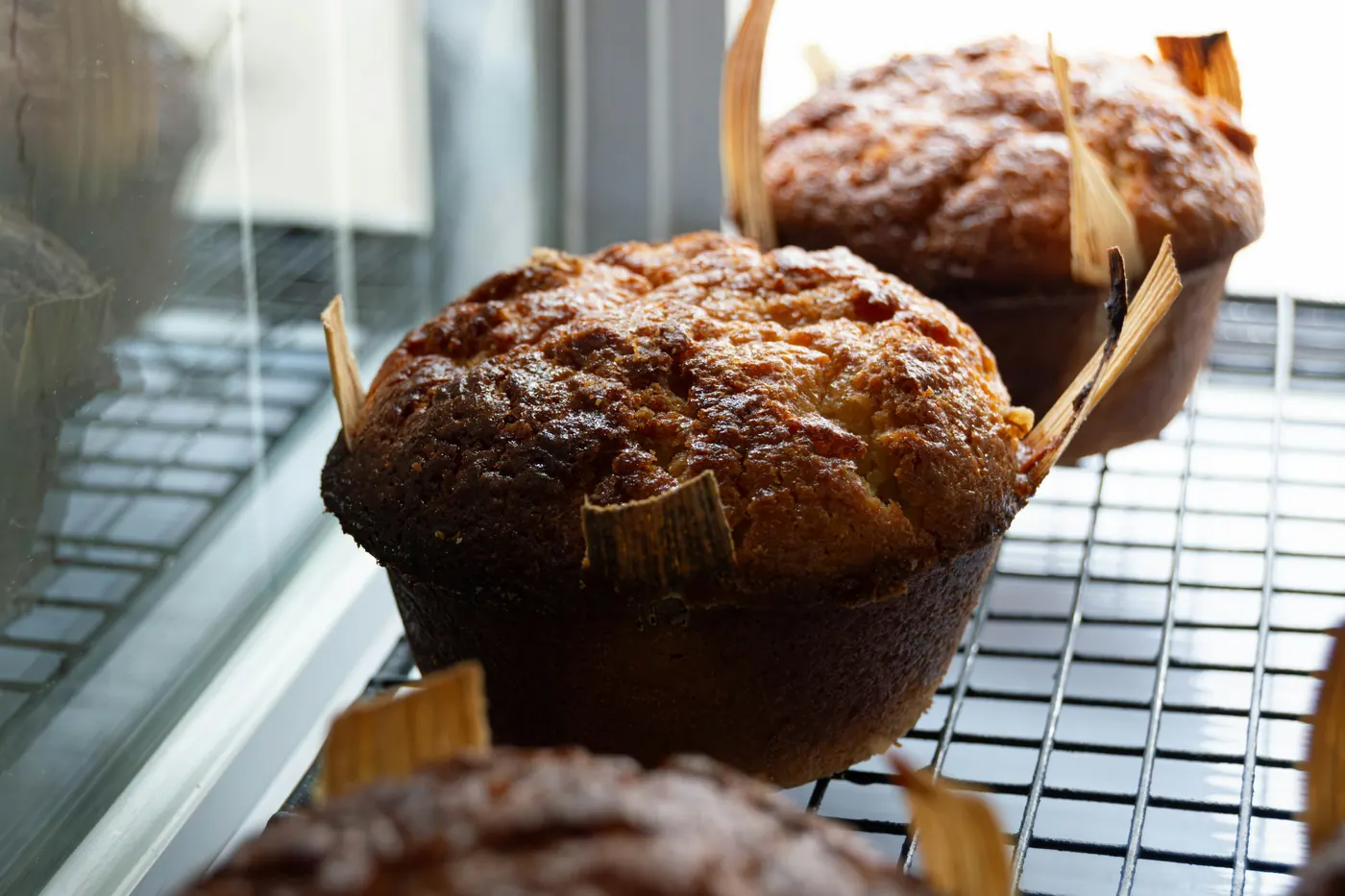
This is the clearest result in the whole comparison, and it favors metal. Cook’s Country, the America’s Test Kitchen magazine, baked muffins in a silicone muffin pan and reported that they “turned an unsightly shade of white even on the sides,” with none of the browning a muffin should have. The editors said they stick with their metal tins.
A study from the University of New Hampshire points the same way with measurements rather than impressions. Nelson Barber and colleagues, writing in the Journal of Foodservice in 2007, baked corn muffins from the same mix in silicone pans and in dark nonstick anodized aluminum pans. The silicone muffins were moister and had more volume, but the color and texture of the top crust were significantly lower, and the authors concluded that silicone muffin pans “did not produce a better product.”
Not every metal pan browns the same, either. Quaker’s muffin baking guide says shiny aluminum pans keep muffins from getting too dark around the sides, while dark nonstick pans brown edges and bottoms quickly, and that many nonstick bakeware makers recommend lowering the oven by 25°F. So within the metal side, a light or silver finish is the more forgiving choice and a dark gray one browns harder.
Moisture and rise: where silicone has a case
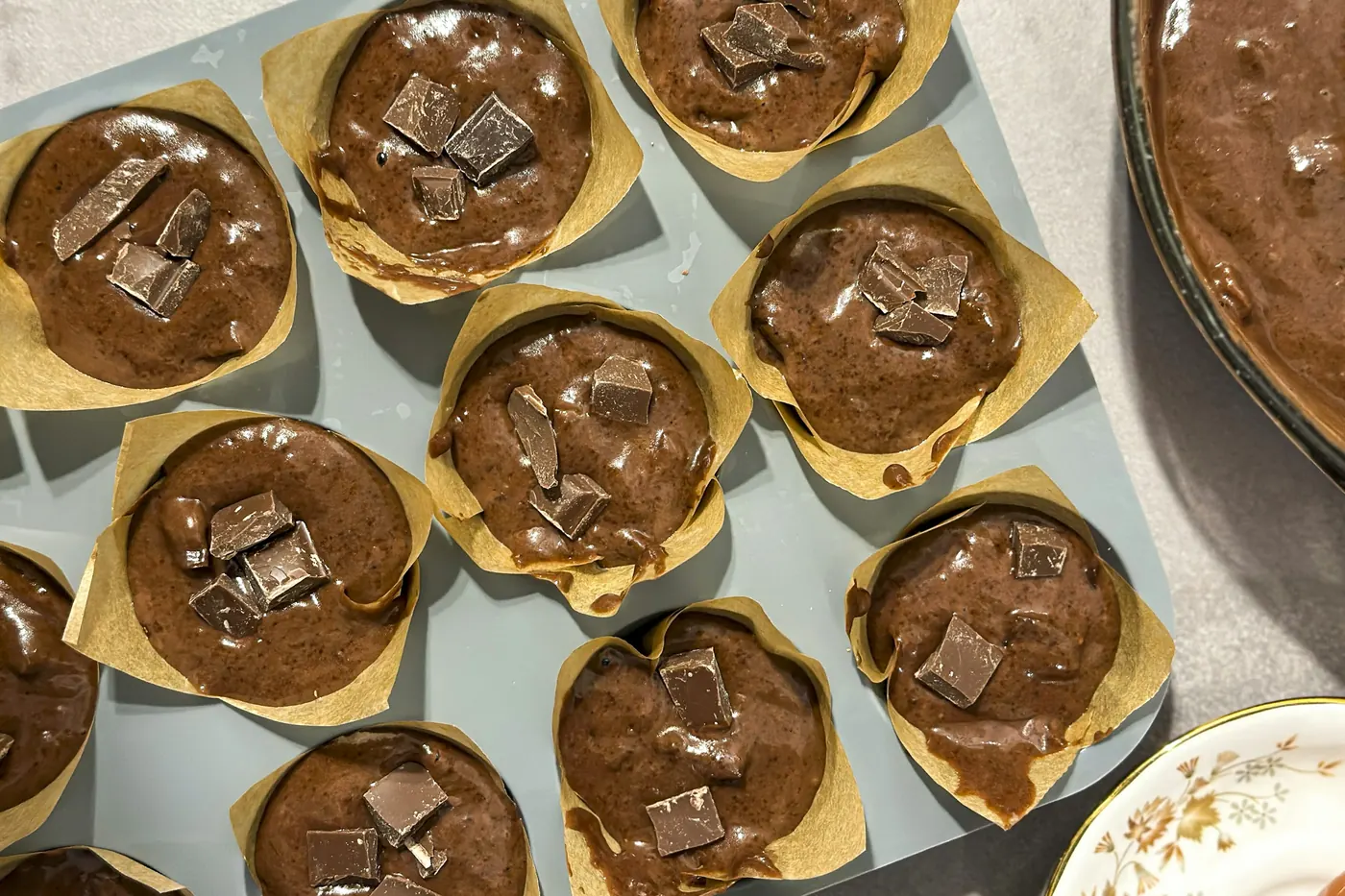
The same study that faulted silicone on color found that silicone muffins were moister and rose higher. If you bake soft, cake-like cupcakes that will be frosted, or you simply prefer a tender edge with no crust, that trade can suit you. Pale sides do not matter under frosting.
It also helps explain why silicone is popular for egg bites and mini frittatas. Eggs don’t need browning; they need to set gently and come out whole. For that kind of baking, the slow, soft heat of silicone is not a drawback. Our best egg muffin pan guide covers pans made for that job.
Release: easier from silicone, but not instant
Silicone’s selling point is release. You bend the cup and push the muffin out from below, which is why it works well for small or sticky bakes. Our best muffin silicone pan guide notes that this matters most at the extremes: tiny mini muffins and tall jumbo ones.
The catch is timing. Cook’s Country found that its silicone muffins had to be peeled from the pan, so they had to cool completely first, and that this took about 40 minutes longer than with the metal tin. Trudeau’s own listing asks you to grease lightly and let bakes cool for 5 to 10 minutes before unmolding. In other words, silicone releases well once it has cooled, not straight from the oven.
Metal releases through a nonstick coating, a coat of grease or a paper liner. With liners, the pan material barely matters for release, and you lose the main reason to choose silicone. Our best cupcake liners guide covers paper and foil options. USA Pan asks owners not to use cooking sprays on its pans because they may stain the coating, and to follow the recipe’s greasing instructions instead.
Support: why a silicone pan wants a sheet pan
A full pan of batter is heavy, and plain silicone bends when you pick it up. Cook’s Country had to steady its floppy pan on a metal sheet pan, and found that this slowed the baking. That is the main practical complaint about silicone: you either carry it on a tray, which shields the bottoms, or you risk spilled batter.
Framed silicone pans are the fix. Trudeau’s Structure pans have a steel frame built into the rim, which the maker says stops drooping and sagging on the way in and out of the oven. If you buy silicone, buy one with a frame or a wire-reinforced rim, and keep a sheet pan nearby for anything floppier. Metal tins, of course, are rigid on their own; Farberware says its tin resists warping, and the KitchenAid has extended handles for a grip with pot holders.
Heat limits and the freezer
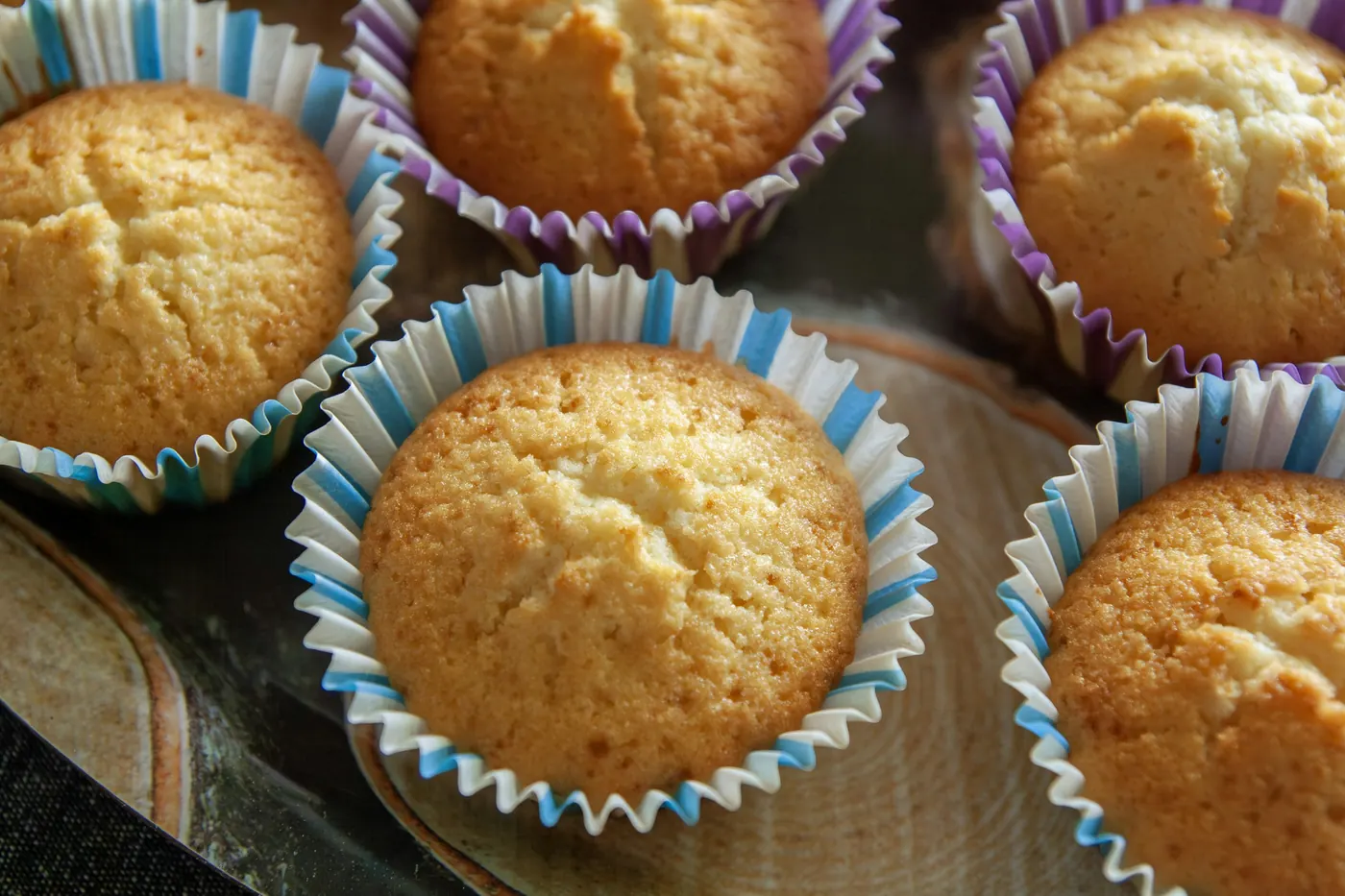
Silicone pans usually stop at a lower oven temperature. Trudeau rates its pans to 428°F (220°C). Farberware rates its nonstick tin to 450°F, and USA Pan says not to exceed 450°F because of its coating. Typical muffin recipes bake below either limit, so this rarely decides the question, but it rules silicone out of very hot, quick bakes.
Silicone wins on the other end. Trudeau says its pans go from freezer to oven and resist thermal shock, which makes them handy for make-ahead egg bites or frozen batter portions. Most metal tin makers don’t make that claim, and it is general kitchen sense not to put a cold metal pan straight into a very hot oven if the maker doesn’t say you can.
Care, wear and storage
Both kinds are easy to clean, with caveats. Trudeau and KitchenAid say their pans are dishwasher safe. Nonstick metal tins need gentler handling than bare metal: USA Pan warns that sharp metal utensils will chip a coating, and the same applies to knives used to loosen a stuck muffin. Silicone has no coating to chip, which is one less thing to protect.
For storage, plain silicone can be folded or squashed into a drawer, which is a real advantage in a small kitchen. Framed silicone loses most of that, because the frame keeps it flat. Metal tins nest and stack well on a shelf.
Choose a silicone muffin pan if… / Choose a metal muffin pan if…
Choose a silicone muffin pan if…
- You bake egg bites, mini frittatas or frosted cupcakes more often than classic muffins.
- Release without liners matters more to you than browned sides.
- You want to go from freezer to oven.
- You are happy to cool the pan before unmolding and to buy a framed model.
Choose a metal muffin pan if…
- You want browned sides, a colored top and a little crust.
- You bake with paper liners anyway.
- You want a rigid pan you can lift with one hand on each handle.
- You want one pan for muffins, cupcakes, popovers and the occasional hot bake up to 450°F.
Our picks for the silicone vs metal muffin pan question
One silicone pan and two metal tins. The silicone pick has a built-in steel frame, because the support problem is the biggest complaint about silicone. The two metal tins differ in color: one dark gray and one silver, so you can choose how hard you want the edges browned. All three were in stock with a new offer when we checked. The Trudeau is a different color listing of the structured silicone line that appears in our egg muffin pan guide; we chose it here because the framed design is the direct answer to the support question, and we found no other framed silicone pan from an established maker as a fresh listing sold new.
1. Trudeau Structure Silicone 12-Cup Muffin Pan – Steel Frame Stops the Sag

Trudeau builds this pan with a steel frame in the rim, which the listing says keeps it stable for oven transfers without sagging. That is the feature that makes a silicone muffin pan practical, and it is why this is our silicone pick rather than a plain flexible pan.
The listing gives each cup as 2.8 inches across the top, 2 inches at the base and 1.5 inches deep, which is a standard muffin size. It is rated to 428°F, goes in the freezer, microwave and oven, and is dishwasher safe. Trudeau asks you to grease lightly and let bakes cool 5 to 10 minutes before you pop them out; following that matters, because silicone releases best once it has cooled a little.
Expect paler sides than a metal tin gives. For egg bites, frosted cupcakes and soft muffins that’s fine. For bakery-style browned muffins, the metal picks below suit better. One listing bullet calls it a “mini muffin pan,” but the stated cup size is standard, so we treat it as a standard pan.
Why we like it
- Integrated steel frame for support (listing)
- Standard 2.8-inch cups (listing)
- Freezer, microwave and oven safe to 428°F (listing)
- Dishwasher safe (listing)
Key specifications
| Model | 5115197M |
|---|---|
| Material | BPA-free silicone with integrated steel frame |
| Cups | 12; 2.8 in top, 2 in base, 1.5 in deep |
| Finish | Grey with mint cups |
| Max oven temp | 428°F (220°C) |
| Support | Steel frame; no sheet pan needed (listing) |
| Dishwasher safe | Yes |
| Warranty | Not stated on this listing |
Why we recommend it
It suits a baker who wants silicone’s easy release for egg bites and cupcakes without the floppy-pan problem.
Skip it if you want browned, crusty muffins; a metal tin does that better.
Pros and cons
Pros
- Frame keeps it rigid when full
- Freezer to oven
- Easy release once cooled
Cons
- Paler sides than metal
- Lower oven limit than metal tins
- Frame means it no longer folds for storage
2. KitchenAid 12-Cup Nonstick Aluminized Steel Muffin Pan – Silver Finish for Even Color
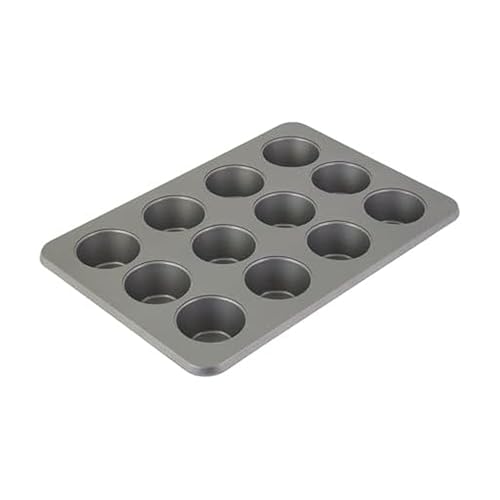
This is the metal tin we would point most home bakers to first. It is aluminized steel with a nonstick coating in a silver color, and a lighter finish browns more gently than a dark one, as Quaker’s baking guide explains. That means browned sides without much risk of dark, hard bottoms at ordinary muffin temperatures.
The listing describes the coating as a heavy-duty, Swiss-engineered nonstick, and says the pan is dishwasher safe. Extended handles at the ends give you something to hold with thick pot holders, which matters with a full, hot pan. The listing gives the size as about 16.5 by 11.4 inches and 1.34 inches high, and the weight as about 1.5 pounds, so check that it fits your oven rack and sheet pan storage.
KitchenAid does not state a maximum oven temperature on the listing. For normal muffin baking that is not an issue, but don’t use it under a broiler without checking with the maker.
Why we like it
- Light silver finish for gentler browning
- Aluminized steel body (listing)
- Extended handles for a safe grip (listing)
- Dishwasher safe (listing)
Key specifications
| Model | KQ958OSNSA |
|---|---|
| Material | Aluminized steel, nonstick coating |
| Cups | 12 |
| Finish | Contour Silver |
| Max oven temp | Not stated |
| Support | Rigid; extended handles |
| Dishwasher safe | Yes |
| Warranty | Not stated |
Why we recommend it
It suits most home bakers who want a single everyday muffin tin that browns evenly and lifts out easily.
Skip it if you want a stated oven limit and lifetime warranty on the listing; the Farberware below has both.
Pros and cons
Pros
- Lighter finish is forgiving
- Large handles
- Dishwasher safe
Cons
- No maximum temperature stated
- Coating needs non-metal tools
- No warranty stated on the listing
3. Farberware 12-Cup Nonstick Muffin Pan – Darker Finish for Browner Edges

Farberware’s tin is the other side of the metal choice: a gray nonstick finish that browns harder. Farberware says its heavy-duty construction resists warping and heats evenly to brown well, and it rates the pan to 450°F. The listing gives the overall size as about 15.2 by 11.4 inches, 1.4 inches high, and about 1.5 pounds.
Farberware says the nonstick coating is made without PFAS, PFOA, lead or cadmium, and backs its bakeware with a lifetime guarantee against defects in normal household use. Those are the maker’s statements, quoted as given.
A darker tin is the one to watch. If your muffins come out too dark on the bottom, follow the advice Quaker repeats from nonstick bakeware makers and lower the oven by 25°F, then check a few minutes early. The listing does not say whether the pan is dishwasher safe, so hand washing is the safe choice for the coating.
Why we like it
- Oven safe to 450°F (listing)
- Warp-resistant construction (listing)
- Coating made without PFAS, PFOA, lead or cadmium (maker statement)
- Lifetime guarantee against defects (listing)
Key specifications
| Model | 52106 |
|---|---|
| Material | Nonstick-coated metal |
| Cups | 12 |
| Finish | Gray |
| Max oven temp | 450°F |
| Support | Rigid; warp resistant |
| Dishwasher safe | Not stated |
| Warranty | Lifetime, defects in normal household use |
Why we recommend it
It suits a baker who likes well-browned muffin sides and wants a stated oven limit and warranty.
Skip it if you often get dark bottoms; the lighter KitchenAid browns more gently.
Pros and cons
Pros
- Stated 450°F limit
- Lifetime guarantee
- Browns edges well
Cons
- Dark finish can over-brown
- Dishwasher use not stated
- Coating needs non-metal tools
Muffin pan questions, answered
Do muffins bake differently in silicone?
Yes. Cook’s Country found silicone muffins came out pale even on the sides, and a University of New Hampshire study found silicone muffins moister and taller but with significantly less top-crust color than muffins from metal pans. Expect softer, paler muffins.
Do you need to put a silicone muffin pan on a baking sheet?
A plain, flexible one, yes: it bends under a full load of batter, and Cook’s Country had to steady its pan on a sheet pan. A pan with a built-in steel frame, like the Trudeau, is designed to be carried on its own.
Do you need to grease a silicone muffin pan?
A light greasing helps. Trudeau asks for it and for a 5 to 10-minute cool before unmolding. Release from silicone is easiest once the muffins have cooled a little.
Is a dark or light metal muffin pan better?
A light or silver pan is more forgiving. Quaker’s muffin guide says dark nonstick pans brown edges and bottoms quickly and notes that many nonstick bakeware makers recommend baking 25°F lower in them.
Which muffin pan should I buy first?
For most kitchens, a light-colored metal tin. Add a framed silicone pan later if you bake egg bites or want liner-free release.
Our final word on silicone vs metal
For muffins as most people picture them, with color on the sides and a domed, golden top, metal is the better pan, and a light-colored nonstick tin is the easy first buy. Silicone earns its place for egg bites, soft frosted cupcakes and freezer-to-oven baking, and only when it has a frame to hold it steady. Our muffin tin reviews cover more metal options, including USA Pan and Nordic Ware, and our best muffin silicone pan guide covers the silicone field in depth. Cool either kind on a proper rack; our best cooling rack guide has options. And if you would rather someone else did the baking, see the menu or call to order.