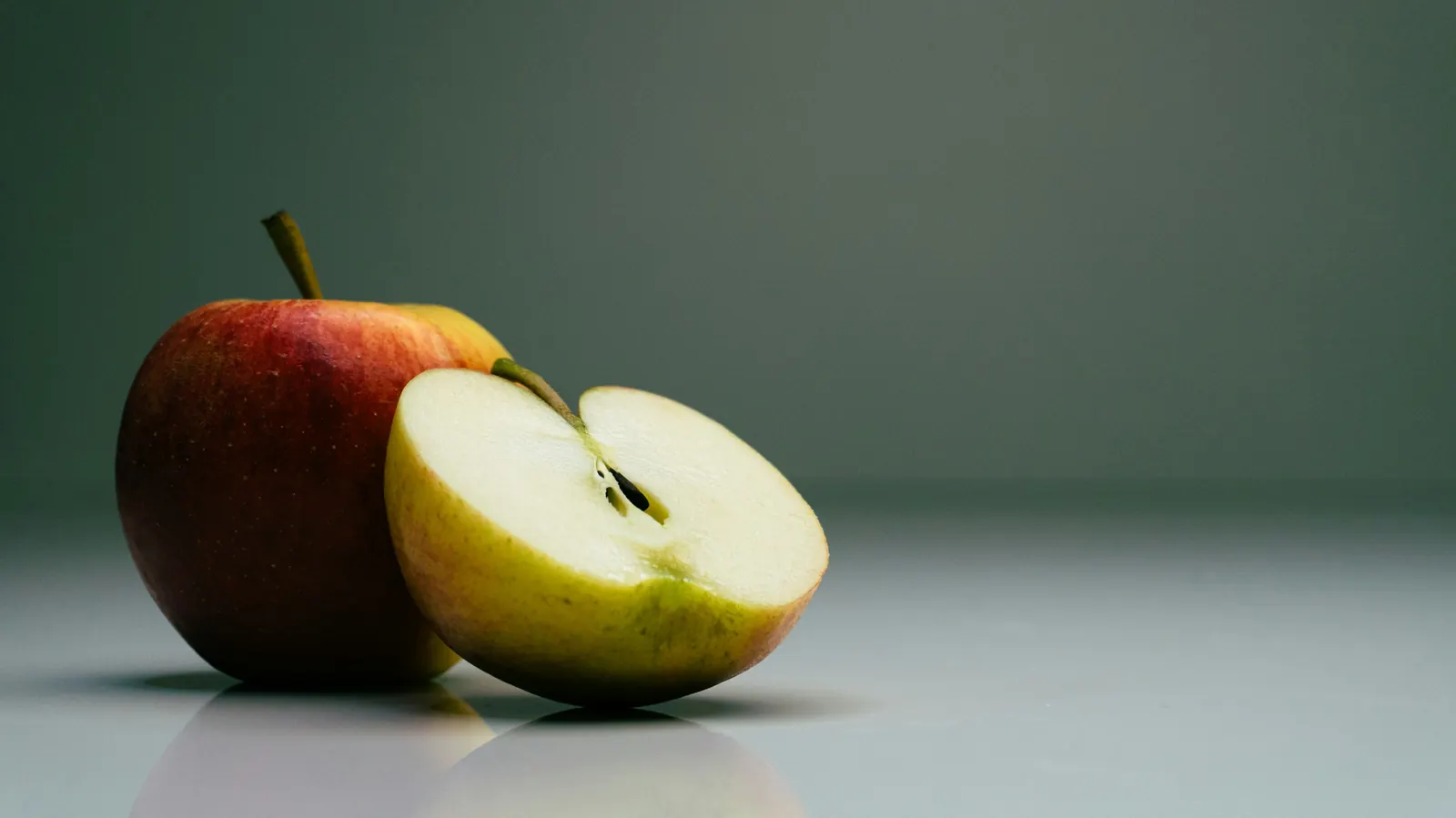
An apple corer is a narrow tube with a sharp end, and it does one thing: it pulls the core out of a whole apple in one push. That is handy for baked apples and apple rings, and not much else, which is why plenty of kitchens don’t have one. If you have a bag of apples and no corer, the tools you already own can do the job, some of them better.
This guide covers the apple corer alternative that suits each job: a paring knife for coring a whole apple, a chef’s knife for fast slices with no coring at all, a melon baller or a serrated spoon for halves, and, oddly enough, a winged corkscrew. For each one we say how clean a result to expect, what it asks of you and where it falls short.
Julia’s earns a commission on purchases made through links on this page, at no cost to you. Recommendations are based on what a restaurant kitchen looks for, product specifications and verified buyer reports.
Why cooks skip the apple corer
- It does one job. A corer earns its drawer space only if you bake whole apples or cut rings often.
- Apples vary. A corer’s tube is one size. A small apple loses too much flesh, and a large one keeps bits of seed pocket the tube missed.
- Most recipes want slices or chunks. For a pie, a salad or a lunchbox, you can cut the fruit away from the core and never core it at all.
- You already own the alternatives. Crystal Antonace, writing for The Daily Meal in 2023, walks through coring and slicing an apple with nothing but a sharp knife and a paring knife.
A dedicated tool still wins on speed when you are prepping a lot of fruit. If you want eight even wedges in one push, or a crank that peels, cores and slices, our guide to the best apple corer slicer covers wedgers and corers, and the best apple corer peeler slicer guide covers the crank machines.
Quick verdict: the best apple corer alternative
For most kitchens, the best apple corer alternative is a sharp paring knife like the Mercer Culinary Millennia 3.5-inch: it cores a whole apple standing upright, quarters and cores slices, and does a hundred other small jobs. If you only need slices, a Victorinox Swiss Classic 8-inch chef’s knife cuts the fruit off the core in four strokes. For halved apples and baked apples, a Restaurantware melon baller scoops the core cleanly, and a Better Houseware serrated grapefruit spoon does the same with a spoon’s shape. A Chef Craft winged corkscrew will pull a core from a whole apple in a pinch.
Five ways to core an apple without a corer, side by side
Our five picks, one per job, with what each maker or listing states. All five are reviewed in full below.
| Tool | How it cores | Apple left | Cleaning | Buy on Amazon |
|---|---|---|---|---|

Mercer Culinary Millennia 3.5-Inch Paring KnifeBest overall
|
Cuts around the core | Whole, or cored quarters | Hand wash only | View on Amazon |

Victorinox Swiss Classic 8-Inch Chef’s KnifeBest for fast slices
|
Slices the fruit off the core | Four slabs, ready to slice | Not stated in the listing | View on Amazon |

Restaurantware Stainless Steel Melon BallerBest for halves
|
Scoops the core out | Neat halves or a hollow apple | Dishwasher safe | View on Amazon |
| Saws and scoops the core | Halves with a rounded hollow | Dishwasher safe | View on Amazon | |

Chef Craft Select Metal Winged CorkscrewBest in a pinch
|
Screws in and levers the core out | Whole, with a narrow channel | Top-rack dishwasher safe | View on Amazon |
Which method to use for which apple dish
The right tool depends less on the apple than on what you are making with it.
- Baked or stuffed apples. You need the apple whole with the bottom left in, so the filling stays put. Cut around the core from the top with a paring knife without piercing the bottom, then scrape the cavity clean with a spoon or melon baller. Natasha Bailey’s 2022 Tasting Table piece describes this paring-knife-and-spoon method.
- Apple rings. Core the whole apple first with a paring knife, cutting straight down around the stem, then slice across. The Daily Meal’s method is to push a paring knife straight down four times around the stem and push the core out with a finger.
- Pie, crisp and salad. Skip coring. Slice the four sides off the core with a chef’s knife, lay each piece flat and slice.
- Halves for roasting or snacks. Halve the apple through the stem and scoop the core out of each half with a melon baller or spoon. Chowhound’s Tara Bowen reports that Ina Garten halves apples and uses “a melon baller to dig out the core,” then trims the stem and blossom end with a knife.
Five tools to use instead of an apple corer
1. Mercer Culinary Millennia 3.5-Inch Paring Knife – Cores Whole Apples and Quarters
A small, sharp paring knife is the most useful apple corer alternative because it handles every coring method there is. For a whole apple, stand it on the board and push the tip straight down beside the stem, then work around the core in a circle or a square and push it out. For quarters, cut the apple through the stem and slice diagonally under the core of each piece to lift it out. The Daily Meal’s Antonace describes both methods with a paring knife and nothing else, and Tasting Table’s Bailey notes that the upright method works “so long as you have a sharp knife.”
Mercer says this Millennia paring knife has a one-piece blade of high-carbon Japanese steel, for easy edge maintenance, and a handle with textured finger points for a non-slip grip. Mercer pitches it for small slicing and intricate cuts such as garnishes, seeding jalapeños and deveining shrimp, so it will earn its place long after apple season. The 3.5-inch blade is long enough to reach through most apples from the top; for a very tall one, you may need to finish from the bottom.
The costs are care and practice. Mercer says to wash it by hand and dry it, and never to put it in the dishwasher; its warranty excludes dishwasher damage. A whole-apple core cut with a knife is rarely as round as one from a corer, and it takes a minute rather than a second. For more choices, see our best paring knife guide.
Why we like it
- Handles every coring method
- High-carbon Japanese steel, per Mercer
- Textured, non-slip handle
- Useful for chiles, garnishes and shrimp too
Key specifications
| Model | M22003 |
|---|---|
| Type | 3.5-inch paring knife |
| How it cores | Cuts around the core |
| Apple left | Whole, or cored quarters |
| Material | High-carbon Japanese steel; textured handle |
| Size | 3.5-inch blade |
| Cleaning | Hand wash only |
| Warranty | Defects in material or workmanship |
Why we recommend it
It suits any cook who would rather own one small knife that does apples, chiles and garnishes than a single-use corer.
Skip it if you core dozens of apples at a time for canning or baking; a dedicated corer is faster.
Pros and cons
Pros
- Works for whole apples and quarters
- Many other uses
- Easy to keep sharp
Cons
- Slower than a corer
- Takes some practice
- No dishwasher
2. Victorinox Swiss Classic 8-Inch Chef’s Knife – Slice Around the Core, Skip Coring
If the apple is headed for a pie, a crisp, a salad or a snack plate, you don’t need to core it at all. Stand it on the board stem side up, and with a chef’s knife cut straight down just beside the stem so the blade misses the core. Turn the apple and repeat on the other sides. You end up with three or four flat chunks of fruit and a square block of core to throw away, then lay each chunk flat and slice. The Daily Meal’s Antonace describes exactly this stem-side method, cutting the apple into “roughly three or four chunks” and slicing each one flesh side down.
A longer blade does it in one clean stroke per side. Victorinox lists this Swiss Classic as an 8-inch chef’s knife, 7.9 inches by its own measure, with a straight edge, an extra-wide blade and a non-slip handle, made in Switzerland. Victorinox says all its cutlery carries a lifetime warranty against manufacturer’s defects.
The trade-off is a little more fruit left on the core than a careful paring-knife job leaves, and you cannot keep the apple whole. The listing does not give care instructions; washing a good knife by hand and drying it straight away is general kitchen practice. If you already own a chef’s knife, use it. Our best chef knife guide covers more options.
Why we like it
- Four cuts and the core is gone
- Long, wide straight-edge blade
- Swiss made, per the listing
- Lifetime warranty against defects
Key specifications
| Model | 6.8063.20B |
|---|---|
| Type | 8-inch chef’s knife, straight edge |
| How it cores | Slices the fruit off the core |
| Apple left | Three or four slabs |
| Material | Not stated in the listing |
| Size | 7.9-inch blade |
| Cleaning | Not stated |
| Warranty | Lifetime, manufacturer’s defects |
Why we recommend it
It suits cooks who mostly slice apples for pies, salads and snacks and want the fastest route with the fewest tools.
Skip it if you need whole cored apples for baking or rings; a paring knife or melon baller does that.
Pros and cons
Pros
- Fastest way to slices
- No coring step at all
- Your main kitchen knife anyway
Cons
- Can’t keep the apple whole
- Some fruit left on the core
- Sold by a third-party seller

3. Restaurantware Stainless Steel Melon Baller – A Clean Scoop From Each Half
A melon baller is the neatest way to core a halved apple. Cut the apple in half through the stem, set the baller over the seed pocket and twist; the round, sharp-edged bowl lifts out the seeds and tough membrane in one or two scoops and leaves a smooth hollow. Trim the stem and blossom end with a knife and you are done. Chowhound’s Bowen reports this is how Ina Garten cores apples, and Tasting Table’s Karen Hart, writing in 2023, recommends a melon baller as a stand-in for a corer, working in from the stem end.
That hollow is useful in its own right. Halved apples cored this way sit flat in a baking dish, ready for butter, brown sugar and cinnamon, or a spoonful of cajeta. The same tool can hollow a whole apple for stuffing, working down from the top, though that takes longer.
Restaurantware’s listing describes a stainless steel baller with an ergonomic grip, sold singly, for melon balls and for hollowing squash and potatoes, and says it is dishwasher safe. The listing does not give the bowl size or the length. This pick rests on the listing details rather than an independent review. Our best melon baller guide covers other ballers.
Why we like it
- Smooth, round hollow in each half
- Works on squash and potatoes too, per the listing
- Stainless steel
- Dishwasher safe
Key specifications
| Model | RWT1520S |
|---|---|
| Type | Single-ended melon baller |
| How it cores | Scoops the core out |
| Apple left | Halves, or a hollowed whole apple |
| Material | Stainless steel |
| Size | Not stated |
| Cleaning | Dishwasher safe |
| Warranty | Not stated |
Why we recommend it
It suits bakers who make halved or baked apples, and anyone who wants neat, rounded hollows rather than knife cuts.
Skip it if you need apple rings; you can’t scoop a core out of a whole apple quickly enough to beat a knife.
Pros and cons
Pros
- Cleanest result on halves
- Easy for beginners
- Dishwasher safe
Cons
- Apple must be halved
- Bowl size not stated
- Rests on listing details only
4. Better Houseware Serrated Grapefruit Spoons, Set of 2 – A Spoon With Teeth

An ordinary tablespoon will scoop the core from a halved apple; Tasting Table’s Hart passes on Daphne Oz’s advice to use one and “rotate the apple” as you go so the inside is cored evenly. A plain spoon’s smooth edge tends to skid on firm apple, though. A grapefruit spoon has a serrated tip that bites in, so it cuts the tough membrane around the seeds as well as scooping. That is general kitchen sense rather than a maker’s claim for apples.
Better Houseware’s listing describes a set of two spoons with a double-serrated stainless steel blade that “grips tough skin and fibrous sections that a flat spoon would just slide off,” and names scooping squash seeds and hollowing citrus halves among its jobs. The nylon handles are meant to stay secure when the fruit is wet, and the spoons are dishwasher safe. Better Houseware describes itself as a women-owned family business.
The limits: a spoon makes a slightly rougher, larger hollow than a melon baller, and it only works on halves. On the other hand, you get two, so a helper can core while you slice, and the spoons go back to breakfast duty with grapefruit and kiwi.
Why we like it
- Serrated edge bites into firm fruit
- Set of two
- Non-slip nylon handles
- Dishwasher safe
Key specifications
| Model | 939/2 |
|---|---|
| Type | Serrated grapefruit spoons, set of 2 |
| How it cores | Saws and scoops the core |
| Apple left | Halves with a rounded hollow |
| Material | Stainless steel bowl; nylon handle |
| Size | Not stated |
| Cleaning | Dishwasher safe |
| Warranty | Not stated |
Why we recommend it
It suits households that would use a grapefruit spoon anyway and want it to pull double duty on apples and squash.
Skip it if you want the neatest hollow; the melon baller’s round bowl gives a cleaner shape.
Pros and cons
Pros
- Bites where a plain spoon slides
- Two in the set
- Useful at breakfast too
Cons
- Halves only
- Rougher hollow than a baller
- Apples not named by the maker
5. Chef Craft Select Metal Winged Corkscrew – A Chef’s Trick for Whole Apples
This one sounds like a party trick, but it comes from a working chef. Food Republic’s Audrey Simons, writing in 2024, reports that Sebastian Matheja, chef de cuisine at the Conrad New York Midtown’s restaurant Dabble, told People that a winged corkscrew will core an apple “just as well” as a corer. You set the tip of the spiral in the top of the apple, aimed at the center, and screw it down until it is fully in; the wings rise as you turn. Push the wings down and the spiral lifts the core out, the same way it would lift a cork.
Simons adds that you “may have to use a bit of elbow grease to wiggle the core out,” and that matches what you would expect: the spiral grabs a narrow plug through the middle, so seed pockets off to the side can stay behind and need a tidy-up with a paring knife. It keeps the apple whole, which is the thing a corer does that a knife finds hardest.
Chef Craft’s listing describes a 6.5-inch winged corkscrew with a chromed zinc screw, a handle that “raises for easy downward motion cork extraction,” a built-in bottle opener, and top-rack dishwasher safety. Wash it before and after it goes into fruit. If you need a corkscrew for wine as well, our best wine opener guide has sturdier ones.
Why we like it
- Keeps the apple whole
- Method recommended by a working chef
- Opens wine and beer too
- Top-rack dishwasher safe
Key specifications
| Model | 20168 |
|---|---|
| Type | Winged corkscrew with bottle opener |
| How it cores | Screws in and levers the core out |
| Apple left | Whole, with a narrow channel |
| Material | Chromed zinc screw |
| Size | 6.5 inches long |
| Cleaning | Top-rack dishwasher safe |
| Warranty | Not stated |
Why we recommend it
It suits cooks who want whole cored apples now and then and would rather own a corkscrew than a corer.
Skip it if you want a clean, full-width core; the spiral takes only the middle and you will finish with a knife.
Pros and cons
Pros
- Whole apple, no cutting
- Two tools in one
- Dishwasher safe
Cons
- Takes some wiggling
- Leaves seed pockets behind
- Narrow core only
Coring a whole apple with a paring knife, step by step
The paring knife method is worth learning once, because it keeps the apple whole. This combines the methods described by The Daily Meal and Tasting Table, with a little general kitchen sense.
- Stand it steady. Set the apple stem side up. If it wobbles, take a thin slice off the bottom only if you don’t need the bottom sealed for baking.
- Cut down beside the stem. Push the knife straight down about a quarter inch from the stem, all the way through for rings, or stopping short of the bottom for baked apples.
- Go around. Make three more cuts to form a square around the core, or work the blade around in a circle.
- Push it out. Push the core out with a finger, or lift it with the knife tip. Scrape any seed pockets with a spoon.
- Keep it sharp. A dull knife wanders into the core or skids off the skin, which is where most cuts happen. That is general kitchen sense.
To keep cut apples from browning while you work, The Daily Meal suggests squeezing citrus juice over the slices; lime is what most Mexican kitchens have on hand.

How we chose these five corer alternatives
We looked at the ways cooks actually core apples without a corer, cutting around the core, cutting the fruit off the core, scooping it out of halves and pulling it out with a corkscrew, and chose one tool from an identifiable maker for each. We left out apple wedgers, corers and crank machines, which our apple corer slicer and peeler guides already cover, and we did not repeat any product from our paring knife, chef knife, melon baller or wine opener guides. Every pick was listed in stock and sold new when we checked.
Specifications come from each maker’s Amazon listing. For the methods, we read Crystal Antonace’s apple-cutting guide for The Daily Meal (2023), Natasha Bailey (2022) and Karen Hart (2023) for Tasting Table, Tara Bowen’s report on Ina Garten’s method for Chowhound (2025) and Audrey Simons’s piece on the corkscrew method for Food Republic (2024). Where a statement is general kitchen sense rather than a sourced fact, we say so. We have not used these products ourselves. We also searched the U.S. Consumer Product Safety Commission’s recall database for each brand and found no recall covering any of these five products.
Apple corer alternative questions, answered
What can I use instead of an apple corer?
A paring knife cores a whole apple or quarters. A chef’s knife slices the fruit off the core so you can skip coring. A melon baller or a sturdy spoon scoops the core out of halves, and a winged corkscrew can pull the center out of a whole apple.
How do you core an apple without a corer and keep it whole?
Stand it stem side up, push a paring knife straight down beside the stem, cut around the core in a square or circle and push the core out. For baked apples, stop short of the bottom and scrape the cavity with a spoon or melon baller.
Can you core an apple with a spoon?
Yes, once it is halved. Tasting Table passes on Daphne Oz’s advice to scoop with a tablespoon and rotate the apple as you go. A serrated grapefruit spoon bites into firm apple more easily than a smooth one.
Does a melon baller work for coring apples?
Very well on halves: it leaves a smooth, round hollow and takes only the seeds and membrane. Ina Garten uses one, according to Chowhound. On a whole apple it works but is slow.
Do I need to core apples for apple pie?
No. Slice the four sides off the core with a chef’s knife, lay them flat and slice. That is faster than coring and gives you flat-sided slices that stack well in a pie.
Our pick for coring apples without a corer
A sharp paring knife is the alternative to own: it cores whole apples, quarters and rings, and you will use it every day for other things. Add a melon baller if halved and baked apples are a regular thing, and reach for the chef’s knife when all you want is slices. If you core apples by the bushel, the best apple corer slicer is still the faster tool.
And when you’d rather someone else did the cooking, see the menu or call to order.