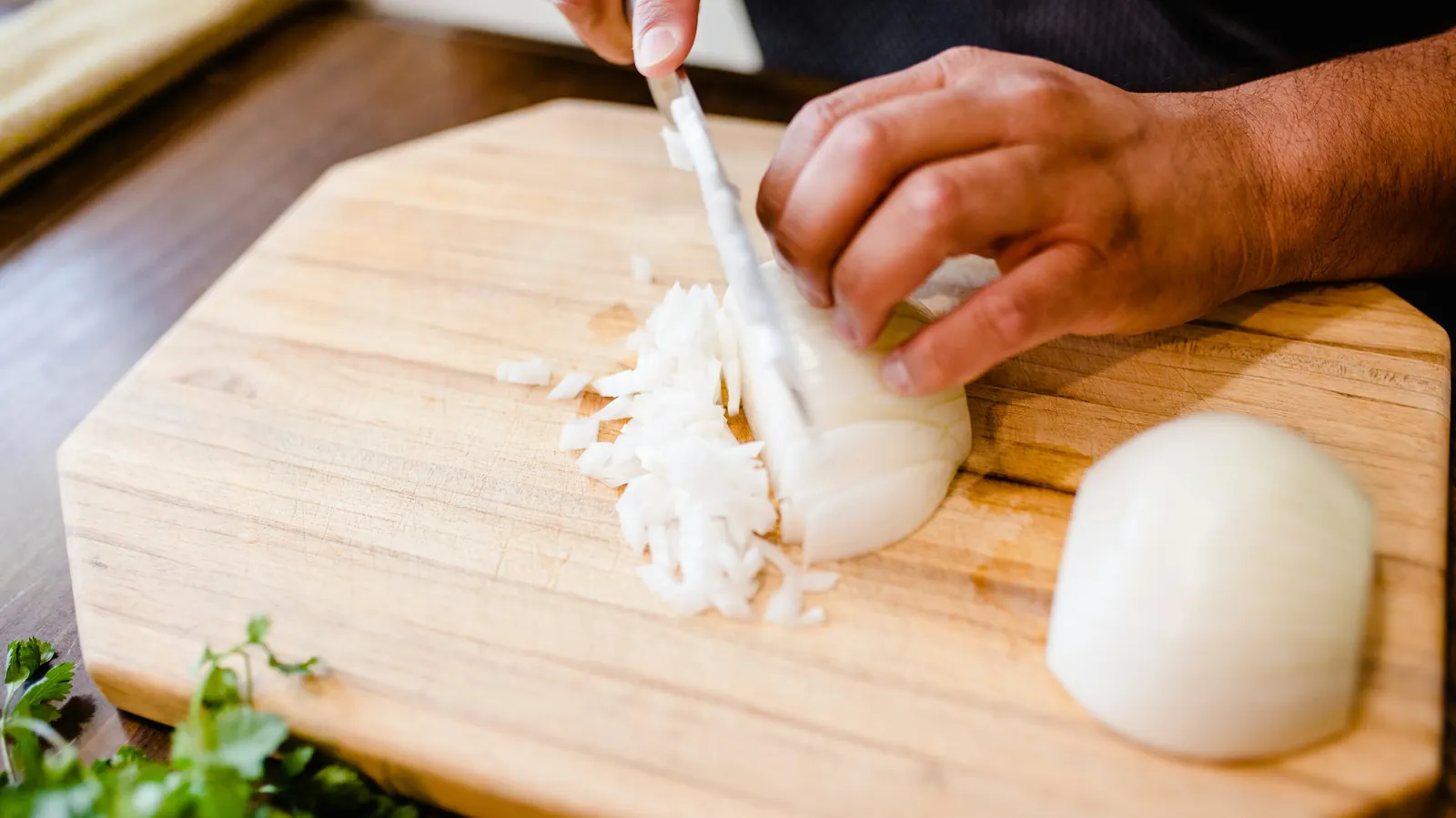
In a restaurant kitchen the chef’s knife does most of the work before service: a case of white onions diced for pico de gallo, jalapeños and serranos seeded and minced, bunches of cilantro chopped fine, and skirt steak sliced thin across the grain for carne asada. Paring knives, cleavers and bread knives have their moments, but the 8-inch chef’s knife is the one that stays on the board.
At home the job is the same, just smaller. This guide explains the real difference between a heavier Western chef’s knife and a thinner Japanese gyuto, names nine knives worth buying from makers who publish their specifications, and sets out what to look for so the knife you choose suits the way you cut.
Julia’s earns a commission on purchases made through links on this page, at no cost to you. Recommendations are based on what a restaurant kitchen looks for, product specifications and verified buyer reports.
Quick verdict: which chef’s knife to buy
For most home cooks, the best chef knife is the Victorinox Fibrox Pro 8-inch: a light, sharp, stamped stainless blade with a non-slip handle that Victorinox rates as dishwasher safe, and America’s Test Kitchen’s top pick among Western chef’s knives. If you want a thinner, harder Japanese-style blade, choose the Mac Professional 8-inch MTH-80. If you like weight behind the cut and a full bolster, the Wüsthof Classic 8-inch is the traditional German choice.
The rest of this page explains why, and which of the others suits a different kind of cook.
Five chef’s knives compared
Our five standout picks side by side, one for each kind of cook, with the specifications each maker or listing states. All nine knives are reviewed in full below.
| Knife | Best for | Style & blade | Hardness (stated) | Buy on Amazon |
|---|---|---|---|---|

Victorinox Fibrox Pro 8-inch Chef’s KnifeBest overall
|
Most kitchens, everyday prep | Western, stamped, 7.9-inch | Not stated | View on Amazon |

Mac Professional 8-inch Chef’s Knife with DimplesBest Japanese-style
|
Thin, precise slicing | Japanese hybrid, 7.88-inch | Not stated by Mac | View on Amazon |
Wüsthof Classic 8-inch Chef’s KnifeBest German forged
|
Heft, rocking cuts, squash | Western, forged, 8-inch | 58 HRC | View on Amazon |

Shun Classic 8-inch Western Cook’s KnifeBest upgrade
|
A keen edge with a Western curve | Japanese-made, Western profile, 8-inch | Not stated on listing | View on Amazon |

Misono Molybdenum 8.2-inch GyutoLightest pick
|
Long prep sessions, light hands | Japanese gyuto, 21 cm | Not stated | View on Amazon |
Product images from Amazon. Hardness and edge angles are listed only where the maker or its listing states them; check the listing before you buy.
Our picks for the best chef knife
These nine knives cover the two main families of chef’s knife: the heavier, more curved Western knife from Germany, Switzerland and France, and the thinner, harder, flatter Japanese gyuto. Each review covers who the knife suits, the specifications its maker states, and one honest reason to skip it, so you can match the blade to your hands and your cutting.
1. Victorinox Fibrox Pro 8-inch Chef’s Knife – Sharp, Light and Easy Care
This is the plain, practical knife that America’s Test Kitchen has recommended for years. The blade is stamped from a sheet of high-carbon stainless steel rather than forged, which keeps it thin and light: Victorinox lists the blade at 7.9 inches and the whole knife at 6.4 ounces. That lightness matters when you are dicing a sack of onions or mincing a big pile of cilantro, because your wrist tires far more slowly.
The handle is the part people either love or put up with. It is a textured thermoplastic elastomer that Victorinox says stays non-slip even when wet, which is exactly what you want when your hands are covered in tomato juice or lime. It is not pretty, but it does not get slick.
America’s Test Kitchen names it the top pick in its review of 8-inch Western chef’s knives, writing that it “cuts foods of all kinds effortlessly”, and has recommended it for many years. Victorinox rates it as dishwasher safe and covers it with a lifetime warranty against defects in material and workmanship. Hand washing will still keep the edge longer, since a dishwasher knocks blades against racks and other cutlery.
Why we like it
- Light at 6.4 ounces, per Victorinox, so it is easy on the wrist
- Textured TPE handle that stays grippy when wet
- America’s Test Kitchen’s top pick among Western chef’s knives
- Lifetime warranty against defects
Key specifications
| Model | 5.2063.20 |
|---|---|
| Blade length | 7.9 inches |
| Steel | High-carbon stainless, stamped |
| Hardness (stated) | Not stated |
| Edge angle (stated) | Not stated |
| Handle | Textured TPE (Fibrox) |
| Weight | 6.4 oz |
| Warranty | Lifetime, against defects |
Why we recommend it
It suits almost everyone: first-time knife buyers, cooks who want one blade for vegetables, chiles and meat, and anyone who would rather not fuss over care. The thin blade glides through onions and tomatoes without wedging, and the slight curve lets you rock through herbs.
Skip it if you want a knife that feels substantial in the hand or looks good on a magnetic strip: the plastic handle and light stamped blade are practical rather than handsome.
Pros and cons
Pros
- Light and nimble for long prep jobs
- Non-slip handle when wet
- Rated dishwasher safe by Victorinox
- Backed by a lifetime warranty
Cons
- Plain, utilitarian look
- Softer stainless than Japanese blades, so it needs honing more often
- Too light for cooks who like weight to do the work
2. Mac Professional 8-inch Chef’s Knife with Dimples – Thin Blade, Western Handle
The Mac MTH-80 sits between the two traditions. It has the thin, hard blade of a Japanese gyuto with a Western-shaped Pakka wood handle and a bolster, so it feels familiar to someone coming from a German knife while cutting more like a Japanese one. Mac lists the blade at 7.88 inches, 2.5 mm thick, and the whole knife at 6.5 ounces.
The row of dimples along the blade is there, Mac says, to help it release sticky foods such as potatoes and apples. In a Mexican kitchen that means sliced potatoes for papas con chorizo or a pile of jícama sticks come away cleanly instead of clinging to the blade. The listing describes the steel as molybdenum vanadium stainless; Mac’s own product page does not give a hardness figure, so we have not listed one.
America’s Test Kitchen recommends it in its gyuto review, calling it “razor-sharp, nimble, and capable”, though its testers found the dimples a minor nuisance to clean. Mac’s listing says hand washing is recommended and the knife is not dishwasher safe, and it carries a 25-year limited warranty.
Why we like it
- Thin 2.5 mm blade for clean slices through tomatoes and onions
- Dimples to stop starchy foods sticking, per Mac
- Western handle with a bolster, so it feels familiar
- Recommended by America’s Test Kitchen in its gyuto review
Key specifications
| Model | MTH-80 |
|---|---|
| Blade length | 7.88 inches |
| Steel | Molybdenum vanadium stainless (listing) |
| Hardness (stated) | Not stated by Mac |
| Edge angle (stated) | Not stated by Mac |
| Handle | Pakka wood, Western shape |
| Weight | 6.5 oz |
| Warranty | 25-year limited |
Why we recommend it
It suits a cook who already has some knife skills and wants a sharper, more precise blade for slicing tomatoes, shaving onions for curtido or cutting carne asada into thin strips, without giving up a comfortable Western grip.
Skip it if you want a dishwasher-safe knife or tend to hack through chicken bones: a thin, hard edge rewards a gentle push cut and can chip if twisted or used on bone.
Pros and cons
Pros
- Thin, precise blade
- Light at 6.5 ounces
- Food releases well thanks to the dimples
Cons
- Hand wash only
- Dimples take a little more care to clean
- Hardness and edge angle not published by Mac
3. Wüsthof Classic 8-inch Chef’s Knife – Forged Weight for Heavy Jobs
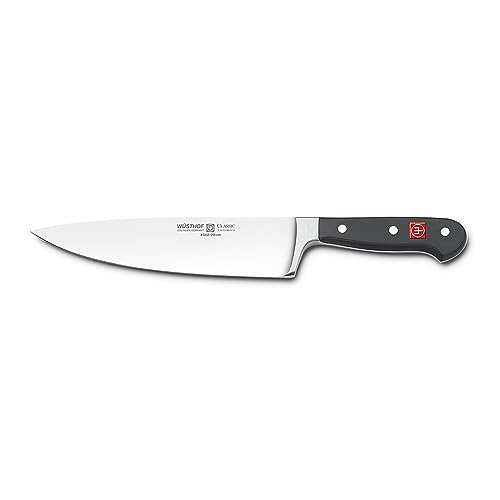
The Wüsthof Classic is the German chef’s knife most people picture: forged from a single block of high-carbon stainless steel, with a full bolster, a full tang and a triple-riveted synthetic handle. Wüsthof’s listing gives an 8-inch blade, a weight of 8.5 ounces and a hardness of 58 HRC, and says it is made in Solingen, Germany.
That weight is the point. A heavier blade lets the knife do more of the work on dense foods: halving a calabaza, chopping through a pile of carrots and potatoes for caldo, or breaking down a whole chicken at the joints. The curved belly suits the rocking motion many home cooks use for herbs and garlic. Wüsthof says its Precision Edge Technology gives a blade 20 percent sharper with twice the edge retention of its earlier models.
America’s Test Kitchen recommends it, noting that testers liked its grippy handle but that the thick spine and heavy build “sometimes felt a little less nimble” than they wanted. The listing carries a lifetime warranty. Like any good forged knife, it is happiest washed by hand and dried straight away.
Why we like it
- Forged from one piece of steel, tempered to 58 HRC (Wüsthof)
- 8.5 ounces of weight for dense vegetables and meat
- Full bolster and finger guard
- Made in Solingen, Germany, with a lifetime warranty
Key specifications
| Model | 4582/20 (Classic) |
|---|---|
| Blade length | 8 inches |
| Steel | High-carbon stainless, forged |
| Hardness (stated) | 58 HRC |
| Edge angle (stated) | Not stated on listing |
| Handle | Synthetic, triple-riveted, full tang |
| Weight | 8.5 oz |
| Warranty | Lifetime |
Why we recommend it
It suits cooks who like a solid, balanced knife that feels the same for decades, and who cut a lot of hard produce or meat. It is a forgiving blade for rocking cuts and less likely to chip than a thin Japanese edge.
Skip it if you have small hands or do long sessions of fine dicing: the weight and full bolster that make it sturdy also make it tiring, and the bolster makes sharpening the heel more work.
Pros and cons
Pros
- Sturdy forged blade with a full tang
- Stated hardness of 58 HRC
- Grippy handle, per America’s Test Kitchen
Cons
- Heavy for long prep sessions
- Thick spine can wedge in onions and squash
- Full bolster complicates sharpening
4. Shun Classic 8-inch Western Cook’s Knife – Japanese Steel, Western Curve
Shun’s Western Cook’s Knife is made in Japan but shaped like a German chef’s knife, with a deeper, curved blade for rocking. The listing describes a VG-MAX steel core with 68 layers of Damascus stainless cladding on each side, a D-shaped Pakkawood handle, and a 22-degree edge that Shun chose for extra strength on tougher jobs. That is a wider angle than the 16 degrees Shun uses on its Classic chef’s knife, which makes this one more durable.
America’s Test Kitchen names it the upgrade pick in its review of 8-inch Western chef’s knives, saying its “ultrakeen blade” sliced even dense butternut squash “as if it were butter”. The same review lists it at 8.1 ounces and notes the handle is “a bit slippery and quite long”, which can be awkward for smaller hands.
Shun covers its knives with a limited lifetime warranty for the original owner and offers free sharpening by mail, according to its warranty page; the warranty is honored only for knives bought from authorized sellers. Shun’s care guide says never to put its knives in the dishwasher, to hand wash and dry them straight away, and to use a wood board rather than glass, stone or ceramic.
Why we like it
- America’s Test Kitchen’s upgrade pick for Western chef’s knives
- 22-degree edge for extra strength, per Shun
- Curved belly for rocking through herbs and garlic
- Free sharpening service from Shun
Key specifications
| Model | DM0766 |
|---|---|
| Blade length | 8 inches |
| Steel | VG-MAX core, Damascus stainless cladding |
| Hardness (stated) | Not stated on listing |
| Edge angle (stated) | 22° |
| Handle | D-shaped Pakkawood |
| Weight | 8.1 oz (America’s Test Kitchen) |
| Warranty | Limited lifetime, free sharpening |
Why we recommend it
It suits a cook who rocks the knife the German way but wants Japanese steel and a keener edge, and who will pay more for a knife they plan to keep for years.
Skip it if you have small hands or want a dishwasher-safe knife: the handle is long and smooth, and Shun says its knives should never go in a dishwasher.
Pros and cons
Pros
- Very sharp, according to America’s Test Kitchen
- Stronger 22-degree edge
- Free sharpening from Shun
Cons
- Handle can feel slippery and long
- Hand wash only
- Warranty only for authorized sellers
5. Misono Molybdenum 8.2-inch Gyuto – Featherweight Japanese Workhorse
Misono’s Molybdenum series is its plain, working gyuto line. The listing gives a 21 cm (8.3-inch) blade, a 2.0 mm spine and a weight of just 160 grams, about 5.6 ounces, which makes it the lightest knife on this page. The steel is listed as 16-chrome stainless and the handle as black reinforced wood, riveted Western-style.
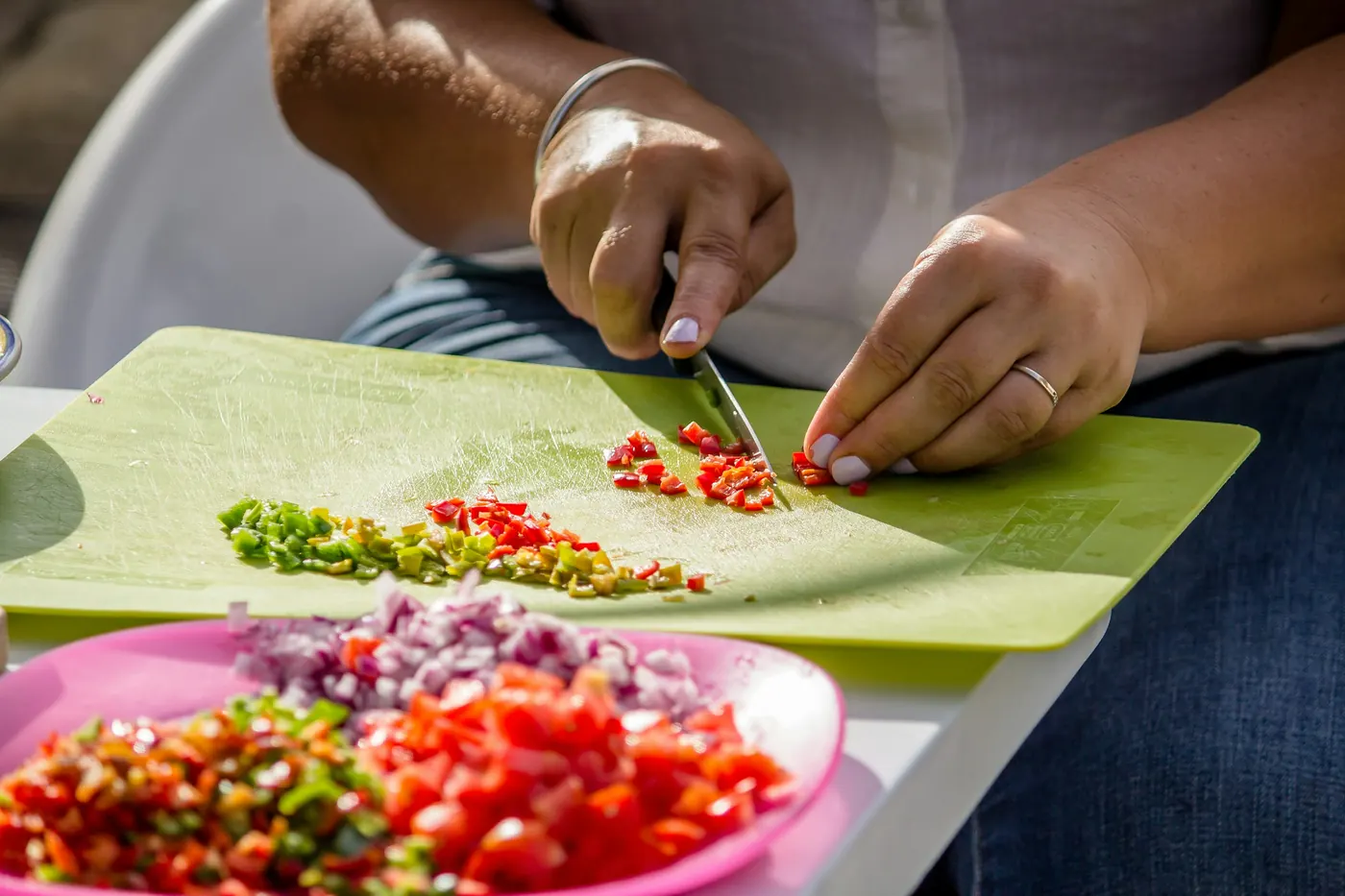
A gyuto is flatter than a German chef’s knife, with a pointed tip and less belly. That shape favors push cuts and slicing over rocking: you drive the blade forward and down through an onion rather than seesawing. It is excellent for fine brunoise of onion and chile for salsa, thin slices of radish, and long draw cuts through a flank or skirt steak.
Misono’s listing does not give a hardness figure or edge angle for this line, so we have left them as not stated. It is a right-handed knife as listed, and it is made in Japan. Hand wash it, dry it at once and keep it off glass and stone boards.
Why we like it
- Only 160 grams (5.6 ounces), per the listing
- Thin 2.0 mm spine for clean push cuts
- Flat gyuto profile for precise dicing
- Made in Japan, per the listing
Key specifications
| Model | 812 |
|---|---|
| Blade length | 21 cm (8.3 inches) |
| Steel | 16-chrome stainless |
| Hardness (stated) | Not stated |
| Edge angle (stated) | Not stated |
| Handle | Black reinforced wood |
| Weight | 160 g (5.6 oz) |
| Warranty | Not stated |
Why we recommend it
It suits cooks who prep for a long time at a stretch and want the lightest possible blade, and anyone curious about a true gyuto without paying for a fancy finish.
Skip it if you are left-handed or want a warranty in writing: the listing is for a right-handed knife and no warranty terms are stated.
Pros and cons
Pros
- Very light
- Thin, flat blade for push cuts
- Made in Japan
Cons
- Right-handed as listed
- No stated hardness or warranty
- Less suited to rocking cuts
6. Henckels Classic 8-inch Chef’s Knife – Fully Forged, Dishwasher Safe

Henckels’ Classic is the brand’s traditional forged chef’s knife. The listing describes fully forged construction with a seamless transition from blade to handle, a satin-finished blade that is finely honed for long-lasting sharpness, and stain- and rust-free steel.
The handle is the familiar black triple-rivet design, and the shape is the broad, curved Western blade you see on the Wüsthof, so it rocks well through cilantro and handles heavier work. The listing names the jobs it is meant for, from slicing, chopping and mincing vegetables, fruits and herbs to cutting through large slabs of meat and disjointing bones.
The listing says it can be cleaned in the dishwasher or by hand; we would still wash it by hand, because a dishwasher dulls any edge faster. Henckels gives it a lifetime warranty, according to the listing. The listing does not give a hardness, edge angle or weight.
Why we like it
- Fully forged blade and bolster
- Triple-rivet handle
- Dishwasher safe, per the listing
- Lifetime warranty
Key specifications
| Model | 31161-201 |
|---|---|
| Blade length | 8 inches |
| Steel | Stainless (stain and rust free, per listing) |
| Construction | Fully forged |
| Hardness | Not stated |
| Edge angle | Not stated |
| Handle | Triple-rivet |
| Weight | Not stated |
| Warranty | Lifetime |
Why we recommend it
It suits cooks who want a traditional forged German-style knife with a bolster from a long-established maker, and who like the option of the dishwasher.
Skip it if you want published numbers for steel hardness and edge angle, or a light knife: the listing gives neither figure, nor a weight.
Pros and cons
Pros
- Sturdy forged construction
- Dishwasher safe per listing
- Lifetime warranty
Cons
- Hardness and edge angle not stated
- Bolster makes heel sharpening harder
- Softer steel than Japanese knives
7. Mercer Genesis 8-inch Chef’s Knife – Forged Blade on a Budget

The Genesis line is Mercer Culinary’s forged range. The listing describes a blade precision-forged from high-carbon German steel with a taper-ground edge, and a non-slip ergonomic handle that grips even with wet hands. It is the most affordable forged, full-bolster knife on this page.
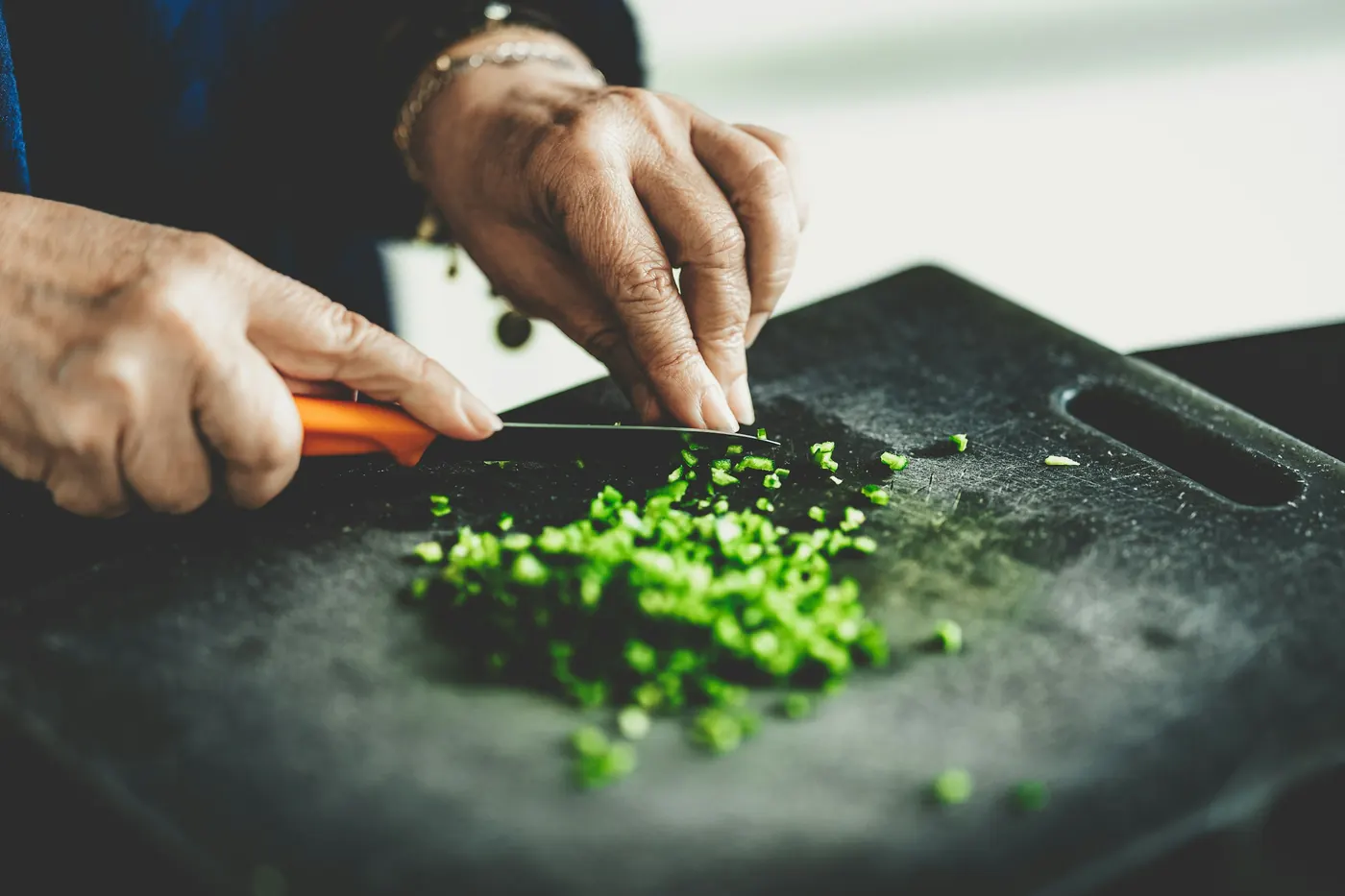
Mercer’s own description reads like a prep list for salsa: dicing onions, mincing shallots, chopping herbs, crushing garlic and shredding cabbage. The broad blade is handy for scooping chopped onion and cilantro off the board and into the bowl, and the bolster gives your pinch grip something to rest against.
Care instructions are clear: wash by hand in warm water with mild soap, rinse, and dry completely, and do not put it in the dishwasher or leave it soaking. Mercer gives it a lifetime warranty. The listing does not give a hardness, edge angle or weight. If you want an even cheaper stamped Mercer, America’s Test Kitchen names the Mercer Millennia 8-inch its Best Buy among Western chef’s knives.
Why we like it
- Forged high-carbon German steel at a modest price
- Taper-ground edge, per Mercer
- Non-slip handle, even with wet hands
- Lifetime warranty
Key specifications
| Model | M20608 |
|---|---|
| Blade length | 8 inches |
| Steel | High-carbon German steel, forged |
| Hardness (stated) | Not stated |
| Edge angle (stated) | Not stated (taper-ground) |
| Handle | Non-slip ergonomic handle |
| Weight | Not stated |
| Warranty | Lifetime |
Why we recommend it
It suits cooks who want the feel of a forged German knife, bolster and all, without the price of a Wüsthof, and culinary students building a first kit.
Skip it if you want published specifications to compare: Mercer’s listing gives no hardness, edge angle or weight.
Pros and cons
Pros
- Forged blade for less
- Grippy handle
- Clear care instructions
Cons
- No stated hardness, angle or weight
- Hand wash only
- Plain handle styling
8. Tojiro DP Damascus 8.25-inch Chef’s Knife – VG10 Core With a Bolster

Tojiro’s DP line pairs a hard Japanese steel core with a stainless cladding. This DP Damascus version, model F-655, has an 8.25-inch blade. Tojiro’s listing describes a VG10 cobalt alloy steel core with 37 layers of low- and high-carbon stainless steel forged over it to make the patterned finish.
Unlike most gyuto, it has a bolster, which Tojiro says adds heft and balance while the blade and edge stay thin. The handle is Micarta, a resin-and-fabric composite, fixed with three stainless rivets. The result is a knife with a Japanese edge and a Western feel in the hand.
The listing gives a limited lifetime warranty against defects and says it is made in Japan. It does not give a hardness figure, edge angle or weight, so we have left those as not stated. Treat it as you would any thin, hard Japanese blade: hand wash, dry it at once, and keep it away from bones and frozen food.
Why we like it
- VG10 core steel, per Tojiro’s listing
- Bolster adds balance to a thin blade
- Micarta handle with three rivets
- Made in Japan, limited lifetime warranty
Key specifications
| Model | F-655 |
|---|---|
| Blade length | 8.25 inches |
| Steel | VG10 core, 37-layer stainless cladding |
| Hardness (stated) | Not stated |
| Edge angle (stated) | Not stated |
| Handle | Micarta, three rivets |
| Weight | Not stated |
| Warranty | Limited lifetime, against defects |
Why we recommend it
It suits cooks who want Japanese steel but like the reassuring weight of a bolster, and who prefer a composite handle to wood.
Skip it if you want the plain, proven DP gyuto: that simpler model was not in stock when we checked, and the patterned cladding here adds cost without changing how the edge cuts.
Pros and cons
Pros
- Hard Japanese core steel
- Balanced by a bolster
- Durable Micarta handle
Cons
- No stated hardness or weight
- Patterned finish adds cost
- Hand wash only
9. Made In 8-inch Chef Knife – Forged in France

Made In’s chef knife is forged in Thiers, the French knifemaking town, from a single rod of nitrogen-treated X50CrMoV15 stainless steel, the same family of steel used by many German makers. Made In lists the blade at 8.5 inches long, 2 mm thick and 1.96 inches tall, with a hardness of 58-plus HRC, a total edge angle of 18 degrees and a weight of 7 ounces. This version has an olive wood handle on a full tang.
The blade sits between the German and Japanese styles: thinner and lighter than a Wüsthof, with a fairly flat edge that works for both push cuts and a gentle rock. That makes it a sensible choice for mixed prep, from slicing tomatoes to cutting chicken thighs into strips for tinga.
Made In’s care instructions are “Hand Wash Only, Dry Immediately”. America’s Test Kitchen recommends it with reservations: testers liked the handsome handle but found it not sharp enough out of the box. A trip to a sharpener or a few passes on a whetstone would fix that. Made In describes its warranty coverage as limited or lifetime depending on the item, so check the terms before you buy.
Why we like it
- Forged in Thiers, France
- Stated 58-plus HRC and 18-degree edge
- 7 ounces, lighter than most forged knives
- Olive wood handle on a full tang
Key specifications
| Model | CUT-8-KNF-WD |
|---|---|
| Blade length | 8.5 inches |
| Steel | Nitrogen-treated X50CrMoV15 stainless |
| Hardness (stated) | 58+ HRC |
| Edge angle (stated) | 18° total |
| Handle | Olive wood, full tang |
| Weight | 7 oz |
| Warranty | Limited or lifetime, by item (Made In) |
Why we recommend it
It suits cooks who want a good-looking forged knife with published specifications, a middle-weight blade and a wooden handle.
Skip it if you want the sharpest knife straight out of the box: America’s Test Kitchen found it was not.
Pros and cons
Pros
- Clear published specifications
- Lighter than most forged knives
- Attractive olive wood handle
Cons
- Not sharp enough out of the box, per America’s Test Kitchen
- Wood handle needs hand washing and drying
- Warranty terms vary by item
Western or Japanese: which chef’s knife profile suits you
Almost every chef’s knife on the market falls into one of two families, and choosing between them matters more than choosing between brands.
Western chef’s knives (Wüsthof, Henckels, Victorinox, Mercer, Made In) have a broad blade with a pronounced curve, or belly, from the middle to the tip. That curve lets you rock the knife through herbs and garlic without lifting the tip from the board. The steel is softer, so the edge rolls rather than chips and is easy to bring back with a honing rod. Forged German knives usually carry a bolster and weigh 7 to 9 ounces.
Japanese gyuto (Mac, Misono, Tojiro, Shun’s chef’s knives) are the Japanese take on the Western chef’s knife. America’s Test Kitchen’s gyuto review explains that they are lighter, about 3 to 6 ounces, with thinner, narrower blades, flatter edges, no bolster on most models, and harder steel, typically 58 to 65 HRC against about 55 to 58 for Western knives. They take a finer edge and hold it longer, but they are more brittle: the same review warns against twisting, scraping, bones, frozen food and dense squash, which can chip the blade.
For a Mexican home kitchen, both work. A Western knife is more forgiving if several people share it, if it occasionally meets a chicken bone or if it goes in the dishwasher. A gyuto is the better tool for fine, even dice for pico de gallo and for slicing grilled meat thin.
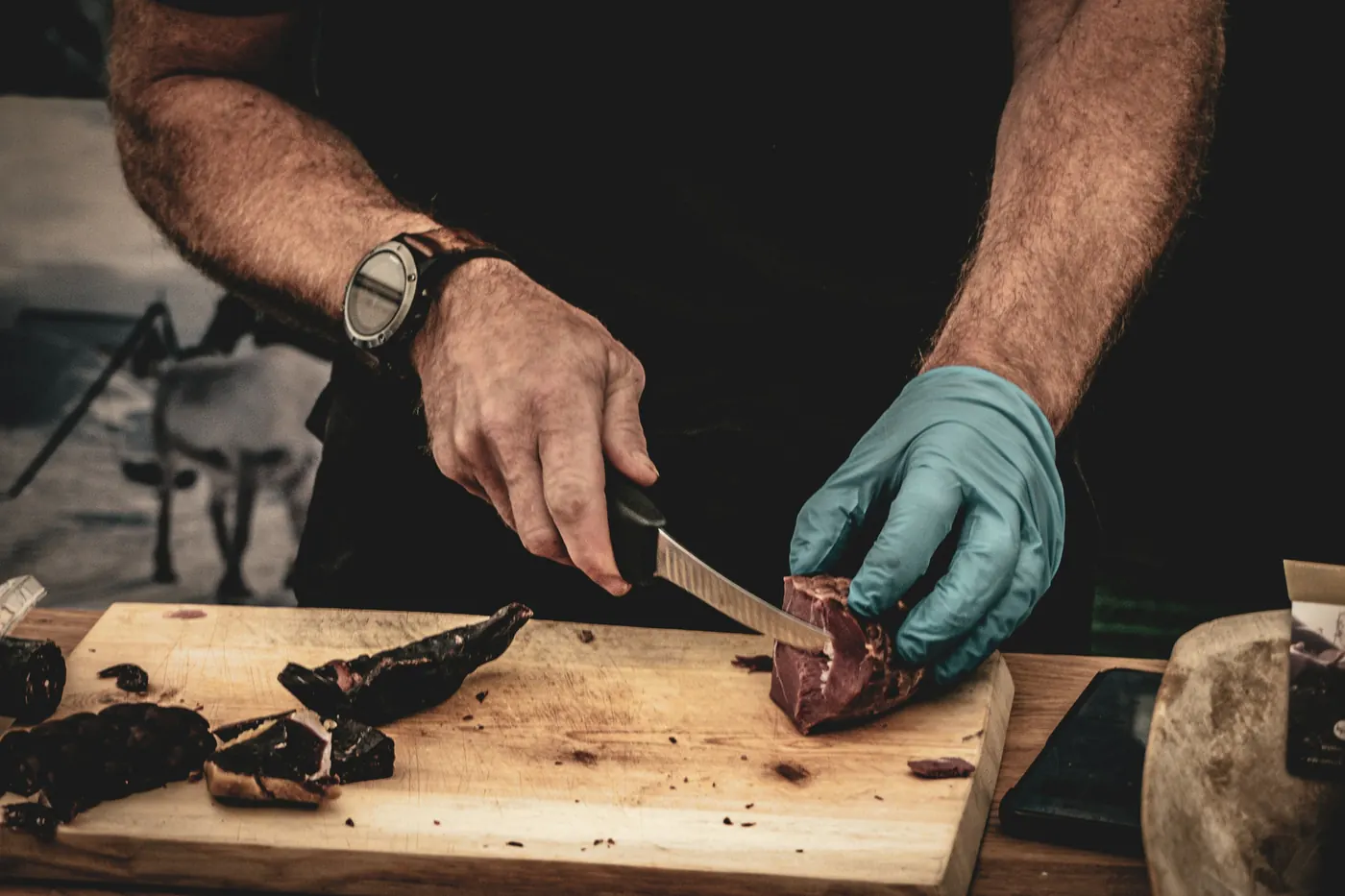
How to choose a chef’s knife for your kitchen
1. Length
Eight inches is the standard because it is long enough to slice through a large onion or a cut of skirt steak in one stroke, and short enough to control on a home cutting board. A 10-inch knife suits big boards and big batches; a 6-inch knife suits small hands and small kitchens.
2. Weight and balance
Light knives (5 to 6.5 ounces) are less tiring for long prep and fine work. Heavier knives (8 ounces and up) do more of the work on dense vegetables and meat. Hold the knife at the bolster or heel; if it pulls hard toward the handle or the tip, it will tire your hand.
3. Steel and hardness
Harder steel holds an edge longer but is more brittle and harder to sharpen at home. Softer steel dulls faster but is tougher and quick to hone. A stated hardness around 56 to 58 HRC is typical of German knives; 60 and above is typical of Japanese ones. Be wary of any listing that gives no maker, no steel and no hardness at all.
4. Edge angle
A narrower angle cuts more easily but wears faster. Shun, for example, uses 16 degrees on its Classic chef’s knife and 22 degrees on its Western Cook’s Knife for extra strength. Many makers do not publish an angle; that is not a red flag, but it means you will need to find the angle before sharpening.
5. Handle and grip
A handle should stay secure with wet hands and not press into your palm. Textured plastic is the grippiest; Pakkawood, Micarta and polymer are smooth but durable; untreated wood needs drying after each wash. If you can, try the knife with a pinch grip, thumb and forefinger on the blade just ahead of the handle.
6. Care you will actually give it
Only a few chef’s knives are rated dishwasher safe by their makers, and even those keep their edge longer when washed by hand. If you know your knife will end up in the dishwasher, buy the Victorinox. Every knife here should be used on wood or plastic boards; glass, stone and ceramic dull edges fast. Our guide to the best cutting board covers which boards are kind to an edge.
How we chose these nine chef’s knives
We started from what a working Mexican kitchen asks of a chef’s knife: a blade that dices onions, chiles and tomatoes evenly, chops herbs without bruising them, and slices cooked and raw meat cleanly, and that is comfortable through a long prep session. We then narrowed the field to knives from established makers sold on Amazon in the United States and in stock when we checked, with specifications we could confirm from the maker’s own website or the brand’s Amazon listing (each review says which). We covered both the Western and Japanese families, a range of weights, and stamped and forged construction, rather than padding the list with near-identical knives. We used America’s Test Kitchen’s review of Western chef’s knives and its review of gyuto knives for how these knives perform and how the two styles differ, and we say so wherever we quote them. We left out knives from sellers with no identifiable maker, listings with unverifiable steel or “Damascus” claims, and models that were out of stock or nearly so, including Global’s G-2 and the plain Tojiro DP gyuto. We have not used these products ourselves; where we describe how a knife performs, we say whose findings those are.
Looking after a chef’s knife
Hone often, sharpen rarely. A honing rod realigns an edge that has rolled over in use and does not remove much steel; a few strokes before each prep session keep a Western knife cutting cleanly. Hard Japanese blades roll less and are better served by a ceramic rod or a whetstone. When honing no longer brings the edge back, it is time to sharpen.
Wash by hand with warm, soapy water straight after cutting, especially after acidic foods like lime, tomato and tomatillo, and dry the knife completely before you put it away. Shun’s care guide warns against air-drying for this reason. Store it on a magnetic strip, in a block or in a guard, never loose in a drawer.
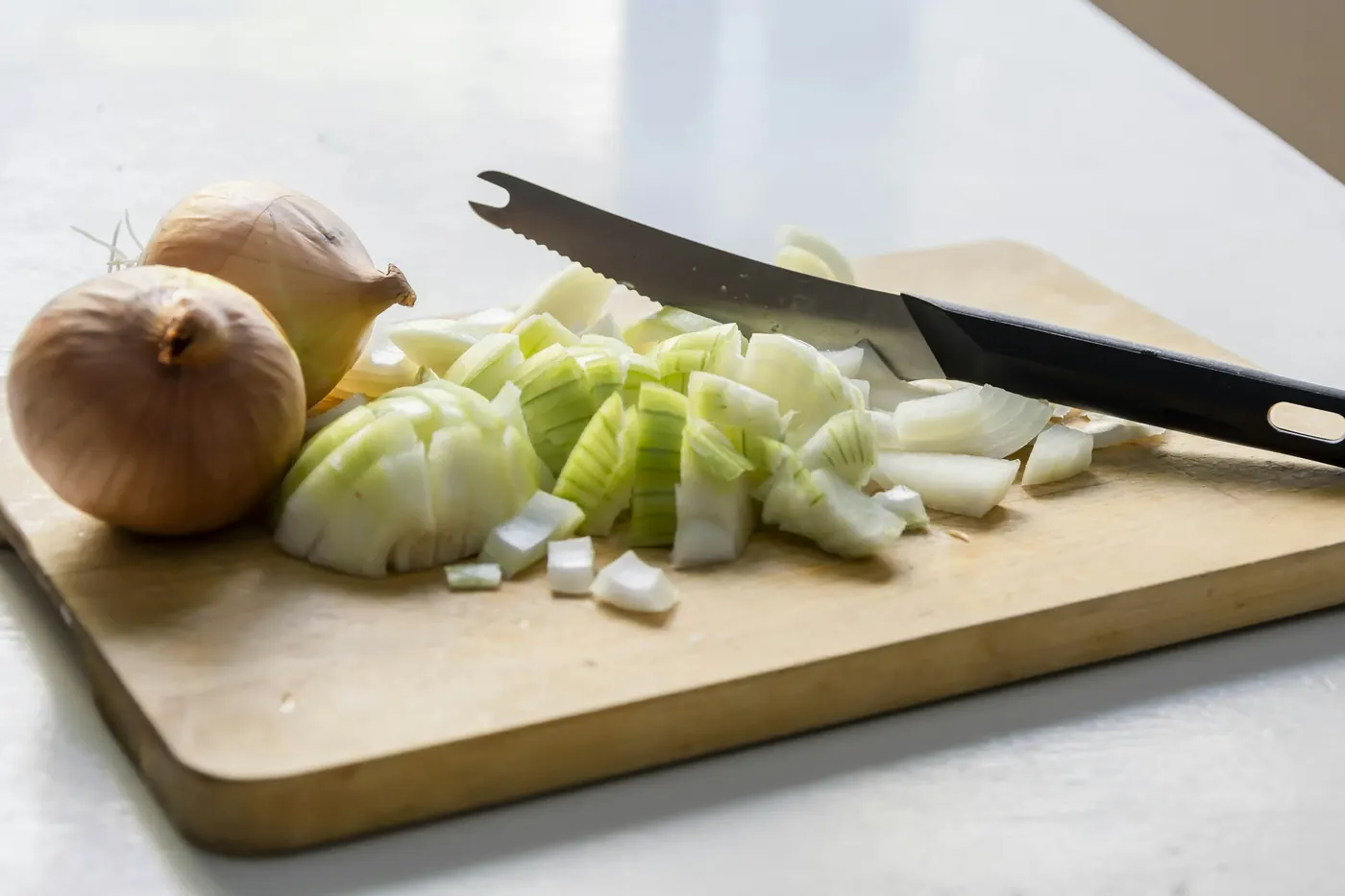
Chef’s knife questions, answered
What is the best chef knife for everyday use at home?
A light, sharp, easy-care 8-inch knife you will reach for every day. For most home cooks that is the Victorinox Fibrox Pro, America’s Test Kitchen’s top pick in its review of Western chef’s knives. If you prefer a thinner, harder blade, the Mac MTH-80 is the step up.
Which chef knife brands are worth buying?
The makers that publish their specifications and stand behind their knives: Victorinox, Wüsthof, Henckels and Mercer for Western knives; Mac, Misono, Tojiro, Shun and Miyabi for Japanese ones; and Made In for French-forged. Be cautious of brands that sell only on marketplaces and make big claims about steel or layers without naming a maker.
Is a Japanese or German chef’s knife better?
Neither is better for everyone. A German knife is heavier, more curved and tougher, which suits rocking cuts and heavier jobs. A Japanese gyuto is lighter, flatter and harder, which suits precise push cuts and slicing, but it can chip if used on bones or twisted. The section above explains the difference.
What does America’s Test Kitchen recommend as the best chef knife?
In its review of 8-inch Western chef’s knives, America’s Test Kitchen names the Victorinox Fibrox Pro its top pick, the Mercer Millennia its Best Buy, and the Shun Classic Western Cook’s Knife its upgrade pick. In its separate gyuto review it recommends the Mac MTH-80 and the Misono UX10 among others.
Is an expensive chef knife worth it?
Up to a point. A more expensive knife usually brings harder steel, a finer edge, better fit and finish and a more comfortable handle. It will not cut better than a well-sharpened budget knife if you do not keep it sharp. If you will not hone and sharpen regularly, spend less and get it sharpened professionally once in a while.
What size chef knife is best for a home cook?
Eight inches suits most people and most cutting boards. Choose 10 inches if you have a large board and often cut big batches, or 6 inches if you have small hands or a small kitchen.
Our pick for your cutting board
Buy the Victorinox Fibrox Pro if you want one chef’s knife that is sharp, light, grippy and easy to care for. Choose the Mac MTH-80 for a thinner, more precise Japanese-style blade with a familiar handle, or the Wüsthof Classic if you want a heavy, forged knife that will take decades of rocking and chopping. The Shun Western Cook’s Knife is the upgrade if you want Japanese steel with a German curve.
A chef’s knife does most of the work, but not all of it: a paring knife handles limes, chiles and garnishes, a bread knife takes care of bolillos and teleras for tortas, and if you would rather buy the pieces together, see the best knife set.
A good chef’s knife is the start of a Mexican kitchen. Our guide to Mexican cooking tools covers what goes alongside it, and the best molcajete covers the stone mortar for grinding what you have just chopped. For what to do with all those diced chiles and tomatoes, see salsa roja vs salsa verde, Mexican chiles explained and Mexican herbs explained.
Keep the edge you paid for: our guide to the best knife sharpener compares electric, pull-through and whetstone options.
Drawn to layered steel? Our guide to the best Damascus chef knives explains what the pattern does and doesn’t mean.
Got large hands? See our guide to the best chef knives for big hands.
More specific guides: the best large chef knives and the best chef knives for professional cooks.
On a budget? See our guide to the best value chef knives.
Want a 9-inch blade? See our guide to the best 9-inch chef knives.
Loyal to ZWILLING? See our guide to the best ZWILLING and HENCKELS chef knives.
More specific guides: the best chef knives for beginners and the best cleavers for meat and vegetables.
Related guide: Best chef knife gift.
Related guide: Best wusthof knives.
Related guide: Best mercer knives.
Related guide: Best victorinox kitchen knives.
Related guide: Ceramic vs steel kitchen knife.
Related guide: Forged vs stamped knives.
And if you would rather leave the chopping to someone else tonight, see the menu or call to order.